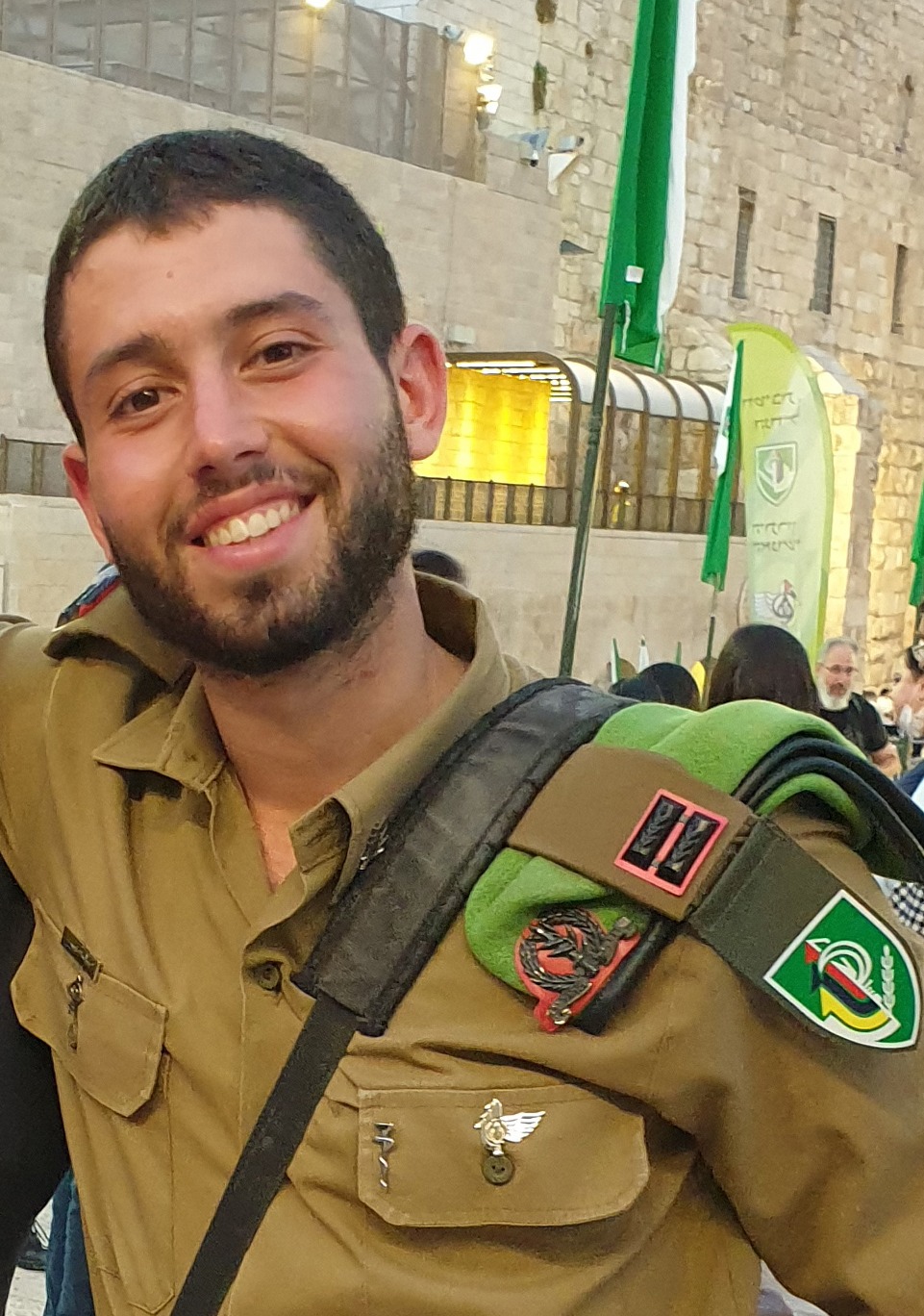
The story
In a Ramat Gan apartment, whose walls had absorbed the rolling laughter of small children and the aromas of a mother's cooking, Yuval was born. It was on the 7th of Iyar, 5758, May 3rd, 1998, when Yael and Itai warmly embraced their firstborn son into the world. This was no ordinary birth; from the very first moment, Yuval seemed to carry a special spark, a blend of quiet curiosity and infectious joy. The apartment, which had until then been merely a house, transformed into a small kingdom of discoveries, every corner serving as a stage for his first adventures. The living room, with its patterned fabric sofa and heavy wooden cabinet, saw him crawl, stand on his tiny feet for the first time, and later, race toy cars across the polished parquet floor, making perfect engine sounds. The smell of morning coffee would mingle with the scent of fresh diapers and baby soap, and the walls would tremble with rolling laughter as he played hide-and-seek behind the heavy curtains, his small feet peeking out from underneath, revealing his location.
He grew up enveloped in love and attention, a curious child whose blue eyes learned to absorb every detail of the world around him. When Yuval was three, Shira, his first sister, joined the family, and a few years later, Rom, his younger brother, arrived. The house filled with even more laughter, even more noise, and in Yuval, a new role awakened – the eldest brother, the one who leads, who protects, who sets an example. He learned to share his toys, his parents' attention, and most importantly – his heart. When little Shira would cry for no clear reason, he would approach her, stroke her head, and try to make her laugh with funny faces or stories he invented about good dragons and brave princesses. With Rom, the connection was slightly different; he taught him to throw a ball, build complex Lego sets, and stand his ground against other children. Yuval would often gather both Shira and Rom around him on the living room rug and tell them adventure stories he made up on the spot, his voice changing with each character, his eyes sparkling with youthful mischief. He was the beating heart of the home, bringing with him a quiet but present energy, one that calmed and filled with light.
Over the years, the Ramat Gan house became a gathering place for many friends. Yuval was the child who was never alone in the playground, the one everyone was drawn to. There wasn't a speck of arrogance in him, only a genuine willingness to listen, to share, to be there. When he returned from school, his backpack tossed on the floor by the entrance, he would immediately go to the kitchen, ask his mother if she needed help, or turn to his father, sitting next to him and telling him about his day – about a math test that perhaps hadn't gone so well, or a particularly dramatic football game in the yard. He wasn't a child afraid to reveal himself, his emotions, and this was a trait that characterized him even in adulthood. Yael and Itai, who saw this spark in him, always encouraged him to be himself, to stick to his values, and to stand by his truth. They taught him the importance of giving, the power of compassion, and the deep sense of belonging to a place and a community. These values weren't learned through long lectures, but absorbed through personal example, through shared evenings around the dinner table, where everyone recounted their day, and through family trips in nature, when Yuval would be the first to run ahead and discover new paths, leaving a trail of enthusiasm behind him.
Years passed, and Yuval discovered the world of the Scouts. The Yarkon tribe in Ramat Gan became his second home, a place where his inner energy found a powerful channel of expression. He started as an enthusiastic cadet, with sparkling eyes during activities, committing to every task, whether it was building a tent or preparing a bonfire ceremony. Very quickly, his natural leadership skills began to emerge. He wasn't the noisy leader, the one who shouted orders, but the quiet leader, the one who radiated confidence, who saw everyone, who made everyone feel an integral part of the group. Other cadets were drawn to him like moths to a flame, seeking his advice, his calming smile, his stable presence. He was always there for them, whether to help with a math test, listen to a broken heart, or simply laugh with them around a crackling bonfire, as they returned from a long field trip, tired but content, the smell of earth and smoke clinging to their clothes.
As a counselor, Yuval was creative and sensitive. He wasn't content with regular activity plans; he always sought new ways to excite the cadets, to make them think, to dream. He would prepare complex puzzles, write moving ceremonies, and organize trips that included navigation challenges and field challenges that made everyone feel like true heroes. He believed in the power of a group, in the ability of everyone to contribute their part, and taught his cadets that even when everything seemed lost, there was always a way to find a solution, if only they worked together and believed in each other. He was a counselor who saw beyond the mask of childhood, into the inner soul, into the hidden dreams, and he knew how to touch them, how to encourage them to blossom. His smile, when he saw a cadet overcome a fear, or a group successfully solve a complex problem through cooperation, was a smile of deep satisfaction, a smile that reflected the light and joy he brought to all around him.
When he rose to the rank of Rosh G’dud, head of the battalion, the responsibility on his shoulders grew, but Yuval was not deterred. He took on the task with full seriousness, with his special brilliance. Now he no longer just guided one group; he was responsible for a large group of counselors and cadets, for coordinating activities, for building long-term plans. He would sit for long hours, sometimes late into the night, with other tribe leaders and the senior leadership team, planning, analyzing, thinking how to make the Yarkon tribe better, more meaningful. He was known for his ability to calm stormy spirits, bridge disagreements, and find common ground between different opinions. He would conduct long and complex discussions, but always with a smile, always with a kind word, always with a genuine willingness to listen and understand. He was a leading figure in the tribe, a symbol of excellence, dedication, and giving. His friends in the senior leadership team remember him as someone who always pushed forward, but gently, without trampling anyone along the way, and always with a deep belief in the good in people. He reflected the beautiful face of the Scout movement in general, and the Yarkon tribe in particular – values of friendship, responsibility, love of the land and its people, and above all, a belief in the power of youth to change the world for the better.
The Ramon cohort, the group in which Yuval was first a cadet and then a counselor, became synonymous with a period of flourishing and deep connection. He instilled in them values of mutual respect, integrity, and love for others. He taught them not only how to tie knots or light a bonfire, but also how to be better human beings, how to look at the world with open eyes and a broad heart. He was the driving spirit behind community projects, behind volunteer work, and he led them proudly everywhere. When an activity ended, the children would surround him, not wanting him to leave, asking for another story, another game. He was the pillar of the tribe, the one everyone knew they could rely on, the one who would always find the right word, the right hug, the right advice.
After completing his active period in the Scouts and approaching his enlistment in the IDF, Yuval was already a well-formed young man with a strong ethical backbone. He wasn't just a "good person" in the general sense of the word; he was a person who lived goodness, who spread it around him effortlessly, as if it were an inseparable part of his breath. He loved life in all its nuances – the music that played in the background on long drives, the taste of morning coffee, the heartfelt conversations with close friends. He would often go on long walks, even when alone, just him and his thoughts, absorbing the scenery, the smells of the earth, the calming quiet of nature. These were the moments when Yuval connected with himself, sharpened his thoughts, deepened his understanding of the world.
Around that time, or perhaps a little earlier, Noa Tversky entered his life, bringing with her new colors and sounds. Their connection was deep and unique, one that only two people can truly understand. He taught her to love, not just in the romantic sense, but to love life, to see the good in everything, even in difficult moments. They would spend long hours in conversation, sharing dreams, fears, hopes. She would find in him a listening ear and always the comforting word. He would see in her strength, inner beauty, and she would see in him depth, sensitivity, the special light within him. Together they created a small bubble of happiness, full of laughter, hugs, and the comforting quiet of mutual understanding. Noa remembers Yuval as someone who showed her the world through rose-colored glasses, not because he ignored difficulties, but because he believed in the power of love and goodness to overcome any obstacle. She felt privileged to be with him, to learn from him, and only they knew how special and deep this connection was, built from countless small moments of magic.
In October 2019, when Yuval was twenty-one, he wrote words that would prove to be prophetic in retrospect, almost chilling, words that revealed an inner depth and a philosophy of life that few at his age attain. "I have a peculiar notion that writing within me is bad luck. Not just writing, but documenting in general, as if somehow all the fallen are always successful, funny, and poets; those who leave something behind." He began his words with a reflection on legacy, on memory, on the ancient fear of oblivion, and on the stereotype of the hero etched in the history books. But Yuval was not like that. He feared this definition, this framework in which those who are no longer are confined. And then he moved to an example, a metaphor that would be etched in the memory of all who read his words: "I'm afraid of the first sip of tea. I bring the cup to my mouth, inhale, almost taste it, but stop. I do this a few times until I gather courage and drink."
This description, of a hot cup of tea waiting for the first sip, is essentially an allegory for life itself, for those moments when we face a decision, a challenge, a fear. "What's interesting about the story is that it illustrates almost perfectly the first step in things that scare us. The decision, like the sip, is a roller coaster; once you get on, you can't get off until you finish, and what people don't understand is that true courage is standing in line to be next." Yuval, in his young yet profound soul, understood that courage is not just in performing the act, but in the very decision to approach it, to stand in line, to put oneself in a situation that could be frightening. He wasn't talking about wartime heroism, but about everyday heroism, about the courage to face life's small and large fears.
He went on to offer a solution, a "fairly simple" method for dealing with fear: "Take a sip. Without too much hesitation. In life, we all too often let the tea of opportunities cool down right under our noses. We hesitate so much because of fear, and it cools down even though we could have discovered if the tea was hot with one sip." Here Yuval presented his central philosophy: to live life to the fullest, not to let fear paralyze, not to miss opportunities. He knew that life is full of challenges, disappointments, pain, but also immense satisfaction. "So yes, it will be scary. Sometimes we'll get burned, and sometimes she won't want us, and sometimes we'll make mistakes, but there are times when it will be the best thing that could have happened. And then it's all worth it. After all, let's be honest – who really wants to drink lukewarm tea?" These words, written four years before his fall, are a philosophical testament from a young man who sought to live a full, passionate life, one that leaves a deep and sweet taste, not a lukewarm life, devoid of action and passion. This was the essence of his personality – the desire to experience, to learn, to dare, even at the cost of burns, mistakes, pain.
Upon completing high school, Yuval enlisted in the IDF, as so many of his friends did, but for him, it was not just an obligation, but a natural continuation of the values he had absorbed at home and in the Scouts. He chose to serve in the infantry, a choice not surprising given his character – a fighter, a leader, one who wanted to be on the front lines, to make an impact. He underwent arduous basic training, where he was pushed to the limits of his physical and mental capabilities, but he completed it with a stubborn smile on his face, supporting his friends, encouraging those who struggled. He learned to operate a weapon, to run with heavy equipment, to navigate unfamiliar terrain, but more than anything, he learned to know himself deeply, his limits and his hidden strengths. The bonds formed in the company were true bonds, a camaraderie of fighters that seeped into his bones, connections that would accompany him for many years.
After becoming a platoon commander (M"M) in Infantry Battalion 7007 of the Harel Reserve Brigade, Yuval carried heavy responsibility on his shoulders. He was a natural leader, but in the army, things took on a different meaning. He was responsible for young soldiers, for their safe return home, for them carrying out their missions to the best of their ability. He combined the tough command required on the battlefield with the sensitivity and humanity that characterized him. His soldiers saw him as an example, a role model – not just because of his professional abilities, but because of the person he was. He knew how to listen to their problems, offer advice, and provide a supportive shoulder when needed, all while maintaining his command status. He believed in the power of the group, in the spirit of the unit, and nurtured them with dedication. His period of regular and reserve service shaped him even further, sharpening his sense of belonging to the state, and his willingness to defend it at all costs.
In his civilian life, after his release from regular service, Yuval returned to his home in Ramat Gan, but not as someone who simply laid down his burden. He returned with deeper insights, with a strong desire to contribute and do good. He was a man of action, one who could not sit idly by. He continued to be a pillar for his family – father Itai, mother Yael, sisters Shira and Rom, and his partner Noa. He was present, attentive, always with a small smile at the corner of his mouth that hinted at something good. He and his father Itai would often drink their morning coffee together, sometimes in comforting silence, sometimes in long conversations about politics, the future of the country, about life itself. He would come to his parents' house for Friday night dinners, the smell of fresh challah filling the home, the laughter of his sisters echoing through the walls, and he would be there, centering everyone around him, radiating his special light.
He was a loyal friend, one you could trust with your eyes closed. When one of his friends needed help, Yuval was the first to show up, asking no questions, simply doing. Whether it was helping with a move, fixing something broken, or just driving with him for a long conversation by the sea, with a gentle breeze caressing their faces and the sound of waves filling the air. He was also involved in the wider community, out of a deep sense of civic responsibility. His uncle, Boaz, remembered his endless giving, his good heart, and the fact that despite his young age, he learned a lot from him. This was Yuval – a person who, even when receiving, gave back many times over. He never rested on his laurels and always sought ways to improve, to learn, to grow. He would read books, watch documentaries, engage in deep discussions, all out of a desire to understand the world better and act meaningfully within it.
Uncle Boaz also spoke of a shared dream, one that Yuval was part of, a dream of a better society. "We agreed that after you return, we would together build a bridge to heal the rifts in fragmented Israeli society." These words reveal Yuval not just as a fighter, but as a thinker, a person who cared about the future of the state not only on the security level, but also on the social level. He saw the rifts, the gaps, the pain, and he had a vision for repair. He believed in the power of conversation, in the power of connection, in the ability of people to set aside their disagreements and find common ground. This was Yuval – a person who aspired not only to protect what existed, but to build a better, more united future. These thoughts, about building bridges, about connecting hearts, were probably an inseparable part of his conversations with Noa, with his parents, with his friends, and they reflected the depth of his soul and his deep commitment to the values of unity and peace.
And then came that black morning, October 7th, 2023. The morning everything changed. Yuval was in Thailand then, thousands of kilometers from Israel, enjoying a vacation, perhaps planning the next step in his life. His phone vibrated, messages began to pour in, horrifying news began to spread. The pictures, the videos, the testimonies of atrocity – everything reached him with full force. He did not receive an official 'Tzav 8' (reserve duty call-up order), he had no legal obligation to return. But for him, there was no question at all. The philosophy of the "first sip of tea" he had written four years earlier was suddenly put to the ultimate test. He did not let the tea cool. He did not hesitate. His heart knew what he had to do. Without waiting for instructions, without a second thought, he booked a flight back to Israel. The thought of his family, his friends, his community, his country, was stronger than any fear. Thailand, with its serene beaches and exotic landscapes, became a distant and meaningless memory in the face of the burning reality he had left behind.
The flight back was long, tense, filled with worry. With every passing moment, the news from Israel only worsened. He sat on the plane, his heart pounding, trying to imagine what was happening, trying to comprehend the magnitude of the disaster. When the plane landed on Friday morning, Yuval did not waste a moment. He arrived home, for a brief, tearful hug with his parents and sisters, trying to reassure them despite the anxiety that gnawed at him too. He managed to meet Noa, to share a moment of eye contact, of quiet understanding. The next day, Saturday, he was already in Sde Teiman, reporting for duty with his unit. Without a Tzav 8, without an official order, only with the command of his conscience. His father, Itai, spoke of it with immense pride, but also with pain: "He arrived on Friday morning and on Saturday he was already in Sde Teiman and reported to his unit, even without receiving a Tzav 8." This was the full embodiment of the courage he described in his writing – to stand in line, to take the sip, without hesitation.
The first days of the war were days of chaos and uncertainty. Yuval, as a platoon commander, was required to demonstrate leadership, calm his soldiers, organize them, prepare them for the mission. He was there for them, talking to them, explaining, strengthening. A week before his fall, he went on a short leave. The family, Yael, Itai, Shira, Rom, and Noa, met him for a brief picnic on the grass. It was a precious moment, a moment of normalcy amidst the madness. He was a "magic child," as his father said – "funny, smart, loved, humble." At that picnic, they laughed, shared stories, tried for a moment to forget the harsh reality that awaited him. The smell of fresh grass, the warm sun on their faces, the rolling laughter of his sisters – all these were moments that would be etched in their memories forever. It was their last meeting, moments of pure happiness, mixed with quiet worry.
His last conversation with his father, Itai, was on Friday evening, a few days before his fall. "He called to tell me he loved me and not to worry," Itai recounted with pain. "I told him I loved him and was strengthening him." It was a short, quick call, but charged with so much emotion. A quiet farewell call, full of love and mutual concern. Yuval, even in the most difficult moments, thought of his family, wanted to reassure them, to leave behind a feeling of security, of love. His mother, Yael, bid him farewell with words that reflected the depth of her love and pride: "Proud that I was your mother. Thank you for bringing such a child into the world." These words, spoken from a broken heart, expressed the depth of their connection, the recognition of her son's uniqueness.
He entered Gaza with his unit, Infantry Battalion 7007, as part of the forces that entered ground operations in the northern Gaza Strip. The reality there was harsh, complex, different from anything they had known in training. The ruined buildings, the narrow alleys, the danger lurking around every corner. As a fighter and a commander, Yuval displayed composure, professionalism, and determination. He led his platoon bravely, navigating through the destroyed houses, under fire. Every step was calculated, every decision carried a price. He was there for his soldiers, protecting them, instilling confidence in them, despite the tangible danger. The smell of gunpowder clung to their clothes, the sounds of gunfire and explosions filled the air. This was not a war of open fields, but of close-quarters combat, of complex observations, of locating an elusive enemy.
On the 17th of Marcheshvan, 5784, November 1st, 2023, just two weeks after enlisting in the reserves and reporting to his unit, Yuval Zilber fell in battle. He was twenty-five years old at the time of his death. He was killed by Hamas sniper fire in the northern Gaza Strip. One shot, precise and cruel, cut short the life of this young man full of light and life. He was the seventeenth soldier killed in battles since the start of ground operations in the Gaza Strip, a number that testifies to the heavy price exacted by the war. The moment he fell was a moment of chaos, of fire, of adrenaline. His platoon mates tried to render aid, but the injury was fatal. He fell while defending his home, his family, his people. He fell while living the philosophy of the "first sip" to the fullest – he did not hesitate, he did not waver, he stood in line, and he took the last sip.
The bitter news reached his family in Ramat Gan, turning their world upside down. The house that had been full of laughter, conversations, and the light Yuval brought, was filled with helplessness, deep pain, and deafening silence. Yuval was laid to rest in the civilian cemetery in Neta'im, a land that became his final resting place. Above his fresh grave, in a line of stones, Yael and Itai, Shira and Rom, Noa, Uncle Boaz, and his many friends from the Yarkon tribe and the army, stood with red eyes, trying to contain the incomprehensible loss. Each of them carried their own Yuval in their heart – the child, the brother, the partner, the friend, the commander, the counselor. After his death, Yuval was posthumously promoted from the rank of Lieutenant (res.) to Captain (res.), a mark of honor for his bravery, leadership, and contribution.
The legacy of Yuval Zilber, may his memory be a blessing, is not just a story of falling in battle, but a complete life story, full of light, joy, giving, and courage. He left behind heartbroken parents, two sisters who lost their eldest brother and their pillar, and a partner who lost the love of her life. Noa, who learned from him to love and see the good, was left with an immense void: "Now I am left alone. I had the privilege of being with you and learning from you. Only the two of us know how special our connection was." His uncle Boaz, who will no longer get to build the bridge to heal the rifts in Israeli society with him, is left with the unfulfilled promise and with endless love for the nephew he so greatly admired. The Yarkon tribe bows its head, remembering the graduate from the Ramon cohort, the counselor, the Rosh G’dud, and the head of the active team who was a leading figure and influenced his cadets so much. They remember his smile, his sparkling eyes, the way he reflected the beautiful face of the State of Israel and the Scout movement.
Yuval Zilber was not just a fallen soldier. He was a man who lived a full, passionate life, a life of meaning. He was the magic child, the funny, smart, beloved, and humble boy who grew up in Ramat Gan and became a natural leader, a mentor, a figure who positively influenced everyone he met. He was the one who did not hesitate to take the "first sip of tea," even when it was scary, even when it might cause burns. He chose to live life to the fullest, not to give up any opportunity, not to let fear paralyze him. And in the end, he chose to return and defend his home, his people, the values he believed in with every fiber of his being. His death left an immense void, but his life, and the choices he made, serve as a guiding light for us. He left behind a memory of love, of giving, of courage, and of deep commitment. May his memory be a blessing, and may the story of his life be a source of inspiration and revival for us. He will forever remain in our hearts, loved and mourned, a symbol of the light and joy he brought to the world, and of the quiet, human heroism he chose to live.
Moments of a life

All photographs · 3
In the media
Articles
- Tel Aviv University Marks One Year Since October 7
Freunde der Tel Aviv Universität ·
- Day 27: Iron Swords War
JCC Association of North America ·
Songs
- A Life Worth Living — Jimbo J, Based on Words by Yuval Zilber
גל״צ וגלגלצ — שבעה שירים באוקטובר
Memorial sites
- Yizkor — Captain Yuval Zilber
משרד הביטחון — יזכור
- Captain (res.) Yuval Zilber
תנועת הצופים — ספר הזיכרון
Memorial projects
Soldiers of the 7007th Battalion named the Hamas training compound they captured “Yuval Outpost,” in memory of Yuval, who fell in battle at the compound.
The Peled Sharf family established a fund with Ogen in his memory to help reservists. The campaign page describes an initial donation of NIS 500,000 and a target of one million; these amounts are reported by the page, rather than verified through an audit.
According to his father, the Komemiyut Scout troop in Pardes Katz, which Yuval helped found, became the Yuval troop after his death in action.
Jimbo J turned Yuval’s text “A Life Worth Living” into a song as part of Seven Songs in October. His father Itay, a bassist, took part in creating and playing it.
Stories told about them
His father spoke about Yuval’s meaningful role in the Scouts and his year of volunteering for children in Beit She’an. He also described how Yuval returned from a trip to the Far East following October 7.
Life & service
Profile
Service
- Rank
- Captain (res.)
- Service Type
- Reserve Forces
- Honours
- Posthumously Promoted
- Battle Location
- North Gaza Strip
Family
- Father
- Itay
- Mother
- Yael
Burial
Cemetery
Plantations
Tributes & remembrance
תודה יובל על נתינה והקרבה, חיוך והקדשה שמאתגר לחיות לפיה כשאתה לא פה.. "חיים ששווה לחיות". חיבוק גדול לאבא איתי, איש מיוחד
תודה לך על הכל אבא שלי הכיר את אבא שלך ולי יש צביטה בלב כל פעם שאני רואה את המדבקה שלך סליחה
יהי זכרו ברוך
יובל,
וההורים שחינכו כזה ילד
תודה על המילים- חיים ששווה לחיות!
בשבילך ובזכותך נחיה חיים ששווה לחיות אותם, להיות אמיצים.
תודה וסליחה
היוזמה המרגשת של Next October.
יובל
אמנם לא הכרתי אותך אישית, אבל שמעתי המון סיפורים עליך. אני שומעת את השם שלך וישר יש לי צמרמורת. כל הסיפורים עליך גורמים לי להיות עצובה שלא זכיתי להכיר אותך אישית, ועל כך שלא יצא לי לדבר איתך מעולם. יהיה זכרך ברוך.
אוהבים אותך לא נשכח אותך יהיה זכרו
מצדיעה לך בחור יקר ז"ל
מיטב בנינו
אתה ואחרים מלאכים בשמיים
תודה מקרב הלב
בזכותך ובזכות אחרים אנחנו פה
אני יודעת שלא תשמע אותי אבל הייתי רוצה לומר לך שהיית חזק, והלוואי שלא היית נופל. אני מאוד התחברתי למשפט שלך "ואהבת לראותך כמוך, המשיכו לחיות, ליצור, לחלום לצחוק ולאהוב כי זה משפט ממש יפה לומר והמשפט גם מאיד על הבן אדם שאתה
יובל זילבר, איזה תמונה שמו לך, אי אפשר לטעות באופי שלך לפי התמונה הזו, איש מלא חיים, עם ניצוץ בעיניים, איזה חיוך של נחת אני לא מכירה אותך, הלוואי והייתי, אבא שלך מספר עליך המון דברים, וככל שאני קוראת יותר אני מבינה איזה אדם היית, אהבה, נתינה, דאגה, איזה מן אדם מוותר על הדרגות שלו נכנס להילחם למרות שלא ביקשו וממקם את עצמו בקו הכי פגיע לתקיפה, לא היית אדם רגיל, מי יתן ונזכה כולנו להיות קצת יותר כמוך
יצא לי להכיר אותך מהסיפורים, ומאחל לעצמי לקחת קצת ממך להמשך.
מלח הארץ
יהי זכרו ברוך
לנצח תהיה בליבי ילד אהוב
תמיד תישאר בליבי ילד אהוב
יהי זכרו ברוך
איש נדיר ומפקד מיוחד, השאיר מורשת וזכרונות טובים לכל מי שהכיר אותו. יהי זכרו ברוך אמן.
הייתי שכבה מתחתייך באהל שם ולצערי לא זכרתי להקיר אותך איש יקר.
שמעתי עלייך כל כך הרבה דברים טובים
יהיה זכרו ברוך
יובל, אני גר בשכונה שלך, 2 דקות הליכה מהבית שלך
לא הכרתי אותך פיזית אבל כן אני מכיר את הסיפור שלך. היום (29.4.2025 יום ג׳) לתיכון בו למדת ובו אסיים ללמוד בקרוב הגיע אביך, לעשות לנו הרצאה על הסיפור שלך ועל האדם שהיית. כולם כיבדו אותו ובסוף ההרצאה הוא חילק לנו סטיקרים עם המשפט שהיה ידוע איתך ״קחו שלוק ותחיו חיים ששווה לחיות״
והחלטתי לשים את המשפט באינסטגרם ובוואטסאפ שלי לעד.
יהי זכרך ברוך יובל
לאיתי היקר,
איתך בכאבך.
היום שמעתי על יובל בהרצאה בתיכון. מאוד התרגשתי לשמוע עליו ואני אדאג להפיץ את הסיפור שלו לקרוביי.
משתתפת בצער המשפחה
אדם כזה, שלא שוכחים.
נזכור אותך תמיד זילבר
גיבור ישראל יפה הבלורית והתואר אומץ לב נדיר גיבור ישראל
ת.נ.צ.ב.א
עם החיוך הכי טהור ושמחת חיים שלא פוגשים כל יום, לנצח רמד אוהד בלב שלנו)
גיבור ישראל.
סיפור הגבורה שהשאיר מהווה השראה לכל אזרחי המדינה.
נזכור אותך תמיד גיבור ישראל
כתבת
"ש לי שריטה שלכתוב בקרבי מביא מזל רע
אחרת איך זה שכל הנופלים תמיד כותבים
תמיד משוררים כאלה
מוצלחים
מצחיקים
תמיד גיבורים
איך זה שכל הנופלים תמיד משאירים איזה משהו
אז אם אתם קוראים את זה תדעו לכם שיש לי שריטה"
"תבטיחו לי לחיות חיים ששווה לחיות"
צוואתך מחייבת את כולם.
אני מצדיע לך גיבור.
אוהבת ומתגעגעת עד השמיים שזה עד אליך
סליחה
גיבור אהוב.
אומנם לא הכרתי אישית את יובל, אבל הוא הותיר אצלי ואצל עוד רבים המון אור, השראה, חיוך ורצון לתרום לאחרים. תודה על כל מה שעשית בשביל עם ישראל כל החיים שלך, שלא הפסקת להסתכל סביבך כדי לראות איפה לעזור, ויחד עם זאת לא שכחת את הצחוק והשטותניקיות. יובל, אני מעריכה אותך המון, ואת אבא שלך שהוביל לכך שזכיתי לשמוע עליך. יהי זיכרך ברוך.
יובל היה פרח קסום
יובלי, איזה אישיות נדירה היית. מתגעגעת אליך, להומור לשנינות ולחדות שלך.
בן של בת דודה
יהי זיכרו ברוך
We will miss his smile and kindness very much
Source:וואלה
Read the Hebrew original
חיוכו וטוב ליבו יחסרו לנו מאוד
He was a magical boy: funny, smart, loved, modest.
Source:וואלה
Read the Hebrew original
הוא היה ילד קסם; מצחיק, חכם, אהוב, צנוע.
Yuval knew how to take anger, arguments and disagreements and turn them into pure love and great light, spreading them to everyone around him
Source:ynet
Read the Hebrew original
יובל ידע איך לקחת כעסים, מריבות ואי-הסכמות ולהפוך אותם לאהבה טהורה ואור גדול, ולפזר על כל הסובבים
To me, this is further proof of how much Yuval meant to his friends
Source:ynet
Read the Hebrew original
זו עוד הוכחה עבורי עד כמה יובל היה משמעותי לחבריו
Yuval taught me so much. I chose life. I ask everyone to choose life.
The atrocities of October 7 brought you back without anyone having to ask.
Source:תנועת הצופים — ספר הזיכרון
Read the Hebrew original
מעשי הזוועה של 7 באוקטובר החזירו אותך מבלי שתתבקש.
He had a charm: his humor, his lightness, his sensitivity, his wisdom
Source:N12
Read the Hebrew original
היה לו קסם: ההומור, הקלילות, הרגישות, החוכמה שלו
He was a special, unifying figure, someone a little different from the rest
Source:N12
Read the Hebrew original
הוא היה דמות מאחדת ומיוחדת, משהו קצת אחר בנוף
That was Yuval
Source:N12
Read the Hebrew original
זה היה יובל
Remembrance Day addresses
יום הזיכרון לחללי מערכות ישראל התשפ"ה – 2025
בכל יום שעובר, אזכור יותר! אזכור, את אלו שיצאו עימי לקרב ולא שבו, ולהם אין מי ידמה ומי ישווה. אזכור, שהכאב לא יעבור לעולם, והזמן, הוא לא מרפה ולא מרפא. אזכור, את שיברון הלב הגובר ואת הבית שבוער. אזכור, את צדקת הדרך, ואשבע שוב, שמה שהיה לא יהיה יותר. אזכור, שיותר מכל דבר אחר – אני חסר! ביום הזה, אני נתקף געגוע לדמותם, לחיתוך דיבורם, לחיוכם, ומדליק נר לזיכרון דרכם ומורשתם!
משרד הביטחון
אגף משפחות, הנצחה ומורשת
יום הזיכרון לחללי מערכות ישראל התשפ"ה – 2025
בכאב, בהצדעה ובתקווה אני מתכבד להדליק נר זיכרון זה. השנה, כשאנו נלחמים במלחמה ארוכה, רב זירתית וצודקת, הזיכרון נושא משמעות עמוקה. ביום זה נעצור ונתייחד עם זכרם של טובי בנינו ובנותינו שנפלו בהגנה על המדינה. מורשתם היא המצפן שמתווה את דרכינו, והיא המעניקה לנו כוח להמשיך ולהגן על מדינת ישראל ותושביה. משפחות יקרות, אנו מרכינים ראשנו ומתחייבים שנעמוד לצידכן תמיד. יהי זכר הנופלים ברוך.
אלוף דדו בר כליפא
ראש אגף כוח האדם, צה"ל
יום הזיכרון לחללי מערכות ישראל התשפ"ה – 2025
בשעה שאנו זוכרים את גודל תרומתם ועומק מסירות נפשם של טובי בנינו ובנותינו, נופלי מערכות ישראל לדורותיהן, ממשיכים צה"ל וכוחות הביטחון במימוש המשימה למענה לחמו ועבורה נפלו: הכרעת אויבינו מדרום, מצפון, ביהודה ובשומרון, וגם בזירות רחוקות יותר. בהערכה רבה ובגאווה אדירה אנו מרכינים ראש בפני הנופלים והנופלות, מאמצים את משפחותיהם אל לבנו, וממשיכים במשימה להבטחת קיומה של ישראל לדורי דורות. יחד נעשה ונצליח.
רב אלוף אייל זמיר
הרמטכ"ל, צה"ל
יום הזיכרון לחללי מערכות ישראל התשפ"ד – 2024
כאשר דגלינו מורדים לחצי התורן וראשינו מורכנים לזכר הנופלים והנופלות במערכות ישראל, ממשיכים לוחמי צה"ל ומפקדיו בלחימה בדרום, בצפון, ביהודה ובשומרון ובזירות נוספות. על כל דור מוטלת המשימה של הגנת העם והארץ – משימה שאף פעם אינה פוסקת. נצדיע בגעגוע ובגאווה לנופלים ולנופלות, נחבק את משפחותיהם, ונמשיך ברוח הציווי שהותירו לנו. עם ישראל חי.
רב ניצב יעקב שבתאי
המפקח הכללי, משטרת ישראל
יום הזיכרון לחללי מערכות ישראל התשפ"ד – 2024
אחיי הנופלים, כל נר הוא זיכרון יחיד ומיוחד, על חיים שהיו ואינם, געגוע שנצרב עמוק בלב, עולם ומלואו. הנרות כולם הם זיכרון של אומה כי לעולם לא עוד, בשורת הציונות וקוממיות ישראל. זיכרון כי הדרך לעם חופשי בארצנו עוברת דרך מסדר הנופלים. אור הנר יזכיר לנו את מסירות נפשכם להציל חיים, להגן על הבית. הנרות מסמנים לנו נתיב גבורה ערכי מחייב שאנו מצווים ללכת לאורו. נמשיך להילחם ולהוסיף אור מתוך אמונה בנצח ישראל.
יואב גלנט
שר הביטחון
יום הזיכרון לחללי מערכות ישראל התשפ"ד – 2024
בהצדעה ובכאב, בשם צה"ל כולו, אני מדליק נר זיכרון. בעיצומה של מלחמה, הזכרון נושא משמעות יום-יומית, שעבר והווה מתלכדים בה. לאורם של הנופלים נמשיך לצעוד, חיילי הסדיר והמילואים. לאורם של הנופלים נמשיך להגן על ארצנו ועל מולדתנו, גם כשהמחיר כבד. להבת-הזכרון תבער בנו בעודנו ממשיכים להלחם ונזכור את הנופלים ואת אומץ ליבם. משפחות יקרות, צה"ל מרכין היום ראש, מצדיע לכן וכואב איתכן. יהי זכר הנופלים ברוך.
אלוף יניב עשור
ראש אגף כוח האדם, צה"ל
יום הזיכרון לחללי מערכות ישראל התשפ"ד – 2024
בהוקרה, בגאווה ובכאב שאין לו סוף, אני מתכבד להדליק נר לזכרם של הנופלים והנופלות במערכות ישראל. סיפור חייהם בארץ הזאת, מסכת שירותם, גבורתם והקרבתם – הם סיפורה של הארץ הזאת, אך גם סיפור המחיר הכבד שהיא תובעת מאוהביה. מחויבותנו לזכר הנופלים ולדרך שהותירו לנו ניצבת תמיד לנגד עינינו. את המשימה שלא זכו להשלים, משלימים כיום, וישלימו, אנשי כוחות הביטחון, הממשיכים בדרכם ולאורם. יהי זכרם של הנופלים ברוך.
משרד הביטחון
אגף משפחות, הנצחה ומורשת
יום הזיכרון לחללי מערכות ישראל התשפ"ד – 2024
בחרדת קודש אני מתכבד להדליק נר לזכרם של חללי מערכות ישראל, חברנו שנפלו, מראשית היציאה מהחומות ולאורך כל שנות עצמאותנו המדינית והציונית, מהווים תמרור זיכרון לדרך חיינו ולמחוייבות הלאומית להנצחת זכרם. דרכם נותרה דרכנו ומורשתם נר להמשך עשייתנו. יהי זכרם ברוך!
בני גנץ
שר הביטחון
יום הזיכרון לחללי מערכות ישראל
נזכור אותם, כולנו יחד. כל אחד ואחת מהם, מדי יום ביומו, והיום ביתר שאת, כך – לנצח. "כי מדי דברי בו זכור אזכרנו עוד"
משרד הביטחון
אגף משפחות, הנצחה ומורשת