
The story
On a Friday in the Hebrew month of Shevat, 2005, in a remote corner of Ethiopia, the life story of Yosef Dasa, son of Ganet and Tamasgen, began to take shape. He entered the world on January 16, 2005, a tiny infant whose eyes already held a spark of curiosity, charm, and a smile that would one day brighten many faces. His early life unfolded amidst the wild and beautiful landscapes of his homeland, surrounded by the sounds of Amharic, the scent of sun-baked earth, and the voices of his family gathered around him. His mother, Ganet, enveloped him in boundless warmth, and his first days were filled with the touch of her healing hands, the stories she told him, and the songs she hummed in his ear. His father, Tamasgen, watched him with pride, seeing in him continuity, hope, and together they wove around him a world of security and love. Young Yosef learned about the world through his bare feet on the ground, through fleeting glances at farm animals, and through the laughter of his family.
But this happiness was short-lived. When Yosef was just three years old, a harsh storm struck his small world: his mother, Ganet, passed away unexpectedly. A heavy cloud descended upon their home; the sounds of joy ceased, and the void left behind was immense. Suddenly, the house that had been full of warmth and laughter became quiet and painful. Little Yosef didn't fully grasp the meaning of the loss, but he keenly felt the sharp pain that gripped his father, the sorrow reflected in his eyes, and the agonizing loneliness that enveloped them. Tamasgen, a single father, had to cope with his immense personal loss and the responsibility of raising his young son alone. He tried to fill the void, to give Yosef all his love and care, but he knew that nothing could bring back his mother's touch, her soothing voice. The thought of their future, of how they could build a new and better life, began to take root in him, and very quickly, the decision crystallized to immigrate to the Land of Israel, the dream of generations, a place where they could find renewed hope and embrace.
And so, in 2008, a three-and-a-half-year-old boy, Yosef and his father embarked on the great journey. The journey was long and turbulent, filled with anxieties and hopes, and it was etched in Yosef's memory as a series of blurred but vivid images: a painful farewell from family members, the unfamiliar roar of an airplane, a landing in a new land whose language was incomprehensible. They were housed in the absorption center in Kiryat Yam, a place where new smells of the Mediterranean and Israeli food mingled with the sounds of rapid Hebrew speech, and sights of people from all corners of the world. There, between crowded bedrooms and a bustling dining hall, Yosef began to learn Hebrew. At first, it was just sounds, isolated words he repeated after adults, simple children's games where he learned the names of things. Slowly, like a tender sapling taking root in new soil, he began to adapt. He played with other children his age, also new immigrants, and through play, through smiles and understanding glances, his new world was built. He learned the names of colors, animals, and greetings. Every new word was like a small stone in the building of his emerging identity, and every small success in understanding and communication filled him with a sense of satisfaction and pride. Beyond the language, he absorbed the values of the place, the love of the people and the land, which were deeply ingrained in the souls of the adults around him, in the air he breathed, in the stories he heard.
Several years passed, and Tamasgen, Yosef's father, found love and solace again. He married Emetabel, a warm and embracing woman, and together they built a new, warm, and loving home in Kiryat Motzkin. Yosef, who had already passed elementary school age, vividly remembered the loneliness and the void created by his mother's death, and therefore immediately opened up to Emetabel. His father later recounted, "From their very first meeting, they fell in love like a mother and son, and since then, they were inseparable for a moment." Indeed, their bond was immediate and deep. Emetabel saw Yosef as her own son, not just her stepson, and showered him with unconditional love, caring for all his needs—from warm food on the table to a comforting hug when he was sad. Yosef, in turn, returned her immense love and appreciation. He felt in her the maternal figure he had so deeply missed, the anchor he had sought. "From the first moment I saw you, I knew I was your mother," Emetabel often told him, and Yosef, with a mature gaze and honest eyes, would reply, "You always made me feel like you were my real mother, and you told me how much you loved and appreciated me." This special bond was deeply rooted in both their hearts and served as a strong foundation for their expanding home. When his siblings—Kasahun, Maya, Liel, and Ariel—were born, Yosef became Emetabel's right-hand man, helping to raise them with devotion, changing diapers, feeding bottles, and engaging in endless games on the floor. He was the responsible and loving older brother, a role model for them, and always made sure they felt loved and safe. The home in Kiryat Motzkin became a hub of warmth and laughter, a place where everyone felt they belonged, were supported, and loved. Yosef was very proud of his extended family, served as a role model for his younger siblings, and often said, in his clear voice and bright eyes: "How wonderful it is to have such a supportive, embracing, and united family, and no one is ever alone." He didn't limit himself to his nuclear family but also served as a pillar within the broader extended family, maintaining close contact with his cousins, and seizing every opportunity for shared gatherings and outings—whether it was trips to the park, festive Friday dinners, or just spontaneous get-togethers for coffee and cookies. "He was the family's joy," his family later wrote, "always lifting everyone's spirits, with his captivating smile and his playful spirit."
Yosef received his education in Kiryat Motzkin, his new hometown. He began his journey at the "Mitzpeh" state-religious school, where he learned the Hebrew alphabet, absorbed biblical stories, and internalized the values of tradition and community. Even at a young age, Yosef excelled not only in his academic abilities but also, and primarily, in his athletic skills. He loved to run, jump, compete, and especially – to play soccer. The field became his second home, a place where he flourished. Every afternoon, he would rush to the neighborhood field, where groups of children and teenagers gathered, and he would play until the sun set and darkness fell. Sweat streamed down his forehead, balls rolled noisily on the asphalt, and he, with his constant smile, would run tirelessly, kicking, passing, and scoring goals amidst shouts of joy. He was a natural leader on the field, drawing his friends to him, encouraging them, and infecting them with his enthusiasm. His love for soccer wasn't just for the game itself, but also for the sense of togetherness, the team spirit, the friendships forged between running legs and pounding hearts. He was deeply loved by everyone, by his classmates and his teammates, and always knew how to defuse tension, how to make everyone laugh, and how to create a good atmosphere.
At "Mitzpeh" school, Yosef first met Daniel Levi, his best friend. The special bond that formed between them began in kindergarten, continued throughout their elementary school years, junior high at Yitzhak Rabin School, and at the "Ort Motzkin" municipal education campus. They were inseparable, almost Siamese. In the mornings, they studied in the same classes, sat side by side, whispered secrets, shared laughter, and helped each other with homework. In the afternoons, as mentioned, immediately after throwing their bags at the entrance to the house, they would rush out together to the soccer field, where they spent long hours, chasing the ball, sweating and laughing, dreaming of becoming famous soccer players. They weren't just friends for games and studies; they were kindred spirits, caring for each other, growing up together, and sharing the same values and aspirations—love of the land, the desire to contribute, and devotion to family and friends. They were always there for each other, a supportive shoulder, a listening ear, partners in every experience, big or small. As they grew older, their bond only strengthened and deepened, and they became a symbol of true friendship, the kind you see in movies.
Towards the end of his high school studies, Yosef's family moved to Kiryat Bialik, a neighboring city. The change was significant, but Yosef, loyal to his values and friends, chose not to disconnect from the familiar environment and the deep connections he had formed. He continued to study in Kiryat Motzkin, a short bus ride that became part of his routine, but for him, it was a statement of intent—loyalty to his friends, to his teachers, to the soccer field. His friends spoke of a person for whom friendship was paramount, always there for them, knowing how to encourage during difficult moments, to offer a kind word, to lend a hand. One of his close friends wrote about him: "Wherever I needed to go, you came with me, even when you were exhausted. No matter how late it was, or how tired you were from training or lessons, you were always there. You were my partner in every experience, from the small crazy things to the big dilemmas. You could instantly lighten a dark mood, turn sadness into laughter, make sure everyone felt good." His wide smile, his unique humor, and his ability to see the good in every person and every situation made him a magnet. He was the center of joy and connection in every group, every gathering, every moment.
As his enlistment into the IDF approached, Yosef began to prepare himself for meaningful service, one where he could contribute the most. He was not the type of person to settle for less, always striving for excellence in every aspect of his life. As an only son whose mother had passed away at a young age, Yosef was naturally designated for a rear-echelon role, to ease the burden on his family and ensure his safety. But for Yosef, the idea was unbearable. He was a patriot and a Zionist with every fiber of his being, not in empty words, but in a deep sense of belonging and responsibility. He felt a profound commitment to the state, to the people, to the security of the place that had become his second home. "We tried to convince him to drop the idea," his parents, Emetabel and Tamasgen, recounted with worried eyes, "We explained the risks, the difficulties, the fact that he had an exemption. But we quickly realized that when Yosef wanted something, nothing would stop him, and we accepted it with understanding." They saw the spark in his eyes, his unwavering determination, and knew there was no point fighting such a strong spirit. Yifat Twito, his beloved high school teacher, testified about him: "I remember you eagerly awaiting your enlistment, you insisted on being a combat soldier, you wanted to give your all, because that's who you were – a Zionist, principled, and loyal friend." He didn't speak of Zionism as a slogan, but lived it every day, in every action, in every thought about his future and the future of the state.
The path to combat service was not easy. Yosef had to contend with military bureaucracy, approaching various officials, explaining his motivations and his strong desire to contribute again and again. He filled out forms, appealed decisions, traveled to different bases, and knocked on doors. After much effort and repeated appeals, he obtained the necessary approvals for field unit service and received notification of his assignment as an operational driver. For many, this would have been a sufficient success, a significant role on the front lines. But Yosef refused to settle. He didn't want to drive in the field; he wanted to be a combat soldier, to carry a weapon, to walk on foot, to fight shoulder to shoulder with his friends. He continued to fight for the right to serve as a combat soldier, and this time, with an additional and focused goal: he wanted to serve in the Nahal Brigade, and alongside his best friend, Daniel. To this end, Yosef even went to the office of the Mayor of Kiryat Bialik, Eli Dukorsky. He entered the room with determined steps, dressed in his civilian clothes, but in his eyes burned a fire of determination and patriotism. He explained the situation to the mayor, his special bond with Daniel, and his burning desire to fully contribute his part. The mayor, deeply impressed by his sincerity and desire, promised to help. And it worked. When Yosef received the coveted assignment to the Nahal Brigade, no one was happier than him. He felt that all his efforts had paid off, that his dream was about to come true.
On August 21, 2023, on a hot and humid summer day, Yosef enlisted in the IDF. He stood at the induction center with Daniel, two friends since kindergarten, now fresh soldiers, with large bags on their backs and eyes sparkling with anticipation. He was assigned to the infantry, and began his combat training in the "Shaham" (931) Battalion of the Nahal Brigade – exactly as he wanted, and alongside his friend Daniel. From the very beginning, Yosef stood out with exceptional motivation and his aspiration for excellence. He wasn't just another soldier; he was a soldier who wanted to learn, to excel, to be the best. He carried out all tasks with determination, even the most difficult and grueling ones, always with a smile on his face and a kind word for his friends. His social skills were an important aspect of his character: he knew how to connect with everyone, to build relationships, and to create a good atmosphere around him even in moments of difficulty and fatigue. His commanders were impressed by his physical and mental abilities, his capacity to lead, to support, and the good spirit he brought to the team. They predicted a bright future for him in the army, seeing in him leadership potential that was just waiting to be realized.
His unit pride and the satisfaction he felt were evident. Every time he came home for a weekend leave, he entered the house with a wide smile, almost from ear to ear, a smile that testified to the correctness of his insistence. The uniform, the beret, the weapon – all these were not just symbols, but an external expression of a new identity, of self-realization. His younger siblings looked up to him with admiration, seeing him as a hero, a person who followed his dreams. He, in turn, loved to surprise them with small gifts he bought with his savings, or with fascinating stories from the base, with a little exaggeration, of course, to excite them even more. "When we told him he looked so happy and asked him how he felt in the army," his family recounted, "he shared his experiences, difficulties, and feelings honestly. He didn't sugarcoat reality. He said: 'The military system is not easy, there are difficult moments, there are days of fatigue and homesickness. But with the right and good friends and commanders who do everything for you – everything works out in the end. We are strong together'." He knew how to appreciate the friendships that formed around him, the shoulder he found in his friends, and the support he received from his commanders. Whenever possible, he also visited "Ort Motzkin" high school, never giving up on the connection with the place that shaped him. He met with the educational staff who embraced him with love, and with younger students, telling them about his service, about his experiences. "You were proud to visit us in uniform and with your weapon," the teachers said, "to show everyone how proud you were to serve in the Israel Defense Forces and contribute to the country you loved so much." He was a role model for them, living proof that dreams do come true, and that one can serve the country out of true love and pride.
On Saturday, the 22nd of Tishrei, Simchat Torah 5784, October 7, 2023, at 6:30 in the morning, sirens blared across the country, and then the shocking news began to arrive. The Hamas terrorist organization launched a brutal surprise attack from the Gaza Strip on Israel. On that morning, the gates of hell opened, and the entire country entered a war unlike any it had known. Yosef, who was in the midst of his basic training and combat soldier course, found himself drawn into the new and harsh reality. The camp where he was staying became a sort of war room, with news playing in the background, phones ringing incessantly. He had gotten to know many friends from different units during his training, and since the events of that Black Saturday – he had also lost some of them. Every condolence message, every additional name published, pierced his heart. The pain was immense, and the feeling of loss and sorrow was unbearable. But it was precisely this pain, precisely the terrible price exacted by the attack, that only strengthened his belief in the righteousness of their path and his fervent desire to complete the course and join the combat soldiers of Battalion 931 in the Gaza Strip. He knew that this was his destiny, that this was what he had to do, and that he had to continue the path of his fallen friends.
A few months later, in March 2024, after the challenging beret march, the graduation ceremony Yosef had so eagerly awaited took place. The beret march was a difficult physical and mental experience, a long and grueling trek designed to test the limits of the soldiers' endurance, but Yosef completed it with determination, pushing forward even when his body almost collapsed, when his muscles burned and his feet ached. He did it for his friends, for his family, and for the country. At the graduation ceremony, a peak moment in his military life, his commander chose to present him with his personal beret, a symbol of deep appreciation and the potential he saw in him. Alongside the beret, Yosef also received the title "Outstanding Platoon Member," an award recognizing his prominent achievements, his good spirit, and his contribution to the team. This moment, of receiving the green beret and the title, filled him with immense pride, not only for his personal achievement, but for being part of something big and meaningful, for being a true combat soldier in the Nahal Brigade.
Immediately after Passover 2024, Yosef's company began feverish preparations for combat. The air was thick with tension and anticipation. Equipment was packed, weapons cleaned, briefings held repeatedly. On the night of May 8, just before entering the Gaza Strip, when everyone knew that the coming hours could change their lives forever, Yosef and Daniel posted a joint message in their class WhatsApp group. The words were simple, yet loaded with meaning: "We're watching out for everyone, and for each other too." It was a heartfelt promise, an expression of the deep and unbreakable bond forged between them since kindergarten. Yosef called family members and close friends to say goodbye. His voice sounded calm and unconcerned, though deep anxieties gnawed at everyone's hearts. In his characteristic way, he tried to reassure everyone, to dispel the tension in the air. "I'm going in for a day or two and then coming out. We'll meet on Independence Day," he told his loved ones, trying to paint a picture of approaching normalcy, of a happy ending. He bid them farewell with love, with a virtual hug, leaving them with a mixed feeling of pride and worry. Moments before entering Gaza, Daniel, Yosef's best friend, arrived at school in uniform and entered his teacher Yifat Twito's classroom. "We were all so proud!" Yifat recounted painfully, "We looked at him with excitement. In retrospect, I realize he came to say goodbye." The two friends, in their own way, said goodbye to the world they knew, entering the unknown, driven by one goal – to defend their home.
Just two days later, on Friday, May 10, 2024, the 2nd of Iyar 5784, Yosef went out with a force from Battalion 931 towards a school complex in the Zeitoun neighborhood of Gaza City. Intelligence indicated that many terrorists were hiding there, and the mission was to sweep and clear the complex. The air was thick with tension; every step was calculated, every glance sought a sign of danger. The soldiers advanced cautiously, their feet treading on ruins, their eyes scanning every corner. On their way to the target, as the grim and tense routine of combat was in full swing, a powerful explosion suddenly occurred. A deadly explosive device, planted along the way, detonated with terrifying force. The noise was deafening, a cloud of dust and smoke rose to the sky, and the ground shook. In that incomprehensible moment, lives were cut short. Yosef was killed instantly, just nineteen years old, with his young smile, his hopes and dreams. Along with him, three more of his platoon mates fell, his comrades in arms and fate: Sergeant Daniel Levi, his soulmate and friend, who accompanied him from kindergarten until his last moments, Sergeant Itai Livni, and Sergeant Ermias Makuria. Another officer and a soldier were wounded in the same deadly explosion. Corporal Yosef Dasa, the Zionist and devoted combat soldier, fell in battle in the northern Gaza Strip. After his death, he was promoted to the rank of Sergeant, in recognition of his bravery and dedication.
The bitter news of Daniel's fall arrived first, striking the communities of Kiryat Motzkin and Kiryat Bialik with shock and deep mourning. "We were all devastated," his friends recounted, "and immediately thought of Yosef, how he felt, what was with him in light of the difficult news." Hearts prayed that Yosef would remain safe, but cruel fate held another, unthinkable blow. Not long after, the news of Yosef also reached them. Everyone's heart shattered into pieces; the pain was unbearable. Two inseparable friends, who had walked together in life and in the army, fell together, in the same battle, in the same explosion. He was laid to rest in the military plot of the "Usha" cemetery in Kiryat Ata, on a scorching, unbearable sunny day. Multitudes accompanied Yosef on his last journey, thousands of people who knew and loved him, or those who had only heard his story and his bravery. A long line of family members, friends, commanders, teachers, and students stood silently, their eyes red with tears, paying him their last respects, trying to comprehend the magnitude of the loss. He left behind parents, two brothers, and two sisters – an entire family left with an immense void, with sweet memories and deep pain.
At his fresh grave, his commander eulogized him, his voice breaking but resolute: "Yosef, if anyone ever asked me if I needed to take one soldier and conquer an entire army with him, I would say 'Dasa' without even thinking twice. Of combat soldiers like you, the saying goes, 'Victory belongs to the persistent.' You were strong, you were determined, you were an example and a role model for all of us." The Mayor of Kiryat Bialik, Eli Dukorsky, who remembered Yosef's determined appeal, eulogized him with pain: "Dear Yosef, you were full of charm and always smiling. Wherever you went, you brought joy to those present and were the central figure. So loved. You entered all our hearts. Your service in the IDF did you good, and you loved it very much. You flourished there and were loved by your fellow combat soldiers. You fought for the right to serve in the Nahal Brigade alongside your best friend. For you, it was self-evident that you would enlist and serve in the army together. And indeed, it was so. In your lives and in your deaths, you were not separated. How sad and painful that you will no longer fulfill dreams, will not start a family, and will not have children of your own. We will remember and cherish your memory in the cultural and creative life of our city, Kiryat Bialik." One of his close friends, who shared all his childhood and adolescence with him, stood at his grave, his voice trembling: "One can say many things about many friends, but Yosef – only on you could I rely with my eyes closed. A thousand words cannot describe our bond. You are etched in my heart and body forever, and you are proof that not only blood makes family. I love you, my brother, and I will remember you forever."
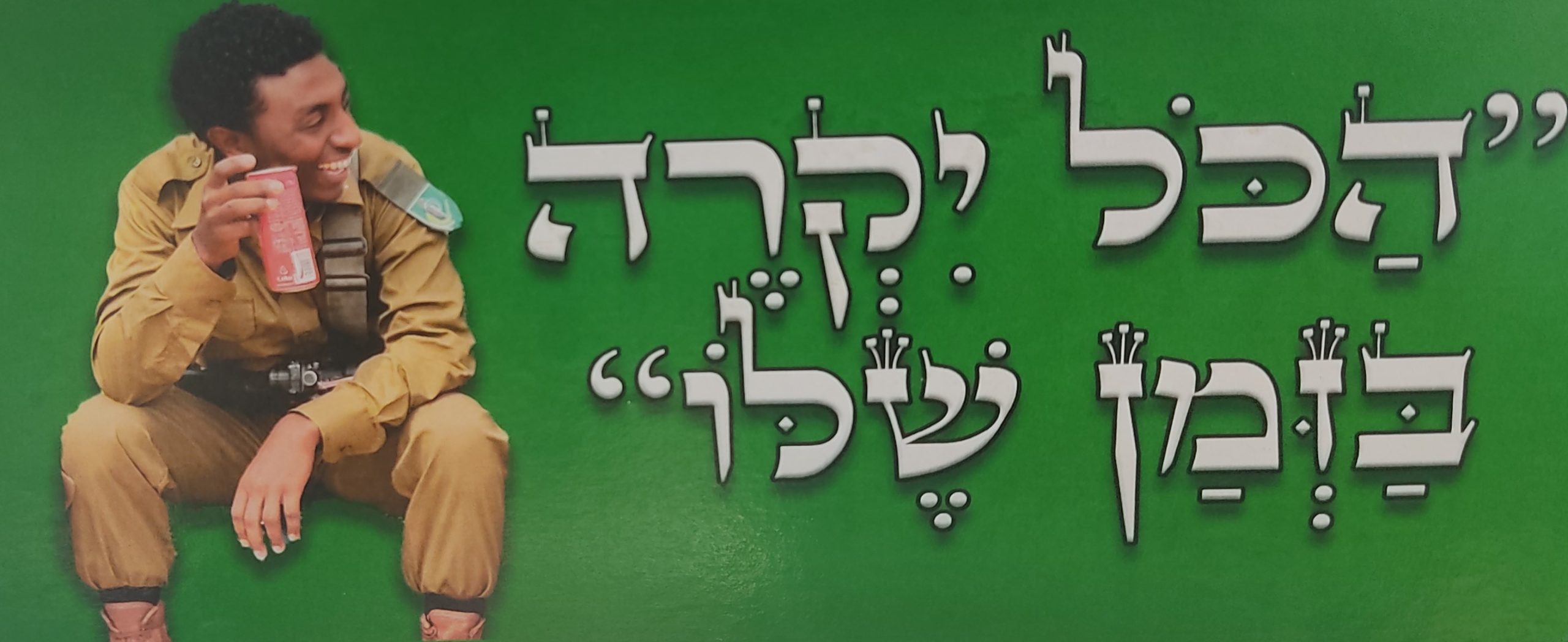
Yosef Dasa was a man of smiles, love, giving, and unwavering determination. One of his favorite songs was "B'Zman Shelo" by Ya-Na, a song whose lyrics, as his family wrote, characterized him so well: "Every day you improve / So come see how beautiful the world is / Everything will happen in its own time / In its own time, everything will happen." He lived his life believing that everything would work out, that good would triumph, and that he could always improve and grow. He believed in the power of perseverance, the power of friendship, and the ability of a person to positively influence their surroundings. In our hearts, he will remain forever, a symbol of human heroism, true friendship, and deep love for the land. His family and friends promised that they would always spread his wide smile and his good heart to everyone, so that they would know who you were, Yosef, a child of Ethiopia who became a hero of Israel. On May 17, 2024, a few days after his fall, a soccer tournament was held in Kiryat Motzkin in memory of Yosef and Daniel, a tournament where children and teenagers ran on the fields they loved so much, perpetuating their athletic and friendly spirit. The Kiryat Motzkin Municipality, in tribute to the two fallen friends, decided to commemorate them in the square adjacent to the "Mitzpeh" state-religious school, where they first met, and to name it "R'eut Square" (Friendship Square), a symbol of their unforgettable friendship and legacy. A memorial page was also opened on the "Gilad Le'Halalei Nahal" website of the Association for the Commemoration of Nahal Fallen Soldiers and its Heritage, so that his story will be told to future generations. Yosef Dasa, who put the country and his friends before everything else, left an indelible mark. His heroism stemmed from his very being as a person, a friend, a son, and a brother, who chose to defend his home and his values, and his story will serve as an eternal light of Israeli resurgence and pride.
In the media
Articles
Videos
- Sergeant Daniel Levy, of blessed memory — Zikaron Lehaim
זיכרון לחיים / Vimeo
Podcasts
- A final memory, the story that remains
רדיו חיפה 107.5FM
Memorial sites
- Yosef Dasa
יזכור — משרד הביטחון
Memorial projects
Friendship Square in Kiryat Motzkin commemorates him and his friend Daniel Levy, who fell together and were buried side by side.
ORT’s memorial page links to a publication about the opening of a Torah library in memory of Daniel and Yosef, as part of “Bedarkei Giborim.”
Stories told about them
Yosef lost his mother as a child in Ethiopia and immigrated to Israel with his father in 2008. After his father married Emetbel, he grew up in their home in Kiryat Motzkin and helped raise his brothers and sisters.
“Everything will happen in its own time.”
Life & service
Profile
- Date of birth
- January 16, 2005
- Birthplace
- Kiryat Bialik
- Date of death
- May 10, 2024
- Age
- 19
- Hometown
- Kiryat Bialik
Service
- Rank
- Sergeant
- Unit
- Nahal Brigade
- Honours
- Posthumously Promoted
- Battle Location
- Northern Gaza Strip
Family
- Father
- Tamasgen
- Mother
- Janet
Burial
Tributes & remembrance
יהי זכרך ברוך
יוסף היקר,נפלה בחלקי הזכות לקרוא פרק תהלים לעילוי נשמתך ממש לקראת יום הולדתך ה-21,שיחול ב-ו׳ בשבט התשפ״ו.נפעמתי לקרוא את קורות חייך. תודה לך על כל הטוב והאור שהוספת לעולמנו,יוסף המקסים. תודה לך על שהגנת עלינו ונלחמת למעננו בנחישות,באומץ ובמסירות נפש במובן הכי מציאותי של הביטוי. כמה נוראה הקרבתך. תנחומים מלב כואב לכל אהוביך הרבים. יהא זכרך ברוך,גיבור ישראל!!
שנהיה ראויים!
יהי זכרו ברוך
טופלת במשמרת שלי, והלוואי שעל הצד הטוב ביותר.
מבטיח להשתדל ללמוד על האור והטוב שעשית בחייך והשארת לנו בעולם. זה מהקצת שלמדתי עליך:
התייתם מאמו בגיל 3 ועלה לארץ מאתיופיה עם אביו. אשתו החדשה של אביו הייתה לו כאם, והוא מצידו הפך ליד ימינה ולקח חלק פעיל בגידול אחיו שנולדו ממנה. היה גאה מאוד במשפחתו הגרעינית והמורחבת, לה היה לעמוד תווך. מהיותו יתום יועד לתפקיד עורפי, אך הוא התע
תודה מקרב לב. ת.נ.צ.ב.ה
יוסף אתה הייתה עם אח שלי בבסיס קוראים לו יאסו ואתה תמיד אצלנו בלב יוסף יהי זכרו ברוך
יהי זיכרו ברוך
אני ספציפית לא פגשתי אבל עקבתי אחריו בטיקטוק ששמעתי מה קרה הייתי באילת וחברה שלי זאת בת דודה שלו גם בת דודה שלי וחברה שלה יקראו אותו ושמעתי סיפורים יהי זכרו ברוך מלאך בשמיים
ליוסף, תודה ששמרת עלינו, מצטערות שאתה לא איתנו יותר, מקוות שאתה שמח שם למעלה. כולנו כאן מתגעגעים אליך ושולחים חיבוק. בטוחות שאתה שומר עלינו גם מלמעלה
תודה רבה על המסירות. תודה על ההקרבה הגדולה. מקווה שאנחנו ראויים. שנה לנפילתו.
יהי זכרו ברוך.
נר זה לעילוי נשמתך הטהורה
יהי זכרך ברוך אנחנו אוהבים וזוכרים אותך
לעולם לא נשכח !!!!!!!
היה נראה בן אדם מהמם.
טוב לב ומצחיק
שלא תדעו עוד צער
יהי זכרו ברוך
כואב הלב יוסף אתה זכור בלב של כולנו כואב לכול המדינה קשה להכיל שאתה לא כאן איתו כואב לא לראות אותך
יהי זכרו ברוך
תודה על הכל על כל מה שעשיתה בשבילנו ואני אוהבת אותך מקווה שתשמור מלמעלה כי אתה זה המלך הכי גדול שלנו ותדע שאנחנו מתגעיגעים ותודה שאתה מגן עלינו ונותן לנו ללכת לישון בבטחה.
מתגעגעת מאוד , יהי זכרו ברוך
יהי זכרו ברוך
יהי זכרו ברוך
יוסף דסה ז"ל כואב הלב שאח, בן וילד טוב כמוך הולך בטרם עת, הי"ד!
תנוח על משכבך בשלום
אתה היתה האך החי טוב
גיבור ישראל
אני לא מכיר את יוסף אישית אבל אני רוצה להגיד. שבפעם הראשונה שראיתי בחדשות שהוא נפל אני הרגשתי עצוב אבל היה יום אחד שלא הפסקתי לבכות כמו תינוק יש לו פנים שלא מלאך מרוב בכי לאחר מכן הבנתי את הכאב שמישהו נופל העולם הפסיד בן אדם מושלם עם ערכים מאוד חשובים אני הייתי רוצה לפגוש אותך אוהב אותך אחי מקווה. שאתה נח שם למעלה ואני יודע שעוד ניפגש אני אקח את הערכים שלך לכל מקום אני יפנים אותך יוסף דסה ז״ל
תודה על ששמרת עלי ועל כל עם ישראל ומדינת ישראל .
יהי זכרך ברוך
אומנם לא הכרנו, אך נכיר מבין המילים , שהיית אדם חזק, אציל , שלרגע לא מוותר .
היית לך אפשרות לא להתגייס נלחמת שכן , מראה תוכנות של אדם חזק
תודה וסליחה גיבור ,
יוסף שלנו אני מתגעגעת אליך הלוואי והכל היה סיוט רע מקווה שאתה מצחיק את כולם שם למעלה ומאיר להם אור כמו שעשית פה למטה אוהבת אותך
לזכר גיבור ישראל אשר נלחם למען המולדת וביטחון אנשיה
כמה כואב לקורא ולדעת אלו גיבורים יש לנו במדינה יהי זכרך ברוך
This is a meaningful way to honor his memory.
Source:ynet
Read the Hebrew original
זו הנצחה משמעותית.
whom I miss very much
Source:ynet
Read the Hebrew original
שאני מאוד מתגעגע אליו
The first time I met you, you welcomed me with love as if I were your mother.
Source:ynet
Read the Hebrew original
בפעם הראשונה שפגשתי אותך קיבלת אותי באהבה כאילו אני אמא שלך.
Remembrance Day addresses
יום הזיכרון לחללי מערכות ישראל התשפ"ה – 2025
בכל יום שעובר, אזכור יותר! אזכור, את אלו שיצאו עימי לקרב ולא שבו, ולהם אין מי ידמה ומי ישווה. אזכור, שהכאב לא יעבור לעולם, והזמן, הוא לא מרפה ולא מרפא. אזכור, את שיברון הלב הגובר ואת הבית שבוער. אזכור, את צדקת הדרך, ואשבע שוב, שמה שהיה לא יהיה יותר. אזכור, שיותר מכל דבר אחר – אני חסר! ביום הזה, אני נתקף געגוע לדמותם, לחיתוך דיבורם, לחיוכם, ומדליק נר לזיכרון דרכם ומורשתם!
משרד הביטחון
אגף משפחות, הנצחה ומורשת
יום הזיכרון לחללי מערכות ישראל התשפ"ה – 2025
בכאב, בהצדעה ובתקווה אני מתכבד להדליק נר זיכרון זה. השנה, כשאנו נלחמים במלחמה ארוכה, רב זירתית וצודקת, הזיכרון נושא משמעות עמוקה. ביום זה נעצור ונתייחד עם זכרם של טובי בנינו ובנותינו שנפלו בהגנה על המדינה. מורשתם היא המצפן שמתווה את דרכינו, והיא המעניקה לנו כוח להמשיך ולהגן על מדינת ישראל ותושביה. משפחות יקרות, אנו מרכינים ראשנו ומתחייבים שנעמוד לצידכן תמיד. יהי זכר הנופלים ברוך.
אלוף דדו בר כליפא
ראש אגף כוח האדם, צה"ל
יום הזיכרון לחללי מערכות ישראל התשפ"ה – 2025
בשעה שאנו זוכרים את גודל תרומתם ועומק מסירות נפשם של טובי בנינו ובנותינו, נופלי מערכות ישראל לדורותיהן, ממשיכים צה"ל וכוחות הביטחון במימוש המשימה למענה לחמו ועבורה נפלו: הכרעת אויבינו מדרום, מצפון, ביהודה ובשומרון, וגם בזירות רחוקות יותר. בהערכה רבה ובגאווה אדירה אנו מרכינים ראש בפני הנופלים והנופלות, מאמצים את משפחותיהם אל לבנו, וממשיכים במשימה להבטחת קיומה של ישראל לדורי דורות. יחד נעשה ונצליח.
רב אלוף אייל זמיר
הרמטכ"ל, צה"ל
יום הזיכרון לחללי מערכות ישראל התשפ"ד – 2024
כאשר דגלינו מורדים לחצי התורן וראשינו מורכנים לזכר הנופלים והנופלות במערכות ישראל, ממשיכים לוחמי צה"ל ומפקדיו בלחימה בדרום, בצפון, ביהודה ובשומרון ובזירות נוספות. על כל דור מוטלת המשימה של הגנת העם והארץ – משימה שאף פעם אינה פוסקת. נצדיע בגעגוע ובגאווה לנופלים ולנופלות, נחבק את משפחותיהם, ונמשיך ברוח הציווי שהותירו לנו. עם ישראל חי.
רב ניצב יעקב שבתאי
המפקח הכללי, משטרת ישראל
יום הזיכרון לחללי מערכות ישראל התשפ"ד – 2024
אחיי הנופלים, כל נר הוא זיכרון יחיד ומיוחד, על חיים שהיו ואינם, געגוע שנצרב עמוק בלב, עולם ומלואו. הנרות כולם הם זיכרון של אומה כי לעולם לא עוד, בשורת הציונות וקוממיות ישראל. זיכרון כי הדרך לעם חופשי בארצנו עוברת דרך מסדר הנופלים. אור הנר יזכיר לנו את מסירות נפשכם להציל חיים, להגן על הבית. הנרות מסמנים לנו נתיב גבורה ערכי מחייב שאנו מצווים ללכת לאורו. נמשיך להילחם ולהוסיף אור מתוך אמונה בנצח ישראל.
יואב גלנט
שר הביטחון
יום הזיכרון לחללי מערכות ישראל התשפ"ד – 2024
בהצדעה ובכאב, בשם צה"ל כולו, אני מדליק נר זיכרון. בעיצומה של מלחמה, הזכרון נושא משמעות יום-יומית, שעבר והווה מתלכדים בה. לאורם של הנופלים נמשיך לצעוד, חיילי הסדיר והמילואים. לאורם של הנופלים נמשיך להגן על ארצנו ועל מולדתנו, גם כשהמחיר כבד. להבת-הזכרון תבער בנו בעודנו ממשיכים להלחם ונזכור את הנופלים ואת אומץ ליבם. משפחות יקרות, צה"ל מרכין היום ראש, מצדיע לכן וכואב איתכן. יהי זכר הנופלים ברוך.
אלוף יניב עשור
ראש אגף כוח האדם, צה"ל
יום הזיכרון לחללי מערכות ישראל התשפ"ד – 2024
בהוקרה, בגאווה ובכאב שאין לו סוף, אני מתכבד להדליק נר לזכרם של הנופלים והנופלות במערכות ישראל. סיפור חייהם בארץ הזאת, מסכת שירותם, גבורתם והקרבתם – הם סיפורה של הארץ הזאת, אך גם סיפור המחיר הכבד שהיא תובעת מאוהביה. מחויבותנו לזכר הנופלים ולדרך שהותירו לנו ניצבת תמיד לנגד עינינו. את המשימה שלא זכו להשלים, משלימים כיום, וישלימו, אנשי כוחות הביטחון, הממשיכים בדרכם ולאורם. יהי זכרם של הנופלים ברוך.
משרד הביטחון
אגף משפחות, הנצחה ומורשת
יום הזיכרון לחללי מערכות ישראל התשפ"ד – 2024
בחרדת קודש אני מתכבד להדליק נר לזכרם של חללי מערכות ישראל, חברנו שנפלו, מראשית היציאה מהחומות ולאורך כל שנות עצמאותנו המדינית והציונית, מהווים תמרור זיכרון לדרך חיינו ולמחוייבות הלאומית להנצחת זכרם. דרכם נותרה דרכנו ומורשתם נר להמשך עשייתנו. יהי זכרם ברוך!
בני גנץ
שר הביטחון
יום הזיכרון לחללי מערכות ישראל
נזכור אותם, כולנו יחד. כל אחד ואחת מהם, מדי יום ביומו, והיום ביתר שאת, כך – לנצח. "כי מדי דברי בו זכור אזכרנו עוד"
משרד הביטחון
אגף משפחות, הנצחה ומורשת