
The story
The air in Kiryat Arba was always steeped in stories, even if they weren't explicitly told. They rode on the warm desert wind, seeped into the cracks of ancient stone, and mingled with the scent of sun-baked earth. Into this tapestry, Yochai Duchan was born on the 18th of Iyar, 5757, May 25th, 1997. He was the son of Alexander Yonatan and Rivka, and later, a brother to Yehuda, Eliyahu, Tehila, and Yoav Yinon. Their home on a side street, with a small garden sloping downwards, was always full of life: the sound of children's laughter mixed with fervent discussions around the Shabbat table, the aroma of his mother's cooking wafting through the air, and above all – the powerful yet calm presence of his father. Alex, who had immigrated to Israel from France at eighteen, brought with him a certain European toughness intertwined with deep Zionist fervor. He was not a man of empty words; his love for the land and the Jewish people was not a hollow slogan but a way of life, a daily act. Little Yochai, with his curious eyes and shy smile, absorbed this from the very first moment. He remembered his father fixing something in the yard, his large hands building or dismantling, his deep voice blessing the bread on Friday evening, and the proud glances he would cast towards his children. The long hours Alex spent taking his children on walks through the surrounding area, among the arid hills and rocky terrain, pointing to the Cave of the Patriarchs from afar and telling stories of Abraham, were not dry history lessons but a deep imprinting of belonging. Yochai remembered the feeling of sand between his fingers, the sun beating down on his head, and his father's soft voice explaining the meaning of walking on this land.
When Yochai was five, the rhythm of his life was abruptly and painfully broken. One winter morning in November 2002, the quiet and routine shattered. His father, Alexander, a dedicated member of Kiryat Arba's rapid response team, fell in battle. Heroism Alley in Hebron, the Path of the Patriarchs, became synonymous with the day his heart was torn. Yochai remembered only fragments of the event itself: his mother's weeping, the worried whispers of neighbors, the smell of the "shiva" that hung in the air of the house. But the consequences he carried with him throughout his life. Suddenly, his father's chair at Shabbat remained empty. The deep voice was silenced. The house, though still full of siblings and his mother's love, changed its tune. Yochai grew up in the shadow of his father's heroism and self-sacrifice, not as a heavy burden but as a guiding spirit. His mother, Rivka, was a steadfast rock, a woman of extraordinary strength who taught her children to face loss not with surrender and brokenness, but with a choice for life. "An event like what happened to us," Yochai would say years later, his voice matured and hoarse, "can either break a person or lift them up. We, as a family, chose the path of lifting up and strengthening." And indeed, the Duchan family home did not sink into prolonged mourning but became a beacon of resilience. Rivka ensured that their father's memory was present, but not paralyzing. She told her children about Alex as a hero, as a man who believed with all his heart, who acted out of a deep love for the land and the people. Yochai learned from his parents, through stories and through silence, that true heroism is not just a one-time act, but an entire way of life, made of dedication, perseverance, and love.
Childhood years continued to flow in Kiryat Arba, between the stone alleys of the neighborhood and the local schools, where he acquired his first knowledge and his first friends. He was a relatively quiet child, yet with a strong presence. He played soccer in the neighborhood field, ran with his friends among the hills, and studied chapters of the Torah at school. Even then, that unique blend of toughness and sweetness, of seriousness and a mischievous smile, was evident in him. He was a diligent, studious pupil, but not one who disconnected from society. He loved the people around him, respected them, and was known as someone who always found the good in every person. He had a subtle sense of humor, one that didn't mock but brought joy, easing tensions and bringing light into the space. As he grew, his personality was shaped around the pillars his parents had laid: love of the land, love of the people, and devotion to the path of truth. He saw his father's legacy not just as a painful memory, but as a binding testament. He understood that on his shoulders, like on his siblings' shoulders, lay the responsibility to continue the path, to build and strengthen, and not to give up. He was not a child who whined about his fate, but a teenager who matured quickly, understanding the depth of the destiny given to him.
When he reached the age of eighteen, Yochai took another step on his path. He began his studies at the "Ayelet HaShahar" Yeshiva in Eilat. The transition from the arid Judean Hills landscape and the weighty history of Hebron to the open, quiet desert of Eilat, to the proximity of the deep blue Red Sea, was a refreshing change. Six long years of intensive Torah study awaited him there. He devoted himself entirely to the world of the yeshiva: rising at dawn for prayer, delving into the Gemara for long hours, memorizing pages, engaging in fervent discussions with his friends and rabbis, and deepening his understanding of the intricacies of Jewish law and thought. The smell of old books, the yellowing pages, the sounds of study merging into a constant hum in the study hall – all these became an integral part of his world. In Eilat, far from home but close to his heart, he built his spiritual world. He was not just a student who studied Torah, but a student who lived it. He sought truth in everything, never giving himself a pass on any obscure corner, and striving to understand things deeply. His friends from the yeshiva would remember him as someone who was outwardly calm and serene, but within him burned an eternal fire of progress, both intellectual and practical. He knew no inner rest, always striving for greatness, for perfection, not only for himself but also for those around him. He was infectious; whoever came close to him felt this urge to improve, to excel, not to give up. He was not perfect, but always strived for perfection, out of innocence and an unceasing pursuit of justice.
After six years of profound Torah study, at the age of twenty-four, Yochai made a significant decision: he would enlist in the IDF. The decision was not easy, as the world of the yeshiva was familiar and comfortable, but his father's voice, and the voice of the state, called to him. He saw it as a direct continuation of the path his father had taught him – a path of action, of contribution, of love for the land expressed in its defense. On March 21st, 2021, Yochai boarded a green bus on his way to the induction center, leaving behind the study hall, the smell of the Gemara, and the routine of study. He joined the "Golani" Brigade, the legendary, fierce infantry brigade. The transition from the quiet of the study hall to the noise and dust of the training field was dramatic. He underwent rigorous basic training, pushed to the limits of his physical and mental capacity. Running with a stretcher on his back, night alerts, long field days where the body aches and the spirit is required to overcome – all these tempered him. He learned the meaning of "togetherness," the strength of camaraderie, mutual responsibility. He was not content with being just another soldier; he aimed to excel, to be the best, to push himself and his friends forward. He was a fighter with every fiber of his being, but also one who maintained a deep connection to the values of Judaism and Torah he had absorbed at home and in the yeshiva. His tzitzit were always outside his uniform, a clear and visible symbol of his faith. When asked if he wasn't afraid of being ridiculed, he replied with a calm but determined smile: "I don't wear tzitzit for people outside to see them, I wear them for myself, so I will always see them and merit to fulfill what is written: 'And you shall see it and remember all the commandments of the Lord.'" This was his essence – a person of inner truth, not outward show.
Upon completing his combat training, Yochai went on to command and officer's training. He didn't just want to be a soldier; he wanted to lead, to influence, to take responsibility. The officer's course was particularly challenging, requiring not only high physical and mental fitness, but also leadership ability, strategic thinking, and decision-making under pressure. He learned to know the soldiers who would be his subordinates, to understand their needs, to be not just a commander but also a listening ear, a role model. He completed the course with distinction, and his pride was great, but not for himself, but for the privilege granted to him. At the graduation ceremony, held in Adar 5783, February 2023, with his new officer's insignia gleaming on his shoulders, Yochai spoke in an emotional but steady voice, standing before his family and friends, the cold wind of a Jerusalem winter caressing his face: "Finishing officer's course is exciting, but there is something beyond that, compared to which every ceremony pales – to return to the brigade, to be a commander and receive my soldiers." The words came from him with sincerity, reflecting the depth of his sense of mission. "I and many others believe in our soldiers and our people. Love of Israel and contribution to the state are what stand at the foundation of my family and my father, this is what he left behind, and I am sure that if he saw me today he would be proud of me." In these words, Yochai combined his personal legacy with his national destiny, making it clear to everyone that he was continuing a path, not starting a new one. He returned to Battalion 13 of the Golani Brigade as a platoon commander, the "M.M." to whom his soldiers would look with trust, demanding personal example from him.
Yochai was a man of the earth. Love for the land and the people was not an abstract idea for him, but a living, breathing connection, expressed in actions. He loved to travel throughout Israel, to feel the dirt beneath his feet, to climb mountains and gaze at primeval landscapes. Every path, every stream, every tree – told him a story. But most of all, he loved his vineyard. In the Hebron hills, not far from his home, he had a small vineyard that he tended at every opportunity. He would arrive there with a pickaxe and pruning shears, sweating under the scorching sun, his hands covered in mud and dirt. He pruned, watered, weeded, and spoke to the vines as if they were his children. He felt the pulse of the earth, the cycle of life and growth. The vineyard was not just a source of grapes for him, but a deeper symbol – of connection to roots, of hard work yielding fruit, of continuity. His older brother, Yehuda, would say of him that "Yochai lived for all of Israel, the connection to the people of Israel was not an amorphous and detached thing for him, but alive and pulsating within him." This was Yochai: a man of action, of direct connection.
Beyond his military role and his connection to the land, Yochai was a person of noble character. "A tzaddik in the deepest sense of the word" – this is how his friends described him. He was a good friend, an exemplary brother, and a wonderful son. A man of truth, without concessions or compromises, who devoted himself to hard work and Torah study. He charmingly combined inner toughness with extraordinary sweetness and kindness. He always gave everyone the benefit of the doubt, acted gently, and was careful with the honor of others. He was attentive, sensitive, and possessed a wonderful ability to contain. When he saw division and baseless hatred within the people, he was deeply troubled by it. He spoke often about the need to unite the ranks, to avoid gossip, and to focus on what unites rather than what divides. He believed in the power of the community, of the family, of the entire people, to be whole. At the Memorial Day ceremony for fallen IDF soldiers in April 2023, about a year before his fall, Yochai stood on stage, his eyes scanning the audience, his voice clear and penetrating: "We remember the heroism, stemming from our being the people of Israel. That spirit of heroism that rests upon the entire nation and connects us to all of Israel, is that deep inner something that tells us to sacrifice our lives." He spoke of self-sacrifice not as death, but as a full life, as choosing life for the sake of others.
Yochai's friends knew that "when Yochai decided something – he would see it through to the end." He didn't know the concept of "cutting corners." If he decided on a path, not only would he himself not give up, but he would sweep everyone around him along with him. He would make everyone go with him, improve, be better. Everything he undertook in character refinement and in serving God was done with endless devotion, and it was impossible to ignore it. His presence was an inspiration, a living example of a person who fully realized his potential, out of deep faith and an unceasing pursuit of truth. Daniel, his good friend, who would later name his son after him, would write of him: "Yochai was a great hero. Yochai performed an act of heroism that resulted from a life that entirely expressed such heroism. Indeed, Yochai was not a hero only in his act of heroism but Yochai was a hero all his days. It is difficult to contain Yochai's greatness and magnitude. It is difficult to pinpoint where he was great, because everything about him was like that. His whole life was like that... Yochai was an uncompromising man. He lived a full life without rest. He was a calm person, but you never saw his inner desire for rest. He was always progressing, intellectually and practically. He always sought truth, always strived for greatness."
It was Saturday, the 22nd of Tishrei, Simchat Torah 5784, October 7th, 2023. The morning began at six-thirty, a quiet, almost serene morning. The soft light of the eastern sun began to break over the Gaza horizon, painting the sky in shades of pink and gold. But this quiet was shattered in an instant. Suddenly, sirens wailed, rising and falling, distant explosions growing closer. The Hamas terrorist organization launched an unprecedented surprise attack on Israel. A barrage of missiles and rockets was fired from the Gaza Strip into wide areas of the country, and beneath this curtain of fire, thousands of terrorists – by land, sea, and air – infiltrated the communities surrounding Gaza, Sderot, Ofakim, and Netivot. They stormed nature parties near Kibbutzim Re'im and Nir Oz, IDF bases, and those traveling on the roads. Within a few hours, some eight hundred civilians were murdered in their homes, in their cars, after severe crimes were committed against them. Hundreds of Israelis were abducted to the Gaza Strip, and homes and property were destroyed, looted, and set ablaze. Hundreds of soldiers, police officers, security forces personnel, and local rapid response team members fell in battle. On this morning, a war began.
Yochai, as a platoon commander in Battalion 13 of Golani, commanded a small force that secured the Nahal Oz outpost, near the border fence with Gaza. When the first barrages began, he was already on alert. He knew the routine of escalations, the sounds of rockets, but this time, something felt different. The fire was too heavy, too prolonged. He quickly realized that this was not another routine rocket barrage, but a large-scale infiltration event. This realization struck him like a bolt from the blue, but it did not shake his composure. Without hesitation, together with a fellow officer and another soldier, the three went out to fight as a cell. They moved quickly, armed and alert, amidst the chaos raging around them. Close gunfire mingled with shouts in Arabic, with sounds of explosions. Facing them were dozens of terrorists, well-armed, consumed by hatred. In the midst of the fighting, Yochai and his comrades made a fateful decision: to go and defend the war room – the operations room – and the female observers who were in it. They knew that the war room was the heart of intelligence activity, and also – a fragile booth containing unarmed women, teenagers, whose entire world had been turned upside down. Defending them was a natural instinct for Yochai, a deep expression of the values he had grown up with.
In the chaos, at a time when all communication was cut off and all certainty was shaken, Yochai's phone rang. It was his sister, worried, anxious for his safety. Yochai answered in his normal voice, trying to reassure her, but his words were charged with deep meaning. "I'm fine, pray, not just for me, for all of Israel," he told her. He was not worried about his personal life, but about the fate of the entire people, about the resilience of the state. For six long hours, a fierce battle of heroism raged around the war room, against dozens of terrorists. Yochai and his comrades fought fearlessly, shooting and maneuvering, covering each other. From time to time, when the fire subsided slightly, they would enter the war room, not just to rearm or exchange words, but mainly to encourage the staff officers and the terrified female observers who were in it. He would look into their eyes, conveying calm and confidence, even when he himself knew the magnitude of the danger. A small smile, a kind word, a reassuring glance – all these were a ray of light in the inferno.
At one point, a grenade was thrown at them. The grenade landed near Yochai and his comrades. Without a second thought, in an act of supreme self-sacrifice, Yochai jumped on the grenade, intending to absorb the explosion with his body and protect those around him. Time stood still. A split second of terror, and then – silence. The grenade did not explode. It turned out to be a "dud grenade." A brief moment of relief, mixed with astonishment, but there was no time to process. The battle continued in full force. Hours passed, and Yochai and his comrades' ammunition began to run out. The sounds of their gunfire weakened, and the terrorists, realizing this, began to shout at them, calling for them to surrender. It was a moment of supreme test, a moment when a person stands before the abyss of despair. Yochai, in a response that will be remembered forever, smiled. Not a smile of amusement, but a smile of defiance, of supreme heroism, of unwavering faith. "We will never surrender," he said, in a clear and distinct voice, looking at the terrorists in the eyes.
The terrorists, frustrated by the soldiers' stubborn refusal, decided on a desperate measure: they set the war room on fire. Thick smoke began to fill the space, flames began to lick the walls, and the heat became unbearable. Yochai and his comrades tried to rescue those inside through the window, through the flames and smoke, risking their lives again and again. Even when his ammunition ran out, and even when the fire engulfed the building, Yochai did not give up. He continued to fight the terrorists with bare hands, with his nails, with all his might, until the last moment. He fell in battle, shielding his comrades, his subordinates, the citizens of Israel with his body. He fell as a hero, twenty-six years old at his death, on the 22nd of Tishrei 5784, October 7th, 2023. In the battle for the Nahal Oz outpost, over fifteen soldiers from Company B of Battalion 13 of Golani fell. Yochai was laid to rest in the military cemetery on Mount Herzl, in Jerusalem, the city he loved so much. After his fall, he was posthumously promoted to the rank of Lieutenant, in recognition of his heroism and leadership. He left behind a beloved mother, three brothers and a sister, and an immense, irreplaceable void.
The mourning for Yochai was deep and painful. His mother, Rivka, eulogized him with a trembling yet strong voice, words caught in her throat: "My dear child. The longing for you and your warm embrace, for your kind smile, burns in a way that cannot be described in words. You were like a rock I could lean on, like a wall that protected me. I love you endlessly. May God avenge your blood." She lost a second son in Israel's wars, but her spirit was not broken. She knew that Yochai, like his father, fell defending his people and his land. Yehuda, his older brother, eulogized him with a broken heart: "Yochai, my beloved brother, the sweet and strong man. A duality of truth and holiness, courage, strength, and gentleness of spirit. You were a steadfast mountain of clear and lucid truth. How much depth was in you, how much holiness and gentleness. You would return from the army and despite your fatigue help at home – building, fixing, joking. Your humor, not mocking, but knowing how to bring joy... Your comrade-in-arms told how you jumped on the terrorists with bare hands. You told him: 'We don't surrender' when you ran out of ammunition. What a giant of a man you were. I thank God that I merited to be your brother. I so want to hear your voice and hug you, I want you to continue consulting with me on how to be a good commander. I am so proud of you, my brother, my hero. I love and appreciate you so much. Yochai, I love you. Forgive me. Father is stroking your head, watch over us." In these words, Yehuda connected Yochai to his father, creating a bridge between two heroes who fell for the sanctity of God and the land.
Daniel, Yochai's good friend, chose to commemorate him in a special and moving way. He named his newborn son after him – Yochai. "A great privilege has fallen to us," Daniel wrote, his voice choked with emotion, "we merited to name our son Yochai, after our holy friend Yochai Duchan, may God avenge his blood. Holy son of a holy man... Yochai was a great hero. Yochai performed an act of heroism that resulted from a life that entirely expressed such heroism. Indeed, Yochai was not a hero only in his act of heroism but Yochai was a hero all his days. It is difficult to contain Yochai's greatness and magnitude. It is difficult to pinpoint where he was great, because everything about him was like that. His whole life was like that... We pray that this little one will be great. That our little son Yochai will merit to receive this quality, and many other good qualities of the great Yochai." In his neighborhood, the singer and composer Shmuel Uri Israel, who was Yochai's neighbor, released a song in his memory called "Warriors of the Spirit," words and melody intended to commemorate his character and spirit. The family, never resting, worked on writing an ornate Torah scroll in his memory, a living symbol of continuity, of the Torah Yochai loved so much, and of life renewed from loss. A memorial page was established in his honor on the Remember website, with videos, photos, and stories from different stages of his life, living testimonies to the man he was, the life he left behind, and his unending legacy.
Yochai Duchan, of blessed memory, a lieutenant in the Golani Brigade, fell in battle defending the land, but his spirit did not vanish. He left behind a path, a legacy, and inspiration. His life was intertwined with love for the land and the people, with action, dedication, and a quiet heroism that erupted at the moment of truth. His story is interwoven with the stories of many others, the story of an entire nation that knows how to bear pain, but also to choose revival. He was a tree of life, its roots deeply planted in the soil of Israel, and its branches bore fruits of faith, love, and action. Even when the pain burns, Yochai's memory carries a promise – a promise of life, of continuity, of a people that does not surrender, of a people that builds and strengthens, in memory of its heroes.
Moments of a life
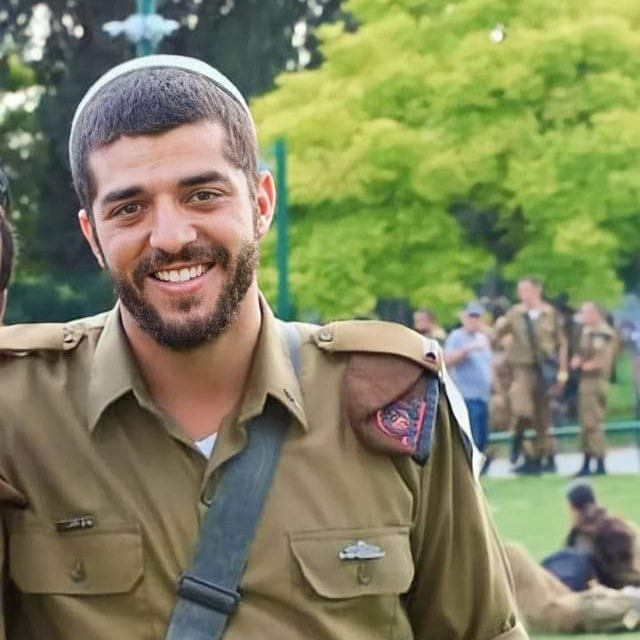
All photographs · 2
In the media
Articles
- Yohaï Dukhan, ancien étudiant de yeshiva, tombé au combat 21 ans après son père
The Times of Israël ·
- The brother of fallen Second Lieutenant Yochai Dukan
ynet
- A quiet leader, a man of books and the land: The story of Lieutenant Yohai Dukhan
ynet גל-הד
- Yohai fell in battle 21 years after his father — his relatives are raising funds for a Torah scroll in his memory
ynet
- Yohai fell 21 years after his father: he lived for the people
וואלה
- Lt. Yohai Dukhan, 26: Former yeshiva student fell in battle
The Times of Israel
Podcasts
- We Will Remember Them All: Lieutenant Yohai Dohan, of blessed memory
iHeart / נזכור את כולם
Songs
- Warriors of the Spirit
שמואל אורי ישראל / סרוגים ·
Memorial sites
- Yohai Dukhan
משרד הביטחון - יזכור
Memorial projects
Shmuel Uri Yisrael, described as his neighbor, released the song “Warriors of the Spirit” in his memory ahead of Memorial Day in 2024.
His friends and family raised funds for a Torah scroll in his memory; at the time of the article, no decision had yet been made about which synagogue would house it.
Stories told about them
According to Gal-Ed, Yohai planted a vineyard out of a connection to the land and would return from yeshiva and the army to repair and tend his mother’s home and garden. As a commander, he insisted on rebuilding a platoon that was about to disband and focusing on the good in every soldier.
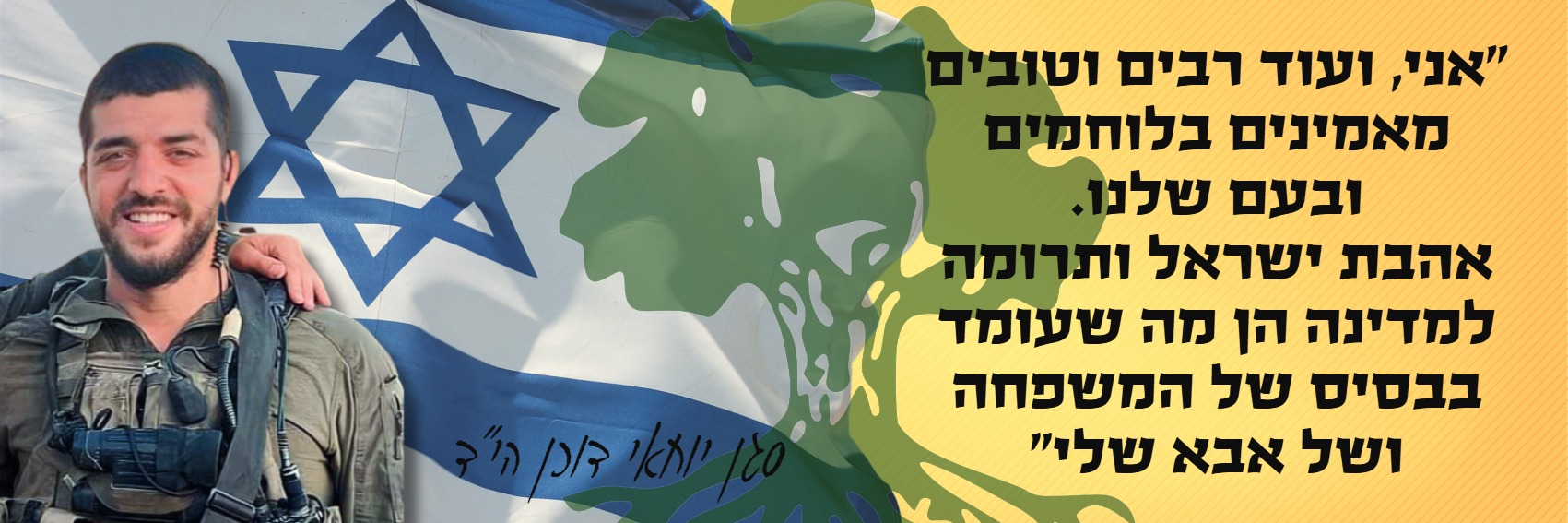
“I, along with many others, believe in our soldiers and in our people. Love for Israel and giving to the country are the foundation of my family and my father.”
Life & service
Profile
- Date of birth
- May 25, 1997
- Birthplace
- Eilat
- Date of death
- October 7, 2023
- Age
- 26
- Hometown
- Kiryat Arba
Service
- Rank
- Lieutenant
- Unit
- Golani Brigade
- Honours
- Posthumously Promoted
Family
- Father
- Alexander Yehonatan
- Mother
- Rivka
Burial
Tributes & remembrance
כל כך התרגשתי לפגוש כאן אדם כמוך. בעל עיניים טובות ולב גדול. בזכותך אנחנו חיים כאן. בהערצה.
חיוך של מלאך טהור
המשכת להילחם ולהגן
נזכור לנצח
יהי זכרו ברוך
זכר צדיק וגיבור לברכה
אישיות גדולה מיוחדת.
חבל על דאבדין ולא משתכחין
לזכר 18 הגיבורים של פלוגה ב׳
הגן בחירוף נפש על חמל נחל עוז, גם כאשר אזלה התחמושת.
יהי זכרו ברוך
נשמה טהורה שעלתה השמימה בקדושה
יהי זכרו ברוך
גיבור ישראל.יהי זכרך ברוך
הקרבת הכל למעננו.
הלוואי שנהיה ראויים להקרבה.
יהי זיכרך ברוך
יוחאי דוכן אתה גיבור ישראל אתה שמור בליבנו לנצח וסיפורך יעבור בין הדורות
יהי זכרו ברוך גיבור ישראל
אח יקר שנה וחצי ואתה חסר
גיבור ישראל ,נפל טרם עת, תשאר בליבנו לתמיד. היה זכרו ברוך
גבורתך וחסרונך מורגשים בכל הזמן. יהי זכרך ברוך
אני לא מכיר אותך, צדיק עליון, אבל ליבי אליך ואל משפחתך. אנחנו צריכים להוכיח שאנחנו ראויים לך
תודה לך גיבור. תנוח בשלום על משכבך.
יהי זכרו ברוך.אמיץ,ערכי שמסר את נפשו למען המדינה.מנשרים קלו מאריות גברו.בזכות אנשים שכמוהו אנחנו חיים.ה יקום דמו.
יהי זכרו ברוך , גיבור ישראל
חייל צדיק של דוד המלך. האור שבפניך מאיר לכולנו. יהי זכרך ברוך, ובזכותך ובזכות כל הנופלים נזכה לניצחון מוחלט
גיבור ישראל כואב כואב הלב
הי"ד
גיבור ישראל מרכינה ראש בפניך
יהי זכרך ברוך
קדוש וגיבור.
אנו עפר לרגלייך
חייל צדיק שהגנת בגופך על המולדת שנשמתך תהיה בגן עדן אמן
תודה רבה לך חייל צדיק שהגנת בגופך עלינו תמיד נזכור אותך שנשמתך תהיה בגן עדן אמן
Tsadik, Repose en paix, apporte la consolation ta chre maman et ta famille. Guibor, tu as fait don de ta vie pour sauver la ntre.
Que ta memoire soit source de
bndictions. n
יהי זכרו ברוך, גיבור ישראל
גיבור!
He was a hero not only in battle, but also in everyday life
Source:iHeart / נזכור את כולם
Read the Hebrew original
הוא היה הגיבור לא רק בקרב, אלא גם בחיי היום-יום
Yochai was shy and humble, and at the same time very brave
Source:וואלה
Read the Hebrew original
יוחאי היה ביישן וצנוע ויחד עם זאת מאוד אמיץ
Yochai lived for the entire people of Israel
Source:וואלה
Read the Hebrew original
יוחאי חי בשביל כל עם ישראל
Yochai's battle was an extraordinary event within one of the most extraordinary events in the history of the Jewish people
Source:ynet
Read the Hebrew original
הקרב של יוחאי זה אירוע חריג בתוך אחד מהאירועים הכי חריגים של העם היהודי
It is pain that helps you grow rather than shattering you. Pain that builds
Source:ynet
Read the Hebrew original
זה כאב שהוא מצמיח ולא מרסק אותך. כאב של בנייה
of the truth.
Source:The Times of Israel
Remembrance Day addresses
יום הזיכרון לחללי מערכות ישראל התשפ"ה – 2025
בכל יום שעובר, אזכור יותר! אזכור, את אלו שיצאו עימי לקרב ולא שבו, ולהם אין מי ידמה ומי ישווה. אזכור, שהכאב לא יעבור לעולם, והזמן, הוא לא מרפה ולא מרפא. אזכור, את שיברון הלב הגובר ואת הבית שבוער. אזכור, את צדקת הדרך, ואשבע שוב, שמה שהיה לא יהיה יותר. אזכור, שיותר מכל דבר אחר – אני חסר! ביום הזה, אני נתקף געגוע לדמותם, לחיתוך דיבורם, לחיוכם, ומדליק נר לזיכרון דרכם ומורשתם!
משרד הביטחון
אגף משפחות, הנצחה ומורשת
יום הזיכרון לחללי מערכות ישראל התשפ"ה – 2025
בכאב, בהצדעה ובתקווה אני מתכבד להדליק נר זיכרון זה. השנה, כשאנו נלחמים במלחמה ארוכה, רב זירתית וצודקת, הזיכרון נושא משמעות עמוקה. ביום זה נעצור ונתייחד עם זכרם של טובי בנינו ובנותינו שנפלו בהגנה על המדינה. מורשתם היא המצפן שמתווה את דרכינו, והיא המעניקה לנו כוח להמשיך ולהגן על מדינת ישראל ותושביה. משפחות יקרות, אנו מרכינים ראשנו ומתחייבים שנעמוד לצידכן תמיד. יהי זכר הנופלים ברוך.
אלוף דדו בר כליפא
ראש אגף כוח האדם, צה"ל
יום הזיכרון לחללי מערכות ישראל התשפ"ה – 2025
בשעה שאנו זוכרים את גודל תרומתם ועומק מסירות נפשם של טובי בנינו ובנותינו, נופלי מערכות ישראל לדורותיהן, ממשיכים צה"ל וכוחות הביטחון במימוש המשימה למענה לחמו ועבורה נפלו: הכרעת אויבינו מדרום, מצפון, ביהודה ובשומרון, וגם בזירות רחוקות יותר. בהערכה רבה ובגאווה אדירה אנו מרכינים ראש בפני הנופלים והנופלות, מאמצים את משפחותיהם אל לבנו, וממשיכים במשימה להבטחת קיומה של ישראל לדורי דורות. יחד נעשה ונצליח.
רב אלוף אייל זמיר
הרמטכ"ל, צה"ל
יום הזיכרון לחללי מערכות ישראל התשפ"ד – 2024
כאשר דגלינו מורדים לחצי התורן וראשינו מורכנים לזכר הנופלים והנופלות במערכות ישראל, ממשיכים לוחמי צה"ל ומפקדיו בלחימה בדרום, בצפון, ביהודה ובשומרון ובזירות נוספות. על כל דור מוטלת המשימה של הגנת העם והארץ – משימה שאף פעם אינה פוסקת. נצדיע בגעגוע ובגאווה לנופלים ולנופלות, נחבק את משפחותיהם, ונמשיך ברוח הציווי שהותירו לנו. עם ישראל חי.
רב ניצב יעקב שבתאי
המפקח הכללי, משטרת ישראל
יום הזיכרון לחללי מערכות ישראל התשפ"ד – 2024
אחיי הנופלים, כל נר הוא זיכרון יחיד ומיוחד, על חיים שהיו ואינם, געגוע שנצרב עמוק בלב, עולם ומלואו. הנרות כולם הם זיכרון של אומה כי לעולם לא עוד, בשורת הציונות וקוממיות ישראל. זיכרון כי הדרך לעם חופשי בארצנו עוברת דרך מסדר הנופלים. אור הנר יזכיר לנו את מסירות נפשכם להציל חיים, להגן על הבית. הנרות מסמנים לנו נתיב גבורה ערכי מחייב שאנו מצווים ללכת לאורו. נמשיך להילחם ולהוסיף אור מתוך אמונה בנצח ישראל.
יואב גלנט
שר הביטחון
יום הזיכרון לחללי מערכות ישראל התשפ"ד – 2024
בהצדעה ובכאב, בשם צה"ל כולו, אני מדליק נר זיכרון. בעיצומה של מלחמה, הזכרון נושא משמעות יום-יומית, שעבר והווה מתלכדים בה. לאורם של הנופלים נמשיך לצעוד, חיילי הסדיר והמילואים. לאורם של הנופלים נמשיך להגן על ארצנו ועל מולדתנו, גם כשהמחיר כבד. להבת-הזכרון תבער בנו בעודנו ממשיכים להלחם ונזכור את הנופלים ואת אומץ ליבם. משפחות יקרות, צה"ל מרכין היום ראש, מצדיע לכן וכואב איתכן. יהי זכר הנופלים ברוך.
אלוף יניב עשור
ראש אגף כוח האדם, צה"ל
יום הזיכרון לחללי מערכות ישראל התשפ"ד – 2024
בהוקרה, בגאווה ובכאב שאין לו סוף, אני מתכבד להדליק נר לזכרם של הנופלים והנופלות במערכות ישראל. סיפור חייהם בארץ הזאת, מסכת שירותם, גבורתם והקרבתם – הם סיפורה של הארץ הזאת, אך גם סיפור המחיר הכבד שהיא תובעת מאוהביה. מחויבותנו לזכר הנופלים ולדרך שהותירו לנו ניצבת תמיד לנגד עינינו. את המשימה שלא זכו להשלים, משלימים כיום, וישלימו, אנשי כוחות הביטחון, הממשיכים בדרכם ולאורם. יהי זכרם של הנופלים ברוך.
משרד הביטחון
אגף משפחות, הנצחה ומורשת
יום הזיכרון לחללי מערכות ישראל התשפ"ד – 2024
בחרדת קודש אני מתכבד להדליק נר לזכרם של חללי מערכות ישראל, חברנו שנפלו, מראשית היציאה מהחומות ולאורך כל שנות עצמאותנו המדינית והציונית, מהווים תמרור זיכרון לדרך חיינו ולמחוייבות הלאומית להנצחת זכרם. דרכם נותרה דרכנו ומורשתם נר להמשך עשייתנו. יהי זכרם ברוך!
בני גנץ
שר הביטחון
יום הזיכרון לחללי מערכות ישראל
נזכור אותם, כולנו יחד. כל אחד ואחת מהם, מדי יום ביומו, והיום ביתר שאת, כך – לנצח. "כי מדי דברי בו זכור אזכרנו עוד"
משרד הביטחון
אגף משפחות, הנצחה ומורשת