
The story
Yitzhak Harush was born into Jerusalem in the summer of 1957, on the twenty-fifth of June, just before the city air filled with the hot, dry haze of August, and just after the green of spring began to fade. He was the son of Sarah and Ben Zion, born into a warm and vibrant home where his older sisters, Lily and Orna, already awaited him, and later, Abigail and his younger brother, Assaf, joined the family. The house on Yirmiyahu Street, or perhaps it was in the old Katamon neighborhood – the exact address didn't matter – was always brimming with life: the aromas of Sarah's cooking wafting from the kitchen, the sounds of children's laughter and play shouts rising from the yard, and the more serious discussions of Ben Zion, whose deep voice filled the space as he settled down to read a newspaper or chat with neighbors who knocked at the door. Yitzhak, the third child, found his natural place between his older sisters who hugged and caressed him, and his younger siblings for whom he was both a figure to educate and a playmate. Even from childhood, a quality of inner calm and contemplation was evident in him, alongside a willingness to take responsibility. He wasn't the loudest child, but when he spoke, his words were measured, full of thought, and he had wise eyes that knew how to absorb the smallest details in his surroundings.
Yitzhak's childhood unfolded amidst the stone alleyways of a developing Jerusalem, between the pine trees that filled the air with the scent of coniferous resin in summer, and the rumble of tractors working on the city's rapid expansion. He loved to go out with his neighborhood friends and explore the surrounding hills, searching for hidden caves or simply rolling down green grassy slopes after a rain. He often returned home with scraped knees, dirty trousers, and eyes sparkling with adventure stories he'd woven in his fertile imagination. Sarah, his mother, would look at him with a soft smile, offer him a glass of cold water, and ask him to tell her everything, while Ben Zion, his father, would listen patiently, accompanying the stories with nods of his head. In the Harush family home, values like hard work, integrity, respect for others, and love of the land were not just words spoken, but a way of life that permeated every corner. Yitzhak learned from his parents the importance of giving, the ability to stand his ground, but also the need to listen and understand others. He remembered the times his mother would send him to bring a plate of food to an elderly neighbor, or when his father would stop his work to help someone whose car had broken down. These were quiet, everyday lessons that shaped his conscience and worldview. He loved the stories his father would tell about old Jerusalem, about the struggles and the building, and would sit captivated, trying to imagine the city through his father's eyes. His bond with his sisters was deep and special; Lily and Orna served as his first guides, helping him with homework, advising him on friendships, and protecting him when needed. With Abigail and Assaf, who were younger than him, he took on the role of a protective older brother, showing them the way, teaching them the rules of the game, and serving as their example.
As he grew older, Yitzhak's interests and talents sharpened. He developed a keen interest in history and geography, often spending long hours in the public library, immersed in books about journeys and distant cultures. He also loved to hike, discovering hidden trails in the Jerusalem hills, feeling the earth beneath his feet, smelling the sage and thyme that filled the air. He came to know every stone and every tree in the area, and could tell a story about each and every spot. This was not a simple agricultural love for the land, but a profound affection for the expanse, for nature, for the history etched into every landscape. In high school, Yitzhak was a serious and dedicated student, not one who sought the limelight, but always ready to help his friends and contribute to the common good. He was an active member of the youth movement, where he learned about leadership, collective responsibility, and the importance of a cohesive community. He organized trips, assisted with social activities, and was always there to listen to a friend in need. His teachers remembered him as a quiet yet curious teenager, with critical thinking skills and a high capacity for analysis, and above all – a generous heart and great empathy. Upon completing his studies, like many of his generation, Yitzhak faced military service. He saw it not just as a duty, but as a privilege, an opportunity to contribute his part to the defense of the young state. He enlisted in the IDF wholeheartedly, determined to fulfill every mission assigned to him with dedication and professionalism.
Military service was a formative period for Yitzhak. He learned to cope with physical and mental challenges, to develop leadership, and to make decisions under pressure. He advanced through the ranks, becoming an officer, a role that demanded great responsibility, the ability to embrace diverse people, and a broad systemic perspective. He served in the General Corps, a unit that required mental flexibility and adaptability to a wide range of missions. There, between briefings and exercises, between working with commanders and leading soldiers, he laid the foundations for a long and meaningful career in reserve service. He became a professional soldier, yet one who maintained his humanity, his ability to see the person behind the uniform, and to understand their needs. During this period, when he returned home on leave, he brought with him a new spirit of maturity and experience. He would sit with his parents and sisters, telling stories from the army, but always maintaining humility and reverence for the mission. He saw how the Jerusalem home continued to be an anchor of stability and love, a place where he could always return to draw strength.
Upon completing his regular service, Yitzhak began to build his civilian life, but he never severed his connection with the army, with the sense of mission and commitment. He continued to serve in the reserves, becoming an officer in Reserve Unit 309 of the Civil Administration. This role suited his character – it required the ability to coordinate between various bodies, to understand human and bureaucratic complexities, and to work towards maintaining a normal routine of life in the Judea and Samaria area. It wasn't a glamorous role, but rather a Sisyphean, daily task that demanded great patience, sound judgment, and the ability to handle sensitive situations. He was a man of the field, a man of people, who knew how to identify problems and find creative solutions for them, always with a deep understanding of the reality on the ground. He gained extensive experience, became an expert in his field, and earned a reputation as a reliable, fair, and upright officer.
Amidst all this activity, Yitzhak found the love of his life, Michal. He met her by chance, perhaps at a social gathering in Jerusalem, or through mutual friends. He was immediately drawn to her quiet demeanor, the wisdom in her eyes, her captivating smile. Their relationship developed slowly and gradually, built on mutual respect, deep understanding, and a love that grew from shared values. They shared dreams, hopes, and a strong desire to build a family in Israel. The wedding was a joyful and moving event, uniting both families and opening a new and exciting chapter in Yitzhak's life. Together, Yitzhak and Michal built their home in Jerusalem, a home that became the center of their world. They raised four children there: Osnat, Hila, Reut, and Ram – four pillars of joy, love, and pride. The house was always full of life, with the children's laughter, the aromas of Friday night dinners, and deep conversations around the dining table. Yitzhak was a devoted and loving father, present in his children's lives at every possible moment. He was the one who would help with homework with infinite patience, who would take them on nature walks and tell them about plants and animals, who would sit with them in the evenings and read them stories, his deep voice calming and lulling them to sleep. He instilled in them the values he had absorbed in his parents' home – integrity, responsibility, love of the land and its people, and above all – the ability to think independently and stand by their principles.
His relationship with Michal was a true partnership. They supported each other, complemented each other, and were an anchor of stability for one another. Michal was a full partner in all his decisions, in all his steps, and she provided him with the peace of mind and support that allowed him to continue contributing to the country, even when it demanded much time and effort from him. She understood the importance of reserve service for him, the sense of commitment that pulsed within him, and always stood by his side, even when fears filled her heart. Their children saw this partnership as a role model, an example of true, deep, and lasting love. Yitzhak was also a devoted son to his mother, Sarah, and to his other sisters. He would visit her regularly, call her, make sure she was well, and help her with anything she needed. His bond with his sisters was strong, and they would meet at family events, sharing childhood memories and catching up on each other's lives. He was a pillar for the entire family, a man who could be relied upon, a man who was simply there.
Yitzhak's life flowed peacefully, alongside challenges and difficulties, as is common for any family, but always with faith and inner strength. He reached the age of sixty-six, a mature, experienced man, with a magnificent family and a long career of meaningful reserve service. He watched his children grow, building their own lives, and felt immense satisfaction from all he had achieved. Jerusalem continued to be his home, and he loved the city for its complexity, its beauty, and its history. He was an inseparable part of the fabric of Israeli life, a working man, a father, and a reserve officer always ready to do his part.
And then, the black morning of October 7th, 2023, arrived. That Shabbat, Simchat Torah, began like any other Saturday. Perhaps Yitzhak and Michal sat drinking coffee on the balcony, or perhaps they were preparing to visit one of their children. The blessed quiet of Shabbat shattered into fragments with the first news that began to trickle in, slowly at first, then in a torrent, like a deluge of horror and blood. Yitzhak's phone, usually silent on Shabbat, began to vibrate. Short, urgent WhatsApp messages began to appear, followed by frantic phone calls. “Immediate call-up.” “All forces.” “Emergency.” Yitzhak didn't hesitate for a moment. Despite his age, despite his long years of service, despite being able to choose to stay home, he knew it was his duty. He looked at Michal, their eyes interlocked in deep understanding, and in his heart, he knew there was no other way. He offered her a few calming words, promised he would take care of himself, and quickly packed a small bag with a few essential items. The farewell was quiet, almost hurried, yet filled with love and concern. His children, who had heard about the developments, also called. He answered each one separately, in his calm and reassuring voice, trying to soothe them, even though his own voice trembled slightly. “I have to go,” he told one of his children, “the country is calling me.” The words were simple, but their meaning was profound. He left the house into the escalating chaos of Jerusalem, towards the assembly point, determined to do everything in his power.
Yitzhak reported for reserve duty that day, October 7th, 2023. He served in the General Corps, as part of Reserve Unit 309 of the Civil Administration. His role, always critical, now became exponentially vital. In the midst of war, with the home front trembling and the front lines ablaze, the Civil Administration was the body that maintained a semblance of normal life, coordinated between various entities, and ensured the basic needs of the population were met, all under constant threat. Yitzhak, with his immense experience, his interpersonal skills, and his composure, was an invaluable asset. He worked tirelessly, day and night, for long weeks, then months, then a full year. His age, 66 at the time, did not slow him down. He worked alongside soldiers much younger than himself, serving as an example and role model for them. He didn't complain, didn't despair, but simply did what was required, and in the best way he could. He was there to ensure that crossings operated, that goods passed through, that coordinations were made, and that life, even under fire, continued as much as possible.
Weeks turned into months, and the war continued in full force. Yitzhak continued to serve, even though a year had passed since his initial call-up. He was already 67, then 68, and still bore the rank of Lieutenant Colonel and the heavy responsibility that came with it. The crossings, points of friction, were always a source of tension and sensitivity, and during wartime, they became potential targets. Yitzhak, with his maturity and experience, knew this well. He saw the weariness in the eyes of the young soldiers, tried to encourage them, tell them a joke, offer them a cup of coffee. He was there for them, a leader and a guardian.
On the 25th of Elul 5785, September 18th, 2025, almost two years after reporting for reserve duty, Yitzhak Harush, of blessed memory, a Lieutenant Colonel in the reserves, 68 years old at his fall, met his death at the Allenby Crossing, on the Jordanian border. The crossing, also known as the King Hussein Bridge, is a central artery of life, a bustling point of human and economic movement. Every day, thousands of people pass through – Palestinian residents, tourists, goods – and it demands an exceptionally high level of security and coordination. Yitzhak was there, as he had been so many times before, performing his duty with dedication and professionalism. Perhaps he stood near the inspection post, or was engaged in a conversation with a security or civilian official. Perhaps he was monitoring the movement of travelers, or checking documents. The air at the crossing was always steeped in a scent of tension, alongside the aromas of oriental coffee and pastries. The roar of bus and car engines filled the space, alongside voices speaking in a variety of languages.
And then, suddenly, the explosion was heard. Perhaps gunfire. A burst of violence that shattered the day's routine at the crossing. A terror attack. The moments that followed were likely chaotic, swift, brutal. Yitzhak, as an experienced officer, undoubtedly reacted immediately, out of an instinct for defense and responsibility. He was a man of action, not a man of hesitation. He didn't think of his age, of his family waiting for him at home, but only of the mission, of the people around him. In those moments, as the smoke of the explosion rose and dust covered the air, Yitzhak Harush, an officer in Reserve Unit 309 of the Civil Administration, fell in the battle for the defense of the homeland, at the Allenby Crossing. He fell as a hero, not in face-to-face combat on an open battlefield, but at a service post, in the line of duty, defending the path that enables normal life, the very lifeline of the country. His heroism was not in battle cries, but in inner calm, in unwavering commitment, in showing up day after day, for two years, at the age of 68, for a mission from which many would have recoiled.
The news of his fall struck the family like a thunderclap on a clear day. The bearers of the bitter tidings arrived at Michal's home in Jerusalem, and with them, an entire world shattered. The pain was unfathomable, the void that opened was immense. Michal, their children Osnat, Hila, Reut, and Ram, his mother Sarah, and his sisters Lily, Orna, and Abigail – all mourned the loss of a beloved husband, father, son, and brother. Yitzhak was laid to rest in the military cemetery on Mount Herzl, among the heroes of Israel, as eulogies rose from broken hearts. Thousands accompanied him on his final journey, civilians and soldiers, family and friends, colleagues and admirers. Each of them carried a piece of Yitzhak with them, a memory of his quiet smile, his measured words, his calming presence.
The void Yitzhak left behind is unbearable. The house is quieter now, the balcony emptier, and the Shabbat table misses one voice. But alongside the immense pain, the legacy of Yitzhak Harush, of blessed memory, remains – a legacy of a man who chose to live a life of meaning, of giving, of deep commitment to his family, his people, and his land. He was a man of quiet action, of endless devotion, of a love that was silent yet powerful. He did not seek glory, but simply did what was necessary, out of a profound sense of responsibility. His heroism stemmed from his very existence, from his choices, from his unwavering stance even in old age, even under threat, for the security of Israel and its citizens.
Yitzhak's story is a story of Israeli revival. He was born in the generation of the state, grew up in a developing Jerusalem, served the country his entire life, and was killed in the line of duty, defending its borders and its way of life. He was a link in the chain of generations, an example and inspiration for future generations, showing that even in old age, and even in a role not on the fighting front, one can be a hero. He left behind a magnificent family, four children who carry on his legacy, a mother and three sisters who remember his warm smile. He left behind friends and colleagues who remember his professionalism, his integrity, and his kindness. Yitzhak Harush, of blessed memory, a Lieutenant Colonel in the reserves, 68 years old at his fall, is a symbol of the dear price of our freedom, but also a symbol of eternal revival, of an unbreakable spirit, of a true Israeli spirit – warm, human, and devoted. His memory will be etched forever in the nation's remembrance.
Moments of a life
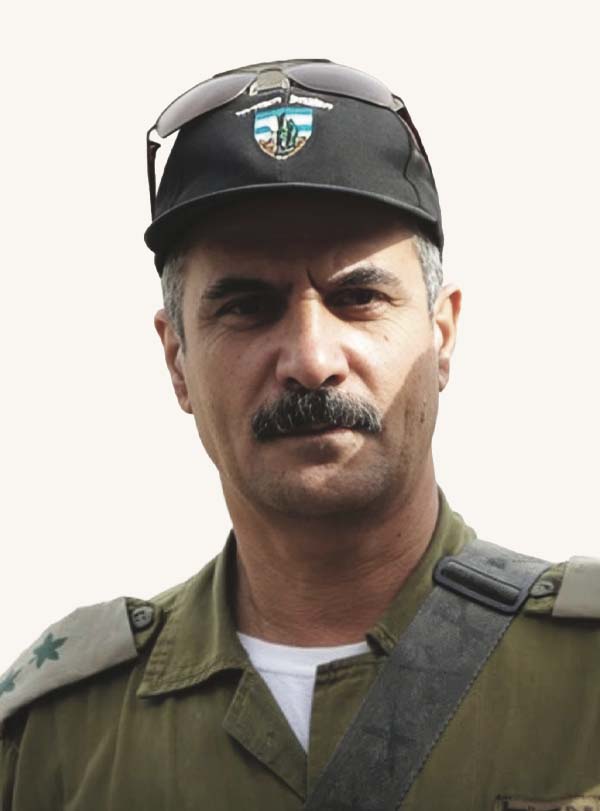
All photographs · 1
In the media
Articles
- After the Killing of Two IDF Soldiers, Israel Opens a Crossing on the Border with Jordan
9tv ·
- The Attack at Allenby Crossing: Oren Hershko Is the Tevel Brigade’s First Fallen Soldier in the War
ynet
- Fifty years in uniform: the story of Lieutenant Colonel Yitzhak Harush, of blessed memory, who fell at 68 — Channel 14 | C14
c14.co.il
- Yitzhak Harush and Oren Hershko Fell in the Attack at the Allenby Crossing – Walla News
news.walla.co.il
- In the Attack at Allenby and the Battle in Rafah: The Stories of the Six Fallen Soldiers
reganews.co.il
- The stories behind the fallen IDF soldiers in Gaza, Allenby Crossing terror attack
ynetnews.com
Memorial sites
- Yizkor – Lieutenant Colonel Yitzhak Harush
משרד הביטחון - יזכור
- Yitzhak Harush | IDF website
אתר צה״ל
Stories told about them
His son Ram served alongside him in the reserves and was at the Allenby crossing during the attack. At the funeral, he promised to protect the family and take responsibility after his father's death.
Words by Rabbi Eyal Karim about a public servant’s duty to care for the needs of the community were found in the pockets of his uniform. Yizkor presents them as part of the story of his path in service.
Life & service
Profile
Service
- Rank
- Lieutenant colonel (res.)
- Service Type
- Reserve Forces
- Battle Location
- Allenby Crossing at the Jordan border
Family
- Father
- Ben Tzion Benoa
- Mother
- Sara
Burial
Tributes & remembrance
ותן שיחזור שוב לביתו - יותר מזה אנחנו לא צריכים.
קצין וג'נטלמן
It is a great source of pride, but it is far from easy
Source:c14.co.il
Read the Hebrew original
זו גאווה גדולה, אבל זה לא פשוט בכלל
I had a card with a prayer in my car that Dad had given me.
Source:c14.co.il
Read the Hebrew original
היה לי ברכב כרטיס עם תפילה שאבא הביא לי.
We had a glimmer of hope
Source:c14.co.il
Read the Hebrew original
היה לנו שביב של תקווה
My dear Itzik, my soulmate, I cannot say goodbye. My soul is bound to yours. I love you, Itzik
Source:ynet
Read the Hebrew original
איציק יקר שלי, חבר הנפש שלי, לא יכולה להיפרד. נפשי קשורה בנפשך. אוהבת אותך איציק
Thanks to you, I became the man I am today.
Source:ynet
Read the Hebrew original
בזכותך הפכתי לגבר שאני היום.
You were a special father and grandfather
Source:ynet
Read the Hebrew original
היית אבא וסבא מיוחד
You always pushed me to excel.
Source:ynet
Read the Hebrew original
תמיד דחפת אותי למצוינות.
You always looked for ways to help and contribute
Source:ynet
Read the Hebrew original
תמיד חיפשת איך לעזור ולתרום
You did everything without a trace of ego.
Source:ynet
Read the Hebrew original
עשית הכל בלי טיפת אגו.
Remembrance Day addresses
יום הזיכרון לחללי מערכות ישראל התשפ"ה – 2025
בכל יום שעובר, אזכור יותר! אזכור, את אלו שיצאו עימי לקרב ולא שבו, ולהם אין מי ידמה ומי ישווה. אזכור, שהכאב לא יעבור לעולם, והזמן, הוא לא מרפה ולא מרפא. אזכור, את שיברון הלב הגובר ואת הבית שבוער. אזכור, את צדקת הדרך, ואשבע שוב, שמה שהיה לא יהיה יותר. אזכור, שיותר מכל דבר אחר – אני חסר! ביום הזה, אני נתקף געגוע לדמותם, לחיתוך דיבורם, לחיוכם, ומדליק נר לזיכרון דרכם ומורשתם!
משרד הביטחון
אגף משפחות, הנצחה ומורשת
יום הזיכרון לחללי מערכות ישראל התשפ"ה – 2025
בכאב, בהצדעה ובתקווה אני מתכבד להדליק נר זיכרון זה. השנה, כשאנו נלחמים במלחמה ארוכה, רב זירתית וצודקת, הזיכרון נושא משמעות עמוקה. ביום זה נעצור ונתייחד עם זכרם של טובי בנינו ובנותינו שנפלו בהגנה על המדינה. מורשתם היא המצפן שמתווה את דרכינו, והיא המעניקה לנו כוח להמשיך ולהגן על מדינת ישראל ותושביה. משפחות יקרות, אנו מרכינים ראשנו ומתחייבים שנעמוד לצידכן תמיד. יהי זכר הנופלים ברוך.
אלוף דדו בר כליפא
ראש אגף כוח האדם, צה"ל
יום הזיכרון לחללי מערכות ישראל התשפ"ה – 2025
בשעה שאנו זוכרים את גודל תרומתם ועומק מסירות נפשם של טובי בנינו ובנותינו, נופלי מערכות ישראל לדורותיהן, ממשיכים צה"ל וכוחות הביטחון במימוש המשימה למענה לחמו ועבורה נפלו: הכרעת אויבינו מדרום, מצפון, ביהודה ובשומרון, וגם בזירות רחוקות יותר. בהערכה רבה ובגאווה אדירה אנו מרכינים ראש בפני הנופלים והנופלות, מאמצים את משפחותיהם אל לבנו, וממשיכים במשימה להבטחת קיומה של ישראל לדורי דורות. יחד נעשה ונצליח.
רב אלוף אייל זמיר
הרמטכ"ל, צה"ל
יום הזיכרון לחללי מערכות ישראל התשפ"ד – 2024
כאשר דגלינו מורדים לחצי התורן וראשינו מורכנים לזכר הנופלים והנופלות במערכות ישראל, ממשיכים לוחמי צה"ל ומפקדיו בלחימה בדרום, בצפון, ביהודה ובשומרון ובזירות נוספות. על כל דור מוטלת המשימה של הגנת העם והארץ – משימה שאף פעם אינה פוסקת. נצדיע בגעגוע ובגאווה לנופלים ולנופלות, נחבק את משפחותיהם, ונמשיך ברוח הציווי שהותירו לנו. עם ישראל חי.
רב ניצב יעקב שבתאי
המפקח הכללי, משטרת ישראל
יום הזיכרון לחללי מערכות ישראל התשפ"ד – 2024
אחיי הנופלים, כל נר הוא זיכרון יחיד ומיוחד, על חיים שהיו ואינם, געגוע שנצרב עמוק בלב, עולם ומלואו. הנרות כולם הם זיכרון של אומה כי לעולם לא עוד, בשורת הציונות וקוממיות ישראל. זיכרון כי הדרך לעם חופשי בארצנו עוברת דרך מסדר הנופלים. אור הנר יזכיר לנו את מסירות נפשכם להציל חיים, להגן על הבית. הנרות מסמנים לנו נתיב גבורה ערכי מחייב שאנו מצווים ללכת לאורו. נמשיך להילחם ולהוסיף אור מתוך אמונה בנצח ישראל.
יואב גלנט
שר הביטחון
יום הזיכרון לחללי מערכות ישראל התשפ"ד – 2024
בהצדעה ובכאב, בשם צה"ל כולו, אני מדליק נר זיכרון. בעיצומה של מלחמה, הזכרון נושא משמעות יום-יומית, שעבר והווה מתלכדים בה. לאורם של הנופלים נמשיך לצעוד, חיילי הסדיר והמילואים. לאורם של הנופלים נמשיך להגן על ארצנו ועל מולדתנו, גם כשהמחיר כבד. להבת-הזכרון תבער בנו בעודנו ממשיכים להלחם ונזכור את הנופלים ואת אומץ ליבם. משפחות יקרות, צה"ל מרכין היום ראש, מצדיע לכן וכואב איתכן. יהי זכר הנופלים ברוך.
אלוף יניב עשור
ראש אגף כוח האדם, צה"ל
יום הזיכרון לחללי מערכות ישראל התשפ"ד – 2024
בהוקרה, בגאווה ובכאב שאין לו סוף, אני מתכבד להדליק נר לזכרם של הנופלים והנופלות במערכות ישראל. סיפור חייהם בארץ הזאת, מסכת שירותם, גבורתם והקרבתם – הם סיפורה של הארץ הזאת, אך גם סיפור המחיר הכבד שהיא תובעת מאוהביה. מחויבותנו לזכר הנופלים ולדרך שהותירו לנו ניצבת תמיד לנגד עינינו. את המשימה שלא זכו להשלים, משלימים כיום, וישלימו, אנשי כוחות הביטחון, הממשיכים בדרכם ולאורם. יהי זכרם של הנופלים ברוך.
משרד הביטחון
אגף משפחות, הנצחה ומורשת
יום הזיכרון לחללי מערכות ישראל התשפ"ד – 2024
בחרדת קודש אני מתכבד להדליק נר לזכרם של חללי מערכות ישראל, חברנו שנפלו, מראשית היציאה מהחומות ולאורך כל שנות עצמאותנו המדינית והציונית, מהווים תמרור זיכרון לדרך חיינו ולמחוייבות הלאומית להנצחת זכרם. דרכם נותרה דרכנו ומורשתם נר להמשך עשייתנו. יהי זכרם ברוך!
בני גנץ
שר הביטחון
יום הזיכרון לחללי מערכות ישראל
נזכור אותם, כולנו יחד. כל אחד ואחת מהם, מדי יום ביומו, והיום ביתר שאת, כך – לנצח. "כי מדי דברי בו זכור אזכרנו עוד"
משרד הביטחון
אגף משפחות, הנצחה ומורשת