
The story
Yiftach was born on a cold winter day, February fourteenth, two thousand, in the city of Tel Aviv, as the world took its first breaths of a new millennium. He was the son of Shira and Gilad Yabetz, the second child after his older sister Michal, and over the years, Tamar, Yael, Ella, and Dan joined the family. Yiftach found himself in a vibrant and joyful bustle of six siblings, a bustling home in Ramat Hasharon, filled with laughter, passionate arguments over childish trifles, the smells of large family meals, and the incessant noise only such a large family could produce. He grew up within the walls of this house, absorbing the contrasts and harmonies of shared life, learning the art of compromise and persistence, the importance of an unwavering bond, the power of belonging. His mother, Shira, a woman with a generous spirit and a deep love for words, instilled in him from childhood the seeds of a love for books and poetry. He remembered the unique scent of old libraries, leather bindings, the rustle of pages, and her soft voice reading him stories before bedtime, her voice accompanying him on imaginary journeys to distant lands and other times. "Yiftach," she would sometimes say to him, as he ran around the yard with the other children, "come sit for a moment, let's wander a bit in other worlds." And he, despite his great love for running and playing, would sit beside her, captivated by the magic of words, discovering entire worlds within bound pages.
The house in Ramat Hasharon was not just a place to sleep, but a melting pot of values. His parents, Shira and Gilad, despite their separate paths later on, made sure to instill in their children a sense of responsibility, curiosity, and a deep connection to their surroundings and to people. Yiftach, as a child, was particularly sensitive. Not infrequently, he would sit by his room window, watching the rain drench the trees outside, or trying to decipher the secrets of the piano music that stood in the living room. His small fingertips would search for the keys, trying to imitate the melodies he heard on the radio, or those his mother would play on quiet evenings. He loved the sounds, the harmony they created, the ability of music to touch deep places in the soul. Alongside this sensitivity, a natural leadership emerged in him at a young age. Among the abundance of siblings, he often knew how to gather the younger ones around him, organize games in the yard, set a path, resolve conflicts, and always with a mischievous smile in his eyes. He was not a child who shouted orders, but a child whose actions spoke for themselves, who drew others after him with the strength of his personality. When he played soccer with his friends in the neighborhood, it was always Yiftach who ran first for the ball, who insisted on one more pass, who pushed everyone forward even when they were already tired.
As he grew, so too did his love for the land – not a flowery love, but a physical, tangible one. He didn't speak of "holy ground" but of the dirt paths of Ramat Hasharon, of the tall eucalyptus trees whose shadows stretched with the sunset, of the unique smell of the earth after the first rain. He loved to hike, to get lost in the open fields that still existed then, to run with the family dog until its tongue lolled out from thirst. His father, Gilad, often took him on long hikes in the north and south, and he learned to identify the vegetation, to recognize the animals, to feel the changes in temperature and air. He connected to every corner, every stone, every tree. This was his love for the land – a love that grew from direct contact, from deep sensory experiences. Perhaps it was a love that distilled all the components of his personality – his sensitivity, his connection to the environment, the leadership that pushed him forward, and the excellent athlete within him. He was a gifted basketball and tennis player; a brilliant future unfolded before him in the field. Coaches recognized his immense potential, his amazing coordination, his unique determination to win, his ability to rally the team. The sweat on his forehead, the pain in his muscles, the feeling of satisfaction after a grueling practice or a close game – all these were an integral part of who he was.
But Yiftach was not just an athlete. He was a man of words and ideas, as his mother remembered. Every Saturday, when he came home from service or stayed for the weekend, a regular ritual took place between them: "Shabbat Song." Both would send each other a poem, a piece of poetry that resonated in their souls at that moment. "Who else knows an excellent fighter," Shira would later recount with a smile mixed with sadness, "who sends his mother a poem by Amichai? Or forces her to read 'A Little Life,' a seven-hundred-page book, because it's the best book he's ever read?" He loved big, complex books, those that demanded thought and patience from him, that opened a window to deep emotional worlds. He could sit for hours, curled up in a comfortable armchair, lost between the pages of a thick book, and emerge afterwards with a thoughtful expression, ready for a deep conversation about the meaning of life, about human relationships, about truth and beauty. He didn't seek the easy, the shallow. He always sought depth, challenge, the real thing.
His friends came from all corners of the Israeli spectrum. In his home in Ramat Hasharon, on the living room sofa, one could find a religious friend from Judea and Samaria, a secular friend from a kibbutz in the north, a friend from the periphery and a friend from the center. He saw no differences, only people. "It doesn't matter where you come from," he would sometimes say, "what matters is who you are, and what you do." They would spend long hours together, playing basketball in the yard, arguing about politics, laughing at inside jokes, planning trips. He knew how to connect everyone, to forge real, deep bonds, ones that survived distances and differing opinions. He was the glue, the unifier, the one who managed to see the good in everyone, and to make everyone feel belonged and appreciated. His father, Gilad, described him as "a symbol of connection in Israeli society," and these words were not mere rhetoric. Yiftach truly lived this value, embodying it in every action, every conversation, every smile.
The decision to abandon a promising sports career for meaningful combat service was a pivotal event in his life. It didn't happen overnight. There were long conversations with his parents, with his coaches, with his friends. "But Yiftach," his basketball coach would say, his voice full of disappointment, "you can go far, you can be a professional player!" And Yiftach would look at him with a serious gaze, staring into space for a moment, then answer in a quiet but determined voice: "I know, but there are other things that are more important now." He felt a strong inner calling, a deep need to contribute, to be part of something bigger. This feeling, which seemed to have been ingrained in him since childhood, crystallized into a clear decision. He saw the reality around him, the security challenges, and felt personal responsibility. It wasn't just "going to the army" but "fighting," as his father defined it. It was a conscious, profound choice that reflected everything he was – the leader, the athlete, the sensitive soul, the lover of his land and its people.
And so, on the last day of March in 2019, Yiftach enlisted in the IDF. He didn't seek the easy path, but the most challenging one. He tried out for special units, and with inexhaustible willpower, determination that characterized him in all areas of his life, and exceptional physical and mental abilities, he was accepted into the Maglan unit, an elite unit in the Commando Brigade. The basic training was difficult, grueling, but he found challenge and satisfaction in it. He loved the long marches, the exhausting fitness training, the precision required in every action. He loved the sense of camaraderie that was built among the fighters, the understanding that everyone depended on each other, the fact that everyone pushed each other to the limit, and then a little more. He found a home in Maglan. He loved the unit and his team with a deep affection, as his father described. Not a blind love, but a love based on trust, on professionalism, on the knowledge that each of his friends was the best in their field, and that together they were invincible.
During his service, Yiftach quickly distinguished himself. He completed an officer's course and became the Operations Officer (Aga"m) in the unit. His role required him to be sharp, focused, capable of precise planning and execution, and yet, attentive to the needs of his fighters, a leader who knew how to lead from the front but also listen with an open heart. He combined the sensitivity that characterized him with the strength and determination required of a commander in a special unit. He earned great respect from both his commanders and subordinates. One of the highlights of his service was during Operation "Shield and Arrow" in Jenin, where he received a commendation for his outstanding performance. Jenin was then a complex area, fraught with tension and risks, requiring composure, daring, and meticulous planning. Yiftach demonstrated all of these. He led his forces with courage and professionalism, carried out his missions flawlessly, and ensured the safety of his soldiers while achieving the operation's objectives. He didn't see this as "supreme heroism" but as a "standard," as he later wrote in his letter – the standard he expected of himself and his surroundings.
Before going out on one of the dangerous operations in the Jenin area, that operation that could have been fatal, Yiftach left a sealed message for his family with a friend. He didn't want them to receive it prematurely, only if the worst happened. This letter, which was hidden for a period and revealed to his family only after his fall, was a moving testament to the man he was, to his life philosophy, and to his clear soul. He wrote in precise, honest words, devoid of unnecessary pathos, what was going through his head and heart in the critical moments before a life-threatening action. "Many thoughts run through my head about why us, why now, why there," Yiftach began his letter, and his voice could be heard through the words, his thoughtful but determined voice. He described the tension in the air, the gallows humor intended to slightly alleviate the anxiety, the final briefing where both small and large details were emphasized: "Work slowly, be vigilant, scan constantly." He knew what he was getting into, knew that the enemy knew the terrain and was preparing surprises, but despite this, he looked around, at the faces of his friends, at the faces of his fighters, and was "very confident in ourselves." They were sharp, they had prepared well, they had already been in this area several times. He tried to imagine the coming hours, what would come. "To lead this thing, to be there first in the most complex part – that's exactly what you taught me to do." And in this sentence, he not only addressed his parents but essentially summarized his entire life path, the values he absorbed, the personality he built. This was his essence. "And when thoughts wander a bit, why us and why now, that's what I think about, and suddenly the answer is very clear to me. To fight for this land, to lead this unit, that's not supreme heroism – that's a standard. And if I had to re-sculpt my life, I wouldn't change a thing. I love you." These words, so simple and so deep, reflected the way he lived, the choices he made, his inner truth. He didn't see himself as a superhuman hero, but as a person who met a standard, an expectation of himself, the values that shaped him. And that standard, as it turned out, was taller than any stature.
That Shabbat, Simchat Torah, the 22nd of Tishrei 5784, October 7th, 2023, began with a magical morning, but quickly turned into an unimaginable nightmare. The sun rose over the Gaza Envelope, illuminating green fields, quiet homes, and suddenly – an unbearable din of incessant rocket fire, rising and falling sirens, and the sound of gunfire that seemed close, too close. Yiftach, like many of his comrades, awoke to the sound of the alarms. His phone wouldn't stop vibrating. WhatsApp messages flowed at a dizzying pace, calls of "scramble," "everyone report," "multi-front incident." He didn't hesitate for a moment. The atmosphere in the house in Ramat Hasharon was tense. His parents, brothers, and sisters – all were worried, but knew there was no other way. He quickly put on his uniform, packed essential gear, and exchanged quick, deep glances with his family. "I have to go," he said, his voice quiet and determined, "this is what I need to do." No more words were needed. Everyone understood. They hugged him tightly, a hug they would remember forever, a hug carrying a silent prayer, an anxious expectation.
He got into his car, as the morning had not yet fully spread its light, and joined a convoy of military and civilian vehicles speeding south, towards the inferno. The road was filled with confusion, rumors, heavy fears, but within the chaos, Yiftach remained calm. He knew every second counted. The information that arrived was fragmented and difficult to digest: a massive terrorist infiltration, a massacre in the communities, fierce battles. When he arrived at the staging areas, it was already clear that the situation was worse than any imagination. He met his unit comrades, his fighters. The glances they exchanged were full of determination, an understanding that this was "the thing," the moment they had trained for so many years. As an Operations Officer, he quickly went over the plans, listened to the final briefings, and ensured every detail was clear. He felt the tension in the air, that same tension he described in his letter, but also the confidence in the unit, in the fighters, in himself. "We are sharp, we prepared well," the words he had written echoed in his head.
The order was clear: the Maglan unit was moving towards Nahal Oz, one of the first kibbutzim to be severely hit, where a terrible massacre and fierce battles raged against terrorists who had infiltrated residents' homes. Yiftach led his forces in the assault, first into the most complex part, exactly as he saw his role. They entered the burning kibbutz, filled with screams, gunfire, smoke, and the smell of death. Leaping between houses, meticulously scanning every corner, the fire opened on them from all sides – all these were part of a heroic, tenacious battle, for every house, for every piece of land, for the lives of the residents who remained in their homes. Yiftach acted with exemplary composure, navigating his fighters, identifying threats, making fateful decisions in fractions of a second. He did not think of himself, only of the mission, of his fighters, of the people who were under fire. He saw the faces of the terrorists, the pure evil, and knew there was no turning back.
During the tenacious and bitter battle, as he led his fighters at the front, Captain Yiftach Yabetz fell. He was only twenty-three years old, in the prime of his life, in the fullness of his strength. He fell defending his home, his people, the standard by which he lived. His fall was a tremendous blow to his family, his unit, and all who knew and loved him. The news of his death reached his family in Ramat Hasharon like a thunderbolt on a clear day, leaving an immense void and unimaginable pain. He was laid to rest in the military cemetery in Kiryat Shaul, where he was buried among the nation's greats, among those who sacrificed their lives for its security. After his fall, he was posthumously promoted from Lieutenant to Captain, as a tribute to his leadership, heroism, and immense contribution.
The void Yiftach left behind is immense, but his legacy lives and breathes in everyone he touched. His parents, Shira and Gilad, and his siblings – Michal, Tamar, Yael, Ella, and Dan – carry his memory every day. Shira, his mother, continues to send him "Shabbat Song" in her imagination, reads "A Little Life" for him, and tells anyone willing to listen about the excellent fighter who loved poetry. She speaks of his sensitivity, his love for words, his ability to see the beauty in the world even amidst harsh reality. Gilad, his father, summarized Yiftach's essence in touching words: "Yiftach was a child who loved the land, loved his unit and his team, he was a child who loved books, he was a sensitive child, on one hand a leader and on the other he had the sensitivity to read poetry, play the piano, he was an excellent athlete and he chose to abandon sports and fight. He joined Maglan, he was a symbol of connection in Israeli society, his best friends were from all sectors, religious, secular, from all over the country, he loved them so much, he was an exceptional child. We will always choose the path he illuminates for us."
Yiftach's friends, from all sectors, continue to carry his image as a role model, a symbol of unity, connection, and pure love for people and land. They remember his rolling laughter, his intelligent eyes, his ability to listen and understand. They remember the intellectual dialogues alongside the spirited soccer games, the seriousness with which he approached everything, and the lightheartedness with which he knew how to defuse tensions. Yiftach was not a mythical hero, but a human, realistic hero, whose heroism stemmed from his virtues, from his choices, from the high standard he set for himself. He illuminated the path for many, and ensured that even after his departure, that light would continue to burn. He left behind not only pain, but also a deep sense of Israeli pride – pride in a man who lived a full, meaningful life, and chose to defend his home with fierce dedication, pride in a man who proved what true love for the land and society is, and what that "standard" is, without which we cannot exist. His memory will be cherished in the heart of the nation forever, as a symbol of resurgence and an indomitable spirit. Yiftach Yabetz, Captain, twenty-three years old at his fall, his name etched forever in the book of life of the State of Israel.
Moments of a life
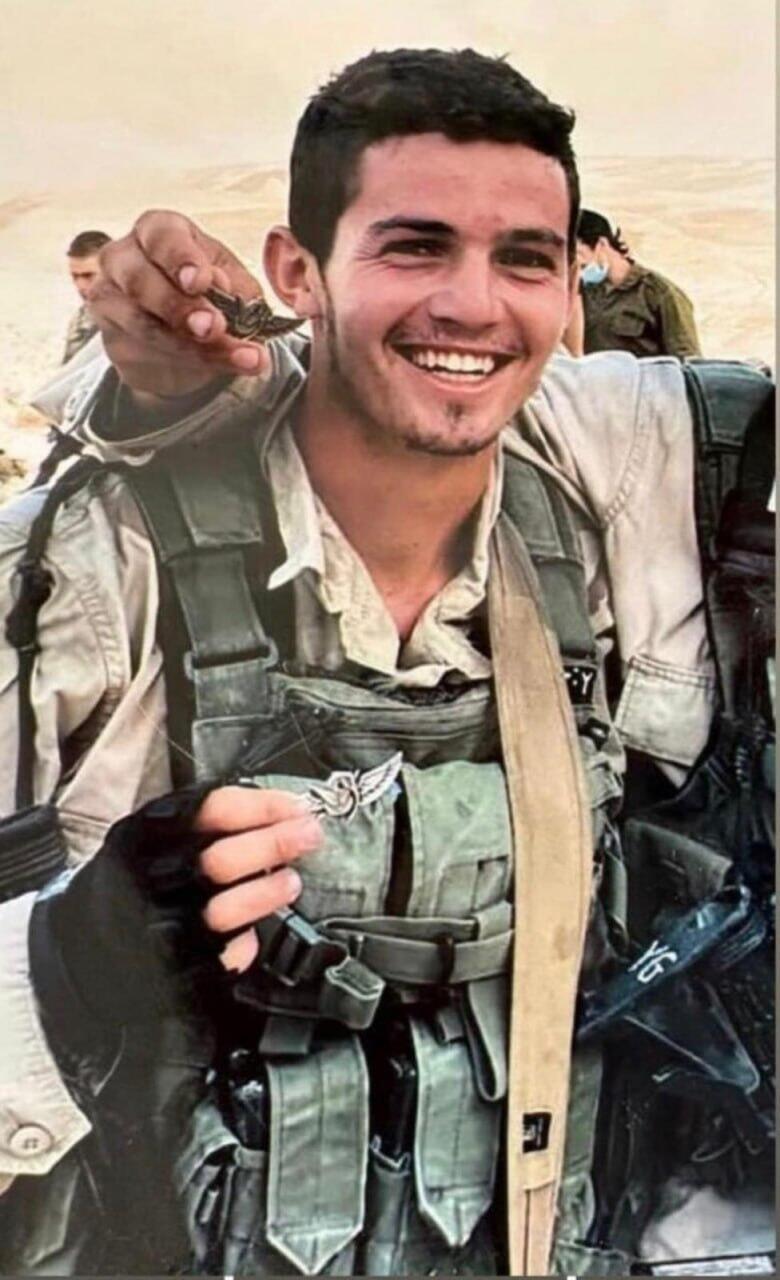
All photographs · 1
In the media
Articles
Memorial sites
- In memory of Capt. Yiftah Yavetz
מוזיאון תל אביב
Memorial projects
The Tel Aviv Museum prepared thousands of art kits in his name and sent them to children from the Gaza border communities who had been evacuated from their homes.
Ziv Yair documented a whale in Australia and, according to the article, named it Yiftah Yavetz through an international tracking database.
The Yiftach program, in partnership with Special in Uniform and Enlight, aims to integrate young people with disabilities from Kiryat Malakhi into volunteer service in the Maglan unit.
Yiftach flour was produced from crops in an agro-solar project in Yesha; according to the article, it will be sold at Reviva and Celia, with proceeds donated to people suffering trauma from October 7.
Stories told about them
Yiftach loved One Wish to the Right and encouraged his friends to read it. Inspired by it, he had a friend sign a contract to take a trip together after their military service, and the friends remain in touch with both his families after his death.
Gon said that before enlisting, Yiftach brought him a written contract obliging them both to go on a post-army trip together. His friend added a humorous reservation about unforeseen circumstances, and they seriously discussed the value of comradeship behind it.
Life & service
Profile
- Date of birth
- February 14, 2000
- Birthplace
- Ramat HaSharon
- Date of death
- October 7, 2023
- Age
- 23
- Hometown
- Ramat HaSharon
Service
- Rank
- Captain
- Unit
- Commando Brigade
- Honours
- Posthumously Promoted
Family
- Father
- Gilad
- Mother
- Shira
Burial
Tributes & remembrance
תהא נשמתם צרורה בצרור החיים
יהי זכרך ברוך.
יהי זכרם ברוך
חיוך מואר
הלווי והייתי יכול לחבק אותך חיבוק חזק ואחרון
יהי זכרך ברוך.
יהי זכרו ברוך.גיבור ישראל
יהי זכרו לנצח ברוך ותהא נשמתו צרורה בצרור החיים. אמן.
תודה על מי שאתה, אתה חי בליבנו, גיבור ישראל
יהי זכרו ברוך
יהי זכרו ברוך
אמא שירה,
אתמול בלילה ראיתי את הטקס שרים לזיכרם, ופתאום אני רואה אותך...אחרי עבודות רבות שעשינו יחד, במנהל עסקים בתואר השני התפצלו דרכינו, ואתמול שוב הצטלבו דרכנו לכמה שניות..
אני בטוח שהוא היה פרפקציוניסט כמו אמא שלו והיה דבק במטרה עד להשגת תוצאה מושלמת...
תהיו חזקים,
יהי זיכרו ברוך.
יהי זכרו ברוך גיבור ישראל
לא הכרתי את יפתח באופן אישי, נחשפתי אליו בימים הראשונים למלחמה דרך עמוד האינסטגרם שמשפחתו מתפעלת והתחברתי אליו כל כך מבלי לדעת מי הוא, הסיפורים, הכתיבה הכל כך יפה ומדויקת שלו, השנינות שהלכה איתו.
יפתח ללא ספק היה בן אדם מיוחד שאני מצטערת שלא זכיתי להכיר,
יפתח נלחם עבור הארץ הזאת, כפי שאמר זה הסטנדרט מבחינתו אך בעיניי זו גם גבורה עילאית.
יהי זכרו ברוך
תודה על מי שהיית, תודה על הכל
כששמעתי את הסיפור של יפתח יש נקשרתי אליו זה היה משהו בחיוך שלו משהו טהור מתפללת שרק נהיה ראויים
אוהב אותך יפתח
יהי זיכרו נצור בליבנו לעד
תודה עליך, גיבור
כמה אור והשראה , תודה על מי שאתה
היה בן אדם נפלאה
בן אדם נפלאה עם שמחת חיים
יהי זכרו לנצח ברוך ותהא נשמתו צרורה בצרור החיים. אמן.
תודה
לא הכרתי אישית, אבל שמעתי אינספור סיפורים.
גיבור אמיתי.
לא הכרתי אותו אבל שמעתי על אישיות יוצאת דופן בחור נחמד שקשוב לכולם איש משכמו ומעלה יהי זכרו ברוך ונשמתו צרורה בצרור החיים ומקומו מובטח בגן עדן
יפתח גבור ישראל חיוך כובש ולב ענק
לזכרו של יפתח, בנם של שירה וגלעד שטיילו איתי בחורף של 2021 ומאז חרב עליהם עולמם
יפתח היה לוחם ביחידת על ומהראשונים לפרוץ לנחל עוז ב7.10 יהיה זכרו ברוך
לא הכרנו אישית, אבל מתפעלת ומעריצה אותך מהסיפורים שמספרת עליך משפחתך.
יהי זכרו ברוך
אורך יאיר דרכנו, אוהבים ומתגעגעים...
But Yiftach's light allows us to go on.
Source:כלכליסט
Read the Hebrew original
אבל האור של יפתח מאפשר לנו להמשיך.
We all have a duty to continue along the path Yiftach left us.
Source:ynet
Read the Hebrew original
כולנו מצווים להמשיך בדרך שיפתח השאיר לנו.
As time went by, we only loved each other more and more. We knew we were forever
Source:ynet
Read the Hebrew original
ככל שעבר הזמן רק אהבנו יותר ויותר. ידענו שאנחנו לנצח
To me, and to everyone around him, Yiftach embodied heroism.
Source:ynet
Read the Hebrew original
יפתח ייצג בעבורי, ועבור כל סביבתו, מהי גבורה.
He wasn't just a commander. He was a big brother to me. Someone I could share everything with
Source:ynet
Read the Hebrew original
הוא לא היה רק מפקד. הוא היה אח גדול בשבילי. מישהו שיכולתי לשתף אותו בהכל
He always said the wisest thing, and sadly, there is no one to call now
Source:N12
Read the Hebrew original
תמיד הוא אמר את הדבר הכי חכם, ולצערי אין למי להתקשר
I want you to know that I love you, even though I didn't always tell you that
Source:רשת 13
Read the Hebrew original
אני רוצה שתדע שאני אוהבת אותך, למרות שלא תמיד הייתי אומרת לך את זה
To me, Yiftach was like a kind of glue
Source:N12
Read the Hebrew original
יפתח בשבילי הוא היה כמו דבק כזה
We will not be able to bring someone like Yiftach into our midst
Source:N12
Read the Hebrew original
כמו יפתח אנחנו לא נצליח להביא אלינו
To preserve this cohesion
Source:N12
Read the Hebrew original
לשמור על הלכידות הזאת
I have a little of Yiftach in me
Source:N12
Read the Hebrew original
יש לי קצת מיפתח
We embrace our beloved Shira and the Yavets and Appel families
Source:Tel Aviv Museum of Art
Remembrance Day addresses
יום הזיכרון לחללי מערכות ישראל התשפ"ה – 2025
בכל יום שעובר, אזכור יותר! אזכור, את אלו שיצאו עימי לקרב ולא שבו, ולהם אין מי ידמה ומי ישווה. אזכור, שהכאב לא יעבור לעולם, והזמן, הוא לא מרפה ולא מרפא. אזכור, את שיברון הלב הגובר ואת הבית שבוער. אזכור, את צדקת הדרך, ואשבע שוב, שמה שהיה לא יהיה יותר. אזכור, שיותר מכל דבר אחר – אני חסר! ביום הזה, אני נתקף געגוע לדמותם, לחיתוך דיבורם, לחיוכם, ומדליק נר לזיכרון דרכם ומורשתם!
משרד הביטחון
אגף משפחות, הנצחה ומורשת
יום הזיכרון לחללי מערכות ישראל התשפ"ה – 2025
בכאב, בהצדעה ובתקווה אני מתכבד להדליק נר זיכרון זה. השנה, כשאנו נלחמים במלחמה ארוכה, רב זירתית וצודקת, הזיכרון נושא משמעות עמוקה. ביום זה נעצור ונתייחד עם זכרם של טובי בנינו ובנותינו שנפלו בהגנה על המדינה. מורשתם היא המצפן שמתווה את דרכינו, והיא המעניקה לנו כוח להמשיך ולהגן על מדינת ישראל ותושביה. משפחות יקרות, אנו מרכינים ראשנו ומתחייבים שנעמוד לצידכן תמיד. יהי זכר הנופלים ברוך.
אלוף דדו בר כליפא
ראש אגף כוח האדם, צה"ל
יום הזיכרון לחללי מערכות ישראל התשפ"ה – 2025
בשעה שאנו זוכרים את גודל תרומתם ועומק מסירות נפשם של טובי בנינו ובנותינו, נופלי מערכות ישראל לדורותיהן, ממשיכים צה"ל וכוחות הביטחון במימוש המשימה למענה לחמו ועבורה נפלו: הכרעת אויבינו מדרום, מצפון, ביהודה ובשומרון, וגם בזירות רחוקות יותר. בהערכה רבה ובגאווה אדירה אנו מרכינים ראש בפני הנופלים והנופלות, מאמצים את משפחותיהם אל לבנו, וממשיכים במשימה להבטחת קיומה של ישראל לדורי דורות. יחד נעשה ונצליח.
רב אלוף אייל זמיר
הרמטכ"ל, צה"ל
יום הזיכרון לחללי מערכות ישראל התשפ"ד – 2024
כאשר דגלינו מורדים לחצי התורן וראשינו מורכנים לזכר הנופלים והנופלות במערכות ישראל, ממשיכים לוחמי צה"ל ומפקדיו בלחימה בדרום, בצפון, ביהודה ובשומרון ובזירות נוספות. על כל דור מוטלת המשימה של הגנת העם והארץ – משימה שאף פעם אינה פוסקת. נצדיע בגעגוע ובגאווה לנופלים ולנופלות, נחבק את משפחותיהם, ונמשיך ברוח הציווי שהותירו לנו. עם ישראל חי.
רב ניצב יעקב שבתאי
המפקח הכללי, משטרת ישראל
יום הזיכרון לחללי מערכות ישראל התשפ"ד – 2024
אחיי הנופלים, כל נר הוא זיכרון יחיד ומיוחד, על חיים שהיו ואינם, געגוע שנצרב עמוק בלב, עולם ומלואו. הנרות כולם הם זיכרון של אומה כי לעולם לא עוד, בשורת הציונות וקוממיות ישראל. זיכרון כי הדרך לעם חופשי בארצנו עוברת דרך מסדר הנופלים. אור הנר יזכיר לנו את מסירות נפשכם להציל חיים, להגן על הבית. הנרות מסמנים לנו נתיב גבורה ערכי מחייב שאנו מצווים ללכת לאורו. נמשיך להילחם ולהוסיף אור מתוך אמונה בנצח ישראל.
יואב גלנט
שר הביטחון
יום הזיכרון לחללי מערכות ישראל התשפ"ד – 2024
בהצדעה ובכאב, בשם צה"ל כולו, אני מדליק נר זיכרון. בעיצומה של מלחמה, הזכרון נושא משמעות יום-יומית, שעבר והווה מתלכדים בה. לאורם של הנופלים נמשיך לצעוד, חיילי הסדיר והמילואים. לאורם של הנופלים נמשיך להגן על ארצנו ועל מולדתנו, גם כשהמחיר כבד. להבת-הזכרון תבער בנו בעודנו ממשיכים להלחם ונזכור את הנופלים ואת אומץ ליבם. משפחות יקרות, צה"ל מרכין היום ראש, מצדיע לכן וכואב איתכן. יהי זכר הנופלים ברוך.
אלוף יניב עשור
ראש אגף כוח האדם, צה"ל
יום הזיכרון לחללי מערכות ישראל התשפ"ד – 2024
בהוקרה, בגאווה ובכאב שאין לו סוף, אני מתכבד להדליק נר לזכרם של הנופלים והנופלות במערכות ישראל. סיפור חייהם בארץ הזאת, מסכת שירותם, גבורתם והקרבתם – הם סיפורה של הארץ הזאת, אך גם סיפור המחיר הכבד שהיא תובעת מאוהביה. מחויבותנו לזכר הנופלים ולדרך שהותירו לנו ניצבת תמיד לנגד עינינו. את המשימה שלא זכו להשלים, משלימים כיום, וישלימו, אנשי כוחות הביטחון, הממשיכים בדרכם ולאורם. יהי זכרם של הנופלים ברוך.
משרד הביטחון
אגף משפחות, הנצחה ומורשת
יום הזיכרון לחללי מערכות ישראל התשפ"ד – 2024
בחרדת קודש אני מתכבד להדליק נר לזכרם של חללי מערכות ישראל, חברנו שנפלו, מראשית היציאה מהחומות ולאורך כל שנות עצמאותנו המדינית והציונית, מהווים תמרור זיכרון לדרך חיינו ולמחוייבות הלאומית להנצחת זכרם. דרכם נותרה דרכנו ומורשתם נר להמשך עשייתנו. יהי זכרם ברוך!
בני גנץ
שר הביטחון
יום הזיכרון לחללי מערכות ישראל
נזכור אותם, כולנו יחד. כל אחד ואחת מהם, מדי יום ביומו, והיום ביתר שאת, כך – לנצח. "כי מדי דברי בו זכור אזכרנו עוד"
משרד הביטחון
אגף משפחות, הנצחה ומורשת