
The story
The ancient and embracing stone house where Yehuda Dror Yahalom was born on the 8th of Kislev 5763, the thirteenth day of November 2002, always carried the scent of fresh spices and open Torah scrolls. He was born into a large and sprawling family, the tenth of eleven children to Rivka Tehila and Moshe, and throughout his life, he knew the constant bustle of siblings around him: Mevaseret, Yisrael, Nachala, David, Elyashiv, Boaz, Chana, Ruth, Techia, and Shlomo – a long chain of children, each bringing a unique hue to the vibrant home, yet all woven together in a delicate tapestry of love and deep connection. Even before he had a chance to open his eyes and truly know the world, his name was etched into the communal memory of Hebron in the shadow of a tragic event that struck the city just two days after his birth: the Hebron Brigade Commander, Colonel Dror Weinberg, fell in battle on the Path of the Patriarchs, leaving an immense void in his wake. When his parents, Moshe and Tehila, chose to give their newborn son the name "Dror" as his middle name, they not only bestowed upon him an identity but implanted in him from the very beginning a profound sense of purpose, a commitment to his community and people. They told him, again and again, about Dror Weinberg, about his heroism, his devotion to Hebron and its residents, and that he, Yehuda, was the first "Dror" named after the legendary commander. This name was not just a label, but a legacy, a sacred burden that Yehuda carried with honor and deep understanding, absorbing its meaning with every breath.
In his childhood, as he scurried through the narrow stone alleys of ancient Hebron, with the echoing laughter of his siblings in the air, Yehuda revealed himself to be a quiet and humble child, yet also profound and courageous in his own way. Unlike many of his siblings, who might have been more boisterous and active, Yehuda often preferred to observe, listen, and absorb the world around him. He would sit for hours by the window of their home, gazing at the mountainous landscape of Judea, at the ancient houses, at the passing people, and at the flight of eagles above the mountaintops, and there was always an inner calm within him, a stability uncharacteristic of his young age. His parents, Moshe and Tehila, were pillars in his life, and from them, he imbibed his values – love of the land, love of his people, and respect for others – not as slogans, but as a tangible way of life. He watched his father toiling to provide for the family, his mother caring for the needs of her eleven children, and there was always an enveloping human warmth present in their home, allowing each child to find their place. His bond with his siblings was particularly close; Yehuda, despite his quiet nature, was always a supportive shoulder, a listening ear, and ready to stand by them at any time. Many days were recalled when he sat with his younger sister, Techia, teaching her to read, or helped his brother David with small agricultural tasks in the backyard, dirtying his hands in the soil and feeling the satisfaction of creation and accomplishment. He respected his parents in an exceptional manner, bringing them joy not only through his academic excellence but also through his daily conduct, his modest actions, and his radiant smile.
As he grew older, distinct buds of leadership ability emerged in Yehuda – not boisterous or dominant leadership, but a quiet leadership, one that drew others through personal example, integrity, and a deep, authentic connection to the Land of Israel. The value of settlement burned in his bones, not as an abstract ideology, but as an existential need, an inseparable part of his identity. He joined the Bnei Akiva movement in the Hebron branch, where he was a member of the "Hineni" tribe, and the movement's activities, the hiking in nature, and conversations around the campfire strengthened his conviction that nothing was more important than building, settling, and cultivating the land. He recalled vividly one trip to Gush Etzion, when he was about ten years old, during which the tribe members helped a local farmer harvest olives. Yehuda, who was usually quiet, suddenly felt immense excitement as his hands touched the heavy branches, smelling the ancient olive trees, and feeling the light oil on his fingertips. In that moment, something awakened within him, a profound understanding that "Torah and Avodah" (Torah and Labor) were not just a slogan, but a guiding light, a complete way of life that blended spirit and matter, study and action, faith and deed. He saw in his mind's eye this land, where he grew up, as a part of him, and wanted to leave his mark upon it, to make it flourish, and to see it thrive.
Yehuda completed his high school studies at the 'Mor Dror' Yeshiva in Katzrin, where he diligently and devotedly pursued Torah studies. The quiet atmosphere of the Yeshiva, somewhat removed from the bustle of Hebron, allowed him to delve into Talmudic issues, immerse himself in the depths of Jewish thought, and develop his spiritual world. But even there, amidst the thick pages of the Gemara, he did not forget the need for action. He wasn't just a yeshiva student who sat and studied; he regularly volunteered in the local community, assisted elderly residents, helped renovate synagogues, and was always the first to step forward for any task requiring physical effort and giving. His yeshiva friends described him as a quiet anchor, a steady presence that instilled calm, yet also inspired. He didn't demand attention, but was always there, ready to listen to a friend struggling with difficulty, to offer help without being asked, and to share his knowledge with humility. He loved the discussions in the Yeshiva, the Talmudic pilpul (intricate debate), but equally loved the moments when he could go out into the nature surrounding Katzrin, breathe the clear Golan air, and connect spiritual study with the world of action.
This feeling of connection to the land, of a need for physical action, only grew stronger in him after completing high school yeshiva. Yehuda, never content with abstract theories, decided to turn his dream into reality. He knew that "Torah and Avodah" was not just a slogan, but a way of life that needed to be put into practice, literally. Thus, with quiet determination and deep devotion, he established 'Havat HaEitam' (Eitam Farm) near Bethlehem. This was not just an agricultural farm; it was a tangible expression of his life philosophy, a place that combined Torah study with agricultural work. He was not afraid of hard work, and was the first to rise at dawn, skilled hands turning the moist soil that had not yet warmed from the morning's first sunbeams. He heard the roar of the tractor engine as he started it, felt the vibrations pass through his body, and saw in his mind's eye the furrows opening in the dark earth, promising a future harvest. The scorching midday sun did not exhaust him, but only strengthened his sense of satisfaction from a day of physical labor, arduous yet rewarding. He built the farm with his own hands, planted trees, erected fences, and in every brick and every sapling, he embedded his soul. Friends and acquaintances, witnessing his uncompromising dedication, described the farm as 'the fuel,' the driving force in his life, the place where he found his deepest meaning. It was for him more than just a project; it was a home, a path, a fulfillment.
Despite his quiet and humble nature, Yehuda was beloved by all and surrounded by friends from all walks of life. His heart was open to everyone, and he knew how to truly listen, to genuinely care, and to be there to help without any expectation of reward. He didn't care about age, status, or background; he connected with equal ease to fifteen-year-olds who came to help on the farm, as he did to sixty-year-olds who came to chat with him about daily affairs and spiritual matters. His gentle demeanor and pleasant manner won the hearts of everyone he met, and he gave each person the feeling that they belonged and were loved. He wasn't the type to initiate long conversations or lavish compliments, but his quiet and embracing presence created a wide circle of people who sought his company. When he received a phone call from a friend who needed help with a broken tractor, or advice on agricultural work, he would drop everything, grab the keys, and drive, without hesitation, to lend a hand. He believed in simple and pure human connection, and in his eyes, every person he met was a world unto themselves, deserving of listening and respect.
The period leading up to his enlistment in the IDF was filled with internal dilemmas for Yehuda, as Torah study and agricultural work were dear to his heart, but so was the defense of the land and the people. He was determined to enlist in a combat role, and refused to compromise on it. He fought until he got his wish, standing his ground against the draft officers, reflecting his uncompromising determination. On March 22, 2023, standing on the threshold of the Induction Center, dressed in green fatigues that he had not yet grown accustomed to, Yehuda enlisted in the IDF as a combat soldier in the Golani Brigade's reconnaissance unit. His military journey began like many others – at a basic training base, with strict discipline and high physical demands. At the beginning of his training, his quiet and introverted nature was very evident. He preferred to listen and internalize, to observe and learn, and only then to act. His commanders and teammates saw him as a serious and dedicated young man, but few could foresee the strengths hidden within him. However, as time passed, and as the combat training demanded more and more from him, Yehuda began to open up. His inner quiet transformed into a quiet of focus, his humility became the humility of quiet leadership, and the light and strengths stored within him began to reveal themselves. He became a respected fighter, one who could be relied upon in any situation, and one who, even in the most difficult moments, maintained his composure and humanity. His commanders recognized his inherent potential, and began to appreciate his unique abilities, his determination, and the special way he knew how to connect different worlds.
And then came that cursed morning, Saturday, the 22nd of Tishrei, Simchat Torah 5784, October 7, 2023. It was six-thirty in the morning, and the holiday's quiet shattered with a deafening roar of incessant rocket fire from the Gaza Strip. The Hamas terrorist organization launched a brutal surprise attack, invading Israel by land, sea, and air. Thousands of terrorists infiltrated southern communities, massacring civilians in their homes, in their cars, at innocent nature parties, and kidnapping hundreds of Israelis to the Gaza Strip. Homes were plundered, set ablaze, and hundreds of soldiers, police officers, and security forces personnel fell in battle. Yehuda, who was undergoing military training at the time, felt the shock and horror like every citizen in the country, but also the urgency and immediate need to act. The training, which was supposed to be a period of learning and development, suddenly became a true test of everything he had learned and everything he believed in. He didn't hesitate for a moment. With his unit, alongside the other fighters of the Golani reconnaissance unit, he immediately joined the fighting, leaping into the inferno, driven by the goal of protecting his people and his home.
The first months of the war were intense and difficult. Yehuda and his unit fought relentlessly, moving from sector to sector, grappling with a harsh and complex reality. In the midst of the fighting, Yehuda was sent to a squad commanders' course. This was an opportunity for him to realize his quiet leadership abilities, which had grown out of his humility and dedication. His comrades-in-arms remembered him as a dedicated and highly motivated commander, who never gave himself a break, and demanded more from himself than from anyone else. He knew how to empower his subordinates in difficult moments, to find the right words to instill hope and strength in them, and to serve as a personal example of courage and composure. He was there for them not just as a commanding hierarchy, but as a friend, an older brother, someone who understood the difficulties and challenges of each individual. He paid attention to the small details, cared for the well-being of his soldiers, and always ensured that everyone was well-protected and equipped. He returned to his team as a commander, with heavy responsibility on his shoulders, but also a deep sense of mission, which grew stronger with each passing day of the war. He became a pillar in the team, someone who could be trusted implicitly.
During his military service, between battles, between training and field exercises, Yehuda met Shahar from Itamar through mutual friends. It was a meeting that changed his life, and their love blossomed quickly, like a solitary flower growing from the ruins of war. Shahar described him as a 'charming young man' (alem chamudot), a humble guy, with captivating personal charm and kind eyes, eyes that reflected a pure soul. She called him a 'surprise box,' because every time they spent together, new virtues were revealed in him, character traits one wouldn't expect to find in such a young man, yet they echoed everything others already knew about him. He was attentive, embracing, and above all, knew how to give her a sense of security and tranquility amidst the storm. They dreamed together of a shared future, of a quiet and peaceful home they would build in the Land of Israel, of a family that would grow up in the spirit of the values they both believed in. They planned to live at Havat HaEitam, the farm Yehuda had built with his own hands, where they had already set up a small, modest caravan, intended to be their temporary home until they could build their permanent one. Talks of life after the war, of the peace that would come, of starting a family at Havat HaEitam, were for both of them an anchor of hope amidst the chaos.
This love culminated on the 11th of Av 5784, when Yehuda and Shahar married in a modest yet moving ceremony, held at Havat HaEitam itself, under the open sky, surrounded by close family and friends. It was a wedding that symbolized the triumph of life and love over war and death, a silent declaration of continuing the path and building a future. However, the joy of their marriage was short-lived. Just two months after the wedding, and despite a shoulder injury he had sustained during the fighting, Yehuda did not hesitate for a moment. He insisted on immediately returning to his team in the Golani reconnaissance unit, to his comrades-in-arms, and to the battles in Lebanon. His father, Moshe, spoke proudly of his uncompromising determination: "Despite a shoulder injury he had, and two months after the wedding, he insisted on returning and joining his team in the Golani reconnaissance unit for the battles in Lebanon." He was driven by purpose, possessed a deep sense of mission, and felt he had no privilege to stay behind while his friends were on the front lines. He believed with all his heart that his place was with them, to defend the land, the people, and his Shahar, the shared future that had only just begun to be built. He parted from Shahar with a strong embrace, promising to return, both of them aware of the possible cost, but also of the supreme duty.
On the eve of Sukkot 5785, October 16, 2024, Yehuda and his unit were in southern Lebanon. The air was thick with tension, the smell of earth and dust, and the feeling that danger lurked around every corner. The force, consisting of five fighters, including Yehuda, entered to search a building in one of the villages near the border – a seemingly routine mission, yet one harboring immense risks. They advanced cautiously, aware of every shadow, every rustle, their senses sharpened. Suddenly, without any prior warning, the force encountered a deadly ambush. Heavy fire opened on them from all directions, heavy bursts tore through the air, and the noise was deafening, a maelstrom of death. Amidst the chaos and madness, Yehuda did not lose his composure. He fought with supreme bravery, returning fire, trying to provide cover for his comrades, fully understanding the magnitude of the danger. In those critical moments, he noticed one of his comrades had been wounded. Without hesitation, out of the instinct of a commander and a human being, he ran to the wounded soldier, and with bullets whistling over his head, began to treat him, trying to stop the bleeding, to save a life. He managed to treat the wounded, providing vital first aid, with the skill of a soldier and the love of humanity in his heart. But even his extraordinary bravery could not save him. A single, fatal shot struck him, and he was killed instantly, only twenty-one years old at the time of his death. In that tragic incident, four more fighters fell, sharing a similar fate. Sergeant Yehuda Dror Yahalom fell in battle, leaving behind an immense void, a wife, parents, five sisters and five brothers, and an entire community in pain and shock.
The bitter news struck Hebron, Itamar, and all the communities Yehuda had touched, like a bolt from the blue. The air in the Yahalom family home grew heavy, saturated with unbearable grief. Yehuda was laid to rest in the cemetery in Hebron, his birthplace, a city he loved so much and worked for. Above his fresh grave, as tears choked throats, he was posthumously promoted to Staff Sergeant, as a sign of appreciation and recognition for his service and dedication. The eulogies delivered at his grave and during the Shiva (seven-day mourning period) reflected his unique character. Eyal Gelman, head of the Hebron Local Council, eulogized him with warm words: "Yehuda was the salt of the earth. A daring hero who, in the last year, fought in all sectors of the war with his unit. Yehuda worked extensively for the building of Hebron and the Land of Israel. In this difficult hour, we embrace his dear wife, Shahar, Moshe and Tehila, and the entire Yahalom family, and will stand by them in whatever is needed." The words of the Minister of National Security, Itamar Ben Gvir, emphasized his determination and his being a pioneer in all his ways: "You were born into a family of heroes... You didn't stop even for a second. You were always first in struggles, in missions, in settlement. You fought to reach far, to help, to act, and to strike the enemy." Every word echoed his actions, his values, and the uncompromising spirit that characterized him.
The legacy Yehuda Dror Yahalom left behind is not just a painful memory, but a testament to action, to connection with the land, and to the love of humanity. In his memory, and as a commemoration of his unique character, it was decided to build three synagogues in different settlement points across the country, with every stone in these synagogues telling the story of his devotion to Torah and to settling the land. In Hebron, the city where he grew up and which he loved, a building was named after him, as a living monument to his activities and contributions to its development. In the community of Itamar, from where his wife Shahar hailed, an observation point (mitzpeh) was inaugurated in Yehuda's memory. A memorial stone engraved with his life story was placed there, and the entire observation point is a symbol of the giving and communal connection that characterized Yehuda, a place where visitors can gaze upon the open landscape and draw inspiration from his spirit. Wine was also produced in his memory, a red wine, strong and full of character, symbolizing the depth of his soul and the life he sought to plant. And on small stickers, distributed since his fall, appears the phrase identified with him: "Let's lower the panic" – a simple, colloquial phrase, yet one that reflected his composure, his ability to calm even in difficult moments, and his belief in the power of inner tranquility. Yehuda is also commemorated at the Golani Brigade memorial and museum at Golani Junction, where his story will be told to future generations, as part of the chain of heroism of the brigade's fighters. He will continue to live not only in close memories, but in every synagogue built, in every stone preserved, in every wine drunk in his memory, and in every person who chooses, like him, to live a life of meaning, of giving, and of deep love for the land and its people. The story of Yehuda Dror Yahalom, of blessed memory, is a story of revival, of human courage, and of boundless dedication, a story that will remain etched forever in our hearts, like an ancient, steadfast, and moving mountain landscape.
Moments of a life
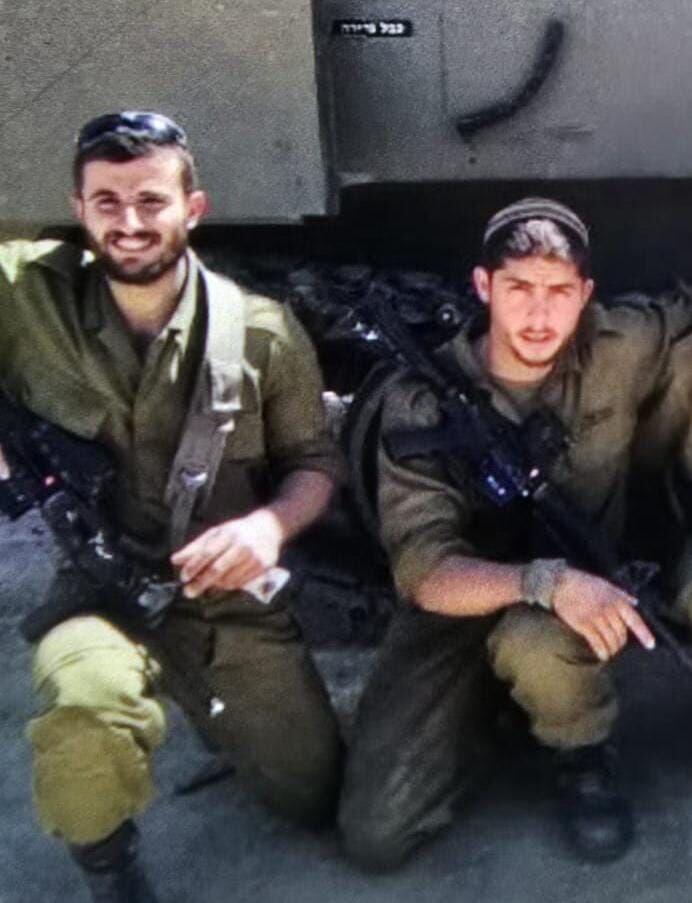
All photographs · 1
In the media
Articles
- A year after Yehuda fell in Lebanon, his widow is engaged to his IDF commander: ‘He’s still guiding us from above’
Ynetnews ·
- Israeli settlers sneak into Syria to form new settlement
The Jerusalem Post ·
- Fell three months after his wedding: “A brave man, an endless box of surprises”
ערוץ 14 ·
- Eulogy for Yehuda, a soldier of Judea
Israel National News ·
- 'Among the finest of the country': Friends mourn five soldiers killed in Lebanon
The Jerusalem Post ·
- Las Fuerzas de Defensa de Israel anunciaron que cinco soldados murieron en combates al sur del Líbano
Agencia AJN ·
Memorial sites
- Yizkor | Yehuda Dror Yahalom
kiryat-arba.muni.il
Memorial projects
JPost reported that the Yehuda family planted flowers and created a memorial corner at an event in Neve Habashan. The article notes that the event took place without military or government support and that the participants were returned to Israel; there is no evidence that the site is preserved or accessible today.
Porat Nov released the single “Remembering You” in Yehuda’s memory; he describes combining words Yehuda wrote with a melody that emerged ahead of the event marking thirty days since his death.
Stories told about them
Channel 14 says that Yaakov Hillel, his teammate, introduced him to Shahar. Their wedding took place at HaEitam Farm, where they planned to live and had placed a caravan.
Life & service
Profile
Service
- Rank
- First sergeant
- Unit
- Golani Brigade
- Honours
- Posthumously Promoted
- Battle Location
- Southern Lebanon
Family
- Father
- Moshe
- Mother
- Tehila Rivka
Burial
Cemetery
Hebron
Tributes & remembrance
תודה לך,יהודה דרור היקר,
על שהגנת עלינו במחיר ההקרבה הנוראה מכל !
תנחומים מלב כואב לכל אהוביך.
יהא זכרך ברוך, גיבור ישראל.
הכרתי אותך מהשיר המרגש של פורת נוב הי"ו
אתה מאוד מיוחד , נגעת ללבי תתפלל על המשפחה ועלינו
גיבור ישראל תתפלל למעלה עם הצדיקים על הגאולה
בן 21 בלבד, נפל בקרב שלושה חודשים לאחר חתונתו ובלכתו הותיר חלל עצום.
לא הכרתי אותך, אבל הסיפורים עליך מציירים דמות נדירה של מי שנלחם לא רק בשדה הקרב, אלא גם על החלומות, על הזכות לתרום, על אהבת הארץ והאדם.
יהי זכרך ברוך.
יהי זכרו ברוך לעד
יהי זכרו ברוך
יזכור עם ישראל את חיילי חרבות ברזל. יהי זכרם ברוך."
Your courage bravery will not be forgotten.
לזכר חברינו גיבור ישראל יהודה דרור יהלום שנפל על קידוש ה למען עם ישראל וארץ ישראל
יהודה אחיין מתוק שלי.נער פלא שעשה כל כך הרבה למען הארץ הקדושה שלנו .עד שמסר נפשו עליה...תשמור על הוריך .משפחתך.ועלינו מלמעלה..אתה חסר כל כך
יהודה אהוב גיבור ישראל שלנו. אתה חסר פה לשחר אלמנתך להוריך אחיך ואחיותיך ולכל מכיריך.תמיד נאהב אותך נזכור דמותך ולא נשכח גבורתך יקר .נאמץ מורשתך אהבת הארץ האדם ואהבת התורה .לא נסלח לעולם .
Yehuda was raised to be a Maccabee, from an early age he wasn’t afraid of anything,
Source:Israel National News
A sort of never-ending box of surprises
Source:ערוץ 14
Read the Hebrew original
מין תיבת הפתעות שלא נגמרת
Our entire acquaintance was during the war
Source:ערוץ 7
Read the Hebrew original
כל ההיכרות שלנו הייתה בתוך המלחמה
Thank you, holy soul, for making me the happiest person in the world.
Source:אתר הנצחה יהודה דרור יהלום
Read the Hebrew original
תודה, נשמה קדושה, שהפכת אותי להיות הבן אדם הכי מאושר בעולם.
Yehuda was the salt of the earth. A daring hero
Source:My Site 6
Read the Hebrew original
יהודה היה מלח הארץ. גיבור נועז
Every opportunity for a raid, every opportunity for a patrol, anything possible — Yehuda strove to be there
Source:My Site 6
Read the Hebrew original
כל אפשרות לפשיטה, כל אפשרות לפטרול, כל דבר אפשרי — יהודה חתר להיות שם
Yehuda found his way into so many people's hearts; it was impossible not to love him.
Source:ערוץ 7
Read the Hebrew original
יהודה נכנס ללב לכל כך הרבה אנשים, אי אפשר היה לא לאהוב אותו.
Yehuda was a simple man who invested in simple things and gave everything he had.
Source:Ynetnews
Remembrance Day addresses
יום הזיכרון לחללי מערכות ישראל התשפ"ה – 2025
בכל יום שעובר, אזכור יותר! אזכור, את אלו שיצאו עימי לקרב ולא שבו, ולהם אין מי ידמה ומי ישווה. אזכור, שהכאב לא יעבור לעולם, והזמן, הוא לא מרפה ולא מרפא. אזכור, את שיברון הלב הגובר ואת הבית שבוער. אזכור, את צדקת הדרך, ואשבע שוב, שמה שהיה לא יהיה יותר. אזכור, שיותר מכל דבר אחר – אני חסר! ביום הזה, אני נתקף געגוע לדמותם, לחיתוך דיבורם, לחיוכם, ומדליק נר לזיכרון דרכם ומורשתם!
משרד הביטחון
אגף משפחות, הנצחה ומורשת
יום הזיכרון לחללי מערכות ישראל התשפ"ה – 2025
בכאב, בהצדעה ובתקווה אני מתכבד להדליק נר זיכרון זה. השנה, כשאנו נלחמים במלחמה ארוכה, רב זירתית וצודקת, הזיכרון נושא משמעות עמוקה. ביום זה נעצור ונתייחד עם זכרם של טובי בנינו ובנותינו שנפלו בהגנה על המדינה. מורשתם היא המצפן שמתווה את דרכינו, והיא המעניקה לנו כוח להמשיך ולהגן על מדינת ישראל ותושביה. משפחות יקרות, אנו מרכינים ראשנו ומתחייבים שנעמוד לצידכן תמיד. יהי זכר הנופלים ברוך.
אלוף דדו בר כליפא
ראש אגף כוח האדם, צה"ל
יום הזיכרון לחללי מערכות ישראל התשפ"ה – 2025
בשעה שאנו זוכרים את גודל תרומתם ועומק מסירות נפשם של טובי בנינו ובנותינו, נופלי מערכות ישראל לדורותיהן, ממשיכים צה"ל וכוחות הביטחון במימוש המשימה למענה לחמו ועבורה נפלו: הכרעת אויבינו מדרום, מצפון, ביהודה ובשומרון, וגם בזירות רחוקות יותר. בהערכה רבה ובגאווה אדירה אנו מרכינים ראש בפני הנופלים והנופלות, מאמצים את משפחותיהם אל לבנו, וממשיכים במשימה להבטחת קיומה של ישראל לדורי דורות. יחד נעשה ונצליח.
רב אלוף אייל זמיר
הרמטכ"ל, צה"ל
יום הזיכרון לחללי מערכות ישראל התשפ"ד – 2024
כאשר דגלינו מורדים לחצי התורן וראשינו מורכנים לזכר הנופלים והנופלות במערכות ישראל, ממשיכים לוחמי צה"ל ומפקדיו בלחימה בדרום, בצפון, ביהודה ובשומרון ובזירות נוספות. על כל דור מוטלת המשימה של הגנת העם והארץ – משימה שאף פעם אינה פוסקת. נצדיע בגעגוע ובגאווה לנופלים ולנופלות, נחבק את משפחותיהם, ונמשיך ברוח הציווי שהותירו לנו. עם ישראל חי.
רב ניצב יעקב שבתאי
המפקח הכללי, משטרת ישראל
יום הזיכרון לחללי מערכות ישראל התשפ"ד – 2024
אחיי הנופלים, כל נר הוא זיכרון יחיד ומיוחד, על חיים שהיו ואינם, געגוע שנצרב עמוק בלב, עולם ומלואו. הנרות כולם הם זיכרון של אומה כי לעולם לא עוד, בשורת הציונות וקוממיות ישראל. זיכרון כי הדרך לעם חופשי בארצנו עוברת דרך מסדר הנופלים. אור הנר יזכיר לנו את מסירות נפשכם להציל חיים, להגן על הבית. הנרות מסמנים לנו נתיב גבורה ערכי מחייב שאנו מצווים ללכת לאורו. נמשיך להילחם ולהוסיף אור מתוך אמונה בנצח ישראל.
יואב גלנט
שר הביטחון
יום הזיכרון לחללי מערכות ישראל התשפ"ד – 2024
בהצדעה ובכאב, בשם צה"ל כולו, אני מדליק נר זיכרון. בעיצומה של מלחמה, הזכרון נושא משמעות יום-יומית, שעבר והווה מתלכדים בה. לאורם של הנופלים נמשיך לצעוד, חיילי הסדיר והמילואים. לאורם של הנופלים נמשיך להגן על ארצנו ועל מולדתנו, גם כשהמחיר כבד. להבת-הזכרון תבער בנו בעודנו ממשיכים להלחם ונזכור את הנופלים ואת אומץ ליבם. משפחות יקרות, צה"ל מרכין היום ראש, מצדיע לכן וכואב איתכן. יהי זכר הנופלים ברוך.
אלוף יניב עשור
ראש אגף כוח האדם, צה"ל
יום הזיכרון לחללי מערכות ישראל התשפ"ד – 2024
בהוקרה, בגאווה ובכאב שאין לו סוף, אני מתכבד להדליק נר לזכרם של הנופלים והנופלות במערכות ישראל. סיפור חייהם בארץ הזאת, מסכת שירותם, גבורתם והקרבתם – הם סיפורה של הארץ הזאת, אך גם סיפור המחיר הכבד שהיא תובעת מאוהביה. מחויבותנו לזכר הנופלים ולדרך שהותירו לנו ניצבת תמיד לנגד עינינו. את המשימה שלא זכו להשלים, משלימים כיום, וישלימו, אנשי כוחות הביטחון, הממשיכים בדרכם ולאורם. יהי זכרם של הנופלים ברוך.
משרד הביטחון
אגף משפחות, הנצחה ומורשת
יום הזיכרון לחללי מערכות ישראל התשפ"ד – 2024
בחרדת קודש אני מתכבד להדליק נר לזכרם של חללי מערכות ישראל, חברנו שנפלו, מראשית היציאה מהחומות ולאורך כל שנות עצמאותנו המדינית והציונית, מהווים תמרור זיכרון לדרך חיינו ולמחוייבות הלאומית להנצחת זכרם. דרכם נותרה דרכנו ומורשתם נר להמשך עשייתנו. יהי זכרם ברוך!
בני גנץ
שר הביטחון
יום הזיכרון לחללי מערכות ישראל
נזכור אותם, כולנו יחד. כל אחד ואחת מהם, מדי יום ביומו, והיום ביתר שאת, כך – לנצח. "כי מדי דברי בו זכור אזכרנו עוד"
משרד הביטחון
אגף משפחות, הנצחה ומורשת