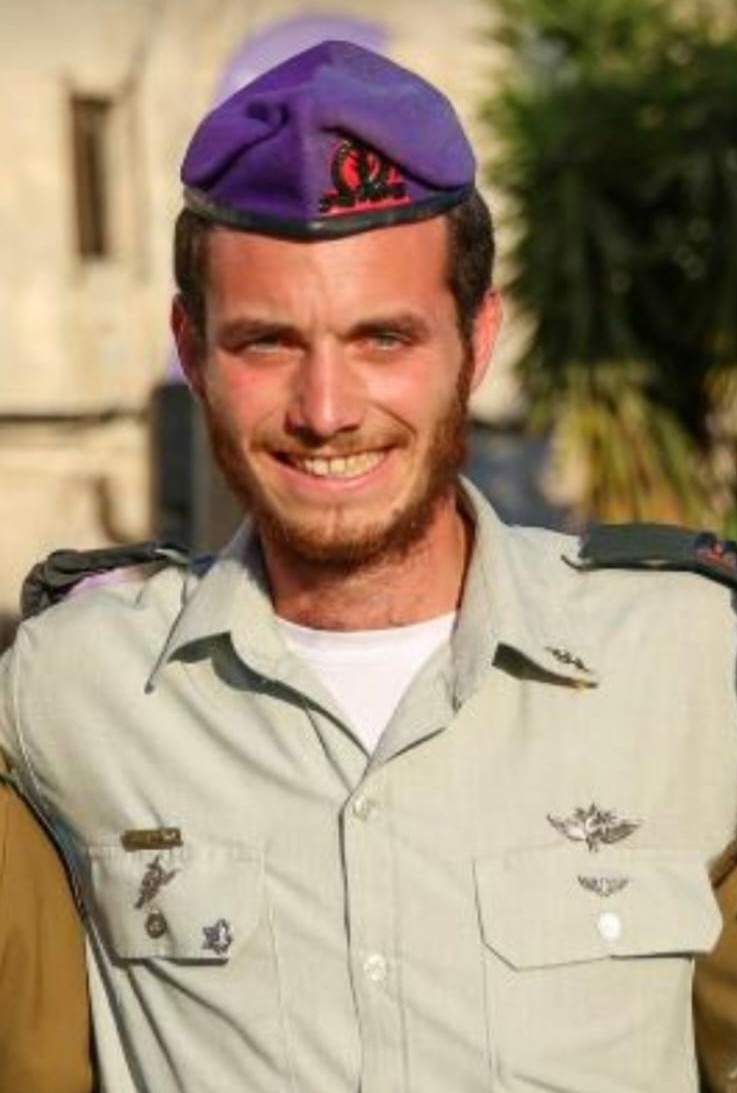
The story
In the clear skies of the Jordan Valley, in the community of Shadmot Mehola, Yehuda Natan Cohen was born on the 30th of Kislev, 5758, corresponding to December 28, 1997. The home where he grew up, that of Tehila and Zeev Dov Cohen, was deeply rooted in the land, steeped in Torah, reverence, and a profound sense of mission that shaped every corner. Shadmot Mehola, a Jewish settlement in the heart of the Jordan Valley, was more than just an address; it was a living testament to vision, dedication, and an ardent desire to cling to the land, cultivate it, and make it flourish. Within this home, which was always wide open – always hosting yeshiva students, always buzzing with deep conversations that transcended the dinner table into broader realms of study and thought – Yehuda grew up, the seventh of seven siblings: Shlomo, Adi, Lea, Vered, Yiska, and Maayan. The warm Jordan Valley air, the scents of ripening date groves, and the pastoral quiet accompanied his childhood years, forming a backdrop for meaningful discussions, shared learning, and an enveloping sense of community. The house was a melting pot of sibling camaraderie, of spirited debates alongside rolling laughter, and of a quiet, unwavering love that provided Yehuda with his solid foundations.
Even from childhood, a unique personality was evident in him, a rare combination of deep humility and burning idealism. He was a bright, talented child, whose joy for life and captivating sense of humor illuminated his face. Everywhere he went, from his playgroup with peers to the "Shaked" elementary school in Kibbutz Sde Eliyahu, he was accepted and loved. There was not a trace of arrogance in him, only a genuine desire to learn, understand, and contribute. He loved the small stories of life, the nuances in people, and through it all, he observed the world with discerning eyes, full of curiosity. His special connection with his grandparents, Holocaust survivors, left a deep imprint on him. For long hours, he would sit with them, listening intently to their memories, to their tales of journey and survival, learning from them about the rich and painful history of the Jewish people. He felt fortunate, a kind of emissary of the generations, given the privilege to live in a generation of redemption, to fulfill the dream of Jews over two thousand years of exile, as he once wrote to a friend. These conversations, against the backdrop of the tranquil Jordan Valley landscape, deepened his sense of belonging, his responsibility to tradition, and his understanding that nothing should be taken for granted. They instilled in him the recognition that life is a gift, and that he must fill it with meaning, action, and goodness.
In his youth, when he moved to study at the "Hispin" high school yeshiva in the Golan Heights, further layers of his personality were revealed. Beyond his studies, where he excelled in his wisdom and breadth of knowledge, Yehuda developed two great loves: deep reading and chess. He was a true bookworm, immersed for long hours in books of philosophy, history, and thought, filling his room's shelves with knowledge and ideas. The chessboard, on the other hand, was for him an arena of intellectual challenge where his talent shone above all others. Each year, a chess tournament was held at the yeshiva, and Yehuda, with his strategic analytical abilities and foresight of several moves ahead, won first place three years in a row, from ninth to eleventh grade. When he reached twelfth grade, he made a surprising decision: he would not compete that year. When asked why, he simply explained that he wanted to allow other students to win first place, to give them the opportunity to taste success as well. This gesture, which demonstrated extraordinary humility and concern for others, was characteristic of him. He did not seek personal glory, but rather rejoiced in the happiness of others and strived to create a space where everyone could flourish.
Beyond his intellectual pursuits, Yehuda was also an outstanding athlete, a gifted basketball player who played for a team in the Golan Heights. On the basketball court, his leadership was anything but quiet; it erupted with energy and determination. His teammates described him as a driving force: he knew how to give precise instructions, to push players forward even in moments of decline, to organize complex offensive and defensive plays, and to improvise creative solutions according to the changing game situation. "All the players always shared the knowledge that when Yehuda was on the court, it was harder to stop us from scoring," one of his friends said, his voice echoing the confidence Yehuda instilled. Off the court, that same leadership took on a different, quieter, but no less significant hue. He knew how to find common ground with everyone, whether an ardent religious person or a complete secularist, and to create genuine and respectful dialogue. He connected and linked the players, making gaps and differences seem small and less significant, and succeeded in building a cohesive team that transcended differences. He had a rare ability to see the person behind the label, to love them for who they were, and to make them feel belonged and valued.
Upon completing his studies at the high school yeshiva, Yehuda took another step in shaping his personality and realizing his values. He joined the "Bnei David" pre-military yeshiva academy in Eli, a year that was particularly significant for him, a milestone in building his spiritual and practical world. In this year, he deepened his Torah study, refined his ways of thinking, and strengthened the values he had absorbed at home and in Hispin: love of Torah, the Land, and the People, loyalty to the commandments, and love for every person. His family felt that the Torah truly brought him to life, that it was a period of intense spiritual growth. They even thought that perhaps he should stay longer, to deepen and immerse himself. But Yehuda, who was always action-oriented, already wanted to "live the Torah, to implement it, not just to hear about the people of Israel and the land of Israel but to move to action." This passion, to translate study into deeds, theory into reality, burned within him intensely, leading him to the next stage of his life – military service.
On July 23, 2017, Yehuda enlisted in the IDF, choosing to serve as a combat soldier in the "Givati" reconnaissance unit. Already in basic training, his physical and mental abilities stood out. He was not just another recruit, but a soldier with exceptional motivation and a clear vision. One evening, during a short break between grueling exercises, he turned to one of his friends and said with a determined look: "My dream is to be a company commander, to build a home and get married. I'm not stopping at squad leaders – I'm stopping at company commander." In these words, he revealed not only his command aspirations but also his complete worldview, in which the building of a private home and the building of the nation were intertwined. He was a brave and professional fighter, undeterred by challenges, even when he reached the limits of physical and mental endurance. Even in difficult moments, when fatigue threatened to overwhelm, he always found inner strength to help his friends, to lend a hand, to support with a kind word or a small act. A fellow soldier recounted one evening, after an exhausting exercise, when everyone returned to base exhausted and prepared for sleep. One of the team members, responsible for organizing guard duties, sat down to prepare some important arrangements, but due to extreme fatigue, began to struggle. While the other soldiers were engrossed in themselves, Yehuda noticed his distress, quietly approached him, and helped him complete the task, at the expense of valuable sleep hours. This small act, done without expectation of reward, but out of genuine concern, demonstrated his broad heart and deep commitment to his friends.
During his service, Yehuda's hearing was slightly damaged. This did not affect his daily functioning as a combat soldier, but it led to a lowered military profile, and as a result, he was not approved to attend officer's course – the dream of his life. For Yehuda, who had always aimed for command and mission, the decision was a severe blow. But Yehuda was not one to give up easily. He turned to his commanders, to the medical personnel at the base, in a persistent attempt to change the decision. Time and again he encountered closed doors, until finally his commanders told him: "We've done everything we could, we allow you to approach additional authorities who might be able to help." Yehuda did not hesitate for a moment. He turned directly to the Givati Brigade Commander. He wrote him a personal letter, a letter in which he poured out his heart, described his feelings, the burning motivation within him, the desire to contribute as much as possible, and the fact that he did not see himself being discharged from the IDF without being an officer. He did not beg, but presented his case with power and conviction, out of faith in the righteousness of his path. His request was granted, and he received special, exceptional approval to attend the coveted officer's course. This moment, when the path was cleared, was a moment of personal triumph, proving once again his uncompromising determination and immense willpower.
After completing the officer's course with distinction, Yehuda served as a team commander, and then was appointed commander of a recruit company in the "Shaked" battalion. This role, in which he took responsibility for shaping the next generation of fighters, filled him with a deep sense of mission. Upon entering the role, he wrote: "To be a recruit company commander in 2022, to sing 'Hatikvah' at the weekly flag ceremony and to know that you are part of the unique group that chooses to get under the stretcher." These words reflected his worldview: command as a privilege and a duty, as an opportunity to influence, educate, and lead young people to the heart of action for the sake of the country. One of the recruits under his command recounted a formative experience. Towards the end of training, the soldier was designated to go to a command course himself, but he vehemently objected. One day, he was summoned to a meeting with Company Commander Yehuda, and arrived with many objections, already convinced of what he would be told and what the outcome of the meeting would be. To his surprise, Yehuda first asked to hear him out. He listened patiently, deeply, and respectfully to the recruit's thoughts, fears, and doubts, showing deep interest in him, and did not rush to judge or impose his opinion. Ultimately, following the long and honest conversation, the soldier was convinced, went to command, and completed significant service that filled him with pride. According to him, Yehuda always spoke at eye level, never treated rank differences or authority as an obstacle, and thus succeeded in engaging his soldiers and influencing them deeply, even long after he finished commanding them. He knew how to touch their souls, awaken their inner motivation, and turn them into better fighters and commanders.
Upon completing his role as a recruit company commander, Yehuda served as an operations officer in Givati, a role that required systemic vision, meticulous planning, and high operational capability. Afterwards, he took an unpaid leave of absence in preparation for his next role. This period, in which he could take a break from the intensive military routine, was an opportunity for him to return to the Beit Midrash (house of study). He joined the "Anshei Emuna Ba'Olam Ha'Ma'aseh" (People of Faith in the World of Action) program at the yeshiva in Eli, where he studied Torah under his rabbis. It was a period of spiritual replenishment, of returning to the sources he loved so much. But Yehuda, as was his custom, was not content with just studying. On other days, he would work in the cowshed – "for the soul," as he described it. The contact with the earth, with the animals, with simple physical labor, was an anchor for him, a way to connect to reality, to the ground, and to the sense of satisfaction from manual labor. And in the remaining time, he filled his life with other activities he loved: playing basketball, working out at the gym, participating in local chess tournaments, spending quality time with his family, and treating everyone to elaborate dinners he cooked himself. He was a true polymath, who knew how to find balance between spirit and matter, between Torah study and physical work, and between duties to family and to himself.
After three months of leave, his life's role arrived: Yehuda was appointed company commander in the "Givati" reconnaissance unit. This was the peak of his aspirations, the fulfillment of a childhood dream. He was a brilliant commander, who brought both to the classroom, in the training of his soldiers, and to the battlefield itself, the tools he developed as a gifted chess player: deep strategic analytical ability, foresight of several moves ahead, and an understanding of the implications of every decision. Above all, he saw himself as an educator. He did everything to empower and develop his soldiers, not just as fighters but as human beings. He led them with courage and sensitivity, was attentive to their needs, deeply connected to them, and created a profound bond of trust and appreciation. They, in turn, loved him intensely and trusted him implicitly. He was for them not just a commander, but a father figure, an older brother, and a role model. And throughout his service, even during the busiest and most demanding periods, he maintained regular contact with the yeshiva in Eli. During every leave, every short window of time, he would return to the Beit Midrash, continuing to study at every opportunity – as a recruit, as a combat soldier, as a team commander, and as a company commander. The Beit Midrash was for him a spiritual anchor, a source of strength and inspiration, which allowed him to maintain clarity of mind and purpose even amidst the complexity and pressures of military life.
Yehuda was a true idealist. He approached everything he did with seriousness and dedication, and was grateful for the privilege given to him to influence people. He always conducted himself with simplicity, humility, and honesty, and therefore easily connected with people of all ages and walks of life. He enjoyed engaging in weighty, profound topics, as well as lighthearted and amusing ones. At the Shabbat table, after Kiddush and the meal, he would engage in deep and meaningful conversations with his parents, brothers, and sisters, conversations that could last for hours, on Torah issues, societal challenges, history, and the future. Five minutes later, he would completely let go, shedding the seriousness of the world, and playing "tag" in the yard with his five-year-old nephews, his rolling laughter filling the air. And later, he would sit down to play chess with a seventy-year-old man, patiently listening to his life stories, and engaging in a fascinating intellectual dialogue with him. This was Yehuda's character: a broad-minded person, full of giving, who knew how to bridge gaps, connect people, and find the common and beautiful in every human encounter. He was a man of truth, loyal to himself, and always did what he loved and what he believed in.
The Shabbat of the 22nd of Tishrei, Simchat Torah 5784, October 7, 2023, began as a normal, quiet Shabbat, full of joy and prayer. But at 6:30 in the morning, the quiet shattered abruptly and turned into hell. The Hamas terrorist organization launched a murderous surprise attack on Israel. Under the cover of massive and incessant firing of thousands of missiles and rockets from the Gaza Strip, which covered vast areas of the country, thousands of terrorists infiltrated – by land, sea, and air – and began an unprecedented attack on the Gaza Envelope communities, on Sderot, Ofakim, and Netivot, on a nature party near Kibbutzim Re'im and Nir Oz, on IDF bases, and on passersby on the roads in the area. The terrorists murdered in cold blood some eight hundred civilians in their homes, in their cars, after committing brutal crimes against them. They abducted hundreds of Israelis to the Gaza Strip, and destroyed, looted, and set fire to homes and property. Hundreds of soldiers, police officers, security forces personnel, and members of local emergency response teams fell in battle, defending the citizens of Israel with their bodies. On this terrible morning, a war began.
With the outbreak of the attack, as sirens sounded in the Jordan Valley and initial reports began to stream in, Yehuda sprang from his home. He did not hesitate for a moment. He managed to say to his father, Rabbi Dov Cohen, the short and loaded words: "Pray for us," and drove south, driving like a madman, understanding the gravity of the hour and the urgency of his actions. Together with his soldiers, and as part of the Givati reconnaissance unit, Yehuda was sent to Kibbutz Nahal Oz, which was under a brutal attack. He arrived there at record speed, and already in the first moments, assisted the unit commander in planning the combat strategy. His sharp mind, trained in chess to see moves ahead, analyzed the complex battlefield. He learned what was happening in Nahal Oz, the structure of the settlement, the location of the terrorists, and their forces. With this information, he built a strategy and prepared the necessary moves before entering actual combat. The company he led fought with supreme courage, with unparalleled determination, and saved many of the kibbutz residents. Nahal Oz, which was adjacent to Be'eri, could have ended in a far greater disaster. But thanks to the persistent fighting and heroism of Yehuda and his company, the events in Nahal Oz ended with ten dead and five abducted, with his soldiers returning safely.
One of the residents rescued from the kibbutz, broken and desperate, yet full of gratitude, later sought to thank Yehuda. She offered to provide the soldiers with equipment or food, anything that could help them in the fighting. Yehuda, moved to tears by the conversation with her, asked for only one thing: that she write down everything she said, so he could convey it to his soldiers and lift their spirits. He knew how important support from the home front was, how the simple words of a rescued civilian could instill hope in the hearts of the fighters. When his family later asked him about the fighting in the Gaza Envelope communities, Yehuda answered with the humility that characterized him, and so as not to worry them: "We were on guard duty." Only a week later, when an article was published in which he was interviewed along with other commanders, the family understood the magnitude of the actions he performed that day. He, who "had no ego," stopped telling his brother-in-law, Tamir, stories of heroism, because he did not want to boast about his deeds. In his modesty, he made acts of heroism seem self-evident, part of the mission. To Menachem Ansbacker, his brother-in-law's father and a war hero himself as commander of the Tel Saki outpost in the Yom Kippur War, Yehuda wrote: "Only after the dust settled did I begin to try and process, and there I felt the spirit and bravery of you fifty years ago permeating us. May we merit to continue the chain of generations in a worthy manner." In these words, he connected himself and his soldiers to a chain of generations of fighters and defenders, carrying the legacy of the people on his shoulders.
In the weeks that followed, Yehuda's company carried out various operational missions, conducted intensive training, and prepared for the next, even more difficult stage – ground combat in the Gaza Strip. The tension was in the air, the anticipation taut. On the eve of their entry into the Strip, Yehuda gathered his soldiers. In his quiet but determined voice, he told them that the tradition of the IDF is that commanders lead the way, "and rightly so." He knew that the price could be heavy, and that commanders were particularly exposed to enemy fire. Out of deep responsibility, he left them precise instructions on what to do if he was hit. One of his soldiers said that he felt it was a tremendous privilege to follow him, and that his words instilled in him deep confidence that "someone is looking out for me, that I am not just another 'number in the war' but a partner in a mitzvah war with the most worthy commanders there are." This feeling, of a shared mission, of absolute trust in the commander, is what led them into battle.
On Friday, November 3rd, after a week of intense and challenging fighting in the northern Gaza Strip, deep within enemy territory, the force led by Yehuda identified suspicious movement in one of the buildings. The valley was suspiciously quiet, and Yehuda's sharpened senses signaled danger. Without hesitation, Yehuda decided to enter and check the building. Together with two other soldiers, he stepped inside, leading the way, as was his custom. Inside the building, a difficult scene unfolded before them: many terrorists, armed with enormous quantities of weapons and ammunition, ambushing them. A bloody, face-to-face battle quickly developed. Yehuda, with resourcefulness and courage, managed the battle, reacting quickly to every threat. During the exchange of fire, Yehuda was severely wounded. The bullet struck him with force, but even wounded, with pain gnawing at his body, Yehuda did not lose his clarity of mind and sense of responsibility. He spoke with the battalion commander on the radio, in a deep and determined voice, and gave a precise description of the building, the locations of the terrorists, and what was happening inside. This critical information, conveyed under fire and in a state of mortal injury, allowed the forces outside to know exactly where to go and what awaited them there. Shortly thereafter, Yehuda died of his wounds. He fell in battle, twenty-five years old, defending his soldiers, his people, and his land. The information he provided, in his last moments, led to the elimination of the terrorists in the building and prevented a much greater disaster, which could have claimed the lives of many more soldiers. His deputy wrote after his fall, in chilling words: "Yehuda saved the entire company with his death, not a millimeter less." His heroism was not only in battle, but also in his final moments, when he made himself a source of life-saving information.
Captain Yehuda Natan Cohen was laid to rest in the cemetery in Mehola, the community where he was born and raised, on the 19th of Cheshvan, 5784, November 3, 2023. He left behind parents and six siblings, an entire family stunned and grieving, but also filled with pride for the way he lived and the sacrifice he made. After his fall, he was posthumously promoted to the rank of Major, a sign of appreciation and recognition for his leadership, courage, and immense contribution. His sister, Vered, eulogized him with heartbreaking words: "Yudi, our dear and beloved brother... We had a bond of sharing, of endless laughter. You were a man of the earth and stability we could lean on. Every shelf in your library was full of books of thought and history. A man of truth, you were true to yourself and did what you loved. We are full of pride in who you were in your life and in your death." His brother, Shlomo, added with pain: "My beloved brother, I miss and love you. I can't believe you're not with us. I worried about you for years, and especially in recent weeks. You were a true righteous man, you made sure to live a life of holiness. A polymath and a commander with a fatherly heart, a chess player. In your death, you commanded us all a life of mission, giving, and caring." These words, which came from the depths of the heart, painted his complete picture – a man of spirit and action, humble and brave, commander and brother, who lived a full and meaningful life.
Yehuda Natan Cohen's legacy continues to pulsate. His family, together with his friends and partners in his path, established many initiatives in his memory, perpetuating his spirit and values. The "Oz LeYehuda" (Yehuda's Strength) initiative is a nationwide project of Torah study in pairs, connecting male and female soldiers with people in the community, providing them with spiritual anchors throughout their military service, exactly as Yehuda himself made sure to do. This is a way to continue his incessant connection with the Beit Midrash, and to spread the light of Torah even within the military reality. His original team members from the Givati reconnaissance unit, in cooperation with his family and the residents of Shadmot Mehola, initiated the establishment of an observation point and an orchard in his memory near the community, a place of creation, growth, and contemplation, overlooking the Jordan Valley landscapes he loved so much. In the WhatsApp group "Nitzotzot Chaim MiYehuda" (Sparks of Life from Yehuda), established following many stories that emerged after his fall, a "spark" is sent weekly, illuminating another corner of his unique character, and continuing to echo the abundance he left behind. The "Shim'u Sipur" (Hear a Story) podcast dedicated an episode to his memory, titled "Our Heroes: Yehuda Cohen," and can be listened to on all podcast platforms, so that more and more people will learn about his inspiring life story. Pages in his memory were opened on the websites "L'Male Et Ha'Halal" (To Fill the Void), remember.bio, and memoriz.plus, and in addition, the family initiated the establishment of a dedicated website in his memory. All of these are just a small part of the ways in which the memory of Yehuda Natan Cohen continues to live, influence, and inspire, serving as a living testament to humble heroism, true leadership, and an unconditional love for people, Torah, and land. He was a hero of the generation of revival, who lived and acted out of deep faith and sacrificed his life for his people, leaving behind a trail of light and meaning that will illuminate our path for many years to come.
Moments of a life
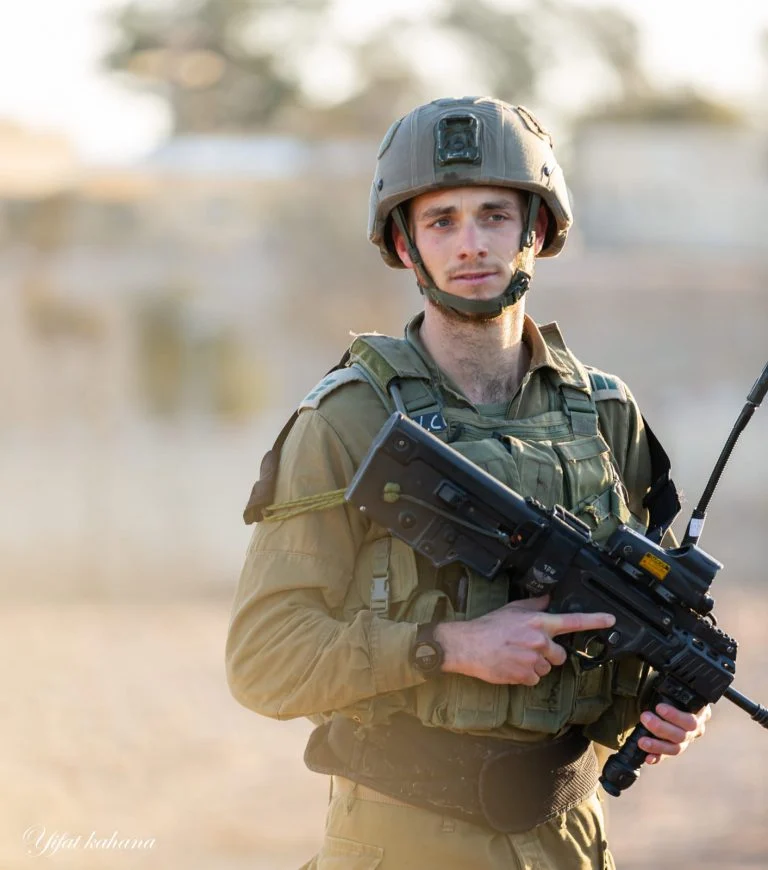
All photographs · 2
Videos and links
In the media
Articles
Podcasts
- Episode 16: Major Yehuda Natan Cohen, of Blessed Memory — Four Aunts and Longing
גיבורים / Apple Podcasts ·
Songs
- Gur Aryeh Yehuda
עולם קטן / אליה מימון
Memorial projects
A font called OH YehudaNatanCohen was created from his handwriting as part of Ot.Haim, designed by Leah Marmorstein Yarchi.
The song “Gur Aryeh Yehuda” was written and performed in his memory by his brother-in-law Eliya Maimon.
The annual chess tournament in his memory was held on July 29, 2026, with about 80 participants and no arbiters, emphasizing mutual respect.
Stories told about them
His relative said that Yehuda used to return to the pre-military academy in Eli on Yom Kippur. According to him, so as not to stand out or be asked to talk about his role in the reconnaissance unit, he chose to remain silent that day.
“May we merit to continue the chain of generations in a worthy manner.”
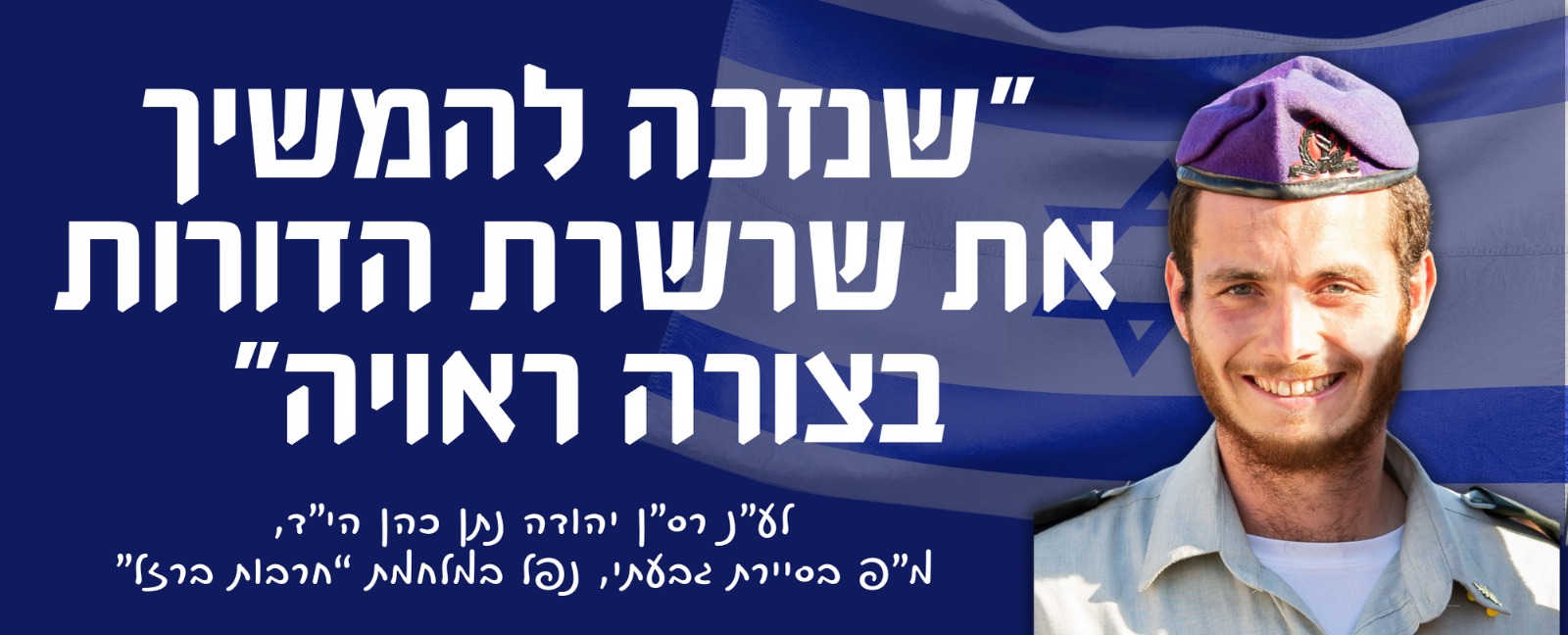
Life & service
Profile
- Date of birth
- December 28, 1997
- Birthplace
- Shdemot Mechola
- Date of death
- November 3, 2023
- Age
- 25
- Hometown
- Shdemot Mechola
Service
- Rank
- Major
- Unit
- Givati Brigade
- Honours
- Posthumously Promoted
- Battle Location
- In the northern Gaza Strip
Family
- Father
- Ze'ev Dov
- Mother
- Tehila
Burial
Cemetery
Machola
Tributes & remembrance
תהא נשמתם צרורה בצרור החיים
שנהיה ראויים
עברו שנתייים
תהא נשמתך צרורה בצרור החיים.............יעקב
איני מכירה אותך אישית. שמעתי את השיר שנכתב עליך. מוצפת דמעות. תודה לך שנתת הכל. תתפלל עינו מלמעלה.
השם יקום דמו
צדיק.זי"ע
נחשפתי ליהודה דרך הסיפורים שפורסמו בקבוצת הווטסאפ שפתחה המשפחה.
מעורר השראה, גיבור, ערכי ומנהיג אמיתי.
יהי זכרו ברוך
האיש המופלא הזה, צדיק, נלקח מאיתנו מוקדם מדי. לא קשה להסיק שבאופק שלו ציפה לו עתיד רחב ידיים.
אני מאמינה שדרך הארץ שלו היא מה שצריך לשאוף אליו, ואמונתו ושקדנותו בלמידת התורה ובקיום מצוות מעוררות בי יראה וכבוד גדול. רואים שכל מי שזכה לפגוש אותו, לדבר איתו, להיעזר בו וללמוד ממנו, הוענקה לו הזדמנות ומתנה גדולה, בהיותו אדם טוב לב , נבון, מוכשר, פיקח ועניו. עצוב לי שלא זכיתי להכיר אותו. יהי זכרו ברוך.
יהי זכרו ברוך
ישר כח לכם משפחה יקרה שגידלתם בן לתיפארת עם ערכי אהבת הזולת שהיה חשוב לו לקרב לבבות בעם ישראל..יהי זכרו ברוך
מכבדים וזוכרים
בחייו ובמותו ציוו לנו את החיים
זוכרים אותך את טוב ליבך ענווה שלך אהבת הזולת
הייתה בשבילנו הרבה יותר ממפקד
ת.נ.צ.ב.ה
מפ יקר. נזכר ולא נשכח
יהודה
לעולם תשאר המ״פ של עומר
המפקד שאפשר לפנות אליו כשצריך, מישהו שאפשר לדבר איתו ולקבל אוזן קשבת. איש של אנשים
יהודה היקר
גיבור ישראל !
זכות היה לשרת איתך
יהודה ,היה לנו דיבור איתך ואהבה הדדית בלי קשר לורד אחותך- כלתנו האהובה. אתה ככ חסר
גיבור ישראל
יהודה אחי ורעי,
מתגעגע אלייך, הגעתי לישיבה ואתה נער, למדתי להכיר אותך כשגדלת וזכיתי לראות את האדם שהפכת להיות
ילד יפה גבור ישראל מלח הארץ יהיה זכרו ברוך
תמיד אתנו.
יהי זכרו ברוך, שנהיה ראויים.
תהיה נשמתו צרורה בצרור החיים, הי"ד
תודה על התרומה שלך למדינת ישראל. אחי גיבורי התהילה. איזה עצוב.
נזכור אותך לנצח אחינו היקר,רס״ן יהודה נתן כהן,גיבור ישראל,מפקד אמיץ לב שלחמת בראש חייליך והקרבת את חייך למען עם ישראל ומדינת ישראל ! תהא נשמתך צרורה בצרור החיים לנצח נצחים ולעולמי עד !
יהיה זכרו ברוך
גיבור ישראל! יהי זכרו ברוך!
יהי זכרו ברוך.
הייתי היום המאהל הגבורה ושמעתי סיפורים מרגשים על יהודה נתן כהן הי"ד. הסיפור שהוא השיג 4000 ציציות לכל חיילי גבעתי ועוד סיפורים מרגשים. היה עצוב מאוד אבל גם מרגש ועוצמתי שיש כאלה אנשים מדהימים בעם ישראל. ה יקום דמו! ושנזכה לגאולה שלמה ברחמים ושנזכה לתחיית המתים. אמן
אתה איתה אדם נהדר
הוא היה מאלו ששחררו את נחל עוז והציל מאות, ולנו לא סיפר דבר, היה איש אדמה ויציבות שאפשר להישען עליו. כל מדף הספרייה שלך היה מלא בספרי הגות והיסטוריה. איש אמת, היית נאמן לעצמך ועשית מה שאתה אוהב. אנחנו מלאי גאווה במי שהיית בחייך ובמותך. שהיית חלק מהחזרת הכבוד הלאומי לעם ישראל".
יהודה ניהל את הקרב בקיבוץ נחל עוז בגבורה ושבועות מספר לאחר מכן נפל בעזה כשהוא מציל במותו את חבריו. עינב, אישה מנחל עוז שהציל בגבורתו סיפרה כי מספר ימים לאחר ה10.7 נחשפו לעוצמת הקרבות שניהלו יהודה וחבריו בקיבוץ והם יצרו איתם קשר, במהלך השיחה אמר יהודה לעינב כי זו הפעם הראשונה מתחילת המלחמה בה הוא מזיל דמעות, כה משמעותית עבורו היתה הידיעה כי הציל חיים של אחרים, אך הוא לא לקח את הקרדיט לעצמו וכשהציעה לו עזרה במזון ובציוד ביקש רק דבר אחד: כתבי לי את מה שאמרת כדי שאוכל להעביר לחיילים שלי ולעודד את רוחם!
בכל שנה מתקיימת בישיבה תחרות שחמט בין השכבות השונות בישיבה, בהיותו תלמיד בכתה ט' זכה יהודה- שהיה באמת בכמה רמות מעל כולם, במקום הראשון בתחרות, בכתה י' שוב קיבל את המקום הראשון וכך גם בכתה י"א, כשהגיע לכתה י"ב לא ניגש כלל לתחרות, הנימוק היה – אני רוצה לאפשר לתלמידם נוספים לזכות במקום הראשון. הסיפור הזה מתאר בדיוק את יהודה – מוכשר מאד אך ענוותן ורגיש לאחר, עבורו השחמט היה משחק חשוב אך לא פחות מכך הזדמנות לויתור ועבודה עצמית על המידות והאישיות.
בימי הכיפורים יהודה היה נוסע למכינה בעלי, אבל עם השנים הוא הרגיש שזה שהוא מ"פ בפלס"ר גבעתי זה ממש מעניין את החברה' והם רצו לדבר איתו על זה, יהודה לא הרגיש בנוח עם השאלות. והוא מצא פיתרון פשוט: ביום כיפור הוא בתענית דיבור. ככה נמנעה ממנו המבוכה לספר על המסלול שעבר. "בהלוויתו של יהודה, סיפרו כי הוא רצה מאד להתחתן אך מעומס התפקיד לא עלה בידו, לכן בהלוויה שרו את ארבע באבות, הניגון החבד"י שמנוגן רק בזמן חופה".
קשה לדמיין במציאות העכשווית משתתפים מכל רחבי המזרח התיכון ,מאירן ומישראל שמשחקים יחד באירוע שחמט אבל אתמול זה קרה. זה היה ערב מרגש . אישית לי לא היה קל לארגן אירוע לאדם היחידי שאני מכיר שנפל בחודשיים הארורים הללו שמדירים שינה והינם סיוט שכולם מחכים שנתעורר ממנו כלא היה.
יהודה נתן כהן ז"ל היה גיבור אמיתי.
שחמטאי נהדר שגדל בבקעת הירדן בריחוק מפעילות השחמט של תחרויות והדרכה שקיימת למכביר באזור המרכז. גם עובדת היותו קצין קרבי בסיירת בוודאי השפיעה אף היא על הקושי אבל למרות זאת הוא עבר את מד הכושר 2000 והצליח לשחק בליגה בקבוצת מועדון שחמטבריה.
האירוע לזכרו היה זה גם פסק זמן חיוני לרבים ושמחתי לארגנו למרות הקושי. שמחתי לגלות אנשים יקרים שתרמו לקרן הפרסים באירוע וזה היה אירוע משמעותי, כואב ומעצים במשהו עם תקווה של הנצחה חיה בתחום שהיה קרוב לליבו של יהודה ז"ל.
יחד עם מועדון שחמטבריה בו היה חבר יהודה הופק אירוע מקוון שכלל גם הרצאה מקדימה מרחוק של חבריו למועדון השחמט שחמטבריה אלירן גנסיה ואסף סופר שבה הראו ממשחקיו הנבחרים של יהודה שהיה טקטיקן לא קטן. אחרי ההרצאה התקיימה תחרות בינלאומית ב-3 רמות שכללה קרן משחקים מכובדת בת 1500 דולר למצטיינים.
בטקס הפתיחה בירך נתן שרנסקי את המשתתפים הרבים באירוע וציין את חשיבותו של אירוע הנצחה יחודי זה. נתן חווה 7 שנים בכלא הרוסי שבהם השחמט סייע לו בהישרדותו והיה פעיל במאבקים רבים וגם סייע לי במאבק למען הפסקת החרמות ישראלים בתחום השחמט בזירה הבינלאומית. נתן הביע תקווה לניצחון מהיר של ישראל במערכה נגד חמאס ונתן כאדם מספק לי תמיד השראה.
יסכה מימון אחותו של יהודה ז"ל שגדל והתחנך בשדמות מחולה בבקעת הירדן ציינה בטקס את אהבתו למשחק השחמט ותרומת המשחק ליהודה כאדם . מרגש היה לשמוע את יסכה . דבריה רק הדגישו כמה עמוק המטען השורשי והערכי במשפחה שחונכה על אהבת ארץ ישראל ועם ישראל.
ציינתי בטקס את כשרונו הנדיר של יהודה בתחרויות שונות ואהבתו לשחמט בתחרויות און ליין שגיליתי דרך היוזר שלו שחושף המון משחקי בולט. יהודה ז"ל השתתף כמה פעמים בתחרויות שניהלתי וכאמור שבר תקרות זכוכית רבות בהצטיינותו .
Today I understand that I need to find a different frequency for my connection with Yehuda.
Source:מקור ראשון
Read the Hebrew original
היום אני מבינה שאני צריכה לחפש תדר אחר לקשר שלי עם יהודה.
You acted with courage and humility.
Source:ynet
Read the Hebrew original
פעלת בעוז וענווה.
You were a truly righteous man
Source:ynet
Read the Hebrew original
היית צדיק אמיתי
And he told us nothing.
Source:ynet
Read the Hebrew original
ולנו לא סיפר דבר.
Yudik, Yudik, my dear, beloved brother.
Source:אתר הנצחה ליהודה נתן כהן
Read the Hebrew original
יודיק, יודיק, אח יקר ואהוב שלי.
he would do big things and treat them like small things.
Source:JFeed
Remembrance Day addresses
יום הזיכרון לחללי מערכות ישראל התשפ"ה – 2025
בכל יום שעובר, אזכור יותר! אזכור, את אלו שיצאו עימי לקרב ולא שבו, ולהם אין מי ידמה ומי ישווה. אזכור, שהכאב לא יעבור לעולם, והזמן, הוא לא מרפה ולא מרפא. אזכור, את שיברון הלב הגובר ואת הבית שבוער. אזכור, את צדקת הדרך, ואשבע שוב, שמה שהיה לא יהיה יותר. אזכור, שיותר מכל דבר אחר – אני חסר! ביום הזה, אני נתקף געגוע לדמותם, לחיתוך דיבורם, לחיוכם, ומדליק נר לזיכרון דרכם ומורשתם!
משרד הביטחון
אגף משפחות, הנצחה ומורשת
יום הזיכרון לחללי מערכות ישראל התשפ"ה – 2025
בכאב, בהצדעה ובתקווה אני מתכבד להדליק נר זיכרון זה. השנה, כשאנו נלחמים במלחמה ארוכה, רב זירתית וצודקת, הזיכרון נושא משמעות עמוקה. ביום זה נעצור ונתייחד עם זכרם של טובי בנינו ובנותינו שנפלו בהגנה על המדינה. מורשתם היא המצפן שמתווה את דרכינו, והיא המעניקה לנו כוח להמשיך ולהגן על מדינת ישראל ותושביה. משפחות יקרות, אנו מרכינים ראשנו ומתחייבים שנעמוד לצידכן תמיד. יהי זכר הנופלים ברוך.
אלוף דדו בר כליפא
ראש אגף כוח האדם, צה"ל
יום הזיכרון לחללי מערכות ישראל התשפ"ה – 2025
בשעה שאנו זוכרים את גודל תרומתם ועומק מסירות נפשם של טובי בנינו ובנותינו, נופלי מערכות ישראל לדורותיהן, ממשיכים צה"ל וכוחות הביטחון במימוש המשימה למענה לחמו ועבורה נפלו: הכרעת אויבינו מדרום, מצפון, ביהודה ובשומרון, וגם בזירות רחוקות יותר. בהערכה רבה ובגאווה אדירה אנו מרכינים ראש בפני הנופלים והנופלות, מאמצים את משפחותיהם אל לבנו, וממשיכים במשימה להבטחת קיומה של ישראל לדורי דורות. יחד נעשה ונצליח.
רב אלוף אייל זמיר
הרמטכ"ל, צה"ל
יום הזיכרון לחללי מערכות ישראל התשפ"ד – 2024
כאשר דגלינו מורדים לחצי התורן וראשינו מורכנים לזכר הנופלים והנופלות במערכות ישראל, ממשיכים לוחמי צה"ל ומפקדיו בלחימה בדרום, בצפון, ביהודה ובשומרון ובזירות נוספות. על כל דור מוטלת המשימה של הגנת העם והארץ – משימה שאף פעם אינה פוסקת. נצדיע בגעגוע ובגאווה לנופלים ולנופלות, נחבק את משפחותיהם, ונמשיך ברוח הציווי שהותירו לנו. עם ישראל חי.
רב ניצב יעקב שבתאי
המפקח הכללי, משטרת ישראל
יום הזיכרון לחללי מערכות ישראל התשפ"ד – 2024
אחיי הנופלים, כל נר הוא זיכרון יחיד ומיוחד, על חיים שהיו ואינם, געגוע שנצרב עמוק בלב, עולם ומלואו. הנרות כולם הם זיכרון של אומה כי לעולם לא עוד, בשורת הציונות וקוממיות ישראל. זיכרון כי הדרך לעם חופשי בארצנו עוברת דרך מסדר הנופלים. אור הנר יזכיר לנו את מסירות נפשכם להציל חיים, להגן על הבית. הנרות מסמנים לנו נתיב גבורה ערכי מחייב שאנו מצווים ללכת לאורו. נמשיך להילחם ולהוסיף אור מתוך אמונה בנצח ישראל.
יואב גלנט
שר הביטחון
יום הזיכרון לחללי מערכות ישראל התשפ"ד – 2024
בהצדעה ובכאב, בשם צה"ל כולו, אני מדליק נר זיכרון. בעיצומה של מלחמה, הזכרון נושא משמעות יום-יומית, שעבר והווה מתלכדים בה. לאורם של הנופלים נמשיך לצעוד, חיילי הסדיר והמילואים. לאורם של הנופלים נמשיך להגן על ארצנו ועל מולדתנו, גם כשהמחיר כבד. להבת-הזכרון תבער בנו בעודנו ממשיכים להלחם ונזכור את הנופלים ואת אומץ ליבם. משפחות יקרות, צה"ל מרכין היום ראש, מצדיע לכן וכואב איתכן. יהי זכר הנופלים ברוך.
אלוף יניב עשור
ראש אגף כוח האדם, צה"ל
יום הזיכרון לחללי מערכות ישראל התשפ"ד – 2024
בהוקרה, בגאווה ובכאב שאין לו סוף, אני מתכבד להדליק נר לזכרם של הנופלים והנופלות במערכות ישראל. סיפור חייהם בארץ הזאת, מסכת שירותם, גבורתם והקרבתם – הם סיפורה של הארץ הזאת, אך גם סיפור המחיר הכבד שהיא תובעת מאוהביה. מחויבותנו לזכר הנופלים ולדרך שהותירו לנו ניצבת תמיד לנגד עינינו. את המשימה שלא זכו להשלים, משלימים כיום, וישלימו, אנשי כוחות הביטחון, הממשיכים בדרכם ולאורם. יהי זכרם של הנופלים ברוך.
משרד הביטחון
אגף משפחות, הנצחה ומורשת
יום הזיכרון לחללי מערכות ישראל התשפ"ד – 2024
בחרדת קודש אני מתכבד להדליק נר לזכרם של חללי מערכות ישראל, חברנו שנפלו, מראשית היציאה מהחומות ולאורך כל שנות עצמאותנו המדינית והציונית, מהווים תמרור זיכרון לדרך חיינו ולמחוייבות הלאומית להנצחת זכרם. דרכם נותרה דרכנו ומורשתם נר להמשך עשייתנו. יהי זכרם ברוך!
בני גנץ
שר הביטחון
יום הזיכרון לחללי מערכות ישראל
נזכור אותם, כולנו יחד. כל אחד ואחת מהם, מדי יום ביומו, והיום ביתר שאת, כך – לנצח. "כי מדי דברי בו זכור אזכרנו עוד"
משרד הביטחון
אגף משפחות, הנצחה ומורשת