
The story
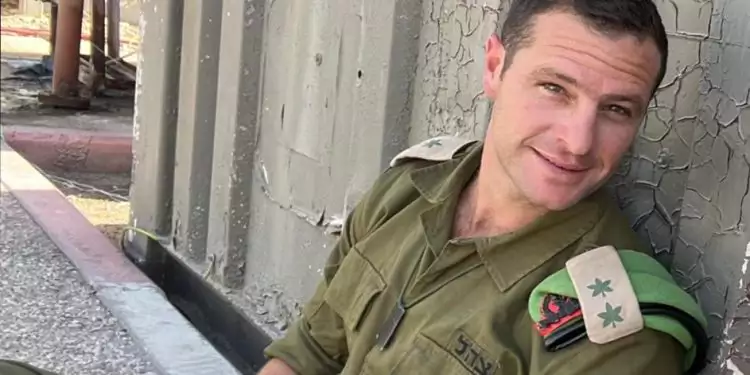
On a bleak day, the 22nd of Tishrei, Simchat Torah of 5784, as the sun had yet to disperse the dew from the grape leaves in the yard of his home in Kedumim, Yonatan (Barnash) Tzur’s heart fell silent. He was thirty-three, married to Rashit and a father to Neta, Arbel, and Dagan. His death was not a quiet one; it was a roar of battle, a clash of supreme courage against unimaginable evil, a moment when a great soul stood guard over the land he loved so deeply. But Barnash’s story doesn’t begin there; it starts in a different home, on different hills, long before the world knew his full name.
Yonatan was born on the 19th of Kislev, 5750, December 17, 1989, in the settlement of Yitzhar, the eldest son of Rivka and Haim. Even before he became an admired commander, even before he was a father and a husband, he was a singular child, whose energy was like a gushing spring. The home in Yitzhar, nestled on the green slopes and rugged terrain surrounding it, served as fertile ground for his imagination and games. He wasn’t just any child; he was a born leader, one who drew his eight younger siblings—Tzruya, Ahinoam, Asa’el, Uriya, Netanel, Shir, Abigail, and Yiska—into every possible adventure. His mother, Rivka, vividly remembered how his tireless activity often led to minor injuries. Once, while speeding down a steep hill on his bicycle, the brakes failed. Instead of panicking, he fell, injured himself beneath his lip, and a small hole opened. When he recovered, instead of complaining about the pain, he laughed heartily and told his worried siblings that now he could drink with a straw directly through the hole. This story, more than any other, told everything about him—his playful spirit, his ability to turn every obstacle into a joke, and his uncompromising character.
Yitzhar, with its wild landscapes, was his private playground. He loved to hike throughout the country, and not just to hike—to experience, to touch, to climb. He would scale the steep hills, the rocky cliffs, his hands scorched by the sun and the grip on the rough stones, the wild wind whipping his face. He rode horses, feeling the rhythm of the gallop and the horse’s mane fluttering in the wind, and dove into the depths of the water, the underwater silence enveloping him, allowing him to observe another world, quiet and wondrous. His hands knew no rest. They were "golden hands," as his family called them. He didn’t just love to explore; he loved to create. He dedicated himself to carpentry, the smell of sawn wood filling his nostrils and the feel of raw material in his palms giving him immense satisfaction. He crafted jewelry, transforming simple metals into small works of art, and cultivated gardens, feeling the damp earth between his fingers, smelling the freshness of the soil, and watching the vegetation bloom under his skilled hands. Every talent that burned within him—climbing, carpentry, silversmithing, gardening—he explored in depth, until he understood it completely. Smart, curious, and multidisciplinary, that was Yonatan.
His teenage years coincided with a turbulent period in Israel. He studied at the "Hitzim" yeshiva in Itamar, where he forged a group of friends who would faithfully accompany him until his last day. The disengagement from Gush Katif, with its pain and national rupture, left a deep impression on him. He was an active participant in the protests, feeling the frustration and sense of injustice burning within him. The dilemmas surrounding his enlistment in the IDF were difficult. His anger and disappointment with the state were immense, but his father, Haim, who was a beacon of wisdom for him, told him a sentence that was etched in his heart: "We must not dismantle the Zionist enterprise over one anger or another." These words resonated within him, leading him to a resolute decision: to influence from within, to be a significant part of the security system. He closed the criminal cases opened against him due to the protests, performed a thousand hours of community service, and trained relentlessly throughout. He ran on the paths of Yitzhar, climbed rocks, pushing the limits of his physical and mental capabilities. It was clear to him: he would reach the best unit possible.
On December 4, 2007, driven by purpose, Yonatan enlisted in the IDF. He was assigned as a combat soldier to the "Shaldag" unit of the Air Force, an elite unit that few are privileged to join. Already in basic training, he stood out and excelled, not only in his physical fitness but also in his natural leadership, his creativity in problem-solving, and his quick responsiveness to changing situations. He continued to a command track, went to officer’s course, and upon its completion, was assigned as a team commander in the "Rimon" commando unit of the "Givati" Brigade. There, amidst the grueling training and dangerous operations, he earned the nickname that would accompany him throughout his military life and beyond: "Barnash." A affectionate shortening of his original family name—Bernstein—which became synonymous with leadership, strength, and a captivating smile.
Military service was a journey of personal growth for Barnash. He saw it not just as a job, but as a mission, a way of life. He was a dominant and respected commander, not only because of his exceptional military skills but also because of his humanity. He served his subordinates as a father figure, friend, and guide. He cared for their social cohesion, instilled values in them, and set a personal example. It didn’t matter if it was a young soldier, a veteran officer, a non-commissioned officer, or a headquarters soldier—Barnash would sit with them for a cigarette, converse at eye level, listen, and advise. "He was the commander you always believed in, knew how to lead, provide solutions, and support everyone," one of his soldiers described, and these words touched upon his essence as a commander. He didn’t "crab" into side roles, as he used to say, but always moved forward, seeking the next significant position.
After serving as a team commander, Barnash was appointed a platoon commander in the "Rimon" unit, and then went to the company commanders’ course. Upon completing the course, he felt a need to pause for a moment, to recalculate his path. He took an unpaid leave, a leave that would change his life. Together with a good friend, he embarked on a four-month motorcycle trip across the United States. They rode from New York, through endless landscapes, all the way to frozen Alaska. On Memorial Day, deep in the Alaskan wilderness, they were caught in a fierce snowstorm. They found shelter in an isolated cabin, surrounded by endless white and bone-chilling cold. There, in the heart of the wilderness, they hung a small Israeli flag they had brought with them and wept for the good friends they had lost in battles. At that moment, far from everything familiar and loved, Barnash felt a "slap of meaning." "I understood what I needed to do," he later recounted, "the importance of the role." In that remote cabin, with the snow piling up outside and the cold penetrating his bones, he made the decision to return to a military career, more determined than ever to continue defending the land.
Upon his return to Israel, Barnash was once again assigned to command roles in the Givati Brigade and the Shaldag unit. He served as a commander in the brigade’s reconnaissance company (Palasar), operations officer, and section officer in Shaldag’s operations branch. He was a commander who saw the big picture, but never neglected the small details. He knew how to tackle every challenge with a full understanding of its significance, and every goal he set for himself—he wouldn’t rest until he achieved it. He didn’t just lead operations; he built people, shaped warriors.
During his service in the Rimon unit, Yonatan met Rashit, a resident of Kedumim, and his world changed. He tried to impress her with all his might: introduced himself as a "Shaldag" commando, on his impressive motorcycle, and in his old blue "Volkswagen Beetle" car. "He told me, 'I’m in Shaldag, I have a motorcycle, and I have a Beetle'," Rashit recalled with a wide smile. "Shaldag didn’t impress me, nor did the motorcycle, but in front of the Beetle, I couldn’t remain indifferent." The rattling Beetle, with its famous patent where the horn would honk every time the brake was pressed, became a symbol of their shared journeys across the length and breadth of the country. Rashit described funny situations where every small accident or sudden stop was accompanied by the deafening noise of the unruly horn and the stunned looks of passersby. "She tamed the wild horse," his family said of Rashit, for she was the only one who managed to see beyond the powerful warrior, to the sensitive and gentle soul within him.
After Barnash returned from his trip to the United States, the couple married and settled in Kedumim in Samaria. With his skilled hands, he built much of their home’s furniture himself, dedicating thought and sensitivity to every detail. Over the years, the couple had three children—Neta, Arbel, and Dagan—who became the center of his world. The family moved to the Har Hamed neighborhood in Kedumim, on the edge of a cliff overlooking breathtaking wild scenery. This dream home, which they designed and built together, was a place of peace and beauty. Barnash built the garden with his own hands and planted a grapevine at the entrance to the house, as a symbol of growth and life. "Yonatan loved this grapevine very much," Rashit recounted with sparkling eyes. "Every time he returned from the army, he would throw his bag and weapon at the entrance and run to tend to the grapevine. 'Look how much it’s grown,' he would exclaim anew each time." After meticulously caring for the grapevine, he would prepare a good steak on the grill on the balcony, dine with a glass of wine from the wine cellar he built, and then return to work in the garden until night. The garden was his third wife, as Rashit called it, and Barnash was very proud of it.
Barnash was deeply involved in the life of the new community in Har Hamed. In the synagogue, he read from the Torah in a clear, resonant voice; at neighborhood parties, he grilled meat in the smoker he built, the rich scent of smoke carried on the wind, inviting everyone to the celebration. He eagerly helped anyone in need and initiated gardening projects in the neighborhood, involving the youth, teaching them not only how to plant and cultivate but also how to build a community. He was a man of people, with a captivating smile and a generous heart, "hands of iron and a heart of gold," as a friend described him.
In 2017, Barnash pursued academic studies as part of his military service, a three-year period during which he dedicated his time to his family and to fulfilling other dreams. During this time, together with his close friend Yehuda Herman—"Yonatan’s second wife," as Rashit called him—he renovated an old truck, transforming it into a luxurious cabin on wheels, filled with ingenious features and surprises. With this truck, which served as a home on wheels, they traveled for a month and a half throughout the country, creating precious family memories that would accompany his children forever. Herman was one of the few people in the world whom Barnash truly admired, and their bond was deep and special.
Strong bonds existed between Barnash and his parents, siblings, and extended family. He cared for everyone, even during difficult times, and his warm, embracing hug was unforgettable. He was the anchor of the family, the legendary storyteller, the one who always knew how to turn every experience, even the most mundane, into a fascinating and humorous tale. "Even when I experienced something with Yonatan myself, I was always happy to hear him recount it afterwards," his brother Asa’el said. "It was always much better than reality itself, because he told it wonderfully."
Barnash’s tenderness was particularly evident towards his grandmother, Hannah, whom he loved and admired deeply. During her difficult years battling cancer, he cared for her with endless devotion. He was entrusted with her care shifts, and as he tended to her body, he also cared for her soul. He prepared a wish list for her, including attending a concert of her beloved singer, Julio Iglesias. Barnash worked tirelessly to fulfill every wish, out of deep love and respect. He would come to her for Shabbat with friends, and Grandma Hannah would spoil everyone with delicious food and stories. After she passed away, Barnash built a small hut near his home with his own hands, which he named "Grandma Hannah." This hut served as a pampering and resting place for soldiers, a corner where they could find hot coffee, cookies, rest, and a picture of Grandma Hannah alongside touching words written by Barnash and Rashit, thanking the soldiers and commemorating her memory. It is difficult to understand how a man who dedicated his life to the army as a senior commander found the time and spirit to operate a pampering corner for soldiers during his short leaves, but that was Barnash—a man of contradictions, a man with a giant heart.
Barnash was a man of principles, opinionated, and believed in the righteousness of his path. His radiant personality and charisma instilled a sense of security in those around him. He inspired those who knew him and served as an example and role model. Nevertheless, he also knew how to connect with people whose opinions differed greatly from his own, and wanted to understand their perspectives and feelings. He had friends from all ends of the political spectrum and from all walks of life, for in his eyes, the person was more important than their opinions. He knew how to enjoy life, appreciated fine food, and loved to travel. He was the life of the party, funny and playful, but also a strong, steadfast, and powerful man with an uncompromising presence. Behind the facade of the tough warrior lay a sensitive and gentle soul, a soul that sought meaning. Evidence of this can be found in the poems he wrote, which offered a window into his inner world. "Why have I wandered so far? Why distance myself so much from the familiar and loved? Why do I ride on the endlessly winding paths of nature? Why do I climb the highest of hills when I know that in a few minutes I will descend again? Why should I walk the path everyone else walks and that they paved for me? Why is nature sometimes more appealing than people? Why did I come into this world? What is the meaning of my life?" These questions, which stemmed from within him, reflected his search for depth and taste, his philosophical soul that beat beneath the uniform. Rashit, his wife, was captivated by his charm after he read his poems to her, seeing in him the complete man—strong and gentle at once. "There was infinite tenderness in him," she said, "it’s hard to understand such complexity. Yonatan is an extremely strong man; he carried very heavy burdens alone, and with one hand, he could easily kill a man, but he is also a soft, sensitive, and intelligent man."
During his service, Barnash experienced the difficult loss of his good friend, Benaya. He eulogized him at his grave and struggled to recover from the loss. A few months later, he was offered two positions: a company commander in Shaldag, the unit where he began his journey, or command of the Givati reconnaissance unit, a significant role where he could fill the void left by Benaya. With all the prestige of Shaldag, it was clear to Barnash that the right choice for him was to step into his friend's shoes, to continue his path. It was a choice that filled him with profound meaning.
Thanks to his exceptional military skills, the leadership he displayed on the battlefield, his fruitful cooperation with other commanders, and his ability to manage operations under extreme pressure, Barnash was appointed commander of the Nahal Reconnaissance Battalion in May 2022. This was a peak in his military career, a role where he could realize all his talents. He planned the operations he led comprehensively and thoroughly, with deep thought and broad vision, and prepared the forces with high professionalism, meticulously attending to every detail. He felt a deep sense of mission in his actions—for the defense of the land and the future of his children, for the Zionist enterprise his father spoke of. "He would always say, 'I won't stay in the army to waste time'," his mother recounted, "he had no patience for all the promotion battles in the army. He would say, 'If you give me an excellent role, if not - I have so many things to do outside. I only move forward; I won't 'crab' into side roles'." The word "crab" (לסרטן) he coined, meaning to move sideways, reflected his uncompromising determination to only advance towards the most significant goals.
On Saturday, the 22nd of Tishrei, Simchat Torah 5784, October 7, 2023, at six-thirty in the morning, Barnash’s life, and the lives of thousands of Israelis, turned upside down. The Hamas terrorist organization launched a murderous surprise attack on Israel. Under the cover of massive rocket fire from the Gaza Strip into wide areas of the country, thousands of terrorists infiltrated—by land, sea, and air—and began a murderous assault on the communities surrounding Gaza, on Sderot, Ofakim, and Netivot, on nature parties near Kibbutzim Re’im and Nir Oz, on IDF bases, and on travelers on the roads in the area. The terrorists murdered approximately eight hundred civilians in their homes, in their cars, after committing severe atrocities against them. They abducted hundreds of Israelis to the Gaza Strip and destroyed, looted, and set fire to homes and property. Hundreds of soldiers, police officers, security forces personnel, and members of local emergency response teams fell in battle. On this morning, a war began.
Yonatan spent that Shabbat with his family in their home in Kedumim, surrounded by the love and tranquility of the home he had built with his own hands. The first chirp of the sirens, heard a little after six in the morning, shattered the silence. The phone rang incessantly. A call from his unit. He had no time to hesitate. He quickly put on his uniform, grabbed his weapon, kissed his wife and children with a determined look, and drove south at high speed. His destination was Kibbutz Kerem Shalom, in the southern sector of the Gaza Division, where he knew his unit’s soldiers, the Nahal Reconnaissance Battalion, were already fighting, and to his commander, the commander of the Nahal Brigade. On his way, as he sped down the burning road, he managed the event by phone—sending critical coordinates, speaking with other commanders, scrambling additional forces to the area, and trying to comprehend the extent of the inferno unfolding before him.
At a quarter past eight in the morning, upon reaching the area of Ma’on Junction, near Kibbutzim Nir Oz and Magen in the Gaza envelope, Barnash encountered an ambush of terrorists. They waited by the roadside, armed and crouched, ready to slaughter anyone who passed. Without a second thought, without a moment’s hesitation, he charged his vehicle towards a terrorist’s motorcycle and struck it with immense force. But he realized it wasn’t enough. The number of terrorists was large, and they continued to advance. With supreme courage and resourcefulness, he made a split-second decision. He collided head-on, with his vehicle, into a terrorist vehicle, completely disabling it. The collision was tremendous, but this act, an act of supreme heroism, managed to halt the terrorists’ advance towards an important base in the area and force them to retreat. He saved many lives. At that moment, in the heart of the inferno, Lieutenant Colonel Yonatan Binyamin (Barnash) Tzur fell in battle. He was thirty-three at his death. He fought with wisdom and bravery, until his last breath, as Rashit knew with certainty.
Yonatan was laid to rest in the military plot of the cemetery in Kedumim, the settlement where he built his home and raised his children. He left behind Rashit, his wife, his two daughters Neta and Arbel, and his son Dagan, who was then only a few years old. He also left behind his parents, Haim and Rivka, and four sisters and four brothers, a large and loving family, broken and in pain. "Sometimes even heroes die," Rashit told little Dagan, who asked how it was possible that his hero father had died. The song Barnash loved so much, the song he joked was for his funeral, was played on a loop at the end of the funeral, its words echoing in the painful silence.
But Barnash’s story doesn’t end on the day of his death; it only begins anew. His legacy lives and breathes in every corner. As part of the "Ot.Haim" project, a font named after Yonatan was designed, based on his unique handwriting, so his words continue to live and influence. His old blue Beetle, in which he traversed the country with Rashit, was renovated in cooperation with the "Car Rescuers Association," and it is proudly displayed near his home, a symbol of his adventurous and mischievous spirit. A wine edition was launched in Yonatan’s memory, titled "Barnash – Continuing the Work," expressing the eternal spirit of the man who never gave up. Those who honored his memory released a sticker with his picture and the resonant inscription: "Believing in our uncompromising right to this land," a sentence that summarizes all that he was.
In the book "One Day in October: Forty Heroes, Forty Stories," an entire chapter was dedicated to Yonatan, commemorating his story of heroism. Web pages in his memory were uploaded to the website of the Shaldag Unit Veterans Association and the website of the Sdot Negev Regional Council, spreading his story far and wide. More than fifteen babies born after his fall were named after him, carrying his name with pride and hope for the future. Scholarships in his name were awarded to several students, continuing the path of a curious and multidisciplinary learner. In the soldiers’ corner that Yonatan established in Har Hamed, "Grandma Hannah," an observation point was built in his memory, a place where soldiers can rest, gaze at the landscape, and remember the commander who cared for them. A Torah scroll was brought into the synagogue in Har Hamed for the elevation of Yonatan’s soul, sanctifying his memory. Near the site of his fall at Ma’on Junction, by the roadside, a moving memorial was erected—a metal monument in the shape of a blue Star of David, with "Barnash" inscribed within it.
Yonatan (Barnash) Tzur was a legendary commander even in his lifetime, a man of strength and tenderness, of earth and sky, of tales and deeds. He was the anchor of his family, a beacon for his friends, and a role model for his subordinates. He left behind an immense void, but also an enormous legacy of love for humanity, love for the land, heroism, and courage. His story, a story of a full and meaningful life, is a story of resurgence, of a man who chose to defend his home and his people, and paid for it with his life. His memory will be etched forever in the heart of the nation.
Moments of a life
All photographs · 7
Videos and links
In the media
Articles
- Sometimes heroes die too, that is what I told my son
ישראל היום ·
- A meeting between the mother of the officer who fell on Simchat Torah and five babies named after him
מקור ראשון
- The writings left by Lieutenant Colonel Yonatan Tzur, may God avenge his blood: I believe in our uncompromising right to this land
ערוץ 7
- Lieutenant Colonel Yehonatan Tzur, of blessed memory, would have been happy to see what they did with his beloved old Beetle
mynet חולון
- He put on his uniform after the shiva for his son who fell on October 7
ynet
Podcasts
- Father of Oct. 7 fallen hero: ‘I have no regrets’
The Caroline Glick Show ·
Memorial sites
- Lieutenant Colonel Yehonatan Binyamin Bernash Tzur, of blessed memory
גל-עד גבעתי
- Yehonatan Tzur (Barnash) — Ot.Hayim
אות.חיים
- Yehonatan Binyamin Tzur
יזכור
- In Memoriam of: Yonatan Tzur
October7Memorial
Memorial projects
The OH YehonatanTzor font, based on his handwriting, in the Ot.Hayim project.
The Classic Car Rescuers association restored Yonatan’s old Beetle for his family.
The “Barnash Wines — Continuing to Act” edition was launched in his memory.
A blue metal Star of David bearing the word “Barnash” was placed near the site where he fell at Ma’on Junction.
A chapter was dedicated to Yonatan in One Day in October by Yair Agmon and Oriya Mevorach.
A wooden observation deck was built in his memory near his home in Kedumim. Friends and relatives named babies after him; his mother embroiders personalized gifts for them.
Stories told about them
Reshit said that when Yehonatan came home, he spent hours tending the grapevine and garden, made steak and drank wine on the balcony. The reporter gave the family a recording of an earlier conversation with him about his friend Bnaya Sarel.
Reshit said that Yehonatan once accidentally connected the horn to the brake in the old Beetle, so it honked every time he braked. On another occasion, they stayed overnight in the car after its lights stopped working because he refused to leave it by the roadside.
Shmuel Ayash said that he enlisted during the war and served for about six months wearing Yehonatan’s combat vest. He and Reshit are keeping it for Dagan, Yehonatan’s son; meeting people who knew Barnash connected him to the memory of his friend.
Life & service
Burial
Cemetery
Kedumim
- Plot
- 1
- Row
- 1
- Grave
- 4
Place of rest
All photographs · 1
Tributes & remembrance
יהי זכרך ברוך.
יהי זכרו ברוך
געגוע מטורף.
רגישים ומרוגשים עד דמעות, ישבנו היום בבית משפחת רום ושרתי לזכרו של יהונתן רום ז"ל שנרצח במסיבה ברעים. אין כאב ששיר יכול לרפא, רק לבטא אהבה ותנחומים למשפחה הנהדרת הזאת שאיבדה את היקר לה מכל. יהי זכרו ברוך https://www.facebook.com/shlomoartzi/videos/1728339890976411
עם ישראל זוכר אותך כל יום
החוסר מורגש ובועט בכל הכח.
געגוע ענק.
זכיתי לשרת תחתייך במשך שנה
מפקד נערץ ודמות לחיקויי, לנצח אחי!
חבל שלא הכרתיך , אישית.
תנחומים למשפחה .
הי"ד
שהמקום ינחם את משפחת צור
אני מאוד מצטערת שזה קרה אתה גיבור ישראל!!
היית לי מודל לחיקוי ומפקד להערצה, ליווית אותי בתקופה כל כך משמעותית ובלחימה יחד
אוהבים ומתגעגעים
״צר לי עליך אחי״
ברנש הי״ד אוהבים ומתגעגעים פעם אחת פגשנו אותך פעם אחת שנחרטה בליבנו לעד.
יהי זכרך שמור בליבנו מפקד למופת גיבור ישראל
תמיד הסתכלת עלינו בגובה העיניים.
ואנחנו משום מה הסתכלנו ״מלמטה״, לא כי היית כזה גבוה כן פשוט כולנו הרגשנו שאתה בלתי מנוצח, ״קרוץ מהחומר הנכון״.
מסתבר שטעינו, תודה על הכל קודקוד.
ברנש איש יקר ואהוב
מתגעגע המון ! לנצח תהיה בליבי
עומד ומצדיע לך ביראת קודש ובכבוד
חיוך שלא ישכך
שמור עלינו מלמעלה
היום יום הזיכרון, ואני חושבת על יהונתן צור (ברנש)
את יהונתן הכרתי בצבא. שירתנו יחד ימים שלמים, בן אדם עם נשמה ענקית ולב זהב. אחד כזה שקשה לשכוח. גיליתי שהוא נרצח ב-7.10 דרך הפייסבוק. הידיעה הזו תפסה אותי חזק, קשה לעכל.
בן דוד אהוב
נוח על משכבך בשלום
ברנש!
תמיד עם החיוך השובב
קשה להאמין שאתה לא איתנו
גיבור ישראל תודה לך
תודה על מה שהיית בשביל בני שלחם ולמד ממך המון
נזכור אותך לעד
חבל על דאבדין ואינן משתכחין יפה תואר ויפה מראה עצוב יהי זכרך ברוך
עוד שנה של געגוע,כאב ועצב רב.
לא נתפס, איך נקטפת .
דמות למופאת ,
מנהיג,
ישר ואמיץ .
אתה חסר .
יהי זכרו ברוך
אדם טוב בנו של אדם טוב . האב לוחם במילואים גם כיום. "איפה ישנם עוד אנשים... ".
ריבונו של עולם שמור על החיים, תן כח לחיות עבור אנשים טובים כמו יהונתן ולהרבות טוב בעולם.
יהיה זכרו ברוך
תודה לך שהפכת אותנו לגברים למדת אותנו להיות לוחמים בחיים ובכול מצב ודרך בחיים תודה שעשינו אותנו בני אדם את המורשת שלך תמיד תהיה ותזכר במחלקת פטרול מבצעית 435 מרץ 13
מפקד יחידה שנגע והשפיע על כל חייל תחתיו גם אם לא הכיר אותו לעומק, וזה אומר הכל על הבן אדם שהיית.
הבחור הכי כריזמטי, הכי מרשים, הכי לוחמני, הכי אמיץ.
תמיד תהיה כל יכול בשבילי,
דמותך תמשיך להוביל אותי לנצח
השם יקום דמך
גיבור ישראל
לא רק לימדת אותי איך להילחם אלא גם את האהבת הארץ והאדם
תודה לך
לוחמי ומפקדי חטיבת הנח״ל
מרכינים ראש ומתייחדים עם זכרם של חללי הנח״ל .
יהי זכרם ברוך!
Yonatan loved this grapevine very much. Every time he came home from the army, he would drop his bag and weapon at the entrance and run to tend to the vine.
Source:ישראל היום
Read the Hebrew original
יהונתן אהב מאוד את הגפן הזו. בכל פעם שהיה שב מהצבא, היה זורק בכניסה את התיק והנשק ורץ לטפל בגפן.
I have so many memories of Yonatan and the car
Source:mynet חולון
Read the Hebrew original
יש לי כל כך הרבה זיכרונות מיהונתן ומהרכב
I felt Yonatan with me every moment.
Source:ערוץ 7
Read the Hebrew original
הרגשתי את יהונתן בכל רגע איתי.
A child who was a gift
Source:מקור ראשון
Read the Hebrew original
ילד מתנה
An amazing father
Source:מקור ראשון
Read the Hebrew original
אבא מדהים
Very authoritative
Source:מקור ראשון
Read the Hebrew original
סמכותי מאוד
A wild horse
Source:מקור ראשון
Read the Hebrew original
סוס פרא
Yonatan is here with us
Source:מקור ראשון
Read the Hebrew original
יהונתן נמצא איתנו
A young man with strong values
Source:מקור ראשון
Read the Hebrew original
בחור ערכי
He did not compromise
Source:מקור ראשון
Read the Hebrew original
הוא לא התפשר
A strong figure
Source:מקור ראשון
Read the Hebrew original
דמות חזקה
Let's name him after him
Source:מקור ראשון
Read the Hebrew original
בוא נקרא על שמו
An admired cousin
Source:מקור ראשון
Read the Hebrew original
בן דוד נערץ
The two Yonatans guarded the road to keep it closed to terrorists
Source:ynet
Read the Hebrew original
שני היהונתנים שמרו על הציר שלא יהיה פתוח למחבלים
the pride of the family.
Source:October7Memorial
Remembrance Day addresses
יום הזיכרון לחללי מערכות ישראל התשפ"ה – 2025
בכל יום שעובר, אזכור יותר! אזכור, את אלו שיצאו עימי לקרב ולא שבו, ולהם אין מי ידמה ומי ישווה. אזכור, שהכאב לא יעבור לעולם, והזמן, הוא לא מרפה ולא מרפא. אזכור, את שיברון הלב הגובר ואת הבית שבוער. אזכור, את צדקת הדרך, ואשבע שוב, שמה שהיה לא יהיה יותר. אזכור, שיותר מכל דבר אחר – אני חסר! ביום הזה, אני נתקף געגוע לדמותם, לחיתוך דיבורם, לחיוכם, ומדליק נר לזיכרון דרכם ומורשתם!
משרד הביטחון
אגף משפחות, הנצחה ומורשת
יום הזיכרון לחללי מערכות ישראל התשפ"ה – 2025
בכאב, בהצדעה ובתקווה אני מתכבד להדליק נר זיכרון זה. השנה, כשאנו נלחמים במלחמה ארוכה, רב זירתית וצודקת, הזיכרון נושא משמעות עמוקה. ביום זה נעצור ונתייחד עם זכרם של טובי בנינו ובנותינו שנפלו בהגנה על המדינה. מורשתם היא המצפן שמתווה את דרכינו, והיא המעניקה לנו כוח להמשיך ולהגן על מדינת ישראל ותושביה. משפחות יקרות, אנו מרכינים ראשנו ומתחייבים שנעמוד לצידכן תמיד. יהי זכר הנופלים ברוך.
אלוף דדו בר כליפא
ראש אגף כוח האדם, צה"ל
יום הזיכרון לחללי מערכות ישראל התשפ"ה – 2025
בשעה שאנו זוכרים את גודל תרומתם ועומק מסירות נפשם של טובי בנינו ובנותינו, נופלי מערכות ישראל לדורותיהן, ממשיכים צה"ל וכוחות הביטחון במימוש המשימה למענה לחמו ועבורה נפלו: הכרעת אויבינו מדרום, מצפון, ביהודה ובשומרון, וגם בזירות רחוקות יותר. בהערכה רבה ובגאווה אדירה אנו מרכינים ראש בפני הנופלים והנופלות, מאמצים את משפחותיהם אל לבנו, וממשיכים במשימה להבטחת קיומה של ישראל לדורי דורות. יחד נעשה ונצליח.
רב אלוף אייל זמיר
הרמטכ"ל, צה"ל
יום הזיכרון לחללי מערכות ישראל התשפ"ד – 2024
כאשר דגלינו מורדים לחצי התורן וראשינו מורכנים לזכר הנופלים והנופלות במערכות ישראל, ממשיכים לוחמי צה"ל ומפקדיו בלחימה בדרום, בצפון, ביהודה ובשומרון ובזירות נוספות. על כל דור מוטלת המשימה של הגנת העם והארץ – משימה שאף פעם אינה פוסקת. נצדיע בגעגוע ובגאווה לנופלים ולנופלות, נחבק את משפחותיהם, ונמשיך ברוח הציווי שהותירו לנו. עם ישראל חי.
רב ניצב יעקב שבתאי
המפקח הכללי, משטרת ישראל
יום הזיכרון לחללי מערכות ישראל התשפ"ד – 2024
אחיי הנופלים, כל נר הוא זיכרון יחיד ומיוחד, על חיים שהיו ואינם, געגוע שנצרב עמוק בלב, עולם ומלואו. הנרות כולם הם זיכרון של אומה כי לעולם לא עוד, בשורת הציונות וקוממיות ישראל. זיכרון כי הדרך לעם חופשי בארצנו עוברת דרך מסדר הנופלים. אור הנר יזכיר לנו את מסירות נפשכם להציל חיים, להגן על הבית. הנרות מסמנים לנו נתיב גבורה ערכי מחייב שאנו מצווים ללכת לאורו. נמשיך להילחם ולהוסיף אור מתוך אמונה בנצח ישראל.
יואב גלנט
שר הביטחון
יום הזיכרון לחללי מערכות ישראל התשפ"ד – 2024
בהצדעה ובכאב, בשם צה"ל כולו, אני מדליק נר זיכרון. בעיצומה של מלחמה, הזכרון נושא משמעות יום-יומית, שעבר והווה מתלכדים בה. לאורם של הנופלים נמשיך לצעוד, חיילי הסדיר והמילואים. לאורם של הנופלים נמשיך להגן על ארצנו ועל מולדתנו, גם כשהמחיר כבד. להבת-הזכרון תבער בנו בעודנו ממשיכים להלחם ונזכור את הנופלים ואת אומץ ליבם. משפחות יקרות, צה"ל מרכין היום ראש, מצדיע לכן וכואב איתכן. יהי זכר הנופלים ברוך.
אלוף יניב עשור
ראש אגף כוח האדם, צה"ל
יום הזיכרון לחללי מערכות ישראל התשפ"ד – 2024
בהוקרה, בגאווה ובכאב שאין לו סוף, אני מתכבד להדליק נר לזכרם של הנופלים והנופלות במערכות ישראל. סיפור חייהם בארץ הזאת, מסכת שירותם, גבורתם והקרבתם – הם סיפורה של הארץ הזאת, אך גם סיפור המחיר הכבד שהיא תובעת מאוהביה. מחויבותנו לזכר הנופלים ולדרך שהותירו לנו ניצבת תמיד לנגד עינינו. את המשימה שלא זכו להשלים, משלימים כיום, וישלימו, אנשי כוחות הביטחון, הממשיכים בדרכם ולאורם. יהי זכרם של הנופלים ברוך.
משרד הביטחון
אגף משפחות, הנצחה ומורשת
יום הזיכרון לחללי מערכות ישראל התשפ"ד – 2024
בחרדת קודש אני מתכבד להדליק נר לזכרם של חללי מערכות ישראל, חברנו שנפלו, מראשית היציאה מהחומות ולאורך כל שנות עצמאותנו המדינית והציונית, מהווים תמרור זיכרון לדרך חיינו ולמחוייבות הלאומית להנצחת זכרם. דרכם נותרה דרכנו ומורשתם נר להמשך עשייתנו. יהי זכרם ברוך!
בני גנץ
שר הביטחון
יום הזיכרון לחללי מערכות ישראל
נזכור אותם, כולנו יחד. כל אחד ואחת מהם, מדי יום ביומו, והיום ביתר שאת, כך – לנצח. "כי מדי דברי בו זכור אזכרנו עוד"
משרד הביטחון
אגף משפחות, הנצחה ומורשת