
The story
Yedidya Eliyahu was born in Jerusalem on the 2nd of December, 1997, the 3rd of Kislev 5758, a child who, from the moment of his birth, carried within him a spark of tranquility and inner vitality. He was the third child in a family that would eventually grow to ten siblings – Uriya, Michal, Tsofia, Yitzhak, Eliav, Revital, David, Moshe, Ariel, and Yair – a vibrant home, always filled with laughter, conversation, and the gentle hum of shared meals and doors opening and closing. Within this lively bustle, in the heart of the Kiryat Moshe neighborhood, Yedidya found his place, a child with observant eyes, attentive to everything around him, absorbing impressions and building a rich inner world. The home was fertile ground for his growth, a place where values of tradition and action permeated the air like the scent of warm dishes, and he absorbed them naturally, almost unconsciously, as an integral part of who he was. His mother, Ziva, would affectionately recall those days, saying, "Yedidya was an easy child to raise, every mother's dream. A child with deep spiritual feelings, all poetry, all contentment. I don't remember him ever missing a prayer, even in his teenage years." She wasn't referring merely to the fulfillment of religious duty, but to a profound and essential nature within him, a kind of inner connection to quietude, to beauty, to a certain order in the world, which manifested early in his ability to find serenity even in a noisy house, and in his devotion to the daily rituals that provided him an anchor. He was not a turbulent or rebellious child, but one who sought meaning, and found it in the gentle poetry his mother plucked from him, and in the calm he brought with him, like a cool breeze on a hot summer day.
Yedidya spent his early childhood and middle school years within the walls of the "Moreshet" Talmud Torah in Jerusalem. He was not only a diligent and talented student, one who applied himself to his studies and excelled in them, but also a sensitive and attentive young man, who always knew how to discern subtle nuances in his friends, offering a kind word or a listening ear. When he entered high school, he left familiar Jerusalem and moved to study at the high school yeshiva in Moshav Neve, located in the Eshkol Regional Council. The transition from the bustling city to the open landscapes of the South, to plowed fields and rural quiet, was a refreshing change for him, an opportunity to breathe different air, to experience a different way of life. At the yeshiva in Neve, between the study hall and the expanses of nature, Yedidya continued to develop his unique personality. He was a young man who loved to learn, not just to acquire knowledge, but out of a deep inner curiosity, a desire to understand the world and his place in it. He was not content with obvious answers, but explored, questioned, delved deep, and built for himself a cohesive worldview, integrating the spiritual world with daily reality. His yeshiva friends remember a modest, smiling young man, who always knew how to blend gentle humor into the deepest conversations, and to touch the souls of everyone around him.
After completing his high school studies, when he reached a crossroads of choice, Yedidya chose to continue his journey in the world of Torah and spirit. He turned north, to the city of Safed, and enrolled in the local Hesder yeshiva. Safed, with its narrow alleys, ancient houses, and unique spirituality, immediately captivated him. This was not just another yeshiva, but a place with a distinct character, combining the depth of study with a Hasidic flavor, with an aspiration "to bring a new and uplifting spirit to the service of God." Yedidya found a spiritual home there, diving into Gemara and other texts, studying with devotion and enthusiasm, not out of compulsion but out of a genuine passion to understand, to develop, to elevate himself. He would sit for long hours in the study hall, an open book before him, his voice blending with the melody of dozens of other students' learning, but his eyes were deeply immersed in the text, searching for the hidden meaning, the grand idea. He sought not just knowledge, but a way of life, a method by which to connect the higher world to simple reality, to infuse holiness and meaning into every moment. He aspired to grow in Torah, not merely as erudition, but as personal growth, as the building of character, as the shaping of a soul. Safed, with its clear air and open views, its deep study and special atmosphere, was for him a crucible of spirit and matter, and he devoted himself to it with all his heart.
When his time came to enlist, Yedidya momentarily set aside his Gemara books and made the sharp transition to the world of uniforms. He joined the IDF, choosing to serve in the Combat Engineering Corps, a unit that demands both sharp thinking and manual labor, both technical understanding and physical determination. After undergoing a rigorous training course, which included intensive field exercises, learning about explosives and heavy equipment, he was assigned as a sharpshooter in his unit. Here too, within the military strictness, Yedidya's personality stood out. He was not only a dedicated and highly motivated soldier, but also a true friend, always volunteering for the most challenging tasks, the first to raise his hand when others hesitated, and always ready to help his comrades, to lend a shoulder, to listen. He did not view his service merely as a duty, but as a mission, an opportunity to contribute, to be part of something larger than himself. He faced the physical and mental challenges of serving in a combat unit with the calm and serenity that characterized him, and even in difficult moments, he knew how to find the silver lining, the reason to smile, the kind word that would lift the spirits of his friends. After completing his mandatory service, Yedidya continued to serve actively in reserves with the unit, an unbreakable bond to the framework and the friends he made there.
Upon his release from regular service, Yedidya returned to Safed, to the yeshiva and the world of study he so loved. He returned to his bench in the study hall, to the smell of old books, to the familiar melody of learning. He loved the unique way of Torah study in that yeshiva, its depth, its desire to connect the spiritual to the practical, theory to daily life. Yedidya had a deep desire to advance and improve himself, to toil and persevere in Torah and in his character traits; he felt an inner connection to Halakha and the values underlying it, not as an external imposition, but as an internal path to a full and meaningful life. He always acted with his characteristic calm, smile, and serenity, always trying to understand, to contain, to accept. A close friend of his, who remembered him well from his yeshiva days, said of him: "Yedidya was a good person. He worked hard on himself to grow, never gave up. He had a unique way of progressing, of knowing, of giving every force in life its place without it interfering with another force. A person of integrity in character, in good manners, in Torah and in fear of Heaven. He had a personality that radiated to those around him, and all with natural humility." He meant that Yedidya was not a person who lived by fixed formulas, but one who sculpted his personality through constant inner work, seeking the delicate balance between different areas of life – between deep study and action, between spirit and matter, between the solitude of study and connection with people. He was straightforward, not only in the religious sense, but in the deep human sense, a person whose word could be trusted, who acted out of inner integrity, whose simplicity and humility only amplified the power of his influence on his surroundings.
The year 2019 marked a turning point in Yedidya's life, the year he married Meitar. The two met through a matchmaker, but it quickly became clear that it was a deep and genuine connection, a love that blossomed naturally and quickly. Meitar recounted the first moments of their acquaintance, the clear feeling that seized her: "My friend from the midrasha matched us, and from the beginning I knew this was it. I looked at him, he had a kind of light, and I thought – 'This is better than I imagined.' I remember returning to the midrasha and meeting the friend who matched us, and I told her, 'This is my husband, that's it.' But it took him a little longer to understand, it took him about another month. And then we got married." She immediately saw in him her life partner, the perfect companion for the journey, the special light she sought. Yedidya, with his more reflective and measured nature, took his time, examining things gently and attentively, until he too reached that same clear understanding, that same inner certainty. The wedding was a joyful and moving event, marking the beginning of a new and fascinating chapter in their shared lives. They established their home in Safed, among the ancient stone alleys, and built a warm, loving nest there. Over the years, their small family expanded, and they were blessed with two charming daughters – Maor-Ziva and Avigail. Yedidya was a very present and involved father in his daughters' lives. He was not content with the traditional role of provider, but saw fatherhood as an essential part of his identity; it was important to him to experience it in its full glory. He took an active part in their upbringing, from changing diapers and telling bedtime stories, through games in the park and nature walks, to deep conversations about the world. He was a full partner in the home and in daily activities, a supportive and indulgent, devoted and loving husband and father, who saw establishing and nurturing his family as one of the most important missions in his life.
To support his family, Yedidya began working in construction. He had good hands, as everyone described him, and a boundless, bursting creativity. He was not just a laborer, but an artist at heart, one who saw the potential in raw material and shaped it with skill and love. Meitar described him with precise words: "A man of spirit, Torah, poetry, and writing, but also a man of action, with golden hands. He worked in construction, creating things, and especially loved building with local stone. He even built an stone bench for our home's courtyard with his own hands." He found in construction, and especially in working with local stone, a way to connect his love for the land and nature with practical necessity. He loved the feel of the stone, its roughness, its colors changing with the light, and the ability to transform a hard block of rock into a useful and beautiful creation. The bench he built with his own hands for their home's courtyard in Safed was not just a piece of furniture, but a tangible symbol of his love, his dedication, and his talent, a quiet corner where they could sit together, look at the view, and dream of the future. Physical labor was not merely a means of livelihood for him, but also a means of expression, creation, a deep connection to the earth and to matter, a direct continuation of his rich spiritual world.
Alongside his studies at the yeshiva and his work in construction, Yedidya began teacher training. The field of education was particularly close to his heart; from childhood, he had a natural inclination to guide, to influence, to see the good in everyone and help them flourish. His dream was to work with at-risk youth, out of a deep understanding of the need to provide hope and tools to those less fortunate. He began instructing in the "Acharei!" movement at the Emuna shelter in Safed, seeing it as a golden opportunity to influence and support young men and women, to provide them with structure, values, and a sense of capability. The movement's coordinators remembered him well, saying that Yedidya, thanks to his rare skills, was given the most challenging groups to instruct, those that others struggled with. He approached them with infinite patience, genuine listening, and an ability to see beyond the tough exterior to the vulnerable, yearning child within. He never gave up on them, but believed in their inner strength, gently and persistently pushing them to break boundaries, both physical and mental. His mother, with sparkling eyes, said, "It was clear to us that he dedicated his life to educating, nurturing, and raising children and youth. That was his direction from childhood." He not only taught, but served as a personal example, a man who lived his values, who believed in action, who saw education as a profound mission, a way to build not just houses, but souls.
The year 2023 brought a new chapter in the family's life. Yedidya, Meitar, and their daughters moved from enchanting Safed to Ramat Gilad in Samaria, a young and developing settlement that offered them a new beginning, a warm community, and open landscapes. They were excited by the move, by the opportunity to build their home in a new community, to plant roots in a different place. In Ramat Gilad too, Yedidya continued to express his love for manual labor and connection to the land. He enjoyed building furniture from local stone for their new home, seeing it as a great privilege, not just work. Every stone he laid, every piece of wood he shaped, was imbued with love and dedication, part of the process of building a home and a community. Beyond work, the family loved to travel the country, discovering hidden corners, enjoying its magical landscapes. They would go on long trips, from mountain peaks to green valleys, from the scents of the desert to the sea breeze. Yedidya loved the land with every fiber of his being, loved to walk on it, to feel its soil beneath his feet, to learn its stories through the landscape.
In his free time, when he wasn't studying, working, or with his family, Yedidya played various percussion instruments. Drums, darbuka, and other percussion instruments were for him a way to express his deep poetic soul, the inner rhythm that pulsed within him. Through sounds and rhythms, he released his rich inner world, the poetry within him. He was sociable and well-liked by everyone, a person easy to connect with, who radiated warmth and love. He maintained good relationships with friends from different periods of his life – from Jerusalem, from Neve, from Safed, from the army – and enjoyed hosting with generosity and open-heartedness. His home was always open, full of people, conversations, laughter, and music. Each of his many friends, from diverse backgrounds, felt they had lost their closest friend, because Yedidya knew how to connect with each person individually, to see a whole world in them. He always looked at reality with a good eye, an optimistic and benevolent approach that was contagious. He lived his life with calm and serenity, even when faced with challenges, and when asked how he was doing, he would often reply – "Living the dream." This was not just a casual remark, but a complete philosophy of life: deep gratitude, contentment with the good fortune he had, and an ability to find beauty and meaning even in the smallest things. He was a person full of gratitude, at peace with himself and his path, radiating this completeness to everyone around him.
And then, on Saturday, October 7th, 2023, the 22nd of Tishrei, Simchat Torah 5784, at 6:30 in the morning, the dream shattered. The Hamas terrorist organization launched a brutal surprise attack on Israel. Under the cover of massive barrages of thousands of missiles and rockets from the Gaza Strip into wide areas of the country, thousands of terrorists infiltrated – by land, sea, and air – and began a murderous assault on the communities surrounding Gaza, on Sderot, Ofakim, and Netivot, on innocent attendees of nature parties near Kibbutzim Re'im and Nir Oz, on IDF bases, and on those traveling on roads in the area. The terrorists cold-bloodedly murdered some eight hundred civilians in their homes, in their cars, after committing grave atrocities against them. They abducted hundreds of Israelis to the Gaza Strip and destroyed, looted, and set fire to homes and property. Hundreds of soldiers, police officers, security forces personnel, and members of local emergency response teams fell in battle. On that terrible morning, a war began. Reality as they knew it was instantly overturned.
On the evening after the holiday, as everyone was still trying to grasp the magnitude of the disaster, Yedidya was called up for reserve duty. He did not hesitate for a moment. The message arrived on his mobile phone, and he immediately got ready, said goodbye to Meitar and his daughters with a strong hug, and set out into the unknown. He reported to base, as part of Battalion 8170 of the Combat Engineering Corps, filled with intense motivation and driven by a deep sense of mission and a strong desire to help and contribute to the defense of the country he loved so much. His reserve comrades, who met him in those first days of confusion and terror, recounted that his spirits were high. He did not allow fear or despair to overcome him, but was a beacon of optimism and calm. He connected all the soldiers, knew how to engage them in conversation, to listen, and to find the right words to lift their spirits and morale. Even in difficult moments, when grim news poured in from all directions, he maintained his composure, his smile, and his belief in the righteousness of their path, a belief that instilled hope even in the hearts of his friends.
About three weeks after the war began, the IDF initiated a ground maneuver in the Gaza Strip. The ground entry was a dramatic event, a significant step in the war. Meitar recounted that Yedidya was not expected to enter Gaza with the main force. He was part of the rotations, but not on the first list for entry. However, just before departure, a spot opened up in one of the armored vehicles, and Yedidya, without a second thought, was the first to volunteer to fill it. He saw it as an opportunity to take an active part in the fighting, to defend his people and his land, to be at the forefront of the effort. He was not the type of person to stand by when action was needed. His decision was further testament to his courage, his dedication, and his unwavering sense of mission.
Upon entering the Strip, Yedidya fought with his unit in the northern Gaza Strip. They engaged in fierce battles against dozens of terrorists, fighting within built-up, mined, and booby-trapped areas, eliminating many terror cells. It was a difficult, complex, and dangerous battle, demanding daring, precision, and determination. Yedidya fought with great heroism and courage, employing his training as a sharpshooter, his understanding as an engineer, and his composure as a person. During the intense fighting, in days of tension and uncertainty, Yedidya knew how to encourage his friends in the most difficult hours. He was a person who instilled confidence, who managed to boost team morale even when forces were on the verge of exhaustion. The phrase he often used – "What is there to fear? God is with us" – was not merely a religious statement, but an expression of a deep inner faith in the righteousness of their path, a sense of destiny and divine protection that gave him and his friends immense strength. He didn't just say it, he lived it. He walked with his head held high, even when danger lurked everywhere, and on this legacy, his friends continued to fight, as many soldiers later testified. His presence gave them an anchor, a reminder that they were not alone, and that there was a greater purpose than personal fear.
That day, the 19th of Cheshvan 5784, November 3rd, 2023, was another day of battle, as there had been many before it. Yedidya and his comrades were on an operational mission, deep in enemy territory. At some point, the armored vehicle they were traveling in sustained a direct hit. It was a massive barrage of mortar fire that struck the vehicle, immediately followed by sniper fire. Yedidya, who was taking a brief nap, a snatched rest between missions, was killed instantly, without feeling anything. Two other soldiers with him in the vehicle were wounded. He was twenty-five years old when he fell. The bitter news quickly reached his family in Karnei Shomron. Yigal Lahav, head of the Karnei Shomron Council, accompanied IDF representatives with a heavy heart to his wife Meitar, to deliver the most difficult news of all. All of Karnei Shomron, the Ramat Gilad neighborhood in particular, and all of Israel, lost a precious son, a hero, a man of action and spirit. Yedidya was laid to rest in the military cemetery on Mount Herzl in Jerusalem, the city where he was born, facing the landscapes he dreamed of and walked through.
Yedidya left behind an enormous void. He left a pregnant wife, Meitar, and two small daughters – Maor-Ziva and Avigail – who lost their beloved father prematurely. He left behind parents and ten siblings, a large and close-knit family, broken and in pain. Only four months after his fall, his son was born – Porat Aviya. Meitar, with extraordinary courage and strength of spirit, recounted that the name "Porat" was a name Yedidya particularly loved, which for him expressed grace and affection, and Porat, in Gematria, symbolizes the phrase "choose life." The name "Aviya," Av-Ya (Father-God), was given to their son in his memory: "The father of the baby who is now with God." The birth of Porat was a ray of light in the darkness, a symbol of resurgence and life continuing, a promise of a future, even if filled with pain and longing.
His brother Eliav eulogized him with touching words that described his essence: "Yedidya was a great Torah scholar. A servant of God. A unique combination of Torah and values he absorbed from home, from the yeshiva in Neve, and from the yeshiva in Safed. After he married, he continued to study until he moved to Samaria. Beyond that – he used to play percussion everywhere. Joyful, funny, full of humor. Every place he arrived was filled with melody." He was a person who connected worlds, between deep study and simple joy of life, between the spiritual and the practical, between seriousness and humor.
His loved ones, friends, and family, seeking to commemorate his unique character, eulogized him with words that painted a complete picture of who he was: "Yedidya was a person who combined Torah, work, and good manners in his life. A talented educator who worked in construction. He loved manual labor very much, to build. He dreamed of building his home for his wife. A simple and kind-hearted man. Sensitive and gentle of soul. He was never heard to raise his voice. An observant man, an amazing and devoted father. A role model father. An active and full partner in raising his daughters. He loved the land, loved Torah, loved the earth. He loved his homeland and his people, insisted on building only with local stones, and traveled the length and breadth of the country." He was a complete man, every part of his personality harmonizing with the others. He was not a man of extremes, but of balance, of serenity, of connection. His love for the land was expressed not only in his travels, but also in his manual labor, in building with local stone, in a deep rooting in the landscape and culture.
In Yedidya's memory, a touching memorial film titled "Living the Dream" was released, in which his family and friends speak about his unique character, the smile that never left his face, and the values that guided him in his short but rich life. The film, available for viewing on YouTube, is a window into his inner world, the strength of his spirit, and the abundance of good he left behind. Leading up to the anniversary of his fall, his friends composed a song Yedidya himself had written, titled "Clods of Earth." Its words, stemming from his poetic and loving soul, are: "How beautiful they become / These clods of earth / The pure earth / That the eyes of God are only upon / And this is all year round / With us one in the brigade / Green in the eyes / A blossoming of melody / A blossoming of holiness / A land with a nature of love / Green in the eyes / A blossoming of melody / A blossoming of holiness / Shout to the Lord / All the earth // ... To you, Father, a psalm for the Torah." The melody, created by Shalio Shaul, enveloped the words with softness and optimism, just like Yedidya's soul. His friends said about the project: "During the work, we tried to keep the song simple and full of optimism, like Yedidya's special soul. The song expresses his love for the Land of Israel, the simplicity of the earth and the joy of renewal. May this song be a fresh message for the aching soul of all of us who long for innocence and simplicity. Thank you, Yedidya, for the unique song of your life, a taste of the eternity to come." A video of the song, combining moving clips of Yedidya with his two daughters, is also available on YouTube, offering a glimpse into the family happiness that was abruptly cut short.
This song is just one of dozens of wonderful poems Yedidya wrote, testifying to his rich, deep, and elevated soul. Some of them appear in a booklet Meitar published in his memory, a further testament to her strength and devotion. Yedidya is also commemorated on the remember.bio memorial website, where his picture and tributes written in his memory can be found. His loved ones created a page in his memory on the male-halal website, featuring a summary of his life, written tributes, and photos from different stages of his life, a visual documentation of his short life journey. His friends produced stickers in his memory bearing his picture and inscriptions quoting his words, those sayings that became an integral part of his personality and legacy: "What is there to fear? God is with us," "It's no secret that I love you," "Living the dream," "But every brokenness has a purpose." These statements encapsulate his worldview, his faith, his love for humanity and for life. In the community of Karnei Shomron, within whose territory Ramat Gilad was built, a special lookout point was dedicated in memory of the fallen residents, including Yedidya. Additionally, a pool and surrounding seating areas are being built in his memory, a corner of quiet and renewal that will serve the community and remind everyone of the special person he was, the spirit he brought with him, and the dream he lived. Yedidya Eliyahu, the man who lived the dream, became a dream himself, a sweet and painful memory, leaving behind a trail of love, inspiration, and hope, resurgence and Israeli pride.
Moments of a life
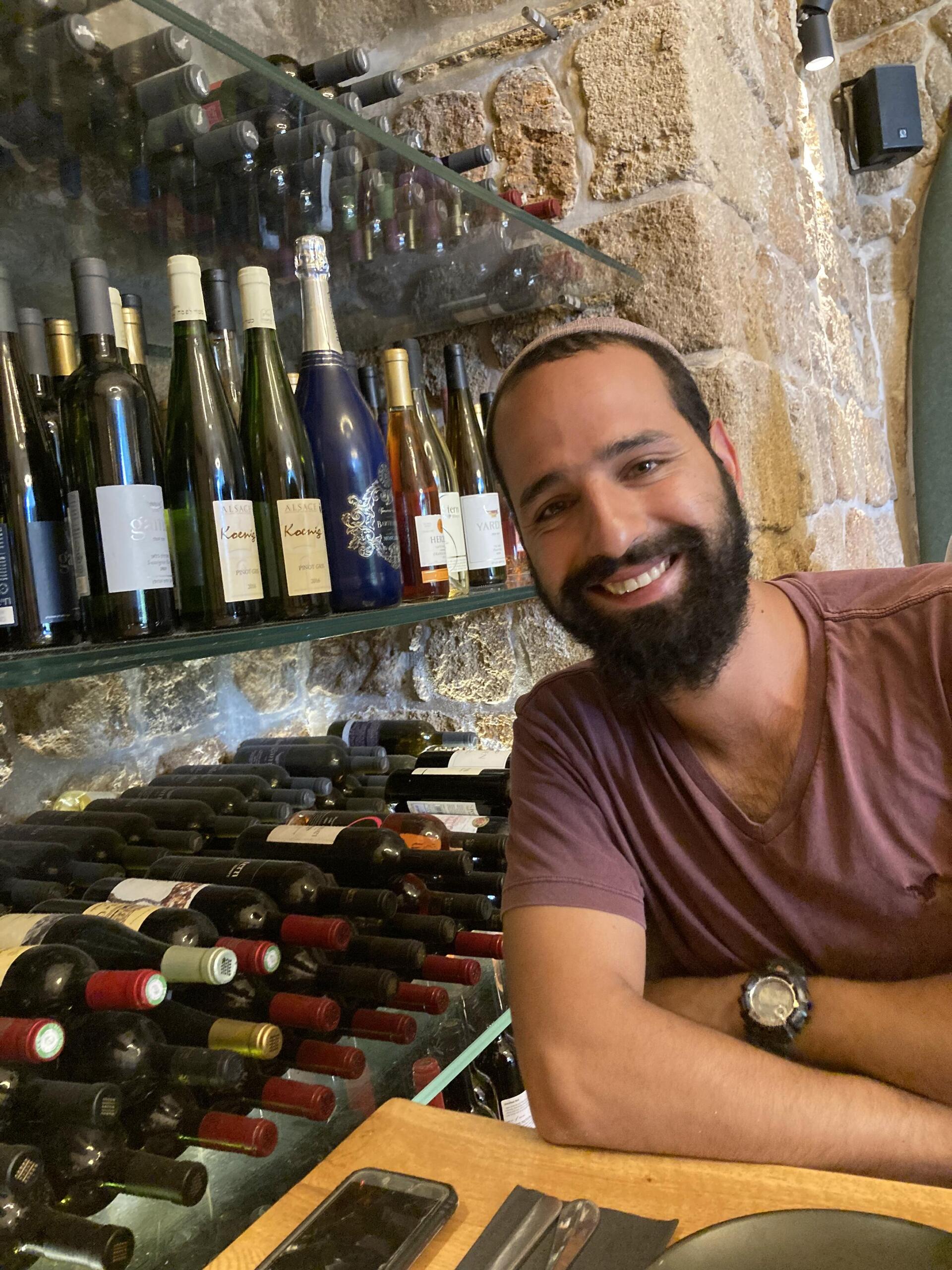
All photographs · 4
In the media
Articles
Songs
- El Galil
ערוץ 7 ·
- The Baal Shem Tov's Nigun
ערוץ 7 ·
- In You, Lord, I Have Placed My Hope
ערוץ 7 ·
Memorial sites
Memorial projects
Performed by Avi Benayoun and arranged by Tzlil Tor, as part of the memorial songs for Yedidya; inspired by his love for Safed and the Galilee.
Performed by Yagel Haroush, arranged and produced by Tzlil Tor, with project management by Ariel Eliyahu, as part of the “Yedid Nefesh” initiative.
A niggun by Emanuel Elishama, published on the “Betziltzelei Shema” channel in his memory.
His friends from the Safed hesder yeshiva gathered to perform “Yedid Nefesh” in his memory, a year after he fell.
His mother describes WhatsApp groups for daily study of Jewish law for soldiers for the elevation of his soul, as well as study in his memory at study halls and schools.
The memorial film “Living the Dream” appears on the family’s page on the Koach Zvika association’s website.
Stories told about them
Meitar brought their infant son Porat Aviya to his father’s grave on Mount Herzl for the first time and laid him on the Israeli flag on the headstone. She said this was the meeting place they had left, and that their two daughters also sit on the grave when visiting.
According to his friends and neighbors Avihu and Tehiya Ben Zahav, Yedidya was exceptionally handy and worked in renovation and construction. While Meitar was studying for the nursing licensing exam and beginning work as a nurse, he devoted a great deal of time to caring for the girls.
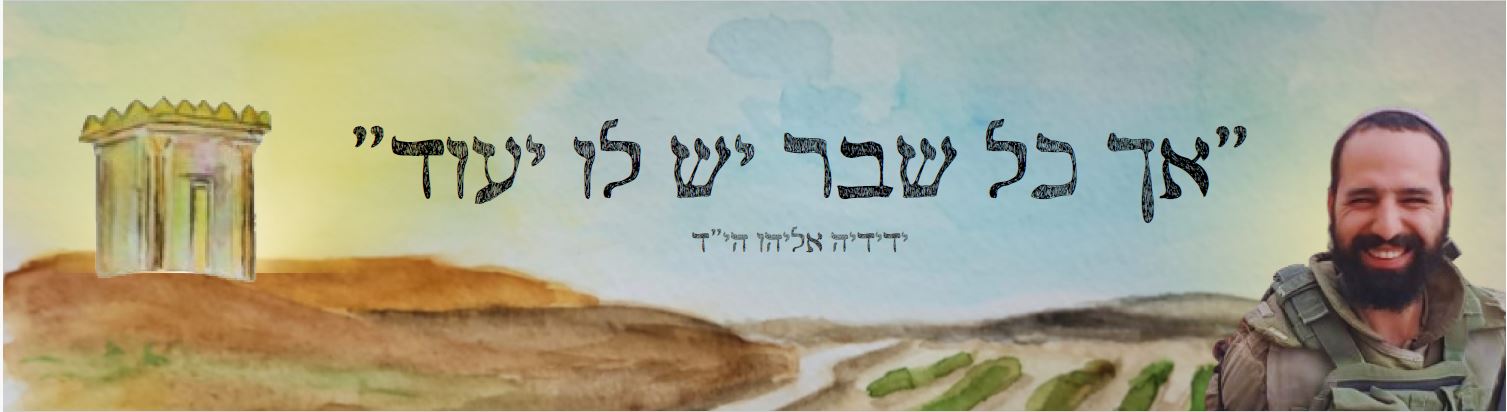
“Every broken piece has a purpose.”
Life & service
Profile
- Date of birth
- December 2, 1997
- Birthplace
- Karnei Shomron
- Date of death
- November 3, 2023
- Age
- 25
- Hometown
- Karnei Shomron
Service
- Rank
- Sergeant first class (res.)
- Service Type
- Reserve Forces
- Battle Location
- Gaza Strip
Family
- Father
- Yoram
- Mother
- Ziva
Burial
Tributes & remembrance
חמודד ממש וסיפור עצוב
יהי זכרו ברוך
הייתה לנו פעילות בבית הספר. מתוך אוסף גדול של מדבקות היינו צריכים לבחור משפט שהתחברנו אליו.
"להרגיש בכל רגע שאתה חי את החלום"
תודה רבה שהקדשת את החיים שלך בשביל העם שלנו
תמיד נזכור אותך
ידידיה, לעולם לא נשכח את המסירות וההקרבה שלך. לכל מקום שהפלוגה הולכת, היא הולכת בשמך!
למשפחה ולאלמנה היקרה היו חזקים ותמשיכו לחזק, נתגעגע לידידיה,
יהי זכרו ברוך. ה׳ יקום דמו.
יהי זכרך ברוך!
משפחת אליהו היקרים,
מוקירים אתכם על הגבורה ומשתתפים בכאב שהוא גם כאב לאומי. הדור הזה עובר תהליך של גאולה, שאנו בעיצומו. קשה לראות בשעת ההתרחשות את גודל השעה.
מחזקים אתכם ומתחזקים מכם.
ידידיה, גיבור ישראל.
ידיד ה ישכון לבטח חופף עליו כל היום
גיבור ישראל
״להרגיש בכל רגע שאתה חי את החלום״ לזכרו , משתתפת בצערכם
יהי זכרו ברוך
יהי זכרו ברוך, שנהיה ראויים.
לוחמי ומפקדי חיל ההנדסה הקרבית מתייחדים עם זכר הנופלים.
אנו פועלים להמשיך את מורשתם ולצעוד בדרכם בנחישות, אמונה ומסירות.
משפחות יקרות,
אנו נושאים את זכר הבנים והבנות בליבנו בכל עת, מחבקים ועומדים לצדכן.
יהי זכר הנופלים ברוך.
יום הזיכרון התשפ"ה
אפריל 2025
אחיינינו האהוב שמך נצור בלבנו לעד
שלושה חודשים לאחר נפילתו נולד לו בן
שמעתי את הסיפור כל כך עצוב
יהי זכרו ברוך.
בחרתי ליצור תמונה המשפט של ידידיה אליהו זל
"להרגיש בכל רגע שאתה חי את החלום"
התחברתי למשפט הזה
כי כל יום הוא התחלה חדשה וצריך לנצל אותה.
איש מיוחד,
אוהב ישראל ואדם
יהי זכרך ברוך
תודה לך.
תנוח בשלום על משכבך חייל יקר.
תודה ששמרת עלינו
השם ינקום דמך
בחרתי במשפט שהוא אמר בשיעור יום הזיכרון שמאוד התחברתי אליו
״להרגיש בכל רגע שאתה חי״
ואני מסכים עם זה לגמרי שכל יום שניתנת לך ההזדמנויות לחיות תחייה את היום הזה הכי טוב שאתה יכול.
אני בטוח שידידה ז״ל היה בן אדם מאושר וטוב שהיה עם ערכים וחיי כל יום כאילו זה יומו הראשון. יהיה זכרו ברוך
הַצְּבִי יִשְׂרָאֵל עַל-בָּמוֹתֶיךָ חָלָל אֵיךְ נָפְלוּ גִבּוֹרִים.
מִנְּשָׁרִים קַלּוּ מֵאֲרָיוֹת גָּבֵרוּ.
יהי זכרו ברוך!
יהיה זכרו ברוך
יהי זכרו ברוך ויזכה לתחית המיתים בקרוב מאוד ויזכה להתאחד עם משפחתו
מנוחתו עדן גיבור ישראל
תהיי נשמתך צרויה בצרור החיים
יהי זכרו ברוך
He knew how to connect with them and give them so many values, meaning and purpose.
Source:אמס / קול חי
Read the Hebrew original
הוא ידע להתחבר אליהם, ולתת להם המון ערכים, ומשמעות, וייעוד.
It's a call for all Israel to connect, find joy, and draw strength.
Source:JFeed
I placed Porat Aviya on the gravestone so he could be as close as possible to his father, Yedidya,
Source:JNS / Israel Hayom
Every place he came to would fill with music
Source:remember.bio
Read the Hebrew original
כל מקום שאליו היה מגיע, היה מלא ניגון
Yedidya was an easy child to raise, every mother's dream.
Source:יזכור
Read the Hebrew original
ידידיה היה ילד קל לגידול, חלום של כל אימא.
Remembrance Day addresses
יום הזיכרון לחללי מערכות ישראל התשפ"ה – 2025
בכל יום שעובר, אזכור יותר! אזכור, את אלו שיצאו עימי לקרב ולא שבו, ולהם אין מי ידמה ומי ישווה. אזכור, שהכאב לא יעבור לעולם, והזמן, הוא לא מרפה ולא מרפא. אזכור, את שיברון הלב הגובר ואת הבית שבוער. אזכור, את צדקת הדרך, ואשבע שוב, שמה שהיה לא יהיה יותר. אזכור, שיותר מכל דבר אחר – אני חסר! ביום הזה, אני נתקף געגוע לדמותם, לחיתוך דיבורם, לחיוכם, ומדליק נר לזיכרון דרכם ומורשתם!
משרד הביטחון
אגף משפחות, הנצחה ומורשת
יום הזיכרון לחללי מערכות ישראל התשפ"ה – 2025
בכאב, בהצדעה ובתקווה אני מתכבד להדליק נר זיכרון זה. השנה, כשאנו נלחמים במלחמה ארוכה, רב זירתית וצודקת, הזיכרון נושא משמעות עמוקה. ביום זה נעצור ונתייחד עם זכרם של טובי בנינו ובנותינו שנפלו בהגנה על המדינה. מורשתם היא המצפן שמתווה את דרכינו, והיא המעניקה לנו כוח להמשיך ולהגן על מדינת ישראל ותושביה. משפחות יקרות, אנו מרכינים ראשנו ומתחייבים שנעמוד לצידכן תמיד. יהי זכר הנופלים ברוך.
אלוף דדו בר כליפא
ראש אגף כוח האדם, צה"ל
יום הזיכרון לחללי מערכות ישראל התשפ"ה – 2025
בשעה שאנו זוכרים את גודל תרומתם ועומק מסירות נפשם של טובי בנינו ובנותינו, נופלי מערכות ישראל לדורותיהן, ממשיכים צה"ל וכוחות הביטחון במימוש המשימה למענה לחמו ועבורה נפלו: הכרעת אויבינו מדרום, מצפון, ביהודה ובשומרון, וגם בזירות רחוקות יותר. בהערכה רבה ובגאווה אדירה אנו מרכינים ראש בפני הנופלים והנופלות, מאמצים את משפחותיהם אל לבנו, וממשיכים במשימה להבטחת קיומה של ישראל לדורי דורות. יחד נעשה ונצליח.
רב אלוף אייל זמיר
הרמטכ"ל, צה"ל
יום הזיכרון לחללי מערכות ישראל התשפ"ד – 2024
כאשר דגלינו מורדים לחצי התורן וראשינו מורכנים לזכר הנופלים והנופלות במערכות ישראל, ממשיכים לוחמי צה"ל ומפקדיו בלחימה בדרום, בצפון, ביהודה ובשומרון ובזירות נוספות. על כל דור מוטלת המשימה של הגנת העם והארץ – משימה שאף פעם אינה פוסקת. נצדיע בגעגוע ובגאווה לנופלים ולנופלות, נחבק את משפחותיהם, ונמשיך ברוח הציווי שהותירו לנו. עם ישראל חי.
רב ניצב יעקב שבתאי
המפקח הכללי, משטרת ישראל
יום הזיכרון לחללי מערכות ישראל התשפ"ד – 2024
אחיי הנופלים, כל נר הוא זיכרון יחיד ומיוחד, על חיים שהיו ואינם, געגוע שנצרב עמוק בלב, עולם ומלואו. הנרות כולם הם זיכרון של אומה כי לעולם לא עוד, בשורת הציונות וקוממיות ישראל. זיכרון כי הדרך לעם חופשי בארצנו עוברת דרך מסדר הנופלים. אור הנר יזכיר לנו את מסירות נפשכם להציל חיים, להגן על הבית. הנרות מסמנים לנו נתיב גבורה ערכי מחייב שאנו מצווים ללכת לאורו. נמשיך להילחם ולהוסיף אור מתוך אמונה בנצח ישראל.
יואב גלנט
שר הביטחון
יום הזיכרון לחללי מערכות ישראל התשפ"ד – 2024
בהצדעה ובכאב, בשם צה"ל כולו, אני מדליק נר זיכרון. בעיצומה של מלחמה, הזכרון נושא משמעות יום-יומית, שעבר והווה מתלכדים בה. לאורם של הנופלים נמשיך לצעוד, חיילי הסדיר והמילואים. לאורם של הנופלים נמשיך להגן על ארצנו ועל מולדתנו, גם כשהמחיר כבד. להבת-הזכרון תבער בנו בעודנו ממשיכים להלחם ונזכור את הנופלים ואת אומץ ליבם. משפחות יקרות, צה"ל מרכין היום ראש, מצדיע לכן וכואב איתכן. יהי זכר הנופלים ברוך.
אלוף יניב עשור
ראש אגף כוח האדם, צה"ל
יום הזיכרון לחללי מערכות ישראל התשפ"ד – 2024
בהוקרה, בגאווה ובכאב שאין לו סוף, אני מתכבד להדליק נר לזכרם של הנופלים והנופלות במערכות ישראל. סיפור חייהם בארץ הזאת, מסכת שירותם, גבורתם והקרבתם – הם סיפורה של הארץ הזאת, אך גם סיפור המחיר הכבד שהיא תובעת מאוהביה. מחויבותנו לזכר הנופלים ולדרך שהותירו לנו ניצבת תמיד לנגד עינינו. את המשימה שלא זכו להשלים, משלימים כיום, וישלימו, אנשי כוחות הביטחון, הממשיכים בדרכם ולאורם. יהי זכרם של הנופלים ברוך.
משרד הביטחון
אגף משפחות, הנצחה ומורשת
יום הזיכרון לחללי מערכות ישראל התשפ"ד – 2024
בחרדת קודש אני מתכבד להדליק נר לזכרם של חללי מערכות ישראל, חברנו שנפלו, מראשית היציאה מהחומות ולאורך כל שנות עצמאותנו המדינית והציונית, מהווים תמרור זיכרון לדרך חיינו ולמחוייבות הלאומית להנצחת זכרם. דרכם נותרה דרכנו ומורשתם נר להמשך עשייתנו. יהי זכרם ברוך!
בני גנץ
שר הביטחון
יום הזיכרון לחללי מערכות ישראל
נזכור אותם, כולנו יחד. כל אחד ואחת מהם, מדי יום ביומו, והיום ביתר שאת, כך – לנצח. "כי מדי דברי בו זכור אזכרנו עוד"
משרד הביטחון
אגף משפחות, הנצחה ומורשת