
The story
In the Kiryat Hasharon neighborhood of Netanya, on the 22nd of Adar, 5762, which was March 6, 2002, Yakir Levi was born, a beautiful-eyed boy who brought with him an innocent, pure smile and a great light into the home of his parents, Revital, whom everyone called Tali, and Asaf Shlomo. He was the youngest of nine children, brother to the elder Aviya, and to seven younger siblings – Shilo, Shani, Nofar, Nevo, Noya, Tahel, Yanai, and Yinon – who grew up around him with small age differences, creating a pressure cooker of love and mutual concern in their echoing home filled with laughter and life. The house was always warm and open, bustling with activity, the scents of home-cooked meals mingling with the aroma of holy books and the sounds of lively conversations. From his very first steps, Yakir was surrounded by hugs and shouts of joy, absorbing the values that characterized his family: kindness as a way of life, a deep love for the people and the land, and a reverence for God that manifested not in rigid rituals, but in small acts of goodwill and attentiveness to others.
Yakir’s childhood was filled with light, and his coming of age, as his father once said with sparkling eyes, was even more astonishing. He was "the entertainer of the house," with an innate ability to spread joy. His rolling laughter was his trademark, and he never stopped making his younger siblings laugh and entertaining them, inventing games, telling strange stories, and simply radiating an undeniable love. But alongside his playfulness and lightness, Yakir was also a responsible child, who saw himself as a full partner in the fabric of the home. He helped his parents with household chores, not out of obligation but from a deep belief that everyone should contribute their part, that a home is a mosaic of shared efforts. He was the one who made sure no one shirked their duties, encouraging everyone, even the youngest, to take an active role, all with a smile and words of encouragement.
He spent his first years of schooling at the "Moreshet Zvulun" state-religious school in Netanya, where his outstanding social qualities were already evident. He was an easy child to love, finding his place in any group, and leaving behind a trail of friends from all corners of the classroom. When he reached fourth grade, the family made a big change in their lives and moved north, to the Lower Galilee, to the national-religious community settlement of Moreshet, in the Misgav Regional Council. The transition from the urban bustle of Netanya to the quiet and green expanses of the Galilee was a formative experience for Yakir. He quickly integrated into the local state-religious school, also called "Moreshet," and immediately found his place in the "Bnei Akiva" youth movement, where he flourished and thrived. In Moreshet, among the dirt paths and the scents of olive trees and damp earth after the rain, his personality was further shaped. He loved nature, the crisp air, the warm sense of community that enveloped the settlement.
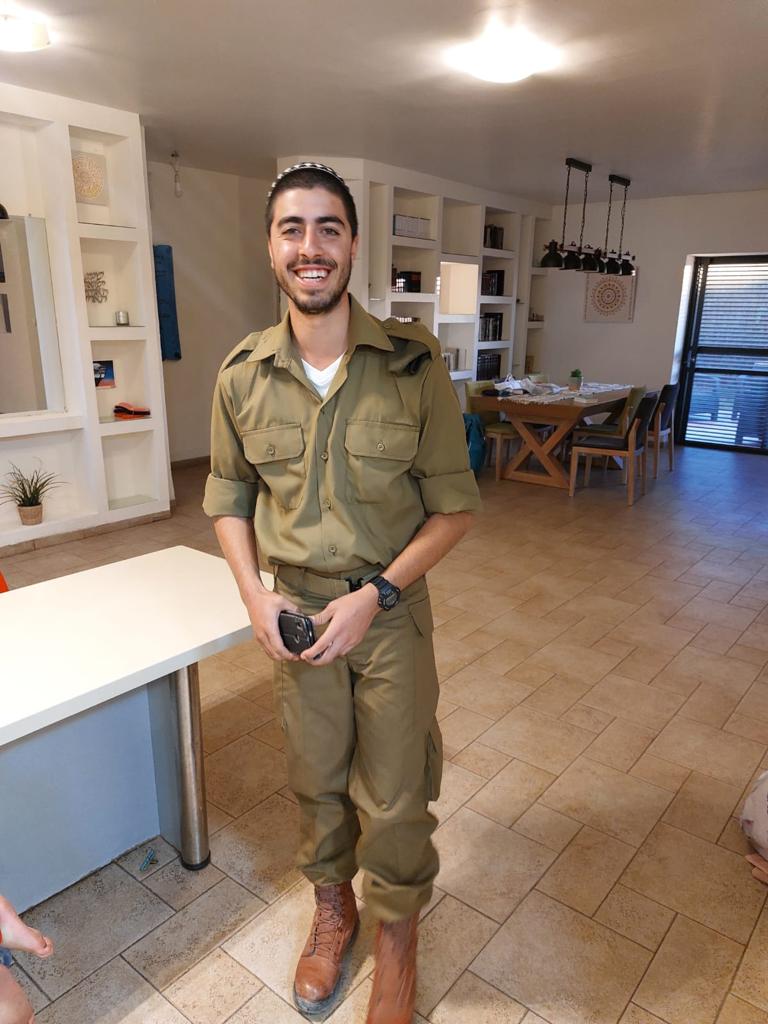
Like many of his friends in Moreshet, Yakir continued his studies at the "Sde Yaakov – Tikvat Yaakov" high school yeshiva, where he deepened his religious studies alongside secular subjects. He was a pleasant young man, always careful to speak respectfully to everyone, regardless of age or status. His smile, which had already become his distinct trademark, never left his face for a moment, and there was something infectious about it, something that made others feel lighter, happier. "Yakir was the happiest kid I ever knew," his father often said, noting his humility and modesty, his immense qualities of love for others and love for the Creator, which were the backbone of all his actions. The generosity that flowed in his blood was not empty words; it was daily deeds. He volunteered for "Magen David Adom," arriving at every shift with the same big smile, with an unflagging desire to learn every detail, to help in every way, and a deep sense of mission burning within him. He was there, as a young medic, responding to distress calls, providing first aid, his voice calm and comforting even in the greatest moments of anxiety. Beyond his Magen David Adom volunteering, he didn't stop there. Once a month, together with his father and brothers, he would travel to the Krayot, packing and distributing food packages to needy families, part of an initiative by charitable people from the settlement. He saw the smiles on the faces of the recipients, the small hope he gave them, and knew that this was the right way, the true way, to fill the world with goodness.
Yakir's uncompromising optimism, the lightness with which he faced life's challenges, stood alongside a great sensitivity and an intense desire to create unity and connections between people. He was known as a "lover and pursuer of peace," a title that earned him affection and appreciation everywhere he went. He was the glue that connected different friends, different groups, always finding common ground, the point of connection. "Everything about you was always with an open heart," his loved ones wrote, "out of a desire for things to be better – for others, for everyone." He was endowed with tranquility and calmness, with a special simplicity that made everyone feel comfortable in his presence. He respected and loved every person as they were, not judging, not criticizing, but accepting. He made everyone feel that they were more, that they belonged, that they were part of something bigger. His smile was a gateway to hearts, and he quickly entered any social circle, leaving a mark of love and acceptance.
One of Yakir's great loves was the land itself. He knew every hidden gem, every secret path, every beautiful hiking trail, as if the land was simply an inseparable part of him. He used every free moment to go out and hike – with friends, with family, and sometimes even alone, just him and the landscape. He would breathe the clear air, gaze at the green expanses of the Galilee or the arid Judean mountains, and fill his soul with the beauty and majesty of his land. He loved football, and was a fervent supporter of Maccabi Haifa. He would attend games at "Sammy Ofer" stadium, his voice joining the roar of the green-and-yellow crowd, experiencing the tension, the disappointment, and the immense joy of victory. He was also interested in basketball, and every Thursday he would gather with his friends to watch Maccabi Tel Aviv's EuroLeague games, a hot cup of tea in hand, arguing about plays, shouting at referees, and simply enjoying the togetherness, the camaraderie.
He completed his high school studies in the communications track, a field that perhaps suited his open personality and connection to people. Afterwards, he continued to "Mechinat Eitan" – a unique pre-military academy located in Mishor Adumim, in the northern Judean Desert, east of Jerusalem. The mechina, which harmoniously combined deep Torah study, strenuous agricultural work, creative manual labor, and community volunteering, alongside deepening acquaintance with the land and intensive preparation for military service, suited Yakir like a glove. During the year and a half he studied at the mechina, he matured, developed, blossomed, and strengthened. He loved the place, the dedicated staff, and the friends who became family. He connected to Torah study not just as subject matter, but as a deep and important foundation for life, a kind of internal compass. "Everyone needs to study the Torah," he wrote in his notebook, a deep voice echoing in his written words, "to understand it, to internalize it, because the Torah gives a person healthy lives, good and righteous lives." And elsewhere, reflecting on his Zionist identity, he added: "To be a Zionist without my Zionism being based on the history of my people, our Bible, it doesn't hold. The root of Zionism is based on the Torah." He saw the connection between past and present, between spirit and matter, as inseparable.
Even at the mechina, Yakir continued to give generously of himself. He took on many responsibilities, through which he expressed his diverse skills: organization and management, creation and construction, dedication to tasks, and boundless devotion. He was the one who organized social activities, planned construction projects at the mechina, and took care of the smallest details. And as was his way, he showered love and joy on everyone around him, touching everyone's hearts. "Yakir's smile could be recognized from miles away," wrote Shilat, a friend from the mechina, describing how his presence lit up the space. Hillel added: "Yakir was so friendly that it was impossible not to connect with him within seconds and feel completely comfortable with him. The most fun was telling him stories, because his reaction was authentic and genuine." He truly listened, with sparkling eyes, responding with the sincerity that so many sought.
Yakir lived life with simplicity and gratitude, fully present in every single moment. He preferred meaningful action over preoccupation with worldly vanities, as he attested about himself: "I will always try not to have a single second of phone time or rest," he wrote in his diary, "always with wheels spinning in my head, hands moving, something, just so I don't get bored in the room. Because that doesn't add any value." He detailed the list of things that filled his day: "Taking out the flock to graze, helping in the sheepfold, building tables for the dining hall, distributing food to soldiers, studying Torah, Halakha, and Emunah. All these things make the day full and interesting. On such a day, when you get into bed and look back – you smile, and that says it all." That smile at the end of a busy day was his true measure of success, of a feeling of satisfaction. For example, when the mechina students went to pick avocados in the orchards of Kibbutz Be'eri – hard physical labor under the scorching sun – Yakir took care of morale. Even when there was no more strength to pick another fruit, when sweat streamed down and backs ached, he urged everyone to continue, put on rhythmic music and said: "Come on, guys, we came to work, not to rest." He knew how to turn even the most grueling work into an experience of togetherness, of a shared purpose.
His approaching military service occupied him greatly. Yakir aspired to enlist in the Nahal Reconnaissance Unit, an elite unit that demanded high physical and mental capabilities. To achieve this goal, he joined the "Acharei! Youth Leading Change" program, entering an intensive training regimen that included long runs, weighted marches, and strength training. At the same time, he continued to work on his mental fortitude, understanding that inner strength was no less important than physical strength. He wrote to himself, in a kind of empowering internal dialogue: "Don't forget your values and who you are, and don't break. It's not for nothing that you want Nahal Reconnaissance. Because you understand the importance of the army, you have it in you to enlist and defend the country and protect it and all those who fell before and after its establishment – to preserve it. Try to be the best you can be, because that's who you are and what you are. A person who cares about others, for whom a group or team is important, and you are willing to sacrifice yourself for it because that's who you are. You have a big head, use it, and don't be afraid of people's reactions along the way because they are just on the way and passing through it." He knew exactly who he was and what motivated him, and he was determined to follow that path to the end.
On April 5, 2022, Yakir enlisted in the IDF, full of motivation and a sense of mission. He was stationed in the infantry and began his combat training for the Nahal Reconnaissance Unit, a difficult and challenging journey that included long weeks of field training, grueling drills, and physical and mental toughening. During the course, his outstanding talents and natural leadership did not escape the commanders' notice, and he was accepted into the "Multidimensional Unit" (Ramad) – a special and prestigious combat unit composed of the best fighters from various corps, designed to deal with the challenges of the modern battlefield. Afterwards, he was sent to a squad commanders' course (Makam), where he learned the intricacies of command and leadership. Subsequently, he was reassigned to the "Golani" Brigade, the glorious brown brigade, and appointed a squad commander in the mortar platoon of the support company in Battalion 13, known as "Gideon." Yakir's military path was full of changes, but he navigated them with the same optimistic spirit. Just as in life he managed to connect people and colors, so too during his service he managed to wear the green beret of Nahal, a red beret that symbolized his passage through an elite unit, and finally the brown beret of Golani. "You came to us from the Ramad and immediately won everyone over with your smile, your modesty, your professionalism, and your warm character," his commander wrote, "You were an amazing person from whom one could learn so much!"
The change and transfer to Golani were not easy for Yakir. Every transition required adaptation, relearning procedures, getting to know new people, and especially, adjusting to the spirit of the unit. But as one who had trained himself "to do everything with a smile, both to lift my own morale and the morale of the team," he acted accordingly. He accepted the situation with a smiling face, and quickly managed to integrate and become an inseparable part of the battalion. Together with the soldiers of Battalion 13, Yakir went down to the Gaza Envelope, where operational company C held a line very close to the security fence, and positioned itself with the mortar platoon of the support company at "Paga" outpost – a strategic point between Kibbutz Be'eri and Alumim. The outpost was home to the soldiers for about three months, where they spent their days on guard, training, and maintaining their equipment. As was his custom, Yakir chose to act with humility. Despite being a commander, he also dedicated himself to the less prestigious tasks, out of a deep belief in personal example. "No matter how much experience I have and how high my level is and I am not a simple soldier," he wrote, "I will be like Emmanuel Moreno and clean the toilets in the morning... Personal example in actions and not in words - the moment you say and implement what you present to them, you show a correct personal example." He believed that a commander must lead from the front, in every sense of the word, even in routine and unglamorous tasks.
Yakir's smile continued to infect people even in the army, even in difficult and challenging moments. To a friend from the mechina who enlisted and experienced difficulties in basic training, a period that sometimes breaks the spirit, Yakir sent a warm and encouraging voice message. His soft and smiling voice was heard beyond the difficulties: "Brother, I heard you're a bit down, so I said let's talk, so I can lift your spirits a bit, bring you back to your best.... Wow, don't forget to smile, brother, don't be 'black.' If your head and mind see black, you will truly be black. If you give a smile, brother, it will bring you back to proportion a bit. And don't forget to enjoy, brother." These words, spoken with sincerity and love, were the essence of Yakir's personality: the ability to see the difficulty, to contain it, but also to remind of the inner strength of the smile, the ability to choose optimism even in the face of challenges. He was a beacon of light and joy to everyone around him.
The Sabbath, the 22nd of Tishrei, Simchat Torah 5784, October 7, 2023, began like any ordinary Sabbath morning at the "Paga" outpost. The first rays of sun began to climb over the eucalyptus trees, heralding a warm day and another day of operational routine. Yakir, who had just finished a routine morning patrol with his soldiers, returned to the outpost gate. The air was still clear, and only the sound of birds broke the silence. At 6:30 AM, the silence was abruptly shattered. A heavy and incessant barrage of mortar shells began to hit the outpost with deafening intensity. The ground shook, violent explosions echoed from all directions, and red alert sirens wailed non-stop. This was not another usual round of escalation. Something was different, more violent, more comprehensive. When a clear and chilling warning of terrorists infiltrating settlements and outposts was received over the radio, Yakir and his soldiers responded with the instinct and professionalism they had absorbed in training. They took up positions, began to arm the mortars according to precise drills, every movement precise and calculated. They acted quickly, understanding the gravity of the situation, but without knowing that dozens, perhaps hundreds, of terrorists were already surrounding the base from all sides, breaching the fences with frightening ease.
Yakir responded to the event with supreme professionalism and determination. For many hours, under incessant fire and against a cruel and unrestrained enemy, he fought with supreme bravery in various arenas throughout the outpost. His voice was heard clearly and distinctly over the radio, giving orders to his soldiers, directing fire, organizing defensive positions. He sought contact with the enemy, undeterred and unhesitating. He evacuated wounded under heavy fire, carrying them to safety, while caring for each and every one of his soldiers. He withdrew the soldiers towards the dining hall, which was the only protected space in the base, in an attempt to protect them. During the tenacious fighting, he never stopped encouraging and strengthening his soldiers with short and incisive sentences that echoed his deep values: "This is why we enlisted," "This is our land," "You are capable." His words were a pillar of hope and motivation in the whirlwind of fire and chaos.
Around 10:30 AM, the terrorists breached the outpost itself. They fired heavy artillery indiscriminately, threw grenades and explosives, and tried in every way to harm the soldiers who were barricaded in the dining hall. When they saw that the soldiers were relatively protected, they resorted to a cruel tactic: they sealed the entrances to the dining hall with mattresses and objects, and set them on fire with the aim of burning the place with its occupants, without mercy. The pungent smell of smoke began to fill the room, the fire spread rapidly, and the soldiers inside realized they were trapped, in immediate mortal danger. Yakir, as commander, along with four other brave soldiers, made a fateful decision: to leave the burning building and charge towards the terrorists to repel them, to give the soldiers inside a chance to survive. This was a decision of supreme heroism, of unquestionable self-sacrifice. They knew they were going out into a storm of fire, against dozens of well-armed terrorists, but they did not hesitate.
In the hours that followed, Yakir and the soldiers by his side continued to fight fiercely, with courage difficult to describe in words. They charged, fired, eliminated terrorists, tried to disrupt their actions and prevent them from continuing the massacre. The battle was unbearable, incessant, at close range. Yakir fought like a hero, defending his soldiers and his country, until he fell and ascended to heaven, around 2:00 PM. He was twenty-one and a half years old when he fell. Thanks to the uncompromising bravery of Yakir and his comrades, the lives of many soldiers at the "Paga" outpost were saved. Their active and heroic action prevented additional terrorists from reaching the nearby Kibbutz Be'eri, which was a central target for the brutal attack. They stood as a strong wall, paid with their lives, but saved many lives.
Sergeant Yakir Levi fell in battle at the "Paga" outpost in the Gaza Envelope on the 22nd of Tishrei, 5784, October 7, 2023. He was laid to rest in the military section of the old cemetery in Kiryat Ata; thousands accompanied him on his final journey. He left behind grieving parents, Revital and Asaf, and five brothers and three sisters, an entire heartbroken family. After his fall, Yakir was posthumously promoted to the rank of Staff Sergeant, as a token of appreciation for his leadership and bravery. On his tombstone, his loved ones engraved the words that described him most accurately: "Our Yakirosh, we love you always. A good heart, a huge smile, a lover of all people, and God-fearing." These words, simple and touching, summarized his essence.
Many eulogies were delivered in his memory, each one sketching another line in the complete picture of his life. His mother eulogized him, her voice broken with pain yet full of faith: "Yakirosh. All my life I told you that I love you all to the highest, to the Throne of Glory. Now you are with God. 'The Lord gave, and the Lord has taken away; blessed be the name of the Lord.'" His sister Shani, her voice choked with tears, asked the bitter question that so many families asked in those days: "How can such a thing happen? A treasure like you, a beautiful boy with a huge smile that never ended. Our righteous one, no matter where you arrived, everyone would jump on you and connect with you within seconds, because you are just like that. ... You are sitting up there, with Grandpa Eli on one side, and Grandpa Avraham on the other, and closest to God. We will continue to smile as you smiled. You are my inspiration. I love you, rest in peace, our prince."
Tal, Yakir's battalion commander, who saw him in action on that cursed day of battle, wrote moving words of appreciation: "Yakir's actions in battle are the essence of heroism, leading from the front, and sacrificing for your subordinates. Yakir went back and forth to rescue and evacuate his soldiers from the mortar position, continued to fight and initiate in defending the outpost. When he understood the severity of the situation, he decided to take active action and go out to fight to disrupt and prevent the terrorists' actions, despite the difficult situation the soldiers were in, and thus serves as an inspiration to us all." This testimony, from his commander, sealed Yakir's heroism in the pages of history. One of his soldiers testified simply, yet powerfully: "He saved many soldiers."
Yakir is commemorated today in light of his spiritual will – "Don't forget to smile" – a short and concise phrase that has become a beacon of inspiration and light in many projects across the country. These projects, seeking to continue his path, cause people to feel the moment, to understand the correct proportions in life, to multiply goodness and kindness, and to spread love and warmth, exactly as Yakir did in his life. The "Orot" tribe of the "Bnei Akiva" movement in Moreshet, the community where he grew up, initiated a Challah separation project for the elevation of his soul. As part of this, many women gathered to bake and separate Challah, and those hundreds of fragrant and warm challahs were distributed to soldiers at the front and in the rear, bringing with them a scent of home and hope. This initiative continued and spread, first by women who were evacuated from their homes, and later by women from the "Heichal Eliyahu" community in Netanya, a circle of kindness and unity that spread and expanded.
In his eternal memory, a new, state-of-the-art intensive care ambulance, proudly bearing his name, was donated to the Magen David Adom station in Karmiel. Every time the ambulance goes out on an emergency call, spreading its lights and sirens through the streets, it continues Yakir's path, who loved so much to save lives and provide help. Yakir's name was also etched into an ornate cover for a Torah scroll, written in memory of the fallen soldiers of the "Golani" Brigade in the war, and placed in the Beit Midrash of "Etzem" Mechina in Moshav Neve in the south of the country. Thus, Yakir's spirit is integrated into the sacred, at the very heart of the Jewish people. Yakir's family also had the privilege of dedicating a new Torah scroll to Mechinat Eitan, the place where he was so shaped, where he left his deep mark. In addition, the family is working on establishing an observation point in Moreshet, overlooking a breathtaking view of the sea, in honor of Yakir who loved the Land of Israel and its landscapes so much. The observation point will be a place of quiet, contemplation, and deep connection to the land and the spirit, just as Yakir loved. Also at Mechinat Eitan, it was decided to build new dormitories in his memory, so that generations of students will continue to learn and be educated in his spirit.
Roee Cohen, Yakir's cousin, wrote a moving and powerful song in his memory, based on voice recordings Yakir left behind, simply titled "Don't Forget to Smile." The song's words echo the pain of loss and the hope: "Still sleeping in the bed in your room / And thinking how good yesterday was / On the wall still hangs your flag / Painted green and yellow / Everyone lately talks a lot / Asks many questions / Why, how is it possible and when will we be again / When will we love again / And only you, as always / Look from the side and smile / From the picture on the wall / Hearing everything that happens / You are only seemingly there / Looking down and knowing all the answers / But by God's command you leave us to live..." This song is a time tunnel to Yakir's room, to the emotions that remained, and to his eternal smile.
The story of Yakir's life and heroism is taught today in schools in Israel and around the world, in pre-military academies, in the IDF, and in other frameworks, as an example and model of love for humanity, love for the land, and boundless devotion. Students of the communications track at the "Sde Yaakov" high school yeshiva, where he studied, created the moving video "Don't Forget to Smile, Brother" in his memory, which spreads his image and messages to a wide audience. One of his famous sayings – "Give food to a friend before myself" – is proudly displayed today in the dining area of "Mechinat Eitan" in Mishor Adumim, a daily reminder of the value of giving and camaraderie. The current mechina students are currently building "Yakir's Lookout," which will commemorate his memory and his love for hiking and the Israeli landscape, a place where they can stop, breathe deeply, and see the world through his eyes.
As part of the "Touching Their Light" project from Ulpanat "Tzvia" in Hefetz Haim, Chapter 32 was dedicated to Yakir, detailing his life story and fall in moving detail. This chapter, along with the song written by Roee and other videos that illuminate his special character, are available on "YouTube," allowing everyone to learn and connect to his story. Pages in his memory have been opened on "Instagram" and "Facebook," on the "To Fill the Void" website, and on the "memoriz+" and "remember" platforms, featuring photos, links to articles and interviews, eulogies and memories, and updates on commemoration events.
His beloved family opened two quiet WhatsApp groups, serving as a direct channel to continue his legacy. One disseminates a daily Halakha, and the other, "Sentences Yakir Wrote," sends his loved ones moving greetings from him every day. Sentences like "I have the power to be connected to myself and to expand my soul; when I see unity in my soul, I see it in the world," echo daily, guiding, strengthening, and reminding of the deep insights Yakir gained in his short but full life. Yakir Levi, with his huge smile, his good heart, and his infinite love for people and the land, continues to live in the hearts of many, a symbol of human heroism, giving, and a light that never fades. His memory will be eternally etched in the nation's memory, as a hero of revival, one who gave everything for the common good, and paved the way for a better future.
Moments of a life
All photographs · 8
In the media
Articles
- The letter Staff Sergeant Yakir Levy, may God avenge his blood, wrote to himself has been revealed
ערוץ 7 בשיתוף מכינת איתן ·
- Staff Sgt. Yakir Levi, 21: Golani soldier was one of 10 siblings
The Times of Israel ·
Videos
Memorial sites
Memorial projects
A fundraising campaign to commemorate him through dormitory buildings at the Eitan pre-military academy and a lookout in Moreshet; the article describes fundraising, not confirmation that construction was completed.
Lizkor Lanetzach helped cover the expenses of dedicating a Torah scroll in his memory and the community meal; the page describes a procession, singing and memorial remarks.
A mobile intensive care unit bearing his name was donated to the Magen David Adom station in Karmiel. The Orot group of Bnei Akiva in Moreshet initiated a challah-separation ceremony and the distribution of hundreds of challahs to soldiers in his memory.
Stories told about them
At the Eitan pre-military academy, educator Uri Mor Yosef asked the students to write a letter to be opened after their discharge in 2025. After Yakir fell, the educator found his letter and sent it to his parents, who decided to publish it as part of his commemoration.
Once a month, Yakir traveled with his father and brother to distribute food packages to families in need in the Krayot. This volunteering complemented his volunteer work with Magen David Adom and the acts of kindness he carried out in the preparatory program.
Life & service
Profile
Service
- Rank
- Staff sergeant
- Unit
- Golani Brigade
- Honours
- Posthumously Promoted
Family
- Father
- Assaf Shlomo
- Mother
- Revital
Burial
Tributes & remembrance
גיבור ישראל
כי הילחם נילחם, כפי שנלחם איש, היודע, שמאחוריו תהום, מימינו תהום, ומשמאלו תהום. ורק דרך תקומה אחת נשארה לו קדימה.
בחייך ובמותך קיימת את חזון ומחיר הציונות.
תודה רבה על הרוח, תודה רבה על המוכנות למשימה, בכל מחיר באשר הוא.
לא הכרתי אותך אבל את אחותך כן וממה שהיא ספרה לי אתה בן אדם אגדה
תודה שגרמתה לי לחייך בתקופה לא פשוטה בחיי
רק מלעבור ליד הסטיקר שלך הכרחתי את עצמי לחייך כי אתה ביקשתה והיום אני עוברת מידי פעם באותו המקום רואה את החיוך שלך על הסטיקר מכירה אותך ומעלה חיוך רחב
תודה תודה תודה
תודה על הכול
תודה רבה שהגנת על המדינה שלנו אתה גיבור ישראל זל
גיבור ישראל
לעולם לא נשכח אותך
יהי זכרך ברוך
אני מקדישה נר זה לזיכרו של יקיר לוי השם יקום דמו שלא הפסיק לחייך והיה מדריך נהדר בבני עקיבא
יהי זכרו ברוך!
ה׳ יקום דמו.
גיבור ישראל
ת.נ.צ.ב.ה.
השם יקום דמו
ילד טהור יהי זכרו ברוך
שהחיוך שלך ידביק כמה שיותר מעם ישראל ועם החיוך הזה נזכה לראות את הגאולה בקרוב
האור הגדול של יקיר של נתינה והתחשבות תמיד באחר כל המידות האצילות שלו . יהיו נר לרגלנו.
יהיה זכרו נצור לעד בליבנו.
הקב"ה יקום דמך צדיק טהור.
תודה שנלחמת עבורינו
שלח נחמה להוריך ולמשפחתיך ובעז"ה תקרבו את הגאולה
אל תשכח לחייך
נזכור ולא נשכח. היד
יקיר היקר. תמיד מחייך ושמח. נלך בדרכך לעולם
יקיר אחייני האהוב,
נפלת על קדושת הארץ כמו שחונכת בבית. נלחמת כמו גיבור באותה שבת ארורה. אתה חסר לי מאד ואני מאד מתגעגעת אלייך ולחיוך שלך, אבל אנחנו ממשיכים לחייך בהתאם לצוואה שהשארתה לכולנו ״אל תשכח לחייך״.
יהי זכרך ברוך.
נזכור את חיוכך היפה ועינייך הטובות. לעד.
משפחת דיין מורשת
יקיר, נקווה שתחזור בתחיית המתים אמן!
בן דודי האהוב והגיבור לעולם תלך איתנו ולא נשכח את הגבורה, ההקרבה והאדם הטוב שהיית.
יקיר לא נטפס שאתה לא איתנו הימים עוברים בלי כל השמחה שאתה משדר לנו
אמן שיקרה לך אותו דבר בשמיים
תנוח בשלום תודה שהגנתה עלינו אוהבים אותך ולא נשכח אותך אפעם
יהי זכרו ברוך.
שנשמתו תהיה בגןמ עדן
יהי זכרו ברוך
יהי זכרו ברוך
גיבור ישראל יהי זיכרו ברוך
גיבור ישראל.יהי זכרו ברוך
יהי זכרו ברוך
ב-7.10 יום שבת בבוקר שעה 6:30 הוכרז גשם סגול במוצב "פגה" ,יקיר וחייליו שבאותו הזמן היו בכוננות עם שחר, החלו לחמש את המרגמות לפי התרגולות שלפתע החלו להיכנס למוצב חוליות מחבלים לתוך המוצב והחלו לירות לכל עבר . באותו הרגע ,יקיר וחייליו הגיבו באש לעבר המחבלים תוך כדי פינוי הפצועים לתוך המרחב המוגן שבמרכז הבסיס והחלו להילחם בהם ,יקיר עלה בקשר וביקש עזרה אך ללא מענה ,הוא יחד עם מפקדיו מאותו הבסיס, בגבורה רבה ,החליטו לחתור למגע מול עשרות מחבלים וניהלו לחימה עד שעות הצהריים . יקיר נתן הוראות וטיפל בפצועים וסידר את הפצועים בחדר האוכל תוך כדי לחימה. וכל הזמן חתר למגע בחוץ כדי לטהר כמה שיותר מחבלים, עד שיצפה בסביבות השעה 14:00 בפעם האחרונה ולא חזר . לבסיס שלו חדרו כ-100 מחבלים המצוידים ברובים ,רימונים ,לבנות חבלה ואר פי גי .
יקיר לוי הי"ד התחיל בסיירת נחל ביחידת הרב מימדי ועבר לתפקיד מפקד כיתה(מ"כ )בגדוד 13 של חטיבת גולני חטיבת המרגמות במוצב .
יקיר בכל תמונה שלו מחייך חיוך כל כך רחב,ילד יפה שמקרין הרבה אור גם בתמונות וגם בסירטונים.
"אל_תשכח_לחייך" - מתוך הקלטה שהשאיר לחבר שלו שהבין שהוא לא במיטבו, יקיר ביקש ממנו שלא לשכוח לחייך ולא להיות שחור- מושג צבאי.
בן 21.7 במותו
"יהי זכרו ברוך"
יקיר שלח הודעה קולית מעודדת לחבר שלו שהיה לו קשה בטירונות. " שמעתי שאתה מבועס,אז אמרתי בא נדבר אחי נרים לך קצת את המצב רוח,אני יחזיר אותך קצת למיטבך. וואלה אל תשכח לחייך , תמשיך לחייך .אל תהיה שחור איך שנקרא אם הראש שלך יחשוב שחור שחור אתה באמת תהיה שחור אבל אם תיתן את החיוך שלך ביום זה יכניס אותךלפורפורציות ואל תיכח להנות אחי"
He was a guy who always smiled and was always ready for any mission.
Source:ערוץ 7 בשיתוף מכינת איתן
Read the Hebrew original
הוא היה בחור שתמיד חייך ותמיד מוכן לכל משימה.
We have this special feeling of how Yakir accompanies us every moment of our lives, from then until now.
Source:ערוץ 7
Read the Hebrew original
אנחנו בתחושה מיוחדת כיצד יקיר מלווה אותנו בכל רגע בחיים מאז ועד עתה.
Yakir would listen to me and know how to give good advice.
Source:The Times of Israel
He gave everything for this country, he was a huge hero.
Source:The Times of Israel
You brought light into our home
Source:משרד הביטחון - יזכור
Read the Hebrew original
הכנסת אור לביתנו
The family's entertainer
Source:משרד הביטחון - יזכור
Read the Hebrew original
הבדרן של הבית
You respected and loved everyone
Source:משרד הביטחון - יזכור
Read the Hebrew original
כיבדת ואהבת כל אדם
Yakir's smile
Source:משרד הביטחון - יזכור
Read the Hebrew original
החיוך של יקיר
As comfortable as can be
Source:משרד הביטחון - יזכור
Read the Hebrew original
הכי בנוח שיש
An amazing person
Source:משרד הביטחון - יזכור
Read the Hebrew original
בן אדם מדהים
You are my inspiration.
Source:משרד הביטחון - יזכור
Read the Hebrew original
אתה ההשראה שלי.
The essence of heroism
Source:משרד הביטחון - יזכור
Read the Hebrew original
תמצית הגבורה
Remembrance Day addresses
יום הזיכרון לחללי מערכות ישראל התשפ"ה – 2025
בכל יום שעובר, אזכור יותר! אזכור, את אלו שיצאו עימי לקרב ולא שבו, ולהם אין מי ידמה ומי ישווה. אזכור, שהכאב לא יעבור לעולם, והזמן, הוא לא מרפה ולא מרפא. אזכור, את שיברון הלב הגובר ואת הבית שבוער. אזכור, את צדקת הדרך, ואשבע שוב, שמה שהיה לא יהיה יותר. אזכור, שיותר מכל דבר אחר – אני חסר! ביום הזה, אני נתקף געגוע לדמותם, לחיתוך דיבורם, לחיוכם, ומדליק נר לזיכרון דרכם ומורשתם!
משרד הביטחון
אגף משפחות, הנצחה ומורשת
יום הזיכרון לחללי מערכות ישראל התשפ"ה – 2025
בכאב, בהצדעה ובתקווה אני מתכבד להדליק נר זיכרון זה. השנה, כשאנו נלחמים במלחמה ארוכה, רב זירתית וצודקת, הזיכרון נושא משמעות עמוקה. ביום זה נעצור ונתייחד עם זכרם של טובי בנינו ובנותינו שנפלו בהגנה על המדינה. מורשתם היא המצפן שמתווה את דרכינו, והיא המעניקה לנו כוח להמשיך ולהגן על מדינת ישראל ותושביה. משפחות יקרות, אנו מרכינים ראשנו ומתחייבים שנעמוד לצידכן תמיד. יהי זכר הנופלים ברוך.
אלוף דדו בר כליפא
ראש אגף כוח האדם, צה"ל
יום הזיכרון לחללי מערכות ישראל התשפ"ה – 2025
בשעה שאנו זוכרים את גודל תרומתם ועומק מסירות נפשם של טובי בנינו ובנותינו, נופלי מערכות ישראל לדורותיהן, ממשיכים צה"ל וכוחות הביטחון במימוש המשימה למענה לחמו ועבורה נפלו: הכרעת אויבינו מדרום, מצפון, ביהודה ובשומרון, וגם בזירות רחוקות יותר. בהערכה רבה ובגאווה אדירה אנו מרכינים ראש בפני הנופלים והנופלות, מאמצים את משפחותיהם אל לבנו, וממשיכים במשימה להבטחת קיומה של ישראל לדורי דורות. יחד נעשה ונצליח.
רב אלוף אייל זמיר
הרמטכ"ל, צה"ל
יום הזיכרון לחללי מערכות ישראל התשפ"ד – 2024
כאשר דגלינו מורדים לחצי התורן וראשינו מורכנים לזכר הנופלים והנופלות במערכות ישראל, ממשיכים לוחמי צה"ל ומפקדיו בלחימה בדרום, בצפון, ביהודה ובשומרון ובזירות נוספות. על כל דור מוטלת המשימה של הגנת העם והארץ – משימה שאף פעם אינה פוסקת. נצדיע בגעגוע ובגאווה לנופלים ולנופלות, נחבק את משפחותיהם, ונמשיך ברוח הציווי שהותירו לנו. עם ישראל חי.
רב ניצב יעקב שבתאי
המפקח הכללי, משטרת ישראל
יום הזיכרון לחללי מערכות ישראל התשפ"ד – 2024
אחיי הנופלים, כל נר הוא זיכרון יחיד ומיוחד, על חיים שהיו ואינם, געגוע שנצרב עמוק בלב, עולם ומלואו. הנרות כולם הם זיכרון של אומה כי לעולם לא עוד, בשורת הציונות וקוממיות ישראל. זיכרון כי הדרך לעם חופשי בארצנו עוברת דרך מסדר הנופלים. אור הנר יזכיר לנו את מסירות נפשכם להציל חיים, להגן על הבית. הנרות מסמנים לנו נתיב גבורה ערכי מחייב שאנו מצווים ללכת לאורו. נמשיך להילחם ולהוסיף אור מתוך אמונה בנצח ישראל.
יואב גלנט
שר הביטחון
יום הזיכרון לחללי מערכות ישראל התשפ"ד – 2024
בהצדעה ובכאב, בשם צה"ל כולו, אני מדליק נר זיכרון. בעיצומה של מלחמה, הזכרון נושא משמעות יום-יומית, שעבר והווה מתלכדים בה. לאורם של הנופלים נמשיך לצעוד, חיילי הסדיר והמילואים. לאורם של הנופלים נמשיך להגן על ארצנו ועל מולדתנו, גם כשהמחיר כבד. להבת-הזכרון תבער בנו בעודנו ממשיכים להלחם ונזכור את הנופלים ואת אומץ ליבם. משפחות יקרות, צה"ל מרכין היום ראש, מצדיע לכן וכואב איתכן. יהי זכר הנופלים ברוך.
אלוף יניב עשור
ראש אגף כוח האדם, צה"ל
יום הזיכרון לחללי מערכות ישראל התשפ"ד – 2024
בהוקרה, בגאווה ובכאב שאין לו סוף, אני מתכבד להדליק נר לזכרם של הנופלים והנופלות במערכות ישראל. סיפור חייהם בארץ הזאת, מסכת שירותם, גבורתם והקרבתם – הם סיפורה של הארץ הזאת, אך גם סיפור המחיר הכבד שהיא תובעת מאוהביה. מחויבותנו לזכר הנופלים ולדרך שהותירו לנו ניצבת תמיד לנגד עינינו. את המשימה שלא זכו להשלים, משלימים כיום, וישלימו, אנשי כוחות הביטחון, הממשיכים בדרכם ולאורם. יהי זכרם של הנופלים ברוך.
משרד הביטחון
אגף משפחות, הנצחה ומורשת
יום הזיכרון לחללי מערכות ישראל התשפ"ד – 2024
בחרדת קודש אני מתכבד להדליק נר לזכרם של חללי מערכות ישראל, חברנו שנפלו, מראשית היציאה מהחומות ולאורך כל שנות עצמאותנו המדינית והציונית, מהווים תמרור זיכרון לדרך חיינו ולמחוייבות הלאומית להנצחת זכרם. דרכם נותרה דרכנו ומורשתם נר להמשך עשייתנו. יהי זכרם ברוך!
בני גנץ
שר הביטחון
יום הזיכרון לחללי מערכות ישראל
נזכור אותם, כולנו יחד. כל אחד ואחת מהם, מדי יום ביומו, והיום ביתר שאת, כך – לנצח. "כי מדי דברי בו זכור אזכרנו עוד"
משרד הביטחון
אגף משפחות, הנצחה ומורשת