
The story
In the Yerucham of the early seventies, a small town nestled in the yellowish desert landscape, between stone walls that had absorbed thousands of hours of sun and warm winds, a child was born who would come to leave his mark on the lives of many. The 26th of Tammuz, 5732, or July 8, 1972, was the day Uri Moyal arrived in the world, the tenth child of Suzan and Amram, a descendant of a family whose roots ran deep in the Negev soil, and whose heart was wide open. The house on the narrow street was always full of life – children's laughter mingling with the sounds of running around, the smells of cooking rising from the small kitchen to every corner, and the human warmth that enveloped everything. Suzan and Amram, parents of ten children, were an anchor of stability and love, raising their children on values of mutual help, respect for family and community, and hard work. Uri, who was almost the last in a long line of siblings – Charlie, Yitzhak, Phoebe, Esther, Avraham, Dorit, Moshe, Ayala, and Daniela – learned from a young age the meaning of a small community within a large home. He saw how everyone contributed their part, how a warm plate passed from hand to hand, and how one laugh could infect everyone. He absorbed the wisdom of the street, the directness of the desert, and the uncompromising optimism of a family that knew how to face challenges with a smile. Even in his childhood, that contagious joy of life was evident in him, that sparkle in his eyes that became a permanent smile on his face, even when he had to share the few toys, or wait patiently for his turn at the table. He was a curious child, who loved to watch his father's hands fix everything, from a leaky faucet to a broken electrical appliance, and would try to imitate him, disassembling and reassembling old toys, intuitively understanding the mechanics behind things.
Years passed, and Uri grew and developed within the dense social fabric of Yerucham, and later in Dimona, the city that adopted him and became his home. He was a trustworthy teenager, always ready to lend a hand, always with a kind word. His friends remembered him as someone who could easily defuse tensions, make people laugh when the atmosphere was heavy, and instill a sense of security. He wouldn't settle for standing by; if he saw someone in need of help, he was the first to jump in, whether it was with math homework that a friend couldn't grasp, or helping out at his parents' house after a long school day. He loved the feeling of belonging, the connection to people, and developed a network of warm and genuine relationships around him. His hands, which would later handle complex engines and technological systems, were then full of desert sand, the mud of the neighborhood playground, and the gouache paints from art classes at school. He loved the simplicity of life, the clarity of handiwork, and the satisfaction of fixing something broken and restoring it to full function. Even then, he showed that quiet leadership quality, one that didn't aspire to control, but led by personal example, with empathy and a sincere desire for everyone to be well. He was the one who organized the neighborhood soccer games, the one who made sure no one was left out, and the one who resolved small disputes between friends with a smile and understanding.
On January 6, 1991, when Uri was eighteen, he stood on the threshold of a new chapter in his life – his enlistment in the IDF. The air that morning was cool, but his heart pounded with excitement. He bid farewell to his parents, his brothers and sisters, receiving a warm hug from each one, accompanied by kind words and encouragement. The anticipation for meaningful service was great, and he knew this was his way to contribute to the country where he grew up. He was assigned to the Technology and Maintenance Corps, a place where his natural talents for mechanics, problem-solving, and the ability to understand complex systems could be fully expressed. For Uri, the Technology and Maintenance Corps was not just a workplace, but a school for life. He learned there the secrets of engines, the precision of electronic systems, and the importance of every screw and every component. He loved the smell of grease and oil, the clatter of wrenches, and the deep satisfaction that came with successfully fixing a complex malfunction, when the device returned to full operation. He advanced quickly, not only because of the professional knowledge he acquired, but mainly because of who he was: a good friend, a listening ear, and a commander who understood the hearts of his soldiers. He didn't see them as just a workforce, but as complete human beings, with worries, hopes, and dreams. He knew how to identify who was struggling, who needed encouragement, and who just needed a good joke to lift their spirits. His smile was always there, even when the work was under pressure, even when he had to work long hours, and he knew how to make everyone around him smile with him. He became a natural leader, one whom soldiers would turn to not only with professional problems, but also with personal matters, knowing they would receive honest advice, support, and a shoulder to lean on.
Over the years, Uri built his life, step by step, with determination and joy. He met Inbal, a warm and loving woman, and his heart immediately knew he had found his life partner. Their love story unfolded slowly, based on mutual respect, deep friendship, and shared dreams. Together they built a home in Dimona, a home that was a direct continuation of the values Uri grew up with – open, inviting, full of laughter and love. Their home became a center of life, not just for them, but also for friends and family who came and went, always finding a listening ear, good advice, and a plate of cookies. Uri and Inbal were each other's anchor, supporting each other in every step and every decision, and serving as an example of a loving and respectful partnership. Their joy intensified with the birth of their children – Sapir, Lidor, and Liav. He was a father in every sense of the word, one who spared nothing for his children, who invested his whole self in them, who saw them as the curve of his life. He taught them the importance of hard work, the value of giving, and the power of a genuine smile. He was there for them at every moment, whether it was to help with homework, teach them to ride a bicycle, or simply sit and listen to their daily stories, with sparkling eyes and an open heart. He was a father who was truly interested, who wanted to know what they were going through, who remembered the small details. He built kites with them in the yard, fixed their bicycles when they broke down, and taught them how to deal with frustrations and how to celebrate small successes. The house shook with laughter when he played with them, and filled with warmth when he hugged them. He was a present father, an involved father, a father who loved unconditionally, and one who, even after a long and exhausting day at the base, would find the strength to play with them, read them a bedtime story, or simply sit and talk over a cup of tea.
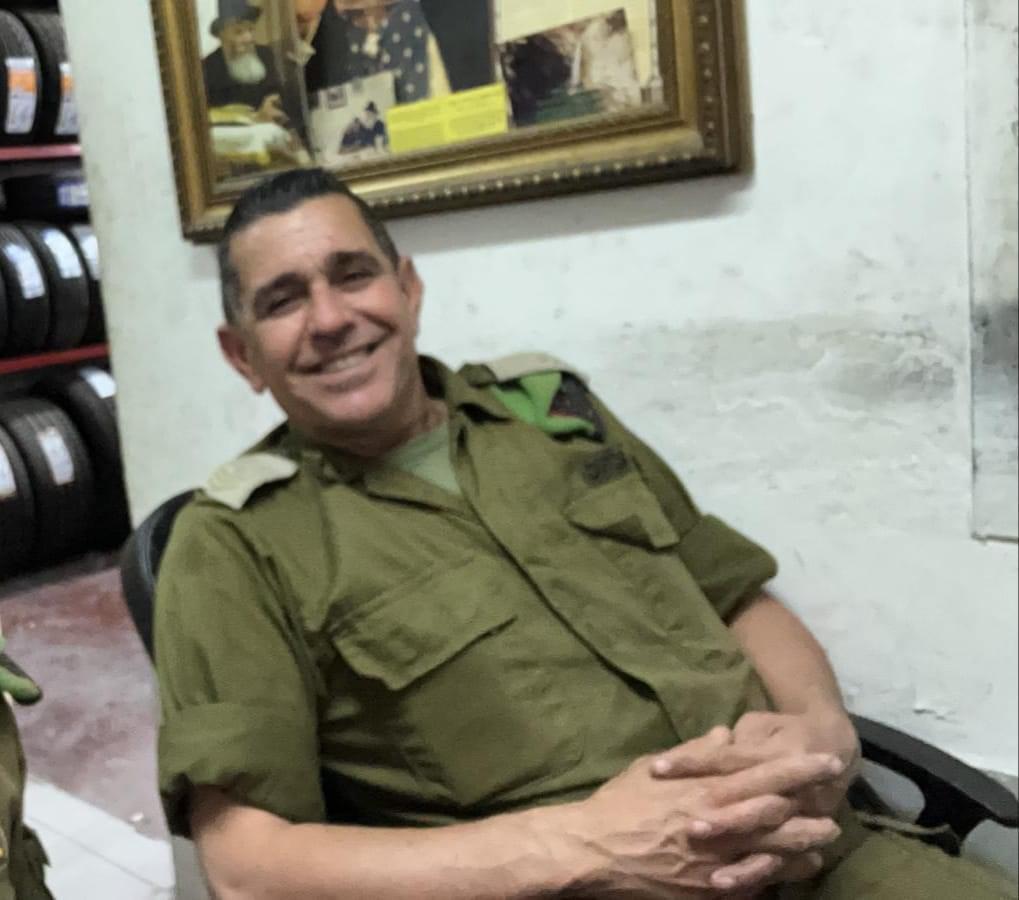
Alongside his rich family life, Uri continued to serve in the regular army, becoming a key figure in the Technology and Maintenance Department at Bahad Nahal, holding the rank of Rav Nagad. His role as a foreman was much more than technical management; he was the beating heart of the department, the driving force that pushed everyone forward, and above all, the listening ear for every soldier. He would arrive at the base with a wide smile, greeting everyone with an energetic good morning, and immediately begin scanning the board, solving problems, planning the workday. He knew the names of all the soldiers, knew their personal stories, and was always there to look after them. For him, rank was not just a symbol of authority, but also of responsibility – the responsibility to ensure that people were well. He was unable to see a sad or worried soldier and not approach to ask how they were doing. "Before you were a commander, you were a friend," his soldiers said of him, and this was the greatest compliment he could receive. He would sit with them in the canteen, drink coffee, listen to their dilemmas, advise from his rich experience, and make them laugh when he needed to relieve tension. He knew when to push and when to release, when to demand and when to contain. He was a role model for generations of young soldiers, teaching them not only the profession, but also the values – integrity, professionalism, giving, and love of humanity. The tractors roared on the base, armored vehicles underwent complex treatments, and weapon systems required constant maintenance, and Uri was there, supervising everything, with hands that knew every screw and every connection, and with a heart that cared for every person. He would see the satisfaction in the eyes of a soldier who succeeded in fixing a complex malfunction thanks to his guidance, and was as proud of them as if they were his own children. He was the commander who, even when he was rushing to catch the bus home to Dimona, to return to his beloved family, would stop, listen patiently to a soldier who asked for advice, and only then continue on his way, leaving behind a trail of calm, confidence, and a smile.
Life in Dimona, in the Negev, flowed at its own pace, a blend of desert tranquility and urban vibrancy, but on the morning of Simchat Torah, October 7, 2023, everything changed. The sound of explosions and sirens pierced the quiet, and horrific news began to stream in with incomprehensible speed. The murderous Hamas terror attack on the Gaza envelope communities and innocent civilians shook the entire country. Uri, like every Israeli citizen, felt the deep shock, the sharp pain, and the incessant worry. The Negev, which had always been a relatively quiet area, suddenly became a front line. Many soldiers were called up for reserve duty, bases were flooded with activity, and military vehicles moved constantly on the roads. Uri, in his role as foreman at Bahad Nahal, found himself at the heart of the action. The work at the base doubled; there was a need to prepare equipment, repair vehicles, train new soldiers at a dizzying pace, and ensure that the entire technology and maintenance system met the complex demands of war. He worked long hours, with the same dedication and spirit of giving that always characterized him, but now with an even more urgent sense of mission. His smile, despite the pain and sadness that hung in the air, did not leave his face. He continued to be the anchor, the commander-friend, the one who managed to maintain high morale among his soldiers, reminding them of the importance of their work, and the fact that every screw they tightened, every engine they repaired, was an integral part of the national effort to defend the homeland. WhatsApp messages flowed on phones, updates on casualties, on fighting, on reservists called to duty. Every conversation, every family gathering, revolved around the situation. Uri and Inbal's home, which was always full of joy, was now also filled with worry, prayers, and hope for better days. Uri was there for his family, dispelling fears, hugging, strengthening, and showing them that same desert optimism that characterized him from childhood.
On the morning of Thursday, the 4th of Adar Bet, 5784, March 14, 2024, a seemingly routine day in the midst of a war that had become the new normal, Uri set out on his way. The Negev sun had already begun to climb in the sky, and the air was clear and cool. He said goodbye to his family, likely with a smile and a kind word, as he did every day. The road from the Nahal base or from his home in Dimona to the Beit Kama junction is a familiar route for many residents of the South. The Beit Kama junction, despite being a meeting point of main roads, was usually a relatively quiet spot. But since October 7th, that quiet had become fragile. Every departure from home, every drive on the road, became accompanied by a vague sense of uncertainty, of hovering danger. On that morning, at a time and place no one could have predicted, the unbelievable happened. A murderous terror attack, in which a terrorist ran over and stabbed innocent civilians, shattered the routine. Uri, who was at the junction at that time, was caught in the violent and deadly event. He, who had dedicated his entire life to giving, helping, and protecting others, met his tragic and cruel end, a victim of a war that began on the borders of the homeland and spread to every corner. He fell as a hero, not in the sense of a person bearing arms and charging, but in the sense of a person who lived his life with devotion and giving, who continued to serve the country and his friends with supreme loyalty, and who ultimately paid the dearest price for his very existence in his land, for his very being an Israeli. He was fifty-one years old when he fell, leaving behind an immense void, unspeakable pain, and an unforgettable memory.
The news of Rav Nagad Uri Moyal's fall struck his family, friends, and community like a bolt from the blue. The house in Dimona, which had always been full of laughter and joy, was filled with heavy mourning. Inbal, Sapir, Lidor, and Liav lost a beloved father and husband, a pillar, a source of endless inspiration and love. His mother, Suzan, and his many brothers and sisters, were left with inconsolable pain, with the memory of a child, brother, and dear man whose smile never left his face. His funeral at the military cemetery in Dimona was a testament to his standing and importance. Hundreds of people came to pay their last respects: family members, childhood friends, neighbors, soldiers who served under his command, senior officers, and also ordinary people who simply knew Uri and his famous smile. The desert sun blazed overhead, and tears streamed down faces etched with pain, but also full of pride for the man he was. Above the fresh grave, with the mound of fresh earth covering the one who was once full of life, weeping voices were heard, but also promises to preserve his legacy.
Uri Moyal, of blessed memory, left behind not only a grieving family, but also a rich legacy of love for humanity, unconditional giving, and personal example. His smile, which was his hallmark, now became a symbol – a symbol of optimism even in difficult moments, a symbol of the ability to maintain humanity and warmth even within a demanding military system. He taught his soldiers and his children, and everyone he met, that even when one is in a hurry, one can always stop for a moment, listen, advise, and ensure that things are good for the people around you. He was a man of action, of working hands, of problem-solving, and of an open heart. He was the everyday hero, the one who worked quietly, behind the scenes, but whose influence was immense, echoing in the lives of countless people. He was the anchor, the friend, the commander, the father, the husband – a man whose every fiber of his soul was dedicated to his family, his country, and caring for others. Uri's fall at the Beit Kama junction, in the midst of the War of Revival, is a painful reminder of the price we pay for our existence here, but also a testament to simple and pure human heroism – the heroism of those who chose to live their lives to the fullest, with giving and love, even when danger lurked at the door. The memory of Uri, a man with an unyielding smile, a man of action and a generous heart, will continue to light the way, to inspire, and to stand as a beacon of hope and revival, in the heart of the desert and in the soul of the entire nation.
Moments of a life
All photographs · 4
In the media
Articles
- The offices of the association in memory of Ori Moyal inaugurated in Ashdod
אשדוד10 ·
- Dedication of a Torah scroll in memory of Israeli hero Uri Moyal, of blessed memory - Ashdod News - Ashdod10
ashdod10.co.il ·
- Chief Warrant Officer Ori Moyal laid to rest: "It is no surprise that even in your final moments you were a hero"
ynet.co.il ·
- Chief Warrant Officer Ori Moyal, who neutralized the terrorist in the Beit Kama attack, died of his wounds: “The man with the biggest heart”
ynet
- Uri Moyal
ynet - גל־הד
- Chief Warrant Officer Uri Moyal, victim of southern Israel stabbing attack, dies
Ynetnews
Memorial sites
- Yizkor — Chief Warrant Officer Uri Moyal
יזכור - משרד הביטחון
Memorial projects
Yitzhak Moyal founded an organization in memory of his brother Uri, and in April 2026 the inauguration of its offices in Ashdod was reported. Brigadier General Shlomo Cohen is described as the organization's CEO, and copies of the book about Uri were distributed at the ceremony.
In March 2025, his brother Itzik Moyal organized a Torah scroll dedication ceremony in his memory at Divan Halls in Ashdod, attended by hundreds of family members and friends.
His brother Yitzhak wrote the book “One Last Step Forward” about him. His sister Ayala continues his legacy by distributing packages to wounded soldiers.
Stories told about them
His brother and sister said Uri cared for lone soldiers, helped with rehabilitation and dealings with the authorities, and arranged food and electrical appliances for their homes. During the war, he prepared Friday meals for hundreds of combat soldiers with his brother.
Life & service
Service
- Rank
- Command Sergeant Major
- Battle Location
- Beit Kama Junction
Family
- Father
- Amram
- Mother
- Susan
Burial
Tributes & remembrance
תהא נשמתם צרורה בצרור החיים
מתגעגעים בכל יום
תמיד תהיה חסר.. לא משנה כמה שנים עברו
חור בלב
אורי היקר שלנו וחברי הטוב
אתה אומנם לא איתנו אך זכרך ותמותך תמיד לנגד עינינו , אתה קדוש שנמצא בגן עדן מנוחתך תפלל עלינו לפני בורא עולם שישמור על משפחתיך ,שיגאלנו מכל הצרות ויחיש משח צדקנו אמן, זכרך חקוק בליבנו.אחי היקר
היית אבא שלנו בפלוגה
בלי שום אינטרס ותמורה
פשוט כי אהבת אותנו
נזכור אותך לעד
האיש עם הלב שעשוי מזהב
אתה לנצח תהיה בליבי. האיש עם הלב הכי גדול שהכרתי בצה״ל.
לזכרך איש יקר
מלך העולם אחד ויחד בדור
בן דוד יקר ואהוב
אורי ,אתה הכל בשבילנו הדבר הכי גדול עבורונו מתגעגעת
אורי היקר,
איזה חיוך, איזה לב, איזה אישיות. אדם נדיר ובעל נתינה אינסופית, תמיד חיובי ותמיד פניו לעזרה.
לעד אשא אותך ואת טוב ליבך איתי.
חבר יקר ואהוב, אדם עם לב ענק שאהב ועזר לכולם.
נוח על משכבך בשלום
מתגעגע
אח יקר ואיש יקר ואהוב.
לעולם לא אשכח אותך .
בליבי תמיד.
ת.נ.צ.ב.ה
אורי היקר מתגעגעים אלייך נורא אתה היית בן אדם עם נתינה אין סולחת לכל חברייך למקצוע אוהבים אותך
איפה ישנם עוד אנשים כמו האיש ההוא
יהי זכרו ברוך
תמיד נזכור אותך תודה שהיה לי תזכורת להכיר אותך ותודה שתמיד דאגת לליאל שלי ושתמיד היית שם בישבילו תודה שדאגת להצחיק אותנו תמיד במשך שנים היית האדם הכי שמח שהכרתי
אורי שמור על כולם מלמלעה אתה חסר לעם שלם כל עם ישראל גאה בך אתה גיבור ישראל
חבר יקר
כמה אתה חסר
טרגדיה נוראית
לא הכרתי אותך, אך בזכות גבורתך ותושייתך הרבה ניצלו חיים רבים ובהם חיי בתי שנכחה בפיגוע. יהי זכרך ברוך לעד.
אורי היית אדם מיוחד
איש של נתינה וחסד בלי גבולות
נזכור אותך לעד
יהי זכרך ברוך.
איש יקר עם חיוך שמפיץ אור.
זכור לי כאדם טוב וצנוע.
איש יקר עם חיוך ענק ולב רחב
יהי זכרו ברוך
לעולם לא אשכח אותך,
תהא נשמתך צרורה בצרור החיים
אורי אח יקר כמה געגועים
חבר יקר אתה חסר
יהי זכרו ברוך, איש משפחה אהוב ויקר
לזכרו של רנ"ג אורי מויאל ז"ל
אורי שירת שנים בחטיבת הנח"ל,
ותמיד בלט בנכונותו לעזור, להקשיב ולתמוך בכל מי שסביבו. זכיתי להכירו במהלך שירותנו המשותף אדם של ערכים, מקצועיות ולב רחב.
במהלך הדרך הוא תמך בי, חיזק אותי, והיה עבורי דמות מופת.
זכרו, אישיותו ומעשיו הטובים ילוו אותי תמיד.
יהי זכרו ברוך.
אורי היקר,
מתגעגעים.
הגעגועים לא פוסקים, אתה חסר פה בעולם הזה
He loved all his soldiers as though they were his children
Source:ynet
Read the Hebrew original
הוא אהב את כל החיילים שלו כאילו היו ילדיו
The most principled commander in the IDF
Source:ynet.co.il
Read the Hebrew original
המפקד הכי ערכי בצה"ל
The residents of Dimona and Yeruham mourn his murder
Source:ynet.co.il
Read the Hebrew original
תושבי דימונה וירוחם כואבים את הירצחו
The man with the biggest heart I have ever known
Source:ynet.co.il
Read the Hebrew original
האיש עם הלב הכי גדול שהכרתי
Your body may have been taken from us, but your spirit and your love will never leave us.
Source:ynet.co.il
Read the Hebrew original
אולי הגוף שלך נלקח מאיתנו, אבל הרוח שלך והאהבה שלך לעולם לא ילכו מאיתנו.
For being a dad who is a teacher for life
Source:ynet.co.il
Read the Hebrew original
על היותך אבא שהוא מורה לחיים
You saved many while you were bleeding
Source:ynet.co.il
Read the Hebrew original
הצלת רבים בזמן שדיממת
We planned to go shopping for Shabbat
Source:ashdod10.co.il
Read the Hebrew original
תכננו לצאת לקניות לשבת
Remembrance Day addresses
יום הזיכרון לחללי מערכות ישראל התשפ"ה – 2025
בכל יום שעובר, אזכור יותר! אזכור, את אלו שיצאו עימי לקרב ולא שבו, ולהם אין מי ידמה ומי ישווה. אזכור, שהכאב לא יעבור לעולם, והזמן, הוא לא מרפה ולא מרפא. אזכור, את שיברון הלב הגובר ואת הבית שבוער. אזכור, את צדקת הדרך, ואשבע שוב, שמה שהיה לא יהיה יותר. אזכור, שיותר מכל דבר אחר – אני חסר! ביום הזה, אני נתקף געגוע לדמותם, לחיתוך דיבורם, לחיוכם, ומדליק נר לזיכרון דרכם ומורשתם!
משרד הביטחון
אגף משפחות, הנצחה ומורשת
יום הזיכרון לחללי מערכות ישראל התשפ"ה – 2025
בכאב, בהצדעה ובתקווה אני מתכבד להדליק נר זיכרון זה. השנה, כשאנו נלחמים במלחמה ארוכה, רב זירתית וצודקת, הזיכרון נושא משמעות עמוקה. ביום זה נעצור ונתייחד עם זכרם של טובי בנינו ובנותינו שנפלו בהגנה על המדינה. מורשתם היא המצפן שמתווה את דרכינו, והיא המעניקה לנו כוח להמשיך ולהגן על מדינת ישראל ותושביה. משפחות יקרות, אנו מרכינים ראשנו ומתחייבים שנעמוד לצידכן תמיד. יהי זכר הנופלים ברוך.
אלוף דדו בר כליפא
ראש אגף כוח האדם, צה"ל
יום הזיכרון לחללי מערכות ישראל התשפ"ה – 2025
בשעה שאנו זוכרים את גודל תרומתם ועומק מסירות נפשם של טובי בנינו ובנותינו, נופלי מערכות ישראל לדורותיהן, ממשיכים צה"ל וכוחות הביטחון במימוש המשימה למענה לחמו ועבורה נפלו: הכרעת אויבינו מדרום, מצפון, ביהודה ובשומרון, וגם בזירות רחוקות יותר. בהערכה רבה ובגאווה אדירה אנו מרכינים ראש בפני הנופלים והנופלות, מאמצים את משפחותיהם אל לבנו, וממשיכים במשימה להבטחת קיומה של ישראל לדורי דורות. יחד נעשה ונצליח.
רב אלוף אייל זמיר
הרמטכ"ל, צה"ל
יום הזיכרון לחללי מערכות ישראל התשפ"ד – 2024
כאשר דגלינו מורדים לחצי התורן וראשינו מורכנים לזכר הנופלים והנופלות במערכות ישראל, ממשיכים לוחמי צה"ל ומפקדיו בלחימה בדרום, בצפון, ביהודה ובשומרון ובזירות נוספות. על כל דור מוטלת המשימה של הגנת העם והארץ – משימה שאף פעם אינה פוסקת. נצדיע בגעגוע ובגאווה לנופלים ולנופלות, נחבק את משפחותיהם, ונמשיך ברוח הציווי שהותירו לנו. עם ישראל חי.
רב ניצב יעקב שבתאי
המפקח הכללי, משטרת ישראל
יום הזיכרון לחללי מערכות ישראל התשפ"ד – 2024
אחיי הנופלים, כל נר הוא זיכרון יחיד ומיוחד, על חיים שהיו ואינם, געגוע שנצרב עמוק בלב, עולם ומלואו. הנרות כולם הם זיכרון של אומה כי לעולם לא עוד, בשורת הציונות וקוממיות ישראל. זיכרון כי הדרך לעם חופשי בארצנו עוברת דרך מסדר הנופלים. אור הנר יזכיר לנו את מסירות נפשכם להציל חיים, להגן על הבית. הנרות מסמנים לנו נתיב גבורה ערכי מחייב שאנו מצווים ללכת לאורו. נמשיך להילחם ולהוסיף אור מתוך אמונה בנצח ישראל.
יואב גלנט
שר הביטחון
יום הזיכרון לחללי מערכות ישראל התשפ"ד – 2024
בהצדעה ובכאב, בשם צה"ל כולו, אני מדליק נר זיכרון. בעיצומה של מלחמה, הזכרון נושא משמעות יום-יומית, שעבר והווה מתלכדים בה. לאורם של הנופלים נמשיך לצעוד, חיילי הסדיר והמילואים. לאורם של הנופלים נמשיך להגן על ארצנו ועל מולדתנו, גם כשהמחיר כבד. להבת-הזכרון תבער בנו בעודנו ממשיכים להלחם ונזכור את הנופלים ואת אומץ ליבם. משפחות יקרות, צה"ל מרכין היום ראש, מצדיע לכן וכואב איתכן. יהי זכר הנופלים ברוך.
אלוף יניב עשור
ראש אגף כוח האדם, צה"ל
יום הזיכרון לחללי מערכות ישראל התשפ"ד – 2024
בהוקרה, בגאווה ובכאב שאין לו סוף, אני מתכבד להדליק נר לזכרם של הנופלים והנופלות במערכות ישראל. סיפור חייהם בארץ הזאת, מסכת שירותם, גבורתם והקרבתם – הם סיפורה של הארץ הזאת, אך גם סיפור המחיר הכבד שהיא תובעת מאוהביה. מחויבותנו לזכר הנופלים ולדרך שהותירו לנו ניצבת תמיד לנגד עינינו. את המשימה שלא זכו להשלים, משלימים כיום, וישלימו, אנשי כוחות הביטחון, הממשיכים בדרכם ולאורם. יהי זכרם של הנופלים ברוך.
משרד הביטחון
אגף משפחות, הנצחה ומורשת
יום הזיכרון לחללי מערכות ישראל התשפ"ד – 2024
בחרדת קודש אני מתכבד להדליק נר לזכרם של חללי מערכות ישראל, חברנו שנפלו, מראשית היציאה מהחומות ולאורך כל שנות עצמאותנו המדינית והציונית, מהווים תמרור זיכרון לדרך חיינו ולמחוייבות הלאומית להנצחת זכרם. דרכם נותרה דרכנו ומורשתם נר להמשך עשייתנו. יהי זכרם ברוך!
בני גנץ
שר הביטחון
יום הזיכרון לחללי מערכות ישראל
נזכור אותם, כולנו יחד. כל אחד ואחת מהם, מדי יום ביומו, והיום ביתר שאת, כך – לנצח. "כי מדי דברי בו זכור אזכרנו עוד"
משרד הביטחון
אגף משפחות, הנצחה ומורשת