The story
The gentle, caressing late-spring sun of Lehavim painted the green shutters of the house on Rakafot Street in gold on the 24th of Sivan, 5763, when twin boys arrived at Anat and Moshe Ahiyas’s home, an exciting addition to a family that already included Maya, Gil, and Eyal. Tomer Yaakov was one of them, emerging into the world alongside his brother Amir, mere seconds after him, as if so deeply connected and intertwined that he couldn't imagine existence without him. The house, already bustling with life and laughter, suddenly filled with another layer of sounds, the scent of babies, and countless pairs of hands eager to caress and embrace. Lehavim, a communal settlement in the south of the country, was more than just an address for Tomer and his siblings; it was a warm nest, a safe environment of dusty bicycle paths, well-tended gardens, and the constant scent of desert blossoms after rain. His parents, Anat and Moshe, made sure to instill in them values of community, mutual respect, and love for humanity, and their home always served as a meeting point for friends and family, a place where the door was always open and a pitcher of cold water awaited on the counter.
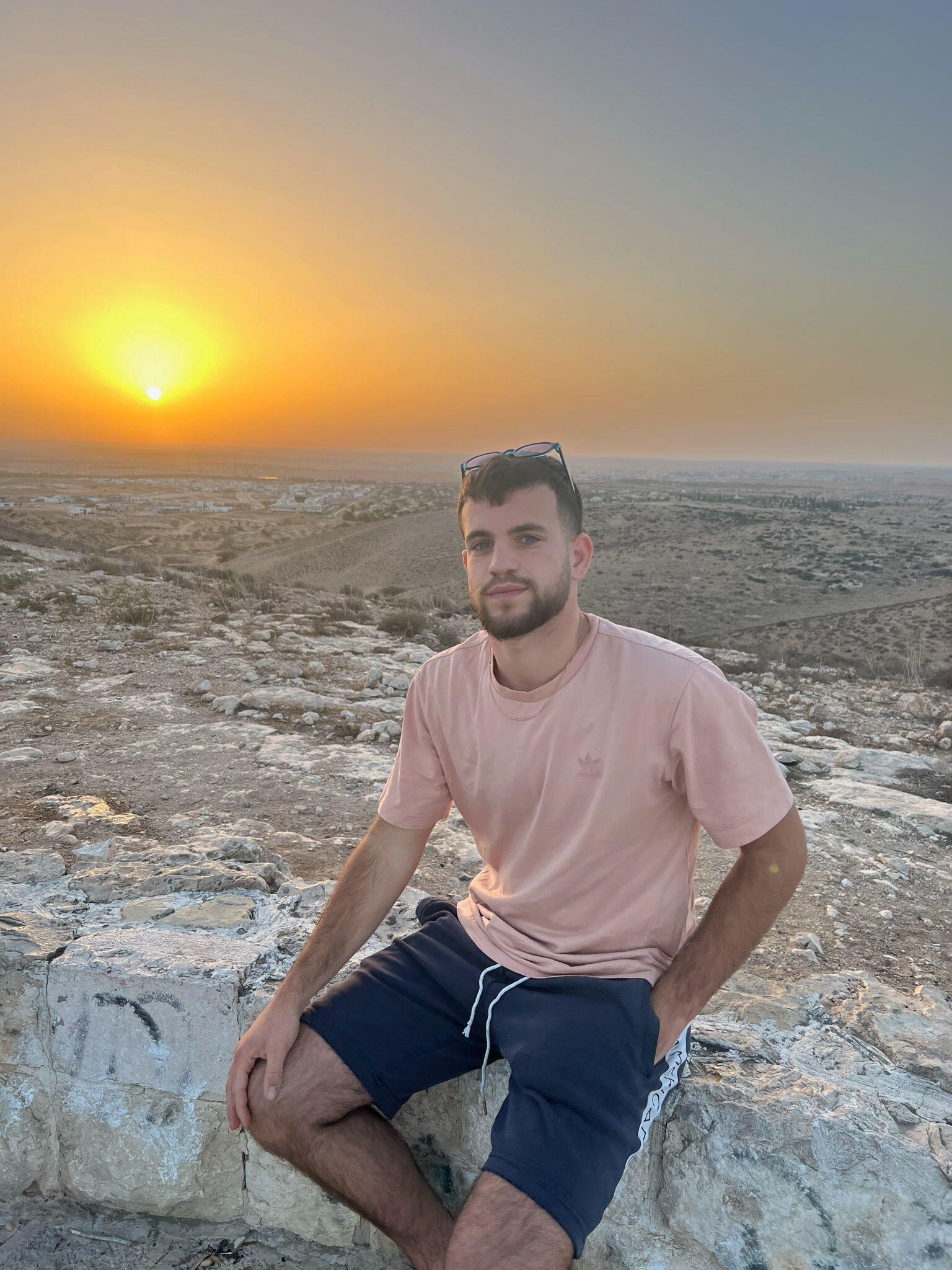
Tomer, with his deep blue eyes and light hair, was a mischievous and curious child, who seemed to have been born with a permanent smile on his face and a spark of mischief in his eyes. He and Amir were an inseparable pair, a rare sight of two almost identical boys moving together in perfect synchronization, whether they were running around in the backyard, competing to be the first to reach the makeshift soccer goal, or sneaking into the kitchen at night to snatch another slice of cake. Their bond was deeper than words, woven with invisible threads of mutual understanding, gentle competitiveness, and infinite love. Amir would recount with a smile those small quarrels, innocent brotherly fights that would end in a strong hug, the continuous teasing, and the knowledge that Tomer was the "strongest kid" he knew, the one no one could beat. When they were seven or eight, they would spend long hours in the grove near their home, building makeshift shelters from branches and leaves, imagining they were hunters or explorers, speaking in a secret language only they understood. Tomer was always the initiator, the one who pushed forward, who found the new path, and Amir was his shadow, his loyal partner in every adventure. In the evenings, after a warm, fragrant shower, as they snuggled together on the large sofa in the living room, they would watch Maccabi Haifa soccer games with the whole family, the team Tomer passionately supported. The cheers, the disappointed "ugh" curses, and the shouts of joy when the ball hit the net – all created a constant soundtrack of a vibrant home, a home where Tomer found the space to be himself: a joyful, curious child, loved by all, and always with a little joke ready on the tip of his tongue.
At Lehavim Elementary School, Tomer continued to be that good-natured whirlwind. He loved playing soccer and basketball during breaks, his hands always dusty and covered in dirt from the field, and his rolling laughter could be heard from afar. He wasn't a particularly diligent student, but he always managed to grasp the material quickly, as if his mind simply absorbed things effortlessly. Teachers loved him for his sense of humor, his ability to brighten any lesson with a small joke or a witty remark, and the way he treated everyone with respect and a smile. He was surrounded by friends, from the little ones just starting school to the older ones, and always found a way to bridge gaps, make people laugh, and calm things down. When he reached middle school age, Tomer moved to study at the Eshel HaNasi Youth Village, a place that greatly shaped his personality and served as fertile ground for his growth. Eshel HaNasi was not just a school, but an entire community, a special connection of boys and girls from different places and backgrounds, who lived and studied together, all under the wings of an agricultural school. For Tomer, the encounter with the land, with manual labor, was like a glove fitting a hand. He found immense satisfaction in the workdays in the sheepfold and the orchard, in the smell of damp earth at six in the morning, as the sun just began to climb over the hills, and in the direct contact with life. He loved the roar of the tractor engine, the feeling of straining muscles, and the deep satisfaction that came at the end of a workday in the sun, when the body was tired but the spirit was full. There, among the trees and animals, Tomer truly connected with himself and his surroundings. He learned to talk with the older instructors during workdays, tough but big-hearted men of the earth, who immediately saw his potential and sincerity. He knew how to find common ground with them, listen to their stories, and ask questions out of genuine interest. He was able to kneel and chat with small children who frequented the youth village, those who admired and loved him especially, and dedicate his full attention to them, as if they were the most important people in the world. Even with the caretaker of the village, who looked after its cleanliness and maintenance, and with the guard at the entrance, whose job was to maintain order and security, Tomer always found the right words, the little joke, the welcoming smile. He saw every person as an equal, regardless of status or age, and this was one of the foundations of his unique personality.
Despite his lighthearted nature and infectious mischievousness, Tomer was a very good student, even choosing to study physics, a field that requires analytical and strenuous thinking. He successfully combined his studies with his rich social life, and it seemed as if he did everything with an incomprehensible ease. Teachers knew he put minimal effort into his studies, but his results were always impressive. He simply absorbed things, understood the complex ideas behind the formulas, and then moved on to the things that truly interested him: friends, sports, music, and of course, the youth movement. From a young age, he was active in the "Tzofim" (Scouts) movement, another place where he thrived. The long hikes in the fields, sleeping under the open sky, the flickering campfire at night, and the communal singing – all were an inseparable part of his childhood and adolescence. He loved the camaraderie, the sense of belonging to a group, and the physical and mental challenges the movement presented him with. He was an avid sports enthusiast, playing soccer, basketball, and tennis. He spent long hours on the courts, sweat pouring down his face, calling out to his friends, laughing and competing. He loved the movement, the running, the adrenaline of the game. At home, the love for music was part of the atmosphere. Tomer loved listening to a wide range of styles, from Israeli rock to hip hop, and his room was always filled with sounds. He knew how to hum the lyrics, usually while performing some small prank or trying to make one of his siblings laugh. The special bond with Amir, his twin brother, continued to be a pillar in his life. They were in the same group of friends, shared similar hobbies, and the first time their paths truly diverged was only when each of them enlisted in the army in a different place. "Our connection was special," Amir recounted, his voice breaking slightly with memories, "We were in the same group of friends, we had pretty much the same hobbies, and the first time our paths separated was when we each enlisted in a different place. When we were together, we loved to tease each other and fight. Tomer was the strongest kid I knew, I didn't know anyone who could beat him in the world." It was a deep love, a quiet love, one that didn't always need words, but existed in small actions, in fleeting glances, and in the knowledge that there was always someone who understood you even before you spoke.
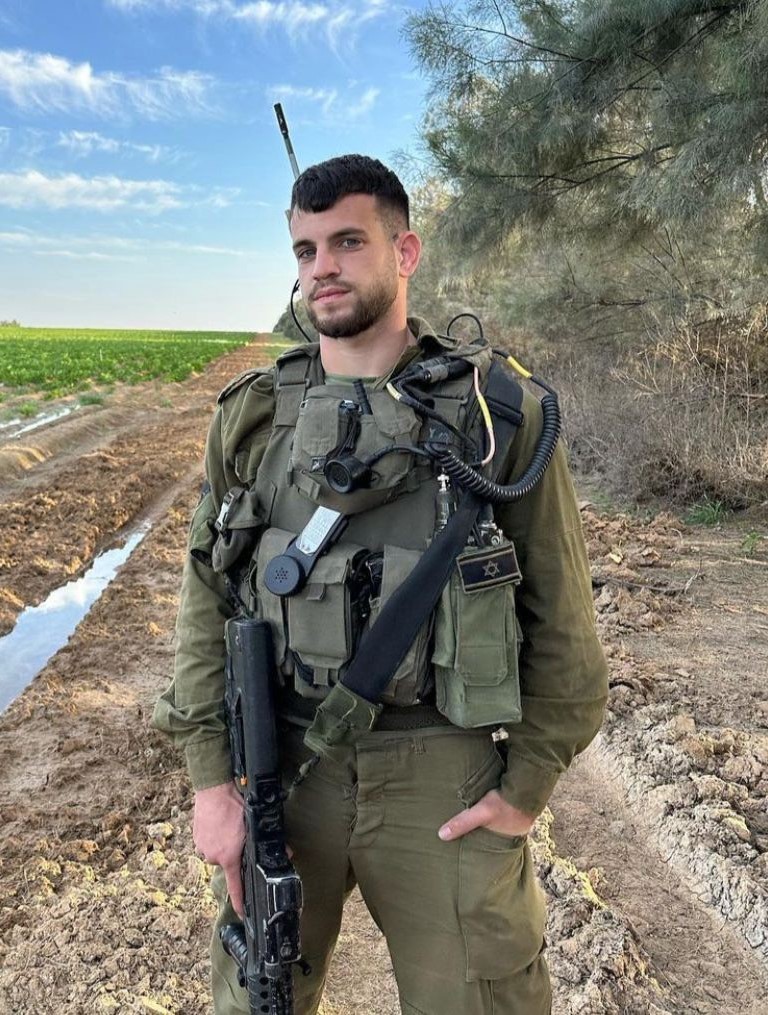
On a winter day, December 8, 2021, it was Tomer's turn to enlist in the IDF. This moment, the transition from adolescence to adulthood, was significant for him. He did not hesitate for a moment and volunteered for combat service, driven by a deep sense of mission and responsibility. He was proud of his assignment as a combat soldier in the Nahal Brigade, and later as a combat soldier in the Southern Brigade of the Gaza Division. The path was long and challenging: tough basic training, grueling field exercises, long marches under scorching sun or pouring rain. He learned to know the limits of his body and soul, and discovered strengths within himself he didn't know existed. He found lifelong friends, brothers in arms, with whom he shared moments of hardship and moments of rolling laughter, inside the cramped tent or in the open field. Tomer felt he belonged, part of something big and important. He saw his combat service not just as a duty, but as a right to defend the country and its citizens, the home in Lehavim, the Maccabi Haifa soccer games, and the dusty paths of Eshel HaNasi. After undergoing various and diverse training courses, in which he proved his operational and personal abilities, he was assigned as a radio operator in the forward command post (FCP) of the brigade commander. This role demanded great responsibility, composure, quick technical operational ability, and excellent communication skills. He was the eyes and ears of the commander in the field, mediating information, relaying orders, and enabling quick and critical decision-making. He performed his duties with dedication and professionalism, and earned great appreciation from his commanders and friends.
During his military service, between one mission and another, between training and guard duty, Shy-Lee entered his life. It was love at first sight, as she herself described it, an immediate and deep connection that seemed as if it had always been there, just waiting to be discovered. They met by chance, perhaps at a soldiers' party or through mutual friends, and from then on, their paths did not diverge. Shy-Lee saw in him everything she had always looked for: the blue eyes full of mischief, the unique sense of humor, the deep kindness, and the quiet determination. They spent every free moment together, whether on short trips in the south of the country, outings with friends, or simply sitting quietly in a cafe, talking for hours on end, sharing dreams and plans for the future. "We had a crazy connection, an embracing and amazing love," she recounted, her voice trembling with emotion and longing. "He was one of a kind, unique." They planned their future together, imagined their own home, a family, a whole life of love and laughter. Tomer would talk to her about his upcoming release from service, his desire to study, perhaps to continue working the land, his dream of traveling the world with her. He would tell her about his twin brother Amir, about their fights and reconciliations, about the special place of each of his brothers and sisters in his life, and about his parents who gave him all the tools to be the person he was. Shy-Lee listened, caressed his hand, and saw in his eyes Tomer's special spark, the lively, mischievous, and loving person she loved so much. She knew she had found her soulmate, her life partner.
And then came that bitter and hasty morning, Saturday, the 22nd of Tishrei, Simchat Torah 5784, October 7, 2023. The morning began like any other Saturday morning in the south, quiet and peaceful, with the promise of a pleasant holiday. At 6:30 AM, the silence was suddenly shattered. The Hamas terrorist organization launched a brutal and unprecedented surprise attack on Israel. Missiles and rockets were fired in massive numbers from the Gaza Strip, scraping the skies above the communities and landing in wide areas across the country. Under the cover of missile fire, thousands of terrorists breached the border fence, by land, sea, and air, and began a murderous rampage on the communities surrounding Gaza, on Sderot, Ofakim, and Netivot, on innocent nature partygoers, and on IDF bases. They murdered some eight hundred civilians in their homes, in their cars, committed horrific crimes, kidnapped hundreds of Israelis to the Gaza Strip, and destroyed, looted, and set fire to homes and property. Hundreds of soldiers, police officers, security forces personnel, and members of local emergency response teams fell in battle, shielding the citizens of the state with their bodies. On this morning, the face of the country changed, and a difficult war began.
On that morning, Tomer was at the division base in Re'im. He awoke in a panic to the wailing sirens, which were different from any siren he had heard before. They were followed by muffled sounds of war that grew stronger – gunshots, explosions, shouts. Chaos overtook the base. Within seconds, Tomer, as the radio operator for the commander of the Southern Brigade of the Gaza Division, Colonel Asaf Hamami, knew his place. There was no doubt what he had to do. Without hesitation, he joined Colonel Hamami and Sergeant Kirill Brodsky, another radio operator. The three jumped into a vehicle and sped into the inferno, straight to Kibbutz Nir Oz, one of the first communities to fall victim to the attack. The air was thick with smoke and dust, the smell of gunpowder and death hung in the air, and incessant gunfire filled every corner. When they arrived at the kibbutz, they found it already under a brutal attack. Dozens of terrorists moved freely between the houses, shooting in all directions, murdering and destroying. Tomer, Asaf, and Kirill, three combat soldiers, against many dozens of well-armed terrorists, began a heroic and hopeless battle. They fought fiercely, with a clear understanding that every second they managed to hold out, every bullet they fired, every terrorist they stopped, bought precious time for the kibbutz residents. They knew they were the last defense, the physical and human wall between terror and the innocent civilians, most of them families with small children, who were hiding in their safe rooms. They took up positions, returned fire, moved between buildings, trying to understand the complex and chaotic battle scene. Tomer, with the radio in his hand, tried to communicate with the forces that had not yet arrived, to report the situation, to request reinforcements, to direct fire. The reports were fragmented, the connection unstable, but he continued to try, his voice determined despite the noise and fire around him.
At 7:05 AM, within the inconceivable inferno, Tomer's voice was heard on the radio. His voice was tense, yet clear, carrying difficult and painful news. "Colonel Hamami, the brigade commander, is wounded," he reported briefly, "immediate evacuation required." These were his last words on the radio. It was a final call for help, a last report from the heart of the battle. Tomer and Kirill did not abandon their wounded commander. They continued to fight, repelling the terrorists who approached from all sides, while trying to treat the brigade commander. With their skilled hands, and with inconceivable composure under intense fire, they bandaged him, applied a tourniquet, and tried to save his life, even as bullets whistled over their heads. They fought three against many, heroes who protected the lives of others at the cost of their own. In the battle for Nir Oz, in the heart of this heroic struggle, the three fell. Their bodies, along with the bodies of many other fallen soldiers and civilians, were abducted by the terrorists to Gaza, and a long and painful period of uncertainty and waiting began.
The news of Tomer's fall, of his being an IDF casualty abducted by a terrorist organization, struck the Ahiyas family in Lehavim like a bolt of lightning on a clear day. The house, which had always been full of laughter and joy, fell silent at once. Tomer's smile, the mischief in his eyes, his rolling laughter – all disappeared, leaving behind a huge void. A long period of uncertainty began, a time of desperate hope and quiet prayers, that perhaps Tomer was alive, that perhaps he would return home. Every day that passed was an eternity, every piece of information, every rumor, was meticulously and anxiously checked. His sister Maya spoke of the white butterfly that hovered in their home, accompanying her everywhere. "I knew it was you," she said, her voice choked. "I hoped the butterfly signaled to me that even though you were captive, your soul was free and soon you too would be free and return home." But reality cruelly slapped them in the face. The white butterfly ultimately signaled to her that Tomer was no longer alive, but his body was still held in Gaza.
The struggle to retrieve Tomer's body, as well as those of other fallen soldiers, became a life's mission for the family. They did not give up for a moment, did not rest, acting in every possible way. On July 24, 2024, many long and difficult months after the tragedy, his body was brought back to Israel by security forces. It was an enormous relief, mixed with unimaginable pain. The long wait was over, and the family was able to say a final farewell. Tomer Yaakov Ahiyas was laid to rest in the military plot in the Lehavim cemetery, the community where he was born, grew up, and loved so much. He was twenty years old when he fell. After his death, he was promoted to the rank of Staff Sergeant, in recognition of his heroism and dedication. On the day of the funeral, thousands came to pay their last respects. The sun of Lehavim, the same sun that saw him born, gently illuminated the faces of the mourners, as if trying to ease the pain. The air was heavy with profound silence, broken only by the sounds of weeping and eulogies.
His father, Moshe, stood by the fresh grave, his voice breaking but his eyes full of determination. "Tomer, hero of Israel, hero of Kibbutz Nir Oz, who by his death commanded life to us and to them," he said, his words echoing in the silence. "My Tomi, Dad's hero. And as a father, in my eyes, you would truly be a hero if you would just come back for five minutes – to give me a slap on the head, I'll slap you back on the neck, you'll make fun of my belly, you'll beat me at backgammon or fight with your twin brother Amir. Just five minutes." He spoke of the pain, the void, the earth soaked in Tomer's blood, and the mission that would not be complete until his body was returned to an Israeli grave. "Amir, your eternal twin, asked me yesterday – 'Dad, how do we go on?' I have no wise answers to give, only to be strong as a family, for Tomer, and to stick to the mission of bringing his body back to an Israeli grave. Soon. Because what you truly see here in the coffin before you is not Tomer, but a part of the land of Kibbutz Nir Oz soaked in Tomer's holy blood..." Moshe concluded with gentle words, "Thank you, Tomer, for who you are, I love you forever."
Amir, his twin brother, stood there, torn between immense pain and a sense of pride. "Tomer, my older brother, my twin brother, my soulmate," he began, his voice trembling. "Never in my life did I think that a day would come when I would stand before your grave and have to speak about you. Why would I even imagine that? October 7th caught an entire country by surprise, and unfortunately, it knocked on our door too." Amir described the bond that was indescribable in words, the special connection that only twins can understand. "A twin brother is not a regular brother. He's the first person you tell when something happens to you, he's the first person you ask for a ride when you're stuck or just ask for help, he's the first person you text after you unexpectedly got a weekend leave, to ask him if he also happened to get one." He spoke of the special rivalry, one with the most love in the world, a quiet love, without words, that they never showed each other. And then, he answered the eternal questions of twins: "Who is stronger? Obviously you. Who is smarter? Tomer, he's just lazier too. Who is more handsome? Obviously Tomer. Who is better with girls? Tomer." And the list went on, but with a sharp pain for the questions that would forever remain unanswered: "Who will be richer? Who will get married first? Who will find a better job? We will never know." Amir concluded with a promise, "When the army told us the story of your encounter with the terrorists – I wasn't surprised. Not from your stories about the brigade commander, but also because of you. You were never afraid of anything and no one could beat you... Tomer, I am the proudest of you in the world and I am grateful for the privilege of calling myself your twin brother for twenty crazy years. I love you forever and know that you are watching over me from above and protecting me in every way and everywhere I will be. I will immortalize you in every way and there will be no one who doesn't know who you were and what you are to me. Hero of Israel." He indeed created an Instagram page in Tomer's memory, "remember_tomer_ahimas", to continue telling his story.
His brother Eyal, his voice choked, asked for forgiveness. "You never needed me to protect you, you knew how to manage on your own. Forgive me, Tomer, that in the only moment of your life when you needed it – I wasn't there to protect you." He spoke of the endless longing and the admiration that would never end. "Tomer, in your last moments, you strove to save lives and fought until the very end. I want you to know that we will not stop for a moment – we will bring you back home, here to Lehavim, for a proper burial." His sister Gil, after the return of the body, wrote words that shed light on the journey of suffering and acceptance. "My Tomi, this is it. It's finally final that you are not with us and final that you are physically here on the soil of your Holy Land, our land, in the country for which you sacrificed your soul, and for which you gave your beautiful and good life. That's it, you are here, you won. You finally won eternal rest, the honor you deserve." She described the daily mourning, the small hope that hovered in the air despite everything, the belief that "what you don't see might not be true." And now, with his body returned, "there was no choice but to believe to the last percent. You are here at home, in Lehavim, where you were born, where we grew up, in the place that characterizes us all our lives. Gaza will not build life over you, my love. What a relief..." She concluded by referring to the words Tomer would say to her: "Tomi, every time I'm struggling, I caress your picture, kiss my necklace, and imagine you calming me down and telling me: 'Gili, everything's fine. I did what I had to do. I don't regret it. Don't you regret it either.'" His grandfather Zvi, his voice choked, summed up the feeling of the entire family: "The mouth speaks and the heart refuses to believe. We are a tribe, a large, strong, and loving family. The testament we give ourselves – to continue even after the disaster that befell us. Tomer, we love you so much, we will miss you."
Tomer Yaakov Ahiyas, twenty years old when he fell, left behind parents, two brothers, and two sisters, a loving family, and many friends. He left behind Shy-Lee, his beloved, whose shared dreams were abruptly cut short. But more than anything, he left behind a legacy of human heroism, of love for people and land, of choosing life even in the face of death. Tomer's story is not just a story of loss, but a story of resurgence, of the Israeli spirit that refuses to be broken. It is a story of a young man full of life, mischievous and smiling, who in the moment of truth stood firm against evil, defended his home and his people, and paid for it with his life. Tomer's memory, the sparkle in his eyes, his rolling laughter, the touch of his hands on the kibbutz earth, his voice reporting on the radio – all these will remain forever etched in the hearts of all who knew him, and will serve as an eternal testament to everyday heroism, that which stems from the simplest and purest humanity. He fell as a hero, and his story will continue to echo, as a voice of hope and pride, within the complex reality of the Land of Israel.
Moments of a life
All photographs · 3
In the media
Articles
- Tomer grew up here, and his roots remain with us: a lookout inaugurated in Lehavim in memory of the community member who fell on October 7
וואלה שבע דרום ·
- A football tournament in memory of Tomer Ahimas
מועצה מקומית להבים ·
- Staff Sgt. Tomer Ahimas, 20: ‘Hero’ soldier slain in battle at Nirim
The Times of Israel ·
- Kiril, Tomer and Shaked will not return from captivity: “How do you cope with the fact that he is a body held hostage?”
ynet ·
- The story of the team of Assaf Hamami in Nirim on October 7
כאן
- Now you are here — the circle is complete: Staff Sergeant Tomer Ahimas laid to rest
ישראל היום
Memorial sites
Memorial projects
On August 26, 2026, a lookout in memory of Tomer Ahimas was inaugurated in Lehavim with dozens in attendance. Council head Elad Erzi described it as a place for nature, gathering and remembrance.
Family and friends, in partnership with the Lehavim community center and council, initiated a community football tournament in his memory at Lehavim Stadium during Passover 2024, on April 26–27. The source is an invitation dated April 7, 2024, not retrospective confirmation that all the matches took place.
Eyal made a children’s book called Tomer Dod Gibor for Yahli, Maya’s son; Maya read from it at the funeral.
Kibbutz Nirim presented the command team’s families with the Magen Nirim emblem designed by Gil Burshtein, and announced at the ceremony that it would place the emblem on Tomer’s grave.
Stories told about them
Tomer and Kirill carried their wounded commander Asaf Hamami toward the soccer field in Nirim. They called for rescue and tried to treat him in a shelter under fire.
“I'm with you till the end of the line.”
Life & service
Service
- Rank
- Staff sergeant
- Unit
- Infantry Corps
- Honours
- Posthumously Promoted
Family
- Father
- Moshe
- Mother
- Anat
Burial
Cemetery
Lahavim
- Plot
- 1
- Row
- 1
- Grave
- 2
Tributes & remembrance
לנצח נזכור אתך. מחנכי ותלמידי אשל
יהי זכרו מבורך לעולם.
גיבור ישראל, נזכור ונוקיר לעולם ועד
תומר הוא סמל לגבורה , לאומץ לאהבת הארץ והמשפחה יהי זכרו חקוק בליבנו לעד.
ת.נ.צ.ב.ה.
גיבור ישראל
איך נפלו גיבורים
תלמידי היקר יפה התואר והאהוב, מלח הארץ ,לעד זיכרונך נצור בליבי .
לזיכרו של תומר אחימס האהוב, הערכי, הנמרץ שהקריב את עצמו למען ארצנו האהובה
יהי זיכרו ברוך!
תומר, לא הכרנו אותך, אך ידענו מי אתה, ופגשנוך בשמחות משפחתיות. מאז נופלך, ידענו עליך עוד ועוד ועוד - מי שקרוביך ראויים להתכבד בך ובזכרך!
ת. נ. צ. ב. ה
תומר היקר
תודה ששמרצת עלינו מלמעלה יהי זכרך ברוך
זכרונו לברך תומר אחימס הוא גר בלהבים ונפל במלחמה ב 7 לאוקטובר אף פעם לא נישכך אותך
ז"ל היה לנו תורניר כדורגל בלהבים בישבילך
גיבור ישראל!! יהי זכרו ברוך וראוי
נזכור אותך תמיד ילד יפה תכול עיניים שמח וממגנט
גיבור ישראל.....יהי זכרך ברוך
"אך נזכור את כולם
את יפי הבלורית והתואר
כי רעות שכזאת לעולם
לא תיתן את ליבנו לשכוח
אהבה מקודשת בדם
את תשובי בינינו לפרוח....."
ונזכור את כולם.....
זכרונו לברכה!!!
גיבור ישראל!!!
תומר הגיבור, לנצח בליבנו!
ואם אחד מאיתנו הולך מעמנו, משהו מת בנו - ומשהו נשאר איתו.
אוהבים ומתגעגעים תמיד.
מלח הארץ, גיבור ישראל
גיבור ששעט להצלת נירים ולא שב, אך הביא גאוה וכבוד למשפחתו ולעמו.
שנהיה ראויים לזכרך
תלמידי היקר , מורים לא אמורים לקבור תלמידים שלהם . התפללתי שבועות וחודשים שאתפ" רק " חטופים , והמציאות הנוראה הכתה בי .
זוכרת באהבה וגעגוע רק
נוח על משכבך בשלום, גיבור.
חבריך לדור הניצחון ישלימו בעזרת השם את המלאכה ויביאו ביטחון על ישראל.
יהי זכרו ברוך מלאך
יהי זכרו ברוך
יהי זכרו ברוך
לנצח אזכור אותך כילד מקסים ושובב
תודה לך תומר
תומר האהוב והיקר נוח בשלום על משכבך גיבור
תודה על שירותך וההקרבה שלך גיבור ישראל. יהי זכרו ברוך.
גיבור ישראל
מגן קיבוץ נירים
נזכור אותך לנצח ילד יפה
An entire community bows its head.
Source:ynet
Read the Hebrew original
יישוב שלם מרכין את ראשו.
Yours forever.
Source:ישראל היום
Read the Hebrew original
שלך לתמיד.
Our Tomer was a true hero.
Source:ישראל היום
Read the Hebrew original
תומר שלנו היה גיבור אמיתי.
You are a hero of Israel.
Source:ישראל היום
Read the Hebrew original
אתה גיבור ישראל.
I was left with a broken heart.
Source:ישראל היום
Read the Hebrew original
נשארתי עם לב שבור.
You saved an entire community.
Source:ישראל היום
Read the Hebrew original
הצלת קהילה שלמה.
You couldn't have done it better.
Source:ישראל היום
Read the Hebrew original
לא יכולת לעשות את זה טוב יותר.
I promise I will continue to do everything I can.
Source:קיבוץ נירים
Read the Hebrew original
אני מבטיחה שאמשיך לעשות כל מה שביכולתי
I made it my goal for everyone to hear about you.
Source:קיבוץ נירים
Read the Hebrew original
הצבתי לי למטרה שכולם ישמעו עלייך.
You were there for each other.
Source:ynet
Read the Hebrew original
הייתם שם אחד בשביל השני.
The mouth says it, but the heart refuses to believe.
Source:ynet
Read the Hebrew original
הפה אומר והלב מסרב להאמין.
You never once needed me to protect you
Source:The Times of Israel
You are a ray of light on a dark day
Source:The Times of Israel
Tomer grew up here, and his roots and his spirit remain here with us
Source:וואלה שבע דרום
Read the Hebrew original
תומר צמח כאן, והשורשים שלו והרוח שלו נשארים כאן איתנו
Remembrance Day addresses
יום הזיכרון לחללי מערכות ישראל התשפ"ה – 2025
בכל יום שעובר, אזכור יותר! אזכור, את אלו שיצאו עימי לקרב ולא שבו, ולהם אין מי ידמה ומי ישווה. אזכור, שהכאב לא יעבור לעולם, והזמן, הוא לא מרפה ולא מרפא. אזכור, את שיברון הלב הגובר ואת הבית שבוער. אזכור, את צדקת הדרך, ואשבע שוב, שמה שהיה לא יהיה יותר. אזכור, שיותר מכל דבר אחר – אני חסר! ביום הזה, אני נתקף געגוע לדמותם, לחיתוך דיבורם, לחיוכם, ומדליק נר לזיכרון דרכם ומורשתם!
משרד הביטחון
אגף משפחות, הנצחה ומורשת
יום הזיכרון לחללי מערכות ישראל התשפ"ה – 2025
בכאב, בהצדעה ובתקווה אני מתכבד להדליק נר זיכרון זה. השנה, כשאנו נלחמים במלחמה ארוכה, רב זירתית וצודקת, הזיכרון נושא משמעות עמוקה. ביום זה נעצור ונתייחד עם זכרם של טובי בנינו ובנותינו שנפלו בהגנה על המדינה. מורשתם היא המצפן שמתווה את דרכינו, והיא המעניקה לנו כוח להמשיך ולהגן על מדינת ישראל ותושביה. משפחות יקרות, אנו מרכינים ראשנו ומתחייבים שנעמוד לצידכן תמיד. יהי זכר הנופלים ברוך.
אלוף דדו בר כליפא
ראש אגף כוח האדם, צה"ל
יום הזיכרון לחללי מערכות ישראל התשפ"ה – 2025
בשעה שאנו זוכרים את גודל תרומתם ועומק מסירות נפשם של טובי בנינו ובנותינו, נופלי מערכות ישראל לדורותיהן, ממשיכים צה"ל וכוחות הביטחון במימוש המשימה למענה לחמו ועבורה נפלו: הכרעת אויבינו מדרום, מצפון, ביהודה ובשומרון, וגם בזירות רחוקות יותר. בהערכה רבה ובגאווה אדירה אנו מרכינים ראש בפני הנופלים והנופלות, מאמצים את משפחותיהם אל לבנו, וממשיכים במשימה להבטחת קיומה של ישראל לדורי דורות. יחד נעשה ונצליח.
רב אלוף אייל זמיר
הרמטכ"ל, צה"ל
יום הזיכרון לחללי מערכות ישראל התשפ"ד – 2024
כאשר דגלינו מורדים לחצי התורן וראשינו מורכנים לזכר הנופלים והנופלות במערכות ישראל, ממשיכים לוחמי צה"ל ומפקדיו בלחימה בדרום, בצפון, ביהודה ובשומרון ובזירות נוספות. על כל דור מוטלת המשימה של הגנת העם והארץ – משימה שאף פעם אינה פוסקת. נצדיע בגעגוע ובגאווה לנופלים ולנופלות, נחבק את משפחותיהם, ונמשיך ברוח הציווי שהותירו לנו. עם ישראל חי.
רב ניצב יעקב שבתאי
המפקח הכללי, משטרת ישראל
יום הזיכרון לחללי מערכות ישראל התשפ"ד – 2024
אחיי הנופלים, כל נר הוא זיכרון יחיד ומיוחד, על חיים שהיו ואינם, געגוע שנצרב עמוק בלב, עולם ומלואו. הנרות כולם הם זיכרון של אומה כי לעולם לא עוד, בשורת הציונות וקוממיות ישראל. זיכרון כי הדרך לעם חופשי בארצנו עוברת דרך מסדר הנופלים. אור הנר יזכיר לנו את מסירות נפשכם להציל חיים, להגן על הבית. הנרות מסמנים לנו נתיב גבורה ערכי מחייב שאנו מצווים ללכת לאורו. נמשיך להילחם ולהוסיף אור מתוך אמונה בנצח ישראל.
יואב גלנט
שר הביטחון
יום הזיכרון לחללי מערכות ישראל התשפ"ד – 2024
בהצדעה ובכאב, בשם צה"ל כולו, אני מדליק נר זיכרון. בעיצומה של מלחמה, הזכרון נושא משמעות יום-יומית, שעבר והווה מתלכדים בה. לאורם של הנופלים נמשיך לצעוד, חיילי הסדיר והמילואים. לאורם של הנופלים נמשיך להגן על ארצנו ועל מולדתנו, גם כשהמחיר כבד. להבת-הזכרון תבער בנו בעודנו ממשיכים להלחם ונזכור את הנופלים ואת אומץ ליבם. משפחות יקרות, צה"ל מרכין היום ראש, מצדיע לכן וכואב איתכן. יהי זכר הנופלים ברוך.
אלוף יניב עשור
ראש אגף כוח האדם, צה"ל
יום הזיכרון לחללי מערכות ישראל התשפ"ד – 2024
בהוקרה, בגאווה ובכאב שאין לו סוף, אני מתכבד להדליק נר לזכרם של הנופלים והנופלות במערכות ישראל. סיפור חייהם בארץ הזאת, מסכת שירותם, גבורתם והקרבתם – הם סיפורה של הארץ הזאת, אך גם סיפור המחיר הכבד שהיא תובעת מאוהביה. מחויבותנו לזכר הנופלים ולדרך שהותירו לנו ניצבת תמיד לנגד עינינו. את המשימה שלא זכו להשלים, משלימים כיום, וישלימו, אנשי כוחות הביטחון, הממשיכים בדרכם ולאורם. יהי זכרם של הנופלים ברוך.
משרד הביטחון
אגף משפחות, הנצחה ומורשת
יום הזיכרון לחללי מערכות ישראל התשפ"ד – 2024
בחרדת קודש אני מתכבד להדליק נר לזכרם של חללי מערכות ישראל, חברנו שנפלו, מראשית היציאה מהחומות ולאורך כל שנות עצמאותנו המדינית והציונית, מהווים תמרור זיכרון לדרך חיינו ולמחוייבות הלאומית להנצחת זכרם. דרכם נותרה דרכנו ומורשתם נר להמשך עשייתנו. יהי זכרם ברוך!
בני גנץ
שר הביטחון
יום הזיכרון לחללי מערכות ישראל
נזכור אותם, כולנו יחד. כל אחד ואחת מהם, מדי יום ביומו, והיום ביתר שאת, כך – לנצח. "כי מדי דברי בו זכור אזכרנו עוד"
משרד הביטחון
אגף משפחות, הנצחה ומורשת