
The story
On a cold January morning, as the new millennium dawned, a baby boy named Tomer Shoham was born in Jerusalem, the first child of Michal and Ran, an older brother to Yael and Avshalom who would follow. The crisp Jerusalem winter air, carrying ancient scents of stone and wind, gently welcomed him into a warm, loving home, bustling with life and anticipation. Tomer spent his first three years amidst the city's vibrant rhythm, its stone-paved alleys, and the green gardens where he played. He absorbed the city's gentle hum, the loud conversations in myriad languages, and the caressing sun that painted its stones in shades of gold. Jerusalem was his initial world of colors and sounds, but soon, a different, more tranquil, quieter, and deeper path awaited him, beginning with a move to the lowlands.
When Tomer was three, his parents packed their small lives and, with their children, moved to Sharigim, a small, picturesque communal settlement nestled near Beit Shemesh, surrounded by green mountains and adorned with forest trees. The transition from the noisy metropolis to the pastoral quiet was dramatic, almost like moving to another world. Little Tomer found himself in open spaces, green fields, and the scent of wet earth after rain. The backyard became a kingdom of adventures, and the neighboring houses, close enough for friendships yet distant enough to offer a sense of space, became bases for endless games. He loved to run, romp, and play wildly with his friends, their vivid imaginations filling the air with tales of knights and dragons. Improvised sword fights, with sticks transformed into powerful weapons, or the creation of elaborate "Dungeons and Dragons" worlds in the yard, were an integral part of his daily routine. The competitive game of "Two Flags" also filled his afternoons with shouts of victory and disappointment, where Tomer, even then, displayed a determination and stubbornness that hinted at the character he would develop. He also found refuge in quieter worlds, spending long hours immersed in adventure books, imagining himself a hero on distant journeys, or sitting at the piano, his small fingers attempting to pluck out melodies, as the music filled the house and gave him a deep sense of peace. Yael, his younger sister, remembered him as a mischievous child but also one who never gave up, who invested and worked hard to excel in everything he touched, even from kindergarten. He underwent occupational and speech therapy, and these early challenges, even before he began his formal education, reinforced his understanding that nothing was impossible to achieve with hard work and perseverance.
Years passed, and when he entered first grade, Tomer began his studies at "Har-Tov" school in Kibbutz Tzora, a school that would accompany him until the end of high school. The short drive to school through green landscapes became an integral part of his day, as he absorbed the communal and serene atmosphere of the kibbutz. He was a curious student, eager for knowledge, and particularly excelled in his love for mathematics and history. Math classes were not just formulas and numbers for him, but an intellectual challenge, a game of logic where he loved to delve deep into problems, solve complex exercises, and feel the satisfaction of clear understanding. In history classes, he didn't just memorize dates but tried to grasp the human story behind the events, the motivations, the consequences, the dynamics that led to great and small changes. He graduated with honors in physics and communications, combining analytical and scientific thinking with a desire to understand and express the world around him. His sister Yael testified to his dedication: "He invested and worked hard to excel in everything... in English, math, and physics." This excellence was not merely the product of natural talent, but of unwavering commitment, long hours of study, and an uncompromising pursuit of perfection that shaped his personality in all aspects of his life.
With the transition to middle school, a new world of physical challenges opened up for Tomer, and he developed a hobby that quickly became a passion – sports and long-distance running. In seventh grade, he joined an athletics group in Jerusalem, and twice a week, with diligence and persistence, he traveled to the capital to train at the athletics stadium on the Givat Ram campus of the Hebrew University. These round trips were not just a means to training, but also a time for introspection, for mental preparation for the physical challenge. On the track, he felt his pulse quicken, his muscles strain, his sweat drip, but above all – the sense of freedom and accomplishment that came with running. He continued to train independently in the years that followed, dedicating many hours to improving endurance and speed, his ambition always pushing him forward. In eleventh grade, official recognition came when he won the school's "Har-Tov" race, taking first place. The sense of satisfaction from this achievement was immense, proving to him once again the power of persistence. The following year, he was not content with just a personal victory, but took on the organization of the entire race, a role he filled with dedication and joy, feeling great pride in his success in this new position, which already demonstrated his organizational and leadership abilities.
His love for sports didn't stop at running. In eighth grade, Tomer joined the "Ironi Modi'in" football team, and this time, football swept him into a routine of four training sessions a week in Modi'in, and Saturday games across the country. The smell of wet grass, the sounds of kicks, the shouts of joy and disappointment, all were part of the intense football experience. He learned the importance of teamwork, the strategy of the game, the need for cooperation and giving for the common goal. In high school, he was already an active participant in the local football community, taking part in establishing the Mateh Yehuda football league, an initiative that expressed his entrepreneurial and communal spirit. From tenth grade, he served as an assistant coach for the younger teams, a role that allowed him to pass on his love for the game and its values to the next generation. In this capacity, he participated in a project of the "Peres Center for Peace," an initiative that connected football with values of coexistence and peace, and in 2018, he was chosen as a representative in a delegation to the World Cup held in Moscow. The trip to the World Cup was not just a sporting experience, but also a rich cultural encounter, a window to the wider world, and further affirmation of his belief in the power of partnership and dialogue, through the universal language of sport.
Alongside his intensive studies and demanding sports training, Tomer also found time for extensive social and community involvement. He was a scout and a leader in the "Tzofim" (Scouts) movement, where he absorbed the values of friendship, giving, love for the land, and the ability to survive in the field. The blue uniforms, the hikes, the treks, building camps, singing around the campfire – all these shaped in him a deep sense of belonging and sharpened his social and leadership skills. His love for nature and hiking, which never ceased to grow, led him in tenth grade to join the KKL (Jewish National Fund) hiking clubs. He was a member of Group 83 in the Shefela region, and there, among ancient trails and primeval landscapes, he met new friends with whom he loved to travel across the country. The smells of wild plants after rain, the sights of breathtaking landscapes, the pleasant fatigue after a long day of walking, and deep conversations late into the night under the open sky, with his ever-present coffee kit, became formative experiences that strengthened his connection to the land and to his friends.
High school years were also a period of significant intellectual and social development for Tomer. He began to take a deep interest in society and politics, dedicating much time to reading newspapers, watching the news, and engaging in sharp discussions with his parents and friends about what was happening in Israel and the world. He believed wholeheartedly in peace and sought to learn and understand the essence of democracy and the complex processes unfolding in the Land of Israel. From a deep understanding that dialogue requires mutual understanding, and from a desire to bring hearts closer and bridge gaps, he even learned Arabic in an evening class in the settlement, believing that familiarity with the language was a key to understanding culture and people. This was not just intellectual curiosity, but an expression of a deep desire for world repair, for a true understanding of the complex reality in which we live.
At the end of high school, when he could have immediately enlisted in the military, Tomer chose to volunteer for a year of service at the "Lachish Zitan" boarding school near Lod, an institution for at-risk youth. This was a brave and significant decision, as it took him out of his comfort zone and brought him into a world completely different from the one in which he grew up. In this year, Tomer experienced living in a group under one roof for the first time, and he had to learn to cope with complex social and emotional challenges. He was exposed to the world of teenagers who had experienced many difficulties, often struggling with family, social, and academic distress. He gave of himself without limits, listened, supported, taught, and served as a personal example. The experience was both difficult and empowering, and he himself testified that it was the hardest and most significant year of his life. This year contributed greatly to the formation of his educational views and his unwavering belief in people and their potential, even those whom society seemed to have given up on. He felt true satisfaction from his contribution to society and deeply understood the meaning of unconditional giving. His sister Yael said that even during his service year, he "invested and worked hard," and there is no doubt that this year was a significant stepping stone in shaping his personality as a leader and a person of values.
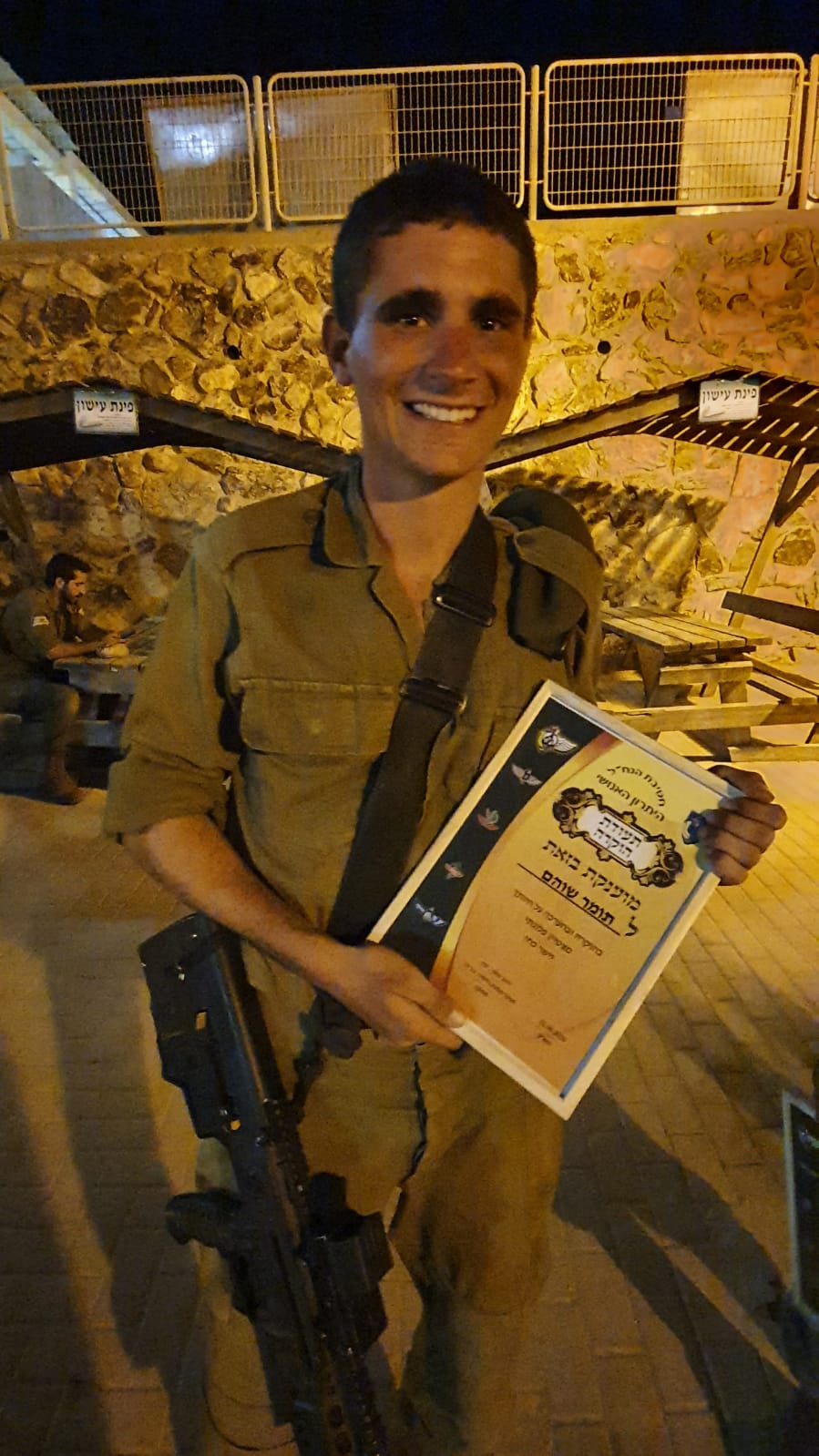
On December 4, 2019, full of experiences from his year of service and deeply motivated, Tomer enlisted in the IDF, joining the Nahal Reconnaissance Unit, an elite combat unit. He enlisted out of a genuine desire to invest, contribute, and do his utmost. His father testified that he always wanted to go as far as possible and always "do his best." The pursuit of excellence was not just a slogan for him, but a way of life. To ensure he met the high goals he set for himself, he developed a unique method: he kept notebooks of "weekly thought organization." Each week, he would plan the upcoming week in detail, addressing potential difficulties, setting clear goals and objectives, and outlining the actions he needed to take to improve and excel. "I am achievement-oriented and ready to perform and do good for myself and for my environment," he wrote one day, detailing his qualities and virtues: "I am diligent and self-disciplined. I am funny, positive, good-hearted, tough, thoughtful, and brave. I am good at what I do." These notebooks served as a personal, almost spiritual, document of self-commitment, in which he constantly tested himself and relentlessly pushed himself to develop and improve.
Indeed, Tomer's military path was marked by excellence. He completed the difficult basic training, the demanding training course, and the challenging navigation course – all with exceptional distinction. Afterward, he went on to the squad commanders' course in his first allocation, a significant step on the path of command, and he also completed it with distinction. While in the squad commanders' course, he wrote a poem titled "Jerusalem" in his notebook, a poem that revealed another side of his personality, a deep and sensitive side, connected to his roots and his hometown. This poem, later set to music by his father and becoming "Tomer's Jerusalem," is a testament to the complexity of his soul and his rich inner world. Tomer then continued to the officers' course, excelling in its first stage as well, standing out for his command, intellectual, and social abilities. In the officers' course, again, he was not content with just personal excellence. Together with his friends, he initiated and published a book titled "Commanders Tell Commanders," intended to help future commanders develop their professional approach and deepen their commitment to the role. This initiative, which stemmed from his desire to contribute and improve the system, reflected his educational philosophy and his concern for the next generation of commanders.
At the end of the officers' course, Tomer was assigned to the Brigade Training Base (BAH) and appointed commander of a recruit unit. For eight months, he led a team of young soldiers, whom he mentored and taught the fundamentals of combat, discipline, and responsibility. He proved to be a meticulous and dedicated commander, but above all – a commander who showed great concern for his soldiers, a concern that went beyond merely fulfilling orders. A prominent example of this concern was a practice he instituted: during basic training, it is customary for commanders to visit soldiers' homes to meet their parents. Usually, this task is divided among several commanders, but Tomer made sure to travel himself and personally visit every home. He traveled from Eilat to Kiryat Shmona, met every parent, sat and talked, listened to their stories and concerns, and assured them that their sons were in good hands. This gesture, which required immense time and effort from him, was greatly appreciated by the soldiers and their parents, building a bridge of trust and mutual commitment. "They don't need to love me," his friend Hadar said in one of their conversations, "that's not what interests me either. They need to trust me, see me as an example, and know that I and they have a common goal, which is to turn them into professional and quality soldiers, into better people." Indeed, Tomer saw himself not only as a commander of his soldiers but also as an educator. It was important to him that they be professionally good, but no less important – that they be ethical, develop critical thinking, set an example for others, see their fellow human beings, and maintain everyone's dignity. Knowing that he first had to set a personal example, he made sure to constantly improve and adhere to the high standards he demanded of his soldiers. Neta, his friend from Bahad 1, wrote about him: "You were simply amazing, dedicated, charismatic, always striving for the highest. There was a certain purity in you, a certain aura, and you truly were different from the rest. An innocent and kind smile... You always wanted to be the best and bring the company to achievements, you always strived, always wanted to know more, you were curious and valued in the company. I appreciated you."
After eight months commanding recruits, Tomer moved on to command a more senior team, a more experienced team whose challenges were different but no less complex. He continued to implement his command and educational philosophy, pushing his soldiers to excellence, but never forgetting the need to see the person behind the uniform. Tomer was a man of action, and even on army leave, he didn't stay home and rest, but constantly sought ways to contribute and do good. Thus, during one leave, he participated in a week-long course in spoken Arabic, out of a deep belief in dialogue and peace, a belief that expressed his principles since high school. During another leave, he volunteered again with youth at a boarding school, returning to the place that had shaped him so much. In addition, he loved to hike with his friends, his coffee kit always with him, a symbol of simplicity, friendship, and connection to nature and the land. He filled his life with content, action, learning, and contribution, leaving no moment empty.
On Saturday, the 22nd of Tishrei, Simchat Torah 5784, October 7, 2023, on a holiday and Sabbath, at 6:30 in the morning, the deceptive calm of the Gaza envelope was shattered. The Hamas terrorist organization launched a brutal and unprecedented surprise attack on Israel. Tomer, a lieutenant and platoon commander in the Nahal Reconnaissance Unit, was at the time at the "Lulim" outpost, near Kibbutz Kerem Shalom, on the Gaza Strip border, on a routine security mission with the team he commanded. As his father, Ran, recounted, "They woke up every morning at 5:30 and maintained readiness for sunrise, and so it was on October 7: they were ready with all their equipment on." This was a routine of vigilance, of uncompromising alertness, which served them well on that dark morning. At 5:30, Tomer, along with five of his fighters and three additional fighters from the Nahal combat engineering team, manned the forward outpost. With the start of the massive rocket fire, which began without prior warning, the team received an order to enter a protected area, a routine action in the face of frequent rocket barrages.
But this time, the situation was different. After a few minutes, a dramatic alert was received about the infiltration of four terrorists who had breached the fence, and the team was scrambled to the fence. Tomer and his soldiers rushed towards the breach point, knowing that every second counted. On their way, they noticed suspicious figures. Tomer, with the composure and professionalism that characterized him, understood that these were terrorists. He immediately began to manage the incident, guiding his soldiers with clear and precise commands, making critical decisions under fire. His soldiers testified: "He gave commands and was in full control, he did not appear scared or frightened." This was the moment when all the years of training, all the hours of writing in his "thought organization" notebooks, all the leadership values he cultivated, came to fruition. After about half an hour of intense gunfire, Tomer realized that the team's position was not optimal, and that a quick tactical change was needed to gain an advantage. He ascended with his marksman to a small nearby hill, to gain a better vantage point over the area and the terrorists. "The operational maneuver of ascending to the control point gave the force an advantage," the fighters recounted. From the new observation point, they continued to fire at the terrorists, and thanks to the improved visibility and the team's high operational capability, they eliminated the first cell.
The silence after the elimination of the cell was brief and deceptive. Shortly thereafter, the team identified dozens more terrorists making their way towards Kibbutz Kerem Shalom, with the intention of carrying out a massacre of innocent civilians. Tomer and his soldiers did not hesitate. They engaged them in battle, defending the kibbutz and its residents with their bodies. During the fierce battle, which was incessant gunfire against a vastly superior force, Tomer was hit by fire from one of the terrorists. He was killed on the spot, only twenty-three years old, his blood mingling with the earth of the Gaza envelope, in defense of home and nation. His fall was a severe blow to his soldiers, but his spirit, his prior planning, continued to guide them. At the end of the difficult battle, the fighters returned to the forward outpost, where they continued to fight additional terrorists who tried to infiltrate. Thanks to an ammunition box that Tomer, in his command concern and long-term thinking, had brought to the outpost in advance, they had enough ammunition for prolonged fighting. They managed to hold out for five consecutive hours of tenacious fighting, preventing the terrorists from entering the outpost, until reinforcements arrived, thereby preventing a greater disaster. Tomer's father recounted that "thanks to the large amount of ammunition he brought to the forward outpost in advance, his fighters held out for five consecutive hours of fighting until reinforcements arrived." This was further testament to his uncompromising responsibility and meticulous planning, which even after his fall, continued to save lives.
Lieutenant Tomer Shoham fell in battle on the 22nd of Tishrei 5784, October 7, 2023, leaving behind his parents – Michal and Ran, and a brother and sister – Yael and Avshalom, at the age of twenty-three. He was laid to rest in the military plot in the cemetery in Sharigim, his childhood home, as a heavy and incomprehensible silence descended upon the community and all his acquaintances and loved ones. After his fall, he was posthumously promoted to the rank of Captain, further recognition of his exceptional leadership and heroism.
But Tomer's story did not end with his fall. His spirit continues to live on and ignite sparks of inspiration and revival. In 2024, Avshalom, Tomer's brother and a 12th-grade student at Har-Tov school, decided to renew the school's race tradition. The race, which Tomer himself had won and organized, was dedicated to the memory of Tomer and two other school graduates who fell in the war – Lieutenant Sahar Tal, and Itay Bardichevsky from Kfar Aza. It was a moving moment of connection between past and present, between grief and hope, between personal memory and national memory. The Har-Tov race, which was once a symbol of personal achievement, became a symbol of community perseverance and vibrant, active commemoration. Friends of Ran, Tomer's father, placed a bench to commemorate Tomer next to the well where they met thanks to him. Engraved on the bench is the phrase "If only I could learn the way of one tree," a phrase that expresses Tomer's deep connection to nature, to roots, to growth, and to life, and the inspiration he gave to those around him. The bench became a quiet meeting place, a corner for reflection and memory, under the open sky, as the forest breeze caressed the faces of visitors.
In July 2024, an episode of the podcast "Conversations and Longing" from the Young Adults Center of the Mateh Yehuda Regional Council was dedicated to Tomer's memory. In the episode, his friends Yael and Roee spoke about Tomer, about the special balance between humor and seriousness that characterized him, about shared experiences from the hiking clubs, about the thought organization notebooks he wrote, and about the way he set goals. The episode, titled "If only I could learn the way of one tree," offered a moving glimpse into Tomer's inner world, and reminded how deeply he left his mark on everyone he met. In August 2024, "Tie-breaker" – a football tournament in Tomer's memory – was held at the football field in Sharigim, another way to revive his memory through his great love for the game. Students from the Har-Tov high school's film major produced a film in Tomer's memory, an artistic creation that expressed the pain and appreciation for the school's alumnus.
The song "Jerusalem" that Tomer wrote while in the squad commanders' course in February 2021, received new life after his fall. His father, Ran, set his moving words to music, and the song "Tomer's Jerusalem," performed by his father, can be heard on YouTube. It is a powerful work, combining Tomer's inner world with the pain of loss and the desire to commemorate, and it serves as a moving testament to unconditional love. A website was also established in his memory – tomer-shoham.com, containing extensive information about his life, photos, stories, and commemoration activities, serving as a virtual space where his memory is preserved and passed on to future generations.
Captain Tomer Shoham, of the Nahal Reconnaissance Unit, was more than a fallen fighter. He was a son, a brother, a friend, a commander, and an educator, a man of action and values, who always strived for excellence and worked to repair the world. His short, yet so full, life was a journey of personal development, uncompromising giving, and deep faith in humanity and society. In his fall in battle, defending a settlement and its residents with his body, he became a symbol of Israeli heroism, of dedication and responsibility. The legacy he left behind, through the many commemoration activities, through the song, the bench, the race, and the podcast, ensures that his story will continue to resonate, influence, and inspire. Tomer Shoham lives in hearts, in memories, in the spirit of revival and the sense of Israeli pride, in the way of one tree, whose roots are deep and branches reach towards the sky, continuing to grow and give life.
Moments of a life
All photographs · 1
In the media
Articles
Videos
הרטוב קולנוע / YouTube ·
Podcasts
- If Only I Could Learn the Way of a Single Tree | In Memory of Tomer Shoham of Blessed Memory | Roy Cohen, Yael Ziv, and Noam Cohen
פודקאסטור — סיפור וגעגוע / YouTube ·
Memorial sites
- Tomer Shoham — Memorial page
כאן
- Experiences with Tomer
אתר לזכר תומר שוהם
- Captain Tomer Shoham
יזכור משרד הביטחון
- In Memory of Tomer - Old
אתר לזכר תומר שוהם
- In Memoriam of Tomer Shoham
October 7 Memorial
Memorial projects
The Bedarko Shel Tomer initiative, in cooperation with his family and the Blender organization and as part of Hakaveret’s Shikma program, trains Hugay Sayarut volunteer-year participants in Arabic language and culture and in encounters with Arab communities. The initiative seeks to carry forward his curiosity and belief in shared life.
His brother Avshalom revived a race at Har-Tuv School in 2024 in memory of Tomer and two other graduates.
The “Tie Breaker” football tournament was held in Srigim in August 2024; his father set his poem “Tomer’s Jerusalem” to music.
Yizkor notes that his father’s friends placed a memorial bench beside the well where they met thanks to Tomer.
A page in memory of Tomer describes a renewed edition of a book of commanders’ stories titled It Still Depends on Us, following the book they compiled during officers’ training.
Stories told about them
Yael said that after his death in action, the family found a diary in which Tomer set out his approach to command, including the importance of personal example and opposition to racism. She said that he learned Arabic from a Druze soldier and improved it through a course in Abu Ghosh during leave, and planned a trip to Nepal with her after his discharge.
Daniel Alon says they asked Tomer to film the team during an exercise in the Golan Heights. It turned out the camera was facing the wrong way and he had filmed himself, and afterward he let the team sit down for coffee facing the sunset.
Guy Abadi describes how Tomer changed the negative atmosphere at a guard post at Bislah by writing out the song “Brosh.” Daniel Alon recounts that after a successful exercise, Tomer accidentally filmed himself instead of the team, and then gave the team time for coffee facing the sunset.
Eliad Ben Nun, the father of his soldier Uria, says that Tomer sat with his son when he lost his appetite during basic training. Nimrod Weisman describes political conversations with Tomer, who was his year-of-service volunteer at the boarding school, despite their disagreements.
Life & service
Profile
- Date of birth
- January 1, 2000
- Birthplace
- Srigim-Li-On
- Date of death
- October 7, 2023
- Age
- 23
- Hometown
- Srigim-Li-On
Service
- Rank
- Captain
- Unit
- Nahal Brigade
- Honours
- Posthumously Promoted
Family
- Father
- Ran
- Mother
- Michal
Burial
Tributes & remembrance
היי תומר זאת בתאל אתה בטח זוכר אותי מהמימונה ומהסיירות זוכר שאני ואתה שחקנו במימונה שכיתה כדורגל ועזרת לי להשתפר אוהבת מאוד בת אל אחותו של רועי כהן
תומר זו בת אל זוכר אתה חבר של אח שלי אני זוכרת שהגעת למימונה ושחקת איתי כדורגל .
תומר הייתה חבר של אח שלי הייתה משחק איתי כדורגל בממונה אני בטוחה במאה אחוז שאתה בגן עדן
יהי זיכרך ברוך בלבבות רבים. תודה
יהיי זכרך ברוך תומר יקר.
עלם חמודות עם עיינים טובות.
תומר שוהם
גיבור ישראל, שכן
יהי זכרך ברוך לעד
נזכור את תומר לעד.
אזכור תמיד שבני -אגם-סיפר שתומר לימד אותו תרגיל מיוחד בכדורגל.
למשפחה של תומר , סבתא ורדה ואמא מיכל (נני) וככל המשפחה ברגשי ידידות ואהבה לזכרו של תומר
נוח על משכבך בשלום
תמיד בליבי ובמחשבות ביום הקדוש הזה , תודה על מי שהיית עבור כולנו
יהי זכרו ברוך
נני ורן האהובים,
איתכם בליבנו ביום קדוש זה, לזכרו של תומר.
זוכרים ומוקירים
ורד ומני אלקלעי
לא הכרתי אותך תומר , מכירה רק את הסיפורים עליך , מלח הארץ זו לא קלישאה . דייקן וקפדן הכריח את חייליו לקחת מספיק תחמושת באותו שחור שבת שחורה ובכך הציל את חבריו . במותו ציווה לנו את החיים , יהיא זכרו ברוך
משפחת שוהם היקרה
אתכם בכאב האובדן
ותום הנעורים של תומר שלכם.
יהי זכרו ברוך
אח יקר על מלא שיהיה ראויים להקרבה שלך
אוהבים אותך ,ומחבקים את המשפחה,
יפה תואר ילדות שריגים עניו תלמיד חכם.
לוחמי ומפקדי חטיבת הנח״ל
מרכינים ראש ומתייחדים עם זכרם של חללי הנח״ל .
יהי זכרם ברוך!
היית טוב בכדורגל, לימדת את בני תרגיל מיוחד והיוות דוגמא.
תודה
יהי זכרו ברוך, שנהיה ראויים.
יהי זכרך ברוך
תומר אתה חסר לנו, מתגעגעים אלייך ואוהבים מאוד
יהי זכרך ברוך גיבור ישראל
יהי זכרו ברוך.
לא הכרתי אותך, אך אני מכיר את ההורים שלך ומהכרות שלי אותם אני בטוח שאתה היית בחור מיוחד במינו וחוד החנית של מדינת ישראל
יהיה זכרך ברוך
נשמה יקרה שלא זכיתי להכיר
יהי זכרך ברוך. תודה ששמרת עלינו. לא אשכח אותך
יהי זכרך ברוך
תודה ששמרת עלינו
השם ינקום דמך
מחבקת את המשפחה תהיו חזקים, מנוחתו עדן.השם יקום דמו
תומר תודה על מי שאתה. תודה שהיית שם ודאגת לביטחוננו
ביום זה - יום הזיכרון שנת התשפ״ד, לוחמי ומפקדי חטיבת הנח״ל מצדיעים לנופלים ומוקירים את זכרם.
חטיבת הנח״ל מחבקת ומחזקת אתכם, המשפחות והקרובים. ״יהי זכרם ברוך״
In every setting you were part of, you were the anchor, the moral compass, the one who always makes the right choice
Source:אתר לזכר תומר שוהם
Read the Hebrew original
בכל מסגרת שבה נכחת היית העוגן , המצפן הערכי , זה שתמיד לוקח את הבחירה הנכונה
A true friend with a heart of gold
Source:אתר לזכר תומר שוהם
Read the Hebrew original
חבר של אמת עם לב זהב
I was fortunate to live alongside him
Source:אתר לזכר תומר שוהם
Read the Hebrew original
זכיתי לחיות לידו
I learned a lot from you
Source:אתר לזכר תומר שוהם
Read the Hebrew original
למדתי ממך הרבה
You will always be the only one who understood.
Source:אתר לזכר תומר שוהם
Read the Hebrew original
תמיד תהיה היחיד שהבין.
You were a true inspiration
Source:אתר לזכר תומר שוהם
Read the Hebrew original
היית השראה אמיתית
You were the kind of officer the army needs.
Source:אתר לזכר תומר שוהם
Read the Hebrew original
היית מהקצינים שהצבא צריך.
Faith in people
Source:אתר לזכר תומר שוהם
Read the Hebrew original
אמונה באדם
It was important to him to be a role model for the soldiers
Source:The Times of Israel
Tomer always wanted to do his very best
Source:The Times of Israel
Through this initiative, we carry on his spirit — curiosity, listening and faith in partnership between people.
Source:ישראל היום
Read the Hebrew original
דרך המיזם הזה אנחנו ממשיכים את הרוח שלו - סקרנות, הקשבה ואמונה בשותפות בין אנשים.
He died as a soldier of peace
Source:The Times of Israel
There was no bad in him, he was pure and kind.
Source:The Times of Israel
Remembrance Day addresses
יום הזיכרון לחללי מערכות ישראל התשפ"ה – 2025
בכל יום שעובר, אזכור יותר! אזכור, את אלו שיצאו עימי לקרב ולא שבו, ולהם אין מי ידמה ומי ישווה. אזכור, שהכאב לא יעבור לעולם, והזמן, הוא לא מרפה ולא מרפא. אזכור, את שיברון הלב הגובר ואת הבית שבוער. אזכור, את צדקת הדרך, ואשבע שוב, שמה שהיה לא יהיה יותר. אזכור, שיותר מכל דבר אחר – אני חסר! ביום הזה, אני נתקף געגוע לדמותם, לחיתוך דיבורם, לחיוכם, ומדליק נר לזיכרון דרכם ומורשתם!
משרד הביטחון
אגף משפחות, הנצחה ומורשת
יום הזיכרון לחללי מערכות ישראל התשפ"ה – 2025
בכאב, בהצדעה ובתקווה אני מתכבד להדליק נר זיכרון זה. השנה, כשאנו נלחמים במלחמה ארוכה, רב זירתית וצודקת, הזיכרון נושא משמעות עמוקה. ביום זה נעצור ונתייחד עם זכרם של טובי בנינו ובנותינו שנפלו בהגנה על המדינה. מורשתם היא המצפן שמתווה את דרכינו, והיא המעניקה לנו כוח להמשיך ולהגן על מדינת ישראל ותושביה. משפחות יקרות, אנו מרכינים ראשנו ומתחייבים שנעמוד לצידכן תמיד. יהי זכר הנופלים ברוך.
אלוף דדו בר כליפא
ראש אגף כוח האדם, צה"ל
יום הזיכרון לחללי מערכות ישראל התשפ"ה – 2025
בשעה שאנו זוכרים את גודל תרומתם ועומק מסירות נפשם של טובי בנינו ובנותינו, נופלי מערכות ישראל לדורותיהן, ממשיכים צה"ל וכוחות הביטחון במימוש המשימה למענה לחמו ועבורה נפלו: הכרעת אויבינו מדרום, מצפון, ביהודה ובשומרון, וגם בזירות רחוקות יותר. בהערכה רבה ובגאווה אדירה אנו מרכינים ראש בפני הנופלים והנופלות, מאמצים את משפחותיהם אל לבנו, וממשיכים במשימה להבטחת קיומה של ישראל לדורי דורות. יחד נעשה ונצליח.
רב אלוף אייל זמיר
הרמטכ"ל, צה"ל
יום הזיכרון לחללי מערכות ישראל התשפ"ד – 2024
כאשר דגלינו מורדים לחצי התורן וראשינו מורכנים לזכר הנופלים והנופלות במערכות ישראל, ממשיכים לוחמי צה"ל ומפקדיו בלחימה בדרום, בצפון, ביהודה ובשומרון ובזירות נוספות. על כל דור מוטלת המשימה של הגנת העם והארץ – משימה שאף פעם אינה פוסקת. נצדיע בגעגוע ובגאווה לנופלים ולנופלות, נחבק את משפחותיהם, ונמשיך ברוח הציווי שהותירו לנו. עם ישראל חי.
רב ניצב יעקב שבתאי
המפקח הכללי, משטרת ישראל
יום הזיכרון לחללי מערכות ישראל התשפ"ד – 2024
אחיי הנופלים, כל נר הוא זיכרון יחיד ומיוחד, על חיים שהיו ואינם, געגוע שנצרב עמוק בלב, עולם ומלואו. הנרות כולם הם זיכרון של אומה כי לעולם לא עוד, בשורת הציונות וקוממיות ישראל. זיכרון כי הדרך לעם חופשי בארצנו עוברת דרך מסדר הנופלים. אור הנר יזכיר לנו את מסירות נפשכם להציל חיים, להגן על הבית. הנרות מסמנים לנו נתיב גבורה ערכי מחייב שאנו מצווים ללכת לאורו. נמשיך להילחם ולהוסיף אור מתוך אמונה בנצח ישראל.
יואב גלנט
שר הביטחון
יום הזיכרון לחללי מערכות ישראל התשפ"ד – 2024
בהצדעה ובכאב, בשם צה"ל כולו, אני מדליק נר זיכרון. בעיצומה של מלחמה, הזכרון נושא משמעות יום-יומית, שעבר והווה מתלכדים בה. לאורם של הנופלים נמשיך לצעוד, חיילי הסדיר והמילואים. לאורם של הנופלים נמשיך להגן על ארצנו ועל מולדתנו, גם כשהמחיר כבד. להבת-הזכרון תבער בנו בעודנו ממשיכים להלחם ונזכור את הנופלים ואת אומץ ליבם. משפחות יקרות, צה"ל מרכין היום ראש, מצדיע לכן וכואב איתכן. יהי זכר הנופלים ברוך.
אלוף יניב עשור
ראש אגף כוח האדם, צה"ל
יום הזיכרון לחללי מערכות ישראל התשפ"ד – 2024
בהוקרה, בגאווה ובכאב שאין לו סוף, אני מתכבד להדליק נר לזכרם של הנופלים והנופלות במערכות ישראל. סיפור חייהם בארץ הזאת, מסכת שירותם, גבורתם והקרבתם – הם סיפורה של הארץ הזאת, אך גם סיפור המחיר הכבד שהיא תובעת מאוהביה. מחויבותנו לזכר הנופלים ולדרך שהותירו לנו ניצבת תמיד לנגד עינינו. את המשימה שלא זכו להשלים, משלימים כיום, וישלימו, אנשי כוחות הביטחון, הממשיכים בדרכם ולאורם. יהי זכרם של הנופלים ברוך.
משרד הביטחון
אגף משפחות, הנצחה ומורשת
יום הזיכרון לחללי מערכות ישראל התשפ"ד – 2024
בחרדת קודש אני מתכבד להדליק נר לזכרם של חללי מערכות ישראל, חברנו שנפלו, מראשית היציאה מהחומות ולאורך כל שנות עצמאותנו המדינית והציונית, מהווים תמרור זיכרון לדרך חיינו ולמחוייבות הלאומית להנצחת זכרם. דרכם נותרה דרכנו ומורשתם נר להמשך עשייתנו. יהי זכרם ברוך!
בני גנץ
שר הביטחון
יום הזיכרון לחללי מערכות ישראל
נזכור אותם, כולנו יחד. כל אחד ואחת מהם, מדי יום ביומו, והיום ביתר שאת, כך – לנצח. "כי מדי דברי בו זכור אזכרנו עוד"
משרד הביטחון
אגף משפחות, הנצחה ומורשת