
The story
The sun of June 5th, 2000, rose above the rooftops of Mount Carmel, casting soft golden rays over Haifa Bay as it slowly awakened. That morning, at Carmel Hospital, Tal’s cries were heard for the first time, the eldest son of Yulia and Yigal Pashvilsky. He entered the world on the second day of the Hebrew month of Sivan, when the air was already warm with the touch of summer and the scent of the sea drifted gently from the horizon. Yulia, his mother, remembered the moment they placed the baby, wrapped in white cloth, on her chest—the small, familiar warmth, the wonder of a new life that had just begun. Yigal, his father, stood beside her, his gaze filled with pride and excitement, tracing the soft features of the baby’s face, unaware of how deeply this child would engrave his mark on the world. The small house in Haifa soon filled with the sounds of laughter and longing, the scent of baby powder, and a new rhythm of life, one that revolved entirely around the tiny creature who had arrived and transformed their world. When Agam joined the family a few years later, followed by Gal, the house became a bustling beehive, full of movement, voices, and countless small stories woven daily.
The move from Haifa to Gedera, a relatively quiet town in central Israel, came early in Tal’s life. He was still a young child then, but his first memories were already linked to the low-slung houses, the peaceful streets that served as a natural playground, and the open landscape that replaced the density of the big city. In Gedera, the family found space to breathe, a small garden where Tal and his sisters could run freely, and community schools where they began to weave their first social threads. Yulia and Yigal maintained a stable daily routine, one that gave the children a sense of security and clear boundaries, but also allowed them to explore and discover the world at their own pace. Tal, even then, showed nascent interest in his surroundings, a quiet curiosity that characterized him throughout the years. He loved spending long hours in the yard, not just playing ball, but also observing ants carrying crumbs or following the path of birds in the blue sky. He was a relatively quiet child, yet full of joy, one who loved to laugh and play with his sisters, inventing imaginary games that revolved around heroic journeys and rescues. His parents, Yulia and Yigal, saw in him a developed sense of responsibility from a young age, and used to tell him: “Tal, always remember you are the eldest, you need to look after your sisters.” And he indeed took this role seriously, accompanying them to kindergarten and school, ensuring they crossed the road safely, and offering help at all times.
The elementary school years in Gedera provided fertile ground for Tal’s growth. He wasn’t the most brilliant student in class, but he persevered in learning and paid attention to every task. He especially loved nature and science lessons, where he could analyze, explore, and understand the complex mechanisms of the world. Teachers remembered him as a polite child, quiet but with a presence, always ready to help his friends and actively participate in social activities. He developed a small but loyal circle of friends, with whom he spent long afternoons playing soccer in the neighborhood field, cycling on the dirt paths around the settlement, or simply sitting on a curb, talking about dreams and future plans. In those conversations, even if childish and simplistic, his deep inclination for thought, for contemplating meaning and humanity’s place in the world, was already evident. He was not a cynical child, but a cautiously optimistic one, seeing the good in people and situations, yet also aware of life’s complexities. At home, the atmosphere was warm and supportive. Family dinners were sacred, a time when everyone shared their day, experiences, and challenges. Yulia and Yigal encouraged open discussions, urging their children to express opinions, ask questions, and respectfully stand their ground. Tal learned from them the importance of loyalty, honesty, and hard work—values that would guide him throughout his life.
When he transitioned to high school, his personality solidified further. He became a tall, sturdy teenager with broad shoulders and a captivating smile, yet still maintained that quiet curiosity and inclination for observation. He stood out in social activities, not as someone who led with shouts, but as someone who united, mediated, and instilled calm. He was involved in the student council, volunteered his time for community projects, and served as a guide in a local youth movement. There, between conversations around a campfire and hikes through the fields, he discovered his passion for leadership. He loved seeing how a group of boys and girls transformed into a cohesive unit, how everyone contributed their part, and how complex tasks became possible through cooperation. He listened patiently to the concerns of his charges, offered practical advice, and was a supportive shoulder for them. He understood that true leadership was not about power, but about responsibility, the ability to contain, understand, and push forward. His friends remembered him as a loyal friend, one who always knew how to calm tensions, offer a different perspective, and make everyone feel included. He was also an athlete, loved to run and play basketball, and maintained physical fitness, likely from an inner sense that he needed to be strong and ready for any challenge that might come.
Towards the end of high school, as conscription age approached, conversations at home and among friends took on a more serious tone. Tal, naturally, aimed for meaningful service, one that would allow him to contribute tangibly to the country. He didn’t speak of heroism in grand words, but of duty, responsibility, and protecting home and family. He saw older friends enlist, heard their stories, and understood the challenges and risks. “I want to be where I’m most needed,” he once told his father, Yigal, during a quiet dinner. “I want to feel like I’m doing something real, something meaningful.” Yulia, his mother, listened with worry but also pride. She knew her son was not reckless, but thoughtful and calculated, and that his decision stemmed from a deep place of values. On March 24, 2019, the day came when he boarded the military bus. The farewell was difficult, but full of hope. His sisters, Agam and Gal, hugged him tightly, promising to send him packages of homemade cookies. His parents stood there, watching him recede, his tall frame disappearing among dozens of other recruits, his future spread before him like an unknown path.
Tal’s military service in the Givati Brigade was a natural continuation of his personality. He quickly found his place, between the grueling basic training that broke physical and mental barriers, and the advanced training that honed him into a skilled soldier. He excelled in his physical fitness, his determination, and his ability to remain calm under pressure. His commanders recognized his leadership potential early on—his ability to lead, instill confidence in his comrades, and handle complex missions. He was not the type of commander who shouted and demanded, but one who led by personal example, always ready to be the first to move forward, the last to stay behind, and always with a watchful eye on the well-being of his soldiers. He spoke to them at eye level, listened to their dilemmas, and cared for their welfare. From the Givati Brigade, his path led him to Sayeret Givati, the brigade’s elite unit, a place that demands an exceptionally high level of professionalism, mental toughness, and the ability to operate in extreme conditions. The selection process for Sayeret was long and challenging, testing every aspect of his physical and mental capabilities. He successfully passed it, step by step, with a clear goal: to reach the unit where he could contribute the maximum.
In Sayeret Givati, Tal found his calling. He dedicated himself to the arduous training, to learning innovative combat doctrines, and to developing technical and tactical capabilities at the highest level. He learned to navigate open terrain under a blanket of stars, to identify threats from a distance, and to operate in perfect coordination with his team. He became a company commander in training, a role that embodies the essence of combat leadership. He was responsible for training a new generation of Sayeret fighters, for instilling the values, knowledge, and skills that would define them as warriors. He knew that an immense responsibility rested on his shoulders—not just to teach them how to fight, but also how to think, how to make decisions under fire, and how to maintain moral integrity even in the most difficult moments. He spoke to them about the importance of camaraderie, about how no soldier leaves a comrade behind, and about the power of a cohesive unit acting as one fist. His conversations with the soldiers were inspiring, full of practical advice and deep insights, and he managed to touch each of them personally. He always made sure to ask about their well-being, about their families, and to remind them that someone was waiting for them at home.
Between the intensive training and operational missions, Tal also found time to develop his personal life. He met his partner, his beloved, and their relationship quickly blossomed. She filled his world with light and color, providing him with a stable anchor in the turbulent reality of military service. They spent every free moment together, going on trips, enjoying quiet evenings in small restaurants, and simply relishing each other’s company. He told her about his experiences in the army, about his friends, about the challenges, and she listened with patience and endless support. She was the one who welcomed him home after long weeks in the field, tired and exhausted, and she knew how to restore his strength. Tal, for his part, found in her a true life partner, one who understood his complex world, his commitment, and his aspirations.
Amidst all this intense activity, Tal also made sure to keep a personal journal. He called it “A Little Asterisk at the End of the Day,” a name that reflected his tendency for introspection and his search for points of light even within challenging realities. In the journal, he wrote about the fighting, its complexity, the difficult moments, and the small victories. He put down on paper his feelings, his fears, and his hopes. But above all, he wrote about his dreams—simple, profoundly human dreams that touched the heart deeply. He dreamed of marrying his partner, building a home and family with her. He wanted to be a “boring dad,” as he wrote. Not a heroic dad from fairy tales, but a normal, stable dad, one who knows how to read a bedtime story, walk with his children in the park, teach them to ride bikes, and provide them with a quiet, safe life. He envisioned himself coming home from work, making dinner, attending parent-teacher meetings, simply living a normal life, full of love and blessed routine. This dream, of being a “boring dad,” was so powerful precisely because of its sharp contrast to his reality as a fighter, and it emphasized the depth of his humanity, his longing for simple, ordinary lives, lives that many of us take for granted. He knew his service was temporary, and that eventually, he wanted to return to civilian life, to build his private world, to fulfill his dreams.
But reality, as always, was more complex. On the morning of Simchat Torah, October 7th, 2023, the first sirens sounded. Tal, like thousands of reservists and active-duty soldiers, was immediately called up. That morning, which opened a deep wound in the heart of the nation, changed the course of many lives, including his own. Messages in WhatsApp groups began to flow, at first confused, then clear and brutal: “Multi-front security incident,” “Whoever can get here – get here,” “General call-up.” Tal did not hesitate for a moment. He hugged his partner in a long embrace, promising to stay safe, trying to reassure her despite the worry gnawing at him too. He quickly donned his uniform, checked his equipment, and said goodbye to his family on the phone, trying to sound strong and calm. He knew where he was going, and he knew what he had to do. He was a commander, and a commander does not hesitate.
From that day on, his world became a reality of incessant combat. He entered deep into the Gaza Strip with his unit, Sayeret Givati, leading his soldiers with determination into the most difficult battles. He commanded forces in built-up areas, navigated labyrinths of narrow alleys, identified enemies from tunnel openings, and made fateful decisions in fractions of a second. He saw his soldiers act with courage, face to face with the enemy, and he was there with them, a personal example of professionalism and composure. His unit operated in complex environments, in areas where every corner could hide a threat, and every step required caution and meticulous planning. They fought inside buildings, cleared houses, searched for tunnels, and dealt with incessant gunfire. Tal was the backbone of his company, the moral and professional compass. He took care of every detail, ensuring everyone was protected, everyone was aware of the mission, and that the fighting spirit remained high.
In one of the quieter moments, perhaps after an exhausting day of battle, or before embarking on a particularly dangerous mission, Tal returned to his journal. He wanted to leave a message, a message that would resonate beyond the moment and time, a message that would express what motivated him, what gave him strength. He wrote: “If I fall in battle, with all the sorrow I am complete. There is no greater right for a Jew than to fight with his body for the defense of the land.” These words were not empty rhetoric, but a true and authentic expression of his deep faith, his understanding of the gravity of the hour and the meaning of Jewish existence in this land. He did not speak of death, but of completeness, of doing the right thing, of standing by his principles and protecting his family and his people. This message, written from his heart, reached his family after his fall, and became a kind of will, a final testament to his character and values.
The fighting in the southern Gaza Strip continued with full force. Tal and his company reached the Shabora neighborhood in Rafah, an area considered a terrorist stronghold, riddled with underground tunnels and sophisticated traps. The air was thick with dust, the smell of gunpowder, and incessant tension. Every building, every alley, every window could be an opening for a threat. They advanced cautiously, step by step, clearing houses, scanning areas, and searching for terrorist infrastructure. Tal, as commander, led from the front, his eyes scanning the surroundings, his ears attentive to every rustle, his mind analyzing the terrain and making decisions at lightning speed. His voice was calm and steady over the radio, instilling confidence in his soldiers, guiding them, reminding them of procedures. He was aware of the dangers, but determined to complete the mission.
On Monday, June 10, 2024, the 4th of Sivan 5784, the tragic event occurred. Amidst the fierce battles in Shabora, in the heart of Rafah, Major Tal Pashvilsky, of blessed memory, fell in battle. He was twenty-four years old at the time of his death. The exact moment, the explosion, the shot, or the fatal blow—the technical details are swallowed by the immense pain of loss. What remains etched is the act itself: a young man, a commander, who was the first to go forward, the one who led his soldiers, the one who chose to defend his home with fierce dedication. His fall left a deep and incomprehensible void. The official notification, which reached his family in Gedera, shattered their world. Yulia and Yigal, Agam and Gal, and Tal’s partner, were left with sharp pain, with unresolved questions, and with the memory of a life cut short in its prime.
The news of his fall also sent shockwaves through the IDF. In recognition of his contribution, his leadership, and his sacrifice, Tal was posthumously promoted from the rank of Captain to Major. This was a mark of appreciation for his impressive command trajectory, his courage, and his unwavering dedication. Tal Pashvilsky was laid to rest in the military plot of the Gedera cemetery. A long convoy of vehicles accompanied his coffin. Thousands came to pay their last respects—family members, childhood friends, teachers, instructors, soldiers he commanded, commanders who commanded him, and residents of Gedera who came to share in the family’s grief. The heavy silence that prevailed in the cemetery was broken only by the sounds of weeping and the eulogies delivered in trembling voices. The Israeli flag draped his coffin, and a dignified military ceremony accompanied his final journey. On the tombstone, alongside his name, rank, and date of fall, the silent words of memory and loss were engraved.
But Tal is not just a name on a tombstone. He is an entire life story, rich, full of meaning. He is the captivating smile, the quiet curiosity, the child who loved to watch ants. He is the teenager who loved to run and play basketball, the instructor who united his charges around the campfire. He is the professional fighter, the commander who led by personal example, who was an anchor of security for his soldiers. He is the son, the brother, the partner, who dreamed of a simple life, of being a “boring dad” who reads bedtime stories. He is the words written in the journal, “A Little Asterisk at the End of the Day,” which expressed his hopes and his completeness. He is the message that remains: “There is no greater right for a Jew than to fight with his body for the defense of the land.”
The legacy of Major Tal Pashvilsky, of blessed memory, lives and breathes in the hearts of all who knew him. It is deeply rooted in the memory of his family, who live with immense pain but also with endless pride. It is in the stories his friends tell, in the lessons his charges learned from him, and in the spirit of combat and leadership he instilled in his soldiers. He was a star that shone brightly, illuminating the path for many. His fall is a painful reminder of the heavy price of our existence here, but also a testament to human heroism, to the love of the land, and to the willingness to sacrifice what is most precious for the sake of the collective. Tal did not get to fulfill his dream of being a “boring dad,” but he became a hero, not in the way fairy tales describe heroes, but in the way that the blood-soaked and hopeful Israeli reality gives birth to them: a simple person, with deep values, who in a moment of trial stood firm and fiercely defended his home. Tal Pashvilsky’s story is a story of revival, of courage, of unconditional love, and of a memory that will always accompany us, like a small, illuminating and comforting asterisk, at the end of our day.
Moments of a life
All photographs · 2
In the media
Articles
Memorial sites
- Major Tal Pshavilski, of blessed memory
המרכז לתולדות אשדוד
- Tal Pshavilski
יזכור — משרד הביטחון
Memorial projects
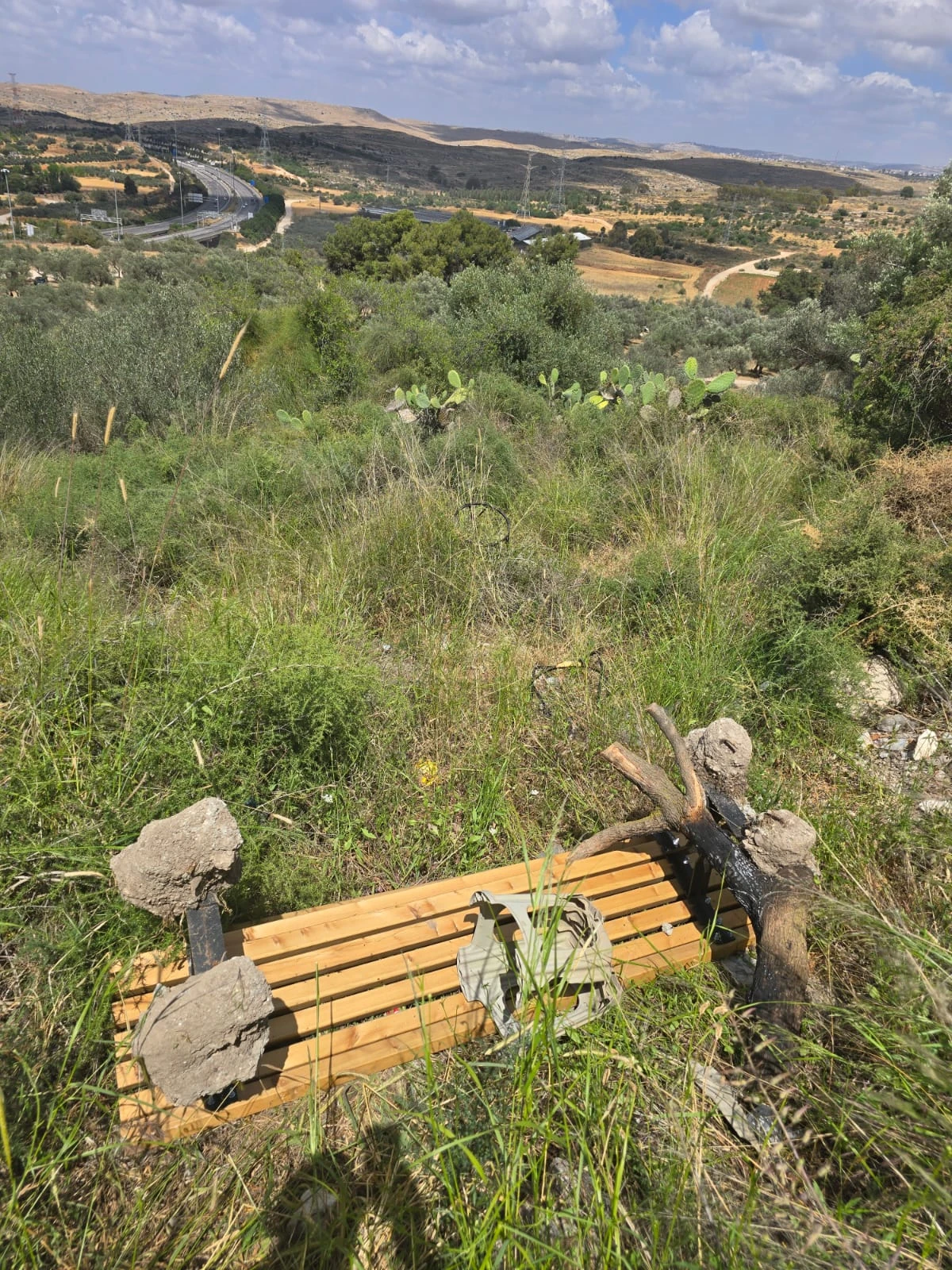
Yizkor documents a lookout in Tal’s memory at Tel Hadid, graffiti at HaKshatot Beach in Ashdod, and the “Toys of Heroism” initiative in Gedera, through which toys were distributed to children in hospitals.
Students at Makif Tet held a six-day Israeli journey in memory of Tal and Ilay Gamzo, with volunteering, ceremonies and shirts bearing their photographs.
Tal was included in a Gedera initiative in which kindergartens were named after fallen soldiers and murder victims from the town, with illustrations and personal descriptions.
Stories told about them
Noam said that Tal would get up to work out, prepare breakfast and coffee for her, and bring them to bed. They met on an officers’ course and planned a long trip to South America, which was canceled when the war broke out.
According to Yizkor, Tal and his sister used to cycle to the beach on a route of fifteen kilometers each way. When she wanted to stop halfway, he encouraged her to continue so she would appreciate reaching the sea.
Life & service
Service
- Rank
- Major
- Unit
- Givati Brigade
- Honours
- Posthumously Promoted
- Battle Location
- In the southern Gaza Strip
Family
- Father
- Yigal
- Mother
- Yulia
Burial
Tributes & remembrance
נקרע לי הלב
מתגעגע אלייך
תודה לך,טל היקר,
על שהגנת עלינו במחיר ההקרבה הנוראה מכל.
תנחומים מלב כואב לכל יקיריך.
תודה לך חולם ולוחם גבעתי.
תודה לך גיבור ישראל!
טלפש אתה פשוט מלך אין מילה אחרת
אתה זה סוג האנשים שהעם שלנו צריך
אני אוהב ומעריך אותך תודה על הזכות להכיר אדם כמוך
אתה לוחם אמיתי
אני לא מעקל שאני כותב עליך את המילים האלה
אבל יהי זכרך ברוך
תהא נשימתו צרורה בצרור החיים. היום אני רץ לזכרו.
תושב גדרה שנפל בקרב ברצועת עזה
יהי זכרו ברוך !
יהי זכרו ברוך
מפקד יקר ואיכפתי
יהי זכרך ברוך
יהיה זכרך ברוך
יהי זכרו ברוך
ת.נ.צ.ב.ה
החותם שלך ישאר איתנו לנצח
את טל ז"ל לא יצא לי להכיר באופן אישי, אך יצא לי לשמוע רבות על הסיפור שלו ופועלו.
עד מותו טל כתב יומן אישי על הקרבות ברצועה בהם לקח חלק, ואחד המשפטים שטל ציין שלי באופן אישי קיבל משמעות רחבה הוא "מכל הדרכים בחרתי בדרך הקשה".
גם במסע שאני עובר בדרך להגשמת היעדים שלי, הדרכים הן הדרכים הקשות ביותר אך ככל שהאתגר קשה יותר, כך תחושת הסיפוק וההצלחה מתוקה יותר. יהי זכרו של טל ויתר חללי מערכות ישראל ברוך.
טל המפקד הנערץ מתגעגעים ואוהבים
את טל ז"ל לא יצא לי להכיר באופן אישי, אך יצא לי לשמוע רבות על הסיפור שלו באמצעות חברו הטוב, עידו טסה.
עד מותו טל כתב יומן אישי על הקרבות ברצועה בהם לקח חלק, ואחד המשפטים שטל ציין שלי באופן אישי נכנסו עמוק ללב הוא "מכל הדרכים בחרתי בדרך הקשה".
גם במסע שאני עובר בדרך להגשמת היעדים שלי, הדרכים הן הדרכים הקשות ביותר אך ככל שהאתגר קשה יותר, כך תחושת הסיפוק וההצלחה מתוקה יותר. יהי זכרו של טל ברוך.
אתה חסר לנו בנוף, ואנחנו מתגעגעים מלא
יהי זכרך ברוך
ת.נ.צ.ב.ה שולחת חיבוקים גדולים להורים ולאחים
מתגעגע כל יום ויום
לומד כל יום עלייך דברים שידעתי שזה אתה אבל לא הכרתי עד כמה גיבור ותותח אתה
מתגעגע
ילד יפה גבור ישראל מלח הארץ יהיה זכרו ברוך
השם ינקום דמו, ילד מקסים, מפקד לדוגמה, בן ונכד ואחיון הגיבור ישראל.
יהי זיכרו ברוך
קסם של ילד
מתגעגע לביטחון ולחיוך
יהי זכרו ברוך, שנהיה ראויים.
טל ז״ל היה חייל המוביל של צוות סיירת גבעתי מרץ 2019 ובהמשך הוביל את חייליו כמפקד . היה ונשאר נערץ ואהוב על ידי חבריו לצוות וע״י חייליו. לוחם וחבר יקר שאת מורשתו חבריו שומרים לנצח . זכיתי להכירו את חיוכו הגדול והכריזמה שליוותה אותו תישאר פה איתנו .ליבנו עם משפחתו היקרה מחבקים אותם היום ובכל יום . משפחת הורדן הרצליה
יהי זכרו לנצח ברוך ותהא נשמתו צרורה בצרור החיים.
תהא נשמתך צרורה בצרור החיים. אמן.
Forever admiring and loving you.
Source:וואלה
Read the Hebrew original
לנצח מעריצה ואוהבת.
All of Gedera is in mourning
Source:וואלה
Read the Hebrew original
גדרה כולה אבלה
The Israeli Journey is a moving way of coming full circle
Source:אשדודי
Read the Hebrew original
המסע הישראלי הוא סגירת מעגל מרגשת
Today we walk in their memory.
Source:אשדודי
Read the Hebrew original
היום אנו צועדים לזכרם.
Will accompany the students at every step
Source:אשדודי
Read the Hebrew original
ילווה את התלמידים בכל צעד שלהם
With every sip, I feel he is drinking with me
Source:ערוץ 14
Read the Hebrew original
אני בלגימה מרגישה שהוא שותה איתי
Thanks to you, I am here, and I have the freedom to live.
Source:יזכור
Read the Hebrew original
בזכותך אני כאן, ויש לי החופש לחיות.
I have never experienced love like the love you gave me.
Source:יזכור
Read the Hebrew original
מעולם לא חוויתי כזאת אהבה כמו שאתה הענקת לי.
Everyone will talk about him as a commander, but he was also the most loving partner there could be
Source:mako
Read the Hebrew original
כולם ידברו עליו כמפקד, אבל הוא היה גם בן הזוג הכי אוהב שיש
Remembrance Day addresses
יום הזיכרון לחללי מערכות ישראל התשפ"ה – 2025
בכל יום שעובר, אזכור יותר! אזכור, את אלו שיצאו עימי לקרב ולא שבו, ולהם אין מי ידמה ומי ישווה. אזכור, שהכאב לא יעבור לעולם, והזמן, הוא לא מרפה ולא מרפא. אזכור, את שיברון הלב הגובר ואת הבית שבוער. אזכור, את צדקת הדרך, ואשבע שוב, שמה שהיה לא יהיה יותר. אזכור, שיותר מכל דבר אחר – אני חסר! ביום הזה, אני נתקף געגוע לדמותם, לחיתוך דיבורם, לחיוכם, ומדליק נר לזיכרון דרכם ומורשתם!
משרד הביטחון
אגף משפחות, הנצחה ומורשת
יום הזיכרון לחללי מערכות ישראל התשפ"ה – 2025
בכאב, בהצדעה ובתקווה אני מתכבד להדליק נר זיכרון זה. השנה, כשאנו נלחמים במלחמה ארוכה, רב זירתית וצודקת, הזיכרון נושא משמעות עמוקה. ביום זה נעצור ונתייחד עם זכרם של טובי בנינו ובנותינו שנפלו בהגנה על המדינה. מורשתם היא המצפן שמתווה את דרכינו, והיא המעניקה לנו כוח להמשיך ולהגן על מדינת ישראל ותושביה. משפחות יקרות, אנו מרכינים ראשנו ומתחייבים שנעמוד לצידכן תמיד. יהי זכר הנופלים ברוך.
אלוף דדו בר כליפא
ראש אגף כוח האדם, צה"ל
יום הזיכרון לחללי מערכות ישראל התשפ"ה – 2025
בשעה שאנו זוכרים את גודל תרומתם ועומק מסירות נפשם של טובי בנינו ובנותינו, נופלי מערכות ישראל לדורותיהן, ממשיכים צה"ל וכוחות הביטחון במימוש המשימה למענה לחמו ועבורה נפלו: הכרעת אויבינו מדרום, מצפון, ביהודה ובשומרון, וגם בזירות רחוקות יותר. בהערכה רבה ובגאווה אדירה אנו מרכינים ראש בפני הנופלים והנופלות, מאמצים את משפחותיהם אל לבנו, וממשיכים במשימה להבטחת קיומה של ישראל לדורי דורות. יחד נעשה ונצליח.
רב אלוף אייל זמיר
הרמטכ"ל, צה"ל
יום הזיכרון לחללי מערכות ישראל התשפ"ד – 2024
כאשר דגלינו מורדים לחצי התורן וראשינו מורכנים לזכר הנופלים והנופלות במערכות ישראל, ממשיכים לוחמי צה"ל ומפקדיו בלחימה בדרום, בצפון, ביהודה ובשומרון ובזירות נוספות. על כל דור מוטלת המשימה של הגנת העם והארץ – משימה שאף פעם אינה פוסקת. נצדיע בגעגוע ובגאווה לנופלים ולנופלות, נחבק את משפחותיהם, ונמשיך ברוח הציווי שהותירו לנו. עם ישראל חי.
רב ניצב יעקב שבתאי
המפקח הכללי, משטרת ישראל
יום הזיכרון לחללי מערכות ישראל התשפ"ד – 2024
אחיי הנופלים, כל נר הוא זיכרון יחיד ומיוחד, על חיים שהיו ואינם, געגוע שנצרב עמוק בלב, עולם ומלואו. הנרות כולם הם זיכרון של אומה כי לעולם לא עוד, בשורת הציונות וקוממיות ישראל. זיכרון כי הדרך לעם חופשי בארצנו עוברת דרך מסדר הנופלים. אור הנר יזכיר לנו את מסירות נפשכם להציל חיים, להגן על הבית. הנרות מסמנים לנו נתיב גבורה ערכי מחייב שאנו מצווים ללכת לאורו. נמשיך להילחם ולהוסיף אור מתוך אמונה בנצח ישראל.
יואב גלנט
שר הביטחון
יום הזיכרון לחללי מערכות ישראל התשפ"ד – 2024
בהצדעה ובכאב, בשם צה"ל כולו, אני מדליק נר זיכרון. בעיצומה של מלחמה, הזכרון נושא משמעות יום-יומית, שעבר והווה מתלכדים בה. לאורם של הנופלים נמשיך לצעוד, חיילי הסדיר והמילואים. לאורם של הנופלים נמשיך להגן על ארצנו ועל מולדתנו, גם כשהמחיר כבד. להבת-הזכרון תבער בנו בעודנו ממשיכים להלחם ונזכור את הנופלים ואת אומץ ליבם. משפחות יקרות, צה"ל מרכין היום ראש, מצדיע לכן וכואב איתכן. יהי זכר הנופלים ברוך.
אלוף יניב עשור
ראש אגף כוח האדם, צה"ל
יום הזיכרון לחללי מערכות ישראל התשפ"ד – 2024
בהוקרה, בגאווה ובכאב שאין לו סוף, אני מתכבד להדליק נר לזכרם של הנופלים והנופלות במערכות ישראל. סיפור חייהם בארץ הזאת, מסכת שירותם, גבורתם והקרבתם – הם סיפורה של הארץ הזאת, אך גם סיפור המחיר הכבד שהיא תובעת מאוהביה. מחויבותנו לזכר הנופלים ולדרך שהותירו לנו ניצבת תמיד לנגד עינינו. את המשימה שלא זכו להשלים, משלימים כיום, וישלימו, אנשי כוחות הביטחון, הממשיכים בדרכם ולאורם. יהי זכרם של הנופלים ברוך.
משרד הביטחון
אגף משפחות, הנצחה ומורשת
יום הזיכרון לחללי מערכות ישראל התשפ"ד – 2024
בחרדת קודש אני מתכבד להדליק נר לזכרם של חללי מערכות ישראל, חברנו שנפלו, מראשית היציאה מהחומות ולאורך כל שנות עצמאותנו המדינית והציונית, מהווים תמרור זיכרון לדרך חיינו ולמחוייבות הלאומית להנצחת זכרם. דרכם נותרה דרכנו ומורשתם נר להמשך עשייתנו. יהי זכרם ברוך!
בני גנץ
שר הביטחון
יום הזיכרון לחללי מערכות ישראל
נזכור אותם, כולנו יחד. כל אחד ואחת מהם, מדי יום ביומו, והיום ביתר שאת, כך – לנצח. "כי מדי דברי בו זכור אזכרנו עוד"
משרד הביטחון
אגף משפחות, הנצחה ומורשת