
The story
In Kibbutz Nir Yitzhak, nestled on the wild yet bountiful southern border of the land, Tal Haimi was born on the 25th of Kislev, 5742, corresponding to December 20, 1981. It was a relatively clear winter day, the sun already beginning to warm the earth after the first autumn rains, and clean, crisp air filled the lungs. His parents, Esti and Zohar, gazed at him in wonder, at their quiet infant, who seemed to have absorbed, even at birth, all the tranquility of the verdant landscape that surrounded them. Tal was a third-generation member of the kibbutz founders, and this was not just a title on paper, but deep roots that instilled in him from birth a profound sense of belonging, an unwavering connection to this land, this community, and the story that began long before him, with pioneers who transformed sand into citrus groves. Even in his first steps, as he tottered along the kibbutz paths paved with river stones, amidst the citrus trees whose sweet scent drifted on the breeze, Tal absorbed the essence of the place. He didn't know then how to define it in words, but the feeling of security, the warm communal spirit, the knowledge that there would always be someone to care, someone to help – all these were an inseparable part of his childhood landscape.
The home where he grew up was an open house, its doors always welcoming to friends and neighbors. Esti, his mother, whose warm and loving nature charmed everyone she met, was the one who taught him the importance of giving and listening. He remembered her soft voice as she told him bedtime stories, the scent of the yeast cakes she baked on Fridays, and her wide smile when she saw him playing with his younger sister, Or. Zohar, his father, a man of action and quiet by nature, showed him the importance of work, respect for craftsmanship, and the ability to find a solution to any problem, even one that seemed hopeless. Tal would follow Zohar to the kibbutz metal shop, to hear the clang of metal, to see the sparks fly from the grinder, to smell the machine oil, and even then, as a small child, he was drawn to the world of iron and mechanics. He loved to take toys apart, not to destroy them, but to understand how they worked, and he tried with all his might to reassemble them, sometimes with greater success, sometimes less, but always with a spark of curiosity in his eyes. The backyard of their home was a small laboratory for him, where he built makeshift shelters, repaired friends' bicycles, and even attempted to assemble simple electronic devices from discarded parts. The sensation of bare hands touching the damp earth, the sound of a tractor engine passing through the verdant fields in the early morning, the smell of fresh manure brought for fertilization – all these were part of the sensory experience that enveloped him and shaped his world. He knew how to identify the chirping of local birds, the rustle of the wind in the ancient eucalyptus trees, and the sound of the dining hall bell inviting everyone to a communal meal. This connection with nature and community was not just knowledge, but a deep sense of belonging, responsibility, an understanding that he was part of something larger, an ongoing story.
As he grew, a characteristic that defined him throughout his life developed: his role as a "pillar" in the community. This was not something acquired overnight, but a gradual process of learning and internalization. In the kibbutz elementary school, and later in high school in nearby areas, Tal was not a loud or dominant leader, but rather "the problem solver." When a friend needed help with math homework, Tal was there. When someone fell off their bike and needed a plaster, Tal was quick to bring first aid. When a class trip or social activity needed organizing, Tal was among the first to raise his hand and volunteer, always with a wide smile and a readiness to act. He loved the feeling of satisfaction that came from giving, from knowing he could ease others' burdens, instill confidence in them. For him, the kibbutz was not just a place to live, but also an extended family, and he felt a personal responsibility towards each of its members. In the dining hall, around the large tables, he loved to listen to the stories of the elders, learning from them about the past, the challenges they faced, and the dreams that had come true. He saw how the community worked together, supported one another, and this strengthened his belief in the power of solidarity. He remembered the evenings when all the cousins would sit together, playing cards or backgammon, laughing loudly, and feeling the warmth of family bonds.
Years passed, and Tal transformed from a child to a teenager, and from a teenager to a young man. His love for nature hikes and camping in the wilderness grew stronger. He loved going with friends for a weekend in the Judean Desert, pitching a tent under star-studded skies, lighting a bonfire, and telling stories late into the night. The smell of smoke, the taste of steaming tea in a tin mug, the mysterious sounds of the night – all these were for him a perfect backdrop for freedom, for quiet, for a deeper connection with himself and with the land. He didn't seek dangerous adventures, but rather the tranquility of nature, the challenge of a demanding hiking trail, and the feeling of satisfaction upon reaching a summit, with the whole world spread out beneath his feet. These trips strengthened his resilience, his resourcefulness, and his confidence in his physical and mental abilities. He learned to read maps, navigate off-road, set up camp efficiently, and provide creative solutions to unexpected problems that arose along the way, such as a flat tire or a lack of water. His sense of responsibility was evident here too; he always made sure everyone was safe, that there was enough equipment, and that every small detail was taken care of.
Upon completing his high school studies, when it was time to choose a professional path, becoming a mechanical engineer was a natural choice for Tal. The combination of practical problem-solving ability and a theoretical understanding of physical and mechanical principles fascinated him. He was drawn to the complexity of creating mechanisms, the precision required in design, and the satisfaction of transforming an abstract idea into a tangible reality. He studied diligently, absorbed every piece of knowledge, and excelled in his ability to apply what he learned in practice. During his studies, and later in his work, he was known as someone who "loved tools." This was not merely a hobby, but a true passion. He loved the weight of a wrench in his hand, the smell of hot metal, the hum of the drill, and the sensation of a screw tightening into place. He believed that with the right tools and appropriate knowledge, anything could be fixed, anything could be built, and any malfunction could be resolved. He was a skilled professional, who saw every machine not just as a collection of parts, but as a complete creation with its own internal logic, and he had the ability to identify its "soul" and bring it back to life. He worked as a mechanical engineer, and on days when he wasn't at his job, he often found himself in the kibbutz workshop, helping friends, repairing agricultural equipment, or restoring old vehicles. He was the professional people turned to when nothing else worked, and he always found a solution, always with a smile and a willingness to help.
Tal's military service, though not detailed in the sources, undoubtedly reflected his character and values. As someone who was a Staff Sergeant Major (res.) in the Border Defense Corps, and later posthumously promoted to Master Sergeant (res.), it can be inferred that he was a dedicated and professional soldier. He surely demonstrated the same qualities of responsibility, initiative, and problem-solving ability within the military framework. He likely served in a unit that required a high level of technical professionalism, coupled with a deep commitment to safeguarding the home front. His service strengthened his sense of mission, his understanding that the security of the state and the community was a supreme value, and that he, as an individual, bore a heavy responsibility to protect them. He learned the meaning of discipline, teamwork, and coping with stressful situations, where often lives themselves depended on quick and correct decisions.
After his release from regular service, Tal returned to Nir Yitzhak, the kibbutz where he grew up and loved so dearly. There was no question in his mind where he would establish his home. The kibbutz was not just a place of residence, but an inseparable part of his identity. He saw in it the continuity of his family's story, the place where he could fulfill his values and aspirations. Amidst the routine of kibbutz life, Tal met Ela. Their connection blossomed slowly, at first through gentle smiles at social gatherings, long conversations on a bench in the dining hall, and later through shared strolls along the kibbutz paths and its familiar landscapes. Ela found him to be a stable, calm man with a subtle sense of humor and kind eyes that always conveyed reassurance. He was drawn to her vitality, her wisdom, and her infectious smile. Their love flourished, and they decided to build a home together, to start a family within the community they so loved.
A modest yet joyful wedding was held in the kibbutz, under the open sky, surrounded by palm trees and green grass, attended by all family members and close friends. The walls of the kibbutz dining hall, which had witnessed so many events and celebrations, also bore witness to the union of Tal and Ela. The lively dancing, the simple joy, the feeling of togetherness – all these enveloped them and promised them a shared future full of love. They built their home in Nir Yitzhak, a house that reflected their personalities: warm, welcoming, filled with books and tools, with a small garden lovingly tended. Tal found in Ela a true life partner, a companion on his journey, and a wonderful mother-to-be.
The greatest happiness in their lives arrived with the birth of their children. Einav, Nir, and Udi, the twins, filled the house with laughter, tears, and the sweet commotion of life. Tal was a father completely devoted to his children. He was not just a provider or a caregiver, but a full partner in every moment of their lives. He understood the importance of presence, the significance of small moments that create big memories. Twice a week, Tal made sure to finish work early, rushing home to be there for them. The children would wait for him by the window, and the moment they heard his ATV approaching, they would run towards him, jumping on him with hugs and kisses. He would drive them to their extracurricular activities – football, drama club, or music lessons – and along the way, the car would fill with conversations about their day's experiences, their friends, their small dreams. He wasn't silent or indifferent, but listened intently, asked questions, and gave them his full attention.
At home, he was a full partner in raising the children. Homework wasn't just a chore, but an opportunity to learn together, solve problems, and laugh at mistakes. He would sit with them for long hours, patiently explaining, encouraging, and showing them that any difficulty could be overcome. Before bedtime, he read them stories in his soft, calming voice, and the children would fall asleep enveloped in a feeling of love and security. The kitchen was no stranger to him either. Despite his work as an engineer, Tal found comfort and joy in cooking and baking. He enjoyed making the children omelets in various shapes, with colorful vegetables, turning dinner into a playful experience. His yeast cakes, with chocolate or cinnamon filling, were especially loved by the children, and the sweet aroma that filled the house as they baked was a clear sign of the approaching weekend. He even baked bread, the smell of yeast and flour clinging to his hands, the feel of the soft dough rising and expanding, and the taste of fresh, warm bread straight from the oven – all these were symbols of home, of warmth, of shared creation.
Beyond his role as a devoted father and loving husband, Tal continued to be a pillar in the wider kibbutz community. He was the Deputy Head of Security (RABSHATZ) of Nir Yitzhak, a role demanding immense responsibility, unceasing vigilance, and a willingness to sacrifice for the safety of all. He was an integral part of the community's standby squad, a team of volunteers ready to defend the home at any time. He saw this role not just as a duty, but as a privilege. A privilege to protect the community where he grew up, the people he loved, and the future of his children. He was there for everyone – if someone needed help fixing something at home, if a friend needed a ride to the clinic, or if someone simply needed a listening ear. He knew how to instill calm and security in everyone around him, even in moments of uncertainty or stress. His quiet voice, the steady gaze in his eyes, and the knowledge that he would always find a solution, made him a beloved and admired figure in the kibbutz. He was the friend you could trust implicitly, the man willing to do anything for his community.
Life in Nir Yitzhak flowed peacefully, yet beneath the surface, a sense of unease always lingered. The proximity to the Gaza border, the memories of previous rounds of fighting, and the awareness of potential risks, were an inseparable part of their reality. Tal, as Deputy Head of Security and a member of the standby squad, was keenly aware of the threats. He trained regularly, maintained a high state of readiness, and ensured all equipment was prepared and accessible. He was not a panic-monger, but a man of action, who operated from a deep understanding of the situation and a strong desire to protect his family and community.
On the night of the 21st of Tishrei, 5784, a Friday leading into Shabbat, a tense quiet prevailed in the kibbutz. The children slept in their beds, tired from a day of activity, and Ela and Tal, like many other couples, went to sleep with a sense of relative calm, before the dawn of a festive Shabbat day. But this quiet, a quiet before the storm, was destined to shatter into fragments with the sunrise. Saturday, October 7, 2023, began with incessant alarms. Not the usual "Red Alert" that had become almost a routine part of life in the Gaza Envelope, but an unending, powerful, and unusual barrage of rockets. Tal, Ela, and the children – Einav, Nir, and Udi – quickly ran to the *mamad*, the protected room in their home. Ela was pregnant with their fourth child, Lotan, who was due in a few months. A feeling of tension and anxiety filled the small room, but Tal tried to remain calm, to instill confidence in his family. He hugged Ela, stroked the children's heads, and tried to reassure them with his familiar voice.
But it soon became clear that this was not another routine escalation. WhatsApp messages began to flow rapidly in the standby squad's group chat. "Terrorist infiltration," "shooting inside the kibbutz," "calls for help." The sharp, urgent words cut through the air. Tal immediately understood the gravity of the situation. This was no longer a training exercise, but a cruel and unprecedented reality. He looked at Ela, at the frightened children clinging to her, and at her swelling belly. For a brief moment, the thought crossed his mind to stay, to protect his family inside the *mamad*. But the feeling of responsibility, the deep commitment to the community, and the knowledge that he was the Deputy Head of Security – a key figure in the defense of the kibbutz – was stronger than any fear. He knew he had no choice. His home, his community, were in real danger.
With a quick kiss to Ela, a strong hug for the children, and a promise in his eyes that he would return, Tal left the *mamad*. He quickly grabbed his weapon and equipment, the uniform he had worn for so many drills, now meant for a real purpose. The air outside was saturated with the smell of burning, smoke, and dust. Incessant gunfire, shouts in Arabic, and powerful explosions filled the quiet of the Shabbat morning. He ran quickly to the assembly point of the standby squad, where several of his comrades already waited, their faces etched with worry and determination. They exchanged quick glances, looks that conveyed a mutual understanding of the gravity of the hour, of the difficult mission ahead of them. There was no time for unnecessary talk, only for quick commands and coordination.
The battle began at the kibbutz gate, where dozens of heavily armed terrorists tried to breach the perimeter. Tal and his comrades in the standby squad, a small handful of armed civilians, stood against them. They fought with supreme bravery, against a force far superior in numbers and armament. The sounds of gunfire were deafening, bullets whistled through the air, and the terrorists advanced relentlessly. Tal, by virtue of his role as Deputy Head of Security, managed the battle with astonishing composure. He maneuvered between positions, gave orders, covered his comrades, and fired accurately at the terrorists. He didn't think of himself, only of the children in the *mamad*, of Ela, and of all the kibbutz members. Every bullet that left his weapon was for their safety, for their future. The battle lasted for long, unbearable hours. Hours of supreme heroism, of steadfast defiance in the face of evil. They fought to their last breath, preventing the terrorists from reaching the residents' homes, the children, the elderly.
During the fierce battle, Tal fell. He was hit by terrorist fire, and fell on the soil of the kibbutz he loved so dearly, which he had defended so fiercely. After his fall, the terrorists continued their cruel actions, and with incomprehensible horror, abducted his body to Gaza. Inside the *mamad*, Ela and the children heard the sounds of gunfire approaching and receding, the shouts, the explosions. They prayed silently, hoping Tal would return, that he would come back to them safe and sound. In the first days after the attack, Tal's fate was unknown. The family, like many others in the Gaza Envelope, lived in desperate hope that he was alive, perhaps wounded, perhaps abducted but still living. They clung to every piece of information, every rumor, every shred of hope. Two full months passed, two months of unbearable uncertainty, of sleepless nights and anxiety-filled days. And then, the bitter news arrived, shattering their hearts: Tal had been abducted to Gaza, but not alive. He was murdered in battle, and his body taken. The silence that fell upon the family was harder than any scream. The void that opened was immense, incomprehensible.
Life in Nir Yitzhak, and especially in the Haimi family home, changed beyond recognition. The kibbutz was devastated, its residents evacuated, and the community dispersed. But amidst the pain and loss, a spark of hope was born. A few months after Tal's fall, his fourth child was born: Lotan. A small baby, who came into the world amidst a cloud of mourning, but also with a promise of life, of continuity. Little Lotan, who never got to know his father, carries within him Tal's legacy, his love for life, his strength of resilience. Ela, a brave and strong woman, found in her children the strength to continue, to rebuild, and to keep Tal's memory alive and breathing in their home. She told the children about their father, about his heroism, about the immense love he showered upon them, about the yeast cakes he baked, and about their nature excursions.
745 days passed since Tal was lost. 745 days of waiting, of the family's relentless struggle for the return of his body, for a proper burial in the soil of our land. This number, 745, is not just a digit, but a string of days, hours, and minutes in which pain and longing mingled with hope and despair. The family went through a hell of uncertainty, of public struggle, of dealing with bureaucracy and incomprehensible pain. But they did not give up. They fought for his memory, for his honor, for the ability to bid him a proper farewell. Finally, after a tenacious and prolonged struggle, Tal was brought home. He was laid to rest in the civilian cemetery in Revivim, not far from the kibbutz he loved so dearly and defended with fierce devotion. The funeral ceremony was painful, yet also full of dignity. Thousands of people came to accompany him on his final journey, a testament to the man he was, to the hero who fell. The earth, that same earth Tal had touched with his hands as a child, where he cultivated the citrus groves, where he fought – welcomed him back into its embrace.
Tal Haimi left behind an immense void: a beloved wife, four young children, a father, and a sister. But he also left a rich legacy of love, generosity, and devotion. His story is one of a seemingly ordinary man, who lived a full life of work, family, and community, but when called upon, became an immense hero. His heroism was not in lofty words, but in his very actions, in his choice to protect his home and loved ones, even at the cost of his own life. He was a pillar of the community, a man of calm and reassurance, a deeply connected and loving father, and a mechanical engineer with golden hands. His memory is a constant reminder of the strength of the Israeli spirit, the ability to stand against evil, and to rebuild from the ruins. Kibbutz Nir Yitzhak, despite its deep wounds, will rise again. Homes will be rebuilt, children will return to play on the paths, and the citrus groves will continue to bear fruit. And the memory of Tal, son of Esti and Zohar, brother to Or, husband of Ela, and father of Einav, Nir, Udi, and Lotan – will continue to live in everyone's hearts, guiding and inspiring, a symbol of eternal Israeli revival and pride. He did not fall in vain, but so that all of us can continue to live here, in security, on the land he defended.
Moments of a life
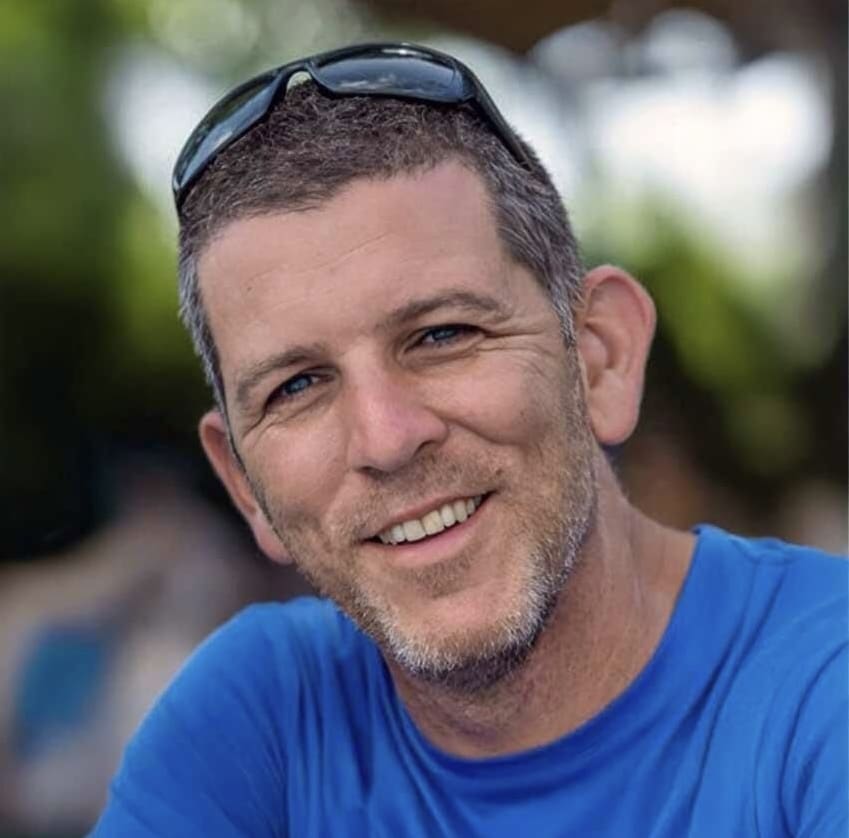
All photographs · 1
In the media
Articles
- Ella's Chilling Eulogy for Tal Haimi: You Came Back Clothed and Whole, I Touched Every Part of You
ynet ·
- Tal Haimi's wife gives a statement from Nir Yitzhak
ynet ·
- Trupul neînsuflețit al lui Tal Chaimi, israelian cu cetățenie română, a fost predat de Hamas autorităților israeliene. Bunicii lui Tal erau din Buzău
TVR Info ·
- Tal Haimi from Nir Yitzhak will never know his son; his friend Lior is still in captivity: “They spoke with a glance”
ynet
- The Jews Should Have Quit a Long Time Ago
Jewish Journal
Videos
Podcasts
- Episode 51: Young Ambassadors for Peace - Parents Circle Families Forum
Katholische Akademie in Berlin / Israel-Palestine Podcast
- The story of Udi Goren, cousin of hostage Tal Haimi
לחזור הביתה / All•in / מטה משפחות החטופים
Memorial sites
- Tal Haimi - Memorial Page
כאן 7.10.360
Stories told about them
Ella said Tal would make sandwiches for the children and wash dishes even when he was tired. At restaurants, he would skip ordering his own meal and rely on the children’s leftovers; she included these details in her eulogy as examples of his everyday life.
TVR reports that Tal held Romanian citizenship and that his grandparents were from Buzău. After the October 7 attack, Ella traveled to Romania to seek the authorities’ help in bringing him back.
Ella said that the family held a funeral in December 2023 even though the body remained in Gaza, and that the children’s questions made her realize that the farewell was not over. Tal loved family hikes and camping and knew how to solve problems with tools.
The opinion article describes a video of a Shavuot celebration in the Nir Yitzhak and Eilot communities. Ella took part in the babies’ dance with Lotan, the son born after Tal’s death; the video’s description was read in the text, but the video itself was not transcribed.
Life & service
Profile
- Date of birth
- December 20, 1981
- Birthplace
- Nir Yitzhak
- Date of death
- October 7, 2023
- Age
- 41
- Hometown
- Nir Yitzhak
Service
- Rank
- Warrant Officer (res.)
- Service Type
- Reserve Forces
- Honours
- Posthumously Promoted
Family
- Father
- Zohar
- Mother
- Esther
Burial
Cemetery
Nir Yitzhak
Tributes & remembrance
נזכור אתכם תמיד
יהי זכרו ברוך
בבית ספר הביאו לנו בטיול שנתי תמונות ושמות של חיילים כדי לצעוד לזכרם, אני קיבלתי את טל חיימי. בפעם השניה שחילקו לנו שמות של חיילים אני ביקשתי את טל כי הרגשתי שאני צריכה לצעוד לזכרו כי זה המינימום שיכולתי לעשות לבן אדם שעשה את המקסימום בשביל המדינה, יהי זכרו ברוך
אנחנו ממש מכבדים אתך
תודה לך,טל היקר,
על הגנתך על אדמתך ועל יקיריך בנחישות,בעוז נפש ובמסירות נפש במובן הכי נורא של הביטוי !
תנחומים מלב כואב לכל יקיריך.
מתפללת לשובך המיידי לחיק אמא אדמה למנוחת עולמים.
יהא זכרך ברוך,גיבור ישראל!
מחכים לך ולא שוכחים!
טל,
זכות גדולה היתה להכיר אותך וזכות גדולה יותר לקרוא לך חבר..
מרגע שנודע לי נדמה שהמשפט "איפה ישנם עוד אנשים כמן האיש ההוא.." נכתב עלייך. איך תמיד היתה לך מילה טובה, אוזן קשבת או כתף תומכת להציע ובחיי שהארת כל מקום אליו הגעת, בנועם ובשקט שלך, איזה אובדן..
חבר יקר
טל יקר, קהילת ניר יצחק עזבה מזמן את אילת טך דומך ופניך עמוק בליבנו.
אדם מקסים ומקצוען בתחום הגינון ,תכנן לנו את הגינה,נזכור אותו לעד
לא שוכחים אותך חבר יקר
איש יקר, נדיב שקט וחכם. כמה הפסדנו . יהי זכרו ברוך
איך אפשר לדמיין קיבוץ בלי טל, איך אפשר לדמיין כל חג או פעילות בלי טל - לא נתפס (
יקר שאתה, כמה שאתה חסר.
טל , לא הכרתי אותך, אבל ליבי איתך ועם משפחתך. נפלת בגבורה ביום קשה לכולנו, ותמיד תישאר בזיכרוננו כסמל לעוז ולנחישות
נזכור ולא נשכח
אלה והילדים
שמי מילי, ולפני כמה חודשים בעלי עוזי הביא מגנט עם התמונה של טל וכמה מילים עליו. החלטנו שהמגנט ישאר על המקרר עד הבאתו לקבורה בישראל.
יהי זכרו ברוך
מחזקים את ידיכם מרחוק ומאחלים לך ולילדים רגעים של אושר.
מילי ועוזי
The entire Haimi family has returned home to Nir Yitzhak.
Source:ynet
Read the Hebrew original
משפחת חיימי חזרה הביתה לניר יצחק במלואה.
There is no other place on Earth where Tal should find his eternal rest than here in the kibbutz
Source:ynet
Read the Hebrew original
אין מקום אחר על פני כדור הארץ שבו טל צריך למצוא מנוחת עולמים מאשר פה בקיבוץ
Tal, I was proud to be your wife, and I am proud to be your widow. Thank you for 22 years together.
Source:ynet
Read the Hebrew original
טל, הייתי גאה להיות אשתך ואני גאה להיות אלמנתך. תודה על 22 שנים משותפות.
I know he did not choose this, and neither did our children, who were left fatherless
Source:כאן 7.10.360
Read the Hebrew original
ברור לי שהוא לא בחר בזה וגם לא הילדים שלנו שנותרו יתומים
They could already speak to each other with a glance.
Source:ynet
Read the Hebrew original
הם כבר ידעו לדבר אחד עם השני במבט.
was one of the pillars of the community
Source:ynetnews
I called him at 8:30, and I have not heard from him since
Source:TVR Info
Remembrance Day addresses
יום הזיכרון לחללי מערכות ישראל התשפ"ה – 2025
בכל יום שעובר, אזכור יותר! אזכור, את אלו שיצאו עימי לקרב ולא שבו, ולהם אין מי ידמה ומי ישווה. אזכור, שהכאב לא יעבור לעולם, והזמן, הוא לא מרפה ולא מרפא. אזכור, את שיברון הלב הגובר ואת הבית שבוער. אזכור, את צדקת הדרך, ואשבע שוב, שמה שהיה לא יהיה יותר. אזכור, שיותר מכל דבר אחר – אני חסר! ביום הזה, אני נתקף געגוע לדמותם, לחיתוך דיבורם, לחיוכם, ומדליק נר לזיכרון דרכם ומורשתם!
משרד הביטחון
אגף משפחות, הנצחה ומורשת
יום הזיכרון לחללי מערכות ישראל התשפ"ה – 2025
בכאב, בהצדעה ובתקווה אני מתכבד להדליק נר זיכרון זה. השנה, כשאנו נלחמים במלחמה ארוכה, רב זירתית וצודקת, הזיכרון נושא משמעות עמוקה. ביום זה נעצור ונתייחד עם זכרם של טובי בנינו ובנותינו שנפלו בהגנה על המדינה. מורשתם היא המצפן שמתווה את דרכינו, והיא המעניקה לנו כוח להמשיך ולהגן על מדינת ישראל ותושביה. משפחות יקרות, אנו מרכינים ראשנו ומתחייבים שנעמוד לצידכן תמיד. יהי זכר הנופלים ברוך.
אלוף דדו בר כליפא
ראש אגף כוח האדם, צה"ל
יום הזיכרון לחללי מערכות ישראל התשפ"ה – 2025
בשעה שאנו זוכרים את גודל תרומתם ועומק מסירות נפשם של טובי בנינו ובנותינו, נופלי מערכות ישראל לדורותיהן, ממשיכים צה"ל וכוחות הביטחון במימוש המשימה למענה לחמו ועבורה נפלו: הכרעת אויבינו מדרום, מצפון, ביהודה ובשומרון, וגם בזירות רחוקות יותר. בהערכה רבה ובגאווה אדירה אנו מרכינים ראש בפני הנופלים והנופלות, מאמצים את משפחותיהם אל לבנו, וממשיכים במשימה להבטחת קיומה של ישראל לדורי דורות. יחד נעשה ונצליח.
רב אלוף אייל זמיר
הרמטכ"ל, צה"ל
יום הזיכרון לחללי מערכות ישראל התשפ"ד – 2024
כאשר דגלינו מורדים לחצי התורן וראשינו מורכנים לזכר הנופלים והנופלות במערכות ישראל, ממשיכים לוחמי צה"ל ומפקדיו בלחימה בדרום, בצפון, ביהודה ובשומרון ובזירות נוספות. על כל דור מוטלת המשימה של הגנת העם והארץ – משימה שאף פעם אינה פוסקת. נצדיע בגעגוע ובגאווה לנופלים ולנופלות, נחבק את משפחותיהם, ונמשיך ברוח הציווי שהותירו לנו. עם ישראל חי.
רב ניצב יעקב שבתאי
המפקח הכללי, משטרת ישראל
יום הזיכרון לחללי מערכות ישראל התשפ"ד – 2024
אחיי הנופלים, כל נר הוא זיכרון יחיד ומיוחד, על חיים שהיו ואינם, געגוע שנצרב עמוק בלב, עולם ומלואו. הנרות כולם הם זיכרון של אומה כי לעולם לא עוד, בשורת הציונות וקוממיות ישראל. זיכרון כי הדרך לעם חופשי בארצנו עוברת דרך מסדר הנופלים. אור הנר יזכיר לנו את מסירות נפשכם להציל חיים, להגן על הבית. הנרות מסמנים לנו נתיב גבורה ערכי מחייב שאנו מצווים ללכת לאורו. נמשיך להילחם ולהוסיף אור מתוך אמונה בנצח ישראל.
יואב גלנט
שר הביטחון
יום הזיכרון לחללי מערכות ישראל התשפ"ד – 2024
בהצדעה ובכאב, בשם צה"ל כולו, אני מדליק נר זיכרון. בעיצומה של מלחמה, הזכרון נושא משמעות יום-יומית, שעבר והווה מתלכדים בה. לאורם של הנופלים נמשיך לצעוד, חיילי הסדיר והמילואים. לאורם של הנופלים נמשיך להגן על ארצנו ועל מולדתנו, גם כשהמחיר כבד. להבת-הזכרון תבער בנו בעודנו ממשיכים להלחם ונזכור את הנופלים ואת אומץ ליבם. משפחות יקרות, צה"ל מרכין היום ראש, מצדיע לכן וכואב איתכן. יהי זכר הנופלים ברוך.
אלוף יניב עשור
ראש אגף כוח האדם, צה"ל
יום הזיכרון לחללי מערכות ישראל התשפ"ד – 2024
בהוקרה, בגאווה ובכאב שאין לו סוף, אני מתכבד להדליק נר לזכרם של הנופלים והנופלות במערכות ישראל. סיפור חייהם בארץ הזאת, מסכת שירותם, גבורתם והקרבתם – הם סיפורה של הארץ הזאת, אך גם סיפור המחיר הכבד שהיא תובעת מאוהביה. מחויבותנו לזכר הנופלים ולדרך שהותירו לנו ניצבת תמיד לנגד עינינו. את המשימה שלא זכו להשלים, משלימים כיום, וישלימו, אנשי כוחות הביטחון, הממשיכים בדרכם ולאורם. יהי זכרם של הנופלים ברוך.
משרד הביטחון
אגף משפחות, הנצחה ומורשת
יום הזיכרון לחללי מערכות ישראל התשפ"ד – 2024
בחרדת קודש אני מתכבד להדליק נר לזכרם של חללי מערכות ישראל, חברנו שנפלו, מראשית היציאה מהחומות ולאורך כל שנות עצמאותנו המדינית והציונית, מהווים תמרור זיכרון לדרך חיינו ולמחוייבות הלאומית להנצחת זכרם. דרכם נותרה דרכנו ומורשתם נר להמשך עשייתנו. יהי זכרם ברוך!
בני גנץ
שר הביטחון
יום הזיכרון לחללי מערכות ישראל
נזכור אותם, כולנו יחד. כל אחד ואחת מהם, מדי יום ביומו, והיום ביתר שאת, כך – לנצח. "כי מדי דברי בו זכור אזכרנו עוד"
משרד הביטחון
אגף משפחות, הנצחה ומורשת