
The story
In a small house, nestled amidst green fields that stretched to the bright horizon of the Jordan Valley, Saria Elboim drew his first breaths. It was on a warm summer day, the 24th of Sivan 5763, June 24, 2003, in Moshav Mahola, a place where the earth is not merely a foundation but an essence, a language, a memory passed down from generation to generation. He was the son of Yael and Shay, born into a warm family, enveloped in the love of his parents and his siblings – Netanel, Eyal, Hodiya, and Aviram – each one adding a unique hue to the family mosaic. From his childhood, the walls of their home absorbed his rolling laughter, the soft sounds of his conversations with his mother, and the gentle patter of his small footsteps on the living room tiles. The air in Mahola was always rich with the scent of damp earth after irrigation, the fragrance of citrus blossoms in spring, and the sweet sweat of labor under the scorching sun. Saria grew up within this landscape, a landscape that shaped him, planting deep roots of connection to the land, to the community, and to the simplicity of life. He attended the local elementary school, among the children of the moshav, running through the fields after classes, building hideouts in the orchards, and always surrounded by friends. The little boy with the captivating smile was already then a human magnet, knowing how to connect with everyone, to see the good in every person, and to spread joy and calm around him. His natural curiosity led him to explore the world around him, gently stroking the petals of wildflowers, observing ants carrying heavy loads, learning the secrets of nature from the veteran farmers in the moshav, who would tell him stories about the cycles of life, about sowing and harvesting, about dependence on the earth and the sky. He was a sensitive child, one who felt the pulse of the world, yet possessed a quiet inner strength, as if he was created for a life of giving.
As he grew, that special quality of "infinite giving" developed within him, as people would later describe it. It wasn't just a desire to help, but a deep inner drive to ease, to gladden, to connect. He was always the first to volunteer to help his grandmother carry groceries, to sit beside a sad friend and listen to his heart, or to organize a spontaneous soccer game to relieve the tension of a long school day. When a friend returned from school with a worried look in his eyes, Saria would quietly approach him, place a hand on his shoulder, and suggest they go sit on the large rock above the wadi, where they would gaze at the open landscape and talk about everything. He wasn't a problem-solver; he was simply there, listening, embracing with his gaze, conveying a feeling of "you are not alone." These small dialogues, conducted between childhood games and school lessons, were the cornerstones of his personality, shaping him into a person who saw the other, who felt their pain and joy, and who always sought to bring light into the world. His strong connection to family was evident in every small detail: in the Friday night dinners where he insisted on helping his mother set the table, listening to his father's stories of the week, or playing with his younger siblings. Hodiya, his sister, always remembered their phone calls, where she would call to strengthen him, but invariably left feeling strengthened herself, as if he were an endless wellspring of optimism and zest for life. His smile, which everyone described as captivating, combined both mischief and depth, a promise of constant joy, even when life presented challenges.
When Saria reached adolescence, he left the familiar green pastures of Mahola and moved to study at the "Ragavim BaEmek" high school yeshiva in Kibbutz Tirat Zvi, not far from home but in a slightly different world. There, between Talmud lessons and mathematics, among new friends with different accents and diverse backgrounds, he continued to develop his rich personality. He was not a quiet or introverted student, nor was he a loud leader. He was the balancer, the one who knew how to bridge gaps between groups, to calm heated arguments in class, and to offer a new perspective in deep conversations. In twelfth grade, something within him yearned beyond the school desk. He sought meaning, direct contact with the land, with physical work that left its mark. This led him to volunteer at the "Neve Uri" farm in Gush Etzion. There, far from the urban bustle, he found himself surrounded by earth, plants, and animals. He rose with the sun, as skilled hands were already busy milking, building fences, tending to crops. Saria, with the soft hands of a city boy, quickly learned the secrets of agriculture. He loved the feel of his hands in the damp earth, the smell of fresh grass, the roar of the tractor engine as it plowed the field in the early morning. But above all, he loved to herd sheep. To go out with the flock, to walk quietly among the hills, to feel the wind on his face, to hear the sheep bells gently jingling. He learned the language of the sheep, the differences between a lamb and an adult, their needs. He felt a deep connection to that ancient tradition of shepherding, to the simple and primal sight of a man and his flock, to a quiet and meaningful life. The sense of satisfaction at the end of a workday, as the sun set in fiery colors over the Judean Hills, and he returned tired but fulfilled, was a greater reward for him than any exam grade. He saw agriculture not just as work, but as a way of life, a way to connect to the deepest roots of this place.
After a year of volunteering on the farm, with the earth and the sheep having left their mark on him, Saria continued his journey and arrived at the advanced yeshiva in Susya in the Hebron Hills. It was a natural transition for him, from a physical connection to the land to a spiritual and ideological connection to the land and the people. In Susya, between profound Torah lessons and long conversations late into the night, his love for the country and its people grew even stronger. He didn't speak in slogans, but from a deep inner understanding of the values upon which the state was built, of the mutual responsibility between one person and another, and between the people and their land. There, in conversations with friends and rabbis, he solidified his aspiration for meaningful combat military service. He saw service not just as a duty, but as a right, an opportunity to contribute his part in the most tangible and profound way. He often sat alone, with a small black notebook, writing his thoughts. He cultivated a rich and deep inner world, where he grappled with fundamental questions about life, meaning, and destiny. In one of those notebooks, in his elegant yet swift handwriting, he penned words that would later become a kind of compass for his life: "It is a foregone conclusion that the spirit conquers all. If there is spirit, even the hardest things will eventually seem like the simplest things to do." These lines reflected his unwavering belief in the power of will, in the power of consciousness, in a person's ability to rise above any difficulty through mental strength. He was not a man of lofty words, but of deeds, yet he preserved his rich inner world in written words, a quiet testament to the depth of his thought.
Joy was a lamp unto his feet. Not a light and fleeting joy, but a deep, inner joy, stemming from a profound understanding of life and his purpose. He made sure to cultivate joy within himself, even when facing personal challenges, and especially – to bring joy to those around him in every way and opportunity. If he noticed a downcast friend, he would approach him with a small joke, a wide smile, or simply suggest they go for a walk among the vineyards to clear their head. He was an expert at transforming simple moments into moments of small happiness. Hodiya, his sister, recounted that there wasn't a single phone call where she called to strengthen him and didn't leave feeling strengthened herself. He would ask her about her day, listening patiently to every detail, and then, in his calm and confident voice, he would find the optimistic point, the positive angle, the reason to smile. He always brought with him a sense of hope, a belief that things would work out, that even if it was difficult now, there was always light at the end of the tunnel. His joy was not merely superficial; it was infectious, authentic, and gave strength to everyone who came into contact with him.
On August 17, 2022, the day he enlisted in the IDF, a dream came true. He donned the olive uniform, wore the brown beret, and joined Battalion 51 of the Golani Brigade, one of the most glorious and challenging brigades in the IDF. From the very first moment, Saria stood out for his abilities. He was not only an excellent soldier physically and professionally, but also displayed exceptional leadership qualities. He fulfilled his role with dedication and perseverance, giving his all in every activity and mission, whether it was strenuous training in open terrain or a long, monotonous guard duty. His comrades in the unit valued him not only for his military skills, but also for his unique personality. He loved his fellow soldiers, with their diverse opinions and beliefs, with all his heart. He saw them as brothers in arms, a second family. Connection and unity were the most important things in his eyes, and he strived for them in everything he did. He was the one who organized small gatherings between soldiers from different backgrounds, the one who convinced everyone to sit and eat together, the one who initiated conversations on various topics, just to bring hearts closer and bridge gaps. His circles of friends were many, wide, and very different from each other – he had friends from the moshav, from the high school yeshiva, from the farm, from the advanced yeshiva, and now also from the army. He loved to bring them together, to create new connections, and to use his personal ability to connect with every person, in order to bring closer people with different opinions and beliefs. He believed that despite the differences, we are all part of the same people, of the same mission, and that only together could we face the challenges. Despite his great sensitivity to others, he was never dependent on the opinions of those around him and maintained a stable connection to his inner truth. He knew what was right for him, what his values were, and did not allow social or external pressures to sway him from his path. Thanks to his impressive performance, his courage, and his natural leadership abilities, he was chosen to attend the squad commanders' (M"K) course, a step that for him was the fulfillment of a dream and the acceptance of additional responsibility on his young shoulders.
That Shabbat, the 22nd of Tishrei, Simchat Torah 5784, October 7, 2023, began like any other Shabbat, but soon became a day etched into national memory as a day of pain and loss. At six-thirty in the morning, as the first rays of sun barely began to paint the sky, the Hamas terrorist organization launched a brutal and unprecedented surprise attack on Israel. Under the cover of massive barrages of thousands of missiles and rockets from the Gaza Strip, which covered wide areas of the country and reached as far as the center, thousands of terrorists infiltrated – by land, sea, and air – and began a murderous assault on the quiet communities surrounding Gaza, and on cities like Sderot, Ofakim, and Netivot. They raided innocent nature parties held near Kibbutzim Re'im and Nir Oz, IDF bases, and travelers on the roads in the area. The terrorists cold-bloodedly murdered some eight hundred civilians in their homes, in their cars, after committing unspeakable atrocities against them. They abducted hundreds of Israelis – children, women, elderly – to the Gaza Strip, and destroyed, looted, and set fire to homes and property. Hundreds of soldiers, police officers, security forces personnel, and members of local rapid response teams fell in battle while defending the lives of others. On this terrible morning, a war began.
Saria was in the midst of his squad commanders' course, a period of intensive learning and anticipation for the graduation ceremony, when the war began. His phone vibrated, WhatsApp messages started flowing into friends' and family groups, at first confused, then terrified, and finally – chillingly clear. He and his course mates, who just moments before had been engaged in command exercises and planning operations on maps, found themselves facing a reality that surpassed all imagination. Without hesitation, without question, they were called up. Within a few hours, course students became commanders on the front lines. With his course mates, Saria took part in the ground fighting within the Gaza Strip. Their first entry into combat in the Strip was on the very date their course graduation ceremony was scheduled – a cruel irony of fate, which turned the rank-awarding ceremony into a true baptism of fire. Instead of standing in a festive parade, they stood before the enemy, defending their home with their bodies. In those intense days, between the dust of the battlefields and brief moments of rest, Saria wrote in his notebook, words that reflected the depth of his feelings and his faith: "This is the stage in life where you are entirely giving in the fullest and deepest sense of the word... There is one thing I am absolutely certain of, the redemption will not cease to come and the victory is ours." These were not just the words of a soldier, but of a person who saw beyond the here and now, who believed in the future, in goodness, and in the victory of the spirit. He understood that this was a historical mission, a moment when absolute giving, without reservation, without compromise, was required of everyone. He fought bravely, led his soldiers professionally, and always made sure to maintain a high fighting spirit, even when fatigue and pain threatened to overwhelm them.
After an intensive and difficult round of fighting in the Gaza Strip, Saria's unit withdrew from the Strip for refreshment and reorganization. Saria was reassigned to Battalion 51, the battalion from which he had gone to the squad commanders' course. But he did not want to return to a routine role. He explicitly requested to command as a squad commander in a platoon that had suffered heavy losses at the beginning of the war, a platoon where many soldiers had fallen and morale was broken. He felt it was his mission to lead them, to restore their trust, their strength, their sense of family. He did so with great dedication and sensitivity. He was gentle by nature, but possessed immense inner strength. He displayed great seriousness and responsibility in all aspects of his role as a commander, knowing how to be tough when necessary, but always with a compassionate gaze in his eyes, with a listening ear for every soldier. He spoke with them about the fallen, about their memory, about the duty to carry on, to fight for them. He instilled hope in them, managed to reconnect them, to rebuild unit cohesion. He insisted on rigorous training, on physical and mental preparation, but also on personal conversations, on jokes that relieved tension, on creating a home-like atmosphere amidst the chaos of war.
The war, which began in the south with the Hamas attack, quickly spread to the north. The Hezbollah terrorist organization in Lebanon launched incessant attacks on border communities, firing missiles, rockets, and drones, turning the lives of residents into hell. The platoon Saria commanded was deployed, along with the rest of the battalion, on the Lebanese border. They took up positions, monitored the border, and prepared for every scenario. Later, as the situation escalated and a ground maneuver in Lebanon became a reality, they also participated in the fighting as part of the maneuver in southern Lebanon. Saria understood the gravity of the mission. He gathered his soldiers, his face serious but his eyes gleaming with passion and faith, and sharpened for them the meaning of their role: "The goal is the defense of the northern communities." He emphasized, in his resonant voice, the importance of every single action, of every risk taken. "There's no way the residents of the North won't return to their homes," he stated with determination, and his words gave validity to the struggle, transforming it from a military battle into a fight for home, for community, for the future of the country. He knew that every soldier stood there, on behalf of thousands of citizens displaced from their homes, and on behalf of the values of defense and security of the people of Israel. He was a symbol of that deeply rooted fighting spirit, a spirit of giving and sacrifice, a spirit that pushes forward even in the face of danger.
In the small moments of respite, between guard duties, between briefings, when he found a quiet corner with a mobile phone or a notebook, Saria wove many plans for the day after the war and his discharge from the IDF. He did not allow the harsh reality of the war to overshadow his dreams. He planned to study music in Safed, a city full of spiritual and artistic atmosphere that attracted him. He imagined himself sitting at a musical instrument, producing sounds, creating melodies that flowed from the depths of his soul. In addition, he dreamed of working on a farm in New Zealand, returning to the agricultural roots he loved so much, experiencing again the contact with the earth, the tranquility of wild nature. He spoke about it with enthusiasm to his friends, describing to them the breathtaking landscapes, the detachment from the world, the opportunity to reconnect with himself. And how could he forget a long trip to Thailand, with a backpack on his back, to meet new cultures, taste exotic foods, experience true freedom. He spoke of all these not just as plans, but as promises for the future, as anchors of hope that gave him strength to continue, to know that there was something to look forward to, that there was a whole life of creation, exploration, and fulfillment after the uniform. He imagined himself returning to Mahola, telling his family about his experiences, sharing with them the lessons he had learned, the person he had become. These plans, which he also wrote in his notebooks, were a testament to the spirit of life that pulsed within him, to his thirst for experiences, for creation, and for connection to the wider world.
On Wednesday, November 13, 2024, the 12th of Cheshvan 5785, Saria led his soldiers as part of a complex operational activity in southern Lebanon. The mission was to clear buildings of weaponry in a Lebanese village. It was a routine but dangerous mission, requiring maximum concentration, professionalism, and alertness. He walked at the head of the force, his eyes scanning every corner, every shadow, every opening, making quick decisions and guiding his soldiers in a quiet but authoritative voice. The tension in the air was palpable; every step was carefully weighed, every movement deliberate. They moved between the semi-abandoned houses, the searches conducted with caution; every door opened, every room entered, could have contained danger. In one of the buildings, which seemed empty and deserted, a terrorist cell was hiding. Suddenly, without warning, a barrage of fire erupted towards them. Intense gunshots pierced the silence, shrapnel flew through the air, and the building became a momentary battlefield. Saria, with the sharp instincts of a fighter and commander, reacted immediately. He leaped forward, shielding his soldiers with his body, identifying the source of the fire and returning fire. He fought with supreme bravery, in close-quarters combat, against the hidden enemy. The sounds of gunfire and shouts mingled in the air. Saria did not hesitate, did not flinch. He fought until his last breath, defending his soldiers, the mission, his home. In that fierce battle, the hero Saria Elboim was killed. He was twenty-one years old at the time of his death. Staff Sergeant Saria Elboim, the fighter and commander, the one who loved life, the land, and the people, fell defending all of these.
The bitter news reached his family in Mahola like a thunderclap. The home, which had always been filled with laughter and joy, was now filled with mourning and sorrow. Saria was laid to rest in the Mahola cemetery, in the earth of the Jordan Valley that he loved so much, in the landscape where he grew up. He left behind heartbroken parents, Yael and Shay, and three brothers and a sister – Netanel, Hodiya, Eyal, and Aviram – who were left with a huge void in their hearts. But Saria did not disappear. He left behind a legacy of love, giving, connection, and unity. His mother, Yael, found solace in his own words, written in his notebooks. "For some time I've wanted to write a little about who you were, my beloved child, and find it hard to put you into words," she wrote, but Saria's own words gave her a voice: "The mission: to defend the land with all might, its values, the good people who live in it, and all its shades." And on "all its shades" she lingered, understanding the depth of his intention: "Not just one shade. Not just those who are like us, think like us, live like us. Defending everyone, that's what was important to you. Connection between everyone..." Elsewhere, she found more words he had written: "A desire to do and be good. A burning desire within me for good to be in the world, for peace, for us to respect, for us to smile and not be afraid of each other." And she added, with pain and faith: "You were right, my child, we cannot draw close when we are afraid... Our beloved Saria died in battle while defending people. Let's try to be better people because of this." Her call was a call to all of us, to continue his path, to live by the values in which he believed.
His close friend, Yisrael, eulogized him with sincere and painful words, expressing the depth of their bond and the shock of the loss: "The most beautiful and sweet child, the child I loved and admired so much, the child who was better and more diligent than all of us, that child, stronger than anything, fell in Lebanon." His words carried the sharp pain of a lost friend, the question of a world where the best go first. "Saria, how did you let God defeat you? It doesn't make sense, where did you go? I need you to come back, to smoke one last cigarette with you," Yisrael wrote, expressing the deep longing, the desire to turn back time, to small and simple moments of friendship. Saria Elboim, in his death, became a symbol of human heroism, of love for humanity and love for the land, of unconditional giving. He is commemorated on the President's Residence website and on his memorial page on memoriz.plus, but his true memory is etched in the hearts of all who knew him, in the spirit of Mahola and the Jordan Valley, and in the values he left behind. He lived his life with simplicity and joy, fought with courage, and died as a hero, driven by the desire for good in the world, for peace, for us to smile and not be afraid of each other. His legacy is a call to continue walking his path, a path of connection, of love, and of faith in the power of the spirit to conquer all, even the most difficult things, and to make them simple to achieve, for a better future.
Moments of a life
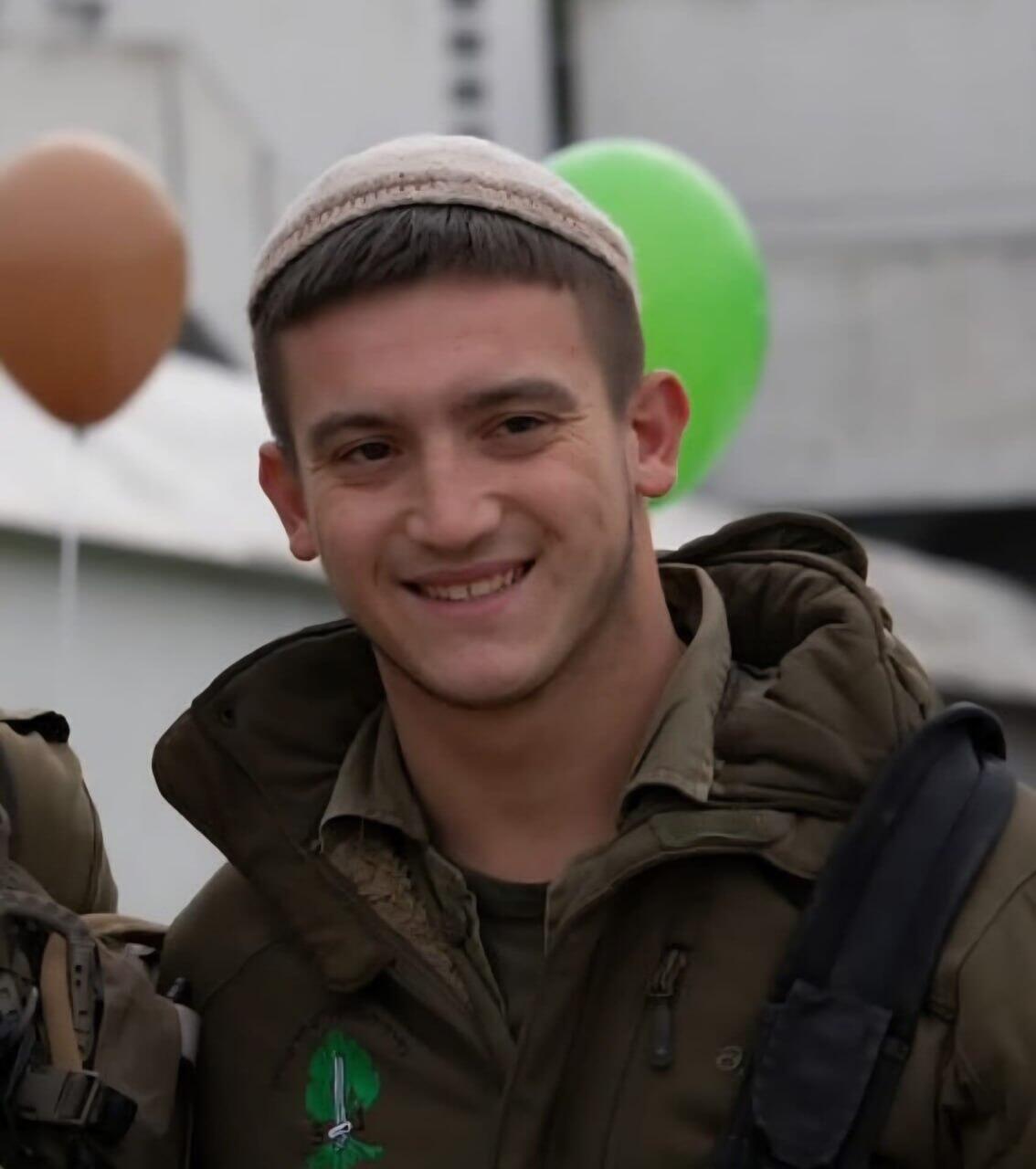
All photographs · 2
In the media
Articles
- Seraya Elboim’s Family Seeks to Commemorate Him in a Special Way
כיפה ·
- 'Until you return' | Family of fallen soldier sings next to his grave | Israel National News
israelnationalnews.com ·
- IDF reports 6 Golani soldiers killed in southern Lebanon combat, 5 named
Ynetnews ·
- IDF announces fallen soldier St.-Sgt. Sraya Elboim, killed in Lebanon
The Jerusalem Post ·
- The investigation into the clash in Lebanon in which 6 soldiers were killed | Saying goodbye to the fallen
ynet
- 6 Golani soldiers killed in battle in southern Lebanon: These are the stories of the fallen
ynet
Show all (7)
Memorial sites
Memorial projects
Following Serya’s path: His family planned a community coffee bar in Mehola, the Serya Tent at Neve Uri Farm and a Torah scroll in his memory.
Stories told about them
His brother Netanel said that Seraya used to start family video calls from the army on Fridays and reconnect the siblings. His father described how he would invite friends to their home and spend hours with them.
“We're not allowed to judge, we're just simple people. We don't deal with all that nonsense; we focus on ourselves, on what really matters.”
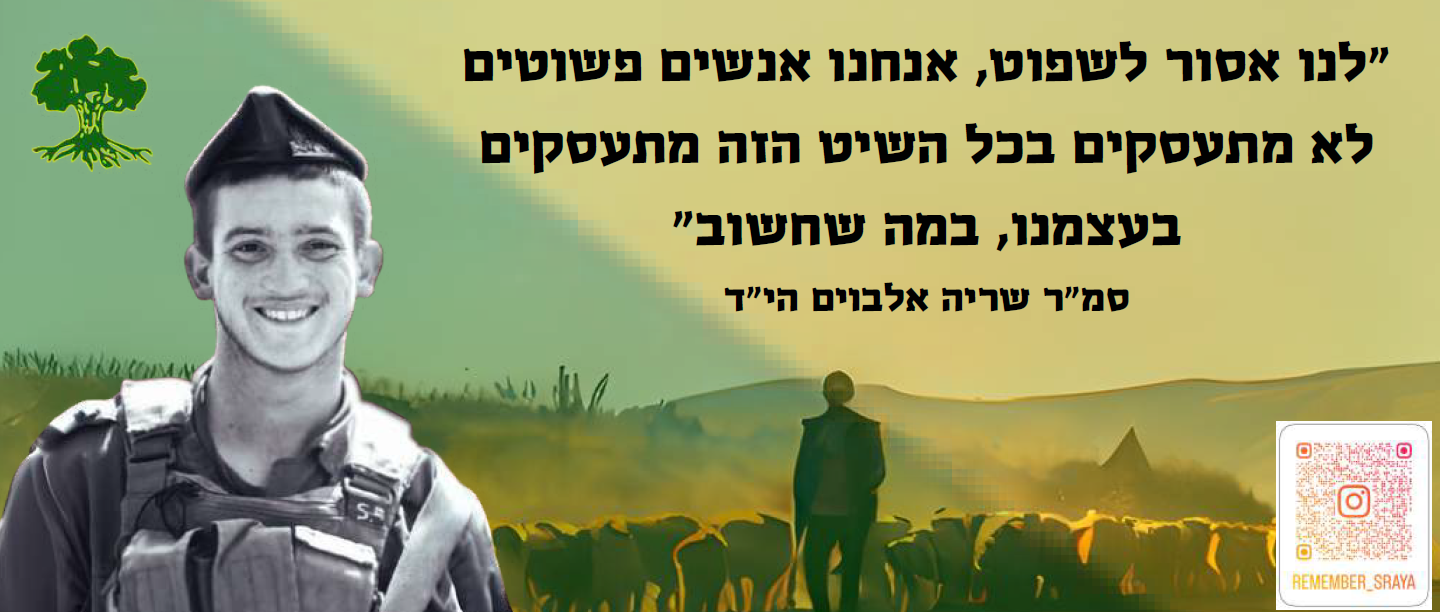
Life & service
Service
- Rank
- First sergeant
- Unit
- Golani Brigade
- Battle Location
- South Lebanon
Family
- Father
- Shy
- Mother
- Yael
Burial
Cemetery
Machola
Tributes & remembrance
יהי זכרך ברוך
בטיולי לניו זילנד ראיתי באחד המסלולים את המדבקה לזכרך , התרגשתי מאוד ולבי נחמץ.
ילד יפה
של אור ושמחה אינסופית
תאיר לעד
תודה לך, שריה היקר, על שהגנת עלינו ונלחמת למעננו
במחיר ההקרבה הנוראה והיקרה מכל!
תנחומים מלב כואב לכל אהוביך.
יהא זכרך ברוך,שר האל גיבור ישראל!
גיבור ישראל
סמ"ר שריה אלבוים, בן 21 ממחולה, מפקד כיתה מגדוד 51 של חטיבת גולני, נפל בקרב עם מחבלים בדרום לבנון. הוא הותיר אחריו את הוריו, יעל ושי, ואת אחיו, נתנאל, הודיה, אייל ואבירם. "שריה היה ילד חברותי, שמח, מוקף בחברים, ערכי, שורשי בעל נתינה אינסופית. הוא יצא ללחימה בעזה בעיצומו של קורס מכ"ים, חזר לסיים את הקורס ומיד עלה ללחימה בלבנון, נשארו לו ארבעה חודשים לשחרור", ספדו לו במועצה האזורית בקעת הירדן. ישראל, חברו ספד לו, וכתב: "הילד הכי יפה ומתוק, הילד שכל כך אהבתי והערצתי, הילד שהיה יותר טוב וחרוץ מכולנו, הילד הזה ששום דבר לא היה חזק יותר ממנו נפל בלבנון". הוא הוסיף: "שריה איך נתת לאלוהים לנצח אותך? זה לא הגיוני, לאן הלכת? אני צריך שתחזור, לעשן איתך סיגריה אחרונה". יהי זכרו ברוך
יהי זכרך ברוך
אוהבים אותך - הגיבעונים
שריה היד גיבור ישראל שאוהב את האדם והארץ, נפל על קדושת השם יהי זכרו ברוך
עם ישראל חי נלך בדרכו
אוהבים אותך מחוות הבקעה
מלך ישראל!!
עם ישראל חי
שריה אלבוים- גיבור ישראל
שריה
עדיין לא מעכלת לראות אותך מביט מהתמונות.
מהסטיקרים על תחנות האוטובוס ועד המצגת שרים וזוכרים של יום הזיכרון.
אני אזכור אותך, את החיוך המתוק שלך, את שמחת החיים שלך, את האכפתיות שלך, כל עוד אני חיה.
מבחינתי, אתה חי לנצח. צעיר, מחייך, צוחק, אכפתי, רגיש, אוהב התורה, העם והארץ בכל לבבך. זה שכולם רוצים להיות לידו. זה שגורם לכולם להרגיש טוב יותר. זה שטוב יותר מכולנו ביחד.
לנצח, שריה.
אני לא הכרתי אותך בחייך. אבל במותך השארת סימן. אם זה במילים, בזכרונות, בסיפורים, הכרתי אותך. ואני תמיד אזכור אותך. אנחנו אנשים פשוטים
יעל ושי היקרים. אתכם בצערכם הכבד. גיבור ישראל והגיבור הפרטי שלכם. הלב נשבר.
גיבור אמיתי, זכות להכיר אותך אפילו לזמן קצר
תודה על הכל
זוכרים ומתגעגעים.
ת. נ. צ. ב. ה
שריה הי"ד היה בחור עם נשמה טהורה, לב ענק מלא שמחה ואהבת הארץ. בחור עם ערכים ואהבת הזולת, אתה כל כך חסר, מתגעגעת ואוהבת לעד
גיבור במשפחה של גיבורים
תודה גולנציק יקר
יהי זכרו לנצח ברוך ותהא נשמתו צרורה בצרור החיים. גיבור ישראל לדור דור.
אוהבת אותך ומחכה לשובך
תמר בת דודתך וחברה הלל
Seraya was a sociable, happy boy, surrounded by friends
Source:noflim.org.il
Read the Hebrew original
שריה היה ילד חברותי, שמח, מוקף בחברים
You have a whole world to see and devour
Source:ynet
Read the Hebrew original
יש לך עולם שלם לראות ולטרוף
Without your smile
Source:ynet
Read the Hebrew original
בלי החיוך שלך
There wasn't a single phone call when I called to give him strength and didn't come away strengthened myself
Source:משרד הביטחון — יזכור
Read the Hebrew original
אין שיחת טלפון שהייתי מתקשרת לחזק אותו ולא יוצאת ממנה מחוזקת בעצמי
Gentle in spirit, loving toward people and generous-hearted.
Source:ynet
Read the Hebrew original
עדין נפש, אוהב אדם ובעל לב רחב.
Remembrance Day addresses
יום הזיכרון לחללי מערכות ישראל התשפ"ה – 2025
בכל יום שעובר, אזכור יותר! אזכור, את אלו שיצאו עימי לקרב ולא שבו, ולהם אין מי ידמה ומי ישווה. אזכור, שהכאב לא יעבור לעולם, והזמן, הוא לא מרפה ולא מרפא. אזכור, את שיברון הלב הגובר ואת הבית שבוער. אזכור, את צדקת הדרך, ואשבע שוב, שמה שהיה לא יהיה יותר. אזכור, שיותר מכל דבר אחר – אני חסר! ביום הזה, אני נתקף געגוע לדמותם, לחיתוך דיבורם, לחיוכם, ומדליק נר לזיכרון דרכם ומורשתם!
משרד הביטחון
אגף משפחות, הנצחה ומורשת
יום הזיכרון לחללי מערכות ישראל התשפ"ה – 2025
בכאב, בהצדעה ובתקווה אני מתכבד להדליק נר זיכרון זה. השנה, כשאנו נלחמים במלחמה ארוכה, רב זירתית וצודקת, הזיכרון נושא משמעות עמוקה. ביום זה נעצור ונתייחד עם זכרם של טובי בנינו ובנותינו שנפלו בהגנה על המדינה. מורשתם היא המצפן שמתווה את דרכינו, והיא המעניקה לנו כוח להמשיך ולהגן על מדינת ישראל ותושביה. משפחות יקרות, אנו מרכינים ראשנו ומתחייבים שנעמוד לצידכן תמיד. יהי זכר הנופלים ברוך.
אלוף דדו בר כליפא
ראש אגף כוח האדם, צה"ל
יום הזיכרון לחללי מערכות ישראל התשפ"ה – 2025
בשעה שאנו זוכרים את גודל תרומתם ועומק מסירות נפשם של טובי בנינו ובנותינו, נופלי מערכות ישראל לדורותיהן, ממשיכים צה"ל וכוחות הביטחון במימוש המשימה למענה לחמו ועבורה נפלו: הכרעת אויבינו מדרום, מצפון, ביהודה ובשומרון, וגם בזירות רחוקות יותר. בהערכה רבה ובגאווה אדירה אנו מרכינים ראש בפני הנופלים והנופלות, מאמצים את משפחותיהם אל לבנו, וממשיכים במשימה להבטחת קיומה של ישראל לדורי דורות. יחד נעשה ונצליח.
רב אלוף אייל זמיר
הרמטכ"ל, צה"ל
יום הזיכרון לחללי מערכות ישראל התשפ"ד – 2024
כאשר דגלינו מורדים לחצי התורן וראשינו מורכנים לזכר הנופלים והנופלות במערכות ישראל, ממשיכים לוחמי צה"ל ומפקדיו בלחימה בדרום, בצפון, ביהודה ובשומרון ובזירות נוספות. על כל דור מוטלת המשימה של הגנת העם והארץ – משימה שאף פעם אינה פוסקת. נצדיע בגעגוע ובגאווה לנופלים ולנופלות, נחבק את משפחותיהם, ונמשיך ברוח הציווי שהותירו לנו. עם ישראל חי.
רב ניצב יעקב שבתאי
המפקח הכללי, משטרת ישראל
יום הזיכרון לחללי מערכות ישראל התשפ"ד – 2024
אחיי הנופלים, כל נר הוא זיכרון יחיד ומיוחד, על חיים שהיו ואינם, געגוע שנצרב עמוק בלב, עולם ומלואו. הנרות כולם הם זיכרון של אומה כי לעולם לא עוד, בשורת הציונות וקוממיות ישראל. זיכרון כי הדרך לעם חופשי בארצנו עוברת דרך מסדר הנופלים. אור הנר יזכיר לנו את מסירות נפשכם להציל חיים, להגן על הבית. הנרות מסמנים לנו נתיב גבורה ערכי מחייב שאנו מצווים ללכת לאורו. נמשיך להילחם ולהוסיף אור מתוך אמונה בנצח ישראל.
יואב גלנט
שר הביטחון
יום הזיכרון לחללי מערכות ישראל התשפ"ד – 2024
בהצדעה ובכאב, בשם צה"ל כולו, אני מדליק נר זיכרון. בעיצומה של מלחמה, הזכרון נושא משמעות יום-יומית, שעבר והווה מתלכדים בה. לאורם של הנופלים נמשיך לצעוד, חיילי הסדיר והמילואים. לאורם של הנופלים נמשיך להגן על ארצנו ועל מולדתנו, גם כשהמחיר כבד. להבת-הזכרון תבער בנו בעודנו ממשיכים להלחם ונזכור את הנופלים ואת אומץ ליבם. משפחות יקרות, צה"ל מרכין היום ראש, מצדיע לכן וכואב איתכן. יהי זכר הנופלים ברוך.
אלוף יניב עשור
ראש אגף כוח האדם, צה"ל
יום הזיכרון לחללי מערכות ישראל התשפ"ד – 2024
בהוקרה, בגאווה ובכאב שאין לו סוף, אני מתכבד להדליק נר לזכרם של הנופלים והנופלות במערכות ישראל. סיפור חייהם בארץ הזאת, מסכת שירותם, גבורתם והקרבתם – הם סיפורה של הארץ הזאת, אך גם סיפור המחיר הכבד שהיא תובעת מאוהביה. מחויבותנו לזכר הנופלים ולדרך שהותירו לנו ניצבת תמיד לנגד עינינו. את המשימה שלא זכו להשלים, משלימים כיום, וישלימו, אנשי כוחות הביטחון, הממשיכים בדרכם ולאורם. יהי זכרם של הנופלים ברוך.
משרד הביטחון
אגף משפחות, הנצחה ומורשת
יום הזיכרון לחללי מערכות ישראל התשפ"ד – 2024
בחרדת קודש אני מתכבד להדליק נר לזכרם של חללי מערכות ישראל, חברנו שנפלו, מראשית היציאה מהחומות ולאורך כל שנות עצמאותנו המדינית והציונית, מהווים תמרור זיכרון לדרך חיינו ולמחוייבות הלאומית להנצחת זכרם. דרכם נותרה דרכנו ומורשתם נר להמשך עשייתנו. יהי זכרם ברוך!
בני גנץ
שר הביטחון
יום הזיכרון לחללי מערכות ישראל
נזכור אותם, כולנו יחד. כל אחד ואחת מהם, מדי יום ביומו, והיום ביתר שאת, כך – לנצח. "כי מדי דברי בו זכור אזכרנו עוד"
משרד הביטחון
אגף משפחות, הנצחה ומורשת