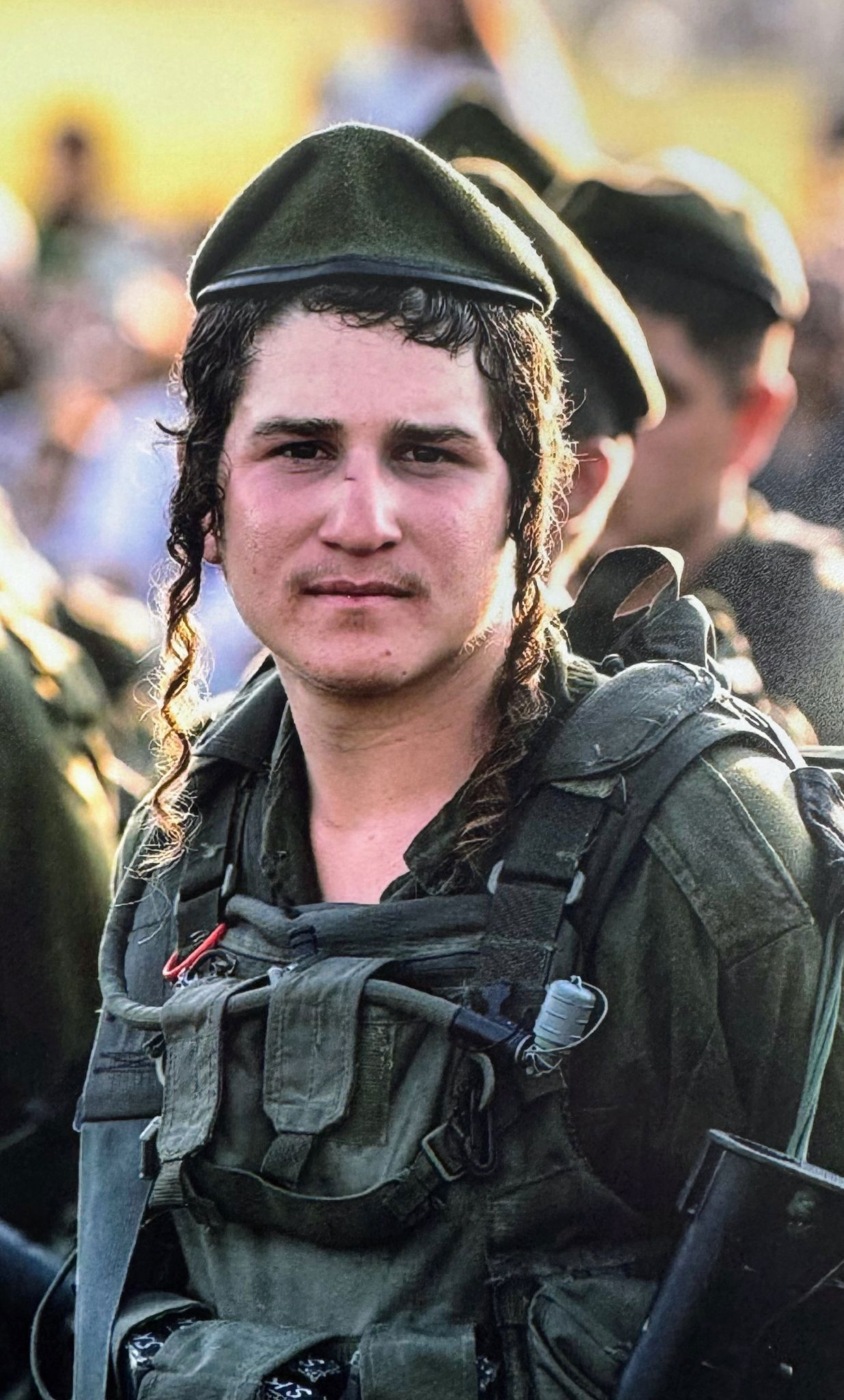
The story
In the community of Yitzhar, nestled on a verdant hill that embraced a wild and expansive landscape, a child was born on a warm summer day in 2004 to Chaim Zev and Dina Cohen. They named him Schneor Zalman, a name that resonated like a promise of light, clarity, and life itself. He was an old soul in a bustling home, the ninth child, brother to Shterna Sarah, Menucha Rachel, Shalom Dov Ber, Menachem Mendel, Meir Chai, Yosef Yitzchak, Chaya Mushka, Shmuel, and Yehuda Leib. Before Schneor Zalman could even grasp the meaning of the words "older brother," their youngest sibling, Shulmka, a tender infant, was taken from them in a quiet, sudden death that etched a deep scar upon the family's heart. This loss, which enveloped the home in a subtle sadness, taught Schneor Zalman, even before he could articulate it, about the fragility of life and the importance of every single moment. He grew up within a deeply rooted Chabad family, one that instilled in him the values of tradition, faith, and mission, but also a profound connection to the land, to the community, and to the pioneering spirit that characterized Yitzhar. Their home was always open, bustling with children's laughter and the comforting scent of fresh baked goods, a place where conversations about Torah and manual labor mingled naturally, interspersed with the playful shouts and energetic scurrying of siblings.
Schneor Zalman absorbed the atmosphere of the place through his very soul. He studied at the "Ben Porat Yosef" Talmud Torah in the community, an institution where the spirit of Torah and the land merged within its local stone walls. His mornings were spent immersed in the pages of the Gemara, the muffled sounds of study blending with the chirping of birds outside and the scent of wet grass after a rain shower. In the afternoons, released from his studies, he would venture out into the expansive reaches of the community, climbing the surrounding rocks, building small stone towers, or running along the dusty paths between the houses, chasing friends and playing hide-and-seek among the ancient olive trees. His hands, even then, were the hands of a doer. Not merely a child's hands, but hands that knew how to touch, to dismantle, to reassemble. If a toy broke, he was the first to try and fix it, his face concentrated, a small tongue peeking out between his lips. If help was needed organizing the family shed, he was there, arranging boxes, screwing in shelves, organizing everything with a methodical precision that was already evident in him. He was a smiling child, with deep blue-grey eyes that reflected an inner grace, a natural humility, and a genuine sensitivity towards those around him. He wasn't a child who ran at the head of the pack, but he was always there, a steady shoulder, a kind word, a routine-breaking joke that would ease tension and bring a smile even to the most tired faces. His parents and siblings already saw something special in him – mature for his age, full of vitality and joy, someone who knew how to set goals for himself and persevere, even when things were difficult. He wouldn't give up easily and always found a way to solve problems, whether it was complicated homework or an argument between friends. "Give him a task and be sure it will be done perfectly – set it and forget it," they used to say about him, knowing that Schneor Zalman would not rest until the task was completed, and to perfection.
In his young adulthood, Schneor Zalman continued his studies at the Chabad Yeshiva in Nof HaGalil, and later returned to the Chabad Yeshiva "Mitzpeh Yitzhar," close to home, to the familiar landscapes. This was a period of deep immersion in Torah, of building a strong spiritual world, but also a time when his connection to the land and the complex reality of Samaria sharpened. His yeshiva studies did not disconnect him from the outside world; on the contrary. He integrated himself into the operational framework with the soldiers serving in the Samaria sector, not as a soldier, but as a supportive community member. He knew how tired and hungry soldiers could be after a night of patrols or a day of missions, and thus the "Coffee and Soup Patrol" was born. He would organize thermoses filled with steaming coffee and hot soup, bringing along cookies and baked goods that his mother and sisters had prepared, and head out to the outposts, to the guard positions, to the friction points, spreading warmth and a taste of home. Many soldiers remembered the smiling face of the young man from Yitzhar, who came to them of his own free will, with kind eyes and a readiness to listen. He wasn't seeking glory; he simply wanted to help, to ease their burden, to show them that someone was thinking of them, that someone cared.
One of the defining moments in his life, which shaped his worldview and spurred him to act with full vigor, occurred during a Bar Mitzvah trip, an event that was supposed to be festive and joyful. Schneor Zalman, along with his classmates, went hiking in the area of Kutsra village in Samaria, a region they were accustomed to for walking tours. The atmosphere was light, filled with the laughter of teenagers, with the enthusiasm of adolescence. They walked along the paths, surrounded by lush green scenery, the sun caressing their faces. Suddenly, without any warning, the atmosphere changed abruptly. Shouts began to be heard from a distance, and then the villagers appeared, armed with stones and sticks, running towards them in a rage. The children, young teenagers, were gripped by deep fear. The shouts, the stones whistling through the air, the frantic run – all etched a traumatic experience into him. He felt the threat in a tangible way, the vulnerability of one who lives on his land but is not safe on it. The frightening experience shook him to the depths of his soul. It did not break him, but rather ignited a new fire within him. "To live life instead of living alongside life," were the words his parents used to describe the change that came over him. He understood that he did not have the privilege to be indifferent, passive. He had to act, to influence, to protect. This event, despite its terrifying nature, became a driving force in his life, a call to action that could not be ignored.
Following this realization, he set clear goals for himself. He was not content with sacred studies alone; he understood that one must also know the outside world, be integrated into it, possess abilities and skills that would contribute to practical action. And so, alongside his yeshiva studies, he studied within the "Manifa" framework and earned a full matriculation certificate. He would sit for long hours after his yeshiva studies, grappling with new academic material, with various intellectual challenges. He did this not out of obligation, but out of a sense of responsibility, out of a desire to be a complete person, with broad knowledge, one who could contribute on every front. He saw no contradiction between the world of Torah and the world of action, but rather a necessary connection. He believed that one who knows how to fix and arrange things with their hands, one who understands how the world works, would be better able to serve their spiritual purpose. He would combine his studies with helping at home, with small repairs, with solving various technical problems. He was a small expert at everything, knowing how to fix electrical appliances, assemble furniture, or simply advise on how to resolve a computer glitch. His friends often turned to him, knowing that if Schneor Zalman took something into his hands, it would simply work. He approached every task with a smile, with endless patience, and with the certainty that he would not give up until it was fixed.
After completing his yeshiva studies and earning his matriculation certificate, Schneor Zalman returned to "the Rebbe's court," as his family called it – for deeper studies at the Chabad Yeshiva, to strengthen his connection to the Rebbe's teachings and the Chabad way. This was a year of introspection, self-discovery, and preparation for his next mission. He was not the type of person who could sit idly by. He always sought a way to act, to influence, to bring hearts closer, to be an "emissary" in the fullest sense of the word. And so, in the month of Tishrei 5784 (October 2023), as the world went on as usual, Schneor Zalman embarked on a mission to the Chabad House in Tulum, Mexico. He landed in a different world, a colorful and vibrant one, so unlike the familiar landscapes of Yitzhar. His mission was to engage with the many Israeli and Jewish travelers who came to the area – to help them put on tefillin, blow the shofar, read from the Torah, hold faith discussions, and connect them to their roots. He approached the task with a bright countenance, with humility, and with the sensitivity that characterized him. He was not condescending or judgmental, but simply present, with a captivating smile and eyes that invited conversation. He succeeded in reaching the hearts of many, both those distant from the synagogue or tradition, and those who simply needed a kind word in the midst of their foreign surroundings.
Schneor Zalman's technical abilities, which he had developed since childhood, also came to the fore during this mission. The Chabad House, like any home, required maintenance, and among the many travelers, only a few were willing to get their hands dirty or exert effort on repairs. But Schneor Zalman was there. He fixed what was broken, assembled what had come apart, and ensured that the place functioned optimally. One story illustrates his dedication and ability to touch people: the family of a young Israeli man, who was disconnected from them and living deep within the Mexican jungle, contacted the Chabad House with a desperate plea to reconnect them. Schneor Zalman did not hesitate. He took on the mission himself, even though it sounded complicated and dangerous. He embarked on a journey into the jungle, navigating unpaved paths, battling humidity and heat, surrounded by the sounds of wild nature. He reached the place where the young man lived, isolated from all human contact. With broken English, and using the universal language of the heart, he translated a personal letter from the man's family back in Israel. He sat with him, listened to him, did not judge him, and simply gave of himself, unconditionally and without condescension. This simple act of genuine and selfless care deeply touched the young man. He agreed to put on tefillin, to come to the Chabad House, and most importantly – to renew contact with his family. Schneor Zalman not only connected him to Judaism but also restored his human, familial connection, which was most important of all. In addition, he undertook a complex logistical task: to find a way to transport a Torah scroll that had been donated to the Chabad House from Israel to Tulum. He worked for many hours, planning, coordinating, and attending to every small detail, until the scroll arrived safely at its destination, ready to serve the community.
And then came that morning, the 22nd of Tishrei, Simchat Torah 5784. It was six-thirty in the morning, the sun had not yet fully cast its rays upon the beaches of Mexico. Schneor Zalman, like his fellow emissaries, was in the midst of holiday activities when the first reports began to trickle in. The Hamas terrorist organization had launched a cruel surprise attack on Israel. Massive barrages of missiles and rockets, thousands of terrorists who infiltrated by land, sea, and air, mass murder of civilians in their homes, in their cars, at an innocent outdoor party. The kidnapping of hundreds of Israelis, destruction, looting, and arson. Hundreds of soldiers, police officers, and security personnel who fell in battle. The first words arrived in fragmented, unclear messages, but the picture that emerged was unbearable. Schneor Zalman was in New York at the time, having completed his mission in Tulum. He heard the news, saw the images, and his entire world turned upside down. He could not sit idly by, thousands of kilometers away. The emotion that overwhelmed him was clear: he had to return. The decision was made quickly, with unequivocal clarity. He felt a deep responsibility, not only for his family and friends, but for the entire nation. He believed in the importance of defending the country and its citizens, and understood that at that time, when he was not studying in yeshiva, he had the ability to physically assist in the war. The motivation to enlist in the IDF and serve in a combat role burned in him with an intensity he had not known before.
The journey back was not simple. Flight tickets were expensive and scarce, and flights filled up quickly. While waiting for his flight, Schneor Zalman did not rest for a moment. He worked tirelessly to raise donations for farms and communities in Samaria, which were under constant threat, understanding that this too was a way to support the war effort. He built connections, explained the situation, raised funds and equipment, all out of deep dedication. When he finally boarded the plane, he breathed a sigh of relief, but also felt immense readiness. He knew he was returning to a difficult reality, but he also knew he had to be there, part of the effort. Upon his return to Israel, while awaiting his enlistment into the IDF, he did not waste a moment. He returned to Yitzhar and immediately joined the local effort. He assisted the community's Regional Defense Battalion (Hagam"ar), which was under immense strain. He volunteered for the role of Deputy Military Security Coordinator (Sgan Rabshatz), a position that demanded great responsibility, coordination, and readiness for any scenario. He accompanied the Hagam"ar soldiers with humility, loyalty, and kindness, assisting them in whatever was needed, coordinating patrols, preparing equipment, and attending to the small details. He was there for everyone, a strong and responsible figure, despite his young age. When his friends suggested he go for a walk or rest a little from the endless activity, he would respond with his sharp and defining question: "And who will guard?" For him, there was no other option. Guarding the home, the community, the nation, was always his top priority.
On December 31, 2023, in the midst of the war, Schneor Zalman enlisted in the IDF. He was assigned to the Haredi company "Tomer" in the "Rotem" Battalion of the "Givati" Brigade, an esteemed purple brigade. Already in basic training, in the tense and intense atmosphere of the recruit base, Schneor Zalman stood out for his caring nature, his responsibility, and his maturity. He was not just another naive recruit, but a fighter in his soul, with a relatively rich life experience for his age. He remained loyal to his comrades in the platoon, serving as a pillar of strength and a personal example for them. He was the first to volunteer for difficult missions, the last to complain. When friends struggled on strenuous marches or physical exercises, he was there to encourage, to push, and sometimes even to carry some of their heavy gear. His friends, impressed by his abilities and initiative, humorously nicknamed him "officer," because he always tried to lead the soldiers to success and achievement. He not only took initiative but also knew how to make people laugh, boost morale, and strengthen everyone with kind words and witty jokes, even in moments of despair. One of his friends told his family about the first day in the room, when he entered Schneor Zalman's space and enthusiastically said: "Come on, let's take this squad into our hands, and together we'll make it the best there is! We can do it!" Schneor Zalman looked at him with his deep eyes, and told him with the sharpness that characterized him, in a serious yet smiling tone: "Listen? The IDF is a place of actions, not words!" He was not a man of grand speeches, but of clean, honest, and uncompromising action.
As a devout Chabadnik, Schneor Zalman was very meticulous about observing commandments, even under the difficult conditions of military service. He was particularly careful about wearing wool tzitzit, as is the Chabad custom. He did not compromise on this, even when it required extra effort. His commanders, impressed by his strong will, abilities, and seriousness, granted him special permission to wear wool tzitzit even on long marches and operational activities, while he carried all his equipment like everyone else, and sometimes even more. He did not ask for leniencies, only the ability to practice his faith. He focused on action and achieving goals, and it was clear to everyone that he was not there just to "fulfill his obligation." During basic training, Schneor Zalman appeared in a television report on Channel N12, which focused on soldiers from the Haredi company. Several soldiers were interviewed about being from Haredi families, trying to explain the complexity of it. Schneor Zalman sat quietly to the side, listening to the conversation. Suddenly, he intervened with his clear voice and said with the sharpness that characterized him: "Haredi or not Haredi – I know, I'm a Chabadnik, I'm here on the Rebbe's mission." The meaning of his words was clear: he was not there to discuss labels or definitions. He was there to act, to give everything he had, to fight, and all out of a deep sense of mission, of purpose, of supreme commitment. He was focused on the desired outcome – victory in the war, defense of the people and the land. This statement, simple and selfless, reflected the depth of his personality and his moral clarity. He proved to be a responsible and proactive young man, and soon, even in basic training, he was appointed as a replacement for the squad commander, a role requiring leadership abilities and great trust.
After successfully completing the arduous combat training course, during which he proved himself again and again, Schneor Zalman was assigned as a regular combat soldier in the battalion. He was a skilled, professional fighter with natural leadership abilities. He strived for continuous improvement, excellence, and optimal operational readiness, and always faced challenges with his smiling and patient approach. When they returned exhausted from long and tiring missions, and when there was an urgent need to equip the Namer vehicles (heavy combat APCs), he was the first to simply start taking care of the Namers voluntarily, without any instruction from the commander. He would approach the massive vehicles, covered in mud and dust, and begin to clean, organize, and prepare them for the next mission. He didn't wait to be told what to do; he simply saw the need and acted. His seriousness and dedication did not escape the notice of his commanders. In light of his abilities, the commander asked him to be with him at the forward command post (Hapak) – a position that required responsibility, composure, and resourcefulness. He was his right-hand man, assisting in battle management and coordinating forces in the field.
Even within the difficult and challenging reality of fighting in the Gaza Strip, Schneor Zalman did not forget his principles. During their service in Deir al-Balah in the Gaza Strip, when his comrades tried to catch some precious rest between missions, he meticulously and quietly, in his characteristic manner, quickly prepared the improvised kitchen – so that he could prepare hot and kosher food for everyone. This was not just a matter of convenience, but a matter of upholding principles, of maintaining a religious way of life even in the heart of hell. He worked quietly, efficiently, without drawing attention, and with a combination of firm adherence to his principles and pleasantness, he ensured that the religious company could eat kosher food in any situation. He was devout and loyal to his principles, adhering to a strict observance of commandments both during training and during combat, and was a role model and personal example for all his friends. He aspired to advance to the position of squad commander, seeing it as another opportunity to contribute and influence, and even applied for a commander course in the Hasmonean Brigade. He was ready for the challenge, driven by purpose, but unfortunately, he did not get to attend the course. The field of security deeply interested him, even before and during his service, not out of a love for power or violence, but out of a deep desire to protect the land and the people. He saw it as a mission, a direct continuation of the values he grew up with. During his short breaks from the army, he did not seek rest or entertainment. He immediately joined the missions of the standby squad in Yitzhar, to strengthen the community's security. Again, when his friends offered him to go for a walk or rest, he asked again: "And who will guard?" This was the question of his life, the call of conscience that guided him at every moment.
The holiday of Simchat Torah 5785, a year after that cursed Simchat Torah of October 7th, found Schneor Zalman in the very heart of the fighting, in the most unexpected place – in the city of Jabalia in the northern Gaza Strip. Amidst the ruins, between bullet-riddled walls and the smell of gunpowder, Schneor Zalman was granted a moment of grace, of spiritual elevation. He and his company comrades, a group of tired but faith-filled fighters, formed a spontaneous circle for "Second Hakafot." They danced with a Torah scroll, which had been specially brought to them, amidst the chaos of war. The sounds of the song "For with joy you shall go out, and with peace you shall be led" mingled with the distant din of battle, with the roar of the Namers and the echoes of explosions. For one moment, in the heart of hell, home returned. A wide smile spread across Schneor Zalman's face, his eyes radiant with pure joy. It was a surreal image, a moment of spiritual heroism, of the triumph of life and faith over death and destruction. He danced with full strength, with full joy, as if there were no tomorrow, as if there were no war, as if the whole world was one big synagogue.
Just ten days after that smiling dance, on Rosh Chodesh Cheshvan 5785, a holy Saturday, Schneor Zalman was sent on a complex operational mission in the Jabalia area. He went out with his friends, as usual, driven by purpose, focused, aware of the dangers but determined to fulfill his role. He was at the heart of the activity, caring for his friends, ensuring that everything was carried out properly, an exemplary soldier ready to do anything for the success of the mission. During the battle, during an exchange of fire, Schneor Zalman was hit. He fell in the line of duty, twenty years old at his passing. His fall was swift, painful, and took from him an entire future, an entire life. The news of his fall struck his family, his friends, the community of Yitzhar, and everyone who knew him with shock. The great light he spread in his life was extinguished prematurely. Private First Class Schneor Zalman Cohen, who just moments before was full of life, plans, and mission, left behind grieving parents, three sisters, and five brothers, an entire heartbroken community. After his fall, he was posthumously promoted to the rank of Sergeant, a belated recognition of his dedication and heroism.
He was laid to rest in the military plot in the Yitzhar cemetery, the very plot he himself had been part of opening and establishing – a chilling and painful detail, testifying to his being an inseparable part of the land he defended. His mother, Dina, eulogized him with heartbreaking words: "Schneor Zalman, like your name – light, a child of light. You brought home so much light of love, light of action, light of vitality, light of 'Don't worry, Mom,' 'I'll fix it, Dad'... You returned to Him who gave you to us for twenty years. Twenty beautiful years full of joy." His parents wrote that they were proud of him "for the goals you set and the objectives you achieved... and now we are sure that you have gone to carry out the final operation above – to bring Mashiach!" His close friend Mendy Shimoni, a childhood friend who also served with him in the company, eulogized him with deep pain: "Schneor was a very special person, holy, a giant hero. The spirit of mission clung to him. He always made sure to emphasize: 'I am a Chabadnik'... In our dear team, in the last twenty-four hours before the incident, we talked about names – what each name means. When we got to your name, Schneor, we talked about how Schneor is composed of two lights – 'shnei or.' You truly were a tower of light to everyone around you, and you illuminated everyone you touched. Your light continues with us. Schneor, you were never afraid of anything. You were always driven by purpose, all the way, all your service, even in Gaza you did not flinch and said that if necessary, you were even willing to sacrifice your soul and body for Israel. And in our last operational activity, you indeed fell... Schneor, my dear friend, beloved of my soul, I will remember you forever. I will immortalize you everywhere, I will do everything so that people can remember you and who you were."
Rabbi David Dudkevitch, the rabbi of the Yitzhar community, described Schneor Zalman's deep connection to the land and to his mission: "How natural it was that you would be buried here, that you would return to the good earth from which you were taken... How much we looked forward to singing 'Arba Bavot' as you walked to your wedding canopy. You unite with your Creator under a different canopy, a painful canopy, but the most exalted that can be for a son of Israel... From a young age, you were an emissary. Your sweet and smiling face... what a pleasure it was to converse... what responsibilities you took upon your shoulders at such a young age, always with a bright countenance, involved with people... You were the kind of emissary who, with or without a uniform – always remained a faithful emissary." Lieutenant Colonel Moshe of the "Givati" Brigade, his commander, eulogized him with simple and sincere words: "Schneor, thank you for being a part of us. We will miss you very much. Your image will remain in our hearts forever. Rest in peace." Yossi Dagan, Head of the Samaria Regional Council, summarized his essence: "Everything united in you – army, mission, Torah, settlement – out of a clear and strong identity, and especially out of an infinite love for Israel."
The memory of Schneor Zalman Cohen continues to beat in many hearts. Those who cherish his memory initiated kits of Shabbat candles with his picture, spreading the light that so characterized him. A tefillin stand was established for the elevation of his soul, a natural continuation of his mission. Stickers with his picture and the famous quote from the news report – "Haredi or not Haredi, I'm a Chabadnik, I'm here on the Rebbe's mission" – spread among his friends and acquaintances, as a symbol of his uncompromising commitment. The painter Elchanan Chaim Beck painted his portrait, immortalizing his smiling face and deep gaze. A page in his memory was uploaded to the "Givati" Brigade association website, and on "Instagram," the memorial account remember_shneor_kohen was created, centralizing tributes, photos, videos, and memorial details. Schneor Zalman Cohen, the child of light from Yitzhar, who lived a short but meaningful life, full of heroism and mission, was laid to rest in the land he defended, but his light continues to shine, to ignite inspiration, and to remind us all of the price of freedom and the depth of commitment to home, to people, and to land. His memory is an eternity of revival, of a strong spirit that does not surrender, and of an infinite love that will never fade.
Moments of a life
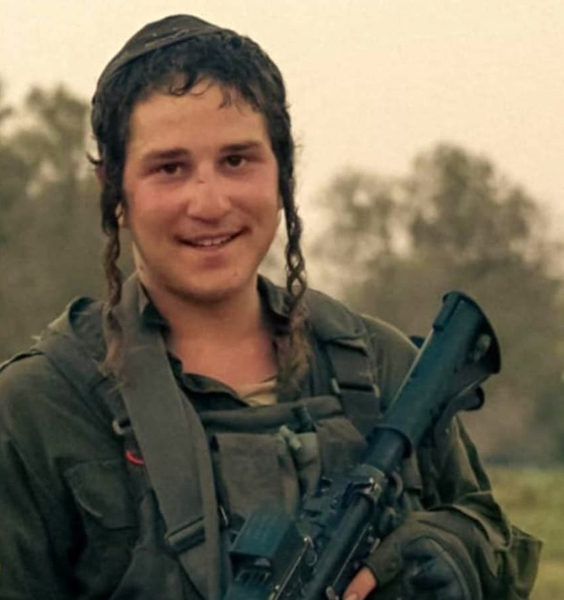
All photographs · 1
In the media
Articles
- In memory of Yedidya Eliyahu and Shneur Cohen: A beit midrash and library inaugurated in Binyamin | Arutz Sheva
ערוץ 7 ·
- Moving moment: Father of fallen soldier presents berets to haredi soldiers
Israel National News ·
- 5 months later: IDF recognizes Yitzhar resident Shneur Cohen as war casualty
Israel National News ·
- L’armée annonce la mort d’un soldat tué par l’explosion d’une grenade
The Times of Israël ·
Videos
- Replay: the funeral of the holy soldier and yeshiva student Shneur Zalman Cohen
חב״ד אינפו
אמיר שימור
Memorial sites
- Yizkor - Sergeant Shneur Zalman Cohen
משרד הביטחון — יזכור
Memorial projects
Beit HaOr, a beit midrash and library in memory of Yedidya Eliyahu and Shneur Cohen, was inaugurated at the Chabad state-Haredi school in Kochav Yaakov.
Those who cherish his memory initiated Shabbat candle kits and a tefillin station in his memory; the artist Elhanan Haim Beck painted his portrait, according to Yizkor.
Stories told about them
Ze’ev, Shneur’s father, arrived in uniform at the graduation ceremony for Givati’s Tomer Company. He presented berets to the soldiers of the company in which his son had served.
While working at a Chabad House in Mexico, Shneur responded to a family's request to reconnect with a son who lived in the jungle. He traveled to see him and translated a letter from the family, and the encounter helped renew the family connection.
Life & service
Service
- Rank
- Sergeant
- Unit
- Givati Brigade
- Honours
- Posthumously Promoted
- Battle Location
- North Gaza Strip
Family
- Father
- Chaim Zeev
- Mother
- Dina
Burial
Cemetery
Yitzhar
Tributes & remembrance
מרגש לשמוע על בחור חבדני"ק שמתגייס למען כולנו, למען עם ישראל.
בטוחה כי היית חזק באמונה וחזק בכל מעשיך.
מי ייתן ותקרב גאולה.ביושבך לצד החוב המרוצים.
האחיינית של שמחה וישי הי"ד
דמותו של שניאור זלמן, ומשפט המחץ שלו "חרדי, לא חרדי. אני יודע, אני חב"דניק, אני חסיד של הרבי" משמשת לי כהשראה גדולה!
דרשת יום הכיפור שלי, לקהל מאות, תיוחד לדמותו וההוראה שארצה שהקהילה כולה תלמד ממנה! אחדות ופעילות באורו של הרבי.
בתור שליח של הרבי פה בניו יורק, מילותיו ודמותו המלאה חום ואהבה, נתנו לי כוחות והבנות שדרבנו אותי לקרב יהודים שאולי נראים כמתבוללים, לתורה ומצווה. יהי זה לעילוי נשמתו.
התרשמתי עמוקות מדמותך, יישר כח להוריך שגידלו אותך ולכל מי שתרם לדמותך ומי שהיית.
תודה אינסופית.
יהי רצון שתגן בנשמתך עלינו מלמעלה.
יבי זכרך ברוך לעד
יהי זכרו ברוך! ילד מדהים, במהלך שירותי הצבאי בשומרון יצא לי לשוחח איתו ביישוב מגוריו.
אבידה גדולה ונוראית!
תודה לך,שניאור-זלמן היקר על האור שהפצת בעולמנו.
תודה לך על שהגנת עלינו ונלחמת למעננו
במחיר ההקרבה הנוראה מכל!
תנחומים מלב כואב לכל יקיריך.
יהא זכרך ברוך,גיבור ישראל!
התרגשתי לקרוא את סיפור חייך, השראה.
שניאור היית בנדוד הכי טוב שילנו לבקש היית תמיד שמח אם חיוך על הפנים ותמיד קופץ לעזור למי שצריך תודה על מי שהיית
תודה לך
יהי זכרו ברוך
השליח שלנו בלחימה, השליח שלנו בחיים , השליח שלנו לגאולה שלימה
שניאור שניאור, לא יודע להכיל את החוסר שלך, כל שבת על המדים הגעת לישיבה הייתי נפעם, אוהב אותך ומתגעגע
הרבה חברה לא יודעים אבל אני הייתי מדריך של שניאור לחודש וקצת בישיבה מצפה יצהר תמיד שרציתי לקבל קצת כוחות וקצת נחת הייתי יושב עם שניאור לאיזה שיחה עמוקה של חניך אל מדריך (יותר נכון מאח אל אח) אני שאבתי ממנו הרבה כוחות להמשיך להדריך ובעיקר לינות מלדבר איתך כי בעייני הייתה בחור מאוד פנימי (חוץ מכול היוזמות) שלקחת ואני כל הזמן רציתי להיינות מהפנימיות הזאת ולהיות חלק בחיים שלך אחי שניאור אזכור אותך לעד
מתגעגע אליך אח יקר
יהי זכרו ברוך הי״ד
למרות שאני לא מכירה אותך מקרוב שמעתי מקרובת משפחה שלך ואתה נראה מדהים ולב זהב ושליח של הרבי באמת!!!!!
שנאור , תתפלל עלינו לגאולה שלמה!!
ערב יום זיכרון ראשון שאתה לא איתנו זכינו להכיר מעט אבל לשמוע הרבה יקח שנים עד שיבינו כמה טוב עשית למען העם והארץ מתחילת המלחמה הזו ועוד בארץ זרה ישר הלכת לחפש מי יתרום למען לוחמי צהל ולמען ישובי צפון השומרון
אח שלי היקר כואב את לכתך כל יום מחדש
אני בטוח שמלאת את רצונו של הרבי במלואו
יהי זכרו ברוך, שנהיה ראויים.
כמה אתה חסר לנו תשמור עלינו מלמעלה
יהי זיכרו ברוך אמן
שמור על מענדל
שניאור היקר יהי מנוחתך כבוד שימשת כאות ומופת לחיל אכפתי דואג לחבריו
All the effort to establish Beit HaOr was worth it for the moment the families entered the hall
Source:ערוץ 7
Read the Hebrew original
כל המאמצים להקמת בית האור היו שווים את הרגע שבו המשפחות נכנסו לאולם
It was so natural that you would be buried here
Source:משרד הביטחון — יזכור
Read the Hebrew original
כה טבעי היה שתיקבר פה
Shneur, thank you for being part of us
Source:משרד הביטחון — יזכור
Read the Hebrew original
שניאור, תודה שהיית חלק מאיתנו
Out of boundless love for the people of Israel
Source:משרד הביטחון — יזכור
Read the Hebrew original
מתוך אהבת ישראל אינסופית
Remembrance Day addresses
יום הזיכרון לחללי מערכות ישראל התשפ"ה – 2025
בכל יום שעובר, אזכור יותר! אזכור, את אלו שיצאו עימי לקרב ולא שבו, ולהם אין מי ידמה ומי ישווה. אזכור, שהכאב לא יעבור לעולם, והזמן, הוא לא מרפה ולא מרפא. אזכור, את שיברון הלב הגובר ואת הבית שבוער. אזכור, את צדקת הדרך, ואשבע שוב, שמה שהיה לא יהיה יותר. אזכור, שיותר מכל דבר אחר – אני חסר! ביום הזה, אני נתקף געגוע לדמותם, לחיתוך דיבורם, לחיוכם, ומדליק נר לזיכרון דרכם ומורשתם!
משרד הביטחון
אגף משפחות, הנצחה ומורשת
יום הזיכרון לחללי מערכות ישראל התשפ"ה – 2025
בכאב, בהצדעה ובתקווה אני מתכבד להדליק נר זיכרון זה. השנה, כשאנו נלחמים במלחמה ארוכה, רב זירתית וצודקת, הזיכרון נושא משמעות עמוקה. ביום זה נעצור ונתייחד עם זכרם של טובי בנינו ובנותינו שנפלו בהגנה על המדינה. מורשתם היא המצפן שמתווה את דרכינו, והיא המעניקה לנו כוח להמשיך ולהגן על מדינת ישראל ותושביה. משפחות יקרות, אנו מרכינים ראשנו ומתחייבים שנעמוד לצידכן תמיד. יהי זכר הנופלים ברוך.
אלוף דדו בר כליפא
ראש אגף כוח האדם, צה"ל
יום הזיכרון לחללי מערכות ישראל התשפ"ה – 2025
בשעה שאנו זוכרים את גודל תרומתם ועומק מסירות נפשם של טובי בנינו ובנותינו, נופלי מערכות ישראל לדורותיהן, ממשיכים צה"ל וכוחות הביטחון במימוש המשימה למענה לחמו ועבורה נפלו: הכרעת אויבינו מדרום, מצפון, ביהודה ובשומרון, וגם בזירות רחוקות יותר. בהערכה רבה ובגאווה אדירה אנו מרכינים ראש בפני הנופלים והנופלות, מאמצים את משפחותיהם אל לבנו, וממשיכים במשימה להבטחת קיומה של ישראל לדורי דורות. יחד נעשה ונצליח.
רב אלוף אייל זמיר
הרמטכ"ל, צה"ל
יום הזיכרון לחללי מערכות ישראל התשפ"ד – 2024
כאשר דגלינו מורדים לחצי התורן וראשינו מורכנים לזכר הנופלים והנופלות במערכות ישראל, ממשיכים לוחמי צה"ל ומפקדיו בלחימה בדרום, בצפון, ביהודה ובשומרון ובזירות נוספות. על כל דור מוטלת המשימה של הגנת העם והארץ – משימה שאף פעם אינה פוסקת. נצדיע בגעגוע ובגאווה לנופלים ולנופלות, נחבק את משפחותיהם, ונמשיך ברוח הציווי שהותירו לנו. עם ישראל חי.
רב ניצב יעקב שבתאי
המפקח הכללי, משטרת ישראל
יום הזיכרון לחללי מערכות ישראל התשפ"ד – 2024
אחיי הנופלים, כל נר הוא זיכרון יחיד ומיוחד, על חיים שהיו ואינם, געגוע שנצרב עמוק בלב, עולם ומלואו. הנרות כולם הם זיכרון של אומה כי לעולם לא עוד, בשורת הציונות וקוממיות ישראל. זיכרון כי הדרך לעם חופשי בארצנו עוברת דרך מסדר הנופלים. אור הנר יזכיר לנו את מסירות נפשכם להציל חיים, להגן על הבית. הנרות מסמנים לנו נתיב גבורה ערכי מחייב שאנו מצווים ללכת לאורו. נמשיך להילחם ולהוסיף אור מתוך אמונה בנצח ישראל.
יואב גלנט
שר הביטחון
יום הזיכרון לחללי מערכות ישראל התשפ"ד – 2024
בהצדעה ובכאב, בשם צה"ל כולו, אני מדליק נר זיכרון. בעיצומה של מלחמה, הזכרון נושא משמעות יום-יומית, שעבר והווה מתלכדים בה. לאורם של הנופלים נמשיך לצעוד, חיילי הסדיר והמילואים. לאורם של הנופלים נמשיך להגן על ארצנו ועל מולדתנו, גם כשהמחיר כבד. להבת-הזכרון תבער בנו בעודנו ממשיכים להלחם ונזכור את הנופלים ואת אומץ ליבם. משפחות יקרות, צה"ל מרכין היום ראש, מצדיע לכן וכואב איתכן. יהי זכר הנופלים ברוך.
אלוף יניב עשור
ראש אגף כוח האדם, צה"ל
יום הזיכרון לחללי מערכות ישראל התשפ"ד – 2024
בהוקרה, בגאווה ובכאב שאין לו סוף, אני מתכבד להדליק נר לזכרם של הנופלים והנופלות במערכות ישראל. סיפור חייהם בארץ הזאת, מסכת שירותם, גבורתם והקרבתם – הם סיפורה של הארץ הזאת, אך גם סיפור המחיר הכבד שהיא תובעת מאוהביה. מחויבותנו לזכר הנופלים ולדרך שהותירו לנו ניצבת תמיד לנגד עינינו. את המשימה שלא זכו להשלים, משלימים כיום, וישלימו, אנשי כוחות הביטחון, הממשיכים בדרכם ולאורם. יהי זכרם של הנופלים ברוך.
משרד הביטחון
אגף משפחות, הנצחה ומורשת
יום הזיכרון לחללי מערכות ישראל התשפ"ד – 2024
בחרדת קודש אני מתכבד להדליק נר לזכרם של חללי מערכות ישראל, חברנו שנפלו, מראשית היציאה מהחומות ולאורך כל שנות עצמאותנו המדינית והציונית, מהווים תמרור זיכרון לדרך חיינו ולמחוייבות הלאומית להנצחת זכרם. דרכם נותרה דרכנו ומורשתם נר להמשך עשייתנו. יהי זכרם ברוך!
בני גנץ
שר הביטחון
יום הזיכרון לחללי מערכות ישראל
נזכור אותם, כולנו יחד. כל אחד ואחת מהם, מדי יום ביומו, והיום ביתר שאת, כך – לנצח. "כי מדי דברי בו זכור אזכרנו עוד"
משרד הביטחון
אגף משפחות, הנצחה ומורשת