
The story
In Volgograd, a sprawling city on the banks of the Volga, under the Russian summer sky of 2003, on the 13th day of Sivan, Dmitry Reshetnikov, later Shlomo, came into the world. He was the younger son of Natalia and Oleg, a little brother to Andrey, and from the very first moment, he filled their home with a different, radiant light, one that promised an unexpected future. Even in his infancy, sparks of pure joy, natural kindness, and a sharp mind that surprised those around him were evident. The home where he grew up, with its thick walls and large windows frosted over in winter, was filled with the soft sounds of the Russian language, old stories, and enveloping family warmth. His parents, simple and hardworking people, saw in him a child of hope, one whose entire future lay before him, as vast as the Volga River itself.
As he grew a little older, young Dmitry was a child who loved to live, not just to breathe. He would sing folk Russian songs in a clear voice that echoed through the house's corridors, read poetry from thick books he collected from various corners of the home, and above all, excelled at the Zionist "Or Avner" school in Volgograd, where he studied. He was not merely an outstanding student but a child with an open soul, one that absorbed every piece of knowledge and impression, eager to understand the world around him. His smile was captivating, his blue-gray eyes sparkled with intelligence and inexhaustible curiosity. He loved his teachers and friends, always seeking points of connection, common ground, what united people, even at such a young age. At the Jewish school, he first heard stories about a distant land, an ancient people, and a different language. The first seeds of his future identity were sown there, deep within his young soul, and began to sprout quietly.
In 2017, when Dmitry was only fourteen years old, a special delegation from Israel arrived at the Jewish school where he studied. They spoke of the "Naaleh" program – Youth Aliyah Before Parents – a revolutionary educational initiative designed to allow Jewish teenagers to immigrate to Israel alone, study in an Israeli high school, and earn a matriculation certificate, all under the state's sponsorship. The stories of green landscapes, an ancient language brought back to life, and a people returning to their land immediately captivated Dmitry. He felt a strong inner calling, an inexplicable pull towards the Promised Land. Although the program was intended for teenagers aged fifteen and above, the program's envoys were deeply impressed by his seriousness, his iron motivation, and his exceptional maturity for his age. They saw in him immense potential, a young man destined to grow and flourish in Israel, and decided to grant him the rare opportunity to join.
The decision to immigrate to Israel, alone, at such a young age, was not easy for his parents. His mother, Natalia, speaks with pain about the immense difficulty of parting with her youngest child, about the tears that flowed at night, about the many fears. But she, like his father Oleg, understood that this was the path Dmitry had chosen for himself, a way meant for him. They saw the sparkle in his eyes, the burning passion within him, and knew there was no point in stopping him. With full hearts, despite the pain, they gave him their complete blessing, armed with the belief that he would succeed and find his way in the new land. The moment of farewell at the airport was heartbreaking but accompanied by a sense of mission, of a new beginning, not just for Dmitry, but for the entire family. A plane taking off carried not only a young boy but also a dream and a great promise.
When Dmitry arrived in Israel, he landed directly at the "Or Avner Kfar Sitrin" youth village, an educational institution affiliated with Chabad, located in the Carmel coastal plain, near Atlit. The boarding school, with its Jewish-Israeli character, was an entirely new world for him. The smells, the sounds, the Hebrew language rolling off everyone's tongues – all were a powerful experience. He began his studies in ninth grade, combining technological subjects like computer science and electronics with religious studies that opened up a rich world of tradition and spirituality. Initially, he was shy and introverted; Hebrew words barely left his mouth. He struggled to express himself, his deep thoughts, and his witty sense of humor. It was a period of adjustment, of intense learning not only of a language but of a culture, social codes, and a new way of life.
But Shlomo, with his inner determination, did not give up. He immersed himself in his studies, listened attentively, and tried to imitate the accent, the slang, the small nuances of the Hebrew language. The boarding school, despite its challenges, was also a social incubator. He quickly found friends there, teenagers who came from similar backgrounds, with similar stories of immigration and building new lives. They shared experiences, frustrations, and the small joys of progress. Teachers and counselors saw him as a diligent and responsible student, one who could be relied upon, and he quickly became a beloved figure surrounded by friends. He loved the communal atmosphere, the shared Sabbaths, the fascinating studies, and the ability to build a new identity for himself – Israeli, Jewish, Zionist.
At the beginning of the High Holy Days, soon after his arrival, Kfar Sitrin reached out to Leah Saad, the adoptive mother who lived in the settlement of Avnei Hefetz and served as the community coordinator at the time. They asked her to find host families for Naaleh students, to connect them to Judaism, to the holidays, and to rooted Israeli life. Leah, with her generous heart, immediately agreed. And so, on one of his first Sabbaths in Israel, Shlomo, then still Dmitry, along with some of his friends, arrived at the Saad family home in Avnei Hefetz. It was his first encounter with a warm Israeli family, with a vibrant and lively Israeli home. Leah, who spoke Russian, was an immediate anchor for him. She could communicate with him directly, translate the new world for him, and bridge the language and cultural gaps.
The connection with the Saad family developed slowly, with sensitivity and patience. Initially, Dmitry was shy and introverted, speaking little, mostly observing and learning. With the father of the family and the five children, he forged a special bond through games. They spent long hours together playing board games, ball games, and inventing new ones. The shared language of laughter and fun bypassed the barrier of words, building a bridge of trust and affection. He was happy when the family asked him to come for more Sabbaths, and gradually, with increasing frequency. He would visit them on weekends, holidays, vacations, and even joined them for family events and Sabbaths outside the settlement. Slowly, he gained confidence, began to arrive alone, and became an integral part of the adoptive family and the vibrant community of Avnei Hefetz. He helped with household chores, sat with his adoptive parents on Friday nights for deep conversations until the early hours, consulted with them before important decisions, and greatly valued their opinions and advice. He found a warm, embracing home, one that filled the void left by his distant family.
During that period, Shlomo felt a deep need to strengthen his connection to Judaism and the land. He began to deepen his faith, laying tefillin every morning with persistence and sanctity. The culmination was when he underwent a brit milah, a deeply significant and personal step for him. Afterward, he asked all his acquaintances and his adoptive family to call him only by his Hebrew name – Shlomo. He chose the name himself, from a deep connection to the figure of King Solomon, a symbol of wisdom, royalty, and peace. The name "Shlomo" expressed for him completeness, the desire for inner and outer peace, and a connection to ancient roots. He felt that the people of Israel were "one big heart and one big family," and he felt that Israel was his true home. He shared this feeling with his parents in Russia, always adding how happy he was in Israel. He firmly decided to build his life here – to study, to serve in the IDF, and to settle in the land. He had no hesitation, no doubt whatsoever.
His years of study at Kfar Sitrin were productive and full of achievements. Shlomo not only integrated socially and spiritually but also flourished academically and artistically. In tenth grade, he was accepted into a music class, where he discovered a new world of sounds and harmony. He learned to play the guitar with surprising speed and connected deeply with the instrument. The sounds of the strings under his fingers were another way for him to express his delicate and rich soul. Later, he performed with the school band on stage, in front of an audience, radiating confidence and joy. He completed his studies with a full matriculation certificate, an impressive achievement by all accounts. In addition, he earned a prestigious technological certificate and an international certificate from the global company CISCO, attesting to his expertise in data communications. His many talents pointed to a bright future, a young man with a wide range of options.
Upon completing his studies, Shlomo faced a momentous choice: to return to his family in Russia or to remain in the land he had adopted. For him, there was no hesitation. He saw Israel as his home, his homeland, the place where he wanted to live and build his future. He aspired to contribute to the state, to defend it, and to serve in a combat and meaningful role. Not only was he himself determined, but his influence was also evident among his friends. He convinced other friends, who were debating whether to return abroad for studies, to stay in Israel and enlist in the IDF. Contribution to the state and military service were, for him, a supreme value, the ultimate expression of his love and identification with the people and the land. He felt that service was not only a duty but a right, an opportunity to become an integral part of the Israeli story, to write his chapter in the glorious history of the Jewish people.
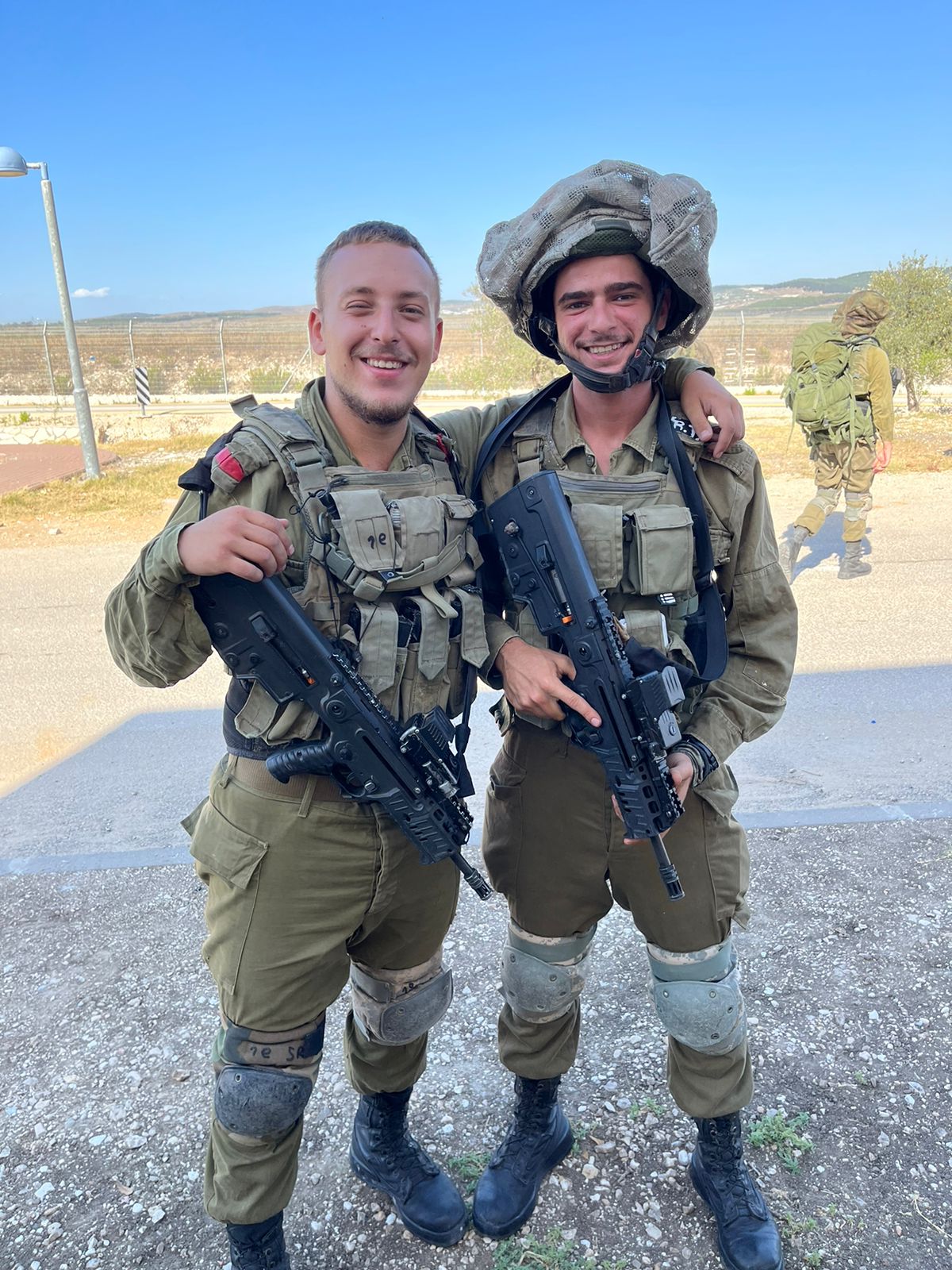
On August 31, 2021, Shlomo enlisted in the IDF, a step that symbolized for him the pinnacle of realizing his dream. He was assigned as a combat soldier in Battalion 51 of the "Golani" Brigade, one of the elite and legendary brigades in the IDF. When he received the assignment, he couldn't have been happier. He felt an immense sense of pride and exhilaration, as if his entire life had culminated in that moment. He knew this was his path, his destiny. As part of his training, Shlomo was trained as a Magist – a combat soldier operating the heavy "Mag" machine gun, a role requiring great physical and mental resilience, significant responsibility, and coolness under pressure. He trained for long hours, carrying the heavy Mag on his shoulders, running with it in the field, firing at ranges, and developing the necessary strength and endurance. He did this out of a deep sense of mission, understanding that every training session, every effort, was part of defending his home, his family, his people.
At the beginning of his military service, Shlomo underwent a Hebrew course at the "Machve Alon" base, a dedicated course for new immigrants. There, among friends who had immigrated from all corners of the world, he dramatically improved his vocabulary. Hebrew became a more fluid and effortless language for him, allowing him to express his witty humor, sharpness, and deep insights more easily. He began to use local slang, opened up more and more, and his self-confidence strengthened remarkably. He felt freer to express himself, to be who he truly was, without the barriers he had previously faced. In the army, Shlomo was a special figure. He was happy for the immense privilege of defending the people of Israel and gave his whole heart and soul to the role. He was always ready to help and support his friends, even when they were already worn out and tired from long guard shifts. When his friends returned exhausted from a patrol, he would prepare them hot tea or stimulating coffee, and encourage them with strengthening words: "How great it is that we are guarding here so that people at home can feel safe." He believed this with all his heart.
He possessed an enormous, infectious joy for life and a rare ability to bring a smile to the faces of everyone around him. He was modest and gentle, full of generosity and giving, and was always there for anyone who needed help or support. His friends described him as a "true friend," one who knew how to accept and contain everyone, who never spoke ill of others, and who always served as a calming and unifying figure. He chose the path of peace and love, and often said a phrase that became his hallmark: "A word is stronger than a fist." He believed in the power of words, in the ability of dialogue and moderation to resolve conflicts, rather than brute force. He was deeply connected to animals, loved playing the guitar, and all these were part of his delicate and sensitive soul, even as he was a tough combat soldier in the Golani Brigade.
In November 2022, his mother, Natalia, visited Israel. It was an emotional reunion after years of longing and long phone calls. Shlomo took her on tours across the country, proudly showed her the places he had adopted, praised the breathtaking beauty of the land, and told her how happy he was there. It was an opportunity for her to see with her own eyes her child, who had become a young man, standing on his own feet, rooted and strong. In one of their conversations, his mother raised concerns about the dangers of military service, the natural maternal worry. Shlomo, with maturity and composure, replied with words that were etched in her heart: "If we are destined to die, we will die as heroes for our people and our country." This was not a rhetorical statement but an expression of deep faith and a willingness for supreme sacrifice. In another conversation with his friends, he once mentioned that he wanted to die as a hero and be buried on Mount Herzl in Jerusalem, the national military cemetery. A heartfelt wish that echoed from within him, testifying to the clear sense of mission that characterized him.
Later in his military service, Shlomo met Liza, who became his partner. Their relationship blossomed quickly, and they moved in together in Haifa, a city where they built a warm home for themselves. He planned to take the relationship a step further after his discharge from the army, towards marriage, to build a home and family in the land he loved so much. Sukkot was always Shlomo's favorite holiday. He loved the atmosphere of joy, the unity, the mitzvah of sleeping in the sukkah. Every year, before arriving at his adoptive Saad family's home, he would call and ask them to wait for him with the sukkah decorations, which he would hang himself, with enthusiasm and devotion. Sukkot 5784, the last one of his life, was particularly special. Shlomo called Leah, his adoptive mother, and asked if it would be suitable for him to come with Liza for the first day of Sukkot, so the family could meet her and give their "blessing and approval" as parents.
The holiday spent with Shlomo and Liza was especially joyful and uplifting. The entire family had missed Shlomo and were very happy to meet Liza. They played games, laughed loudly, and enjoyed every moment of family unity. Shlomo barely left the sukkah during that holiday; it was a mitzvah he loved very much, and he made sure to sleep in it as was his custom. He was the epitome of goodness, in his connection with everyone, in his love for each person, in giving to others even when it was difficult, in his kind words. On the evening after the holiday, Liza flew abroad with a friend, and Shlomo returned to his base, the South R&D outpost in the Gaza Envelope. He did not know that this was the last time he would celebrate his beloved holiday, the last time he would see his loved ones, and that this would be their final farewell.
One of the special stories Shlomo's mother told highlights his unique way as a calming and unifying force. At the beginning of 12th grade, when all the boys returned from summer vacation, a new group of students who had immigrated to Israel arrived directly into 9th grade. This was at the beginning of the tension between Ukraine and Russia, and the guys in Shlomo's grade decided not to involve foreign politics in daily conversation or at all. One day, the entire school went out for an activity in a park, and the seniors noticed a heated argument developing between the new guys – some from Russia and some from Ukraine. Each tried to prove their side regarding the war, who was right and who was doing wrong. The older students saw shouting, belligerence, and a situation that could have escalated into physical altercations. Shlomo suddenly and decisively stood up. Everyone was sure he was about to intervene violently, especially since he was a tall and strong young man. But Shlomo approached the boy who was shouting the most, gently but firmly grabbed him by the shoulders, turned him 180 degrees towards him, and asked, looking him in the eyes: "Who are you?" The boy began to explain, "I'm from Ukraine...", and Shlomo stopped him with piercing words: "You are here because you are Jewish, and we are all here because we are Jewish. And if you are such a patriot of Ukraine, then what are you doing here anyway?" He left the boy speechless, and the commotion ended there. Shlomo returned to his friends, and everyone said: "That's our Shlomo... calming and unifying." It was very important to Shlomo that there was a good connection between friends, finding solutions to arguments and quarrels, and never leaving things unresolved. He always said: "A word is stronger than a fist."
Another story, which we heard from the base's cook during a tour the family took after Simchat Torah, also illustrates Shlomo's way. Once, Shlomo was not satisfied with the food served in the dining hall, and a brief argument ensued between them. After lunch, Shlomo was supposed to go on patrol with several friends, but suddenly asked them to wait for a few minutes. He retraced his steps, approached the cook, and apologized from the bottom of his heart: "Sorry, brother, for taking out my frustration on you, I really love you!" Even though he was already late, he refused to leave until he had appeased him and received his forgiveness. This was Shlomo's way – a way of love, peace, friendship, joy, and laughter, even in moments of anger or frustration. He always chose goodness, mending rifts, connecting hearts.
On Saturday, the 22nd of Tishrei, Simchat Torah 5784, on the morning of October 7, 2023, Shlomo was at the South R&D outpost, a military position near the southern border fence with Gaza. It was a holiday, a day of joy and Torah, and the air was filled with the tense quiet of a Sabbath morning. At precisely 6:30 AM, the quiet was shattered. Deafening sirens began to wail, and heavy barrages of rockets were fired from the Gaza Strip towards the communities of the South and Center. Thousands of terrorists from the Hamas terror organization began to infiltrate Israeli territory – by land, sea, and air – launching a murderous surprise attack on the communities surrounding Gaza. At the outpost, all the soldiers woke up in a panic, some in pajamas, some barefoot, and quickly ran to the dining hall – the base's protected space – with their weapons in hand, under the incessant barrage of rockets.
Amidst the chaos and panic, while the rocket barrages did not cease and the sirens screamed, Shlomo noticed that one of his friends was not with them in the dining hall. He had probably not woken up. Without hesitation, without a second thought about the immediate danger, under the fire of the barrages and the sounds of explosions, Shlomo ran back to the soldiers' room to wake his friend. This act, of supreme courage and concern for others, likely saved his friend's life. He did not think of himself, only of saving his friend, of ensuring that no one would be left behind. As they both ran back to the dining hall, they noticed that terrorists had already infiltrated the outpost. The battle, real and brutal, was about to begin.
The fierce fighting began inside the outpost's dining hall. Shots from all directions, RPG missiles exploding powerfully, and grenades thrown relentlessly. The dining hall had two entrances, and Shlomo, the Magist, took up a position with his heavy Mag machine gun at one of them. He began to fire at the terrorists who had breached, with determination and force, aiming to eliminate them and protect his friends who were with him in the room. The terrorists returned heavy fire, and the battle was bloody and uncompromising. At some point, while firing non-stop, Shlomo was wounded by shrapnel from a grenade that hit his neck. A medic who was with them in the dining hall quickly examined him and cleared him to continue fighting, as the injury was not life-threatening at that moment.
But the injury did not stop Shlomo. While wounded and bleeding, he continued to fight with supreme heroism, with extraordinary self-sacrifice, for long hours. He did not give up, did not succumb to pain or fear. He knew he was on the front line, and that his role was to protect his friends and the outpost, his home. At 8:00 AM, another serious attack began. The soldiers recounted that everything filled with thick soot and smoke, and they could barely see each other. In this absolute chaos, Shlomo continued to fight, shoot, defend, until his last breath. After some time, when the smoke cleared slightly, they noticed that Shlomo had been shot once in the heart. He was no longer alive. He was twenty years old when he fell. With him in the fierce battle at the outpost fell three other combat soldiers: Captain Shilo Rauchberger, Sergeant Amihai Rubin (who died a few days later from his wounds), and Staff Sergeant Dvir Haim Ressler. The terrorists, after four hours of stubborn fighting by the soldiers with very little equipment and ammunition, decided to retreat at 11:00 AM. They thought reinforcements were on their way, after a translator they brought with them heard the soldiers talking about it, unaware that it was only two jeeps with very few soldiers. The heroism of the outpost's soldiers, and Shlomo at their head, decided the battle.
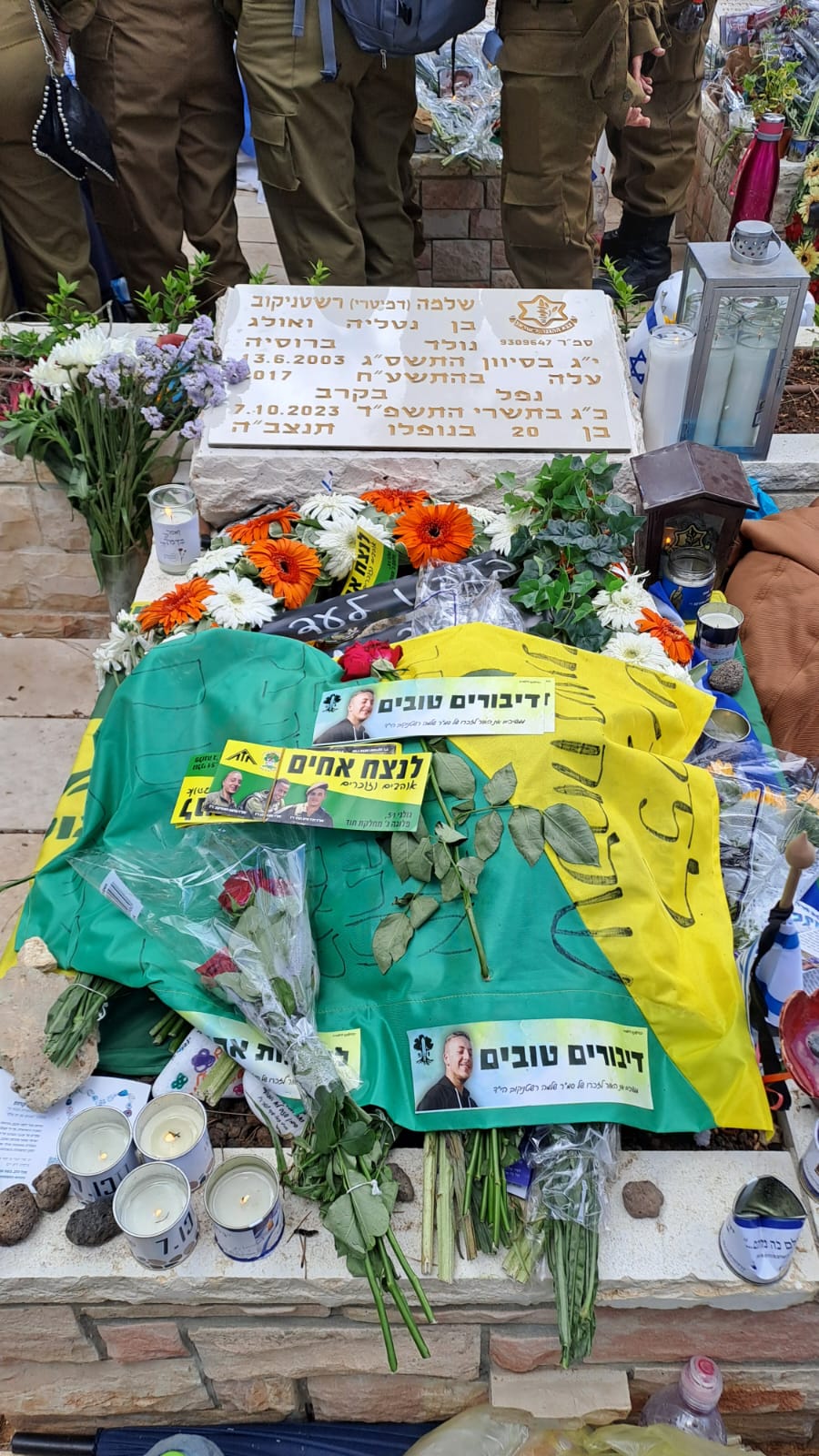
Staff Sergeant Shlomo (Dmitry) Reshetnikov fell in battle on the 22nd of Tishrei 5784, October 7, 2023. He was twenty years old when he fell. His heartfelt wish, to die as a hero and be buried on Mount Herzl, was fully realized. He was laid to rest in the national military cemetery in Jerusalem. His body was evacuated from the base to Shura, where it was treated with respect and sensitivity. Rabbi Shalom Malul, a reserve captain who handled his body, recounted that Shlomo arrived wrapped in two covers, like a Torah scroll. A sukkah fabric, Shlomo's favorite holiday and a holiday of unity, with a drawing of the Ushpizin on it, and a Yemenite tallit. Rabbi Malul added that Shlomo's face radiated a special light, something unusual, which attested to a pure soul and supreme heroism. He left behind parents and a brother, as well as an adoptive family who lost a beloved son and brother.
His mother, Natalia, eulogized him with pain and pride: "You always said that a real man must serve in the army. You are a man, you grew up in the army and became a real man. I am proud of you. We fulfilled your request. You wanted to live here, to be useful, that was your dream. You went towards that dream, you were full of love. You are my light, you are the light in our lives... Thank you to everyone, thank you to those who were by his side, he was happy." Her words reflected her son's journey, from a child in Russia to a fighting man in Israel, driven by love and a dream.
His adoptive mother, Leah Saad, eulogized him with heartbreaking words expressing the deep bond that had formed between them: "You chose us to be your family and never stopped saying how calm your parents in Russia were knowing someone was taking care of their child, and that it wasn't to be taken for granted. Slowly, we discovered what a sweet child you were, happy, listening, sharing... We spent Sabbaths and holidays together and saw how you grew into an amazing young man, smart, diligent, responsible, a leader, much loved among your friends, successful in your studies, musically talented, and with a sense of humor... All of us, the whole family, waited for the Sabbaths you would come... We have so much to learn from your path and your virtues, your dedication to living here in this land, without fearing the difficulties along the way... Shlomo, dear child. Pleasant and noble of spirit. Thank you for being like a son to us and an older brother to the children, and for choosing us to be your family. Thank you for the privilege of being called your second mother."
The legacy of Shlomo Reshetnikov continues to shine even after his fall. He is commemorated on the Shomron Regional Council's online memorial site, and on other memorial sites like remember.bio and "To Fill the Void." His adoptive family, the Saad family, established a Gemach (charitable organization) in his memory, providing equipment to pregnant women, new mothers, and nursing mothers, thereby continuing Shlomo's path of giving and love. A video in his memory was produced by the remember.bio memorial project and can be viewed on YouTube, bringing his story to wide audiences.
But Shlomo's memory transcended borders and continents. In February 2024, a moving ceremony was held at the "Or Avner" Jewish school in Volgograd, Russia, the school where he studied in his childhood, to unveil a memorial plaque in his honor. The initiative for his commemoration came from his classmates and members of the Jewish community in the city, who organized fundraising efforts. The funds were sufficient not only for a magnificent memorial plaque but also for the production of special sacred objects for the school's synagogue and new curtains for the Ark, on which the dedication was embroidered: "In memory of Shlomo Yehuda Reshetnikov." The remaining funds after all the work were transferred to the school administration for repairs to the synagogue building. His family wrote: "Now Shlomo's memory is etched forever within the walls of the school in his homeland, reminding new generations of students of true heroism, self-sacrifice, and the eternal connection of the Volgograd community to its history and to the Land of Israel." In Russia, Shlomo has many relatives who remember and love him, and on Memorial Day, they travel to Moscow, where the embassy holds a wonderful event in memory of Israel's fallen heroes. Shlomo Reshetnikov, the boy from Volgograd who became a Golani combat soldier, was a bridge between worlds, a symbol of love for the land and the people, and of human heroism stemming from deep faith and an uncompromising connection. His story is a story of revival, of choice, and of supreme sacrifice for home. His memory and deeds will be etched forever in the hearts of all who knew him, and in the national memory of the entire people of Israel.
Moments of a life
All photographs · 17
Videos and links
In the media
Articles
- Staff Sgt. Shlomo Reshetnikov, 20: Lone soldier from Russia
The Times of Israel ·
- The Lone Soldiers and Immigrants Who Came to Israel to Enlist — and Fell
N12 ·
- Hundreds gathered to bid farewell to a native of Volgograd who died in Israel
АиФ-Волгоград ·
- A native of Volgograd was killed during fighting in Israel
Кавказский узел ·
- Kfar Or Avner Sitrin: a Torah scroll in memory of the fallen graduate
COL
- When Natalia from Russia and Leah from Israel learned of the death of the same son
ynet
Memorial sites
Memorial projects
The Saad family established a charitable lending service for pregnancy, childbirth and breastfeeding equipment in his memory.
A Torah scroll in his memory was dedicated at the Yoel synagogue in Kfar Or Avner Sitrin, and his parents installed a memorial plaque.
His friends in Volgograd proposed installing a memorial plaque at the Or Avner school and donating covers for the Torah ark and the bimah. The reports describe plans rather than confirmation that the plaque was installed.
Stories told about them
Shlomo went back to wake a friend who had remained in his room during the attack. He defended the dining hall with a machine gun and continued fighting after being wounded by shrapnel, until he was killed.
During shiva, his two mothers cooked soup and went out to distribute it to soldiers. Leah described them as carrying on Shlomo’s path, and the soldiers surrounded the two women with song and dance.
Life & service
Service
- Rank
- Staff sergeant
- Unit
- Golani Brigade
Family
- Father
- Oleg
- Mother
- Natalia
Burial
Place of rest
All photographs · 1
Tributes & remembrance
תמיד בליבנו
גיבור ישראל ת.נ.צ.ב.ה
נזכור ולא נשכח
יהי זכרו ברוך
גיבור ישראל, אוהב בהתלהבות את עמו, נוח על משכבך בשלום
תודה שהגעת ושמרת עלינו
בזכותך יש לנו חיים ולעוד מדינה שלמה
תודה לך,שלמה היקר,
על עליתך ארצה,על הצטרפותך לצבא הגנתנו,
על מלחמתך האמיצה באויבנו האכזר בחירוף נפש למעננו ,עד הקרבת הנפש הטהורה שלך .
מצדיעה לך,כואבת את לכתך
ושולחת צרור תנחומים לכל יקיריך.
יהא זכרך ברוך,גיבור ישראל !
טופלת במשמרת שלי, והלוואי שעל הצד הטוב ביותר. מבטיח להשתדל ללמוד על האור והטוב שעשית בחייך והשארת לנו בעולם. זה מהקצת שלמדתי עליך
מגיל צעיר נחשף לערכי היהדות והציונות והחליט לעלות לבדו מרוסיה בגיל 14 במטרה לחיות כאן את חייו. היה מבטל עצמו כלפי חבריו ואף פעם לא סירב לבקשת עזרה. אדם כזה שעצם הנוכחות שלו מצחיקה ומעלה חיוך. שמח שהתקבל לגולני. בשמחת תורה נלחם שעות ארוכות בחדר האוכל במוצב מו"פ גם אחרי
צדיק. ה יקום דמו
לא נשכח אותך
יהי זכרו ברוך.
יהי זכרו ברוך
יהי זכרך ברוך אמן ואמן
יהי זכרך ברוך אמן.
שלומו, אח יקר, תמיד איתנו חיים שלי. אוהבים אותך.
אני לוחם בחטיבת גולני בשמי ובשם החטיבה אני מדליק נר לזכרו של שלמה רשטניקוב ז״ל מורשתו מאירה לנו את הדרך ואנו נמשיך לזכור ולהזכיר את זכרם של נופלי החטיבה יהי זיכרו ברוך!
גיבור ישראל
זאת הייתה הבחירה שלך לבוא לישראל וללמוד, תמיד אמרת שגבר אמיתי חייב לשרת בצבא.
אתה גבר, גדלת בצבא והפכת לגבר אמיתי.
אני גאה בך.
את הבקשה שלך אנחנו קיימנו
אתה רצית לחיות כאן, להביא תועלת, זה היה החלום שלך.
הלכת לעבר החלום הזה, היית מלא באהבה.
אהבת ילדים, אהבת את החברה שלך, בנית תכניות לעתיד, ארוכות טווח.
אני גאה בך, אני גאה בך. אתה האור שלי, אתה האור בחיים שלנו.
אנחנו מאוד אוהבים אותך ונאהב ונזכור אותך לעד.
תודה לכולם, תןדה למי שהיה לידו, הוא היה מאושר.
הוא היה אומר לי אמא אני מאושר פה.
תודה ענקית לכם
קודם כל חשוב לי להגיד שאנחנו נפעמים מהקהל העצום הזה שבא לתת כבוד אחרון לשלמה.
שלמה אהוב שלנו, זכינו להכיר אותך, נער בן 14, ימים ספורים בארץ.
כשכפר סיטרין יצרו קשר וביקשו לארח בנים לשבת, שמחנו וכך זכינו להכיר אותך לראשונה, נער ביישן ומנומס. עברית אז, לא ידעת וכל שיחה עם המשפחה לקחה פי 2 יותר זמן כדי לאפשר תרגום.
אירחנו הרבה מחבריך, אבל אתה ביקשת לבוא אלינו שוב ושוב, אתה בחרת בנו להיות המשפחה שלך ולא הפסקת להגיד כמה המשפחה ברוסיה, אבא ואמא, רגועים שיש מי שדואג לילד שלהם ושזה לא מובן מאליו.
לאט לאט גילינו איזה ילד מתוק היית, שמח, מקשיב, משתף...
הדעה שלנו תמיד הייתה חשובה לך בהחלטות חשובות.
היית נכון תמיד לעזור כמו בן בית ממש. לא אשכח את הבלינצ'ס השווים שהכנת וכולם זללו, שעזרת לסדר את הגינה והוצאת את הפח גם בלי שביקשנו.
איך אהבת לקשט את הסוכה לפני חג סוכות וזה היה החג האחרון שחגגנו יחד.
עברנו יחד שבתות וחגים וראינו איך אתה צומח להיות בחור מדהים, חכם, חרוץ, אחראי, מוביל, אהוב מאוד בין חבריך, מצליח בלימודים, בעל כישרון מוזיקלי וגם חוש הומור. ראינו כמה התקרבת ליהדות והתחזקת באמונה.
היה ברור לך שזוהי דרך החיים שלך.
כולנו, כל המשפחה, חיכינו לשבתות שתבוא. היה לנו זמן מיוחד, משפחתי, בליל שבת אחרי הארוחה, זה היה ממש הזמן המיוחד שלנו, כשהילדים הקטנים כבר הלכו לישון, היינו יושבים ביחד מספרים, היית מספר, היית משתף. הזמן הזה היה הופך לעיתים קרובות לשחנ"ש לתוך הלילה ובצהרי שבת נהניתם כל הילדים ממסורת קטאן, זה היה המשחק האהוב עליך והיית ממש טוב בזה.
אחרי התיכון כל כך רצית להתגייס לשירות קרבי והיית מאושר כששובצת לגולני.
בצבא הפכת לישראלי אמיתי עם עברית מעולה וביטחון עצמי. נהנית לספר חוויות מהצבא, לקטר על זה שקיבלת את המאג. במיוחד נהניתי לראות אתכם כשהסתודדת עם אבידן, הרצתם חוויות של שני גולנצ'יקים. אני זוכרת גם שכולנו הופתענו כשהשאירו אותך שבת, כי אמרנו אתה כזה ילד טוב, איך זה יכול לקרות...
כאשר אמא שלך באה לבקר אותך לפני כחצי שנה, היה חשוב לך להגיע לקבל אותה על מדים כי היית כל כך גאה להיות חייל בצבא ההגנה לישראל.
בסוכות האחרון, בדיוק שבוע לפני שנהרגת, זכינו לראותך יחד עם ליזה בפעם האחרונה.
הייתה לנו שבת מרוממת ושמחה וראינו כמה היית מאושר. לא ויתרת על הזכות גם לישון בסוכה ואמרת שממש חיכית לרגע הזה. יש לנו כל כך הרבה ללמוד מדרכך ומהמידות שלך, המסירות שלך לחיות כאן בארץ בלי לפחד מקשיים שבדרך, לעזוב את הגלות, להיות חלק בלתי נפרד מהעם שלך כאן בארץ. התרגשנו לשמוע שלפני זמן לא רב בשיחה עם ליזה, אמרת שאם היית צריך לבחור איפה להיקבר, היית רוצה שזה יהיה כאן בהר הרצל. וכעת אנחנו זוכים לקיים את הצוואה שלך.
חברים יקרים, אנו נמצאים כעת בעיצומה של מערכה קשה. שלמה זכה למות מות גיבורים, למסור את הנפש למען העם והארץ ולהשלים את יעודו בעולם הזה. הרב קוק זצ"ל כתב שאין בוכים על מיתת גיבורים כי הם מקדשים את האומה ומחזקים את רוחה. ודאי שבאופן פרטי אנחנו מלאים בכאב, צער ויגון. אך יחד עם זאת, רוחנו לא נשברה ומתוך הכאב הפרטי אנו נתחזק ונתאחד בתקופה הקשה הזאת במערכה מול אויבנו שמנסים להחליש את כוחנו ולהשפיל את רוח האומה.
שלמה ילד יקר. נעים ואציל נפש.
תודה לך על הכרת הטוב שלך כלפינו.
תודה לך שהיית לנו כמו ילד ואח גדול לילדים ושבחרת בנו להיות המשפחה שלך.
תודה שזכיתי שתקרא לי האמא השנייה שלך.
אנו מבקשים סליחה אם בדרך כל שהיא פגענו בך.
אוהבים אותך מאוד, כל המשפחה.
He was happy in Israel
Source:N12
Read the Hebrew original
הוא היה מאושר בישראל
It is a memorial plaque
Source:Лехаим
As I see it, I received a gift. I was entrusted with something precious
Source:ynet
Read the Hebrew original
מבחינתי, קיבלתי מתנה. קיבלתי פיקדון
This is Shlomo's path through life
Source:ynet
Read the Hebrew original
זה מסלול החיים של שלמה
You should know, if I could take this pain away from you
Source:ynet
Read the Hebrew original
שתדעי, אם הייתי יכולה לקחת ממך את הכאב הזה
A young Jewish man with dreams and principles, a wonderful soldier and a dependable friend
Source:Кавказский узел
Thank you for the privilege of having you call me your second mother
Source:יזכור
Read the Hebrew original
תודה שזכיתי שתקרא לי האימא השנייה שלך
He had a good heart
Source:The Times of Israel
He was a diligent and friendly student
Source:The Times of Israel
It was impossible not to love him
Source:The Times of Israel
a mature boy, serious, and happy
Source:The Times of Israel
Remembrance Day addresses
יום הזיכרון לחללי מערכות ישראל התשפ"ה – 2025
בכל יום שעובר, אזכור יותר! אזכור, את אלו שיצאו עימי לקרב ולא שבו, ולהם אין מי ידמה ומי ישווה. אזכור, שהכאב לא יעבור לעולם, והזמן, הוא לא מרפה ולא מרפא. אזכור, את שיברון הלב הגובר ואת הבית שבוער. אזכור, את צדקת הדרך, ואשבע שוב, שמה שהיה לא יהיה יותר. אזכור, שיותר מכל דבר אחר – אני חסר! ביום הזה, אני נתקף געגוע לדמותם, לחיתוך דיבורם, לחיוכם, ומדליק נר לזיכרון דרכם ומורשתם!
משרד הביטחון
אגף משפחות, הנצחה ומורשת
יום הזיכרון לחללי מערכות ישראל התשפ"ה – 2025
בכאב, בהצדעה ובתקווה אני מתכבד להדליק נר זיכרון זה. השנה, כשאנו נלחמים במלחמה ארוכה, רב זירתית וצודקת, הזיכרון נושא משמעות עמוקה. ביום זה נעצור ונתייחד עם זכרם של טובי בנינו ובנותינו שנפלו בהגנה על המדינה. מורשתם היא המצפן שמתווה את דרכינו, והיא המעניקה לנו כוח להמשיך ולהגן על מדינת ישראל ותושביה. משפחות יקרות, אנו מרכינים ראשנו ומתחייבים שנעמוד לצידכן תמיד. יהי זכר הנופלים ברוך.
אלוף דדו בר כליפא
ראש אגף כוח האדם, צה"ל
יום הזיכרון לחללי מערכות ישראל התשפ"ה – 2025
בשעה שאנו זוכרים את גודל תרומתם ועומק מסירות נפשם של טובי בנינו ובנותינו, נופלי מערכות ישראל לדורותיהן, ממשיכים צה"ל וכוחות הביטחון במימוש המשימה למענה לחמו ועבורה נפלו: הכרעת אויבינו מדרום, מצפון, ביהודה ובשומרון, וגם בזירות רחוקות יותר. בהערכה רבה ובגאווה אדירה אנו מרכינים ראש בפני הנופלים והנופלות, מאמצים את משפחותיהם אל לבנו, וממשיכים במשימה להבטחת קיומה של ישראל לדורי דורות. יחד נעשה ונצליח.
רב אלוף אייל זמיר
הרמטכ"ל, צה"ל
יום הזיכרון לחללי מערכות ישראל התשפ"ד – 2024
כאשר דגלינו מורדים לחצי התורן וראשינו מורכנים לזכר הנופלים והנופלות במערכות ישראל, ממשיכים לוחמי צה"ל ומפקדיו בלחימה בדרום, בצפון, ביהודה ובשומרון ובזירות נוספות. על כל דור מוטלת המשימה של הגנת העם והארץ – משימה שאף פעם אינה פוסקת. נצדיע בגעגוע ובגאווה לנופלים ולנופלות, נחבק את משפחותיהם, ונמשיך ברוח הציווי שהותירו לנו. עם ישראל חי.
רב ניצב יעקב שבתאי
המפקח הכללי, משטרת ישראל
יום הזיכרון לחללי מערכות ישראל התשפ"ד – 2024
אחיי הנופלים, כל נר הוא זיכרון יחיד ומיוחד, על חיים שהיו ואינם, געגוע שנצרב עמוק בלב, עולם ומלואו. הנרות כולם הם זיכרון של אומה כי לעולם לא עוד, בשורת הציונות וקוממיות ישראל. זיכרון כי הדרך לעם חופשי בארצנו עוברת דרך מסדר הנופלים. אור הנר יזכיר לנו את מסירות נפשכם להציל חיים, להגן על הבית. הנרות מסמנים לנו נתיב גבורה ערכי מחייב שאנו מצווים ללכת לאורו. נמשיך להילחם ולהוסיף אור מתוך אמונה בנצח ישראל.
יואב גלנט
שר הביטחון
יום הזיכרון לחללי מערכות ישראל התשפ"ד – 2024
בהצדעה ובכאב, בשם צה"ל כולו, אני מדליק נר זיכרון. בעיצומה של מלחמה, הזכרון נושא משמעות יום-יומית, שעבר והווה מתלכדים בה. לאורם של הנופלים נמשיך לצעוד, חיילי הסדיר והמילואים. לאורם של הנופלים נמשיך להגן על ארצנו ועל מולדתנו, גם כשהמחיר כבד. להבת-הזכרון תבער בנו בעודנו ממשיכים להלחם ונזכור את הנופלים ואת אומץ ליבם. משפחות יקרות, צה"ל מרכין היום ראש, מצדיע לכן וכואב איתכן. יהי זכר הנופלים ברוך.
אלוף יניב עשור
ראש אגף כוח האדם, צה"ל
יום הזיכרון לחללי מערכות ישראל התשפ"ד – 2024
בהוקרה, בגאווה ובכאב שאין לו סוף, אני מתכבד להדליק נר לזכרם של הנופלים והנופלות במערכות ישראל. סיפור חייהם בארץ הזאת, מסכת שירותם, גבורתם והקרבתם – הם סיפורה של הארץ הזאת, אך גם סיפור המחיר הכבד שהיא תובעת מאוהביה. מחויבותנו לזכר הנופלים ולדרך שהותירו לנו ניצבת תמיד לנגד עינינו. את המשימה שלא זכו להשלים, משלימים כיום, וישלימו, אנשי כוחות הביטחון, הממשיכים בדרכם ולאורם. יהי זכרם של הנופלים ברוך.
משרד הביטחון
אגף משפחות, הנצחה ומורשת
יום הזיכרון לחללי מערכות ישראל התשפ"ד – 2024
בחרדת קודש אני מתכבד להדליק נר לזכרם של חללי מערכות ישראל, חברנו שנפלו, מראשית היציאה מהחומות ולאורך כל שנות עצמאותנו המדינית והציונית, מהווים תמרור זיכרון לדרך חיינו ולמחוייבות הלאומית להנצחת זכרם. דרכם נותרה דרכנו ומורשתם נר להמשך עשייתנו. יהי זכרם ברוך!
בני גנץ
שר הביטחון
יום הזיכרון לחללי מערכות ישראל
נזכור אותם, כולנו יחד. כל אחד ואחת מהם, מדי יום ביומו, והיום ביתר שאת, כך – לנצח. "כי מדי דברי בו זכור אזכרנו עוד"
משרד הביטחון
אגף משפחות, הנצחה ומורשת