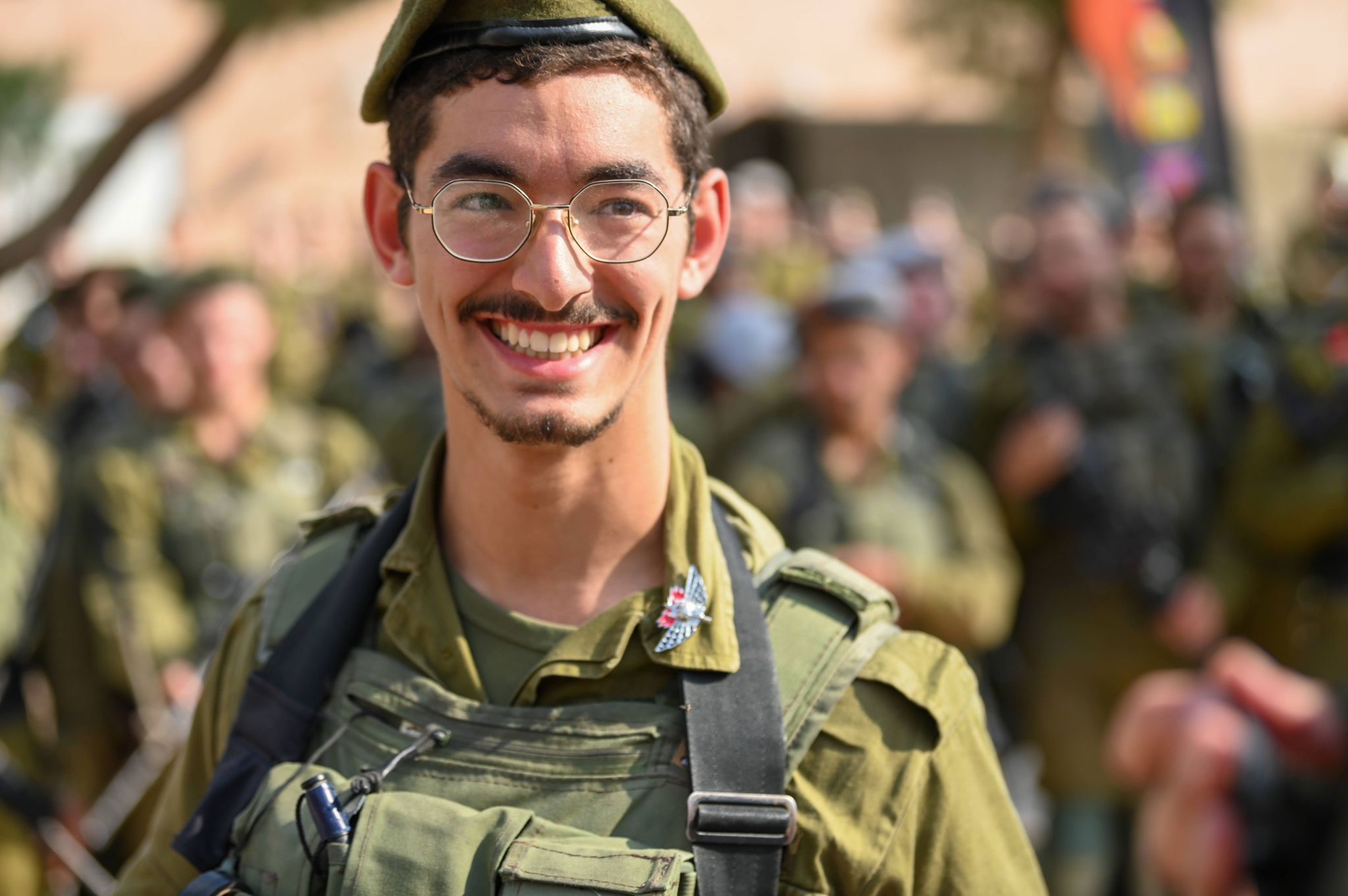
The story
The house in Beit El, perched on one of the mountain ridges overlooking the open landscapes of Benjamin, was always brimming with life. Children’s laughter echoed through its rooms, the scent of spices wafted from the kitchen, and in every corner, you’d find someone engrossed in a book or deep in a game of chess. Into this vibrant commotion, Shalom was born on a Thursday, the 5th of Sivan 5763, June 5, 2003, the firstborn son to Tamar and Yehuda. He didn't arrive alone; he came with a twin brother, David, and together they formed the initial core of a family that steadily expanded, soon welcoming six more siblings: Avraham, Yisrael, Eliyashiv, Shilo, Rivka, and Sarah. Eight children under one roof, the house was a buzzing hive where each child found their place, and despite the natural chaos, a unique harmony always prevailed, steeped in love and mutual care.
Shalom and David, the twins, were bound by an incomprehensible connection, an internal language only they understood, a single glance that conveyed an entire world of unspoken words. David always appeared more dominant, a leader, sometimes boisterous, while Shalom, slender and delicate in appearance, possessed a quiet strength and sharp intellect. He was David's pillar, the unwavering support always by his side. Incidents from Talmud Torah are well-remembered: when other children in class would try to provoke or bother David, Shalom, without an unnecessary word, would stand next to him, his silent yet clear presence conveying an unequivocal message: "We are together." He didn't need to raise his voice; his penetrating gaze, promising his brother would never be alone in any struggle, was enough. This bond, forged in childhood, was the foundation of Shalom's character—kindness, deep loyalty, and the ability to offer quiet yet powerful support.
In his childhood, amidst the house full of sounds and movement, Shalom often found his place in a quiet corner, absorbed in worlds only he created. He was a child with a rich imagination, one who could sit for hours with a book in hand, the story's words transforming into vivid scenes in his mind. He loved to draw, and with his delicate hands, he would bring to paper figures and landscapes drawn from his books or his tumultuous inner world. Beyond drawing and reading, Shalom loved intellectual challenges. Rubik's Cube puzzles could occupy him for long periods, his nimble fingers twisting the colorful squares until they aligned correctly, a triumphant smile spreading across his face. Chess was another hobby, where he learned to plan moves in advance and think several steps ahead, a lesson that proved invaluable later in life. But perhaps most of all, Shalom loved to fix and build things. He was a curious child, one who enjoyed dismantling and reassembling, understanding how things worked. Once, he built a small mezuzah case with his own hands, from simple wood, investing thought and precision. This mezuzah case, into which he poured his childlike soul, hung ever since on his room's door, a quiet testament to his ability to create and build, to touch material and breathe life into it.
Shalom spent his early school years, from first to eighth grade, at the "Sha'ar HaShamayim" Talmud Torah in Beit El. It was a small, warm place, where the walls were imbued with the sweet sounds of Torah study, the scent of old holy books hung in the air, and the rabbis were paternal figures who knew each student deeply. Shalom, with his inner calm and exceptional concentration, flourished there. He wasn't just an ordinary student; he was diligent and persistent, and during his years at Talmud Torah, he achieved an impressive feat—he studied and completed all twenty-four books of the Tanakh, from Genesis to Chronicles. Additionally, he completed the entire Seder Moed of the Mishnah, a complete treasure trove of Jewish law and thought. At his eighth-grade graduation ceremony, his parents, Tamar and Yehuda, stood filled with pride and joy. They watched their slender son ascend the stage, his eyes sparkling, understanding the magnitude of the spiritual accomplishment he had achieved. He learned to read the Torah with precise Ashkenazi cantillation, but also absorbed from his father the rich and melodic Moroccan style, knowledge that served him well later in his path, in yeshiva and in the army, when he would ascend to read the Torah for his friends, his pleasant voice filling the space.
The transition from eighth grade to the "Netivot Yosef" high school yeshiva in Mitzpe Yericho was a significant leap for Shalom, one that was sometimes accompanied by adaptation difficulties. He came from a small, intimate setting where every student was known to every teacher, to a large yeshiva, where he found himself in a class with thirty-seven other students. The Beit Midrash walls were high, and the studies, from morning to evening, were conducted at a very high level of Torah and academic rigor, which was not easy at all. Shalom, who was accustomed to a more personal pace and individual attention, sometimes felt deep frustration. He felt misunderstood, as if his quiet voice was lost among the booming sounds of study and the large space. There were days when he returned to his room in the yeshiva with a heavy heart, trying to decipher the transformation in his life, yet determined not to give up.
The great change, the transformation in his personality, came in twelfth grade, the final year. It was then that he was blessed with a mentor rabbi, Rabbi Menachem Bavli, whose soul became deeply intertwined with Shalom's in profound affection. Rabbi Bavli saw Shalom beyond his slender appearance and external quietness. He perceived the inner strength, the sharp intellect, and the kindness hidden within him, and decided to place his full trust and boundless love in him. The Rabbi incessantly conveyed a message of acceptance and appreciation to Shalom, showing him how a positive outlook on a person, and continuous advocacy, could change everything. He taught him that the moment a person believes in himself, the environment also begins to believe in him, and from that, the person becomes a new being, changing direction in his life. And indeed, thanks to Rabbi Bavli, Shalom blossomed. He began to smile much more, a genuine and wide smile that lit up his face, and started to praise his friends and those around him. The atmosphere around him completely transformed. Kindness became a guiding light for him, endless giving was an inseparable part of him, and the cultivation of character traits, that dedication to self-improvement, became a guiding principle in his life. From a shy and quiet boy, he transformed into a mature, sociable, and self-confident young man, radiating optimism and goodness.
After completing his studies at the high school yeshiva, Shalom continued his Torah and military path, joining the Sha'alvim Hesder Yeshiva. He deeply loved the yeshiva, its academic atmosphere, the soft sounds of study in the Beit Midrash, and the lively discussions with his study partners. He admired his rabbis, who were spiritual lighthouses for him, and cherished his friends, who became a true family. Shalom was not the type of person to sit on the sidelines and wait for things to happen. He always loved to help and advance matters in the yeshiva, whether it was organizing a social event, assisting with lesson preparations, or simply ensuring all equipment was in its place. He did everything with wonderful naturalness, warmth, and great simplicity, without seeking reward or recognition. There was something so humble about him that made everyone he met feel comfortable and secure.
In the Beit Midrash, Shalom studied Torah with enthusiasm and joy, his eyes sparkling with understanding and excitement. He felt he was progressing in his service to God, building his spiritual world brick by brick. Everyone in the yeshiva, from young students to rabbis and alumni, knew him. Not just because of his diligence, but primarily because of his wide smile and perpetual pleasant demeanor. He radiated light, and his presence was calming and joyful. Shalom was blessed with a heart of gold, and always sought opportunities to perform acts of kindness, wherever he went. He did so with modesty and humility, without drawing attention to himself, almost secretly. He excelled in his kindness towards his yeshiva friends, and was always the first to volunteer to help. When a married friend, who studied with him, moved house, Shalom was there first. He didn't just offer help, but made sure to bring his father's car from home, to which he attached a trailer. He worked hard, happily assisting in moving the heavy equipment to the new house, sweating but smiling, a sense of satisfaction filling him.
On Thursday evenings, when the Rosh Yeshiva would host the students at his home for a "vart" – a Torah lesson and light refreshments – Shalom would be the last to leave. After all his friends had departed, he would approach the Rosh Yeshiva and ask if any help was needed. Without an unnecessary word, he would assist in organizing and tidying the house, arranging chairs, collecting dishes, ensuring everything was back in its place. He was also attentive to those who weren't always at the center of attention. If there was a somewhat lonely, quiet student whom no one particularly noticed, Shalom would approach him in the Beit Midrash. He would sit beside him, initiate a warm conversation from a loving heart, ask about his well-being, inquire about his studies, and succeed in cheering him up, alleviating some of his loneliness.
In his final year at the yeshiva, Shalom and his friends didn't limit themselves to small acts of kindness. They decided to organize a particularly moving event: a Bar Mitzvah for a child from a struggling family. A child who had no one to celebrate with him, whose family struggled with the costs and preparations. Shalom and his friends took on the entire task – from organization, through fundraising, to the celebration itself. Shalom, with his radiant smile, was among the first to arrive. Together with his friends, they danced, sang, and created a wonderful and moving evening for that child, whose eyes sparkled with happiness. It was a pinnacle moment of pure giving, of a genuine desire to bring joy to another person. During Hanukkah, Shalom traveled with his friends to light candles in the moshavim of the Gezer Regional Council. They visited the homes of elderly and lonely individuals, who were delighted to receive the light and joy the young men brought. Shalom would sit and talk with the elderly, listening to their stories, giving them a sense of warmth and family.
On Purim, the holiday of joy and giving, Shalom made sure to give Mishloach Manot to all his acquaintances, but paid special attention to anyone with whom he had had a disagreement or felt he might have offended. He would approach them with a generous Mishloach Manot, a captivating smile, and a kind word; it was always important to him to make peace and resolve any misunderstanding with good spirits and a smile. The phrase that characterized him more than anything, and became a kind of mantra in his life, was: "It is a great mitzvah to be joyful, and a great joy to be in a mitzvah." He lived this phrase in every fiber of his being and soul. He always sought the good, the joyful, the unifying, even in difficult and challenging moments.
In the middle of his second year at the Sha'alvim Hesder Yeshiva, the moment arrived when Shalom and his friends donned their uniforms. They enlisted in the IDF, in the Combat Engineering Corps, Battalion 601, as part of the "Binish" track that combines Torah study with significant military service. Shalom, who had blossomed in his final years at the yeshiva and become a mature and confident young man, approached basic training with excitement and curiosity. He greatly enjoyed learning new things related to engineering and combat, especially working with large and complex equipment. He loved the sense of power and precision required in operating them, the challenge of controlling giant machines. When he returned home for short leaves, his eyes would sparkle as he enthusiastically recounted all the explosives and demolition techniques he had learned during training. He described the sharp smells of the explosives, the menacing colors of the charges, the controlled explosions that were an integral part of his day, and the sense of satisfaction in perfectly executing a complex mission.
The transition from a yeshiva student, imbued with reverence for God and spiritual strength, to a determined soldier with a spirit of heroism, was natural and complete for Shalom. He did not see a contradiction between them, but rather a continuity. He went to the army out of a deep belief that he and his friends were joyfully doing something great for the people of Israel, driven by a sense of mission and protection of their homeland. He invested greatly in physical fitness, and despite his slender build, he excelled in his achievements, which surprised many of his friends and commanders. He would run long distances, climb ropes, and carry heavy loads, and each time he would push himself to the limits of his ability, with a smile and determination. Every opportunity he got a leave from the army, he would come home for a warm hug from his parents, and after a few hours, he would rush back to the yeshiva. There, within the walls of the Beit Midrash, he would find rest and quiet again, studying with the rabbis and friends he loved so much. He would study for long hours, combining the spiritual world with the military world, finding deep meaning in each.
In addition to his studies and military service, Shalom loved to travel the country and discover new places. His friends from yeshiva and the army recount wonderful experiences at various springs across the land, long walks on hidden trails, and moments of quiet contemplation of the landscape. Shalom was always the first to enthusiastically organize any trip, researching routes, packing equipment, and ensuring everyone had fun. He loved the smell of the earth after rain, the chirping of birds in the morning, the refreshing touch of cold spring water on his skin, and the warm Israeli sun on his face. These trips were a way for him to connect with the land, to see its beauty and feel its power. Shalom also had a developed musical sense. He loved to sing Shabbat songs he learned in yeshiva, various piyyutim, and Israeli songs. His voice was pleasant, clear, and moving. One piyyut, composed by Avraham Dwek, he particularly loved: "Yahalomah, Yahalomah, our delightful land, our ancient land." He would sing it with enthusiasm, and in time, it became clear how this piyyut, which spoke of our precious land, was connected to his destiny, to his self-sacrifice for it. He was an excellent Baal Koreh (Torah reader), and often read the Torah for his friends in the army, who greatly enjoyed his pleasant voice and precise cantillation, which, even in the harsh reality of the army, managed to infuse a little holiness and calm.
On Shabbat, the 22nd of Tishrei, Simchat Torah 5784, on the morning of October 7, 2023, at 6:30 AM, everything changed. The Hamas terrorist organization launched a brutal surprise attack on Israel. Under the cover of massive barrages of thousands of missiles and rockets from the Gaza Strip, which covered vast areas of the country, thousands of terrorists infiltrated – by land, sea, and air. They began a murderous assault on the Gaza envelope communities, on the cities of Sderot, Ofakim, and Netivot, on attendees of a nature party near Kibbutzim Re'im and Nir Oz, on IDF bases, and on those traveling on roads in the area. The terrorists coldly murdered approximately eight hundred civilians in their homes, in their cars, after committing severe and cruel crimes against them. They abducted hundreds of Israelis to the Gaza Strip, and destroyed, looted, and set fire to homes and property. Hundreds of soldiers, police officers, security forces personnel, and local rapid response team members fell in battle, attempting to defend civilians with their bodies. On this terrible morning, the Iron Swords War began, a war that changed the face of the country and exacted heavy tolls.
After a long and challenging basic training, Shalom, along with his battalion, entered deep combat within the Gaza Strip in the winter of 5784. For many months, he fought in the Strip's territory, under difficult conditions, with courage and determination. He acted with great spirit, heroism, and dedication, driven by a deep sense of mission, with the clear knowledge that he was defending his people and his land. Each day was a new challenge, every step was calculated, and every mission involved a risk to life. He and his friends toiled tirelessly, under fire, exposed to constant dangers, but their spirit did not break. They were there, inside the Strip, dismantling terror infrastructure, clearing routes, paving roads, and assaulting targets, all with unparalleled determination and professionalism. On Seder night, while his other friends from yeshiva and the army were released home to celebrate with their families, Shalom volunteered to stay on base. He organized a Passover Seder for the soldiers who remained, ensuring that they too would feel some of the festive atmosphere, despite the distance from home and the tense security situation. He read the Haggadah in his pleasant voice, sang the holiday songs, and did everything in his power to instill hope and joy in the soldiers' hearts.
During the war, Shalom affixed a beautifully and colorfully printed page inside the binding of his "Mishnah Sdurah," a book that had accompanied him from his childhood years in Talmud Torah to the advanced yeshiva. On the page was written a profound and moving Mishnah from Chapter 6 of Pirkei Avot: "At the time of a person's departure, one is not accompanied by silver, gold, precious stones, or pearls, but only by Torah and good deeds, as it is said – 'When you walk, it shall lead you; when you lie down, it shall watch over you; and when you awake, it shall talk with you.'" He left the book in the yeshiva, awaiting the moment he could return to it after his military service and continue to study from it, as he had planned. It was a kind of silent will, a reminder to himself and those around him of what truly matters in life. In March 2024, his twin brother, David, also enlisted, in the Rotem Battalion of Givati, as a combat soldier within the framework of the Hesder Yeshiva in Tapuach. Shalom, already an experienced combat soldier, supported him and helped him cope with the difficulties of adapting to basic training. He encouraged David with a smile, saying that everything would pass and that David would emerge stronger, just as he himself had. He gave him advice, listened to his fears, and was an anchor of stability and faith.
In early June 2024, Shalom received a short leave for Thursday, Friday, and Saturday. He arrived home in Beit El, and after joyfully reuniting with everyone, his parents and younger siblings who jumped on him with hugs, he asked permission to return to the yeshiva. He wanted to participate in the Thursday night "Mishmar," to study Torah with his friends, and to be with them. He knew time was short, and felt a strong need to draw strength from the study and camaraderie. After studying that night, the Rosh Yeshiva asked him how he was doing, and Shalom, with the smile that never left his face even in the most difficult moments, replied: "It's hard, but I do everything for the people of Israel." These words, spoken quietly and humbly, reflected his inner world, the depth of his faith and dedication. On Friday, he hiked with his friends at "Einot Aner" near the settlement of Neria. They laughed, swam in the cold water, enjoyed the sun and the scenery, rare moments of peace and beauty in a crazy time.
On that last Shabbat he was with us, his family recounted, they celebrated a Shabbat Chatan for one of the nephews. The house was full of guests, tables laden with good food, and Shabbat songs filled the air. Shalom was especially joyful, happiness radiating from his face. Everyone approached him, asking how things were in Gaza, inquiring about his well-being, and Shalom answered everyone patiently and with a smile, reassuring and strengthening. He read from the Torah during the Mincha prayer, his pleasant voice echoing in the synagogue. On Saturday night, after Shabbat had departed and everyone had dispersed, he helped organize all the cleanup in the hall where the celebration was held, just as he had done in the yeshiva, without being asked, simply doing. In retrospect, the family felt it was a farewell Shabbat from him, a Shabbat in which they were blessed to gather more precious moments of his presence, his smile, and his kindness.
On Shabbat Parshat "Naso," the Bar Mitzvah Shabbat of David and Shalom, the 9th of Sivan 5784, June 15, 2024, at five in the morning, Shalom participated in an offensive activity of the brigade in the Tel al-Sultan refugee camp in northern Rafah. As a combat engineer, he was part of a vanguard force, tasked with paving the way and securing the advancing troops. During the activity, an anti-tank missile was fired at the "Namer," an armored combat vehicle, in which he was located. The hit was direct and powerful. Shalom was killed instantly, along with seven other soldiers who were with him in the vehicle. On this morning, Shalom Menachem's voice fell silent. He was only twenty-one years old when he fell. Sergeant Shalom Menachem, of blessed memory, was laid to rest in the military cemetery on Mount Herzl in Jerusalem, the eternal capital of the people of Israel, where he was buried alongside the nation's greats and heroes of Israel. After his fall, he was posthumously promoted to the rank of Sergeant, in recognition of his dedication and heroism. He left behind heartbroken parents and seven siblings, who were forced to cope with an immense loss.
On his tombstone, the family engraved the verse from Psalms 29:11: "The Lord will give strength to His people; the Lord will bless His people with peace." A verse that expresses the essence of his life and his legacy. His father, Yehuda, eulogized him at the funeral, his voice breaking but his eyes sparkling with pain and pride: "Shalom, my dear son, as your name, so are you. Making peace among everyone. You were happy in everything you did and you did everything in the best possible way. You brought joy to the whole family, always came home with a smile and wanted there to be a joyful atmosphere... From a gentle and fragile child you became a charming young man who only wanted to bring joy and give to his parents, his siblings, and all his friends... We thank the Creator of the world for the privilege we had to raise you for twenty-one years. We all hope that in the short time of your life, we were worthy of you." The father's words moved all those present, echoing the memory of the child who grew up to be a hero.
Shalom's siblings, who shared his childhood, youth, and final moments, wrote heartfelt words to him, reflecting the depth of their bond and his immense influence on them. They wrote: "You were a true fighter, not only in the army but also in life. Everything you did – you did to the end, one hundred percent. With faith, seriousness, humility. You didn't seek honor, only action. You always knew what you wanted, you weren't afraid of obstacles, you didn't give up on yourself, you always strived to be better... You were quiet, but you had a strength that burst from within. You knew how to hug, to connect, to maintain unity in the family." In these words, they described not only the brave soldier, but the complete person, the supportive brother, and the loving son.
Shalom fell along with two of his yeshiva friends, Yakir Yaakov Levi from Kibbutz Hefetz Haim and Eliyahu Moshe Zimbalist from Beit Shemesh, and of them it is said, "In their lives and in their deaths, they were not separated." Shalom's parents found comfort and deep meaning in a verse from the weekly Torah portion in which he fell, Parshat Naso, in the Priestly Blessing: "May the Lord bless you and guard you; may the Lord make His face shine upon you and be gracious to you; may the Lord lift up His face to you and grant you peace." They saw in this a divine hint, as the acronyms of their three names, Y – Yakir, S – Shalom, A – Eliyahu Moshe, appear in sequence in the blessing. It was a moving connection, giving additional meaning to the terrible event, and strengthening the sense of eternal bond between them.
After the fierce battle, soldiers found a book of ethics, "B'Gan HaEmunah" by Rabbi Shalom Arush, belonging to Shalom and his friends, inside the burnt Namer. Miraculously, from the great fire, pages from this book remained not entirely consumed. On page 37, it was written: "There are souls that come to this world to rectify a very specific thing, and immediately after they rectify that thing, they depart from the world, and return to their place in Gan Eden." And on page 42, it was written: "Everything is for the good! From now on, I will strengthen myself with joy!" The family felt that this was a kind of will left by these precious young men, who fell for the sanctification of God, a request from them to continue doing good in the world with joy and strong faith. It was a powerful reminder of Shalom's path, who smiled even when it was difficult, and always sought joy and goodness.
Shalom Menachem, of blessed memory, is commemorated at the "Derech HaGvura" (Path of Heroism) memorial for fallen combat engineers, located at Hulda Junction in the Shephelah, and his memory is also honored on the President's Residence website. A page in his memory was opened on Instagram, under the name remember_shalom_menachem, and another memorial page was opened on memoriz.plus, so that his story and character will continue to live and illuminate. The family, bearing the pain of loss, concluded their words by writing: "Shalom, as his name implies, loved his family and friends and always strived for peace. He loved to study Torah and worked on his character traits and spiritual strengths. The trait of joy characterized him, a good eye, giving, and kindness, with a cheerful countenance even when facing life's difficult challenges. We will strive to learn from his ways and continue his good deeds, as it is written: 'And all your children shall be taught of the Lord, and great shall be the peace of your children.' And may he be a good advocate for us and for all the people of Israel for a speedy redemption. May his pure soul be bound in the bundle of life." Shalom Menachem was and remains a symbol, not only in his military rank, but also in his human character, in his quiet strength, in his radiant smile, and in his endless dedication to his people and his land. He left behind an immense void, but along with it, a legacy of love, giving, faith, and heroism, that will continue to resonate and empower future generations. His story is an inseparable part of the story of the War of Revival, of the story of the entire people of Israel, fighting for its life, its freedom, and its future, and finding within the deep pain the strength to grow, to build, and to move forward, with head held high and Israeli pride.
In the media
Articles
- Onze inhumations d’officiers et de soldats de Tsahal dans tout un pays en deuil
The Times of Israël ·
- Sergeant Shalom Menachem among those killed in APC disaster
Israel National News ·
- 3 Classmates From Shalavim Yeshivah Killed Together In APC Explosion
The Yeshiva World ·
- Light in his eyes and an enormous soul: Shalom Menachem fell in the armored personnel carrier disaster
מקור ראשון
- About Shalom Menachem and Yakir Levi, may God avenge their blood
קרוב אליך
- IDF names 2 soldiers killed in Gaza, one of them in deadly APC blast
ynetnews
Videos
- Interview with Yehuda Menachem on the program Yisrael Nilhemet
ערוץ 14 ·
כאן חדשות ·
Podcasts
- Shema Podcast 14 — Gil Tamir
יוגב לבנון / Apple Podcasts ·
Songs
- Remembering the Sons
תלמידי ישיבת שעלבים / ערוץ 7 ·
Memorial sites
Memorial projects
Students at Sha’alvim Yeshiva released the song “Zikhron HaBanim” in memory of Yakir Yaakov Levi, Shalom Menachem and Eliyahu Moshe Shlomo Zimbalist. Lyricist Yonatan Ben Shabbat describes an original work begun days after they fell; this is not Yehuda Saado’s song for Levi.
Students of Shvut Yisrael and other yeshivas divided the tractates among themselves and completed the entire Talmud for the elevation of Shalom’s soul by the thirtieth day after his death. His brother Elyashiv led the completion ceremony; this is a separate project from the Torah scroll already documented.
The President's Residence documents a sticker in memory of Shalom and his friend Yakir Yaakov Levy, with a message about lifelong friendship.
The Beit El Council documents a Torah scroll in memory of Shalom and his seven comrades dedicated at the Chabad House in Kokhav Yair, the family's participation in publishing Tractate Yoma of the Jerusalem Talmud and a book of responsa, and the establishment of Be'er Shalom by the community's youth.
Stories told about them
Rabbi Menachem Babad described his relationship with Shalom and Shalom’s wish to improve his character. Their first personal conversation concerned judging others favorably, and from it they learned how a positive outlook can change a person’s belief in himself.
Yizkor describes how Shalom and his friends organized a bar mitzvah celebration for a boy from a struggling family who had no one to celebrate with him. They came together, sang and danced with the boy.
Life & service
Service
- Rank
- Sergeant
- Honours
- Posthumously Promoted
- Battle Location
- Southern Gaza Strip
Family
- Father
- Yehuda
- Mother
- Tamar
Burial
Tributes & remembrance
שלום!!!!!! חברי היקר והאהוב, הצנוע, הענו, הפשוט, הצדיק, החכם, החייכן, המאיר, המעודד, המלטף, העוזר, ועוד המון!!! איך הלכת לנו ! ! לנצח נזכור אותך. אוהב אותך מאוד אח שלי בלב. הפרידה הזו בלתי ניתנת לתפיסה. אנחנו כל החבר'ה אוהבים אותך ומתגעגעים אליך. תמיד היית הבית שלנו. איפה אתה עכשיו שלום אהובנו, תהנה שם למעלה. נשמה טהורה וצדיקה. לנצח נזכור, לנצח נאהב, לנצח נתעצב. הנפש שלך השקטה... סיימת את משימתך
שלום, נשמה טהורה שכמוך. פשוט איש עם לב כל כך גדול. לא הכרנו מעולם, וצר לי על כך. בין אם מן השמיים אתה שומע ובין אם לא, אני (), חברה טובה של שרה, וכולכם משפחה כל כך מחזקת, מאמינה, שלום, איך נפלו גיבורים ! עברו שנתיים מאז שנאלצנו כולנו יחד פה בבית אל, בצער רב, לומר שלום לך, שלום, ודע לך כי לנצח תישאר חרוט בזיכרוננו. צדיק וחסיד, חם לב ומאיר, חייכן ומעודד, חבר טוב, בן-משפחה מושלם. נח על משכבך בשלום
תודה לך,שלום היקר,
על שהגנת עלינו ולחמת למעננו.
כמה נוראה הקרבתך היקרה מכל.
תנחומים מלב כואב לכל אהוביך.
היה שלום,נוח בשלום על משכבך
ויהא זכרך ברוך,גיבור ישראל.
שלום אני מתגעגע אליך
לזכר החייל הקדוש שלום מנחם , יליד בית אל
גיבור ישראל. הי"ד. תנצב"ה
איתכם בכאבכם הגדול
איך מסכמים במילים את שלום לא ניתן, ובכל זאת נתינה, משמעות, חיוך ועשייה. כשחזרתי לישיבה מהצבא שלום התכונן בהתרגשות לגיוס והתעניין הרבה על מהלך השירות. במקביל הוא השקיע המון בלימוד התורה ונתן יד בכל מהלך שצריך היה לקדם בישיבה. כשהגיע לבקר בישיבה תמיד היה לו אור בעיניים. אני זוכר שהגיע לבקר פעמים כה רבות עד שכבר לא ידענו מתי הוא גם מספיק לבקר בבית. החיוך לא מש מפניו לעולם. יהי זכרו ברוך
יהי זכרך ברוך תשמור לנו על המדינה שם בכיסא הכבוד
שלום אחייני האהוב, אתה בליבנו כל העת ובטח ביום כזה אין רגע שאתה לא במחשבתי
אוהבים ומתגעגעים אליך
שלום מנחם הגיבור שלחם ללא הפסקה על מולדתו
בן אדם שתמיד היה זכור לי עם חיוך על הפנים לא משנה מתי ראיתי אותו אדם שתמיד תרם לעזור למשפחתו שהיה תמיד מעלה לאנשים חיוך על הפנים
יהי זכרך ברוך בן דוד יקר
לזכרו של בן דודי האהוב הטוב העניו החייכן והצדיק
בנדוד אהוב שלי
יהי זכרו ברוך
יהי זכרך ברוך.
החייל שלום מנחם ההיקר והאהוב...
לעולם לא תשכח מלבנו.
אתה בלבנו לעד.
החיוך שלך מלווה אותי ואת כולנו כל חיינו.
שלום , אחייני היקר והאהוב,
שבוע הבא 11 חודש
ואני עדיין בשלב ההדחקה
לא מאמינה שאתה איננו.
היית הילד הכי מתוק וביישן שהכרתי.
חיכיתי כל פעם לראות אותך
ואת החיוך הביישני והכובש שלך.
לחשוב שכבר זה לא יקרה,
ולא נראה אותך יותר,
חייל, חזק וחסון,
לוחם ללא חת,
תלמיד חכם בישיבה
שסיים מסכתות רבות
בחייו הקצרים.
איך, איך הלכת מאיתנו
והשארת אותנו כאן
שבורים מכאב,
והלב ממאן להינחם.
השם יקום דמך.
שלום מנחם, שם עם כל כך הרבה משמעות עבור י ועבור המשפחה כולה. ילד עם חיוך ביישני, מבט מושפלת שאומר לך בפשטות "אני מכבד אותך". צניעות, נחישות ואהבה לאחים שלו
בנופלו נשבר לנו הלב, וקיבלנו עלינו להפיץ את משנתו, להיות בשמחה תמיד. לנצח אזכור אותך תמיד
שלום האחיין שלי,
היה כנכד עבורי.
ילד שקט ועניו, אהב את הספר עוד מילדותו. אוהב את הבריות. אזכור את החיוך שלו לעולמים.
אחי היקר זה יום הזיכרון הראשון שלך כל כך עצוב לנו מחדש . זה לא נתפס הדבר הזה.
יהי זכרו ברוך, שנהיה ראויים.
לוחמי ומפקדי חיל ההנדסה הקרבית מתייחדים עם זכר הנופלים.
אנו פועלים להמשיך את מורשתם ולצעוד בדרכם בנחישות, אמונה ומסירות.
משפחות יקרות,
אנו נושאים את זכר הבנים והבנות בליבנו בכל עת, מחבקים ועומדים לצדכן.
יהי זכר הנופלים ברוך.
יום הזיכרון התשפ"ה
אפריל 2025
אני מקנה בך שאתה עכשיו עים בני איתי עמר עושים חיים שם למעלה עליתםבסערה השמיימה ליד כיסא הכבוד והשארתם אותנו להתגעגע
כל כך עצוב, יהי זכרך ברוך לעד!
יהי זכרו ברוך
גיבור ישראל
He had a light in his eyes and an immense soul
Source:מקור ראשון
Read the Hebrew original
היה לו אור בעיניים ונשמה ענקית
They were people of kindness, sensitive people who understood others
Source:מקור ראשון
Read the Hebrew original
הם היו אנשי חסד, אנשים רגישים שמבינים את השני
He was simply a delight, friendly and smiling.
Source:מקור ראשון
Read the Hebrew original
הוא היה פשוט חמד, מאיר פנים ומחייך.
He is the kind of child every parent would want to raise
Source:ערוץ 14
Read the Hebrew original
הוא ילד כמו שכל הורה היה רוצה לגדל ילד כזה
A few days after our friends were killed, we decided we wanted to write and compose a song in their memory, with our own original lyrics.
Source:ערוץ 7
Read the Hebrew original
כמה ימים לאחר שהחברים שלנו נהרגו החלטנו שאנחנו רוצים לכתוב ולהלחין שיר לזכרם עם מילים מקוריות משלנו.
A young man who simply wanted to keep improving his character in every way.
Source:קרוב אליך
Read the Hebrew original
בחור שפשוט רוצה להתקדם עוד ועוד בכל עולם המידות שלו.
Making peace among everyone.
Source:יזכור
Read the Hebrew original
עושה שלום בין כולם.
You did not seek honor, only to take action.
Source:יזכור
Read the Hebrew original
לא חיפשת כבוד, רק עשייה.
He was known for his joy, his ability to see the good, his generosity and kindness
Source:יזכור
Read the Hebrew original
מידת השמחה אפיינה אותו, העין הטובה, הנתינה והחסד
Remembrance Day addresses
יום הזיכרון לחללי מערכות ישראל התשפ"ה – 2025
בכל יום שעובר, אזכור יותר! אזכור, את אלו שיצאו עימי לקרב ולא שבו, ולהם אין מי ידמה ומי ישווה. אזכור, שהכאב לא יעבור לעולם, והזמן, הוא לא מרפה ולא מרפא. אזכור, את שיברון הלב הגובר ואת הבית שבוער. אזכור, את צדקת הדרך, ואשבע שוב, שמה שהיה לא יהיה יותר. אזכור, שיותר מכל דבר אחר – אני חסר! ביום הזה, אני נתקף געגוע לדמותם, לחיתוך דיבורם, לחיוכם, ומדליק נר לזיכרון דרכם ומורשתם!
משרד הביטחון
אגף משפחות, הנצחה ומורשת
יום הזיכרון לחללי מערכות ישראל התשפ"ה – 2025
בכאב, בהצדעה ובתקווה אני מתכבד להדליק נר זיכרון זה. השנה, כשאנו נלחמים במלחמה ארוכה, רב זירתית וצודקת, הזיכרון נושא משמעות עמוקה. ביום זה נעצור ונתייחד עם זכרם של טובי בנינו ובנותינו שנפלו בהגנה על המדינה. מורשתם היא המצפן שמתווה את דרכינו, והיא המעניקה לנו כוח להמשיך ולהגן על מדינת ישראל ותושביה. משפחות יקרות, אנו מרכינים ראשנו ומתחייבים שנעמוד לצידכן תמיד. יהי זכר הנופלים ברוך.
אלוף דדו בר כליפא
ראש אגף כוח האדם, צה"ל
יום הזיכרון לחללי מערכות ישראל התשפ"ה – 2025
בשעה שאנו זוכרים את גודל תרומתם ועומק מסירות נפשם של טובי בנינו ובנותינו, נופלי מערכות ישראל לדורותיהן, ממשיכים צה"ל וכוחות הביטחון במימוש המשימה למענה לחמו ועבורה נפלו: הכרעת אויבינו מדרום, מצפון, ביהודה ובשומרון, וגם בזירות רחוקות יותר. בהערכה רבה ובגאווה אדירה אנו מרכינים ראש בפני הנופלים והנופלות, מאמצים את משפחותיהם אל לבנו, וממשיכים במשימה להבטחת קיומה של ישראל לדורי דורות. יחד נעשה ונצליח.
רב אלוף אייל זמיר
הרמטכ"ל, צה"ל
יום הזיכרון לחללי מערכות ישראל התשפ"ד – 2024
כאשר דגלינו מורדים לחצי התורן וראשינו מורכנים לזכר הנופלים והנופלות במערכות ישראל, ממשיכים לוחמי צה"ל ומפקדיו בלחימה בדרום, בצפון, ביהודה ובשומרון ובזירות נוספות. על כל דור מוטלת המשימה של הגנת העם והארץ – משימה שאף פעם אינה פוסקת. נצדיע בגעגוע ובגאווה לנופלים ולנופלות, נחבק את משפחותיהם, ונמשיך ברוח הציווי שהותירו לנו. עם ישראל חי.
רב ניצב יעקב שבתאי
המפקח הכללי, משטרת ישראל
יום הזיכרון לחללי מערכות ישראל התשפ"ד – 2024
אחיי הנופלים, כל נר הוא זיכרון יחיד ומיוחד, על חיים שהיו ואינם, געגוע שנצרב עמוק בלב, עולם ומלואו. הנרות כולם הם זיכרון של אומה כי לעולם לא עוד, בשורת הציונות וקוממיות ישראל. זיכרון כי הדרך לעם חופשי בארצנו עוברת דרך מסדר הנופלים. אור הנר יזכיר לנו את מסירות נפשכם להציל חיים, להגן על הבית. הנרות מסמנים לנו נתיב גבורה ערכי מחייב שאנו מצווים ללכת לאורו. נמשיך להילחם ולהוסיף אור מתוך אמונה בנצח ישראל.
יואב גלנט
שר הביטחון
יום הזיכרון לחללי מערכות ישראל התשפ"ד – 2024
בהצדעה ובכאב, בשם צה"ל כולו, אני מדליק נר זיכרון. בעיצומה של מלחמה, הזכרון נושא משמעות יום-יומית, שעבר והווה מתלכדים בה. לאורם של הנופלים נמשיך לצעוד, חיילי הסדיר והמילואים. לאורם של הנופלים נמשיך להגן על ארצנו ועל מולדתנו, גם כשהמחיר כבד. להבת-הזכרון תבער בנו בעודנו ממשיכים להלחם ונזכור את הנופלים ואת אומץ ליבם. משפחות יקרות, צה"ל מרכין היום ראש, מצדיע לכן וכואב איתכן. יהי זכר הנופלים ברוך.
אלוף יניב עשור
ראש אגף כוח האדם, צה"ל
יום הזיכרון לחללי מערכות ישראל התשפ"ד – 2024
בהוקרה, בגאווה ובכאב שאין לו סוף, אני מתכבד להדליק נר לזכרם של הנופלים והנופלות במערכות ישראל. סיפור חייהם בארץ הזאת, מסכת שירותם, גבורתם והקרבתם – הם סיפורה של הארץ הזאת, אך גם סיפור המחיר הכבד שהיא תובעת מאוהביה. מחויבותנו לזכר הנופלים ולדרך שהותירו לנו ניצבת תמיד לנגד עינינו. את המשימה שלא זכו להשלים, משלימים כיום, וישלימו, אנשי כוחות הביטחון, הממשיכים בדרכם ולאורם. יהי זכרם של הנופלים ברוך.
משרד הביטחון
אגף משפחות, הנצחה ומורשת
יום הזיכרון לחללי מערכות ישראל התשפ"ד – 2024
בחרדת קודש אני מתכבד להדליק נר לזכרם של חללי מערכות ישראל, חברנו שנפלו, מראשית היציאה מהחומות ולאורך כל שנות עצמאותנו המדינית והציונית, מהווים תמרור זיכרון לדרך חיינו ולמחוייבות הלאומית להנצחת זכרם. דרכם נותרה דרכנו ומורשתם נר להמשך עשייתנו. יהי זכרם ברוך!
בני גנץ
שר הביטחון
יום הזיכרון לחללי מערכות ישראל
נזכור אותם, כולנו יחד. כל אחד ואחת מהם, מדי יום ביומו, והיום ביתר שאת, כך – לנצח. "כי מדי דברי בו זכור אזכרנו עוד"
משרד הביטחון
אגף משפחות, הנצחה ומורשת