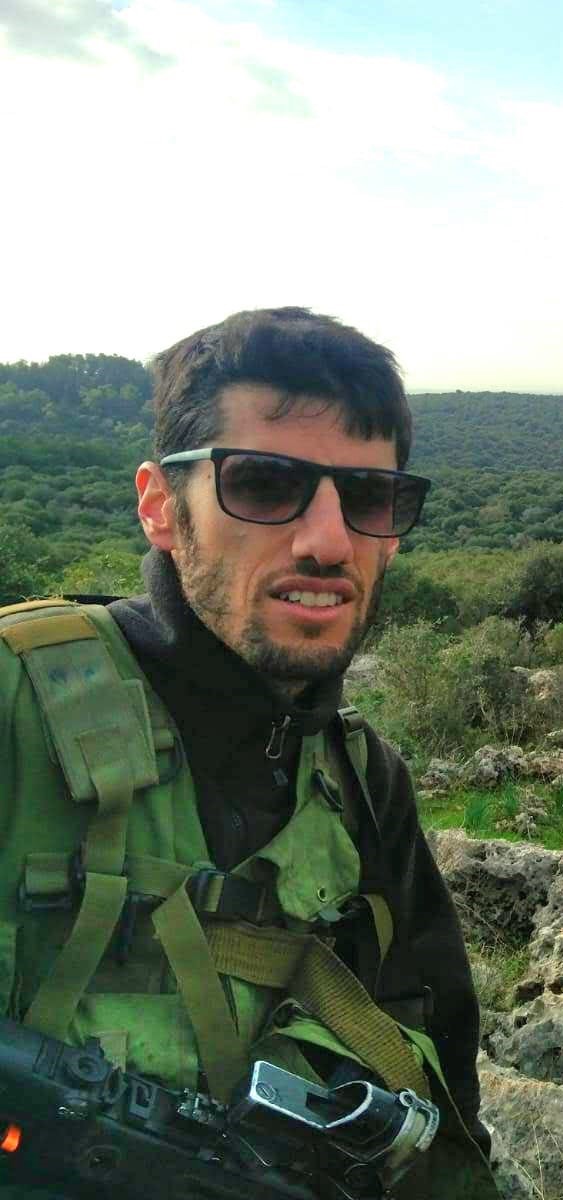
The story
The air in Kibbutz Be’eri, bordering the Gaza Strip, always carried a unique blend of scents: the damp earth from morning dew, the fragrance of citrus blossoms in spring, the dust of the fields in summer, and the fresh ink from the large printing house. This was the place Shahar Zemach called home, even though he drew his first breath far away, on the 15th of Nissan, 5744, April 17, 1984, in Kibbutz Ma'apil in Emek Hefer. He was born to Shlomit and Doron, their eldest son, bringing immense excitement and joy. Soon, while he was still a toddler, the small family moved to Be’eri, a warm and different kibbutz, nestled in the heart of the fertile agricultural land of the Western Negev, so close to the border that delineated a complex reality. Here, between the concrete paths shaded by ancient Ficus trees and the open fields stretching to the eastern horizon, Shahar found his deep roots and wove the story of his life, a story that would one day become one of the greatest tales of heroism and humanity in this place.
Shahar’s childhood in Be’eri was filled with laughter, exploration, and an immediate connection to nature and the people around him. He grew up in a warm and supportive home, where he was soon joined by four younger siblings—Yarden, Itai, Shay, and Ido—and he, the eldest, quickly found himself in the role of the protective older brother, mentor, and sometimes teaser. He attended the local elementary school, where the sounds of children and the smell of wooden pencils filled the classrooms, and from there, he continued to the regional high school, which drew students from all the surrounding kibbutzim and settlements. Shahar was a diligent student who knew how to apply himself to his studies but never sacrificed precious time with his friends. The youth group that surrounded him was particularly cohesive, a group of boys and girls who shared a common love for humor, small pranks, and long conversations late into the night. Shahar, with his characteristic sharp and cynical humor, particularly stood out with his witty provocations that became an integral part of the classroom atmosphere. He knew exactly how to throw out a funny remark that would make everyone burst into laughter, or how to affectionately tease a friend to defuse tension. Along with his close friends, he joined the "HaNoar HaOved VeHaLomed" (Working and Studying Youth) youth movement, where he learned about the values of work, sharing, and community, values that would accompany him throughout his life and shape his worldview.
But Shahar found his place not only within the walls of the school and clubs. In his free time, he was naturally drawn to manual labor and nature. The kibbutz petting zoo was a magical refuge for him, where he spent long hours caring for the animals: feeding the mischievous goats, petting the furry rabbits, and patiently watching the colorful birds. He learned the quiet language of living creatures, the slow and calming rhythm of the petting zoo, and felt a deep connection to the earth and creation. In addition, he volunteered for milking shifts in the kibbutz dairy, where, in the early morning or late evening hours, he stood beside the large, warm cows, felt the vibration of the milking machines, and the smell of fresh milk filling the air. It was physical work, sometimes hard, but it gave him a deep sense of satisfaction. Beyond that, his greatest love for nature was expressed in horseback riding. He would ride for hours on the paths of the kibbutz and the surrounding fields, letting the wind ruffle his hair as he galloped on horseback, feeling the power of the animal beneath him and the boundless freedom of the open spaces. The contact with the earth, with the animals, with the horses, gave him a deep sense of belonging to the place, to the simple and real life that the kibbutz offered. Even then, he understood that he had a strong desire to contribute, to be part of something bigger, to make an impact.
This deep need to contribute to society led him, immediately after graduating from high school, to volunteer for a year of service in the "Nitzana" educational-settlement community in the Negev. It was a formative year, a year in which he left the familiar kibbutz bubble and moved to the yellow, quiet expanses of the desert. In Nitzana, he met young people from diverse backgrounds, worked with them, guided them, and was part of a community that sought to build something new and meaningful in the heart of the wilderness. The encounter with educational and social challenges, and the communal life in desert conditions, strengthened his sense of responsibility and his ability to lead and influence. He learned to rediscover himself in a different environment, to develop communication and leadership skills, and to discover the power of giving. When he returned from Nitzana, laden with experiences and life lessons, he was ready for the next stage in his life path – military service. He enlisted in the IDF with strong motivation, and in the initial screening stages, he was accepted into a prestigious pilot's course, a dream for many. But after several months, for reasons only he knew, he chose to leave the course and move to Palsar Nahal, the elite reconnaissance company of the Nahal Brigade. The transition from a complex technological unit to a demanding combat infantry unit testified to his character: Shahar was not looking for the easy way, but for the way in which he could have a more direct impact, be on the front lines, feel the earth beneath his feet.
In Palsar Nahal, Shahar immediately found his place. He possessed a natural leadership, one that didn't need ranks or formal authority to lead. Already during the long and arduous training of the reconnaissance unit, he stood out for his professional abilities and his excellent instructional skills. His comrades in arms and superiors saw him as a figure to learn from, a person they could rely on. Thus, without being an officer, he became a team commander, a role requiring great responsibility, deep knowledge, and determination. He fulfilled his role with uncompromising professionalism and exceptional meticulousness. Shahar was not content with the standard command plan; he added a regular study session to the weekly schedule, where he conveyed serious content related to their operational role – how to navigate better, how to read a map, how to deal with stressful situations – and alongside them, lighter, but no less important content, such as instruction on different types of coffee, how to make quality coffee in the field, and how to enjoy small moments of respite within the tense routine. He understood that true leadership lies in the ability to connect the tough and professional with the human and approachable, between the demand for excellence and the concern for the individual. He knew how to create an atmosphere where his subordinates felt safe to ask questions, share concerns, and grow both as fighters and as human beings.
Upon his release from the IDF, Shahar felt a strong need to return to the familiar and beloved routine of the kibbutz. He returned to Be’eri and began working at the local printing house, "Dfus Be’eri," for about a year. He learned the intricacies of the profession, the smell of paper and ink, the rhythm of the large machines, and was part of the kibbutz's endeavors. But his adventurous spirit, the need to see the world and experience new things, did not let him rest. After a year, he packed his backpack and set off on a grand world tour, a journey filled with diverse and exciting experiences. He worked as an ice cream vendor in an "ice cream truck" in the United States, experiencing the fast pace of American life and meeting people from all corners of the globe. Afterward, he found himself guarding an ancient castle in Europe, where he combined his work with a deep acquaintance with local history and culture, imagining the stories of knights and princesses who lived within its walls. The journey also led him to South America, where he experienced the thrill of rafting in raging rivers, an experience in which he broke his hand – a painful but exciting reminder of his courage and thirst for life. Each of these experiences shaped him, broadened his horizons, taught him about different cultures, and about the ability to adapt to any situation.
When he returned from his travels, full of stories and insights, Shahar knew it was time to dedicate himself to academic studies. He enrolled in a Bachelor's degree in Economics, Politics, and Government at Ben-Gurion University of the Negev, in Be'er Sheva. The southern city, with its unique blend of students, soldiers, and Bedouins, became his new home. He lived in Be'er Sheva, and in his backyard, he used to organize spontaneous public singing and beer evenings, which became a magnet for his friends and new acquaintances. The guitar passed from hand to hand, singing voices filled the air, and deep conversations about politics, society, and the meaning of life continued late into the night. It was a period of intense learning, not only in the classrooms but also in the rich social life he created around him. To earn a living during his studies, he wrote political opinion pieces for various websites, where he expressed his strong views and critical thinking. Later, after graduating with honors, he continued to a Master's degree in Economics. He delved into the topic of pensions, wrote in-depth articles in the field, and even lectured at professional conferences, presenting innovative and groundbreaking ideas. He was a man of opinion, of action, of deep thought, and it was important for him to make an impact in the academic and public spheres as well.
During that exciting period of personal and professional growth, Shahar met Ofri. The encounter was almost immediate, and love blossomed quickly. Both, full of passion for life, intellectual discussions, and shared experiences, found soulmates in each other. They moved in together in Tel Aviv, the city that never sleeps, and Shahar began his professional journey in the business world. First, he worked at an economic-strategic consulting firm, where he applied the knowledge he gained in his studies and developed analytical and complex thinking skills. Later, he moved to work in the Accountant General's Department at the Ministry of Finance in Jerusalem, a role that required great responsibility, precision, and a broad systemic perspective. He worked diligently, immersed in data, numbers, and economic policy, and aspired to influence the Israeli economy. But despite a promising career in the big city, Shahar's heart remained deeply rooted in the kibbutz soil.
Shahar and Ofri’s wedding took place in Kibbutz Be’eri, the place where he grew up and was shaped. It wasn’t a conventional religious ceremony, but a deeply personal and moving civil one, which they wrote together with close friends. Every word, every vow, every small story told at the ceremony, reflected their unique personalities and shared values. Under the open skies of Be’eri, amidst the rustling eucalyptus trees, they promised each other love, partnership, and loyalty. A few months after the wedding, they made the decision to move back to the kibbutz. This was a significant decision, symbolizing Shahar’s desire to reconnect with his roots and raise his family in the place where he felt most at home. Three years later, their eldest daughter, Ella, was born, bringing new light and joy into their lives. Shahar continued to work in Jerusalem, commuting back and forth, but when Ella was one year old, he received an offer he couldn't refuse: to become the CFO of "Dfus Be’eri," the printing house where he had started his career. He accepted the offer with great joy. For him, it was a moving full circle, an opportunity to combine the vast economic knowledge he had accumulated with his love for the place and the community. He loved the new role, saw himself developing within the thriving printing house, and felt a deep sense of belonging.
At the printing house, Shahar was no longer just an ordinary employee, but a key figure in management. "Shahar injected new and fresh energy into the finance department, into the management, and into the organization as a whole," his employees and fellow managers said about him with appreciation. He was not just a man of numbers; he was a thinker, a leader, and an innovator. "He brought creative, broad-minded thinking, always outside the box. Not infrequently, he was the only dissenting voice in the room." Shahar was not afraid to express his opinions, even if they were unpopular, and it was important to him to conduct a factual and in-depth discussion on every topic. "He had a solid opinion on everything and wasn't afraid to express it," they said about him, appreciating his honesty and intellectual courage. Beyond his role as CFO, Shahar volunteered to be the printing house's "regulation man," a field that was not his "natural area," but in which he flourished with talent and brought amazing achievements to "Dfus Be’eri." He quickly learned the complexities of the field, meticulously analyzed the data, and acted with determination to ensure the printing house met all requirements. Shahar was a caring manager involved in the lives of his employees, always ready to listen, advise, and help. He was a diligent person who was never afraid of new tasks or heavy responsibility. "He was a professional, a financial man full of ideology, determined and opinionated, and a challenging and uncompromising board member," they concluded about him, testifying to a man who lived and acted out of deep belief in his path.
Alongside his demanding work at the printing house, Shahar greatly enjoyed overseeing the renovation of a larger apartment in the kibbutz. He put much thought into every detail, planning, supervising, and choosing materials, all with the goal of creating a warm and inviting home for his growing family. Upon completion of the renovation, he moved in with Ofri and Ella, and in this new, spacious apartment, their second child, Neta, was born, completing the family picture. Shahar was a wonderful father, one who knew how to talk to his children at eye level, to truly listen to their questions and concerns, and to enjoy every shared moment. He wasn't content with just being present in their lives; he created unforgettable experiences with them. They went on many trips together: on foot, in an off-road jeep, or on bicycles, traversing the hidden paths of the Gaza envelope, smelling the scents of the fields and watching the birds. They picked juicy figs from the trees and red strawberries from the fields, returning home with baskets full, to make sweet jams that would accompany them through the cold winter. Shahar taught his children to love nature, to respect the earth, and to see the beauty in the small details of life. He was a world unto himself for them, a guide, a playmate, and a loving father.
Trips and going out into nature were among Shahar's favorite activities. He loved to traverse the country from end to end, to get to know every corner, every path, every landscape. His daily routine included running in the Negev expanses, rigorous training for a marathon, which he completed for the first time in 2022. Each time, he would go for a two-to-three-hour run in the open fields, up to the Gaza Strip fence and back, listening to music by his favorite artists: Simon & Garfunkel, T-Slam, and Bruce Springsteen. This run, between green and yellow fields, with the wind on his face and the sounds of music in his ears, was a way for him to connect with himself, with the earth, and with his thoughts. It was a sacred routine, moments of quiet and strength, in which he felt the pulse of life.
Shahar's many friends knew how to tell that he possessed a perfect combination of seriousness and lightness, of depth and joy of life. In the morning, he would wear the meticulous suit of a CFO, discussing budgets and regulations in important management meetings. In the evening, when he returned home, he would light a bonfire in the yard with the children, tell them stories, roast marshmallows, and play with them. And when the children went to sleep, he would invite close friends for a hookah in the yard, for long conversations late into the night, full of laughter and philosophical discussions. Shahar was a serial entrepreneur, always creating opportunities for human connection, for shared experiences. He invited his friends on off-road trips with a bonfire and a "poyke" pot cooking, they watched soccer games of their favorite teams, Liverpool or Maccabi Haifa, or participated in soccer games in the kibbutz and council tournaments. Every shared activity was an opportunity for him to strengthen connections, enjoy the moment, and celebrate life. He had a great zest for life, endless love for people, and infectious optimism. He saw every challenge as an opportunity to grow, learn, and develop. He loved to dine at good restaurants, taste new foods, and enjoy the good life. He used to quote lines from beloved movies like "The Big Lebowski" and "Catch-22," and would write funny parodies of songs for every friend who got married, making the wedding an unforgettable event.
But alongside all the lightness and joy of life, Shahar was a man of deep responsibility. When he took on a task, he carried it with utmost seriousness and meticulousness. Thus, when he volunteered to be in charge of the kibbutz's hiking equipment storage, he was not content with regular management. He purchased innovative and high-quality equipment, established a close and meticulous tracking system for borrowed items, and ensured that all equipment was in good condition and available to every member. He acted out of a sense of mission, out of an understanding that even in the smallest details, importance lies. Everything he did in his life, he did in his own way, according to the values he believed in. He made sure to always be active; he was unable to sit at home and do nothing. He always sought the next project, the next challenge, the next way to contribute, create, and influence. He was a man of action, of the earth, of people, and of boundless love.
And then came that cursed morning, Saturday, the 22nd of Tishrei, Simchat Torah 5784, October 7, 2023. It was six-thirty in the morning, and the pastoral quiet of the kibbutz was suddenly shattered by a massive barrage of rockets. The Hamas terrorist organization launched a brutal surprise attack on Israel, an attack that would change the face of the country forever. Under the cover of massive missile and rocket fire from the Gaza Strip, thousands of terrorists—by land, sea, and air—infiltrated the communities surrounding Gaza, into Sderot, Ofakim, and Netivot, into innocent nature parties, into IDF bases, and onto roads. They murdered some eight hundred civilians in their homes, in their cars, committed severe crimes, kidnapped hundreds of Israelis to the Gaza Strip, and destroyed, looted, and set fire to homes and property. Hundreds of soldiers, police officers, security forces personnel, and members of local emergency response teams fell in battle. That morning, war broke out.
Shahar, a member of Kibbutz Be’eri’s emergency response team, was immediately mobilized at the start of the attack. The first WhatsApp message, the siren, the sounds of gunfire that began to be clearly heard—all quickly clarified the gravity of the situation to him. He did not hesitate for a moment. As was his custom, he was leading and determined, knowing exactly what needed to be done. He put on his uniform, took his weapon, and went out into the unknown. He instilled confidence in everyone who fought alongside him, with his composure, his determination, and his professionalism. He was the person everyone could rely on in moments of terror. When a casualty treatment point was opened in the kibbutz’s dental clinic—a quiet, familiar place that suddenly became a front line—Shahar positioned himself there with another member of the emergency response team. They knew they were the last defense, the barrier between the terrorists and the wounded and medical staff. Together, they secured the place, standing firm against dozens of terrorists who stormed from all sides, repelling them again and again.
For seven long, endless hours, he fought like a lion with desperate courage, an bravery difficult to describe in words. Many shots were fired from all directions, the clinic walls took hits, but Shahar and his friend did not give up. He fired at the terrorists, eliminated his enemies, and protected his comrades and everyone under his care with his body. He yelled at the terrorists in English: "I am not your enemy," a last attempt to make them understand the absurdity, the illogical nature of their actions, perhaps an attempt to prevent more bloodshed, or simply to express his stance as a man of peace and justice. But facing him were murderers, blind to all human reason. Around 2:00 PM, after hours of incessant fighting, he ran out of ammunition. The last bullet was fired. Only then, when he was helpless, did the terrorists manage to break into the dental clinic. Shahar was shot and killed on the spot, standing guard until the last moment, defending his home and his people.
Staff Sergeant Major Shahar Zemach fell in battle on the 22nd of Tishrei, 5784, October 7, 2023. He was thirty-nine years old at the time of his death. He was laid to rest in the cemetery of Kibbutz Be’eri, the land he loved so much and protected so fiercely. He is survived by his beloved wife, Ofri, two sweet children, Ella and Neta, who were his whole world, his grieving parents, Shlomit and Doron, and three brothers and a sister who loved and admired him. After his fall, Shahar was promoted from the rank of Staff Sergeant Major to Advanced Staff Sergeant Major, an honor in recognition of his exceptional heroism and courage.
Ofri, his wife, found the strength to write heartbreaking words: "My beloved Shahar, I am writing and not truly understanding that you will no longer return to me, to sweet Ella and sweet Neta... Your courage and resourcefulness helped save so many lives... Know that Ella asks about you every day, says she is sad you are not here, and alongside that, she is proud of her father who protected us and the rest of the kibbutz, and without hesitation went out early in the morning to fight the 'bad guys'. I will always love you." Ofri's words are a living testament to the immense love, the glorious heroism, and the enormous void he left behind. They reflect the deep pain and unwavering pride in his choice.
His younger brother, Yarden, also wrote touching words: "Shahar, my beloved brother, I loved you and admired you so much. You were good at everything you did and touched everyone you met. A man who loved the land and its paths, justice, integrity, and striving for good. I am happy for all the years we had together and all the memories that will remain forever. I learned so much from you. You left behind sweet children and a legacy of heroism, devotion, and love." Yarden's words paint a picture of Shahar as an exemplary figure, a mentor, and an older brother, who deeply influenced those around him and left an indelible mark.
Advanced Staff Sergeant Major Shahar Zemach is commemorated today on the website of the "HaNoar HaOved VeHaLomed" movement where he was a member, on the memorial page for fallen "Maccabi Haifa" fans in the war, and on the website of Kibbutz Be’eri, where he lived, loved, fought, and fell. A page in his memory was also opened on memoriz.plus, allowing people to upload memories and photos. Shahar's life story and heroism are a beacon of courage, devotion, and love for humanity and the land. He symbolizes the spirit of Israeli resurgence, the ability to rise from devastation, to continue to build and grow, with the memory of Shahar, and all the fallen, deeply etched in the heart of the nation. He left behind not only pain and longing, but also a rich legacy of humanity, professionalism, true friendship, family love, and a willingness to sacrifice everything for others. Shahar Zemach, the man who loved life in every fiber of his being, who was a CFO in a suit in the morning and lit a bonfire with his children in the evening, who was a clear and opinionated voice in meetings and a free horseback rider in the fields, is a hero of Israel whose heroism stemmed from his being a complete, authentic, and loving person, who chose to stand in defense of his home and community, until his last breath. His memory will be cherished in our hearts forever, a source of inspiration and Israeli pride.
Moments of a life
All photographs · 1
In the media
Articles
- Rebuilding Be’eri: A Kibbutz Community’s Fight for Survival and Legacy
Jewish Journal ·
- Father of a fallen member of Be'eri's emergency response team: Serious doubts about whether the IDF truly investigated itself thoroughly
וואלה ·
- Returned home: the grave of Shahar Tzemach from Be'eri was moved to the kibbutz
חדשות 13 ·
- Allison tells Shahar’s story
The Jewish Standard ·
- IDF releases new names of the fallen
NEWSru.co.il ·
- The Tzemach family from Be’eri on October 7
כאן
Memorial sites
- Shahar Tzemach
הנוער העובד והלומד
- Shachar Tzemach
October7Memorial
- Shahar Tzemach — Commemorating Together
קומו
Memorial projects
A page for Kumu’s Mantzichim Beyachad initiative advertises a gathering in memory of Shahar Tzemach in Ramat Gan on April 19, 2026, at 7:30 p.m.; registration is marked closed. The page documents the planned gathering and is not a retrospective record confirming it took place.
Stories told about them
Shahar defended the clinic for hours while his parents sheltered in their safe room. According to his father’s testimony to ynet, after his ammunition ran out he took ammunition from wounded friends and continued fighting.
Life & service
Service
- Rank
- Sergeant major (res.)
- Service Type
- Reserve Forces
- Honours
- Posthumously Promoted
Family
- Father
- Doron
- Mother
- Shlomit
Burial
Cemetery
Be'eri
Tributes & remembrance
שחר יקר, הכרנו מעט אבל אי אפשר היה לא להתרשם מהאישיות החריפה שלך וההומור החד. נוח על משכבך בשלום בשלוות לוחמים כי נתת את כל כולך.
אישיותך מקרינה למרחקים ולמעמקים
דרך אחותך הקטנה
סיפור גבורתו לא ישכח , תנחומינו לדורון ושלומית
חטיבה צפונית זוכרת את הנופלים יהיה זכרם ברוך
שחר צמח ת.נ.צ.ב.ה דורון שלומית וכל המשפחה מחבקים ואוהבים
הי"ד , תנוח על משכבך בשלום .
יהי זכרך ברוך
אוהב ומתגעגע
שחר,
אתה הולך איתנו תמיד. גאה להכיר אותך. שמחה על הזכרונות שיש לי. כואבת את הזכרונות שלא יצא לך ליצור. הלוואי שעוד היית פה.
לצידכם, משפחת בהל״ג
מאחלת לכם המשפחה שתחלימו מהאובדן ותדמיין להנציח אותו, שגית לשמוע עליו ועל פועלו, תמשיכו לעשות טוב בדרך שלו
רואים שהוא היה בן אדם אמין והציל לראות מישהו שלמרות שיורים בכל מקום אומר שהוא לא אויב מראה על המסירות שלו למדינה שלו ולעם שלו לשרת במדינה כזאת זה זכות רק בגללו.
תודה לך שחר על התושייה והאומץ שלך
יהיה זכרו ברוך
חיל הגנת הגבולות
כל המציל נפש אחת מישראל כאילו הציל עולם שלם..
הוא הציל המון!
שחר.
תמיד תישאר בליבנו
פשוט אין מילים לגבורה
שוח
זוכר אותך כאיש מיוחד, מצחיק ברמות, גורם לכולם לחייך. חובתנו להיות ראויים לך. נוח בשלום
שוח יה שוח. איך נקטפת לנו ככה פתאום. נלחמת כמו אריה מול מחבלים אכזריים והצלת כל כך הרבה נפשות. לפני כמה זמן מצאתי גלויה ישנה ומלאה הומור שכתבת לי כשטיילת בדרום אמריקה. כמה צחקתי. זה מה שנשאר וככה אזכור אותך. אתה חסר לנו מאוד.
יהי זכרך ברוךשולחים חיבוק משפחת צמח יקרה
יהי זכרך ברוךשולחים חיבוק ואהבה לכם משפחת צמח
שחר יקר,
לא הכרנו הרבה זמן.
אבל לא היה צריך יותר מדי זמן בשביל להבין איזה איש אתה!
אתה כל כך חסר בדפוס, החיוך שלך, הנוכחות שלך.
נוח על משכבך בשלום
מדליק נר זה לזכר בן של חבר אח שרק השנה הכרתי יהי זכרו ברוך, בגן עדן תהייה מנוחתו
מדליק נר זיכרון זה ,לזכר בן של חבר אח
שרק השנה הכרתי, יהי זכרו ברוך, בגן עדן תהייה מנוחתו.
תהא נשמתו צרורה בצרור החיים
אל מלא רחמים שוכן במרומים השכן מנוחה נכונה על כנפיי השכינה .
יהי זכרך ברוך
הינך גאוה להורים
צר לי כל כך .
ניחומים למשפחה למכיריך ומוקיריך
לנצח נזכור
הדלקתי נר לזכרון של שחר צמח הגיבור שבזכותו מרפאת השיניים של קיבוץ בארי המשיכה לתפקד כמקלט לפצועים עד שנגמרה לו התחמושת. יהי זכרו ברוך
מכירה אנוכי את דודך רונן התייגנתי עד דמעות וצער ימים ולילות על נפילתך ניחמתי מבפר פעמים את דודך רונן תגן עלינו משיים ואנו נשמור עליך בארץ קדושתנו העם היהודי במדינת היהודים מנשרים קלו מאריות גברו הצבי ישראל על במותך חלל איך נפלו גיבטרים כמוך
מתגעגע.
לטוב שבך.
החיוך שובה הלב.
אהבת הארץ והאדם.
לצחוק המתגלגל.
לחיבוק
אבא
I have no wish or expectation for heads to roll, only for the truth to be revealed and the conclusions to be acted upon
Source:וואלה
Read the Hebrew original
אין לי רצון או ציפייה לעריפת ראשים רק חשיפת האמת ויישום המסקנות
I lost a son, Shahar. He is a hero.
Source:ynet
Read the Hebrew original
איבדתי בן, את שחר, הוא גיבור.
I am heartbroken for his family, and I feel we must share his story and remember him
Source:The Jewish Standard
Because ultimately this is his home — the one he returns to in this way
Source:חדשות 13
Read the Hebrew original
כי בסוף זה הבית שלו - שאליו הוא חוזר באופן הזה
Shahar was a man hungry for life, a lover of people, optimistic and brave
Source:חדשות 13
Read the Hebrew original
שחר היה איש תאב חיים, אוהב אדם, אופטימי, אמיץ
Remembrance Day addresses
יום הזיכרון לחללי מערכות ישראל התשפ"ה – 2025
בכל יום שעובר, אזכור יותר! אזכור, את אלו שיצאו עימי לקרב ולא שבו, ולהם אין מי ידמה ומי ישווה. אזכור, שהכאב לא יעבור לעולם, והזמן, הוא לא מרפה ולא מרפא. אזכור, את שיברון הלב הגובר ואת הבית שבוער. אזכור, את צדקת הדרך, ואשבע שוב, שמה שהיה לא יהיה יותר. אזכור, שיותר מכל דבר אחר – אני חסר! ביום הזה, אני נתקף געגוע לדמותם, לחיתוך דיבורם, לחיוכם, ומדליק נר לזיכרון דרכם ומורשתם!
משרד הביטחון
אגף משפחות, הנצחה ומורשת
יום הזיכרון לחללי מערכות ישראל התשפ"ה – 2025
בכאב, בהצדעה ובתקווה אני מתכבד להדליק נר זיכרון זה. השנה, כשאנו נלחמים במלחמה ארוכה, רב זירתית וצודקת, הזיכרון נושא משמעות עמוקה. ביום זה נעצור ונתייחד עם זכרם של טובי בנינו ובנותינו שנפלו בהגנה על המדינה. מורשתם היא המצפן שמתווה את דרכינו, והיא המעניקה לנו כוח להמשיך ולהגן על מדינת ישראל ותושביה. משפחות יקרות, אנו מרכינים ראשנו ומתחייבים שנעמוד לצידכן תמיד. יהי זכר הנופלים ברוך.
אלוף דדו בר כליפא
ראש אגף כוח האדם, צה"ל
יום הזיכרון לחללי מערכות ישראל התשפ"ה – 2025
בשעה שאנו זוכרים את גודל תרומתם ועומק מסירות נפשם של טובי בנינו ובנותינו, נופלי מערכות ישראל לדורותיהן, ממשיכים צה"ל וכוחות הביטחון במימוש המשימה למענה לחמו ועבורה נפלו: הכרעת אויבינו מדרום, מצפון, ביהודה ובשומרון, וגם בזירות רחוקות יותר. בהערכה רבה ובגאווה אדירה אנו מרכינים ראש בפני הנופלים והנופלות, מאמצים את משפחותיהם אל לבנו, וממשיכים במשימה להבטחת קיומה של ישראל לדורי דורות. יחד נעשה ונצליח.
רב אלוף אייל זמיר
הרמטכ"ל, צה"ל
יום הזיכרון לחללי מערכות ישראל התשפ"ד – 2024
כאשר דגלינו מורדים לחצי התורן וראשינו מורכנים לזכר הנופלים והנופלות במערכות ישראל, ממשיכים לוחמי צה"ל ומפקדיו בלחימה בדרום, בצפון, ביהודה ובשומרון ובזירות נוספות. על כל דור מוטלת המשימה של הגנת העם והארץ – משימה שאף פעם אינה פוסקת. נצדיע בגעגוע ובגאווה לנופלים ולנופלות, נחבק את משפחותיהם, ונמשיך ברוח הציווי שהותירו לנו. עם ישראל חי.
רב ניצב יעקב שבתאי
המפקח הכללי, משטרת ישראל
יום הזיכרון לחללי מערכות ישראל התשפ"ד – 2024
אחיי הנופלים, כל נר הוא זיכרון יחיד ומיוחד, על חיים שהיו ואינם, געגוע שנצרב עמוק בלב, עולם ומלואו. הנרות כולם הם זיכרון של אומה כי לעולם לא עוד, בשורת הציונות וקוממיות ישראל. זיכרון כי הדרך לעם חופשי בארצנו עוברת דרך מסדר הנופלים. אור הנר יזכיר לנו את מסירות נפשכם להציל חיים, להגן על הבית. הנרות מסמנים לנו נתיב גבורה ערכי מחייב שאנו מצווים ללכת לאורו. נמשיך להילחם ולהוסיף אור מתוך אמונה בנצח ישראל.
יואב גלנט
שר הביטחון
יום הזיכרון לחללי מערכות ישראל התשפ"ד – 2024
בהצדעה ובכאב, בשם צה"ל כולו, אני מדליק נר זיכרון. בעיצומה של מלחמה, הזכרון נושא משמעות יום-יומית, שעבר והווה מתלכדים בה. לאורם של הנופלים נמשיך לצעוד, חיילי הסדיר והמילואים. לאורם של הנופלים נמשיך להגן על ארצנו ועל מולדתנו, גם כשהמחיר כבד. להבת-הזכרון תבער בנו בעודנו ממשיכים להלחם ונזכור את הנופלים ואת אומץ ליבם. משפחות יקרות, צה"ל מרכין היום ראש, מצדיע לכן וכואב איתכן. יהי זכר הנופלים ברוך.
אלוף יניב עשור
ראש אגף כוח האדם, צה"ל
יום הזיכרון לחללי מערכות ישראל התשפ"ד – 2024
בהוקרה, בגאווה ובכאב שאין לו סוף, אני מתכבד להדליק נר לזכרם של הנופלים והנופלות במערכות ישראל. סיפור חייהם בארץ הזאת, מסכת שירותם, גבורתם והקרבתם – הם סיפורה של הארץ הזאת, אך גם סיפור המחיר הכבד שהיא תובעת מאוהביה. מחויבותנו לזכר הנופלים ולדרך שהותירו לנו ניצבת תמיד לנגד עינינו. את המשימה שלא זכו להשלים, משלימים כיום, וישלימו, אנשי כוחות הביטחון, הממשיכים בדרכם ולאורם. יהי זכרם של הנופלים ברוך.
משרד הביטחון
אגף משפחות, הנצחה ומורשת
יום הזיכרון לחללי מערכות ישראל התשפ"ד – 2024
בחרדת קודש אני מתכבד להדליק נר לזכרם של חללי מערכות ישראל, חברנו שנפלו, מראשית היציאה מהחומות ולאורך כל שנות עצמאותנו המדינית והציונית, מהווים תמרור זיכרון לדרך חיינו ולמחוייבות הלאומית להנצחת זכרם. דרכם נותרה דרכנו ומורשתם נר להמשך עשייתנו. יהי זכרם ברוך!
בני גנץ
שר הביטחון
יום הזיכרון לחללי מערכות ישראל
נזכור אותם, כולנו יחד. כל אחד ואחת מהם, מדי יום ביומו, והיום ביתר שאת, כך – לנצח. "כי מדי דברי בו זכור אזכרנו עוד"
משרד הביטחון
אגף משפחות, הנצחה ומורשת