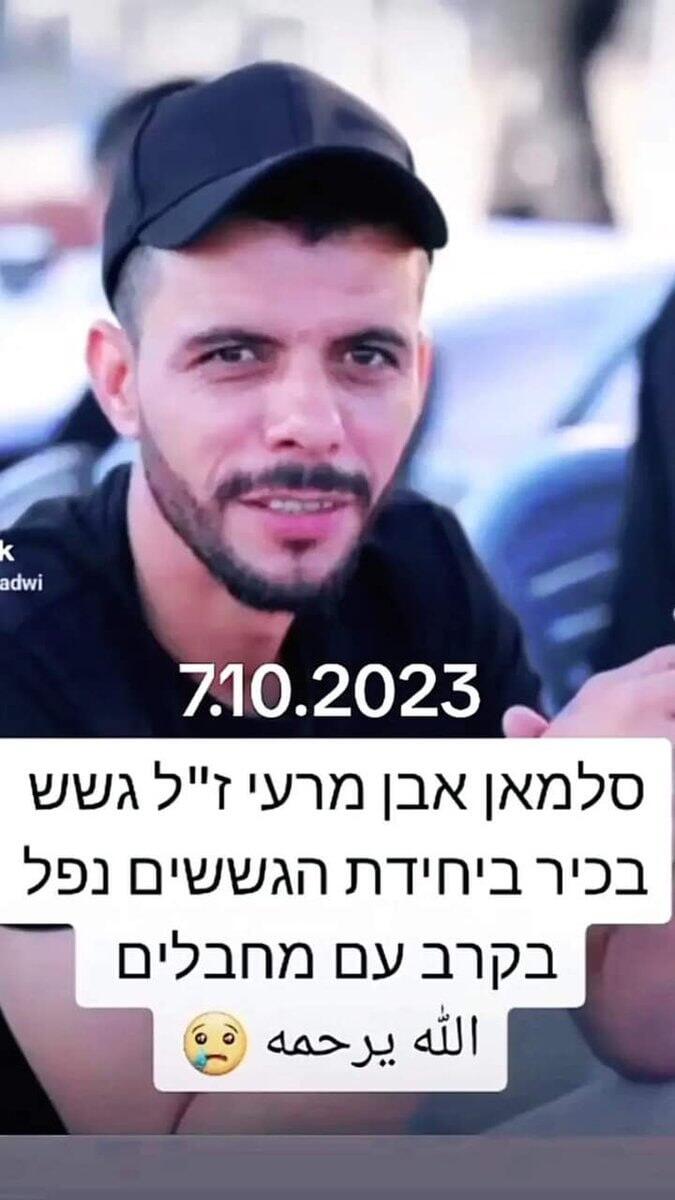
The story
That morning, on the 26th of Kislev, 5742, December 22, 1981, dawned in the cool, quiet, and contemplative hues of a desert winter in Segev Shalom, a Bedouin settlement in the northern Negev. The world welcomed Salman, son of Hasina and Salama, a baby whose eyes already held the bright sky-blue of the wadis and the distant horizon. He was born into a large, bustling family, a home with a wide, warm heart, where laughter and squabbles, mutual help and brotherhood, were daily bread. His brothers and sisters—Salmi, Hussein, Hassan, Alia, Salama, Amana, Faiz, Naama, Adiab, Sulaiman, and Naima—were his entire world, a small community within the house, where everyone found their place, their role, their unique voice in the family choir of life. Salman, growing up among them all, learned from a young age the importance of connection, mutual responsibility, and how to navigate between different personalities, to listen, to support, and to stand his ground when necessary.
The home was the center of his world; its walls absorbed the aromas of Mother Hasina's cooking, which would rise from the kitchen and fill every corner, and the sounds of Father Salama's stories, woven around the evening bonfire or beside the bubbling tea kettle. Young Salman would sit and listen, his eyes following his parents' facial expressions, absorbing the subtle nuances of their language, the wisdom of their quiet speech, the way words built bridges between people. He learned from them the value of hard work, respect for the land, and an unwavering commitment to family, not just the immediate but the extended, tribal one. He ran barefoot on the courtyard earth, feeling the grains of sand between his toes, the dust of the roads that rose with every gust of wind, the thorns of the sabra cactus, and the green broom leaves that sprouted after the rain. He learned to recognize the bleating of goats and sheep, the distant barking of dogs, the unique silence of the desert at night, when the stars twinkled with unbelievable clarity overhead. His childhood was intertwined with nature, with a deep connection to his surroundings, to movement, to an attentiveness to small details—a flying bird, animal tracks, a slight shift in the wind—all these were his first lessons in orientation and sharpening his senses, which would later become his most important tools.
As he grew, his desire to venture out into the open spaces intensified. He was not a child of four walls. Most of his days were spent outdoors, among the rocks and bushes, sometimes helping his older brothers or father with the flock, sometimes just wandering, building entire worlds of imagination from what the desert offered. He learned to identify plants, to understand the movement of water in the wadis after rain, to recognize the type of soil by its color and texture. His hands were rough, tanned, his feet strong and accustomed to contact with all types of terrain. Even then, without knowing it, he was training to be a tracker, learning the language of the earth, the stories it tells to those who know how to listen. He didn't need maps or compasses; the directions were etched in his memory, his childhood landscapes were the best map. He knew every goat trail, every rock hollow, every ancient acacia tree, and they were reliable and safe landmarks for him.
In his youth, Salman's personality solidified. He was a relatively quiet young man, yet possessed a strong presence, one who didn't speak much but when he did, his words were measured and meaningful. He was loved by his friends, always ready to help, with a wide smile and kind eyes that radiated trustworthiness and integrity. He was an integral part of the local group, playing soccer with them on makeshift dirt fields, laughing around late-night bonfires, and dreaming about the future. But even then, there was always a quiet corner within him, perhaps a kind of internal wandering, that drew him back to the open space, to the silence, to the challenge of deciphering the earth's secrets. He attended the local school, absorbing the necessary knowledge, but most of his education, it seemed, took place outside the classroom walls, in the fields, in the wadis, under the open sky. He learned to take responsibility for his actions, for his words, to be a pillar for his family and later for his community.
Upon completing his studies, it was only natural for Salman to turn to military service. For a young Bedouin man, raised with a deep connection to the land and its expanses, and possessing a unique sense of orientation and attentiveness, serving as a tracker was almost a calling. He found his natural place in the Southern Brigade of the Gaza Division, where he became the operational arm, the sharp eyes and keen ears of the force. He wore the IDF uniform with pride, not just as part of a nation, but as an expression of his commitment to protecting his home, his family, and the community in which he grew up. The work of a tracker was not an easy task. It demanded long hours of vigilance, silent walking along the fence line, sharp observation of the ground, trying to decipher every slight sign, every footprint, every minute change in the landscape that might indicate an infiltration, a danger. He learned to live with constant tension, with the knowledge that any small mistake could cost human lives. But he did it with love, with dedication, with a deep sense of mission. He knew the sector like the back of his hand; every dune, every plant, every stone, held a story for him, and each story was connected to the next.
Years passed, and Salman accumulated extensive experience. He became a Staff Sergeant Major, a rank indicating seniority, professionalism, and quiet leadership. He was a mentor to younger trackers, teaching them the secrets of the profession, not just the dry technique of identifying tracks, but also the philosophy behind it: listening to the wind, understanding the person behind the footprint, and the importance of accurate, quiet, and uncompromising intelligence gathering. He was a respected figure among his peers and commanders, a man one could trust implicitly, who even in the most tense moments knew how to remain calm, analyze the situation clearly, and make the right decisions. He witnessed many incidents on the Gaza border, dealt with complex security challenges, and always returned home with the feeling that he had done his part, that he had protected the home.
Amidst all his military endeavors, Salman also built his personal life. He married Najah, a woman of valor, strong and supportive, who was his anchor. She understood his commitment, his unconventional working hours, the tension he lived with, and always welcomed him with a warm smile and a tidy, loving home. Together, they built their own home, a home where family warmth was paramount. One after another, they had seven children: Malak, Ayat, Lamis, Habiba, Ritaj, Salama, and Noor. Seven small worlds, seven treasures, each filling Salman's heart with immense love and pride. He was a devoted, involved father, who even after long, exhausting days in the field, found the strength to hug, to play, to listen to stories from kindergarten or school, and to teach his children the values of respect, work, and family love.
In their home in Segev Shalom, life buzzed. The children's laughter filled the space, the aromas of Najah's delicious food rose from the kitchen, and Salman's quiet yet authoritative voice could be heard as he guided, advised, or simply told stories. He loved to sit with his children, show them pictures of tracks he found in the field, explain the world of animals and plants, teach them to identify stars at night. "Look closely, children," he would tell them, "the world is full of signs. Whoever learns to read them will never get lost." Malak, the eldest, had already begun to develop her independence, with a serious look in her eyes inherited from her father. Ayat, with her playfulness, loved to hear desert stories. Lamis and Habiba were inseparable, playing together for long hours, and little Ritaj would climb onto her father's lap asking for a hug. Salama and Noor, the youngest of the group, filled the house with their innocent joy, and Salman would look at them, his heart full, understanding that he had built an entire world of love and hope for himself, a world worth protecting at all costs. He would go to the mosque in the mornings, pray, and then continue to his work, always with a heavy sense of responsibility on his shoulders, but also with the inner peace of a man who knew his place in the world.
Years passed, Salman became a man of forty-one, at the peak of his strength and experience. He was a pillar for his extended family, for his brothers and sisters, for his father. He was an integral part of the community in Segev Shalom, a man who contributed, helped, and served as a personal example. He was a quiet man, yet one whose presence was felt, whose words were weighed carefully, and whose advice was invaluable. He knew the desert, its mysteries, its secrets, and lived in it and for it. His life was intertwined with the security of Israel, but also with the simple and beautiful life of a man who loved his home, his family, and his work. He would rise at dawn, when the desert wind was still cool, and set out for his day, sometimes to the border, sometimes to community affairs, always with the same dedication and responsibility.
And then came that morning, the 23rd of Tishrei, 5784, October 8, 2023. The morning before, October 7th, was a morning that changed the face of the country. Salman, as a Staff Sergeant Major, a tracker in the Southern Brigade of the Gaza Division, was one of the first to feel the approaching magnitude of the disaster. The sounds of gunfire, the initial reports, the confusion and chaos—all reached him quickly. He did not hesitate for a moment. WhatsApp messages began to flow through the command chain, urgent calls to report, to get to the sector, to fight. Salman, with his intimate knowledge of the terrain, with his many years of experience, knew exactly what was expected of him. He quickly parted from his family, a brief hug for Najah, a last look at the sleeping children, perhaps a quiet word, a promise to return. He knew the situation was different from anything he had seen before. This was not another local infiltration, not another round of fighting. This was a war for home.
He was rapidly deployed to the sector, to the place where he knew every path, every bush, every piece of land. The air was thick with the smell of gunpowder, smoke rose from all directions, and the sounds of gunfire and explosions were incessant. The chaos was absolute, but Salman remained calm. His role as a tracker was critical. In the midst of the morning of October 8th, with the first light just breaking over the Negev and highlighting the brutal features of the battle, Salman was already at the heart of the action, navigating between forces, identifying infiltration routes, deciphering enemy movement. He used all the knowledge he had accumulated over decades—reading tracks, identifying directions of movement, understanding the terrorists' modus operandi. He was the eyes and ears of the force, providing vital information that saved lives and allowed our forces to respond effectively. He moved quietly, persistently, engaging all his senses, trying to understand the changing terrain beneath his feet, the invisible threat lurking in every corner.
The battle was difficult and brutal. Salman, accustomed to the precision and order of tracking work, found himself in a whirlwind of fire and hell. But he did not break. He continued his mission, aware of its importance. He assisted in locating terrorists, guiding forces, and understanding the complex situation. With every step, he thought of his family, his children, his home. The thought of them gave him strength to continue, to push forward, to fight for their future. He was one of those human heroes who rose to defend their homes on a day when everything seemed lost. He did not seek glory, but acted out of a deep sense of duty, loyalty, and love.
On the morning of October 8th, in the midst of the heroic battle to repel the invaders and defend the settlements, Staff Sergeant Major Salman Ibn Marei, forty-one years old, fell in battle. He fell while defending his people, his homeland, and the values he believed in all his life. His fall was a severe blow, but his actions were a sign of supreme heroism, of uncompromising dedication. He left behind a huge void, a gaping wound in the hearts of his family, friends, and community. In Segev Shalom, the settlement where he grew up and built his life, Salman was laid to rest in the civilian cemetery. The land he so loved, whose secrets he knew better than anyone, received him into its final embrace.
The news of his fall struck the family like a bolt from the blue. Najah lost her husband, her beloved and life partner; Malak, Ayat, Lamis, Habiba, Ritaj, Salama, and Noor lost their father, the pillar of their lives, a father who was their entire world. His father, Salama, lost a son, and his brothers and sisters lost a beloved brother. But alongside the immense pain, a deep pride was also planted. Salman did not fall in vain. He fell as a hero, as one who defended his home with fierce courage, as one who tied his life and destiny to the fate of the nation. He left behind a legacy of bravery, professionalism, love for humanity, and love for the land.
Today, the name of Salman Ibn Marei, of blessed memory, is remembered with honor and appreciation. The story of his life, the story of a desert child who became an expert tracker, a devoted family man, and a hero of Israel, echoes in hearts. He was a man who lived a full, meaningful life, a life intertwined with tradition, community, and deep commitment. His legacy is not just a story of courage on the battlefield, but also a story of unwavering love for family, hard work, integrity, and a deep connection to roots. His children grow up knowing that their father was a hero, a man who was willing to sacrifice everything for their future. They carry his name, his memory, and the values he instilled in them. Every time they look at the distant horizon of the Negev, at the winding paths and the twinkling stars above Segev Shalom, they know that Father Salman is there, his spirit watching over them, accompanying them, and reminding them of the strength in connection to the land, to family, and to the people. His legacy is eternal, etched in hearts and in the history of the people of Israel, a symbol of human heroism, simple and powerful, born from a deep love for life and the right to live it in security and peace.
Moments of a life
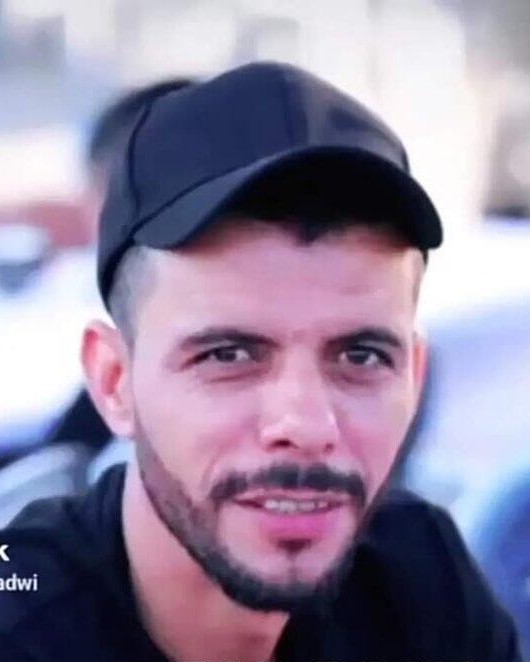
All photographs · 1
In the media
Articles
Memorial sites
- Commemoration – The Fallen of the Bedouin Community
קידום – העמותה לקידום חיילים בדואים
- Yizkor — Salman Ibn Mar’i
משרד הביטחון – יזכור
- Sergeant Major Salman Eben Marei HY"D
KTM Montreal
Memorial projects
A page in KTM Montreal’s tree-planting initiative in memory of the fallen; personal memorial code H370. The page invites tree planting and does not prove that a tree has already been planted.
KTM Montreal’s memorial page offers the option of planting a tree in Salman’s memory using ID H370. This is a donation option bearing his name; the page does not establish that a tree has already been planted.
Life & service
Profile
- Date of birth
- December 22, 1981
- Birthplace
- Segev Shalom
- Date of death
- October 7, 2023
- Age
- 41
- Hometown
- Segev Shalom
Service
- Rank
- Sergeant major
- Unit
- Southern Brigade
Family
- Father
- Salameh
- Mother
- Chasina
Burial
Cemetery
Segev Shalom
Tributes & remembrance
Salman was a dedicated family man, he made sure to take care of his grandmother, mother, siblings and children
Source:The Times of Israel
he was brave and he fought with honor at the IDF base.
Source:The Times of Israel
Remembrance Day addresses
יום הזיכרון לחללי מערכות ישראל התשפ"ה – 2025
בכל יום שעובר, אזכור יותר! אזכור, את אלו שיצאו עימי לקרב ולא שבו, ולהם אין מי ידמה ומי ישווה. אזכור, שהכאב לא יעבור לעולם, והזמן, הוא לא מרפה ולא מרפא. אזכור, את שיברון הלב הגובר ואת הבית שבוער. אזכור, את צדקת הדרך, ואשבע שוב, שמה שהיה לא יהיה יותר. אזכור, שיותר מכל דבר אחר – אני חסר! ביום הזה, אני נתקף געגוע לדמותם, לחיתוך דיבורם, לחיוכם, ומדליק נר לזיכרון דרכם ומורשתם!
משרד הביטחון
אגף משפחות, הנצחה ומורשת
יום הזיכרון לחללי מערכות ישראל התשפ"ה – 2025
בכאב, בהצדעה ובתקווה אני מתכבד להדליק נר זיכרון זה. השנה, כשאנו נלחמים במלחמה ארוכה, רב זירתית וצודקת, הזיכרון נושא משמעות עמוקה. ביום זה נעצור ונתייחד עם זכרם של טובי בנינו ובנותינו שנפלו בהגנה על המדינה. מורשתם היא המצפן שמתווה את דרכינו, והיא המעניקה לנו כוח להמשיך ולהגן על מדינת ישראל ותושביה. משפחות יקרות, אנו מרכינים ראשנו ומתחייבים שנעמוד לצידכן תמיד. יהי זכר הנופלים ברוך.
אלוף דדו בר כליפא
ראש אגף כוח האדם, צה"ל
יום הזיכרון לחללי מערכות ישראל התשפ"ה – 2025
בשעה שאנו זוכרים את גודל תרומתם ועומק מסירות נפשם של טובי בנינו ובנותינו, נופלי מערכות ישראל לדורותיהן, ממשיכים צה"ל וכוחות הביטחון במימוש המשימה למענה לחמו ועבורה נפלו: הכרעת אויבינו מדרום, מצפון, ביהודה ובשומרון, וגם בזירות רחוקות יותר. בהערכה רבה ובגאווה אדירה אנו מרכינים ראש בפני הנופלים והנופלות, מאמצים את משפחותיהם אל לבנו, וממשיכים במשימה להבטחת קיומה של ישראל לדורי דורות. יחד נעשה ונצליח.
רב אלוף אייל זמיר
הרמטכ"ל, צה"ל
יום הזיכרון לחללי מערכות ישראל התשפ"ד – 2024
כאשר דגלינו מורדים לחצי התורן וראשינו מורכנים לזכר הנופלים והנופלות במערכות ישראל, ממשיכים לוחמי צה"ל ומפקדיו בלחימה בדרום, בצפון, ביהודה ובשומרון ובזירות נוספות. על כל דור מוטלת המשימה של הגנת העם והארץ – משימה שאף פעם אינה פוסקת. נצדיע בגעגוע ובגאווה לנופלים ולנופלות, נחבק את משפחותיהם, ונמשיך ברוח הציווי שהותירו לנו. עם ישראל חי.
רב ניצב יעקב שבתאי
המפקח הכללי, משטרת ישראל
יום הזיכרון לחללי מערכות ישראל התשפ"ד – 2024
אחיי הנופלים, כל נר הוא זיכרון יחיד ומיוחד, על חיים שהיו ואינם, געגוע שנצרב עמוק בלב, עולם ומלואו. הנרות כולם הם זיכרון של אומה כי לעולם לא עוד, בשורת הציונות וקוממיות ישראל. זיכרון כי הדרך לעם חופשי בארצנו עוברת דרך מסדר הנופלים. אור הנר יזכיר לנו את מסירות נפשכם להציל חיים, להגן על הבית. הנרות מסמנים לנו נתיב גבורה ערכי מחייב שאנו מצווים ללכת לאורו. נמשיך להילחם ולהוסיף אור מתוך אמונה בנצח ישראל.
יואב גלנט
שר הביטחון
יום הזיכרון לחללי מערכות ישראל התשפ"ד – 2024
בהצדעה ובכאב, בשם צה"ל כולו, אני מדליק נר זיכרון. בעיצומה של מלחמה, הזכרון נושא משמעות יום-יומית, שעבר והווה מתלכדים בה. לאורם של הנופלים נמשיך לצעוד, חיילי הסדיר והמילואים. לאורם של הנופלים נמשיך להגן על ארצנו ועל מולדתנו, גם כשהמחיר כבד. להבת-הזכרון תבער בנו בעודנו ממשיכים להלחם ונזכור את הנופלים ואת אומץ ליבם. משפחות יקרות, צה"ל מרכין היום ראש, מצדיע לכן וכואב איתכן. יהי זכר הנופלים ברוך.
אלוף יניב עשור
ראש אגף כוח האדם, צה"ל
יום הזיכרון לחללי מערכות ישראל התשפ"ד – 2024
בהוקרה, בגאווה ובכאב שאין לו סוף, אני מתכבד להדליק נר לזכרם של הנופלים והנופלות במערכות ישראל. סיפור חייהם בארץ הזאת, מסכת שירותם, גבורתם והקרבתם – הם סיפורה של הארץ הזאת, אך גם סיפור המחיר הכבד שהיא תובעת מאוהביה. מחויבותנו לזכר הנופלים ולדרך שהותירו לנו ניצבת תמיד לנגד עינינו. את המשימה שלא זכו להשלים, משלימים כיום, וישלימו, אנשי כוחות הביטחון, הממשיכים בדרכם ולאורם. יהי זכרם של הנופלים ברוך.
משרד הביטחון
אגף משפחות, הנצחה ומורשת
יום הזיכרון לחללי מערכות ישראל התשפ"ד – 2024
בחרדת קודש אני מתכבד להדליק נר לזכרם של חללי מערכות ישראל, חברנו שנפלו, מראשית היציאה מהחומות ולאורך כל שנות עצמאותנו המדינית והציונית, מהווים תמרור זיכרון לדרך חיינו ולמחוייבות הלאומית להנצחת זכרם. דרכם נותרה דרכנו ומורשתם נר להמשך עשייתנו. יהי זכרם ברוך!
בני גנץ
שר הביטחון
יום הזיכרון לחללי מערכות ישראל
נזכור אותם, כולנו יחד. כל אחד ואחת מהם, מדי יום ביומו, והיום ביתר שאת, כך – לנצח. "כי מדי דברי בו זכור אזכרנו עוד"
משרד הביטחון
אגף משפחות, הנצחה ומורשת