
The story
The dawn of the 22nd of Tishrei, Simchat Torah 5784, October 7, 2023, began like any other Saturday morning in the home of Roi Yosef Levy in Shavei Tzion, a quiet and picturesque community nestled against the Mediterranean coast in the Western Galilee. The first rays of sun had already begun to climb over the rooftops, casting a soft light on the turquoise-blue sea, promising a day of warmth and tranquility. The children, Yoav and Yonatan, were likely still deep in sleep, wrapped in childhood dreams. Yael, his wife, might have already woken and made coffee, or perhaps she too was enjoying the rare quiet. But this morning was not like all others. It opened with rising and falling sirens, with distant explosions that began to pull the brutal reality into their peaceful bubble, and soon, the understanding spread that something terrible was unfolding. Roi, even when at home, always had his finger on the pulse. He wasn't a man who could afford to disconnect completely. Within a short hour, at seven in the morning, as reports began to stream in and clarify, he had already sent a brief and clear message to his soldiers: "Remember the actions that need to be taken, the mental shift? This is exactly the time. Everyone comes to the unit, gears up with weapons and vests, and awaits orders." These words, written by his own hands, carried the weight of long years of command, of a deep understanding of the battlefield, and of absolute trust in the capabilities of his people. He knew exactly what was required of them, and most importantly – what was required of him.
Roi's story began much earlier, on the 3rd of Sivan 5739, May 29, 1979, not in Israel, but in the United States, far from the landscapes that would become his home and his theater of operations. He was born to Yehudit and Shlomo, the second son among four brothers – Ido, Nir, and Eli. His parents, then in America, carried in their hearts a longing for the land and dreamed of returning home. In 1982, when Roi was three years old, the family journey to Israel began. They made aliyah and settled in Jerusalem, a city that became Roi’s first home in Israel, a city whose ancient streets and alleys, sun-warmed stone walls, and the scents of spices from the market formed the backdrop of his early childhood. In Jerusalem, Roi learned to walk, run, speak Hebrew with a rolling Jerusalem accent, and absorb the unique atmosphere of the capital. He grew up in a home where values of tradition, connection to the land, and concern for others were not just words, but a daily way of life. One can imagine him as a curious child, scampering through the alleys, climbing bare stone hills, exploring every corner and taking an interest in every person. Perhaps even then, in his innocent childhood games, the seeds of leadership were evident – the ability to organize friends, to settle small arguments, or to lead everyone into a new and challenging game.
As he grew older, his personality was shaped by educational institutions that profoundly influenced him. He studied at the Bnei Akiva Yeshiva "Bnei Binyamin" in Beit El, a religious-communal settlement in the Binyamin mountains, where he was exposed to a world of Torah study, Zionism, and mutual responsibility. The benches of the Beit Midrash, the Gemara lessons, and the conversations with rabbis and friends, shaped his spiritual and ethical world. This was not an isolated yeshiva, but a place that combined sacred studies with preparation for practical life and meaningful military service. Roi was not a quiet, introverted student. He was engaged, asking questions, debating passionately, and showing genuine interest in the world around him. Afterward, he continued his studies at the "Ateret Yerushalayim" Yeshiva in Jerusalem, where he deepened his knowledge and broadened his horizons. This period of intensive study and deep connection to the sources strengthened his sense of belonging to the people and the state, and instilled in him the understanding that there were things greater than himself, and that he had to contribute his part. The conversations with his friends, the hikes in the landscapes of Judea and Samaria, and the encounter with the challenges of Israeli reality, solidified his recognition that his future was deeply intertwined with the future of the state.
On March 14, 1999, the moment arrived when all the conversations, studies, and dreams became reality – Roi enlisted in the IDF. He did not seek an easy or safe service. His determination led him to try out for the elite brigade units, where exceptional physical fitness, mental resilience, and the ability to work in a team under pressure were required. He successfully passed the rigorous selection process and was accepted into the "Orev" unit – the anti-tank company (Palnat) of the "Golani" Brigade. This was not just a unit; it was a family, a framework where deep bonds of trust and brotherhood were forged. The training path was difficult and challenging, a combination of grueling physical training, learning complex combat professions, and practicing battle tactics. Roi excelled in his abilities, his perseverance, and his willingness to push himself and his friends forward. As a young soldier, he quickly found himself in the midst of operational activity. He participated in the fighting in South Lebanon, during those final, tense months of IDF presence in the security zone. There, facing the enemy, under fire, under the constant pressure of uncertainty, Roi learned his first lessons about war, about true friendship, and about the importance of every single detail on the battlefield. The encounter with the harsh reality of the northern sector, the fighting against Hezbollah, and the responsibility for human lives, left a deep impression on him.
Roi's command potential did not escape the notice of his commanders. After serving as a combat soldier, he went on to a squad commander's course (Makam), where he learned the fundamentals of commanding a small team, the responsibility for the people under him, and the ability to lead under fire. From there, the path to the infantry officers' course was natural. At Bahad 1, the officers' school, he honed his command abilities, learned strategy and tactics, and shaped his identity as a military leader. Upon completing the officers' course, he returned to Golani's Palnat, this time not as a regular combat soldier, but as a training team commander for the August 2001 draft. This was a role that required him not only to lead in battle, but also to educate, guide, and shape the next generation of fighters. Roi fulfilled this role in the midst of Operation Defensive Shield in March 2002. The operation erupted in response to the severe terror attacks of the Second Intifada, and involved all IDF units in intensive fighting in Palestinian cities and refugee camps in Judea and Samaria. Roi led his soldiers into fierce, face-to-face battles, in narrow alleys and between crowded houses. He fought alongside them, shoulder to shoulder, radiating confidence, professionalism, and composure under fire. He was not a commander who sent his soldiers forward and remained behind; he was always at the head of the force, a personal example and a model of courage.
After "Defensive Shield," Roi continued to advance up the command ladder of the Golani Brigade, accumulating rich experience in a variety of roles. He was appointed commander of a combat team, and subsequently commander of a training company in the Golani reconnaissance battalion (Gadsar) – a unit requiring an exceptionally high level of professionalism and operational capabilities. These roles demanded of him not only to command, but also to deeply understand the soldier's psyche, to identify hidden talents, and to build cohesive teams that could function in any situation. He served as deputy commander of the Palnat, and later as a company commander in Battalion 51, one of the brigade's legendary battalions. In every role, Roi left his mark: he was a demanding commander, but also humane, attentive to his soldiers' needs, and concerned for their welfare. He knew how to combine strict operational demands with a deep understanding of each soldier's personal challenges.
The Second Lebanon War erupted in the summer of 2006, and Roi once again found himself on the front lines, this time as the unit's operations officer. In this role, he was responsible for planning and executing operations, coordinating between different forces, and managing the flow of information on the battlefield. It was a difficult, complex, and sometimes frustrating war, but Roi, with his composure and sharp mind, successfully navigated his unit through the challenges. After the war, in 2006-2007, he returned to command the Palnat, this time as the company commander in the full sense of the word, applying the lessons of the war and building a strong and skilled force. In the two years that followed, he served as commander of the brigade's reconnaissance company (Palsar) – another elite unit, requiring the highest level of navigation, observation, and intelligence gathering capabilities. Under his command, the Palsar became a significant force, carrying out complex operations deep in enemy territory and in sensitive sectors.
After long and intense years of combat service, Roi took a leave for academic studies. He began his bachelor's degree in law at the Ono Academic College, a move that perhaps surprised some of his friends, but reflected his desire to broaden his horizons and acquire additional tools. One can imagine him sitting in lecture halls, trying to adjust to the quiet of the campus after the din of battles, debating legal issues with the same passion with which he conducted operational discussions. However, this quiet did not last long. In late December 2007, Operation Cast Lead broke out in the Gaza Strip, and Roi, without hesitation, left his studies and returned to operational service. He could not sit idly by while his people fought. During the operation, he was wounded in the leg during an encounter with terrorists. This was his first injury, a painful and physical reminder that the battlefield is unforgiving. But even this injury did not break his spirit. At the end of the operation, he returned to his studies, and with the same determination that characterized him in battle, successfully completed his degree in 2011. He proved again and again his ability to combine different worlds and overcome any challenge placed before him.
Upon completing his academic studies, Roi returned to the IDF's command track, this time equipped with legal knowledge and a broader thinking capacity. He was appointed Deputy Commander of Battalion 12, a role that prepared him for commanding a larger unit. During this period, he continued to leave his mark, bringing with him his rich operational experience and his human ability to connect people. At the end of this role in 2012, Roi went on to study at the Inter-Service Command and Staff College (PUM), a college for senior officers that trains them for key positions in the IDF. There, Roi learned high-level strategy, large-scale operational planning, and human resource and technology management. He emerged from the college with a rich command and managerial toolkit, and was appointed Commander of the Golani Gadsar – the brigade's elite reconnaissance unit, which he had previously commanded as a training company. Now, he returned to it as the commander of the entire unit, with full responsibility for the soldiers, the operations, and the legacy.
The summer of 2014 brought with it Operation Protective Edge in Gaza, and Roi, as commander of the Gadsar, led his soldiers into fierce and complex fighting. The operation was characterized by close-quarters combat within the built-up area of the Gaza Strip, against a sophisticated and determined enemy. Roi, as was his custom, was at the head of the force, leading his men in Shuja'iyya, one of Hamas's strongholds. During the battles, while he was in a building with his force, the building was hit by an anti-tank missile. The hit was direct, severe, and devastating. The building collapsed, and Roi suffered a critical head injury. This was a far more severe injury than that of "Cast Lead," an injury that threatened his life and left him in a critical condition. He was forced to end his role as Gadsar commander and began a complex and long period of medical rehabilitation.
The critical head injury could have broken any other person, but it did not weaken Roi's resolve or break his spirit. On the contrary, it only strengthened his determination and the deep sense of mission that pulsed within him. For him, there was no question: he would return to combat service. Although doctors were not optimistic about his ability to return to full function, and even though he was repeatedly denied permission to return to combat roles due to his medical condition, Roi did not give up. He repeatedly appealed to senior commanders, persistently requesting to be allowed to return to service. He was not content with words. To demonstrate his return to routine and readiness, he continued to interview officers for the battalion, finalized roles with company commanders, and was involved in every detail. Alongside the grueling physical rehabilitation process, which involved daily pain and effort, he also pursued a master's degree in law at Bar-Ilan University. He did not allow the injury to define him, but rather insisted on redefining the limits of human capability.
After a rehabilitation period of over a year, during which he fought for every movement, every word, every clear thought, his efforts bore fruit. He received medical clearance that he had recovered and recuperated, an approval that was nothing short of a miracle for many. Consequently, he returned to serve in the army, this time stronger and more determined than ever. He was appointed commander of the "Hadas" Battalion at the Officers' School (Bahad 1), a role that held deep symbolic significance. He, the combat soldier who was critically wounded and returned from hell, now became an educator and shaper of generations of IDF officers. Less than a year later, in May 2016, Roi was appointed commander of "Egoz" – the ground forces' commando unit. This was an amazing full circle: he, who at the beginning of his career fought in an anti-tank unit, now returned to command one of the most elite units of the IDF, a unit that demands the highest levels of operational and command capabilities. Roi fulfilled this role with great success until May 2018, leading the unit in daring and groundbreaking operations, and earning great appreciation from his subordinates and commanders.
A month after completing his role as commander of Egoz, Roi was promoted to the rank of Colonel – a very senior rank in the IDF, indicating an exceptional command career and great trust in his abilities. He was appointed commander of "Bar'am" Formation – the territorial brigade within the Galilee Division, responsible for ongoing security in the western sector of the border between Israel and Lebanon. This was a complex and sensitive sector, requiring command, strategic, and diplomatic capabilities alike. In his role, Roi led the unit in December 2018 in Operation "Northern Shield" – an operation to locate and destroy offensive cross-border tunnels from Lebanon, built by Hezbollah. The operation was technologically and operationally complex, requiring composure, meticulous planning, and precise execution. Under his command, Hezbollah's flagship tunnels were neutralized, a strategic operational achievement that changed the face of the security reality in the sector. He became a symbol of determination and steadfastness, not only within the IDF, but also in the eyes of the Israeli public.
In August 2020, Roi completed his role as commander of the Bar'am Formation and went to study at the National Security College, class 48. This was another step in his senior command career, training for key roles at the national level. A year later, he was appointed commander of the Fire Training Center (Ma'ash) at MALI – the National Ground Training Center. In this role, he was responsible for training all ground units of the IDF, developing innovative combat doctrines, and ensuring the army's readiness for the next war. He completed his role in July 2023, and just two and a half months prior, he was appointed commander of the Multi-Dimensional Unit – a special commando unit of the ground forces, an innovative unit that combines various capabilities and breaks new ground in future combat concepts. He was at the peak of his strength, at the peak of his career, a respected, experienced, and visionary commander.
Alongside his brilliant military career, Roi also built a rich and full family life. During his military service, he married Naomi, and together they established a warm home where their three daughters were born: Tzurya, Zohar, and Avigail. One can imagine the few moments of quiet at home, when Roi would set aside his ranks and military worries, and fully devote himself to his daughters. The question the daughters asked in their eulogy – "Isn't it hard to see Dad once every two weeks?" – illustrates the challenges of his life as a senior military officer, the gap between physical presence and constant emotional presence. But they also answered: "No, we're used to it," a sentence that carries both acceptance and pain. Even after their divorce from Naomi, Roi continued to be a devoted father to his daughters. Later, he married Yael, and they had two more sons: Yoav and Yonatan. Yael, as she wrote in her eulogy, felt that Roi gave her the family she had so longed for. He was an anchor, someone who balanced and lightened her. In their home in Shavei Tzion, against the backdrop of the sea, he tried to find the delicate balance between the demands of the army and the warmth of home, between national mission and love for family. He was a man of principles, but also a warm and loving family man, who cared for his children and was present in their lives as much as he could.
Throughout his years of service, Roi was an exceptional commander and an admired figure. He led many operations quietly, confidently, and professionally, both within Israel and abroad. He was a role model for his friends and subordinates, not only because of his courage on the battlefield, but also because of his integrity, humility, and unwavering dedication. For his steadfastness in his missions on the battlefield and the fighting spirit that characterized him, he was chosen in April 2018 to light the IDF torch on Israel's seventieth Independence Day – a tremendous honor, which was a tribute not only to him personally, but also to all IDF combat soldiers and commanders. Roi, with his characteristic humility, responded: "Command and people are always before my eyes. I am grateful for the privilege given to light a torch on the seventieth Independence Day of the State of Israel. Serving the state and military service are a way of life for me." He added that it was a great honor "to represent the army and the unit. The people who work day and night to carry the heavy burden of the gates in defending this country." In these words, Roi summarized the essence of his service: dedication to purpose, devotion to people, and deep love for the state. In addition, the unit under his command received the Chief of Staff's award for outstanding units, further testament to his command excellence.
And then came the morning of Simchat Torah 5784. It was six-thirty in the morning, October 7, 2023. The echoes of explosions mingled with the wails of sirens, and the quiet was suddenly torn apart. The Hamas terrorist organization launched a brutal and unprecedented surprise attack on Israel. Massive missile and rocket fire covered wide areas of the country, and under its cover, thousands of terrorists infiltrated – by land, sea, and air. They raided the communities surrounding Gaza, Sderot, Ofakim, and Netivot, massacred revelers at a nature party near Kibbutzim Re'im and Nir Oz, attacked IDF bases, and shot indiscriminately at passersby on the roads. The terrorists cold-bloodedly murdered some eight hundred civilians in their homes and cars, committed horrific crimes against them, abducted hundreds of Israelis to the Gaza Strip, and destroyed, looted, and set fire to homes and property. Hundreds of soldiers, police officers, security forces personnel, and members of local standby squads fell in battle. On this morning, all at once, war broke out.
Roi, commander of the Multi-Dimensional Unit, was at his home in Shavei Tzion. As the fragmented reports began to arrive, and the horrifying picture quickly became clear, he did not hesitate. At seven in the morning, when the entire country was still in shock, he had already sent the message to his soldiers, a clear and sharp call to report for duty. Few words were needed; they knew Roi, knew his determination and his unwavering commitment. Two hours later, at nine in the morning, he had already arrived at the unit's base. A quick scramble, hasty organization, and immediately he set out with his soldiers to the south, to the inferno, to the nature party in Re'im that had become a bloodbath. As they approached the south, the horrifying picture became clear: blocked roads, burned cars, scattered bodies, and sounds of gunfire and screams.
At eleven in the morning, Roi's force arrived at Kibbutz Re'im. The place was under attack. Initial reports indicated the presence of terrorists inside the kibbutz, and residents trapped in their homes, helpless, awaiting salvation. Roi, without a moment's hesitation, made a daring decision: he would lead the force into the kibbutz. He had no intention of waiting for reinforcements or planning in minute detail. The goal was one: to fight the terrorists and rescue the residents. He knew that every minute counted, that every second of hesitation could cost human lives. Under heavy fire, facing well-armed terrorists, Roi and his soldiers stormed into the kibbutz. The battle was fierce, close-quarters, face-to-face. Roi, as commander, led from the front, radiating composure and courage under a hail of bullets and grenades. They managed to hit terrorists, neutralize threats, and rescue residents from their burning homes. Amidst the chaos and destruction, they saved many lives, and were a beacon of hope in absolute darkness. About ten terrorists were eliminated in that encounter, a testament to the bravery and effectiveness of the force under Roi's command.
During the fighting, in the midst of the battle, as Roi positioned himself outside a building and prepared for another assault, he was hit in the chest. The injury was fatal. He was killed on the spot, forty-four years old at his fall. His fall was swift, instantaneous, in the midst of an act of heroism, defending innocent civilians. He fell as he always told his daughters: "I am only willing to die in war." In his death, he fulfilled his destiny, the sense of mission that pulsed within him all his life. He, a hero of Israel, Colonel Roi Yosef Levy, was laid to rest in the military cemetery on Mount Herzl in Jerusalem, the city where he grew up, the city he loved so much.
He left behind a wife, Yael, and five children – Tzurya, Zohar, Avigail, Yoav, and Yonatan. He left behind his parents, Yehudit and Shlomo, and three brothers, Ido, Nir, and Eli. He left behind an immense void, an unimaginable pain, and a glorious legacy. His widow, Yael, eulogized him with heartbreaking words that reflected the magnitude of the loss: "A day and a half I've been trying to wake up from the nightmare that has gripped me, waiting for you to walk through the door. I refuse to believe that my superhero won't return. You are a brand, you are invincible. Fix things as you always do. You taught me that love conquers all and that no one can defeat us, but now there is no 'us.' Who will balance me? Who will lighten me? I don't want to live this life without you. It's impossible to summarize you, who you are. I promise to continue raising our children in your image and values. Thank you for giving me the family I so longed for. I promise you that I will protect the family we built. I love you so much." Her words testified to a deep love, a life partnership abruptly cut short, and a promise to preserve his memory and values.
His daughters, Tzurya, Zohar, and Avigail, also eulogized their father with words that touched the heart: "They always asked us, 'Isn't it hard to see Dad once every two weeks?', and we answered no, we're used to it. But what now, Dad? Will we miss you forever? You were supposed to see us get married and walk us down the aisle. We're not asking for much, just one more conversation and one hug. You always said: 'I am only willing to die in war.' You were a hero to us, we will continue to live by your values. We love, we hurt, and we miss you." Their words revealed the difficulty of living in the shadow of a senior commander, but also the immense admiration for a father who was a hero in their lives and in his death. His mother, Yehudit, described him as "the greatest diamond one could receive. A wonderful soul, a hero of Israel." She recalled his severe injuries and his persistent fight to return to the army, and the phrase he always told her: "This is what I was born for." His brother Eli, in his eulogy, called him "the holy ark of the people of Israel," and "a brother to all the people of Israel," words that expressed the recognition that Roi dedicated his life for the common good, for the state.
The legacy of Roi Yosef Levy, of blessed memory, is not just a story of personal heroism, but a story of dedication, determination, and love for the land, a story that inspires us all. He was a commander who influenced thousands of soldiers and officers, a man who shaped the face of the IDF and made an immense contribution to the security of the state. His memory and actions are commemorated in many ways, ensuring that his life story will not be forgotten. In May 2024, near Burma Road in the Jerusalem mountains, a memorial site was established in his memory, "Roi's Hill." It is a beautiful lookout point, overlooking the landscapes of Judea, a place where "we can all get to know, hear, commune, recall memories of a hero of Israel and also just sit for a cup of coffee." It is a quiet and majestic place, allowing one to connect with Roi's memory, with the man he was, with the values he instilled.
Roi's friends, who loved and deeply appreciated him, established a website in his memory, "Commemorating Roi," roylevy.co.il, which gathers photos, stories from his life, and details about additional memorial events. A Torah scroll was dedicated in his memory at a festive event in the "Heichal Avner" synagogue, a testament to his deep connection to Jewish tradition and values. In the community of Shavei Tzion in the Galilee, the settlement where he lived with his family, "Roi's Sunset Corner" was established on the coastline, with a wooden swing next to a memorial stone. It is a quiet and picturesque corner, a place where the wind blows from the sea, and where one can sit, watch the magnificent sunset, and imagine Roi sitting there, thinking about his family, about the state, about an entire life's legacy. All these are not just virtual stones or memorial corners; they are a living and breathing expression of his heroism, his immense love for his family and his people, and his unwavering commitment to defending the State of Israel. Roi Yosef Levy, of blessed memory, in his death, became a symbol of Israeli resurgence, of the unconquerable spirit, of national pride, and of the unimaginable price the people of Israel must pay to ensure its existence and future. His life story is an eternal flame, illuminating our path and reminding us of the power of the human and Israeli spirit.
Moments of a life
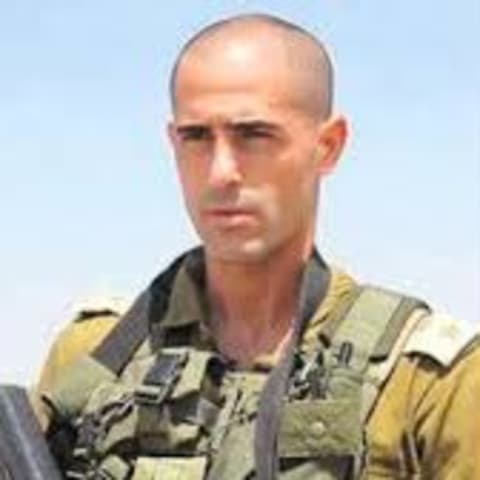
All photographs · 2
In the media
Articles
Videos
Yael Nave / YouTube
Podcasts
Memorial sites
- Roee Yosef Levy - Memorial Page
כאן 7.10.360
- Commemoration and Legacy
עמותת רפאים
Memorial projects
“Givat Roi” was established near the Burma Road in May 2024. Roi’s Sunset Corner was established in Shavei Tzion, and a Torah scroll in his memory was placed in the Heichal Avner synagogue.
Stories told about them
After being seriously wounded in Operation Protective Edge, Roi fought to return to operational service. Following a long rehabilitation, he returned to command at Bahad 1 and was later appointed commander of Egoz.
Life & service
Profile
- Date of birth
- May 29, 1979
- Birthplace
- Shavei Tzion
- Date of death
- October 7, 2023
- Age
- 44
- Hometown
- Shavei Tzion
Service
- Rank
- Colonel
Family
- Father
- Shlomo
- Mother
- Yehudit
Burial
Tributes & remembrance
אבישי דהן .
[איתי זסלבסקי]
אתר ההנצחה - מנציחים את רועי
נזכור אתכם תמיד
יהי זכרך ברוך
אוהבים ומתגעגעים
רועי !
אתה בליבנו לך !! ביזכותך ובזכות חבריך יש לנו מדינה.
תהייי נשמתך צרורה בצרור החיים אמן ואמן
אני זוכה להכיר את כל תכונותיך הטובות דרך האמא המהממת שלך
אנא שלח לה מלמעלה כוחות
״הצבי ישראל על במותיך חלל איך נפלו גיבורים״
נעים הליכות, עדין נפש וגיבור על החיים ובקרב.
אוהב אותך לנצח
הי"ד. יהי זכרו ברוך.
רועי היקר
זוכר את הרגעים המשותפים שלנו עוד כשהיית סמפ צעיר בעורב גולני
יהי זכרך ברוך
אני אתגעגע אלייך ממש גיבור
גיבור ישראל,מופת ואור לכל
תנצב"ה, גיבור ישראל
נוח על משכבך חבר יקר
נזכור אותך תמיד
בין האנשים הכי מקצועיים שיצא לי להכיר במהלך השירות, דוגמא אישית ושימת האדם לפני הכל !
ידע לתת ערך מוסף לכל חייליו ותמיד התייחס בכבוד לכולם.
אמיץ, מנהיג מהיום הראשון בטירונות, שם תמיד היה ראשון להתנדב לכל דבר או משימה, סוחב את המאג כאילו היה מקוצר ומסתער איתו בשקע כתף!
בעל חוסן פיזי ומנטלי יוצאים מגדר הרגיל.
בעיקר אדם שערכיו לפניו וחבר טוב עם כולם.
יהי זכרו ברוך!
אדם אהוב עניו וצנוע
גיבור ישראל
יהי זכרו ברוך
יהי זכרו ברוך
יהי זכרו ברוך
יהי זכרו ברוך
"הצבי ישראל על במותיך חלל
איך נפלו גיבורים"
יהי זכרו ברוך
גיבור ישראל
רועי
אתה גיבור ישראל
כמפקד חינכת וסחפת את פקודיך שהעריצו אותך
כאדם וכמפקד
היית בן בן זוג ואב למופת
יהי זכרך ברוך אמן
רועי גיבור ישראל אתה תודה לך לנצח על שהצלת את חיינו בקיבוץ רעים מוקירים אותך תמיד איש יקר. יהי זכרך ברוך לעד. בשם תושבי קיבוץ רעים
רועי זה עוד לא נתפס. היית איש הברזל עם לב ענק וזה פשוט לא נתפס. תודה רועי על כל מה שנתת.
לזכר רועי שהציל את משפחתי בקיבוץ רעים. יהיה זכרו ברוך
יהי זכרו ברוך
לזכרך המפקד.
קצין למופת ואדם מיוחד במינו.
ת.נ.צ.ב.ה
יהי זכרו ברוך
We will continue to live by your values.
Source:ynet
Read the Hebrew original
נמשיך לחיות את הערכים שלך.
Love conquers all
Source:ynet
Read the Hebrew original
אהבה מנצחת הכול
You got up and went back to fighting
Source:ynet
Read the Hebrew original
קמת וחזרת ללחום
A brother to the entire people of Israel
Source:ynet
Read the Hebrew original
אח של כל עם ישראל
A wonderful soul, a hero of Israel.
Source:ynet
Read the Hebrew original
נשמה מופלאה, גיבור ישראל.
Taking this unit to the skies
Source:ynet
Read the Hebrew original
מעיף את היחידה הזאת לשמיים
I promise to keep raising our children with your example and your values.
Source:כאן 7.10.360
Read the Hebrew original
אני מבטיחה שאמשיך לגדל את ילדינו על דמותך וערכיך.
To live together, one people
Source:ynet
Read the Hebrew original
לחיות ביחד, עם אחד
A levelheaded and sensitive leader, serious and full of humor
Source:ynet
Read the Hebrew original
מנהיג קר רוח ורגיש, רציני ומלא הומור
You were like a brother to me and a rare friend.
Source:ynet
Read the Hebrew original
היית לי כאח וחבר נדיר.
I will be there for your children all my life. Roey was dear to my heart, and he made me proud that he chose me to be his friend.
Source:ynet
Read the Hebrew original
אהיה שם בשביל ילדיך כל חיי. רועי היה אהוב ליבי והוא עשה אותי גאה שהוא בחר בי להיות חבר שלו.
He wanted to live, but he died as a fighter.
Source:The Times of Israel
His heart was so big that it was easy for the terrorist to hit him right there
Source:ישראל היום
Read the Hebrew original
היה לו לב כ"כ גדול שלמחבל היה קל לפגוע דווקא שם
Remembrance Day addresses
יום הזיכרון לחללי מערכות ישראל התשפ"ה – 2025
בכל יום שעובר, אזכור יותר! אזכור, את אלו שיצאו עימי לקרב ולא שבו, ולהם אין מי ידמה ומי ישווה. אזכור, שהכאב לא יעבור לעולם, והזמן, הוא לא מרפה ולא מרפא. אזכור, את שיברון הלב הגובר ואת הבית שבוער. אזכור, את צדקת הדרך, ואשבע שוב, שמה שהיה לא יהיה יותר. אזכור, שיותר מכל דבר אחר – אני חסר! ביום הזה, אני נתקף געגוע לדמותם, לחיתוך דיבורם, לחיוכם, ומדליק נר לזיכרון דרכם ומורשתם!
משרד הביטחון
אגף משפחות, הנצחה ומורשת
יום הזיכרון לחללי מערכות ישראל התשפ"ה – 2025
בכאב, בהצדעה ובתקווה אני מתכבד להדליק נר זיכרון זה. השנה, כשאנו נלחמים במלחמה ארוכה, רב זירתית וצודקת, הזיכרון נושא משמעות עמוקה. ביום זה נעצור ונתייחד עם זכרם של טובי בנינו ובנותינו שנפלו בהגנה על המדינה. מורשתם היא המצפן שמתווה את דרכינו, והיא המעניקה לנו כוח להמשיך ולהגן על מדינת ישראל ותושביה. משפחות יקרות, אנו מרכינים ראשנו ומתחייבים שנעמוד לצידכן תמיד. יהי זכר הנופלים ברוך.
אלוף דדו בר כליפא
ראש אגף כוח האדם, צה"ל
יום הזיכרון לחללי מערכות ישראל התשפ"ה – 2025
בשעה שאנו זוכרים את גודל תרומתם ועומק מסירות נפשם של טובי בנינו ובנותינו, נופלי מערכות ישראל לדורותיהן, ממשיכים צה"ל וכוחות הביטחון במימוש המשימה למענה לחמו ועבורה נפלו: הכרעת אויבינו מדרום, מצפון, ביהודה ובשומרון, וגם בזירות רחוקות יותר. בהערכה רבה ובגאווה אדירה אנו מרכינים ראש בפני הנופלים והנופלות, מאמצים את משפחותיהם אל לבנו, וממשיכים במשימה להבטחת קיומה של ישראל לדורי דורות. יחד נעשה ונצליח.
רב אלוף אייל זמיר
הרמטכ"ל, צה"ל
יום הזיכרון לחללי מערכות ישראל התשפ"ד – 2024
כאשר דגלינו מורדים לחצי התורן וראשינו מורכנים לזכר הנופלים והנופלות במערכות ישראל, ממשיכים לוחמי צה"ל ומפקדיו בלחימה בדרום, בצפון, ביהודה ובשומרון ובזירות נוספות. על כל דור מוטלת המשימה של הגנת העם והארץ – משימה שאף פעם אינה פוסקת. נצדיע בגעגוע ובגאווה לנופלים ולנופלות, נחבק את משפחותיהם, ונמשיך ברוח הציווי שהותירו לנו. עם ישראל חי.
רב ניצב יעקב שבתאי
המפקח הכללי, משטרת ישראל
יום הזיכרון לחללי מערכות ישראל התשפ"ד – 2024
אחיי הנופלים, כל נר הוא זיכרון יחיד ומיוחד, על חיים שהיו ואינם, געגוע שנצרב עמוק בלב, עולם ומלואו. הנרות כולם הם זיכרון של אומה כי לעולם לא עוד, בשורת הציונות וקוממיות ישראל. זיכרון כי הדרך לעם חופשי בארצנו עוברת דרך מסדר הנופלים. אור הנר יזכיר לנו את מסירות נפשכם להציל חיים, להגן על הבית. הנרות מסמנים לנו נתיב גבורה ערכי מחייב שאנו מצווים ללכת לאורו. נמשיך להילחם ולהוסיף אור מתוך אמונה בנצח ישראל.
יואב גלנט
שר הביטחון
יום הזיכרון לחללי מערכות ישראל התשפ"ד – 2024
בהצדעה ובכאב, בשם צה"ל כולו, אני מדליק נר זיכרון. בעיצומה של מלחמה, הזכרון נושא משמעות יום-יומית, שעבר והווה מתלכדים בה. לאורם של הנופלים נמשיך לצעוד, חיילי הסדיר והמילואים. לאורם של הנופלים נמשיך להגן על ארצנו ועל מולדתנו, גם כשהמחיר כבד. להבת-הזכרון תבער בנו בעודנו ממשיכים להלחם ונזכור את הנופלים ואת אומץ ליבם. משפחות יקרות, צה"ל מרכין היום ראש, מצדיע לכן וכואב איתכן. יהי זכר הנופלים ברוך.
אלוף יניב עשור
ראש אגף כוח האדם, צה"ל
יום הזיכרון לחללי מערכות ישראל התשפ"ד – 2024
בהוקרה, בגאווה ובכאב שאין לו סוף, אני מתכבד להדליק נר לזכרם של הנופלים והנופלות במערכות ישראל. סיפור חייהם בארץ הזאת, מסכת שירותם, גבורתם והקרבתם – הם סיפורה של הארץ הזאת, אך גם סיפור המחיר הכבד שהיא תובעת מאוהביה. מחויבותנו לזכר הנופלים ולדרך שהותירו לנו ניצבת תמיד לנגד עינינו. את המשימה שלא זכו להשלים, משלימים כיום, וישלימו, אנשי כוחות הביטחון, הממשיכים בדרכם ולאורם. יהי זכרם של הנופלים ברוך.
משרד הביטחון
אגף משפחות, הנצחה ומורשת
יום הזיכרון לחללי מערכות ישראל התשפ"ד – 2024
בחרדת קודש אני מתכבד להדליק נר לזכרם של חללי מערכות ישראל, חברנו שנפלו, מראשית היציאה מהחומות ולאורך כל שנות עצמאותנו המדינית והציונית, מהווים תמרור זיכרון לדרך חיינו ולמחוייבות הלאומית להנצחת זכרם. דרכם נותרה דרכנו ומורשתם נר להמשך עשייתנו. יהי זכרם ברוך!
בני גנץ
שר הביטחון
יום הזיכרון לחללי מערכות ישראל
נזכור אותם, כולנו יחד. כל אחד ואחת מהם, מדי יום ביומו, והיום ביתר שאת, כך – לנצח. "כי מדי דברי בו זכור אזכרנו עוד"
משרד הביטחון
אגף משפחות, הנצחה ומורשת