
The story
The Yanai family home in Givat Ada was a place where love blossomed. Not the loud, declared kind, but the quiet, everyday kind, woven from small acts of giving and understanding glances. Here, within the walls of the warm home, Rotem grew up, a child who absorbed into her soul the values that made her who she was. She was born into a complete family, enveloped in the arms of her parents, Hilit and Tal, and surrounded by the protective presence of her brothers, Dor, who was older, and Aviad, who was younger. The small, tranquil moshav provided the perfect backdrop for an Israeli childhood, one composed of familiar bike paths, friends who were like family, and a sense of communal security that turned every neighbor into an uncle and every yard into a playground. Rotem, with the smile that always preceded her, was an inseparable part of this landscape. She wasn't a child of grand dramas or stormy teenage rebellion; her energy was directed inward and outward simultaneously – inward, to a rich inner world of emotion and creativity, and outward, to ever-expanding circles of friends, community, and caring. From a young age, that special quality was evident in her, that ability to see others, to feel their distress, and to offer, without grand words, a shoulder, a listening ear, and an open heart. In this home, where Hilit and Tal raised their children to be good people above all else, Rotem learned that a person's greatest value is not measured by what they take for themselves, but by what they give to their surroundings.
The transition from childhood to adolescence was a natural process of blossoming for Rotem. She found her place at "Kramim" school, but she wasn't content with ordinary paths. Something within her sought expression, a channel through which she could give free rein to her rich emotional world, and she found it in the theater major. The stage became a safe space for her. There, under the spotlight, she didn't play characters far removed from herself, but rather learned to distill her own qualities: her empathy, her ability to step into another's shoes, to understand their motives, to feel their pain and joy. Every role was a lesson in understanding the human condition, and every rehearsal was training in the ability to work as a team, to listen, to compromise, and to create something greater than the sum of its parts. Her classmates remember a girl who didn't push herself to center stage, but when she was on it, her quiet yet powerful presence was impossible to ignore. Simultaneously, she found a second home in the "Gefen" tribe of the Scouts movement. The blue shirt with the white lanyard wasn't just a uniform; it was a declaration of belonging. There, amidst bonfires and hikes, between parades and evening activities, her sense of social responsibility grew stronger. She learned the value of camaraderie, the importance of leading by personal example, and the immense satisfaction of taking a group of young trainees and, within a year, transforming them into a cohesive and values-driven body. Theater and Scouts were not two separate worlds for her, but two sides of the same essence: the belief that one can and should mend the world, not with grand slogans, but with small, consistent actions, one person for another.
When it was her time to enlist, choosing the role of *Mashakit Tash* (Service Conditions NCO) seemed like the most direct and natural continuation of everything she had been until then. For many, this role was perceived as gray, bureaucratic work, but for Rotem, it was a true mission. She didn't see forms and personal identification numbers before her, but entire life stories. She saw the soldier struggling to help their family, the lone soldier with nowhere to go for the weekend, the combatant worried about their sick sibling. She requested and was assigned to the Givati Brigade, the spearhead of the IDF, and was placed in the "Rotem" Battalion, a fateful name coincidence that made the place even more hers. Very quickly, the young soldier from Givat Ada became a central figure in the battalion. Her commanders immediately recognized what was clear to everyone who knew her: a rare combination of "responsibility and a big heart." The soldiers learned that the door to her office was always open, and more importantly – that her heart was always open. She would fight for them as if they were her younger siblings, moving mountains to solve a problem, not resting or settling until she found a solution. She didn't do the bare minimum; her friends recounted how "she loved the soldiers in Givati, stayed on base and didn't leave" long after official work hours ended. She became a point of contact, a beacon of sanity and caring within the large and sometimes rigid military system. It was no coincidence that the battalion called her "the heart of the unit." She was the emotional engine, the one who ensured that this large machine, composed of young combatants with a whole world on their shoulders, would continue to beat. She was an outstanding comrade, not just in military terms, but in the deepest human sense of the word.
The war that erupted on October 7th reshuffled the cards for the entire country, and Rotem's military service, like everyone else's, took on a different, more urgent and tense hue. Her base in northern Israel, at the Shomra outpost in the Western Galilee, became a front line. The sound of sirens, warnings of hostile aircraft infiltration, and the constant awareness of the looming danger from Lebanon became part of her daily routine. But even within this new reality, Rotem remained Rotem. She continued to be an anchor for her soldiers, who needed her now more than ever. The tension and worry at home, in Givat Ada, were unbearable, but phone calls with Rotem were always reassuring. She made sure to convey that everything was under control, that she was strong and careful. The day before the tragedy, at 11:30 AM, her father Tal's phone rang. It was Rotem on the line. She told him that just a moment ago there had been a siren, a warning about a UAV, but she quickly reassured him, with that same calm and confident voice she always had. "Everything's fine," she told him. These simple words meant the world to a worried father. They continued to talk, planning the near future. Rotem said she was on her way to a ceremony, and they made plans for the next day. Tal already imagined the drive; he was supposed to pick her up at 8 PM from the Netanya train station, hug her tight, hear all the stories from the past week, and bring her home, to the safe place. The call ended with a sense of relief, with the promise of a soon-to-be meeting. Neither of them could have imagined that this would be their last conversation.
The following hours passed in the routine tension of the war days in the North. And then, on May 27, 2026, the strike occurred. An explosive UAV launched from Lebanon penetrated the defense systems and found its way directly to the Shomra base. The explosion was fatal and precise. At that moment, the world of the Yanai family, and the world of so many who loved Rotem, shattered into pieces. The initial news of casualties in the incident in the North began to seep in, immediately followed by the cold wave of rumors and fear. For the family members, the long hours of uncertainty were an indescribable torment. "We thought it was a 'test' they were putting us through," her aunt, Reut Schwartzman, recounted about those terrible moments when hope and dread battled within their souls. They clung to every shred of optimism, to every thought that she was okay, that maybe she was injured, that maybe it was a mistake. But as time passed, the bitter truth began to sink in. "We thought the worst had already happened," added her other aunt, Meital Ansbacker, words that reflected the entire national sentiment, the feeling that they had already absorbed the hardest blow, "and yesterday the absolute worst happened." And then came the knock on the door, the moment when all fears materialize and the world collapses. The official announcement of the fall of Sergeant Rotem Yanai, the *Mashakit Tash* of the Rotem Battalion, struck the family and community like a bolt from the blue, leaving behind a deafening silence and an irreplaceable void.
The military cemetery in Givat Ada, a peaceful patch of land usually accustomed to the moshav's quiet, was filled to capacity. Friends, family members, commanders and soldiers, local residents and people from all over the country came to pay their last respects to a girl who was all about giving. Above the open grave, her father, Tal, a broken man, stood and tried to find the words to describe the indescribable. "Rotem, my dear, beloved child," he cried out, his voice breaking, "I stand here stunned and refuse to believe." His words hung in the heavy air, touching every heart. He addressed her directly, as if she were still there, listening to him. "Who else will call me 'Bini'?" he asked, and this small, intimate question, a pet name known only to them both, revealed the depth of the unique and private bond that was taken from them, the chasm that opened in his life. "Your whole life was still ahead of you," he continued, his voice choked, "and I'm sorry I couldn't protect you." This was the universal cry of grief of a parent who lost their child, the illogical feeling of guilt and the pure pain of love left without an object. The battalion commander, Lt. Col. Shmuel Batit, eulogized her as a soldier and a person, speaking of an outstanding *Mashakit Tash*, of the responsibility and the enormous heart she brought to the role. Her friends, their eyes red from tears, spoke of a friend who loved life and people, who was always there for them. Each eulogy added another line, another color, to Rotem's portrait, until the picture that emerged was clear and sharp: a picture of a great soul, of a heart of gold.
Rotem Yanai was twenty years old when she fell. Twenty years, too short, yet filled with content, meaning, and giving that would suffice for an entire lifetime. She left behind parents, Hilit and Tal, brothers, Dor and Aviad, a wide family, and stunned and grieving friends. She left behind an entire battalion of soldiers who lost "the heart of the unit," the one who always cared for them. Her legacy is not written in stone nor etched in tales of fierce battle heroism. Rotem's heroism was an everyday heroism, a quiet and persistent heroism. This is the heroism of a girl who chose a theater major to learn empathy, who went to the Scouts to learn responsibility, and chose to be a *Mashakit Tash* to fight for the welfare of others. Her heroism was in every phone call that calmed a worried soldier, in every form she filled out to help a needy family, and every time she stayed in the office late to ensure no one was left behind. She was the beautiful face of Israeli mutual responsibility. After her death, Rotem was promoted from the rank of Corporal to Sergeant, an official recognition of the immense responsibility she had already carried on her young shoulders. Her aunt, Meital, summarized her essence in simple and precise words: "Rotem in two words is a huge heart. She is a girl who is all about giving. A heart of gold." And her mother, Hilit, in her painful words, looked heavenward and wrote: "Hero of Israel. My daughter, Rotem Yanai, will surely receive him with open arms and love up there. May their memory be a blessing." Rotem Yanai's story is a story of a great light extinguished too soon, but also an eternal reminder of the power of giving, that the truest heroism blossoms from an open heart and love for humanity. Her enormous heart, which ceased to beat in the soil of the Galilee, continues to echo in the hearts of all who were privileged to know her, leaving behind a trail of inspiration and hope amidst the great darkness.
Moments of a life
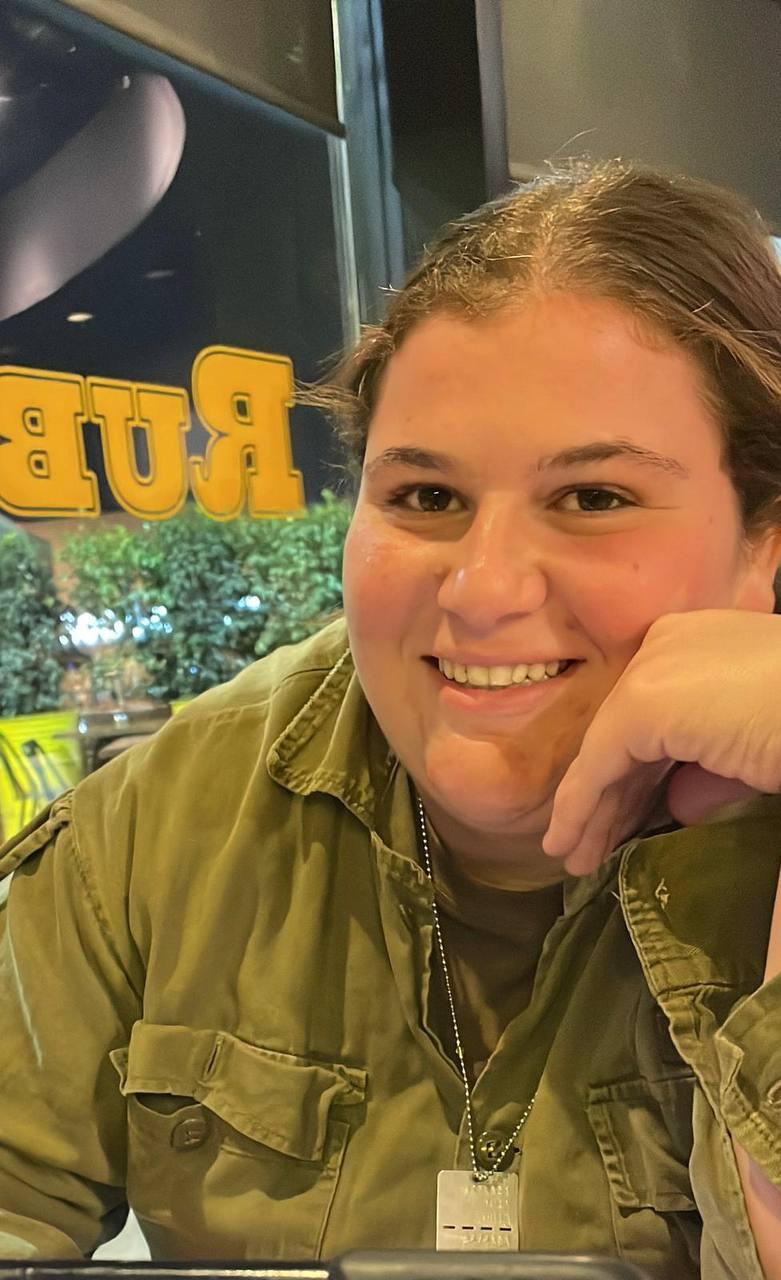
All photographs · 2
In the media
Articles
- Mother of female soldier killed by Hezbollah mourns 'sunshine' of her life
The Jewish Chronicle ·
- Sergeant Rotem Yanai, of Blessed Memory, Laid to Rest; Her Father Eulogized Her at Her Graveside: I'm Sorry I Couldn't Keep You Safe
N12 ·
- Sergeant Rotem Yanai killed by a drone strike at an outpost in the Galilee: A girl with a heart of gold, smiling and caring
ynet ·
- Sergeant Rotem Yanai Was Laid to Rest
חדשות 13 ·
- Sgt. Rotem Yanai killed during operational activity in northern Israel
The Jerusalem Post ·
- Une soldate tuée lors d’une attaque de drone du Hezbollah à la frontière nord
The Times of Israël ·
Social posts
- Yanonews Desk — Sergeant Rotem Yanai, May God Avenge His Blood
YINONEWS / Telegram
Stories told about them
Hilit said that Rotem asked her to prepare food for lone soldiers who stayed on base. Even when she needed rest, she refused to be absent because she felt responsible for the soldiers and her female friends.
Her aunt Meital said that Rotem prepared pots of hot food for soldiers when they returned from Lebanon. She loved her role as a service conditions NCO and did not complain even after a long period without going home.
In a later interview, Hilit said Rotem had guided autistic children in the Scouts and befriended children who were rejected or struggled to fit in. She said that after Rotem fell, children came and told how she had supported them.
Life & service
Profile
- Date of death
- May 27, 2026
- Age
- 20
- Hometown
- Giv'at Ada
Service
- Rank
- Sergeant
- Unit
- Givati Brigade
- Honours
- Posthumously Promoted
- Battle Location
- Northern Israel
Tributes & remembrance
You were a girl with a beautiful soul whom the world has lost.
Source:ישראל היום
Read the Hebrew original
היית ילדה נשמה שהעולם הפסיד.
She fought for the soldiers like a lioness.
Source:Israel National News
She was a radiant girl, full of smiles, surrounded by many friends, who left a positive mark.
Source:ynet
Read the Hebrew original
היא היתה ילדה קורנת מלאה בחיוך, מוקפת בהרבה חברים, השאירה חותם חיובי.
In the Scouts, she was a counselor for autistic children.
Source:ynetnews
On behalf of all citizens of Israel, we embrace Rotem’s family
Source:The Jerusalem Post
Rotem, my girl, my one and only, my special one, the sunshine of my life
Source:N12
Read the Hebrew original
רותם ילדה שלי, יחידה ומיוחדת שלי, השמש של חיי
I am sorry I could not protect you
Source:N12
Read the Hebrew original
אני מצטער שלא הצלחתי לשמור עלייך
The heart of the platoon
Source:N12
Read the Hebrew original
הלב של המחלקה
Your kind heart, the way you made everyone around you feel loved
Source:N12
Read the Hebrew original
הלב הטוב שלך, הדרך שגרמת לכל מי שסביבך להרגיש אהוב