
The story
On December fifth, two thousand and five, as the Israeli winter began to hint at its presence with first rains and cool winds, Ronen was born in Rehovot, the third child of Marina and Ilya Shapiro. The home, already filled with the laughter of older brother Grigory and middle sister Maria, was now illuminated by a new, soft and gentle light that the tiny baby brought with him. Marina remembered the birth as a moment of revelation, when Ronen’s eyes opened and immediately conveyed a sense of inner peace, a small smile that almost chuckled at the corner of his lips even in his first moments outside the womb. Ilya, a man more of actions than words, felt a profound emotion that manifested in a gentle squeeze of Marina’s hand and a long kiss on the baby’s forehead, a silent promise to be his steadfast support. Grigory and Maria, who were already six and seven years old respectively, approached the crib gently, curious and a little awestruck by the small wonder added to their family. They found themselves stroking his tiny head, captivated by the miniature fingers that firmly grasped their larger ones, and from that moment, the bond between them was softly woven, enveloping Ronen in a network of love and support.
His first years unfolded in Rehovot, amidst games in the shared courtyard of the building, the scents of fruit trees in the nearby public garden, and the sounds of the many children who frequented the streets. He attended Weizmann Elementary School, where his tireless curiosity was already evident in the lower grades. He wasn't content with standard answers, but always asked "why?" and "how?", dissecting ideas into their components and striving to deeply understand the world around him. Teachers remembered a child with sparkling eyes, who even while running around with friends during breaks, would always find a moment to stop and observe an ant carrying a breadcrumb, or a cloud changing shape in the sky. At the end of second grade, when he was eight, the family decided to move to Mazkeret Batya, a smaller, quieter town with a rural and communal atmosphere. The move was a significant change for Ronen, but he adapted quickly. Herzog Elementary School welcomed him with open arms, and his captivating smile, those kind eyes, and the golden heart already evident in him, quickly made him a beloved and sought-after friend. He was a child blessed with talents, one who seemed to turn everything he touched into gold – whether it was a simple drawing that became a work of art in the eyes of his friends, or a tower of blocks that rose to unexpected heights.
As he grew, his traits sharpened and his interests became more defined. At Rabin High School in Mazkeret Batya, he excelled in mathematics and sciences, not only due to his high intellectual abilities but also because of his uncompromising passion to understand the world. He wasn't satisfied with memorizing formulas or facts; he wanted to know the mechanisms behind them, the causes and consequences. Textbooks were merely a starting point for him. He became a true autodidact, spending long hours in the home library and online, researching and delving into subjects that fascinated him. Astronomy and geology were two worlds that completely captivated his heart. He could sit for hours in the backyard on a clear night, with a small telescope he received as a birthday gift, pointing out stars and constellations to his sister Avital, who was younger and mesmerized by his stories of distant galaxies and colorful nebulae. "Look, Avital," he would whisper to her in an excited voice as he pointed to a tiny speck in the sky, "there, far, far away, is a star a thousand times bigger than our sun. Think how immense it is, and how small we are in all this." He would explain to her about the formation of stars, about black holes, and about the journey of meteorites through infinite space. A small piece of meteorite, a black stone with a rough and mysterious texture, became a permanent necklace around his neck, a symbol of his invisible connection to the vast universe, a daily reminder that beyond the familiar everyday, there were entire worlds of wonder and mystery.
Amidst all his intellectual and investigative pursuits, Ronen remained a devoted son to his parents and a loving, supportive brother. He was an anchor of light and joy in the home, his presence filling every corner with warmth and laughter. He deeply respected his parents, not only in words but in small, everyday actions – helping with household chores without being asked, patiently listening to their day's stories, offering help at any time. Marina and Ilya felt immense pride and contentment in him, seeing in him the perfect blend of wisdom and kindness. With his siblings – Grigory, Maria, and Avital – Ronen maintained a warm and unique bond. He was the shoulder they could lean on, the listening ear for their problems, and the best friend for games and heart-to-heart conversations. When Avital would come home from school with a low test score, Ronen would sit with her with endless patience, explaining the material anew, turning intimidating mathematics into a fascinating game. "Look, Avital," he would tell her, "it's like a puzzle. Each number is a small piece, and when you understand how they connect, suddenly the whole picture is clear." He not only taught her the material but also instilled in her self-confidence and belief in her abilities. When Grigory, his older brother, was deliberating life choices, Ronen was there to offer a new perspective, to ask questions that illuminated the path, always calmly and without judgment. Maria would find in him a partner for deep conversations about the meaning of life, art, and emotions, and he would listen to her with genuine curiosity, even when the topics were far from his scientific interests. He was fully present in their lives, laughing heartily with them at inside jokes, quietly comforting them when they were sad, and always standing by their side.
Beyond school and family life, Ronen found another channel for personal expression and giving in the "Acharei" movement. The movement, which aimed to strengthen capabilities and leadership among young people, was a fertile ground for him to grow and develop. He was drawn to the physical and mental challenges, to nature trips, to the long treks that demanded endurance and determination. But more than anything, he loved community work and instruction. He became a youth instructor, where he shared with his trainees not only tips for combat fitness but also values of mutual aid, solidarity, and self-belief. He spoke to them about the importance of setting goals and how to cope with difficulties, always with an encouraging smile and genuine support. He vividly remembered the first time he led a group on a particularly long trek, when one of the younger boys struggled to keep pace, his face red with exhaustion and despair. Ronen didn't scold him; instead, he slowed his pace, placed a hand on his shoulder, and said in a soft yet firm voice: "Look at me, deep breaths, one step at a time. We don't leave anyone behind. Together we'll reach the end." And he stayed by his side, encouraging, telling small jokes to distract him from the pain, until they all reached the finish line together.
An inseparable part of his volunteer activity was his care for an elderly woman in the moshav. Every week, on regular days, Ronen would visit her home, bringing not only light physical help – arranging groceries, carrying heavy items, small repairs around the house – but primarily companionship. He would sit with her for hours, listening to her stories about days gone by, about the family she raised, and about the changes the moshav had undergone. He didn't see it as a "chore," but as a deep human connection. His friends recounted that even beyond the official volunteer hours of the movement, Ronen would simply drop by, with a warm cup of tea in hand or cookies his mother had baked, just to see how she was doing and to make sure she wasn't alone. She would await him eagerly, and her smile when he entered the door was worth more to him than any other reward. He understood, even at a young age, the immense value of presence, of listening, of simply being there for someone.
After completing high school, Ronen decided to continue to a service year in Karmiel. This was a period of immense personal growth for him, a time when he blossomed in full splendor. His friends from the service year described him as a "charming young man, radiant and full of giving." He was the first to volunteer for any task, big or small, always with a wide smile and kind eyes. If heavy equipment needed to be carried, he was there. If someone needed help with studies, he was there. If the atmosphere in the room was a bit tense, he was there with a small joke, a funny remark, or just an encouraging smile that would diffuse the tension. He was a caring and funny friend, one who radiated good energy to everyone around him. He believed in the power of positivity and always used to say, in his soft yet determined voice: "Give a smile, everything will be okay." For him, this was not just a cliché, but a philosophy of life. He believed that even in the most difficult moments, a small smile could change one's perspective, opening a window to optimism and hope. He formed deep connections with his friends, who felt he was someone they could trust implicitly, someone who would always see the good and find a way forward.
Ronen was a competitive and achievement-oriented person, but always in a sporting and fair spirit. He engaged extensively in sports, and cycling was one of his great loves. He would go on long rides on the trails of Mazkeret Batya and its surroundings, feeling the wind on his face, his rapid pulse, the sense of freedom that only cycling could grant him. He set clear goals for himself and worked with determination to achieve them. One example, which his friends and family remembered well, was a pull-up competition against his older brother, Grigory. Grigory, who was stronger and more experienced, easily defeated him the first few times. Ronen did not accept the defeat as a matter of course. He didn't despair; on the contrary – he saw it as a challenge. He began to train consistently, morning and evening, at home and in the garden, hanging himself from playground equipment or a doorframe. His hands ached, his muscles burned, but he did not give up. Day after day, he did another pull-up, and another, until he felt his strength grow. He did not stop training until he matched Grigory's result, and even surpassed it. The moment he managed to do one more pull-up than his brother, his face sweaty but beaming with happiness, was a moment of pure personal triumph, which more than anything testified to his determination and the fighting spirit that pulsed within him.
Leading up to his enlistment in the IDF, all his energy and strength were focused on combat fitness training. He viewed meaningful military service not merely as an obligation, but as a great privilege, a true way to contribute to the country he so loved. He aspired to be a combat soldier, not just to serve, but to be at the forefront, to defend his people. He ran long distances with weights, performed intense strength training, practiced navigation and combat techniques, guided by the image of the perfect warrior. He did not seek shortcuts; he believed in hard work and full dedication, knowing that every drop of sweat he shed now would transform into strength and capability in the moment of truth.
On Saturday, the 22nd of Tishrei, Simchat Torah 5784, on the morning of October 7, 2023, at half past six, Ronen's life, like the lives of millions of Israelis, was turned upside down. The quiet of the holiday morning was shattered all at once by a deafening roar of massive rocket fire from the Gaza Strip. Ronen, who was in his service year in Karmiel, woke to the sounds of distant sirens, but quickly understood that something unusual and widespread was happening. WhatsApp messages began to flow rapidly among his service year friends, among his family in Mazkeret Batya, initial reports of terrorist infiltration, of a massacre in the Gaza envelope communities, of the nature party that had turned into a killing field. His heart sank, his breath caught. The images and videos that began to spread on social media documented unimaginable horrors – the murder of civilians in their homes, kidnappings, burning of houses, and looting. Ronen sat open-mouthed, stunned, as all his plans, all his future, suddenly seemed so meaningless in the face of the magnitude of the disaster. He understood that this was a pivotal moment, that there was no turning back. The entire nation was called to war, and he, with all the passion and determination that characterized him, knew exactly what he had to do. His service year, which was planned to last many more months, was abruptly cut short. He did not hesitate for a moment. The sense of urgency and the need to contribute outweighed all other considerations.
On April 8, 2024, a few months after the terrible massacre, Ronen enlisted in the IDF. He fulfilled his dream of becoming a combat soldier, joining the Combat Engineering Corps, Battalion 605, part of the "Barak" (188) Formation. The training was intense and demanding, but Ronen, with his excellent physical fitness and uncompromising determination, completed it with distinction. He learned the intricacies of the profession – breaching obstacles, demolitions, urban and open-field combat, operating heavy engineering equipment – with every detail absorbed by his inquisitive and precise mind. He was not content with the minimum required, but always strived to understand deeply, to refine his techniques, and to be the best he could be.
After his training, Ronen's unit entered combat in the north, in the Lebanon sector, where they stayed for about three weeks. This was his first baptism by fire, the real encounter with the complex and dangerous reality of the battlefield. He acted with determination and professionalism, despite the pressure and fatigue. He remembered the first night he heard live fire so close, the rapid pulse, the immense sense of responsibility. He learned to remain calm under fire, to trust his training and his comrades in arms. From there, the unit was sent to the Gaza Strip, into the heart of the war. Ronen quickly proved himself to be a professional, dedicated, and responsible soldier, earning great appreciation from his commanders. They saw in him an exemplary figure, a soldier who could be relied upon in any situation, one who would always carry out his mission to the best of his ability, and even beyond. His unit comrades spoke of a smiling and pleasant soldier, who even amidst the inferno of combat, knew how to spread light and optimism. He stood out for his exceptional physical fitness, which was evident not only in runs and treks but also in his ability to carry heavy weights with seemingly no effort.
More than anything, Ronen’s big heart stood out. He was there for his friends not only on the battlefield but also in the small moments of the exhausting daily routine. When other soldiers struggled on a trek, when their backpack was too heavy, when fatigue threatened to overwhelm them, Ronen was the first to volunteer to help. He remembered one particularly long march, when his good friend, Yoav, began to sway from side to side, his face pale and his eyes red with exhaustion. Ronen didn't think twice. He approached him, placed a hand on his shoulder, and took his heavy vest, his helmet, and for a moment even his weapon. "It's all good, Yoavi," he said with a smile, as he loaded the heavy equipment onto his own shoulder, "I've got another shoulder, you guys rest a bit, I'll keep going with you." He continued to walk, carrying his friend’s burden on his doubled shoulders, as if nothing had happened, and the smile never left his face. This story, and many others like it, became a symbol of the person he was – boundless giving, genuine concern for others, and a tireless ability to maintain a positive spirit even in the toughest conditions. Ronen was proud of his role in the army, loved his unit and his friends, and aspired to advance. He was soon to attend a squad commanders' course, a natural step for a person with such prominent leadership qualities, who always sought to contribute and lead. He already envisioned himself commanding soldiers, passing on the knowledge and values he had absorbed, and continuing his path as a warrior and a leader.
On the 28th of Sivan 5785, June 24, 2025, when he was just nineteen and a half years old, Ronen was engaged in operational activity with his unit in Khan Yunis in the southern Gaza Strip. It was another day of intense fighting, complex missions of locating and neutralizing terror infrastructure, breaching routes, and searching buildings. Ronen was inside a Puma APC (Armored Personnel Carrier), a formidable and vital armored vehicle designed to breach paths and protect the soldiers within. The Puma advanced through the area, amidst the ruined streets of Khan Yunis, a city that had become a continuous battlefield. Suddenly, with a swift and unexpected movement, a terrorist emerged from a corner and threw an explosive device into the APC. The explosion was violent and immediate, a deafening roar that tore through the relative quiet of the moment. Within seconds, the Puma, which had been the soldiers' fortress, turned into a trap of fire and iron. Ronen and six other soldiers who were with him in the APC were killed instantly. The death was sudden, cruel, and broke the hearts of many.
Corporal Ronen Shapiro fell in battle, leaving behind heartbroken parents, a brother, two sisters, and an entire community left grieving and stunned. He was laid to rest in the military section of the Mazkeret Batya cemetery, under gray skies and accompanied by a heavy sense of national mourning. After his fall, he was posthumously promoted to the rank of Sergeant, in recognition of his dedication, his bravery, and his immense contribution to the security of the state. The new rank was but a small symbol of the greatness of the person he was, and the enormous void he left behind.
The grief for Ronen was profound, yet alongside it grew a fierce sense of pride in the way he lived and the manner in which he fell. His brother Grigory, with a broken heart, eulogized him with words that cried out pain and love: "Ronen, my hero brother. That's what I called you when you came to visit home, because most of the time you were in the army. You were a person with the biggest heart I knew, and the widest smile I'd ever seen. Last week, when you came for leave, we had a meal together, we got to talk to you, to hug you. We didn't know it would be the last time... It's incomprehensible that they took you from us. We always worried about you, and our greatest nightmare came true. Ronen, my hero brother. I love you forever." Grigory's words reflected the shock, the incomprehensible pain of the sudden loss of a young brother, full of life and plans.
His sister Avital, who shared so many moments of childhood and adolescence with him, wrote heartfelt words describing the emptiness of life without him: "Two and a half weeks of silence in a big heart. Two and a half weeks of silence without words, two and a half weeks and I still don't understand how to continue... It's hard to smile when I know you're not here. It's hard to enjoy when something in me remains there, in the place where you ceased to be... My big brother, I miss you in every possible way, but I promise not to stop living because you would want me to continue, even when it hurts, even when it's almost impossible." Avital's words were a quiet promise to continue his path, to live a full and meaningful life, even when every cell in her body resisted.
Maria, his other sister, chose to commemorate his memory through poetry, deciding to publish a book of poems in his honor. In one of the poems, "Things Are Different Now," she described with painful precision the small and large changes that had occurred in the family's life since his fall, the immense void he left behind. She wrote about how "the smile is different now / somber, piercing," and how "the laughter sounds different / rings on another note." She described how "a glass of wine became four," as the family sat around the central table where Ronen was missing, and how "a cigarette is already a pack," as one of them tried to find temporary comfort in smoke. The dance, which was once an expression of joy, "became full of guilt," and the crying "took on an unfamiliar sound." She touched on the small, everyday details that shaped his presence in the home: "The freezer is no longer bursting with malawach waiting for you to make," "there's no more missing milk, because no one drinks it like you," and "commercial quantities of chocolate that were your responsibility." His pajamas, which were once just clothes, "became your shirt," an item of clothing that carried his scent and his memory, honoring his tangible presence. All these were deep expressions of how Gaza, which had become a word not to be spoken, had penetrated every corner of their lives, changing the color and sound of the most familiar things.
Ronen's family, along with his many friends, created an Instagram page in his memory called @remember_ronen_shapiro, where they upload his pictures, dedications, and commemoration activities. The page became a gathering place and a space for remembrance, a virtual realm where Ronen's story continues to echo, and his qualities and values serve as an inspiration to many. They produced shirts and stickers with phrases that were identified with him, words that became mottos in his life and expressed his worldview: "Alone you go fast, together you go far" – a phrase that reflected his belief in the power of community and mutual aid. "Choose your path and illuminate every step with a smile" – which recalled his tireless optimism and his ability to find the good in every situation. "Work hard in silence, success will make the noise" – which attested to his modesty and his belief in hard work without needing the spotlight. And "Keep running forward, do it only with a smile" – which summarized his uncompromising spirit, his determination to strive for excellence, and the way he always did so with a smile and an open heart.
Sergeant Ronen Shapiro was more than just a soldier who fell in battle. He was a son, a brother, a friend, an instructor, a volunteer – a man of action, a curious researcher, a determined athlete, an unwavering optimist. His short life, brutally cut short at just nineteen and a half years, was filled with substance, giving, and love. He left behind an enormous void, but at the same time, also a rich legacy of values, an unforgettable smile, and a strong spirit that continued to pulse even when danger loomed. His memory is a constant reminder of the strength of the human spirit, the ability to light up the world even in the darkest moments, and the heavy price we pay for our freedom. Ronen's story is a story of Israeli resurgence, of deep pride in a person who chose to defend his home, his people, and his values, until his last breath.
Moments of a life
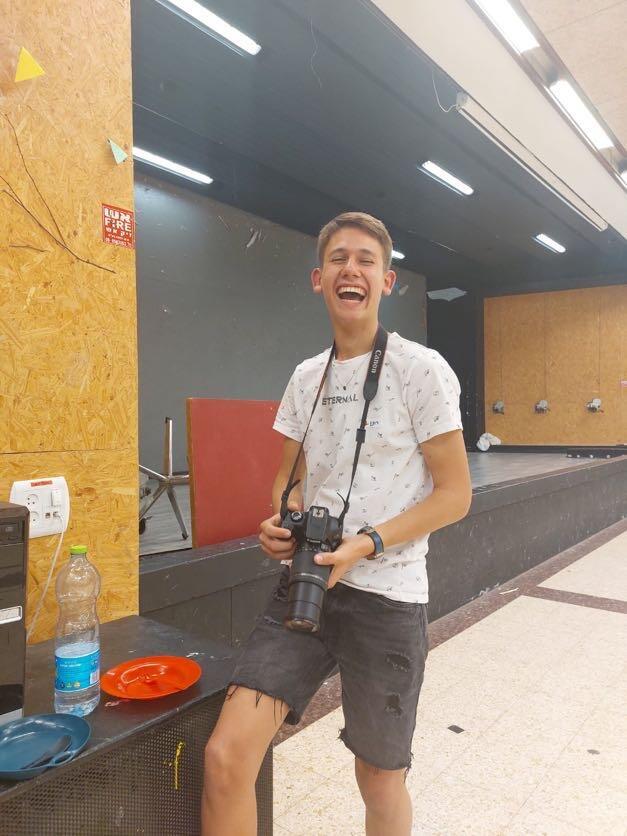
All photographs · 4
In the media
Articles
- "You left without saying goodbye — I feel as though half of me has been taken": Five of the soldiers who fell in the devastating incident in Khan Younis laid to rest
ישראל היום ·
- Five combat engineering soldiers who fell in the Khan Younis disaster laid to rest
ynet ·
- IDF names 7 soldiers killed in Gaza explosion
ynetnews ·
- ‘How does a father eulogize his son?’: 5 soldiers killed in Gaza blast laid to rest
The Times of Israel ·
- An IDF officer and six soldiers were killed in Khan Younis
Вести
Podcasts
- Episode 25: What is happening in Gaza?
Ask Haviv Anything — Haviv Rettig Gur ·
Memorial sites
- Ronen Shapiro
ynet ·
- Yizkor — Sergeant Ronen Shapiro
משרד הביטחון – יזכור
Memorial projects
His sister Maria decided to publish a book of poems in his memory; shirts and stickers with phrases associated with him were also produced. This describes a decision to publish a book, without proof that the book has already been published.
Stories told about them
Ronen volunteered at the home of an elderly woman with no family even after completing his school’s required community service hours. According to his brother’s account on Gal-Ed, family members got matching meteor tattoos in memory of his love of space.
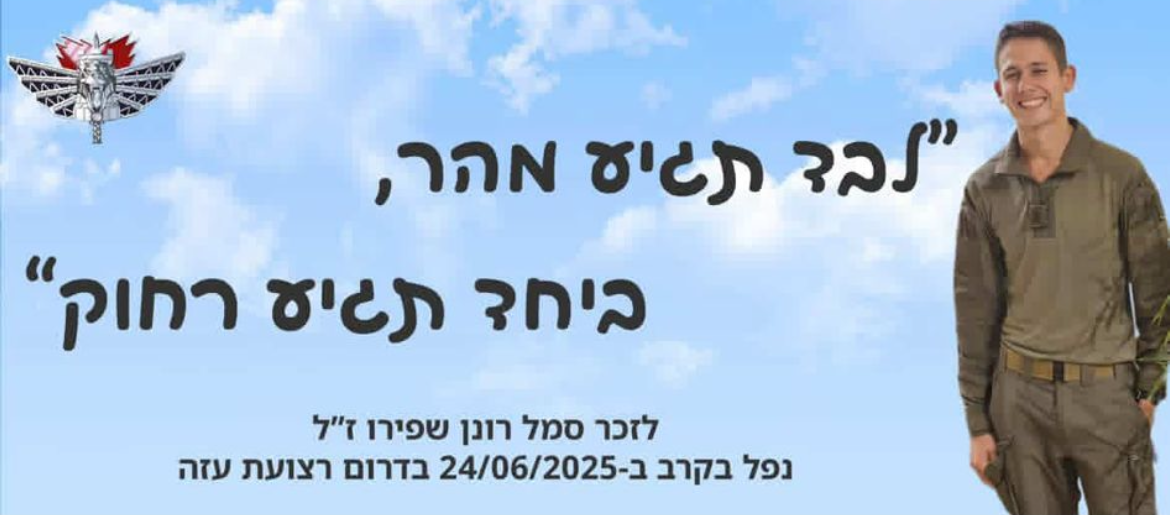
“Alone you go fast, together you go far.”
Life & service
Profile
- Date of birth
- December 5, 2005
- Birthplace
- Mazkeret Batya
- Date of death
- June 24, 2025
- Age
- 19
- Hometown
- Mazkeret Batya
Service
- Rank
- Sergeant
- Honours
- Posthumously Promoted
- Battle Location
- South Gaza Strip
Family
- Father
- Ilya
- Mother
- Marina
Burial
Tributes & remembrance
למשפחת שפירו משתתפים בצערכם אנחנו לומדים וחוקרים על עליו ביהס אוהבים אותכם מאוד
רונני חבר יקר שלי כמה געגועים תודה שיצאה לי הזכות להכיר אותך בן אדם יוצא דופן תמיד עם חיוך על הפנים חיוך כובש חיוך שמיד תופס את העין ומעלה בחזרה חיוך על הפנים תודה רונני על הכל שתמיד היית שם בשביל כולם ולא ויתרת לאף אחד, תודה על מי שהיית בשבילי חבר אחד הטובים שלי חבר שלא ויתר חבר שלא ראה בעיניים חבר שתמיד עם חיוך ענק על הפנים וטוב לב לא מהעולם הזה רונני תמיד תישאר בליבי יהי זכרך ברוך גיבור
יהי זכרם ברוך
אחי היקר אני מתגעגע כל כך תנוח על משכבך בשלום אחי אוהב אותך הכי שיש ואני מודה לך על כל השנים שהיו לנו ביחד ועל החברות המופלאה שהיתה בינינו תנוח על משכבך בשלום אחי היקר ואהוב ??
יהי זיכרו ברוך תהיו חזקים ובריאים
גיבור ישראל. יהי זכרו ברוך
ראיתי תמונה שלו בעמוד לזכרו, והחיוך שלו ישר תפס אותי. נראה אדם ככ טוב, עם עיניים טובות. רואים שהיה אהוב על ידי כל מי שמסביבו.
You loved the country
Source:ישראל היום
Read the Hebrew original
אהבת את המדינה
A precious soul
Source:ישראל היום
Read the Hebrew original
נפש יקרה
Determination and humility
Source:ישראל היום
Read the Hebrew original
נחישות וענווה
What a beautiful boy you are
Source:ynet
Read the Hebrew original
ילד יפה שאתה
An amazing boy
Source:ynet
Read the Hebrew original
ילד מדהים
A special young man
Source:ynet
Read the Hebrew original
בחור מיוחד
The smile became different
Source:משרד הביטחון — יזכור
Read the Hebrew original
החיוך נהיה אחר
It is hard to smile when I know you are not here.
Source:משרד הביטחון – יזכור
Read the Hebrew original
קשה לחייך כשאני יודעת שאתה לא פה.
Remembrance Day addresses
יום הזיכרון לחללי מערכות ישראל התשפ"ה – 2025
בכל יום שעובר, אזכור יותר! אזכור, את אלו שיצאו עימי לקרב ולא שבו, ולהם אין מי ידמה ומי ישווה. אזכור, שהכאב לא יעבור לעולם, והזמן, הוא לא מרפה ולא מרפא. אזכור, את שיברון הלב הגובר ואת הבית שבוער. אזכור, את צדקת הדרך, ואשבע שוב, שמה שהיה לא יהיה יותר. אזכור, שיותר מכל דבר אחר – אני חסר! ביום הזה, אני נתקף געגוע לדמותם, לחיתוך דיבורם, לחיוכם, ומדליק נר לזיכרון דרכם ומורשתם!
משרד הביטחון
אגף משפחות, הנצחה ומורשת
יום הזיכרון לחללי מערכות ישראל התשפ"ה – 2025
בכאב, בהצדעה ובתקווה אני מתכבד להדליק נר זיכרון זה. השנה, כשאנו נלחמים במלחמה ארוכה, רב זירתית וצודקת, הזיכרון נושא משמעות עמוקה. ביום זה נעצור ונתייחד עם זכרם של טובי בנינו ובנותינו שנפלו בהגנה על המדינה. מורשתם היא המצפן שמתווה את דרכינו, והיא המעניקה לנו כוח להמשיך ולהגן על מדינת ישראל ותושביה. משפחות יקרות, אנו מרכינים ראשנו ומתחייבים שנעמוד לצידכן תמיד. יהי זכר הנופלים ברוך.
אלוף דדו בר כליפא
ראש אגף כוח האדם, צה"ל
יום הזיכרון לחללי מערכות ישראל התשפ"ה – 2025
בשעה שאנו זוכרים את גודל תרומתם ועומק מסירות נפשם של טובי בנינו ובנותינו, נופלי מערכות ישראל לדורותיהן, ממשיכים צה"ל וכוחות הביטחון במימוש המשימה למענה לחמו ועבורה נפלו: הכרעת אויבינו מדרום, מצפון, ביהודה ובשומרון, וגם בזירות רחוקות יותר. בהערכה רבה ובגאווה אדירה אנו מרכינים ראש בפני הנופלים והנופלות, מאמצים את משפחותיהם אל לבנו, וממשיכים במשימה להבטחת קיומה של ישראל לדורי דורות. יחד נעשה ונצליח.
רב אלוף אייל זמיר
הרמטכ"ל, צה"ל
יום הזיכרון לחללי מערכות ישראל התשפ"ד – 2024
כאשר דגלינו מורדים לחצי התורן וראשינו מורכנים לזכר הנופלים והנופלות במערכות ישראל, ממשיכים לוחמי צה"ל ומפקדיו בלחימה בדרום, בצפון, ביהודה ובשומרון ובזירות נוספות. על כל דור מוטלת המשימה של הגנת העם והארץ – משימה שאף פעם אינה פוסקת. נצדיע בגעגוע ובגאווה לנופלים ולנופלות, נחבק את משפחותיהם, ונמשיך ברוח הציווי שהותירו לנו. עם ישראל חי.
רב ניצב יעקב שבתאי
המפקח הכללי, משטרת ישראל
יום הזיכרון לחללי מערכות ישראל התשפ"ד – 2024
אחיי הנופלים, כל נר הוא זיכרון יחיד ומיוחד, על חיים שהיו ואינם, געגוע שנצרב עמוק בלב, עולם ומלואו. הנרות כולם הם זיכרון של אומה כי לעולם לא עוד, בשורת הציונות וקוממיות ישראל. זיכרון כי הדרך לעם חופשי בארצנו עוברת דרך מסדר הנופלים. אור הנר יזכיר לנו את מסירות נפשכם להציל חיים, להגן על הבית. הנרות מסמנים לנו נתיב גבורה ערכי מחייב שאנו מצווים ללכת לאורו. נמשיך להילחם ולהוסיף אור מתוך אמונה בנצח ישראל.
יואב גלנט
שר הביטחון
יום הזיכרון לחללי מערכות ישראל התשפ"ד – 2024
בהצדעה ובכאב, בשם צה"ל כולו, אני מדליק נר זיכרון. בעיצומה של מלחמה, הזכרון נושא משמעות יום-יומית, שעבר והווה מתלכדים בה. לאורם של הנופלים נמשיך לצעוד, חיילי הסדיר והמילואים. לאורם של הנופלים נמשיך להגן על ארצנו ועל מולדתנו, גם כשהמחיר כבד. להבת-הזכרון תבער בנו בעודנו ממשיכים להלחם ונזכור את הנופלים ואת אומץ ליבם. משפחות יקרות, צה"ל מרכין היום ראש, מצדיע לכן וכואב איתכן. יהי זכר הנופלים ברוך.
אלוף יניב עשור
ראש אגף כוח האדם, צה"ל
יום הזיכרון לחללי מערכות ישראל התשפ"ד – 2024
בהוקרה, בגאווה ובכאב שאין לו סוף, אני מתכבד להדליק נר לזכרם של הנופלים והנופלות במערכות ישראל. סיפור חייהם בארץ הזאת, מסכת שירותם, גבורתם והקרבתם – הם סיפורה של הארץ הזאת, אך גם סיפור המחיר הכבד שהיא תובעת מאוהביה. מחויבותנו לזכר הנופלים ולדרך שהותירו לנו ניצבת תמיד לנגד עינינו. את המשימה שלא זכו להשלים, משלימים כיום, וישלימו, אנשי כוחות הביטחון, הממשיכים בדרכם ולאורם. יהי זכרם של הנופלים ברוך.
משרד הביטחון
אגף משפחות, הנצחה ומורשת
יום הזיכרון לחללי מערכות ישראל התשפ"ד – 2024
בחרדת קודש אני מתכבד להדליק נר לזכרם של חללי מערכות ישראל, חברנו שנפלו, מראשית היציאה מהחומות ולאורך כל שנות עצמאותנו המדינית והציונית, מהווים תמרור זיכרון לדרך חיינו ולמחוייבות הלאומית להנצחת זכרם. דרכם נותרה דרכנו ומורשתם נר להמשך עשייתנו. יהי זכרם ברוך!
בני גנץ
שר הביטחון
יום הזיכרון לחללי מערכות ישראל
נזכור אותם, כולנו יחד. כל אחד ואחת מהם, מדי יום ביומו, והיום ביתר שאת, כך – לנצח. "כי מדי דברי בו זכור אזכרנו עוד"
משרד הביטחון
אגף משפחות, הנצחה ומורשת