
The story
The crisp air of the Samarian Mountains was Ori Yosef Sylvester's first playground, the place where his first breaths mingled with the scent of pines and rocky soil. He was born and raised in Beit Aryeh, a communal settlement perched like a crown on one of the hills, overlooking a wild and ancient landscape. His life there was woven into the dense fabric of a small community, where everyone knew everyone, and the winding paths between the houses were also the paths that connected hearts. He was the child who ran barefoot on the grass, who knew every hidden corner, every fig tree, and every vantage point from which the coastal plain unfolded in all its glory on days of good visibility. Alongside his sisters, Ron and Maya, he learned the meaning of a close family bond, of a home that was always an anchor, even when the winds outside raged. This childhood, amidst rocky hills and vast skies, shaped within him an inner calm and quiet strength, an ability to look far ahead, literally, and to plan his steps forward with patience and determination. Even then, in those formative years, the buds of the person he would become were evident: a young man with a serious gaze, one who didn't look for shortcuts, who understood that to reach the summit, whether it was the nearby hill or a greater aspiration, required hard work, step by step, breath by breath.
As he grew older, and the small world of Beit Aryeh was no longer enough to contain his curiosity and aspirations, he expanded his horizons to the comprehensive high school in Yehud. This transition, the daily commute from the quiet settlement to the bustling city, was more than just a geographical change. It was an exposure to a wider world, to a rich human tapestry, to the complexity of Israeli society. There, amidst the school corridors, he began to chart his future path. His high grades and academic excellence were not an end in themselves, but a means. They were the tools with which he built the bridge to his great dream – studying medicine. This choice did not stem from a search for prestige or status; it arose from a deep inner calling, from a genuine passion to understand the wondrous and fragile machine of the human body, and from a desire to dedicate his life to healing, to alleviating suffering. While his friends deliberated between academic tracks and grappled with the questions of adolescence, it seemed that for Ori, everything was already clear, organized, as if he were looking at a master plan for his life and knew exactly what the next step was. His high school years sharpened his self-discipline, his ability to focus on a long-term goal and ignore background noise, qualities that would become so vital later in his journey, both as a medical student and as a marathon runner.
Admission to the Hebrew University's School of Medicine in Jerusalem was the realization of a dream and the beginning of an arduous path. The years of study were demanding, almost cruel. Days and nights merged into an endless sequence of lectures, memorization of anatomy, physiology, and biochemistry, and exams that seemed like insurmountable hurdles. Jerusalem, with its cold air and heavy history, was the perfect backdrop for this journey. He walked its streets immersed in thoughts of molecular mechanisms, sat in libraries until the small hours of the night under neon light, and sacrificed sleep and social gatherings on the altar of excellence. But Ori was not just a brilliant student; he was a person who sought balance. And amidst the intensity of medical studies, he found his refuge and challenge in running. It began as a way to release pressure, to shed the tension of a long study day, but quickly became a true passion, an inseparable part of his identity. Running was not just a sport for him; it was meditation in motion, a way of life. He discovered that the same determination required to pass his final medical exams was the same determination needed to run another kilometer when his body screamed to stop. The streets of Jerusalem, and later the roads of the entire country, became his training ground, and he became a serious runner, one who wasn't content with a half marathon. He dreamed of the full distance, the mythical 42.2 kilometers of the marathon, and understood that to get there, he needed professional guidance.
He began training under the guidance of Daniel Guetta, an Olympic marathoner, and the training became part of his daily routine, no less sacred than his study hours. Early morning hours, before the sun rose, found him already on the track, breathing at a steady pace, dedicating himself to the continuous effort, to the internal dialogue between the desire to continue and the temptation to give up. Running taught him about perseverance, about the ability to endure pain for a greater achievement, and about the deep understanding that true limits are in the mind, not in the legs. His training and study partners saw him as an inspiring figure – the outstanding medical student who was also a serious athlete, a person who managed his time with the precision of a surgeon and ran long distances with the determination of a warrior. He proved, first and foremost to himself, that there was no contradiction between a demanding intellectual life and a challenging physical life, but rather that they complemented and nourished each other. Around 2022, after many years of diligent effort, he completed his studies and held the coveted degree: Doctor of Medicine. The journey wasn't over; it had only entered its next phase. He completed his internship at Carmel Hospital in Haifa, where, for the first time, he stood before real patients, facing their anxieties, hopes, and pains, and transformed theoretical knowledge into the act of healing.
Amidst this demanding path of building a professional career, Ori also built his personal life. He met Shahar, and she became the center of his world, an anchor of sanity amidst his intense life. Their love blossomed, and they decided to build their shared home in Tel Aviv. The city that never stops, with its energy and dynamism, suited their young and vibrant spirit. He became part of Shahar's family, a beloved son to Limor and Shai Shoshani from Kochav Yair-Tzur Yigal, and found another warm home with them. His life filled with new meaning, that of partnership and companionship, of building a shared future. Concurrently, he made the most significant choice in his military career. As a doctor, many quieter options were open to him in the army, but Ori chose differently. He chose to go with the combat soldiers, to be there with them, on the front line. He enlisted for the role of battalion doctor in the Shaked Battalion of the Givati Brigade. This was not a technical choice; it was a declaration of intent. He didn't want to treat injuries only in a sterile clinic; he wanted to be there, in the field, in the moment of truth, the person to whom the combat soldiers looked when everything went wrong. He wanted to be their first point of contact, not only for treating physical injuries, but also as a source of moral support, as a responsible and calming figure amidst the chaos of the battlefield.
He served in his role "with dedication, great courage, and a sense of mission." These words, which would become part of his official eulogy, were an accurate description of his life in the battalion. His dedication was evident in the endless hours he invested in getting to know the combat soldiers, in learning the procedures, in preparing medical equipment, in his readiness to be available 24/7 for every soldier, whether they suffered from chafing or anxiety before an operation. Courage was not the absence of fear, but the ability to function under fire, to make life-or-death decisions in seconds, to crawl under gunfire to reach the wounded, to prioritize the well-being of his soldiers over his own. And the sense of mission, that was the fuel that drove him. He saw his role not just as a job, but as a calling. As then-Defense Minister Israel Katz put it, Ori was a person who "chose to dedicate his life to healing and saving lives," and he chose to do so in the most dangerous and challenging place. The transition from the stethoscope in a civilian clinic to the ceramic vest and the battalion medic's bag was natural for him, a direct continuation of that inner compass that had always guided him – to be where he was needed most.
Then came the difficult years. The war that erupted on October 7, 2023, and changed the face of the country, also shook Ori's life. As a combat doctor, he was at the forefront of the war effort from the very first moment. He experienced the loss, the pain, the sights of horror, and the heroism. He saw his friends, his subordinates, fall in battle, and treated countless wounded. Years passed, and the war changed shape, from Gaza to Lebanon, from periods of intense fighting to fragile ceasefires, but the scars remained. On October 15, 2025, on his birthday, as the country marked two years since the war began, Ori sat and wrote a Facebook post that became a kind of spiritual testament. He poured into words the feelings that had accumulated within him, the insights of a doctor and a combat soldier who had seen too much. He wrote about the grief and sorrow, and about the stubborn hope that people would once again be able to feel joy. He expressed a wish, a secular prayer from a man of science and a humanist, that this terrible war would be the last, that "after an unprecedented war, we will break the cycle of wars in Israel and enter a period of peace and prosperity without an expiration date." He hoped that "the cycle of bereavement would stop growing," and concluded with a resounding hope, one that only a doctor who understands the healing processes of body and soul could articulate: "I hope this point is the beginning of the contractions in healing for everyone." He saw that day, at that point in time, the potential for a new beginning, for national healing. He did not know that for him, the time remaining was limited.
The spring of 2026 brought with it a fragile ceasefire, but the northern sector remained volatile. On June 1, the Shaked Battalion operated in southern Lebanon, in the area adjacent to Beaufort Castle, a sector ancient with battles and steeped in blood. Ori was there with his soldiers, as usual. The battalion doctor, the calming and professional figure, moved with the force, ready for any scenario. It was a little after noon, around 12:40 PM. The sun was high in the sky, and the relative quiet was deceptive, tense. Then, out of nowhere, came the ominous hum, the familiar and terrible sound of a suicide drone. The explosion killed Ori, who had chosen to dedicate his life to healing and saving lives. Lieutenant Doctor Ori Yosef Sylvester, the doctor of the Shaked Battalion, fell in battle. He was 30 years old. The first battalion doctor killed in this war, the 15th casualty since the last ceasefire came into effect. The irony was cruel and incomprehensible: the man who dreamed of ending the cycle of bereavement became another link in it himself. The man who hoped for healing was cut down at the peak of his ability to provide it.
The news of his death struck his family, friends, soldiers, and the entire country with immense shock and pain. The man who ran marathons, who was always moving forward, was stopped. The man who was all life, determination, and hope, was no more. He was laid to rest in the cemetery in Beit Aryeh, the place where everything began. The circle of life closed in the same soil where he ran as a child. He was posthumously promoted to the rank of Captain, a final mark of honor for his dedication and heroism. The void he left behind was immense. A void in the life of Shahar, his widow; a void in the lives of his sisters, Ron and Maya; a void in the hearts of Shahar's parents, Limor and Shai; a void in the hearts of hundreds of combat soldiers who saw him as a brother, a guide, and a lifesaver. But Ori left behind more than a void. He left a legacy. A legacy of choice – the choice to heal, the choice to serve, the choice to be there for others. The words he wrote on his last birthday became a memorial candle, a lighthouse of hope in the darkness. His short and rich life story is the essence of Israeliness at its best: deep roots in the land, an uncompromising pursuit of excellence, supreme commitment to community and country, and a profound understanding that life is a marathon, not a sprint. Ori Yosef Sylvester did not get to finish his marathon, but in his short journey, he left a trail of light, illuminating the path for those left behind, and reminding us all of the heavy price of revival and the great spirit of those who, in their death, commanded us life.
Moments of a life
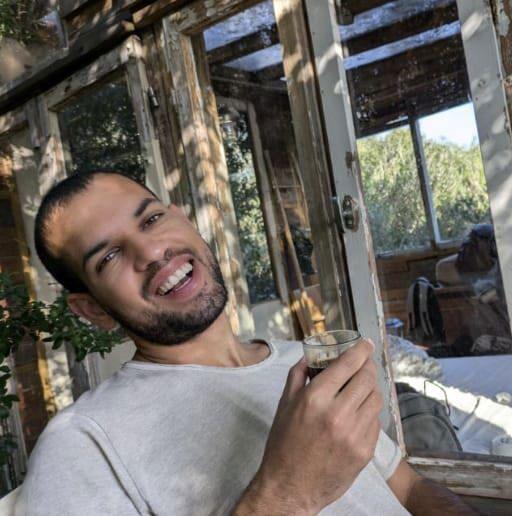
All photographs · 1
In the media
Articles
- The mother who lost her only son, and the doctor who fell in Lebanon
מקור ראשון ·
- You planned a future — you had dreams of joy and children: Dr. Uri Yosef Silberster, who fell in southern Lebanon, laid to rest
N12 ·
- Mourning strikes two schools in Petah Tikva: Uri Silvester, son of teachers Yoni and Pnina, fell in Lebanon
פתח תקווה NEWS ·
- Mourning the loss of Captain Dr. Ori Yosef Silvester, of blessed memory
ההסתדרות הרפואית בישראל ·
- I Was Blessed to Have You, the Best Thing That Ever Happened to Me: The Painful Farewell to the Shaked Battalion Doctor
וואלה ·
- IDF military doctor killed in southern Lebanon in a Hezbollah attack
STMEGI ·
Show all (9)
- Capt. Dr. Ori Yosef Silvester killed in combat, several others wounded, in southern Lebanon
The Jerusalem Post ·
- “I hope we break the cycle of wars in Israel”: the post by Uri Silvester, who fell in Lebanon
ישראל היום ·
- Shabbat Beha'alotcha
Congregation Beth Abraham-Jacob
Podcasts
- Captain Dr. Ori Yosef Silvester, of Blessed Memory, Laid to Rest
גלצ / קטעים משידור
Social posts
- The Jewish Agency for Israel’s Post
The Jewish Agency / LinkedIn
Stories told about them
His sister-in-law Yuval said that Uri treated the battalion medics to meals and food deliveries to give them a sense of home. She said he chose to specialize in community pediatrics out of a desire to focus on life, children and healing.
His friend Or said that in their last conversation they planned to get back to running and playing padel, and that Uri missed the time when he lived with his friends. His medical school friends pledged to stand by Shahar.
The Jewish Agency said Uri took part in a “Shlichim in Uniform” delegation to the community in Howard County, Maryland. After returning, he spoke about how moved he was by the community’s Jews’ connection to Israel and by the added meaning his service had gained.
Life & service
Profile
- Date of death
- June 1, 2026
- Age
- 30
- Hometown
- Tel Aviv-Yafo
Service
- Rank
- Captain
- Unit
- Givati Brigade
- Honours
- Posthumously Promoted
- Battle Location
- South Lebanon
Tributes & remembrance
The Israeli Medical Association salutes Dr. Yosef Silvester for his work and mission and shares the family’s grief.
Source:ההסתדרות הרפואית בישראל
Read the Hebrew original
ההסתדרות הרפואית מצדיעה לד"ר יוסף סילבסטר על פועלו ושליחותו ומשתתפת בצער המשפחה.
I grew up alongside the best role model.
Source:ישראל היום
Read the Hebrew original
גדלתי לצד המודל לחיקוי הטוב ביותר.
That person was you.
Source:ישראל היום
Read the Hebrew original
הדמות הזאת הייתה אתה.
You are the whole world to me
Source:וואלה
Read the Hebrew original
אתה עולם ומלואו עבורי
You managed to bring so many people together around you.
Source:וואלה
Read the Hebrew original
הצלחת לאגד מלא אנשים מסביבך.
I love you
Source:וואלה
Read the Hebrew original
אני אוהב אותך
Everyone loved and appreciated you
Source:וואלה
Read the Hebrew original
כולם אהבו והעריכו אותך
You were my pillar
Source:וואלה
Read the Hebrew original
היית עמוד התווך שלי
He wanted to give them a sense of home
Source:מקור ראשון
Read the Hebrew original
הוא רצה לתת להם תחושה של בית
May his memory be an inspiration.
Source:The Jewish Agency / LinkedIn
Since then, I feel that every joy is sullied by sadness, and even sadness has flattened in the face of this immense and terrible bereavement.
Source:ישראל היום
Read the Hebrew original
מאז, לתחושתי, כל שמחה מלוכלכת בעצב, וגם העצב השתטח לעומת השכול הגדול והאיום.
You are not a man of war and the military — you are a man of friends and love
Source:N12
Read the Hebrew original
אתה לא איש של מלחמות וצבא - אתה איש של חברים ואהבה
We were blessed to be your dad and mom
Source:N12
Read the Hebrew original
זכינו להיות אבא ואימא שלך