
The story
The air in Eilat, on the 21st of Kislev, 5763, remained clear and slightly warm, despite it being late November. The sun's rays, having just risen above the sleepy Edom mountains, painted the Red Sea in shades of deep blue and glowing turquoise, promising another day of heat and tranquility. Into this morning, on November 26, 2002, Uri Nissanovitch was born, the sixth of Sarah and Ronnie's seven children. The house on Shacham Street, already brimming with laughter, commotion, and the aromas of shared cooking, welcomed the newborn with great joy. Naomi, Tamar, Daniel, Yehuda, and Shir were already waiting for him, a small band of siblings eager to add another tender soul to their games, and later, young Noam would join them. Uri grew up in this family crucible, where each child found their unique place, and every voice created a shared melody. He attended the state-religious elementary school in the city, within classrooms where the scents of sharpened pencils and new book pages lingered, while outside a warm desert wind whistled. Uri wasn't the loudest child in the group, but his presence was felt. He was a modest and simple boy, one who loved every person for who they were, and always found a way to lend a hand or offer a genuine smile. His quietness didn't stem from shyness, but from a kind of inner clarity, a calm and clear knowing of what was good and right, which solidified in him from a young age. He would observe, listen, and only then speak, and his words carried weight. He was a child who loved to walk on the beach, collect broken seashells, and gaze at the colorful schools of fish swimming in the clear waters, absorbing the beauty of the world around him with a broad and loving perspective.
After years in Eilat, the city of freedom and desert, the family made its way north, to the heart of Jerusalem. The move was dramatic: from the scorching sands and blue sea, to ancient Jerusalem stone, to narrow alleys and bustling streets, to history breathing from every stone. Uri, then a young teenager, quickly adapted to the change. He studied at the "Mitzpe Ramon" high school yeshiva, and once again found himself surrounded by a desert landscape, but this time it was a different desert – a primordial, vast wilderness, where silence served as a backdrop for deep Torah study and self-discovery. Between lessons on a yellowed page of Gemara and hikes along the trails of the Great Makhtesh, Uri continued to shape his personality. He excelled in his studies, not only due to his natural talent, but primarily due to his perseverance and deep desire to understand, to penetrate the depths of things. He wasn't satisfied with superficial knowledge; he sought the root, the inner logic, the connection between the written word and daily life. Later, as he matured slightly, he moved to the "Avinoam-Tapuach" Hesder yeshiva in the settlement of Evyatar in Samaria. There, amidst green-yellow hills and an open landscape stretching to the horizon, he deepened his studies even further. The yeshiva study was intense, a combination of complex Halakhic issues, profound Jewish thought, and a fierce connection to the Land. He spent long hours in the study hall, with thick tomes open before him, the voices of his friends' learning surrounding him in a kind of sacred hum. He was known as someone who rarely complained about tiredness, even when study hours stretched into the night. His friends remember him as someone who could illuminate a complex issue with a short, precise remark, or connect different worlds of knowledge with surprising clarity. He didn't seek the spotlight, but the truth in learning, and was always willing to listen and understand his friend's perspective, even if it differed from his own.
Two deep loves burned within Uri: the love of the Land of Israel and the love of Torah. For him, they were not abstract concepts, but living foundations that shaped his entire world. He didn't just love the Land; he lived it, breathed it. Every piece of earth, every dirt path, every ancient olive tree told him a story. He traveled extensively, knowing the hidden trails, the quiet corners where one could sit and gaze at the landscape, feeling the wind on his face and the sun on his skin. The love of Torah was not merely intellectual study, but a way of life, a wellspring of wisdom and guidance. He saw in the Torah the moral compass, the key to understanding the world, and the path to living a meaningful life. Within this framework, two additional loves developed in him, which were in fact extensions of the first two: working the land and settlement throughout all areas of the Land of Israel. He believed with all his heart that this was the true way to connect Torah and Land, spirit and matter. He didn't speak of it in slogans, but in actions. He found a plot of land in Samaria, near the settlement where he studied, and decided to establish an olive grove there. It was not an easy task. He would arrive there with simple tools – a shovel, a hoe, buckets. He dug the pits with his bare hands, the morning sweat clinging to the dust of the earth. He planted the young olive trees, carefully and gently, as if they were tender infants. He tended to them devotedly, watering them, weeding around them, fertilizing the soil. He felt the direct contact with the moist earth, the smell of freshly cut grass, the immense satisfaction of manual labor under the Israeli sun. Every olive tree was for him a symbol of revival, of settlement, of a deep and true connection to roots. This grove was not just an agricultural project, but a life project, a tangible expression of his deepest beliefs.
Uri's vision was not only about cultivating his olive grove, but about realizing a broader vision of building the Land, and he knew that an inseparable part of this was defending it. On November 10, 2023, when he was already 21, he formally joined the IDF. The decision to enlist was not simple for him. He suffered from a leg injury, an injury that caused his enlistment to be delayed. Many in his situation would choose an easier service path, perhaps combat support or a rear-echelon role, but not Uri. He insisted, fighting for his right to be a combat soldier. He underwent a series of tests, visits to doctors, grueling physiotherapy, and all this time he did not give up on his goal. He knew that only on the front lines, as part of a fighting force, could he contribute most significantly to the defense of his people and his land. "He fought to stay," his brother Daniel recounted, a phrase that echoes his uncompromising determination. Even after he enlisted, during the arduous training, he was injured again. It was another obstacle, another moment of frustration, but he refused to surrender. He carried the injury, dealt with the pain, pushed himself beyond the limits of his physical ability, all to secure his place as a regular combat soldier. He wanted to be part of the Golani Brigade, and this dream came true when he was assigned to Battalion 13. The Golanchiks, with their stubborn fighting spirit, their deep connection to the land, matched Uri's spirit.
His army comrades remembered him as "the funny guy of the group." He was the one who always knew how to crack a joke at the right time, to defuse tension with a witty remark, or to humorously imitate a commander. Even in the difficult moments of training, when fatigue and exhaustion threatened to overcome everyone, Uri would find the strength to bring a smile to his friends' faces. He didn't know what laziness was; he always toiled, always acted, and always thought of the well-being of others. If someone struggled with carrying equipment, Uri was there to offer help. If a friend needed encouragement, Uri would find the right words. He didn't seek glory or praise, but only to be useful, to contribute, to be an integral part of the team. He was the one who made sure no one was left behind, that everyone felt they belonged and were valued. Uri was not just an excellent soldier; he was a true friend, an anchor of stability and kindness in a demanding and challenging environment. He was the one who woke up first in the morning, the one who volunteered for the toughest missions, and the one who made sure everyone ate and drank before he took care of himself. His spirit of giving and responsibility radiated to everyone around him, making him a beloved and respected figure among his friends and commanders alike. Even when there were moments of worry and fear, he was the one who managed to maintain optimism and project calm, stemming from that same inner clarity that characterized him from childhood.
That Shabbat, the 22nd of Tishrei, Simchat Torah 5784, on October 7, 2023, was seared into the national consciousness as a moment that changed the face of the country. It was six-thirty in the morning, and a holiday quiet enveloped the land. Uri, at the family home in Jerusalem, woke up like many others to the sounds of rising and falling sirens. It quickly became clear that this time it was different. No longer a short round of fighting, but a brutal and unprecedented surprise attack by the Hamas terrorist organization. Under the cover of massive and incessant firing of thousands of missiles and rockets from the Gaza Strip, which covered vast areas of the country, thousands of terrorists infiltrated – by land, sea, and air – and began a murderous rampage. The Gaza envelope communities, the southern cities of Sderot, Ofakim, and Netivot, the nature party near Kibbutz Re'im and Nir Oz, IDF bases, and southern roads became scenes of slaughter. The terrorists murdered some eight hundred civilians in their homes, in their cars, committed horrific and indescribable crimes against them, and kidnapped hundreds of Israelis, infants and elderly, women and men, into the Gaza Strip. They destroyed, looted, and set fire to homes and property, leaving behind a trail of devastation and horror. Hundreds of soldiers, police officers, security forces personnel, and members of local rapid response teams fell in battle, in a desperate attempt to defend the citizens of the state. On that terrible morning, the War of Revival began. Uri watched the news, heard the shocking testimonies, and his heart burned within him. He saw the images, read the reports, and immediately understood the gravity of the hour. His intense desire to take part in the war, to defend his people and his land, only intensified. He felt it was not just a duty, but a destiny. He didn't want to be behind; he wanted to be there, where he was needed most. This desire burned in him so strongly that he refused his commanders' offer to attend an NCO course. He knew that if he took such a course, he would find himself in a command role, perhaps less on the direct front line of combat. He refused. He wanted to remain a rank-and-file fighter, part of the active force, the one that met the enemy face-to-face. He wanted direct engagement with the mission, the ability to be an uncompromising part of the defending force.
As the war in the South spread and the northern border became a daily conflict zone, with incessant Hezbollah fire from Lebanon towards Israeli communities, Uri and his unit were transferred north. The Golanchiks from Battalion 13 were sent to defend the northern border of the State of Israel, its communities, and its residents. Uri found himself in a mountainous, green landscape, so different from the desert he knew, but with the same deep sense of mission. The days passed in great tension, between patrols along the border, observations of the area, and constant readiness. He knew that every step, every movement, could be the difference between life and death. Before his first entry into Lebanon, as the unit prepared to enter enemy territory, he spoke with his family. It was not a dramatic farewell, but a deep and honest conversation, in which he clarified his position to them. His voice was calm, full of confidence. He told them that he was going to fight out of complete faith that it was the necessary and right thing to do. There was not a shred of hesitation or fear in him. He explained to them the importance of the mission, the defense of the home, of the people, of the values on which he was raised. "Dad, listen," he said to his father, in a mature voice full of a sense of destiny, "I am happy with what I chose and I don't regret what will happen." These words, spoken with inner peace and clarity of thought, left a deep impression on his family. They understood that this was not just a military mission for him, but the fulfillment of a way of life, a deep expression of his faith.
Even amidst the fighting, within the tension and danger, Uri did not abandon his inner work. He continued to engage in constant self-improvement of his character traits. He carried small journals with him, in which he recorded his thoughts, his observations, the goals he set for himself. Between one operational activity and the next, during a short rest inside an APC or an improvised tent, he would open his journal and write. He sought ways to improve, to be a better person, more patient, more attentive. He grappled with the moral and emotional challenges of war, and tried to preserve his humanity and the gentleness of his soul even amidst military harshness. His pages were filled with reflections on faith, responsibility, friendship, and the deep connection to the land. These journals were a window into the heart and soul of a person who lived a full life of action and inner contemplation. During his short leaves from the army, when others might have sought rest and entertainment, Uri would exchange his uniform for simple clothes – a faded t-shirt, dirty work pants, old boots – and drive directly to his olive grove in Samaria. The land was for him a refuge, a source of strength. He would bend to the earth, touching it with bare hands, feeling the deep connection to the place. He tended the grove with great pride, weeding, watering the trees, checking their condition. He was proud of every green leaf, every small olive that grew. On his last visit to the grove, just before entering Lebanon again, he managed to fence it. It was a symbolic act, a kind of promise for the future, an act of optimism and hope, even as danger loomed in the air. He wanted to protect his grove, his life's work, just as he went to protect our greater home.
On November 15, 2024, deep inside southern Lebanon, an IDF force, including Uri, set out on an operational activity. The mission was to clear a building, to ensure there were no terrorists or threats within. The tension in the air was thick. The fighters advanced cautiously, step by step, aware of the danger lurking around every corner. Uri, with his determination and courage, was the first in the force. He led the fighters into the building, his eyes scanning every angle, his weapon ready. It was the role of the point man, to be the first to encounter the enemy, to break through. In a moment of uncertainty, as the force entered, a terrorist hiding inside the building opened sudden and deadly fire. The shot hit Uri. He was killed on the spot. In that moment, with his incredible heroism, he saved his friends. By being the first to be hit, he absorbed the initial fire, exposed the terrorist's location, and allowed the rest of the force to react, take cover, and neutralize the threat. His fall was the ultimate sacrifice, a pure act of heroism, which allowed his comrades to continue fighting and save lives. Corporal Uri Nissanovitch fell in battle on the 14th of Cheshvan, 5785, at only twenty-one years old. The notification of his fall reached his family in Jerusalem, casting a heavy shadow over their home and hearts. His father, Rabbi Ronnie, felt at that moment that his entire world had collapsed. "Upon receiving the news, I thought it was terrible, and that the people of Israel had lost Uri," he eulogized him later. The pain was unfathomable, the void left immense. Uri was laid to rest in the military cemetery on Mount Herzl in Jerusalem, in a military ceremony full of solemnity and grandeur, surrounded by thousands of people who came to pay their last respects – family, friends, comrades-in-arms, his commanders, and residents of Israel who felt the pain of the loss. He left behind parents and six siblings, an entire heartbroken family, but also one filled with pride for his path and his heroism. After his fall, Uri was posthumously promoted to Sergeant, in recognition of his contribution, his dedication, and the sacrifice he made.
His father, Rabbi Ronnie, stood by the fresh grave, his voice broken but his eyes shining with pain and love. He eulogized his son, painting in his words a clear and moving picture of Uri's unique personality. "Uri didn't need anything and didn't want us to buy him anything except beautiful tzitzit," he said, and these words reflected Uri's inner world, his focus on spirituality and simplicity, his detachment from the vanities of this world. "We forced him to buy clothes and shoes," he added, thereby emphasizing his extreme modesty, his lack of interest in external appearances. "I was amazed with admiration at his developing personality... Uri spoke of the honor of defending the people of Israel from our enemies. Nothing interested him except the importance of what he was doing in the army." The father's words revealed Uri's core: a deep sense of mission, an uncompromising commitment to his people and his land, and an unwavering faith in the righteousness of his path. He recalled the last conversation with Uri before entering Lebanon, the words that still echoed in his ears: "'Dad, listen, I am happy with what I chose and I don't regret what will happen.'" A sentence that expressed inner peace and supreme courage, and gave the family strength to cope with what was to come, even if at that moment they did not know its full meaning.
Uri's sister, her voice trembling, also eulogized him, revealing additional layers of his special personality. "Orush, our beloved little brother..." she began, and the affectionate nickname "Orush" echoed the warm and loving bond within the family. "I always boasted about you, with your big blue eyes..." a small physical description, yet rich in meaning, revealing Uri's external beauty and the pride his family felt in him. "You are proof that one can do both army and Torah without compromise." This sentence captured Uri's essence – the perfect combination of the world of spirit and the world of action, between deep Torah study and meaningful combat service, without any compromise on either. He proved that it was possible to live powerfully in both worlds, and to connect them in harmony. "You knew what was right and that knowledge allowed you not to judge those who thought differently..." These words testified to Uri's wisdom, his inner clarity, and his tolerance. He was not opinionated, but was able to contain different views, to understand the complexity of human beings, and to accept those who were different. "Send us strength. Rest in peace, our beloved brother." She concluded, with a moving plea and an expression of eternal love, which echoed the deep pain of loss, but also the understanding that Uri's spirit would continue to live and light their way.
About a month after his fall, Uri's twenty-second birthday was marked. Instead of merely sinking into mourning, his family decided to commemorate the day by doing good, by giving, as Uri himself would have wanted. They asked the public to perform acts of kindness in his memory, for the elevation of his soul. This initiative, which spread quickly, transformed his birthday into a day of light and positive action, where many rallied to acts of kindness, charity, and helping others, thereby perpetuating Uri's spirit – a spirit of giving and love for humanity. Uri's name is memorialized at the Golani Brigade memorial site in the North, among the names of the brigade's greatest fighters, and also on the "Memories+" website, where his story and character continue to resonate. But perhaps the most moving and prominent project in his memory is the establishment of "Uri's Lookout" (Mitzpe Uri) in the community settlement of Adora in the Hebron Hills. This lookout, built in an area where Uri so loved to hike and engage in settlement, is more than just a vantage point. It is a place where one can stand and gaze at the open landscape of the Judean Hills, feel the wind, see the land spread out at one's feet – the land he loved so much and for whose defense he gave his life. It is a place of quiet and contemplation, of connection to earth and sky, a place where one can feel Uri's legacy: love of the Land, love of Torah, and the willingness to sacrifice everything for home. Uri Nissanovitch's story is not just a story of loss, but a story of revival. A story of a young man, with big blue eyes, who lived a full life of meaning, of action, of love. His path, his heroism, and the legacy he left behind, continue to light the way, to inspire, and to connect us all to the deep meaning of being Israeli, of defending home, and of building a better future on this land, where our roots and hopes are embedded. Uri, in his fall, became a symbol, a light of heroism and humanity, and his story will continue to be an integral part of the great story of the people of Israel, a story of life, revival, and pride.
Moments of a life
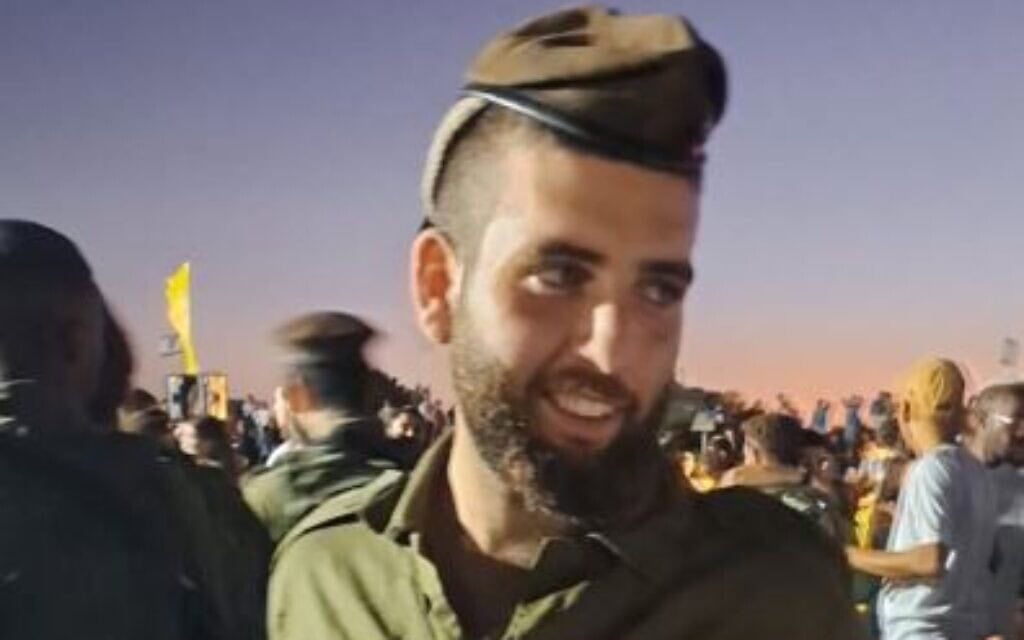
All photographs · 1
In the media
Articles
- In memory of a Golani soldier: The first Torah scroll for the new community of Marom Yehuda
ערוץ 7 ·
- "The people of Israel have lost Uri": Sergeant Uri Nisanovich, of blessed memory, who fell in battle in Lebanon, laid to rest
ישראל היום ·
- Sergeant Uri Nisanovitch laid to rest: “He said, ‘If I need to sacrifice myself, that’s all right’”
ynet ·
- IDF announces fallen soldier Sergeant Ori Nisanovich killed in southern Lebanon
The Jerusalem Post ·
- IDF announces Golani soldier Ori Nisanovich killed fighting in southern Lebanon
The Times of Israel ·
Songs
- Lives of Souls
כיכר השבת / מחזור כ״ה ועמיחי פלסר ·
Memorial sites
- Yizkor — Sergeant Uri Nisanovitch
משרד הביטחון — יזכור
Memorial projects
The Nisanovitch family brought a Torah scroll in his memory to the community of Merom Yehuda in Gush Etzion on 29 October 2025.
“Hayei Neshamot,” a song in memory of Ori Nisanovich, performed by Amichai Plesser and members of the 25th class at the yeshiva in Mitzpe Ramon, produced by Eran Klein.
“Mitzpe Ori” was established in his memory in the community of Adora in the Hebron Hills.
Stories told about them
His father said that Ori used to work in the olive grove he tended even when he came home on leave from the army. According to the IDF representative’s eulogy, his commanders offered to send him on a squad commanders’ course, but he preferred to continue fighting.
Life & service
Profile
Service
- Rank
- Sergeant
- Unit
- Golani Brigade
- Honours
- Posthumously Promoted
- Battle Location
- South Lebanon
Family
- Father
- Roni
- Mother
- Sara
Burial
Cemetery
Mount Herzl Military Cemetery
- Area
- א
Tributes & remembrance
נזכור אתכם תמיד
תהא נשמתם צרורה בצרור החיים
י"ד במרחשוון.
לימוד הדף היומי היום מוקדש לזכרו.
גיבור ישראל.
תודה על הערכיות והמסירות. תודה על ההקרבה הגדולה. בזכות אנשים כמו אורי יש לנו מדינה לתפארת.
מקווה שאנחנו ראויים. שנה לנפילתו. יהי זכרו ברוך.
אפשר תורה וצבא יחד. וואו. תורה זו הצבא, הצבא זה התורה.
תודה על הלימוד אורי שלנו.
תהא נשמתך בוערת בנו לעד.
אורי כותבת לך באופן אישי , היום אתה מכיר אותי מה שלא היה קודם. שמעתי רבות עליך , וכה מצטערת שלא זכינו להפגש כי זו זכות ענקית להכירך . אומרים שלאכים יש רק בשמים , אז עכשיו ברור למה בורא עולם לקח אותך כה מוקדם , כי אתה ממש היית מלאך בסביבתינו
אורי תהי נשמתך צרורה בצרור החיים .
שמעתי רבות מבחור שלמד איתך באינועם אביתר הבחור איתן פריד - אני עובדת עם אחותו .
רוני ושרה סמל ודוגמה לאהבת התורה ,הארץ, האדם והמלאכה. גומלי חסדים ומלמדי תורה שנבחרו להיות בסיירת של מובילי ההסטוריה של עם ישראל.
יהי זכרו של אורי תכול העיניים(ככה זכור לנו עוד מאילת, ילד קטן ומתוק) ברוך
יהיה זכרו ברוך ונשמתו בגן עדן , אמן
יזכר לעד .במותו ציווה לנו את החיים
נשמתך בגן עדן. יהי זכרך ברוך
אורי חבר יקר היית דמות להרעצה ולימדתי ממך כל כך הרבה מתגעגע
אורי נשמה גדולה בעולם
איש יקר וחבר אהוב
תמיד היית המצחיק מהחברה
איש שלא ידע מה זה עצלנות אלא תמיד עמל וחשב על טובת האחר
אוהב אותך וננציח אותך לעד
רק מהכרות עם אביך יכול אני במקצת להבין איזה רוח ואישיות היית, יהי זכרך ברוך
אורי איש של עמל,תורה וארץ ישראל.
נפל בקרב בלבנון.
חבר אמת תשמור עלינו מלמעלה
גאה שזכיתי להכיר אותך.
גיבור ישראל. צפיתי באחיך בפטריוטים. כמה אהוב ונערץ היית. הי"ד. נוח על משכבך לשלום
Uri would come home from the army, change his clothes and go out to work in the olive grove he tended.
Source:ישראל היום
Read the Hebrew original
אורי היה חוזר מהצבא, מחליף בגדים ונוסע לעבד את מטע הזיתים שטיפח.
I was awestruck with admiration at his developing personality
Source:ynet
Read the Hebrew original
נדהמתי בהערצה לאישיותו שמתפתחת
You are proof that military service and Torah can go together without compromise
Source:ynet
Read the Hebrew original
אתה ההוכחה שאפשר גם צבא וגם תורה בלי פשרות
He had a hernia and didn't tell anyone
Source:ynet
Read the Hebrew original
היה לו בקע והוא לא סיפר לאף אחד
Ori was a man of toil and hard work, a man of this country and this soil.
Source:כיכר השבת
Read the Hebrew original
אורי היה איש של עמל ועבודה קשה, ואיש של הארץ והאדמה הזאת.
The funny one in the group
Source:משרד הביטחון — יזכור
Read the Hebrew original
המצחיק של החבר'ה
Remembrance Day addresses
יום הזיכרון לחללי מערכות ישראל התשפ"ה – 2025
בכל יום שעובר, אזכור יותר! אזכור, את אלו שיצאו עימי לקרב ולא שבו, ולהם אין מי ידמה ומי ישווה. אזכור, שהכאב לא יעבור לעולם, והזמן, הוא לא מרפה ולא מרפא. אזכור, את שיברון הלב הגובר ואת הבית שבוער. אזכור, את צדקת הדרך, ואשבע שוב, שמה שהיה לא יהיה יותר. אזכור, שיותר מכל דבר אחר – אני חסר! ביום הזה, אני נתקף געגוע לדמותם, לחיתוך דיבורם, לחיוכם, ומדליק נר לזיכרון דרכם ומורשתם!
משרד הביטחון
אגף משפחות, הנצחה ומורשת
יום הזיכרון לחללי מערכות ישראל התשפ"ה – 2025
בכאב, בהצדעה ובתקווה אני מתכבד להדליק נר זיכרון זה. השנה, כשאנו נלחמים במלחמה ארוכה, רב זירתית וצודקת, הזיכרון נושא משמעות עמוקה. ביום זה נעצור ונתייחד עם זכרם של טובי בנינו ובנותינו שנפלו בהגנה על המדינה. מורשתם היא המצפן שמתווה את דרכינו, והיא המעניקה לנו כוח להמשיך ולהגן על מדינת ישראל ותושביה. משפחות יקרות, אנו מרכינים ראשנו ומתחייבים שנעמוד לצידכן תמיד. יהי זכר הנופלים ברוך.
אלוף דדו בר כליפא
ראש אגף כוח האדם, צה"ל
יום הזיכרון לחללי מערכות ישראל התשפ"ה – 2025
בשעה שאנו זוכרים את גודל תרומתם ועומק מסירות נפשם של טובי בנינו ובנותינו, נופלי מערכות ישראל לדורותיהן, ממשיכים צה"ל וכוחות הביטחון במימוש המשימה למענה לחמו ועבורה נפלו: הכרעת אויבינו מדרום, מצפון, ביהודה ובשומרון, וגם בזירות רחוקות יותר. בהערכה רבה ובגאווה אדירה אנו מרכינים ראש בפני הנופלים והנופלות, מאמצים את משפחותיהם אל לבנו, וממשיכים במשימה להבטחת קיומה של ישראל לדורי דורות. יחד נעשה ונצליח.
רב אלוף אייל זמיר
הרמטכ"ל, צה"ל
יום הזיכרון לחללי מערכות ישראל התשפ"ד – 2024
כאשר דגלינו מורדים לחצי התורן וראשינו מורכנים לזכר הנופלים והנופלות במערכות ישראל, ממשיכים לוחמי צה"ל ומפקדיו בלחימה בדרום, בצפון, ביהודה ובשומרון ובזירות נוספות. על כל דור מוטלת המשימה של הגנת העם והארץ – משימה שאף פעם אינה פוסקת. נצדיע בגעגוע ובגאווה לנופלים ולנופלות, נחבק את משפחותיהם, ונמשיך ברוח הציווי שהותירו לנו. עם ישראל חי.
רב ניצב יעקב שבתאי
המפקח הכללי, משטרת ישראל
יום הזיכרון לחללי מערכות ישראל התשפ"ד – 2024
אחיי הנופלים, כל נר הוא זיכרון יחיד ומיוחד, על חיים שהיו ואינם, געגוע שנצרב עמוק בלב, עולם ומלואו. הנרות כולם הם זיכרון של אומה כי לעולם לא עוד, בשורת הציונות וקוממיות ישראל. זיכרון כי הדרך לעם חופשי בארצנו עוברת דרך מסדר הנופלים. אור הנר יזכיר לנו את מסירות נפשכם להציל חיים, להגן על הבית. הנרות מסמנים לנו נתיב גבורה ערכי מחייב שאנו מצווים ללכת לאורו. נמשיך להילחם ולהוסיף אור מתוך אמונה בנצח ישראל.
יואב גלנט
שר הביטחון
יום הזיכרון לחללי מערכות ישראל התשפ"ד – 2024
בהצדעה ובכאב, בשם צה"ל כולו, אני מדליק נר זיכרון. בעיצומה של מלחמה, הזכרון נושא משמעות יום-יומית, שעבר והווה מתלכדים בה. לאורם של הנופלים נמשיך לצעוד, חיילי הסדיר והמילואים. לאורם של הנופלים נמשיך להגן על ארצנו ועל מולדתנו, גם כשהמחיר כבד. להבת-הזכרון תבער בנו בעודנו ממשיכים להלחם ונזכור את הנופלים ואת אומץ ליבם. משפחות יקרות, צה"ל מרכין היום ראש, מצדיע לכן וכואב איתכן. יהי זכר הנופלים ברוך.
אלוף יניב עשור
ראש אגף כוח האדם, צה"ל
יום הזיכרון לחללי מערכות ישראל התשפ"ד – 2024
בהוקרה, בגאווה ובכאב שאין לו סוף, אני מתכבד להדליק נר לזכרם של הנופלים והנופלות במערכות ישראל. סיפור חייהם בארץ הזאת, מסכת שירותם, גבורתם והקרבתם – הם סיפורה של הארץ הזאת, אך גם סיפור המחיר הכבד שהיא תובעת מאוהביה. מחויבותנו לזכר הנופלים ולדרך שהותירו לנו ניצבת תמיד לנגד עינינו. את המשימה שלא זכו להשלים, משלימים כיום, וישלימו, אנשי כוחות הביטחון, הממשיכים בדרכם ולאורם. יהי זכרם של הנופלים ברוך.
משרד הביטחון
אגף משפחות, הנצחה ומורשת
יום הזיכרון לחללי מערכות ישראל התשפ"ד – 2024
בחרדת קודש אני מתכבד להדליק נר לזכרם של חללי מערכות ישראל, חברנו שנפלו, מראשית היציאה מהחומות ולאורך כל שנות עצמאותנו המדינית והציונית, מהווים תמרור זיכרון לדרך חיינו ולמחוייבות הלאומית להנצחת זכרם. דרכם נותרה דרכנו ומורשתם נר להמשך עשייתנו. יהי זכרם ברוך!
בני גנץ
שר הביטחון
יום הזיכרון לחללי מערכות ישראל
נזכור אותם, כולנו יחד. כל אחד ואחת מהם, מדי יום ביומו, והיום ביתר שאת, כך – לנצח. "כי מדי דברי בו זכור אזכרנו עוד"
משרד הביטחון
אגף משפחות, הנצחה ומורשת