
The story
In the winding alleys of Kiryat Arba, a settlement steeped in history and embracing ancient Hebron, on the 21st of Shevat, 5761, which was February 14, 2001, the clear cry of a newborn baby echoed. This sound, destined to become an infectious laugh, an authoritative command, and a loving whisper, belonged to Uri Mordechai Shani. The youngest son of Shulamit Rivka and Yehoshua, Uri was born into a large and vibrant family, surrounded by the enveloping love of six older siblings – Nava, Bat Tzion, Yishai, Tzofia, Elisha, and Malachi. The house in Kiryat Arba was not just a structure of walls and a ceiling, but a bustling human hive, buzzing with activity, lively discussions, and a multitude of sounds – rolling laughter, heated arguments, warm Shabbat songs, and the constant hum of Torah study in the background. Within this sweet commotion, Uri grew, a happy and sparkling child, brimming with inexhaustible energy. His unique charm was quick to reveal itself; he was captivating, always with a twinkle in his eyes, drawing both children and adults to him with his winning smile and endless curiosity.
In his early childhood, Uri was a little adventurer, climbing trees, exploring every rock and bush in the garden, and inventing imaginative games with his older siblings who were both his inspiration and his role models. He was a child impossible to ignore, with a captivating smile that brightened every place he went. Between dusty soccer games on the neighborhood field and long hours of building Lego towers in the living room, a natural leadership instinct was already evident in him. He was the one who assigned roles in hide-and-seek, the one who offered creative solutions when faced with an obstacle, and the one who looked out for any child left on the sidelines. At home, his parents, Shulamit Rivka and Yehoshua, instilled in him and all his siblings values of giving, responsibility, and love for humanity, deeply woven into the fabric of their lives. Friday night meals revolved around a table laden with good food, with each family member sharing their week's experiences, and Yehoshua, his father, would intersperse his words with stories from the weekly Torah portion and life lessons, casting a loving gaze at his youngest son, Uri, who sat attentively, his eyes bright with listening and understanding. Uri grew up with a profound sense of belonging and responsibility, not only to his immediate family but to the entire community, a feeling that strengthened over the years and became one of the pillars of his personality.
As he matured, the playful and energetic child became a young man. Uri was a fascinating personality – gentle in his veins, yet powerful in spirit. He possessed a sharp mind and rare depth, excelling in everything he did, whether in his studies at the Hesder yeshivas in Ramat Gan and Dimona, where he diligently studied Talmud and Halakha for long hours, or in his extensive social activism. Holy books lay open on his table, and he would be immersed in them, analyzing complex issues, debating with his friends and rabbis, always searching for the deeper meaning beyond the words. His sense of humor was exceptional, witty and original, and he knew how to defuse tension and make those around him laugh even in the most difficult moments. Beyond his intellectual abilities, Uri stood out for his immense sensitivity to others, his boundless generosity, and his uncompromising determination to achieve his goals. He loved the people of Israel with every fiber of his being and saw the Torah of Israel as the basis of his existence, a compass guiding every step of his life. From his youth, these qualities made him a true "social warrior" – a fighter for the weak, a fighter for the observance of mitzvot, and a fighter for the integration of Torah values into society as a whole. His leadership ability was pronounced, and he knew how to inspire many with his sincerity, pure faith, and intense desire to make a positive impact on the collective.
At the age of seventeen, Uri's capacity for action revealed itself in full force. He did not content himself with words, but initiated and acted. The tragic memory of Yaakov and Netanel Litman, father and son murdered in a terror attack in the Hebron Hills, resonated in the settlement. Uri could not sit idly by. He rallied the youth of Kiryat Arba, young men and women his age, to the task of rehabilitating and preserving a local spring, to turn it into a living, breathing memorial site. He gathered them in one of the synagogues, spoke to them eye-to-eye, and ignited in them a passion for action. "We are not just remembering," he told them, his voice resolute and his eyes burning, "we are building. We are continuing their lives through our hands, through this land." They spent long hours together, working under the scorching sun, their hands immersed in the damp earth, removing weeds, carrying stones, building benches. The sound of tools mingled with laughter and deep conversations, and in between, when someone despaired of the hard physical labor, Uri was there, with an encouraging smile and a kind word, offering water and reminding them of the noble purpose. He was the first to jump into the freezing waters of the spring to clean the bottom, and the last to leave when it was already dark. The spring, revived thanks to them, was not just a memorial site, but a symbol of the community's spirit, the youth's capacity for action, and Uri's inspiring leadership. Less than a year later, Uri initiated another project: the establishment of "Mitzpe Dvir" in memory of his friend, Dvir Hadad, and at its center, "Ayelet's Garden" to commemorate the young girl Ayelet Yonian. Again, he mobilized the youth, this time to build an observation point overlooking the landscapes of Hebron, a place where they could gather, learn, and connect. Uri saw in physical construction also spiritual construction, a deep connection to the land and heritage, and he did it with an eternal smile and a sparkle in his eyes.
After years of yeshiva study and community activism, Uri, like many of his peers, found himself at a significant crossroads. He seriously deliberated between three main paths: should he dedicate his life to education, delve deeper into Torah, or serve a meaningful term in the army? These were not trivial considerations, but a sincere confrontation with the essence of his existence and the question, "What does the people of Israel need most from me now?" He sat for long hours with his rabbis, consulted with his parents, talked with friends, and laid out his thoughts before them. He saw in each option a supreme mission, but felt the need to find the place where he could make the most optimal impact. Finally, after a deep process of internal clarification, Uri decided to dedicate his life to military service. This decision did not come at the expense of his love for Torah, but was its natural continuation. "After filling his belly with Torah," as his father Yehoshua put it, he felt the time was ripe to translate the principles he had learned into action, to defend the people and the land in the most tangible way. He saw the army not only as a security arm, but also as a melting pot and a huge educational arena, where he could continue to influence and connect people from all walks of Israeli society to the values of love for the land and humanity.
On November 29, 2020, Uri donned the olive uniform and enlisted in the IDF. He did not settle for regular service, but volunteered for the "Egoz" unit (621), an elite unit operating under the "Oz" Brigade (89). The training in Egoz was demanding and grueling, both physically and mentally. Long hours of arduous marches, complex field combat exercises, intensive firing drills, and harsh terrain conditions – all were designed to push the fighters to the limits of their capabilities. Uri, with his uncompromising determination and unwavering spirit, excelled in the training with flying colors. He not only met the tasks but stood out for his professional abilities, his natural leadership skills, and his ability to serve as a personal example to his comrades. When it was time for him to go to officer's course, it was clear to everyone that he was destined for command. He also completed the course successfully, but instead of choosing a relatively comfortable path or a rear unit, he asked to command a platoon in the "Golani" Brigade, in Battalion 51. The choice of Golani was not accidental. Uri saw it as the realization of a true dream: an opportunity to train fighters for a real "hour of command," and to engage in educating soldiers from all corners of Israeli society. He wanted to be in the field, to touch people, to influence the next generation of commanders and fighters in the IDF. He deeply believed that the IDF is "the people's army," and the best way to strengthen it was to be part of a quality force building for the next war, with the understanding that the threat was real and imminent.
In February 2023, Uri began his role as a platoon commander in Battalion 51 of Golani. He approached the mission with full seriousness and passion. As a commander, he was tough and meticulous, never tolerating shortcuts and demanding uncompromising excellence from his soldiers. "Guys, we're here to be the best we can be," he would tell them, his voice echoing across the training ground. "Not for me, not for your commander, but for the country, for your families, for yourselves." He trained his soldiers to the highest standard, pushing them to confront physical and mental challenges, and preparing them for every possible scenario. He made them crawl in the mud, run with full gear under the scorching sun, practice urban warfare until their movements became second nature. But at the same time, and perhaps this was the secret of his commanding charm, he cared for their well-being and gave each of them great attention and personal care. He knew how to identify the struggling soldier, the one experiencing difficulties at home, or the one who simply needed a kind word. "He cared for his soldiers in an extraordinary way," recounted the company's welfare NCO, "and we knew he cared about them as if they were his own children. You could count on him to do whatever was necessary for them." He not only demanded but also gave, was a listening ear, knew how to listen to their dilemmas and fears, and was there for each of them, at any hour and in any situation. Alexey, his commander, described him as a principled commander with great faith in the righteousness of their path, who managed to wisely cope with the many challenges the role presented him. "He had a sparkle in his eyes and enthusiasm for the very privilege of being a commander," Alexey said. "Uri did not tolerate shortcuts, and would not compromise on things he considered important. For example, when he decided that his platoon would be cohesive, despite a difficult starting point, he was unwilling to give up on it, and did everything to unite them. He had an ability to think outside the box and initiate things that were not trivial or standard. He always insisted with me to approve them, and never gave up, until I agreed. He achieved everything he wanted for his platoon." Uri saw his soldiers not just as soldiers, but as "twenty more children at home," as he would tell his wife, Miriam, with a smile. He believed in them, and they believed in him, trusting him to prepare them for any challenge.
During his demanding military service, Uri also found happiness in his personal life. He married Miriam, née Turgeman, the love of his life, and together they established a warm and bright home. Uri was a devoted and loving family man, who wonderfully harmonized his immense commitment to the army with his dedication to his family. "When he came home from the army," his widow, Miriam, recounted, her voice tinged with longing, "he wouldn't leave Ro'i for a moment. He loved carrying him in the baby carrier, showing him off to the whole world. He was so proud of him." She described the few hours at home as sacred time, during which Uri gave his all – as a father, as a husband, as an uncle to his nephews. Everyone felt his giving, his full presence, the warmth that radiated from him. Life was before him, with many dreams and aspirations, and Miriam and little Ro'i were the center of his world. Four months before the war broke out, they celebrated their son Ro'i's brit milah (circumcision) at the Cave of the Patriarchs in Hebron, a moving and symbolic event that connected their personal lives to the depth of Jewish history and heritage.
Uri saw military service not only as a duty, but as a privilege and a profound mission. Once, one of his subordinates asked him, during a heartfelt conversation in the cramped tent at the base, "Why would a married man with a baby go to officer's course and continue in the army instead of being discharged and being with his family?" Uri, without a moment's hesitation, replied with a piercing question of his own, "Because who will do this job in my place?" This answer, in its simplicity, distilled the essence of his faith and his uncompromising sense of mission. He was extremely diligent and sought to utilize every moment of his life for action, for connection, for building. Even when he went on a weekend leave from the base, after a grueling week of training and duties, his schedule was packed with activity. He knew no rest. First, he would visit the homes of soldiers from his platoon, sitting with their parents, inquiring about their well-being, strengthening them. "We have twenty more children at home," he would smile at his wife Miriam, as he told her about his visits. Afterwards, he would find time for social activism with the youth in Kiryat Arba, continuing the projects he had started in his youth, guiding and inspiring. He arranged study sessions with study partners, woke up early for prayer in the early minyan at the synagogue, his voice blending with the voices of the worshippers. And on Saturday night, after a busy week and a sacred Shabbat day, he met young couples and recruited them for a new settlement core in the Negev, seeing this as another fulfillment of his vision to strengthen the people of Israel in their land. And amidst all this, of course, he found precious and dedicated time to meet his parents, siblings, and their families. His mother, Shulamit Rivka, recounted with tears of longing and pain: "When he came home, he wasn't the officer, the Egoz fighter, the Golani commander. He was a little boy who gave a strong hug, a hug that told of the entire week he had been through, and always gave another long hug, on account of the coming week, when we wouldn't see each other." A hug that was a gathering of strength and love for the difficult days yet to come.
At an advanced stage of his platoon's training, Uri and his soldiers were stationed at the Kissufim outpost, on the border of the Gaza Strip. This is a sensitive seam line, where every movement and every sound takes on a different meaning. Uri, a researcher at heart, was not content with the routine of current security. He saw the frequent and intensifying "disturbances" near the fence and did not accept the explanations presented. "These are not just disturbances," he repeatedly told his commanders and friends, his voice resolute, "they are preparing something entirely different here under the guise of these disturbances." He would go to the observation room every evening, after a busy day of activity, and ask to learn what had happened in the sector that day, even though it was not his direct responsibility. He would sit for hours, interrogating, analyzing images, connecting every single detail. It was clear to him what was unfolding before his eyes, and throughout the five months he spent with his soldiers on the Gaza border, he would repeat, almost with a chilling prophecy: "Here they will breach the fences, enter the communities, and slaughter Jews." He tried to convey these alarming insights up the chain of command, but encountered indifference. Those above him saw his warnings as merely a nuisance, a young and overly "hysterical" officer. But Uri did not give up. He deeply believed in the approaching threat, and as he himself wrote, "it is important for me in my role to be part of building a quality force for the next war." And indeed, he prepared his platoon for this attack, which he was sure would come. He intensified the training, practiced scenarios of terrorist infiltration more intensively than any other commander, and ensured that every soldier knew their role by heart, even under fire. As a result, this platoon was in excellent operational condition, ready for any scenario, without knowing how close the hour was.
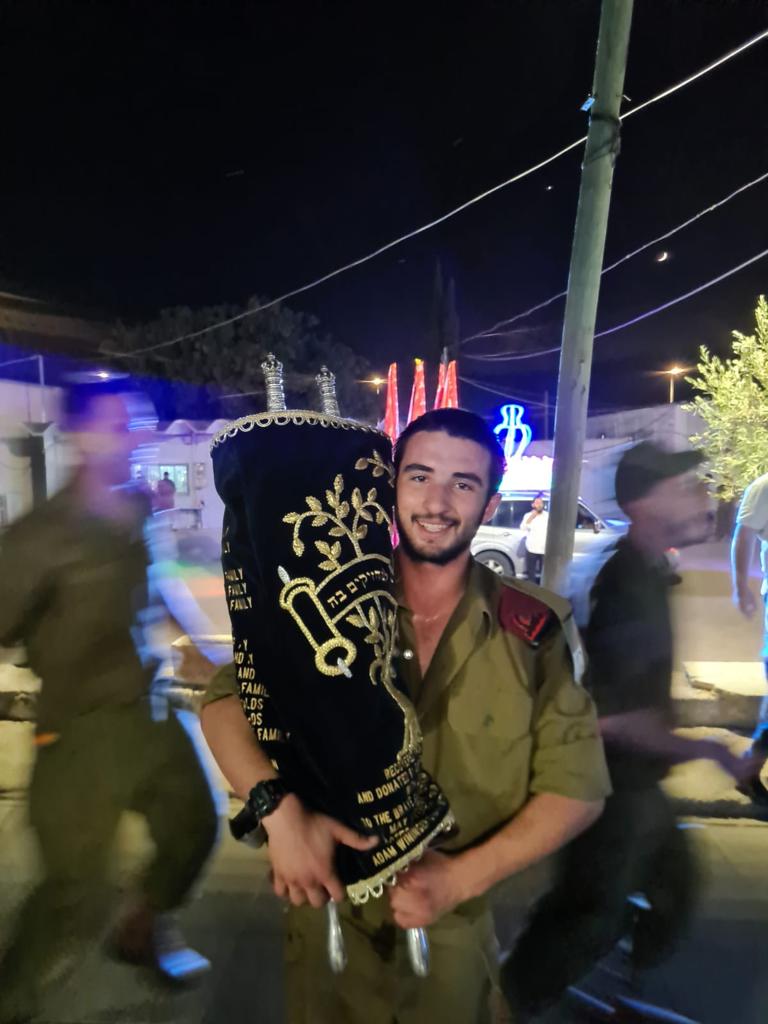
On the eve of Simchat Torah, 5784, Uri was on duty at the Kissufim base. Instead of sinking into the sadness of a holiday far from home, he chose to celebrate with immense joy with the soldiers and commanders who remained with him. There were ten of them in total, a small group in the heart of a remote outpost, but the joy that erupted from them was infectious and powerful. "We were ten, but it was like the joy of a hundred people," said one of the celebrants, his voice trembling with the memory. "There was great power there, the power of Torah." They danced with the Torah scrolls, sang loudly, shared words of Torah, and raised a toast to life. The atmosphere was steeped in faith, love of Torah, and a deep sense of unity. Uri, with his wide smile and a twinkle in his eyes, was the center of the joy, sweeping everyone along with his inexhaustible energy. These moments, of pure unity and joy, served as a final respite, spiritual provisions, before the great storm that was about to strike everyone just a few hours later. None of them could have imagined that this great joy would soon turn into a bitter lament, and that the sounds of singing would be replaced by the sounds of gunfire and explosions.
On Shabbat, the 22nd of Tishrei, Simchat Torah 5784, October 7, 2023, at 6:30 in the morning, the echoing silence of the morning was shattered. A massive and unprecedented barrage of rockets began to be heard from all directions, tearing through the morning calm and shaking the earth. From the Gaza Strip, thousands of missiles and rockets were launched towards the southern and central communities, signaling the beginning of a murderous surprise attack. Uri, who was on a routine patrol with six of his soldiers at the Kissufim junction, along the border, immediately tensed. He knew this was not just another routine barrage. Suddenly, over the radio, the panicked voice of an observer was heard: "Infiltration by surprise from many points! Infiltration by surprise from many points!" Hearts began to pound. Uri, with a quick glance, scanned the sector. Two hundred meters from him, before his shocked eyes, he saw the huge tractor that had breached the border fence, creating a massive opening. Through this opening, in a wild rush, hundreds of Hamas terrorists stormed, riding motorcycles and pickup trucks, carrying light weapons and RPG rockets. Uri's nightmare, the one he had warned about repeatedly, had become a cruel reality.
With incredible composure, Uri made crucial decisions in seconds. He ordered some of the base's soldiers to go protect the nearby Kibbutz Kissufim, which was a primary target for the terrorists, thereby likely saving dozens of lives. His six soldiers, who were with him at the junction, he deployed in quick fighting positions, facing the heavily armed Nukhba forces who were swarming them in droves. "Guys, take it easy," he told them in his calm voice, which radiated absolute confidence, "just like we learned in training." He didn't need to say more. They knew exactly what to do. They fought like lions, delivered a strong and powerful barrage of fire, and killed dozens of terrorists who tried to pass through the junction. The battle was fierce and uncompromising, long hours of incessant exchanges of fire, as they were surrounded, with almost no ammunition and no water. After four hours of continuous fighting, in the midst of the inferno, Uri pulled out his phone. "Guys," he told them, his voice still calm but his eyes gleaming with exhaustion, "smile. Let's take a selfie." This moment, of human humor and an intense desire to lift the spirits of his soldiers, encapsulated Uri as a warrior leader. His father, Yehoshua, later noted: "This, in my opinion, is a point that distills Uri as a warrior leader, who identified the psychological need of the soldiers to lift their heads and be somewhat encouraged in the face of the situation." In the picture, seven fighters, their faces dusty and sweaty, but a small smile visible in their eyes, stood in the inferno, surrounded by death, yet resolute in spirit.
The fighting at the junction continued without cease, until ammunition ran out. Uri, with amazing resourcefulness and navigation skills, managed to extract the crew from the orchard area near the fence, guiding them safely to the base over six kilometers, under heavy fire, without any of them being harmed. They arrived at the base exhausted but determined, re-equipped with additional ammunition, and as they were about to go out to fight again, to continue defending the surrounding communities, a deadly mortar barrage was fired at them at 4:45 PM. A mortar shrapnel struck Uri in a main artery, ending his life instantly. Sergeant Ra'am Meir Batito was killed alongside him. Uri, Lieutenant Uri Mordechai Shani, fell in battle, twenty-two years old at his passing. In nine hours of fierce fighting, he and his soldiers eliminated many terrorists, repelled terrorists who infiltrated the Kissufim outpost's war room where observers and wounded were located, delayed the attack on Kibbutz Kissufim, and prevented many casualties there. Thanks to him and his soldiers, Kibbutz Kissufim was the kibbutz with the lowest number of fatalities, and at the Kissufim base, not a single observer was harmed. His platoon, with its two branches, eliminated hundreds of terrorists, and dramatically impacted the outcomes of that bloody day, in both the kibbutz and the outpost. "We are not surprised by Uri's performance. That's him," his mother said, her voice broken but proud. "We are proud of him for every second he was there." His widow, Miriam, added: "I knew he would fight like that. He was a great hero in his life and in his death." He was a hero not because of lofty words, but because of his actions, his resourcefulness, his humanity, and his uncompromising dedication to defending his people and his land.
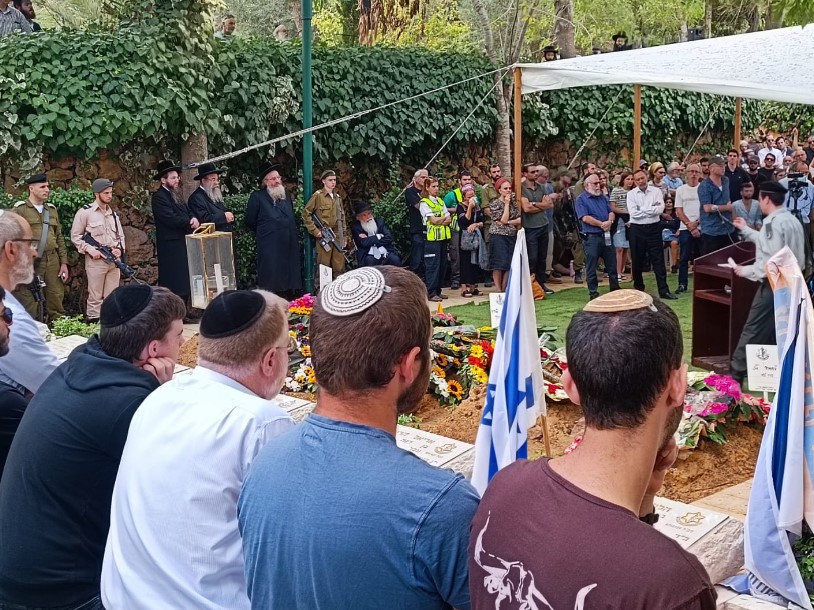
Uri Mordechai Shani, of blessed memory, was laid to rest in the military cemetery on Mount Herzl in Jerusalem. He left behind a beloved wife, Miriam, a tender infant, Ro'i, heartbroken parents, and six siblings who lost a younger brother who was immense in spirit. After his fall, he was posthumously promoted from lieutenant to captain, in recognition of his heroism and leadership. In the synagogue at the Kissufim outpost, where a fierce battle took place and a rocket even struck the building, the soldiers found Uri's Torah scroll and tefillin, which they delivered to his family. Inside his Rosh Hashanah prayer book, his parents found a page with a list of life goals he had written for himself to strengthen himself spiritually. These goals, written in his familiar handwriting, constituted a spiritual testament and an illumination of his short and full life path. He wrote: "Study partner for morning session, persevere in Mishnayot, persevere in Halakha study, fall in love with Torah, serve God, connect to learning, find a rabbi, find true friends, a good eye! Love every Jew, the trait of anger, gently... joy – not to fall into sadness, to see the good, utilize every minute, avoid gossip." These were the foundations upon which Uri lived his life, foundations of humility, love, diligence, and an unceasing striving for good.
Uri's legacy continues to live on and illuminate through many. Miriam, his widow, eulogized him with heartbreaking words: "A month has passed since the news. A month in which I felt your absence so deeply. A month without a message, without a phone call from you, without receiving a picture with a tired smile after a sleepless night... When I thought of light, I thought of you. You were a special light that radiated to everyone around you. It's a light that always accompanies me. There was in you a true love for everything, for Torah, for the land, and for the people: an eagerness and thirst for Torah study, investment in settling the land, and a simple love for every Jew... Life was before you, you had many dreams and aspirations, and now it is our task to continue them, your path and your light." His father, Yehoshua, said with pain and power: "Master of the Universe, we received from you the most precious trust for twenty-two and a half years, and we thank you for every single moment. We returned him to you holy and pure, innocent and clean, and in this is our comfort. Our Uri, I stand here and am so proud of you... We promise you to continue your light, your mission. We will do everything for Miriam and Ro'i, for the entire family, friends, your soldiers. With heads held high and with pride, we will continue to live lives of joy, of building, of creation, of heroism, of pure service to God. This is the great lesson we all learned from you."
Uri's commander, Major Ido, eulogized him with deep appreciation, describing his leadership in the field: "You led your soldiers without hesitation for many kilometers, and carried out ambushes along the main and secondary longitudinal axes. In the delaying battles, you destroyed dozens of terrorists whose path was to the surrounding communities and our outposts. Thanks to you and your soldiers, we, the commanders, had time to make difficult decisions and fight alongside the heroes of the company and battalion for our mission, the defense of Kibbutz and Outpost Kissufim. A person is measured by their character. Your character was immense! I am grateful for the privilege and honor of having known, commanded, and learned from a person like you, and certainly for the privilege of fighting by your side. This is a sad day when the company's motto, 'In my blood you shall live forever,' takes on significant meaning. I promise to tell your story until my last breath." His friends and subordinates also continue to carry his memory. Nir, his friend from the base staff, expressed immense pain: "I didn't want to believe you had fallen. I stood for a minute in your memory in all the chaos. You were a friend to me who was truly like a brother. You had my back and were always there for me. I couldn't be there for you. You deserved to live your life with your wife Miriam and little Ro'i. Ro'i deserved a father like you, a true hero." Joe, one of his subordinates, promised: "Uri, we haven't forgotten for a second the skills you taught us and the discipline. On October 7th and in the subsequent battles, the platoon fought exactly as you taught us, and in Gaza too we did exactly as in your drills. You gave your life to defend the land and its inhabitants, and you also gave us the ability to fulfill our role. Don't worry, Uri, your platoon will continue in your path. We will fight and win every battle and every war."
These promises are not just words. They are being fulfilled in actions. In the "Tefillin Hebron" factory, managed by Yehoshua Shani, Uri's father, a new visitor center has been inaugurated in Uri's name, where people learn about the process of manufacturing tefillin casings and writing the parchment scrolls, continuing Uri's legacy of connection to Torah and tradition. Avyatar, Uri's commander in the officer's course at Bahad 1, named his son Ra'i Uri, after his subordinate who became his teacher. "It is a great comfort that his greatness was recognized," Uri's parents said when they were informed of the moving commemoration. Uri's dream of leading a settlement core in the Negev, a dream he had only begun to formulate in his lifetime, has become a national mission, and the Minister of Settlement and National Missions, MK Orit Strock, has pledged to work towards its realization. Uri Mordechai Shani lived a short life, but one full of content, meaning, and action. He was a social warrior, a Torah scholar, an admired commander, a devoted family man, and a visionary. His special light, which radiated to everyone around him, continues to illuminate our path, as Miriam said. The story of his life, interwoven with heroism, humanity, and deep love for his people and his land, is a story of resurgence, of an unbreakable spirit, and of a commitment to continue his path and his light, even when the heart aches. He fell in battle, but his spirit is eternal, and it will continue to lead, educate, and build, for generations to come.
Moments of a life
All photographs · 2
Videos and links
In the media
Articles
Podcasts
- They Fought Hundreds of Terrorists: The Heroic Story of Uri Shani, May God Avenge His Blood
קול חי — אמס MS ·
- Honoring the Memory of IDF Captain Ori Shani
Miller Mosaic LLC ·
Memorial sites
- Captain Uri Mordechai Shani, of blessed memory
עיריית ירושלים – גלעד
- Yishai Shani — Memorial Day Ceremony 5785
אתר ההנצחה אורי שני
Memorial projects
According to the description of a podcast with his parents, they worked to establish a children’s library in his memory at Nof Harim Elementary School in Modi’in.
A visitor center bearing his name was inaugurated at his father’s Tefillin Hebron factory, where visitors learn the stages of tefillin production.
Stories told about them
As a platoon commander, Shani demanded high standards of discipline and training while also caring personally for his soldiers. The welfare NCO said he could be relied on to act for their well-being.
According to Yizkor, after hours of fighting, Uri asked his soldiers to smile for a selfie. His father explained that he saw this as a conscious effort to lift the fighters’ spirits in the midst of battle.
Yisrael Shiran says that during the Yom Kippur 5783 prayers at Yehoshua and Shuli Shani’s home, Uri asked him to begin a melody, and when he did not know it well, Uri began singing and the congregation joined in. After the holiday, Uri danced with his grandfather Avraham Shani; Shiran describes it as the grandfather’s last dance, as he died a few days later.
Life & service
Profile
- Date of birth
- February 14, 2001
- Birthplace
- Kiryat Arba
- Date of death
- October 7, 2023
- Age
- 22
- Hometown
- Kiryat Arba
Service
- Rank
- Captain
- Unit
- Golani Brigade
- Honours
- Posthumously Promoted
Family
- Father
- Yehoshua
- Mother
- Shulamit Rivka
Burial
Cemetery
Mount Herzl Military Cemetery
- Area
- ד
- Plot
- 8
- Row
- 11
- Grave
- 1
Place of rest
All photographs · 1
Tributes & remembrance
בתמונה הזו סרן אורי שני מצלם סלפי עם החיילים שלו. התמונה הזו צולמה בבוקר השבעה באוקטובר. אורי, מ"מ בגדוד 51 והחיילים שאיתו היו בסיור שגרתי על הגבול בעזה, אף אחד לא הזהיר אותם וכך הם מצאו את עצמם בשש וחצי מול חוליות רבות של מחבלים שחדרו לשטח ישראל. אורי וחייליו נלחמו בהם בגבורה וחיסלו עשרות מחבלים, אבל התחמושת אזלה, לא נשאר להם מים והם לא הצליחו לתפוס אף אחד בקשר. אורי החליט שיחזרו למוצב כדי להתחמש ולהמשיך להילחם. בינתיים אורי דאג לסלפי הזה כדי להעביר לכל מי שדואג להם שהכל בסדר. אורי הצליח להוביל את החיילים למוצב בשלום בניווט של מספר קילומטרים תחת אש, אבל שם רגע אחרי שסיימו להתחמש ולהתארגן להמשך לחימה הם חטפו מטח פצמ"רים שמהם אורי נפל במקום ואיתו החייל שלו סמל ראם בטיטו. אי אפשר להבין ולתאר את הגבורה של אורי, איזה מפקד דגול, איך תיפקד למופת בסיטואציה האימתנית הזו (ממליץ לכולם לצפות בכתבה של אילה חסון עליו ולשמוע את קולות הקשר שלו). זה אובדן ענק של לוחם ומפקד ובעיקר בן אדם, שהותיר מאחוריו גם אישה ובן קטן שנולד במהלך שירותו. יהי זכרו ברוך גיבור ישראל שנהיה ראויים.
שנהיה ראויים. ת.נ.צ.ב.ה.
שרק נהיה ראויים
אורי היקר שמך הולך לפניך.
משמח את כולם לא הבדל דת גזע ומין.
דבק בערכים ונלחם עליהם.
באורך נצעד עד אחרית הימים.
תהיה נשמתך צרורה הצרור החיים.
תודה גיבור ישראל.
איפה ישנם עוד אנשים כמו האיש ההוא...שנהיה ראויים לו ולשאר נופלי כוחות הביטחון וההצלה.
זצל נוח על משכבך בשלום .התפלל על עם ישראל ושיבוא המשיח בקרוב מאוד
תודה לך גיבור. תנוח על משכבך בשלום.
תודה רבה על ההקרבה שלך
גיבור ישראל
לעולם לא נשכח אותך
גיבור ישראל הי"ד
יהי זכרו ברוך לעד גיבור ישראל
אשרייך גיבור ישראל
דמות מעוררת השראה, אמן שנלך בדרכו.
הסיפור של אורי נגע לליבי אפילו מבלי להכיר אותו רק מלראות את התמונות הבנתי שהבנאדם עם לב ענקי וזה גרם לי להרגיש כ"כ הרבה עצב שאיבדנו ילד כזה מדהים
תהא נשמתך צרורה בצרור החיים גיבור.
אורי המתוק והמופלא
לא הכרתי אותך בחייך אלא רק דרך הסיפורים המופלאים המופעים פה באתר
כמה איכות ויופי חיצוני ופנימי השם שפע עליך
כמה מופלאה היא הדרך בה בחרת להשפיע שפע טוב על הסובבים אותך
אני מתרגשת להביט בפניך המאירות, המפיצות אהבה גדולה החוצה
ולדעת שהיתה בך גם חוזק פנימי וגבורה ועז להגן עלינו, על עם ישראל
זכיתי להיות חלק מהעם שלך
אורי אחי, חברי היקר.
האמת, בתוך כל השכול שעברנו בשנה וחצי האחרונות, אני מרגיש שאולי לא הבנתי מספיק מי אתה, אתה גיבור! אתה ה-גיבור, כל הדיבורים שלך על גבורה, לא היו לחינם וסרק.
חיית את החיים! מתוך גבורה וערכים באמת!
תודה אחי ששמרת עלינו, תודה על הזכות להיות חבר שלך ולחיות לצידך כמה שנים.
וסליחה, סליחה אם פגעתי בך, וסליחה שאתה כבר לא איתנו.
לנצח תישאר בליבי ובלב כל ישראל.
תודה לך, אורי, על שהגנת עלינו. תהיה נשמתך צרורה בצרור החיים, יהי זכרך ברוך.
אורי מרדכי, בחייו הקצרים שימש כמנהיג למופת. תורתו אומנותו. שנהיה ראויים לו ולכל אלה שמסרו את נפשם.
תודה וסליחה
זוכרים את אורי.מחבקים את המשפחה ! ממשיכים בדרכו.
אורי,
לא הכרנו, אך נשמתך קרובה. אור צעיר שנכבה אך ממשיך להאיר הלאה.
יהי זכרך ברוך!!
גבורתך ואומץ לבך לעד נצורים בלבנו ובלב העם.
חלקך בהגנת ובגאולת העם והארץ למופת לנצח עם ישראל כי הטוב ינצח!
הכרתי אותו דרך הבן שלי , שהם, שהיה פקוד שלו. דמות נערצת ומיוחדת.
שהם אהב והעריך את אורי מאוד והוא מאוד כואב את לכתו.
הזמן לא מרפא את הכאב הרב
העצים ואני ניזכרו אותך לעולם! תודה על כול מה תרמת לעולם הזה, תודה שנלחמת עבור עם ישראל. זוכרים אותך בכבוד ואהבה.
יהי זכרו ברוך
הלב הלב לא יכול להכיל את הצער והכאב.
זכות לקרוא ולדעת מי היה אורי שני הי"ד
שנזכה ללכת בדרכיו
אשרי יולדתו
הרופא לשבורי לב ירפא את המשפה החשובה
ואת כל בית ישראל
יהי זכרו ברוך!!
גיבור ישראל!
גיבורי כוח עושי דברו...... לשמוע בקול דברו
אורי גיבור ישראל, בלב העם לנצח נצחים. יהי זכרך ברוך, קורבנך לא יהיה לשווא. אשרי העם שאלו הם בניו. חיבוק חזק ואמיץ לכל משפחת שני, ההורים האחים בת הזוג והבן הקטן
בטקס מצומצם בחיק המשפחה נחנך אתמול (ג') מרכז המבקרים החדש של תפילין חברון ע"ש סרן אורי מרדכי שני הי"ד, קצין בגולני שנפל בקרב גבורה על הגנת מוצב כיסופים בשמחת תורה.
בטקס נכחו משפחה, חברים וצוות מפעל תפילין חברון, ובפרט משפחת שני שמפעל תפילין חברון הוקם על ידי אביו של סרן אורי מרדכי, יהושע שני.
מנכ"ל תפילין חברון אורי יושובייב אמר: "כעת, לאחר ששבנו משירות מילואים ואנו חוזרים לפעול במקום המרגש הזה והחלטנו להקדיש את המקום על שמו של אורי מרדכי. כי המקום בו אנו לומדים על חיבור, קשר לקב"ה, על משמעות התכשיט המיוחד שקיבלנו - מצוות התפילין - מקום כזה ראוי להיקרא על שמו של אורי מרדכי ז"ל".
אביו של אורי שני הי"ד לסרוגים: "אנחנו המגזר שעומד בניסיון הכי גדול"
יהושע שני, אביו של סרן אורי שני, שנפל בקרב על כיסופים, מספר לנו על רוחו הגדולה של אורי, על העדינות והעצמה, על המכתבים שהשאיר, על ניצול הזמן העשיר ועל הרך הנולד שנקרא על שם בנו האהוב
Do not worry, Uri, your platoon will carry on your path. We will fight and win every battle and every war
Source:עיריית ירושלים – גלעד
Read the Hebrew original
אל תדאג, אורי, המחלקה שלך תמשיך בדרכך. נילחם וננצח כל קרב וכל מלחמה
Ori was a man of big dreams and a deep sense of purpose.
Source:אתר ההנצחה אורי שני
Read the Hebrew original
אורי היה אדם של חלומות גדולים ושליחות עמוקה.
October 7. I was gutted. The news of Israel broke my spirit, my soul.
Source:Daniella Platt / Medium
In the recordings, you can hear Uri demonstrating leadership and control, and he grasped the scale of the incident very quickly.
Source:N12
Read the Hebrew original
אורי נשמע בהקלטות שהוא מראה ניהול ושליטה ותפס מאוד מהר את גודל האירוע.
Ori starts and sweeps us all along…
Source:אתר ההנצחה לאורי מרדכי שני
Read the Hebrew original
אורי מתחיל וסוחף את כולנו…
Who recognized the soldiers' emotional need to lift their heads and take a little heart in the face of the situation
Source:יזכור – משרד הביטחון
Read the Hebrew original
שזיהה את הצורך הנפשי של החיילים להרים את הראש ולהתעודד קצת לנוכח המצב
That's him. We are proud of him
Source:יזכור – משרד הביטחון
Read the Hebrew original
זה הוא. גאים בו
He was a great hero in life and in death
Source:יזכור – משרד הביטחון
Read the Hebrew original
היה גיבור גדול בחייו ובמותו
Remembrance Day addresses
יום הזיכרון לחללי מערכות ישראל התשפ"ה – 2025
בכל יום שעובר, אזכור יותר! אזכור, את אלו שיצאו עימי לקרב ולא שבו, ולהם אין מי ידמה ומי ישווה. אזכור, שהכאב לא יעבור לעולם, והזמן, הוא לא מרפה ולא מרפא. אזכור, את שיברון הלב הגובר ואת הבית שבוער. אזכור, את צדקת הדרך, ואשבע שוב, שמה שהיה לא יהיה יותר. אזכור, שיותר מכל דבר אחר – אני חסר! ביום הזה, אני נתקף געגוע לדמותם, לחיתוך דיבורם, לחיוכם, ומדליק נר לזיכרון דרכם ומורשתם!
משרד הביטחון
אגף משפחות, הנצחה ומורשת
יום הזיכרון לחללי מערכות ישראל התשפ"ה – 2025
בכאב, בהצדעה ובתקווה אני מתכבד להדליק נר זיכרון זה. השנה, כשאנו נלחמים במלחמה ארוכה, רב זירתית וצודקת, הזיכרון נושא משמעות עמוקה. ביום זה נעצור ונתייחד עם זכרם של טובי בנינו ובנותינו שנפלו בהגנה על המדינה. מורשתם היא המצפן שמתווה את דרכינו, והיא המעניקה לנו כוח להמשיך ולהגן על מדינת ישראל ותושביה. משפחות יקרות, אנו מרכינים ראשנו ומתחייבים שנעמוד לצידכן תמיד. יהי זכר הנופלים ברוך.
אלוף דדו בר כליפא
ראש אגף כוח האדם, צה"ל
יום הזיכרון לחללי מערכות ישראל התשפ"ה – 2025
בשעה שאנו זוכרים את גודל תרומתם ועומק מסירות נפשם של טובי בנינו ובנותינו, נופלי מערכות ישראל לדורותיהן, ממשיכים צה"ל וכוחות הביטחון במימוש המשימה למענה לחמו ועבורה נפלו: הכרעת אויבינו מדרום, מצפון, ביהודה ובשומרון, וגם בזירות רחוקות יותר. בהערכה רבה ובגאווה אדירה אנו מרכינים ראש בפני הנופלים והנופלות, מאמצים את משפחותיהם אל לבנו, וממשיכים במשימה להבטחת קיומה של ישראל לדורי דורות. יחד נעשה ונצליח.
רב אלוף אייל זמיר
הרמטכ"ל, צה"ל
יום הזיכרון לחללי מערכות ישראל התשפ"ד – 2024
כאשר דגלינו מורדים לחצי התורן וראשינו מורכנים לזכר הנופלים והנופלות במערכות ישראל, ממשיכים לוחמי צה"ל ומפקדיו בלחימה בדרום, בצפון, ביהודה ובשומרון ובזירות נוספות. על כל דור מוטלת המשימה של הגנת העם והארץ – משימה שאף פעם אינה פוסקת. נצדיע בגעגוע ובגאווה לנופלים ולנופלות, נחבק את משפחותיהם, ונמשיך ברוח הציווי שהותירו לנו. עם ישראל חי.
רב ניצב יעקב שבתאי
המפקח הכללי, משטרת ישראל
יום הזיכרון לחללי מערכות ישראל התשפ"ד – 2024
אחיי הנופלים, כל נר הוא זיכרון יחיד ומיוחד, על חיים שהיו ואינם, געגוע שנצרב עמוק בלב, עולם ומלואו. הנרות כולם הם זיכרון של אומה כי לעולם לא עוד, בשורת הציונות וקוממיות ישראל. זיכרון כי הדרך לעם חופשי בארצנו עוברת דרך מסדר הנופלים. אור הנר יזכיר לנו את מסירות נפשכם להציל חיים, להגן על הבית. הנרות מסמנים לנו נתיב גבורה ערכי מחייב שאנו מצווים ללכת לאורו. נמשיך להילחם ולהוסיף אור מתוך אמונה בנצח ישראל.
יואב גלנט
שר הביטחון
יום הזיכרון לחללי מערכות ישראל התשפ"ד – 2024
בהצדעה ובכאב, בשם צה"ל כולו, אני מדליק נר זיכרון. בעיצומה של מלחמה, הזכרון נושא משמעות יום-יומית, שעבר והווה מתלכדים בה. לאורם של הנופלים נמשיך לצעוד, חיילי הסדיר והמילואים. לאורם של הנופלים נמשיך להגן על ארצנו ועל מולדתנו, גם כשהמחיר כבד. להבת-הזכרון תבער בנו בעודנו ממשיכים להלחם ונזכור את הנופלים ואת אומץ ליבם. משפחות יקרות, צה"ל מרכין היום ראש, מצדיע לכן וכואב איתכן. יהי זכר הנופלים ברוך.
אלוף יניב עשור
ראש אגף כוח האדם, צה"ל
יום הזיכרון לחללי מערכות ישראל התשפ"ד – 2024
בהוקרה, בגאווה ובכאב שאין לו סוף, אני מתכבד להדליק נר לזכרם של הנופלים והנופלות במערכות ישראל. סיפור חייהם בארץ הזאת, מסכת שירותם, גבורתם והקרבתם – הם סיפורה של הארץ הזאת, אך גם סיפור המחיר הכבד שהיא תובעת מאוהביה. מחויבותנו לזכר הנופלים ולדרך שהותירו לנו ניצבת תמיד לנגד עינינו. את המשימה שלא זכו להשלים, משלימים כיום, וישלימו, אנשי כוחות הביטחון, הממשיכים בדרכם ולאורם. יהי זכרם של הנופלים ברוך.
משרד הביטחון
אגף משפחות, הנצחה ומורשת
יום הזיכרון לחללי מערכות ישראל התשפ"ד – 2024
בחרדת קודש אני מתכבד להדליק נר לזכרם של חללי מערכות ישראל, חברנו שנפלו, מראשית היציאה מהחומות ולאורך כל שנות עצמאותנו המדינית והציונית, מהווים תמרור זיכרון לדרך חיינו ולמחוייבות הלאומית להנצחת זכרם. דרכם נותרה דרכנו ומורשתם נר להמשך עשייתנו. יהי זכרם ברוך!
בני גנץ
שר הביטחון
יום הזיכרון לחללי מערכות ישראל
נזכור אותם, כולנו יחד. כל אחד ואחת מהם, מדי יום ביומו, והיום ביתר שאת, כך – לנצח. "כי מדי דברי בו זכור אזכרנו עוד"
משרד הביטחון
אגף משפחות, הנצחה ומורשת