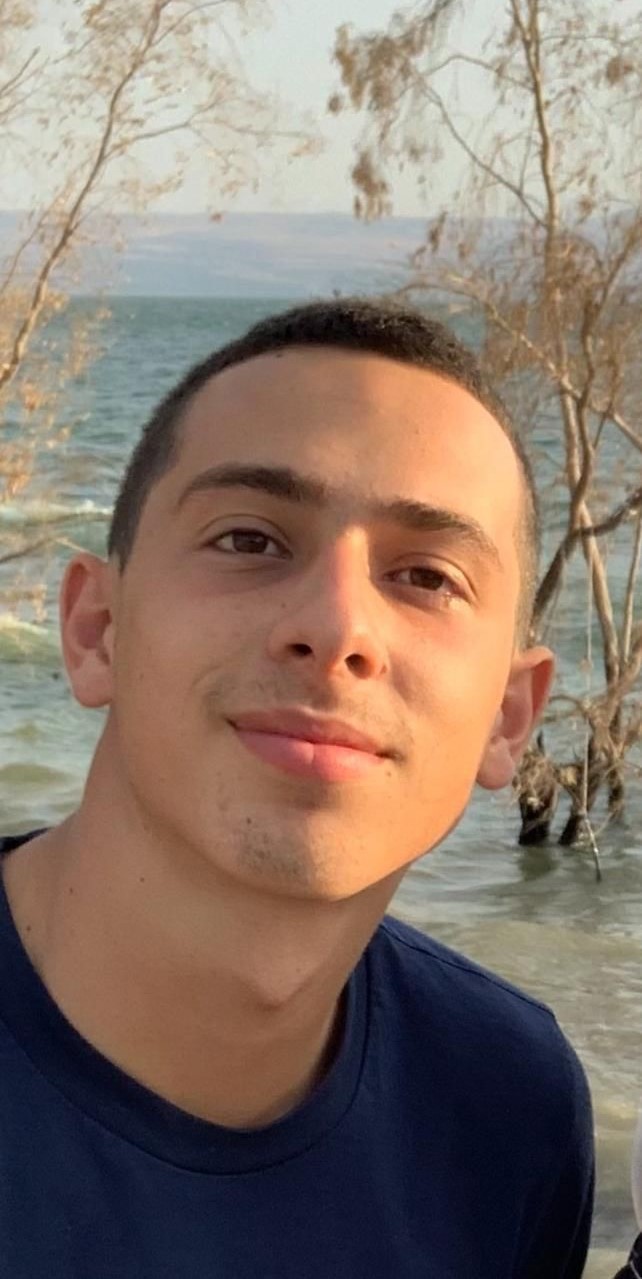
The story
Uri Gerbi’s light was ignited on the 30th of Adar Aleph, 5763, the fourth of March 2003, and from the very first moment it illuminated the lives of Naomi and Hagai, who had waited for him through long, difficult years until he finally arrived. He was their firstborn son, and the name “Uri” suited him with perfect naturalness, as though he had been born with an inner promise to light up every corner of their world. The house filled with laughter, with tiny footsteps, with the overflowing energy of a baby with golden curls and mischievous eyes who instantly became the crown on their heads and the object of their greatest pride. When he turned five the family moved to Herzliya, a quieter city open to the sea, and that change opened before Uri a new universe of landscapes, smells, and experiences that would shape his childhood and teenage years. He found his place quickly, and soon “Gerbi,” the family name, became an affectionate nickname that stuck to him and was heard everywhere—among friends and family alike—as if it had always been an inseparable part of his identity.
The special bond that formed between him and his younger sister Yuval was deeper than any conventional definition of sibling relations. “We were best friends before we were brother and sister,” Yuval would always say, and it showed in every interaction between them. Uri was not merely an older brother; he was a supportive pillar, a listening ear, a partner in games and secrets. Whether they were building forts in the living room, running wildly in the garden, or talking deep into the night, their connection was warm, loving, and filled with mutual admiration. He was her role model, an endless source of pride, a figure who influenced her profoundly at every stage of her life. The light he brought into Naomi and Hagai’s lives was not limited to them alone; it embraced the entire family—grandparents, aunts and uncles, cousins—who saw him as a hero long before he truly became one. He was a happy, vibrant child who managed to touch the heart of everyone he met, and it was clear to all that there was something special in him, an inner spark that could not be extinguished.
Uri’s childhood years in Herzliya were woven together with studies at “Gan Yuval” kindergarten and later at “Lev Tov” elementary school, where he stood out as a curious and highly motivated boy. He continued on to “Ze’ev” middle school and “HaRishonim” high school, where he chose biology and business administration tracks—a combination that reflected his inner world, balancing a deep curiosity about the mechanisms of life with a practical understanding of the world. He was an outstanding student, not only because of his high grades but because of his genuine passion for learning, his ability to grasp any subject in depth and to connect ideas. His classroom was for him not merely a place to study but also a social arena where he could flourish, make people laugh, listen, and be there for his friends.
From the age of eight, the “Bnei Herzliya” tennis center became his second home. Uri was captivated by the white sport, and within a short time he became a competitive tennis player, one of the most prominent in the club. The sound of racket striking ball, the rubber smell of sneakers on the green court, the feeling of straining muscles and dripping sweat—all of these became an inseparable part of his daily routine. He trained almost every day for long hours, setting clear goals for himself and pursuing excellence with uncompromising determination. The many competitions he participated in taught him not only how to win but also how to lose with dignity, to learn from mistakes, and to return to the court with renewed resolve. His training partners and coaches loved him dearly, not only for his talent but for his captivating personality, his sense of humor, and his ability to cheer others on and be a true friend. He was present at every practice, every match, with a broad smile and sparkling eyes belonging to someone who genuinely enjoyed every moment on the court.
But tennis was not the only sport that enchanted Uri. He was an athlete to the core, someone who loved movement and physical challenge. He played basketball, soccer, beach paddleball with friends, and table tennis. Often he would go out running alone, with no clear destination, simply to feel the sense of release and power that came from a body in motion. He would shoot hoops for hours, improving his accuracy, practicing movements, completely focused on the goal. “Waking up at five in the morning to climb some dune or dragging us out to play basketball after you had already played tennis that morning was routine for you,” his friends later wrote, a description that perfectly captured his inexhaustible energy and enormous love for sport and challenge. He was never afraid of difficulty; he saw it as an opportunity to grow and become stronger.
Beyond his physical abilities, Uri also stood out for his verbal talent. He loved to write and did so with great skill, almost effortlessly. At the age of just nine he wrote an entire children’s book called “Aliens Against Mutations from Mars,” which he also illustrated himself and dedicated to his parents, grandfather, and grandmother—an enchanting expression of his generous spirit and love for his family. He could produce limericks and poems in a matter of minutes; words were a natural tool of expression for him. He was the one who wrote blessings for family events, blending wit, emotion, and humor, every word coming straight from his heart. Alongside writing, he also loved photography and being photographed. He left behind countless funny videos, some of them starring himself, in which his unique sense of humor was revealed—his ability to laugh at himself and at any situation and to turn even the most boring moment into a source of joy and entertainment. All of these were part of the complex and fascinating mosaic of a young man with a rich inner world.
Uri was characterized by great sensitivity toward others, a highly developed sense of justice, and a rare ability to truly see the other person. He never stood idly by when he witnessed injustice or social distress; he acted actively to help students who were experiencing ostracism or bullying. In the tennis club, for example, he took under his wing a boy who had been bullied at his previous school. Instead of joining the flow, Uri did the complete opposite of what the boy had experienced before. He talked to him, invited him to join games, took care of him socially and athletically, and showed him that there are good people in the world who want to help and do good. “That was one of the most important encounters in my life,” the boy wrote years later, words that illustrate the depth of Uri’s impact on those around him. He was an active member of the “Reshefim” scout troop in Herzliya and greatly enjoyed the activities, especially the summer camps that provided him with a break from his demanding schedule and gave him the chance to experience teamwork, adventure, and connection to nature and friends. Despite his packed timetable, which included intensive studies and near-daily training, Uri always found time to spend with his family. He knew how to navigate between his various commitments, and it was important to him to dedicate quality time to his parents, his sister, and those closest to him. “He seized every moment in life,” those close to him said, and an example of this was a neighbor who told how she saw him waiting for the elevator in their building; instead of standing idly, he dropped down and did push-ups—another expression of his bursting energy and his desire to make use of every single moment.
Uri was a true “social magnet.” From childhood he was extremely sociable and immediately integrated into any group or gathering. He always stood at the center of the circle, surrounded by friends who loved him with all their hearts. They enjoyed his pleasant personality, his developed sense of humor, his sharp wit, and the broad smile that never left his face. He was rarely seen sad or angry; he constantly radiated optimism and constant joy. His friends knew they would always find in him a listening ear, good advice, and that he would come to their aid whenever they needed him. He was the address for sharing, for consultation, and sometimes simply for a good conversation that ended in rolling laughter. The sentence “Whoever doesn’t take risks risks living a mediocre life” was often on his lips and represented his path: he encouraged his friends and his sister to set challenges for themselves and to meet them, just as he did himself. He was never satisfied with little; he was always looking for ways to advance, to improve, to break boundaries—both physical and mental.
At the age of sixteen and a half, Uri made a significant decision in his life: he retired from competitive tennis in favor of army preparation training. It was not an easy decision for him, but once he set a goal for himself, nothing could stop him. He began training at the “CrossFit” club in Herzliya, and after a short period moved to train with the “Five Fingers” movement, where he persisted for nearly two years. The “Five Fingers” movement focused not only on physical fitness but also on building mental resilience, developing leadership abilities, and influencing one’s environment. Uri was truly “addicted,” as his mother put it; he loved the activity in the movement, trained far beyond the regular sessions, and pushed himself to the limit. He would wake up at five in the morning to run on the beach, sometimes with sandbags on his back, plowing through the soft sand with determined steps. The goal was clear: to reach an elite unit, and everyone knew that nothing would stand in his way. He was purpose-driven, possessed iron self-discipline, and was ready for any difficulty on the road to fulfilling his dream.
Upon graduating high school with exceptional honors, Uri enlisted in the IDF on August 16, 2021. He was assigned to the Givati Brigade, and after a grueling selection process successfully passed everything required to become a fighter in the reconnaissance company. The track in Givati Reconnaissance, which lasted a year and two months, was difficult and demanding, yet Uri never complained. He was purpose-driven, happy to be serving in an elite unit, and saw it as a great privilege. He went on to the snipers course, and in his role as a sniper in Givati Reconnaissance he operated with professionalism, precision, and an uncompromising drive for contact. He became a skilled and lethal sniper who knew how to deter and eliminate any threat, as he wrote with charm to his partner. His commanders described him as a determined and skilled fighter with high self-discipline and exceptional mental strength. He served as a squad sergeant, a role that perfectly suited his caring and considerate personality. He would wake up before everyone else, make sure all the soldiers called home, and ensure that each one found the song he loved in the unit playlist in order to raise morale. His comrades and commanders saw him as someone they could trust with their eyes closed, valued his opinion, and loved him with genuine affection. In the sociometric survey he was chosen for first place by the team members—an emotional testament to his natural leadership, his ability to connect people, and to care for the individual. He was offered the chance to go to commanders’ course but preferred to remain a full-time fighter alongside his soldiers, out of a deep sense of commitment and love for the unit. His commander wrote about him: “The moment I arrived in the position I understood I was dealing with a serious, responsible, funny, and introverted guy whom everyone in the team loved and called their best friend. We always trusted him blindly that everything would happen exactly as it should, and even beyond. The team knew it too, followed him, and listened to everything he said. A man head and shoulders above the rest.”
During his military service Uri met Chen, his partner, and fell deeply in love with her. Their relationship blossomed quickly, and he found in her his life partner, the one with whom he wanted to build a future. He planned his future by her side, dreamed of a family, three children, a few dogs, and a big yard where they could run freely. In one of the moving songs he wrote for her he expressed the depth of his love and his promise: “After all I promised, you are sanctified to me, / your husband, your beloved however you choose. / Every day I can’t stop imagining / the moment we get married. / Some will say: three months?! / I know this is a once-in-a-lifetime love.” He even incorporated his role as a sniper into the song, trying to calm her worries: “I’ll be fine, I promise, / I’m with a sniper that deters even a watermelon. / A fearsome sniper who knows how to eliminate, / whoever stands in the way will get hit and receive. / Don’t worry about me too much / and if you do, then until when? / A month, a month and a half. Okay, maybe two months / we’ll have a nice date in the Yarkon on bikes.” This song, a blend of romance, humor, and expression of his sense of mission as a fighter, reflects everything that Uri was—a man in love, with big dreams, yet also aware of the complex reality of his life. He loved spending time at the sea, eating well, hiking to springs, and enjoying every moment with Chen, his friends, and his family. He said on several occasions that as a combat soldier he took risks and knew his life could end any day, but he always added that he was at peace with it and with his mission as a fighting soldier to defend the country and its citizens. His family knew without a doubt that Uri would go out again and again on the same mission, because that was his way, that was his essence.
On Saturday, the 22nd of Tishrei, Simchat Torah 5784, the morning of October 7, 2023, at six-thirty, the quiet was shattered by a cruel surprise attack by the Hamas terrorist organization on Israel. Heavy barrages of missiles and rockets were fired from the Gaza Strip toward wide areas of the country, and under their cover thousands of terrorists infiltrated by land, sea, and air and began a murderous rampage through the communities of the Gaza envelope, through Sderot, Ofakim, and Netivot, through revelers at a nature party, through IDF bases, and through passersby on the roads. The terrorists brutally murdered hundreds of civilians in their homes and cars, committed heinous crimes against them, abducted hundreds of Israelis into the Gaza Strip, and destroyed, looted, and set fire to homes and property. Hundreds of soldiers, police officers, security personnel, and members of local standby squads fell in battle on that terrible day, which marked the beginning of a war.
On that black morning, as the news began to flow and chaos took hold, Uri stood up to fight without hesitation. He put on his uniform, said goodbye to his grandmother with a light kiss on the cheek and a short hug. Grandma Ruth asked him to take care of himself, and he, as was his way, answered calmly: “Grandma, don’t worry.” But the worry, as only grandmothers can worry, burned in her heart. Together with his comrades from Givati Reconnaissance, he entered Kibbutz Nahal Oz, which was under attack by a large number of terrorists. In the midst of the inferno and chaos, he and his friends fought bravely, face to face with the enemy, rescued civilians from their burning homes, and evacuated them to safety. The bitter smell of smoke, the sounds of nonstop shooting, the cries of the wounded and the silence of those who had lost their lives—all of these were etched into his soul but did not break his spirit. He acted as a professional fighter, purpose-driven, his heroism arising from the very human reality of a person who chooses to defend his home and his people.
After that terrible day, the Air Force began bombing the Gaza Strip, and a few days later the ground maneuver began. Uri fought for more than a hundred days as part of the reconnaissance company, which achieved many operational successes deep inside the Strip. Every day was a challenge, every mission a danger, yet he and his friends continued forward, filled with faith in their mission. “The animal that best characterizes you is a lion,” his comrades from Team 70 eulogized him, “and that’s exactly how you behaved. You devoured every mission you received and carried it out perfectly.” He was a pillar, a commander from within the team, whom everyone followed with admiration, trusting his judgment and the courage of his heart.
On the night between Tuesday and Wednesday, January 17, 2024, Uri went out with his force on a bold and complex mission in Khan Yunis in the southern Gaza Strip. It was a deep operation in enemy territory with a specific and dangerous objective. The force encountered dozens of terrorists, foiled and eliminated them in a stubborn battle. During the operation, in a single moment of hellfire, Uri was critically wounded by a direct RPG hit. The fighters around him acted quickly under fire, gave him initial treatment in the field, and he was rushed to Soroka Hospital in Be’er Sheva. In that same difficult incident, his good friend, Sergeant First Class Uria Aimalk Goshen, who was beside him, was killed. For more than twenty-four hours Uri fought for his life in the hospital while his family and friends clung to the thinnest thread of hope, praying and wishing for a miracle. But the body that had fought so bravely could hold on no longer. On the 8th of Shevat 5784, January 18, 2024, his death was pronounced. Uri Gerbi, twenty years old when he fell, left behind an enormous void, grieving parents and sister, and a partner whose shared dreams were cut short in an instant. He was laid to rest in the military cemetery in Herzliya, as the journey of his short, full life of light, heroism, and love was sealed before its time.
In the midst of their immense pain, Uri’s family made a noble and moving decision that was a direct continuation of his path and values. His parents agreed to donate his organs, which were transplanted into two children: a liver lobe was transplanted into a six-month-old baby, and a kidney was transplanted into a six-year-old girl. “In his life Uri always looked first at others and only then at himself,” his mother Naomi said. “He initiated signing an Adi card because it was important to him to contribute even after he was gone.” This act, which saved lives in his death, was further testimony to his tireless light. “In the background of the phone call with the parents of the transplant recipient I heard a baby crying and understood that Uri is still alive through someone else. For some people death is final, but for us there is a great deal of comfort in the fact that thanks to Uri the lives of children were saved.” On Uri’s gravestone appears the symbol of the Adi card, to note that he saved lives not only in his life but also in his death.
Many eulogies were spoken in his memory, each one breaking the heart anew and repainting the multifaceted image of who he was. His parents eulogized him: “Uri, our beloved child. You came to us after many difficulties and long years of waiting and anticipation. The name we chose for you suited you from the very first moment. You brought enormous light into our lives. Our little Uri, we can’t believe we’re speaking about you in the past tense. You seized every moment of your short life, you were loved everywhere and by every person. You were a perfect brother to Yuvali and a source of pride for us, the crown on our heads. You fought for the people of Israel with heroism, a hero of Israel. Beloved and generous in your life and also after you left us. In your death you merited to save additional souls in Israel.” His sister Yuval wept for her beloved brother: “They always say that God takes the best ones. On the day you were wounded was the first time I begged that you not be the best at something, so they wouldn’t take you from me, but you really were the best. You were a person full of good intentions. You wanted to conquer the world and make everyone you love smile a big smile. You were my source of pride, my model of admiration. Every time they asked me who the person I love most is, it was always you and it always will be.” Chen, his partner, eulogized him through tears over dreams that had vanished: “My little Uri, Uritziyon, you were the smartest, most beautiful, bravest, most golden-hearted boy. You made the best and happiest period of my life. It wasn’t supposed to end like this. You promised a family, three children, a few dogs, and a big yard where they could run. You had big dreams. We still had so many things we wanted to accomplish.”
His grandmother Ruth, who had feared so much for him, parted from him in heart-wrenching words: “You went out on the mission of your life on the seventh of October. Without hesitation you put on your uniform, we parted with a light kiss on the cheek and a short hug. I was afraid the excitement would overcome me and I wouldn’t be able to stop the tears. I asked you to take care of yourself and you said, ‘Grandma, don’t worry.’ But I did worry, because that’s what grandmothers can do. In the hospital you gave us the privilege that many bereaved parents did not receive. We stood by your bed, read chapters of Psalms, cried, and blessed you that you would successfully travel your new path knowing you are arriving by a direct and short flight to paradise. Though the journey has ended and the thread of your life has been cut, the memories and experiences will never end or fade. Our dear grandson, rest in peace on your bed and may the clods of earth you loved and for which you fell be pleasant to you.” Uri’s aunts Hila, Dana, and Reut wrote: “Our little lion cub Uri. Almost twenty-one years ago you gave us one of the peak moments of our lives, you made us aunts. You were a perfect baby with golden curls, laughing eyes, and quite the little mischief-maker. Over the years we watched you become a brave, value-driven young man with the biggest soul we had ever known. You had compassion, generosity, and sensitivity… Cub, no one was prouder than us. There wasn’t a person in our close circle who didn’t know who our nephew Uri was. Everywhere you went with us—everyone knew how proud we were of you, how much we admired you and were close to you, what a special bond we had formed. That’s how it was in your life, and we promise that’s how it will be in your death. You loved life, you devoured it. Amid all the difficulty and tears we stand in this hardest of moments and promise you—we will continue your will. We will remain a happy, warm, and united family. We will take care of your parents and Yuvali and Grandpa and Grandma, and also of the cousins who admire you so much, those who are here and those who will yet be and will know you as if you never left. You will be with us in every breath, in every moment. Rest in peace, our beautiful prince. We love you so much, Uri, love without bounds, and that is how we will always love you. Thank you, Uri, for countless moments of happiness.”
Uri’s friends, who saw him as the social magnet, the man of laughter and smiles, struggled to digest the new reality. “We all admired your developed sense of humor. We would split our sides laughing at the jokes and nonsense you would do, and even when you weren’t there we would find ourselves remembering your jokes and quoting sentences you said. Everywhere you connected with people and all the teachers were crazy about you. A loving person loved by his entire environment. It’s hard to imagine what our gatherings will look like without you. You’re no longer coming out next Saturday, you’re not arriving a little later because you’re meeting Chen, and you’re not falling asleep by mistake because you came back exhausted from the army.” These simple words illustrated the void that had opened and the pain of losing a person who loved life so much and devoured it.
The legacy of Uri Gerbi continues to light the way, just as his name promised. The municipal-national tennis center in Herzliya, the place where he discovered his love for sport, is now called “The Uri Gerbi Tennis Center” in recognition of his talent and personality. Amir Menachem, founder of the “Five Fingers” movement, dedicated a chapter in his podcast “How a Leader Creates Meaning?” to his memory, in which he reflected on Uri’s path as a trailblazer and leader. Tamir Mendovsky, host of the podcast “Investments for Lazy People,” which Uri was an avid listener of, also dedicated an episode to him. Uri’s motto, “Live every day, die once,” was printed on stickers made in his memory and serves as a daily reminder of full and meaningful living. A lion cub born at the “Hai Park” in Kiryat Motzkin was named Uri after him, as a tribute to the “lion” he was, who devoured every mission. His unique handwriting was immortalized in the “Ot Chaim” project, and the font is available for download and use, so that his words continue to live. The children’s book Uri wrote and illustrated at the age of nine, “Mutations Against Aliens from Mars,” was published at the initiative of the Herzliya municipality and is available for download, a treasure of imagination and talent. The “Uri’s Light” project was established in his memory with the goal of distributing hot meals to the elderly and those in need, continuing Uri’s path of always caring for others and lighting up the lives of many. The project’s Facebook page, “Uri’s Light – A Hot Meal in Memory of Sergeant Major Uri Gerbi,” preserves the spirit of giving and compassion that was his.
Sergeant First Class Uri Gerbi left behind not only memories and pain but also a legacy of courage, giving, love of people, and love of the land. He was a salt-of-the-earth man, a heroic fighter, a beloved son, brother, friend, and partner who lived his life to the fullest, seized every moment, and lit up the world around him. In his death he saved lives, and so, even though he is no longer here physically, Uri’s light continues to burn, to illuminate, and to remind us of the heroism found in simplicity, in humanity, and in the uncompromising choice to defend home and to live full and meaningful lives. He is forever in our hearts, with us in every breath, a symbol of revival and Israeli pride that does not fade.
Moments of a life
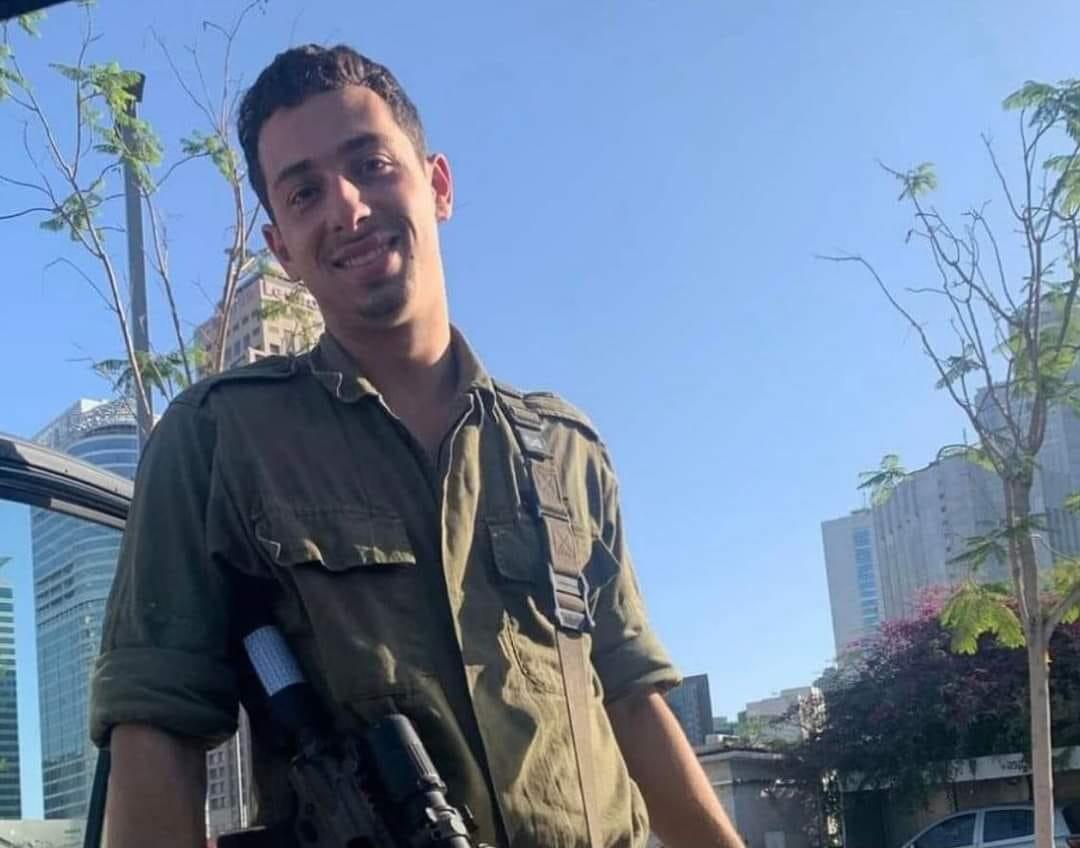
All photographs · 1
In the media
Articles
- Staff Sgt. Ori Gerby, 20: Givati soldier and talented tennis player
The Times of Israel ·
- Thousands accompanied Staff Sgt. Uri Jerbi to his final resting place with Israeli flags: “A 20-year-old flower was plucked”
www.ynet.co.il
- "Uri Charged Us with Preserving Our Joy for Life, and We Are Trying to Put That into Practice" - HaShikma Holon
www.hashikma-holon.co.il
- “Tears in my eyes.” The mother of Staff Sergeant Uri Gerbi, of blessed memory, donated his prom suit to a social initiative - HaShikma Bat Yam
www.hashikma-batyam.co.il
- The Family of a Fallen Soldier Said Goodbye to the Lion Named in His Honor: Ori Was Sent to Africa
Вести
Memorial sites
- Uri Jerbi — The Scouts Movement Memorial Website
תנועת הצופים
- Ori Gerby — OH OriGerby
אות חיים
Memorial projects
His family donated his prom suit to the Dress on Loan initiative. A commemorative label with his photograph and a photograph of Uriah Goshen was added to the initiative.
A lion rescued from smuggling was named Ori at his mother’s request, in memory of her son’s love of lions. The family visited him at Hai Park and said goodbye before his transfer to a sanctuary in South Africa; his parents explained that the lion’s welfare and freedom took precedence over the bond they had developed with him.
As part of the Ot Chaim project, Elhanan Ben Uri designed the OH OriGerby font from Ori’s handwriting at the age of nine. The page lets users try the font and download it; the license terms for use were not examined.
Stories told about them
Uri supported a boy at the tennis club who had suffered social exclusion at his previous school, helping him fit in socially and in sports. The boy described meeting him as an encounter that restored his hope in the goodness of people.
After his death, his family donated some of his organs. According to the article, a liver lobe was transplanted into an infant and a kidney into a girl.
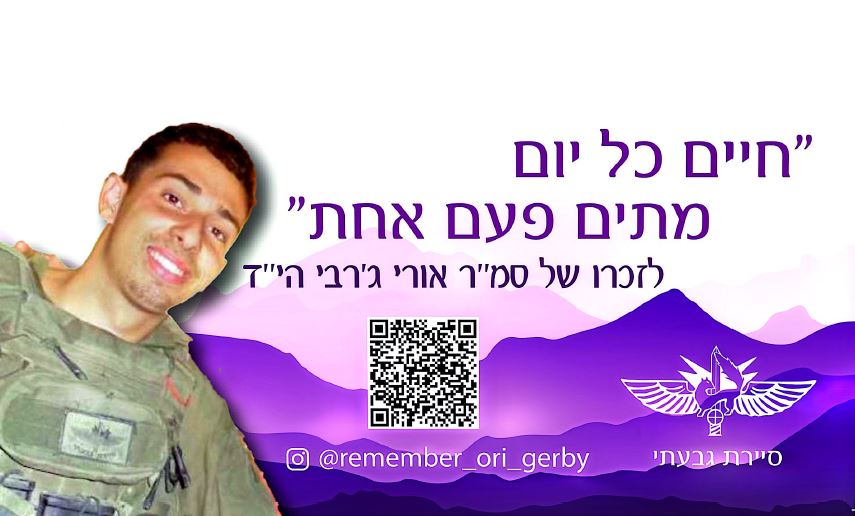
“You live every day, you die once.”
Life & service
Profile
Service
- Rank
- Staff sergeant
- Unit
- Givati Brigade
- Battle Location
- Southern Gaza Strip
Family
- Father
- Hagai
- Mother
- Naomi
Burial
Tributes & remembrance
נזכור אתכם תמיד
אורי ג׳רבי הגיבור, הציל חיים בחייו ובמותו. השבוע הוריו, לפי בקשתו, תרמו את אבריו והצילו חיים של ילדים. הכליה הצילה ילד בן 6 והכבד תינוקת בת שנה. אורי ב 7.10 לחם בנחל עוז, צלף חוד שחיסל מחבלים והציל חיים רבים. ברצועת עזה הוא נלחם בגבורה והשתתף במבצעים שהשתיקה יפה להם, כרגע. הוא הפיץ אור ושמחה, כמו שאמרה לי אמו נעמי, 60 חברים שלו אמרו לי שהם היו החברים הכי טובים שלו. אהב את כולם וכולם אהבו אותו. אמו יושבת בשבעה עם חצאית וכיסוי ראש אבל היא לא דתייה, היא אומרת לי: אני מכבדת את המבקרים שבאים אלי מבני ברק שם אני עובדת. כולנו עם אחד. שנהיה ראויים לאורי. יהי זכרו ברוך.
אורי היקר,
לא הכרתי אותך אבל רואה אני את דמותך נשקפת משלט ההנצחה שנתלה באדיקות בגשר כפר שמריהו. וכל פעם כזו אני עוצר ואומר לך תודה וסליחה ולפני שיורדת דמעה מבטיח לעשות מעשה טוב לזכרך.
נכד אהוב ויקר שלנו שנתיים חלפו והזמן כמו עמד מלכת .לעולם נתגעגע וננצור אותך בליבנו. לובשי חול וחגור וכבדי נעליים בנתיב עלו הם,הלוך והחרש לא החליפו בגדם,לא מחו עוד במים את עקבות יום הפרך וליל קו האש. נתן אלתרמן
אוריקו שלנו, שנתיים כואבים את לכתך מאיתנו, אתה כל כך חסר פה, אורך ממשיך להאיר את העולם בטוב, בחסד בנתינה, ובאהבה גדולה, אתה ממשיך לחיות בלבבות של כל מי שנגעת בו, נוח על משכבך בשלום ילד אהוב שלנו, יהי זכרך לנצח מבורך! חיבוק גדול למשפחת ג׳רבי היקרה!
שנתיים .
ילד אהוב שלנו , בליבנו לעד .
גיבור ישראל לא נשכח אותך לעולם
במותם ציוו לנו חיים
למשפחת ג׳רבי היקרה.
אני לא מכיר אתכם אבל טיילתי עם אשתי ובתי בת ה10 חודשים באוסטריה ומישהו שם מדבקה לזכרו. קראתי את הביוגרפיה שלו ונשמע שהוא היה גבר גבר ואדם מעורר השראה. אני מקווה כשבתי תגדל, היא תכיר מישהו עם איכויות כמותו
מאחל שלא תדעו עוד צער ושכולנו נזכה לחיות את החיים על מלא כפי שאורי שלכם הפציר.
נזכור לעולם אוהבים אותך
נזכור לעולם
בדיוק מדברת עם סבתא רבא שלך אלה...היא מספרת עליך....
יהי זכרך ברוך גבור ישראל!!!!
אורי יקר היית בן אדם זהב, אני לא אשכח שהיינו באים לבית שלך שהיינו קטנים ולמרות שלקח זמן להסתדר היינו בסוף חברים טובים, יהי זכרך ברוך.
למשפחת ג׳רבי
רציתי להביע את צערי העמוק על לכתו של אדם שלא הכרתי אישית, אך מילותיו "חיים כל יום, מתים פעם אחת" נגעו בי מאוד.
מהמילים האלה הבנתי שהיה זה אדם שידע להעריך כל רגע, שחי באמת, שהבין את המשמעות של זמן, אהבה ונשמה. לפעמים לא צריך להכיר מישהו מקרוב כדי לחוש את הטוב שבו לפעמים משפט אחד מלמד על עולם שלם של עומק, רגישות וחוכמה.
משתתפת בצערכם
גיבור ישראל
בן בכור, נכד ראשון, ספורטאי, לוחם, חבר ומכביסט. יהי זכרו ברוך
יהי זכרך ברוך גיבור ישראל.
אני לא מכירה אבל נתקלתי במדבקה באגם במונטנגרו במהלך טיול עם הגיפ שלנו
כואב לי הלב בכל פעם שחושבת עליך ועש כל החיילים שלנו שנהרגו. מאחלת למשפחה שלך למצוא קצת.שקט ושלווה
זכיתי להתנדב היום בבית חב"ד הרצליה דרך המיזם "האור של אורי". היה מרגש ומקסים והלוואי וכל בית בישראל יתמלא באהבה, באורך ובחיוך הנצחי שלך.
סליחה אורי, פשוט סליחה.
פרח שנקטף , נזכור תמיד
יהי זכרו ברוך
אורי גרבי מלאך יקר שלנו ששומר עליינו מלמעלה תהה נשמתך עדן אמן
זוכרים אותך תמיד בתיכון הראשונים. באהבה
יהי זכרו ברוך לעד, גיבור ישראל
שלום משפחת ג׳רבי היקרה אני משתתף בצערכם
אורי ג׳רבי היה גיבור לפי מה שקראתי ואני מאמין שהוא היום מסתכל מלמעלה והוא כנראה היה רוצה שתמשיכו להיות משפחה מאושרת הוא היה חיל מדהים בברכה ראם
יהי זכרך ברוך
מתגעגעים.......וזוכרים........
לעילוי נשמתו של אורי גרבי
יהי זכרו ברוך
אמן ונהיה ראויים
שה ייתן ליקרים ולמשפחה, כוחות ושפע של טוב להמשך מסע החיים.
What a painful and unjust loss.
Source:www.ynet.co.il
Read the Hebrew original
איזו אבדה קשה ולא צודקת.
He was pleasant and respectful
Source:www.ynet.co.il
Read the Hebrew original
הוא היה נעים הליכות ובעל דרך ארץ
Time does not help, because the longing grows stronger and the realization that Uri will not return begins to sink in
Source:www.hashikma-holon.co.il
Read the Hebrew original
הזמן לא עושה טוב, כי הגעגוע מתגבר וההבנה שאורי לא יחזור מתחילה לחלחל
Every time we came, we felt a connection with Ori.
Source:Вести
Remembrance Day addresses
יום הזיכרון לחללי מערכות ישראל התשפ"ה – 2025
בכל יום שעובר, אזכור יותר! אזכור, את אלו שיצאו עימי לקרב ולא שבו, ולהם אין מי ידמה ומי ישווה. אזכור, שהכאב לא יעבור לעולם, והזמן, הוא לא מרפה ולא מרפא. אזכור, את שיברון הלב הגובר ואת הבית שבוער. אזכור, את צדקת הדרך, ואשבע שוב, שמה שהיה לא יהיה יותר. אזכור, שיותר מכל דבר אחר – אני חסר! ביום הזה, אני נתקף געגוע לדמותם, לחיתוך דיבורם, לחיוכם, ומדליק נר לזיכרון דרכם ומורשתם!
משרד הביטחון
אגף משפחות, הנצחה ומורשת
יום הזיכרון לחללי מערכות ישראל התשפ"ה – 2025
בכאב, בהצדעה ובתקווה אני מתכבד להדליק נר זיכרון זה. השנה, כשאנו נלחמים במלחמה ארוכה, רב זירתית וצודקת, הזיכרון נושא משמעות עמוקה. ביום זה נעצור ונתייחד עם זכרם של טובי בנינו ובנותינו שנפלו בהגנה על המדינה. מורשתם היא המצפן שמתווה את דרכינו, והיא המעניקה לנו כוח להמשיך ולהגן על מדינת ישראל ותושביה. משפחות יקרות, אנו מרכינים ראשנו ומתחייבים שנעמוד לצידכן תמיד. יהי זכר הנופלים ברוך.
אלוף דדו בר כליפא
ראש אגף כוח האדם, צה"ל
יום הזיכרון לחללי מערכות ישראל התשפ"ה – 2025
בשעה שאנו זוכרים את גודל תרומתם ועומק מסירות נפשם של טובי בנינו ובנותינו, נופלי מערכות ישראל לדורותיהן, ממשיכים צה"ל וכוחות הביטחון במימוש המשימה למענה לחמו ועבורה נפלו: הכרעת אויבינו מדרום, מצפון, ביהודה ובשומרון, וגם בזירות רחוקות יותר. בהערכה רבה ובגאווה אדירה אנו מרכינים ראש בפני הנופלים והנופלות, מאמצים את משפחותיהם אל לבנו, וממשיכים במשימה להבטחת קיומה של ישראל לדורי דורות. יחד נעשה ונצליח.
רב אלוף אייל זמיר
הרמטכ"ל, צה"ל
יום הזיכרון לחללי מערכות ישראל התשפ"ד – 2024
כאשר דגלינו מורדים לחצי התורן וראשינו מורכנים לזכר הנופלים והנופלות במערכות ישראל, ממשיכים לוחמי צה"ל ומפקדיו בלחימה בדרום, בצפון, ביהודה ובשומרון ובזירות נוספות. על כל דור מוטלת המשימה של הגנת העם והארץ – משימה שאף פעם אינה פוסקת. נצדיע בגעגוע ובגאווה לנופלים ולנופלות, נחבק את משפחותיהם, ונמשיך ברוח הציווי שהותירו לנו. עם ישראל חי.
רב ניצב יעקב שבתאי
המפקח הכללי, משטרת ישראל
יום הזיכרון לחללי מערכות ישראל התשפ"ד – 2024
אחיי הנופלים, כל נר הוא זיכרון יחיד ומיוחד, על חיים שהיו ואינם, געגוע שנצרב עמוק בלב, עולם ומלואו. הנרות כולם הם זיכרון של אומה כי לעולם לא עוד, בשורת הציונות וקוממיות ישראל. זיכרון כי הדרך לעם חופשי בארצנו עוברת דרך מסדר הנופלים. אור הנר יזכיר לנו את מסירות נפשכם להציל חיים, להגן על הבית. הנרות מסמנים לנו נתיב גבורה ערכי מחייב שאנו מצווים ללכת לאורו. נמשיך להילחם ולהוסיף אור מתוך אמונה בנצח ישראל.
יואב גלנט
שר הביטחון
יום הזיכרון לחללי מערכות ישראל התשפ"ד – 2024
בהצדעה ובכאב, בשם צה"ל כולו, אני מדליק נר זיכרון. בעיצומה של מלחמה, הזכרון נושא משמעות יום-יומית, שעבר והווה מתלכדים בה. לאורם של הנופלים נמשיך לצעוד, חיילי הסדיר והמילואים. לאורם של הנופלים נמשיך להגן על ארצנו ועל מולדתנו, גם כשהמחיר כבד. להבת-הזכרון תבער בנו בעודנו ממשיכים להלחם ונזכור את הנופלים ואת אומץ ליבם. משפחות יקרות, צה"ל מרכין היום ראש, מצדיע לכן וכואב איתכן. יהי זכר הנופלים ברוך.
אלוף יניב עשור
ראש אגף כוח האדם, צה"ל
יום הזיכרון לחללי מערכות ישראל התשפ"ד – 2024
בהוקרה, בגאווה ובכאב שאין לו סוף, אני מתכבד להדליק נר לזכרם של הנופלים והנופלות במערכות ישראל. סיפור חייהם בארץ הזאת, מסכת שירותם, גבורתם והקרבתם – הם סיפורה של הארץ הזאת, אך גם סיפור המחיר הכבד שהיא תובעת מאוהביה. מחויבותנו לזכר הנופלים ולדרך שהותירו לנו ניצבת תמיד לנגד עינינו. את המשימה שלא זכו להשלים, משלימים כיום, וישלימו, אנשי כוחות הביטחון, הממשיכים בדרכם ולאורם. יהי זכרם של הנופלים ברוך.
משרד הביטחון
אגף משפחות, הנצחה ומורשת
יום הזיכרון לחללי מערכות ישראל התשפ"ד – 2024
בחרדת קודש אני מתכבד להדליק נר לזכרם של חללי מערכות ישראל, חברנו שנפלו, מראשית היציאה מהחומות ולאורך כל שנות עצמאותנו המדינית והציונית, מהווים תמרור זיכרון לדרך חיינו ולמחוייבות הלאומית להנצחת זכרם. דרכם נותרה דרכנו ומורשתם נר להמשך עשייתנו. יהי זכרם ברוך!
בני גנץ
שר הביטחון
יום הזיכרון לחללי מערכות ישראל
נזכור אותם, כולנו יחד. כל אחד ואחת מהם, מדי יום ביומו, והיום ביתר שאת, כך – לנצח. "כי מדי דברי בו זכור אזכרנו עוד"
משרד הביטחון
אגף משפחות, הנצחה ומורשת