
The story
The air in Shadmot Dvora, a small, sprawling moshav in the Lower Galilee, always carried the scent of damp earth after rain and fresh blossoms. It was into this landscape, on the 23rd of Av, 5762, the first of August 2002, that Omri Schwartz was born. He was the eldest son of Shirley and Tomer, a great gift that expanded their hearts. Their home, warm and full of laughter, was always open, its roots deeply planted in the moshav landscape that was also home to his grandparents, Tirza and Libaleh, among the first founders. Omri grew up within an extensive family, surrounded by the love of parents, grandparents, aunts, uncles, and cousins who were his friends before he even understood the meaning of the words. Soon, Noam and Ella joined him, a brother and sister who became inseparable parts of the mosaic of his life.
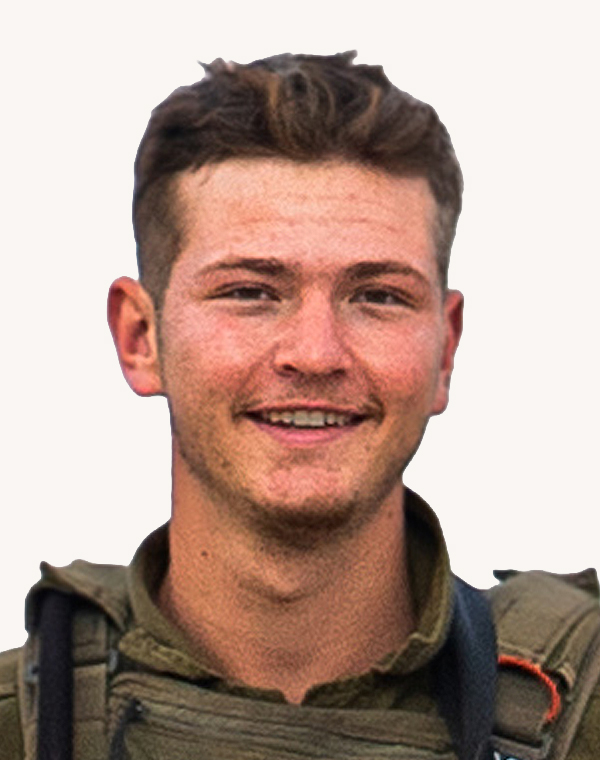
Omri’s childhood was woven with the golden fields stretching at the foot of Mount Tabor, with hikes on the winding paths between the hills, and with a sense of freedom only moshav children truly know. He was a charming boy with a wide smile, one that lit up a room the moment he entered it, a rare combination of an adorable child and an exemplary young man. This smile, which became his trademark, accompanied him through all stages of life, from a mischievous boy playing soccer on his grandfather’s lawn to a commander on the battlefield. At home, he found a sanctuary of love and security. His parents, Shirley and Tomer, were role models for him, "a couple with one heart, a precise blend of heart and mind," as he would later write to them. Omri, as the eldest, naturally took on the role of mentor to his younger siblings. For Noam, he was a listening ear and a friend in every sense, someone to advise him, to spend long hours with, and they became "the closest brothers," as Noam himself described. With Ella, his younger sister, he shared his wisdom, taught her about life, and offered help at every turn. She, for her part, waited for his WhatsApp messages at two in the morning, when he would return from a party hungry and ask, "Lola, let's make a great breakfast," knowing she couldn't refuse him. These bonds, based on deep love, mutual respect, and a shared sense of humor, formed the backbone of his life.
His connection to the extended family was no less strong. Grandparents Tirza and Libaleh, who were physically and emotionally close, saw in him a direct continuation of the settlement's legacy. On every army leave, Omri would come to them, bringing Tirza clothes to mend or a vest to add pouches to, and nurturing the ritual of removing thorns from his knee pads, which became a regular ceremony between them. With Libaleh, a veteran fighter who had experienced all of Israel's wars, he shared experiences and dilemmas from his military service, finding a sympathetic and understanding ear. Grandparents Tzadik and Jacqueline were also an integral part of his life; he loved Jacqueline's special dishes and the meat Tzadik loved to prepare for him at every opportunity. With his cousins, who were his close friends, he hiked, spent time, and watched games of Hapoel Tel Aviv, his second love after home. They would sit together, laughing and talking for long hours at family events, strengthening the bond between blood and friendship.
Omri spent all his school years at the "Kadoorie" agricultural school, an institution steeped in history and values of working the land. He was an excellent student, dedicated to his studies, and at the same time very active in the student council, where his quiet leadership abilities shone through. In high school, he chose biology and diplomacy majors, which reflected his curiosity and intelligence. As part of the agricultural work customary at Kadoorie, he joined the dairy farm, where he learned the taste of physical labor and the satisfaction of contact with the earth and animals. He not only worked but also volunteered and gave of himself quietly, without asking for anything in return, and his positive demeanor inspired others around him to act. Friends and teachers saw him as a "magnet for people," as his friend Yuval called him, a "star" wherever he went. His close friend Doron testified that "all the girls in the class were in love with him, and all the boys wanted to be his friends," and he was indeed the unifying factor of several social circles, the one who was always "at the center of things." He used to organize movie nights, gatherings, parties, and social events, and everyone simply came, drawn to his special energy, to the combination of seriousness and playfulness, inner and outer beauty, and quiet charisma and leadership.
In his free time, Omri listened to Israeli music, played the guitar, and played soccer for the Hapoel Haifa youth team. Four or five times a week he would travel to Haifa, investing long hours in training and games. Although he excelled in the team and had a bright future in the field, he understood that if he pursued a professional level, the required investment would come at the expense of his social life and prevent him from more meaningful activities. This decision, to forgo a sports dream for other values, reflected his maturity and his clear priorities. Instead of professional soccer, he chose to continue nurturing his love for Hapoel Tel Aviv, both in soccer and basketball, and would attend games whenever possible with family and friends, experiencing the peak emotions of victory and defeat together with the crowd.
Omri's connection to nature and the landscapes at the foot of Mount Tabor, where he grew up and where his character was shaped, was deep and uncompromising. He seized every opportunity to travel the country, in various family and social configurations, and knew it far and wide – in an old Subaru pickup truck, on an off-road motorcycle, on a field ATV, and on foot. He didn't seek comfort; alongside his connection to simplicity, he charged forward on challenging trails, slept in a tent under the open sky, and cooked over a campfire in a Dutch oven, enjoying the challenge and the freedom. His friend Bari remembered their shared ATV trips, the refreshing dip in Ein Hidda spring, and the cup of coffee they would drink afterward, debating what they saw, catching up, and talking about their love for the country and the region in particular. Omri was a person with "a head on his shoulders," endowed with wisdom, curiosity, and rational thought, wit and sharpness that sharpened over the years. His personality combined ardent values, wisdom, and seriousness with playfulness, inner beauty with outer beauty, charisma and quiet young leadership with adult insights. He knew how to express himself in short, precise formulations with a cynical sense of humor, and to say the right thing at the right time. The secret of his charm, as they described him, lay in his simple belief: "If people are simple, they will simply be."
From his early youth, he was active as a trainee in the "Bnei HaMoshavim" youth movement. At the end of ninth grade, he went to a young instructors' course, and there, as in everything he did, he immediately stood out. He guided the children of the moshav and became a role model for them. Doron, a senior instructor who mentored him, wrote about him: "Omri didn't give up on any trainee, and made sure to bring them from home so they would want to and feel they belonged to participate in the activity. He was always at the head of the trip, the only one who knew the route (even though everyone followed one another) and when there was a problem he was sensitive and attentive to the trainees... His cooperation with the staff was through personal example and friendship, always covering for whoever hadn't prepared an activity, sitting with them for a few minutes to write an activity and help." He was there for everyone, with a smile and a kind word, with an outstretched hand and quiet support.
After graduating from Kadoorie, towards the 2020-2021 academic year, Omri chose to defer his enlistment to the IDF to do a year of service at Kibbutz Be’eri in the Western Negev. This was a significant decision, and it quickly became clear that it shaped a large part of his identity and purpose. He joined Commune Z at the kibbutz, and soon became a central figure there, as he was accustomed to in every framework he entered. As part of his service, he worked in agriculture and education, and volunteered in the nearby city of Sderot. Warm and deep connections were formed between Omri and the residents of the kibbutz. On Saturdays, he was a regular guest at the Sagi family's home, a local family, and the children of the family saw him as a kind of admired older brother. They waited for him eagerly, ran to him, were proud of him, and listened intently to his stories. "His smile and his presence in one second filled the whole house with light," said Hadas, the mother of the family. When his year of service ended, and he said goodbye to the kibbutz, the Sagi family gave him a key to their home. "He already had a key to our hearts," Hadas added, and this sentence summarized the depth of the bond that had been forged. Be’eri became an inseparable part of him, and he found a second home and another family there.
During these years, Omri met Maya Itzhar. The two quickly fell in love and became a couple. They wove shared dreams and even managed to travel together in Portugal, experiencing the world through loving eyes. "A match made in heaven," it was written about them, "their future together seemed assured." Omri loved life, blessed with optimism and an infectious joy for living. He aimed high and always managed to achieve his goals, not least thanks to his tough character and his ability not to break even in the face of difficulties. His father described it in precise words: "You had your own way of operating, solving problems, progressing, loving, making people laugh, and accumulating more and more experiences." He was a person "with a head on his shoulders," and his cousin Amir added that "you were the most logical person in the family, always saying the right word."
Omri genuinely loved his country and wanted to be a combat soldier. On December 16, 2021, he enlisted in the IDF, full of motivation and aspirations. After passing a difficult and challenging selection process, he was assigned as a paratrooper in the elite "Orev" anti-tank unit – a distinguished infantry unit. The training path was grueling, requiring physical and mental strength, but Omri endured it bravely, with his unique smile and uncompromising determination. At the end of the course, he went on to a squad commanders' course, a course where the "outstanding" grade seemed natural for him. In his notebook, he wrote an insight that accompanied him: "When I make a mistake, I learn better," a sentence that reflected his approach to life – to learn from everything, to always move forward. At the end of the course, due to his outstanding skills, he was chosen to remain at Bislamach (the School for Squad Commanders and Infantry Professions) as a commander in the squad commanders' course for paratrooper reconnaissance company soldiers (Palsar). In the summer of 2023, as the next stage in his military career, he went to officers' course, his eyes set on the coveted role – a team commander in Palsar Paratroopers. He eagerly awaited the moment he could lead soldiers, make his mark, and contribute to the country in what he considered the most significant way. His cousin Guy remembered a trip in the fields of Shadmot in a Traxter, about a year ago, when Omri told him about his desire to go to officers' course. Guy immediately told him: "You are a catch for the IDF and it will gain you," an expression of deep appreciation for his abilities and spirit.
And then came that black morning. Saturday, the 22nd of Tishrei, Simchat Torah 5784, October 7, 2023. At six-thirty in the morning, the deceptive calm shattered. The Hamas terrorist organization launched a brutal and murderous surprise attack on Israel. Under a barrage of massive missile and rocket fire from the Gaza Strip, thousands of terrorists infiltrated – by land, sea, and air – and began a rampage of killing, rape, kidnapping, and destruction in the communities surrounding Gaza, in Sderot, Ofakim, and Netivot, at the nature festival near Re'im and Nir Oz, at IDF bases, and on traffic arteries. Hundreds of civilians were brutally murdered in their homes and cars, hundreds were kidnapped to Gaza, and homes and property were set ablaze. Hundreds of soldiers, police officers, security forces personnel, and rapid response teams fell in fierce battles. That morning, a war broke out that cast a heavy shadow over the entire country.
Omri, like the other cadets, was immediately called to battle. He found himself in the heart of the fire, in the battle for Kibbutz Kissufim, one of the infernal hotspots. He fought bravely, as he had been trained, defending the country's borders and saving many lives. In those days and moments of chaos and terror, Omri, with his sharp senses and clear mind, began to write a diary in a small notebook. At its beginning, on that very day, he wrote these chilling words, which expressed the depth of his understanding and the intensity of his emotions: "We just left Kissufim, lying here in the open field behind the cemetery, every minute 'purple rain.' I am writing here because I understand that the deadly battle we went through is not the last, so to my family I will write that they educated and raised me perfectly. Mom and Dad, I love you, you are the best there is. A couple with one heart, a precise blend of heart and mind. Noam my brother, you are the salt of this earth, and I love you. And Lola my sister, keep everyone sane, for you are the smartest here." These words, written under fire, revealed the depth of his love and concern for his family, and his sober understanding of the gravity of the hour and the complexity of the task still ahead of him.
A few weeks later, after completing the first stage of the officers' course – the "Lahav" phase – Omri went on a short leave of several hours. Instead of going home to Shadmot Dvora, he chose to go directly to a hotel in the Dead Sea, where the evacuated residents of Kibbutz Be’eri were staying. He arrived there with his familiar smile, shedding light on the grieving evacuees, and declared to them, with determination and clarity, that after his military service, he would return to live in Kibbutz Be’eri. His parents, who had traveled south to meet him during the short break, heard from him that for him, this was "Be’eri's War," an expression that conveyed his deep and uncompromising connection to the kibbutz, which had become a symbol of the attack and destruction, but also a symbol of the spirit of revival. In that brief and charged encounter, his mother Shirley hugged him so tightly, so long, and tried to hold back her tears. She felt that for a moment the roles had reversed, that he was protecting her, guarding her. And he told her: "We are acting as we were taught, calmly, with mission-orientation. Don't worry," and he didn't let go. She remembered his quiet and powerful confidence, which she now missed so much.
Later in the war, Omri joined the fighting inside the Gaza Strip as a cadet in the "Gefen" phase – the corps completion in the officers' course. He was part of the force operating in the heart of hostile territory, against a cruel enemy. In early December 2023, in the midst of the fighting, he wrote more words in his diary that expressed his tireless spirit: "We are going on a complex raid tonight, but the smile doesn't leave my face. This is what I waited for, this is what I trained for. I am part of the legacy of this country. Everything suddenly makes sense, our generation, our turn. The smile doesn't fade, because all the experiences I've accumulated, and the people with me along the way, don't allow it. I couldn't have asked for a better life. No more loving parents, no more cohesive family, no greater love, no better friends. Keep laughing and enjoying, because I had a crazy life." In these words, under the stress of battle and tangible danger, Omri summarized his worldview, his deep gratitude for his life, and his belief in the path he had chosen. He saw himself as a link in the chain of generations, part of the country's legacy, and chose to stand on the front lines, with a smile.
On December 20, 2023, the same day he went into his last battle, Omri wrote the following simple and profound words in his diary: "The war is not hard, there is food, mattresses, and generally everything you need. If Grandpa Yaakov made an escape scene in cold Europe with an eight-year-old child on his back, who am I to complain." This sentence, connecting him to his roots and his grandfather's Holocaust story, expressed the perspective in which he viewed difficulties, his humility, and his uncompromising spirit. He didn't complain, he acted. On that day, Omri went into battle in the northern Gaza Strip. During the battle, he was shot in the hand, a painful and complex injury, but Omri, as he had been all his life, did not give up. He continued to fight bravely, with a determination that only those who were there could understand, until he was killed. In this fierce battle, Lieutenant Ilian Yaakov was also killed, and an officer and two other cadets were wounded, testament to the intensity of the fighting and the heavy price it exacted.
Lieutenant Omri Schwartz fell in battle on the 8th of Tevet, 5784, December 20, 2023. He was only twenty-one years old when he died. Unbearably difficult news was delivered to his family in Shadmot Dvora, and the light in their home momentarily extinguished. He was laid to rest in the cemetery of the moshav where he grew up, surrounded by his loved ones and the fields he so adored. He left behind heartbroken parents, Shirley and Tomer, a brother, Noam, and a sister, Ella, and a partner, Maya, whose shared dreams vanished in an instant. After his fall, Omri was posthumously promoted from Staff Sergeant to Lieutenant, in recognition of his dedication, bravery, and leadership.
On his gravestone, his loved ones engraved the two words "Forward Onward," an expression Omri used to say during his year of service in Be’eri. These two words became a summary of his being – to go forward, to strive, to advance in every field, to move on and not break. "What happened, happened," he would say, and move on, always with an optimistic outlook towards the future. His mother, Shirley, eulogized him with heartbreaking words, speaking of the infinite pride she felt every time he entered a room, of his sparkling eyes and the feeling that she "flew on him." She missed the long, strong hug he gave her at the Dead Sea, the feeling of being protected in his arms, the quiet and powerful confidence he radiated. His father, Tomer, found Omriki's diary in the equipment box that returned from Gaza, and there, in two tiny spiral notebooks, in doctor's handwriting, seasoned with commas in the right places, Omri documented everything – from October 7th until the day of his death. There were maneuvers, events, thoughts, feelings, aspirations, and desires, all seasoned with his legendary sharpness and humor. He wrote how much he loved Maya, how much his family and friends, how determined he was and how much he missed them, what simple things he intended to do after the war, and generally what insights about life. "Everything was there," his father said, "You gave us more of yourself, Omri. In your own way."
Noam, his brother, eulogized him as "my brother, my inspiration, my listening ear, whom I love to the point of pain." He missed him, was incredibly hurt, afraid, and confused, but mostly loved him, his hero. He promised to continue writing to him and remembering him, "the closest brother." Noam remembered the family meals, and immediately afterward the parties at friends' houses, the moment when Omri, surrounded by friends, would approach him with a smile, give him a small slap, and whisper in his ear: "Have two arak shots." Laughing, drinking, and enjoying, that was the essence of their bond. His sister Ella, "Lola," eulogized him with words that expressed the deep pain and the loss of their shared future. She spoke of his wonderful smile, one she would do anything to see again, and of his ability to always find a way to get what he wanted, because "you love the difficulty, you smile at it every chance you get." She remembered his special morning messages, the cinematic breakfasts she made for him, because "when you ask, you can't say no." Her world collapsed, and life without him seemed impossible, blurry, and dark. She missed the company commander he would not be, the parents' fiftieth birthday, his release from the army, life with Maya in Be’eri, the flight to the 2026 World Cup, medical studies, marriage, and children.
Maya, his partner, eulogized him with words that expressed the intensity of their love and the void that had opened. "You always stated it as a fact: 'You know I love you much more than you love me,'" and she understood that now she carried all his love for both of them. She wondered to whom she would tell about him, to whom she would dedicate songs, whom she would hug every moment, at whom she would laugh and smile from afar when he wrote to her that he had an inexplicable burst of love. Who would make her feel complete always, never alone. His grandfather Libaleh wrote about Omri being "interwoven in our lives," about his plaid flannel shirts seen on his friends, about his lawnmower that was borrowed and returned without him ever understanding when or where. He remembered the white French tables that arrived at his friends' homes, and the large television on the back porch that Omri and his friends used to watch the European Champions League, with pizzas and beers. Libaleh, whose life was connected to the army, the state, and its revival, felt the deep pain, and wrote: "After your funeral, even the heavens cried and rained. And we too, farmers born of farmers, cry."
His uncle Alon described Omri as someone who had a "special powder – 'Omriki' powder," which he sprinkled throughout his life in a wonderful and unique way. He distributed it to young people, adults, family, and friends, and what was special about this powder was that he managed to give everyone exactly what they needed – values, humor, a spirit of mischief. Everyone touched by this powder felt they were the center of Omri's world. His aunt Rotem remembered countless photos, in Shadmot, in the kibbutz, on trips, at family meals, and on holidays. The last photo she didn't take of him was already during the war, at a dinner in their pergola, on November 17th, when he was wearing a Bnei Be’eri tank top and ripped jeans, smiling, laughing, telling stories with a funny twist. She looked at him and didn't photograph, so as not to hear "Auntie, how you love," meaning "stop taking pictures." She called him "sun child."
His cousin Yuval wrote how symbolic and characteristic it was of Omri to run and protect what he loved, what he represented. He was "the most kibbutznik moshavnik there is," and at that dinner, he declared that he would move to the kibbutz when he was discharged from the army – a pioneer, the ideal model of a Sabra, the salt of the earth, a paratrooper, a son of the farm with a stick in one hand and a weapon in the other. "Omriki, the wheat has already sprouted and it will become a harvest and be gathered into sheaves, and you will not return here," Yuval wrote in pain, but added: "We will cry for you and we will laugh for you and we will move on, with you, because that's how you would want it." His cousin Tal, who still hadn't processed his passing, felt that at any moment Omri was about to enter his parents' home. He remembered how Omri saw something in him that others didn't see, something Tal didn't see in himself, and how he pushed him to invest more in his studies, in his year of service, and in the army, and didn't give up on him. He knew that Omri would see him at his ceremony, even if not physically present. His cousin Amir, who saw him as the most logical person in the family, with a head on his shoulders and always saying the right word, admired him for his lack of ego and the special connection he created with all his cousins. He remembered the trip to England, the derby at Nokia, soccer on his grandfather's lawn, FIFA tournaments, trips in the Subaru pickup and Traxter, Ein Yavniel spring, the night in Hatzava, and how much he loved Be’eri and Maya, and how much they loved loving him. "There are no other people like you," Amir wrote, "Omri, you are a cousin who is a brother, a brother in every sense, I love you, you are the best. We will do everything to be worthy of you."
His friend Itai, who received the hardest news of his life in that house in Gaza, wrote: "My beautiful boy, my heart is broken, and a piece of it remained in that house." He missed him, hurt unimaginably, and promised to know that always a part of his personality was Omri. He hoped Omri saw him and felt his difficulty, and knew they would all meet in the end. "You will remain the same 21-year-old boy who died in Gaza. With all the dreams that died with you. And how many you had, so many you wanted to do." His friend Doron called him "Kiki, my beloved brother and dearest to me," and testified that "I don't need a blood relation to call you that, our connection is so special." He was "the best I could have asked for in my life," and now a large and painful hole remained in her heart. She said that Omri touched so many people, planted roots in them and made them flourish, and that in the last two months they kept hearing the phrase "Omri was my best friend" from many people who knew him in his life. His friend Nir wrote: "I love you so much my brother, a large part of me was buried with you but also a large part of you remains alive in my smile." He likened their relationship to a puzzle, and every time they meet and smile, the pieces Omri left in each of them will connect and he will be here with them. "Everyone always says you were infectious. Now that you are no longer here, you left us one mission, and that is to make sure to guard the puzzle you assembled and glued with all your might. Forever brother, we will meet in the end." His friend Yuval will remember his lighthearted atmosphere, that he was open to everything, that he loved everyone. "He did what was good for him and what was good for us, simply a child of love. He entered our hearts. We all have a hole in our hearts in his shape, and that will never change."
His teammates from the Paratroopers Reconnaissance Unit, who continued to fight in Gaza, wrote to him: "The team returned to fight in Gaza, for you, in your name, for your sake." They even opened a "chill spot" for him in Khan Younis, and knew he would love it, "lazy and low-key," as he would say. They feel that in the last month each of them has "like a small Schwartz in their head, guiding, advising, 'because that's what Schwartz would want.'" The void and wound he left in them are great, painful, and still bleeding, but they knew that who better than him knew that "even the heaviest stretcher, when carried together and making sure to smile at the one next to you in a moment of crisis, becomes a little lighter." They promised him, Omri, on behalf of those who remained and on behalf of those who could not come, that they would continue to carry the stretcher, that they would continue to smile at the one next to them, even when it feels unbearably heavy, for him, always.
The legacy of Omri Schwartz, the "sun child" from Shadmot Dvora, continues to illuminate the path of many. Yahali Sobol, lead singer of his favorite band "Monica Sex," wrote, composed, and performed a song in his memory, which was produced as a moving clip accompanied by photos and videos from his life. Safe School, a company that creates educational content, wrote a lesson plan in his memory for Memorial Day called "Sun Child," and at the "Kadoorie" agricultural school, a special video was produced in which his teachers speak about him. An "Instagram" page was created in his memory – remember_omrishwartz – full of photos, videos, and tributes. Omri's family, out of a deep desire to continue spreading his light, established an association called "Our Omri Schwartz, Forward Onward," whose purpose is to commemorate his legacy in diverse, creative, and meaningful ways, so that his light will continue to accompany many, many people, and lead them "Forward Onward." The wheat in the fields of Shadmot Dvora has already sprouted and will become a harvest, but the memory of Omri, the paratrooper, the commander, the instructor, the friend, the brother, the son, and the lover, remains deeply etched in hearts and consciousness, a symbol of human bravery, love of humanity and love of homeland, who continued to smile even at difficulty, and led us all, in his unique and infectious way, Forward Onward.
Moments of a life
All photographs · 4
In the media
Articles
- “A lovely young man with a broad smile”: Lieutenant Omri Schwartz, a soldier in the Paratroopers Reconnaissance Unit, fell in battle in northern Gaza | Israel Hayom
ישראל היום ·
- IDF announces 3 more soldiers killed in Gaza battles, bringing ground op toll to 137
The Times of Israel ·
- Two IDF captains and a sergeant killed in the Gaza Strip
Vesty / Вести ·
Podcasts
- Episode 26: Lieutenant Omri Schwartz, of blessed memory — I had the time of my life
גיבורים — Apple Podcasts ·
Memorial sites
Memorial projects
The OH OmriShwartz font, designed by Dorit Reutteberg and based on his handwriting, in the Ot.Chaim project.
Yahli Sobol wrote, composed and performed a song in his memory that was produced as a music video; Safe School created the “Sunshine Child” lesson plan in his memory.
The family established the nonprofit “Our Omri Schwartz, Kadima Hala'a” to commemorate his legacy.
HaHavura is a project in his memory offering retreats and workshops for groups of bereaved friends.
Stories told about them
He played for Hapoel Haifa’s youth team and traveled to training several times a week. He chose to forgo a professional path to leave room for friends and activities guided by his values.
Life & service
Profile
- Date of birth
- August 1, 2002
- Birthplace
- Shadmot Dvora
- Date of death
- December 20, 2023
- Age
- 21
- Hometown
- Shadmot Dvora
Service
- Rank
- Lieutenant
- Unit
- Bahad 1
- Honours
- Posthumously Promoted
- Battle Location
- North Gaza Strip
Family
- Father
- Tomer
- Mother
- Shirley
Burial
Cemetery
Shdemot Dvora
Tributes & remembrance
נזכור אתכם תמיד
עוֹמְרִי לְסוֹפׇשׁ חוֹזְרִים בִּלְעָדֶיךָ לחוּפְשָׁה מְחוּיֶכֶת בְּיָוָון שומע עומרי, בשבוע שעבר נחתה לי התמונה הזאת בטלפון. ככה, באמצע היום, כי מסתבר שעברו בדיוק שבע שנים מהרגע שצולמה, אי אז בחופשה חלומית ביוון. ואז מצאתי עוד כמה תמונות יווניות מחייכות שלך איתנו, כולל מהחופשה המשפחתית המפוארת שם קצת לפני הגיוס שלך. והנה השבוע מצאנו את עצמנו שוב ביוון. הפעם רק עם אלה, כי נועם בצבא, ואתה, אתה יודע איפה אתה. נסענו עם זיו ונועה, ועם עדי שלהם שהיא גם בת דודה וגם חברה טובה של אלה. בימים אחרים היינו יכולים להצטופף בבית שלהם, אבל עכשיו אנחנו צריכים את הפינה שלנו. תזכור את זה, שכולים חייבים פינה. שומע עומרי, זה התחיל קצת מצחיק, או שכול מדי, כשנחתנו בקׇלַמַטָה וצעדנו לסוכנות להשכרת הרכב. כמעט הצליח לי עומרי, את ההזמנה ביצעתי מזמן, המועדים מולאו כמו שצריך, אלא שבמקום מקׇלַמַטָה החלטתי שאת הרכב נאסוף משדה התעופה ב... (קבל, אחד המוגזמים שלי) לוס אנג'לס - קליפורניה. הם צחקו, ולא היה ממש טעם להסביר להם איך זה קרה. אז בנוהל, שכול-עולה-יותר, שכרנו מחדש רכב קטן יותר, כי זה מה שהיה בסוכנות, וזה מה יש. בדרך לבית השווה שאמא מצאה לנו, אלה נרדמה מאחורה, ובכל פעם שהגעתי למהירות מסוימת ציפצף רעש טורדני. גם ככה עברנו ליד יותר מדי מקומות שהקפיצו אותך, אלוהים כמה ט"ע בנסיעה של שעה ורבע. בשלב מסוים, אמא אמרה, 'וואי אם עומרי היה פה, היה מתעצבן, עוצר בצד ופותר את הצפצוף הזה'. וזהו. משקפי שמש עלי ועליה, קינוחים, משיכות אף, דמעות מלוחות וכל הָעֶרְכָּה הרגילה. ושקט. כמה שקט, שהופרע מדי פעם מהצפצוף הזה, המעצבן הזה, שהיית פותר בשנייה. שומע עומרי, את הכאב העמוק ביותר, זה שמשאיר אותי ללא מילים ונטול חיוך, אותו אני שותק. לא מצליח לתרגם אותו, רק לתת בו סימנים. דקירה חדה. צריבה בלתי מוסברת. עווית. מתבונן אל האופק התכול, לחיבור בין הים לשמיים, ושותק את יגוני. שיתקת אותי, עומרי, באין-שלך. נגיד, כשמאיה שלחה פתאום בקבוצה שלנו, תמונה שלך בחדר בקורס מ"כים, יושב על המיטת קומותיים עם מישהו, מחפש אופנועים בפלאפון. מתחתיך פזורים הסנדלים, הכפכפים והנעליים שלך, מעליך הסדין מהבית מגולגל. וזהו, ככה באמצע יוון, שותק את התמונה הזאת ואת כל מה שמסביבה. איך לא הכרתי אותה, כבר עברו שלוש שנים מהמ"כים. אחרי כמה שעות גם אמא תגלה את התמונה, וגם היא בעיקר תשתוק אותה. בשבוע שעבר, עוד לפני שטסנו, ישבנו בערב שבת בחוף הים עם ליאת ועודד. זה היה מעודד. וליאת סיפרה איך כמה ימים קודם, התיישבת לה באוטו, שמת ת'יד על החלון (עומרי קלאסי!), למרות שהוא סגור (מה?) ואמרת לה, פעמיים(!), 'אני מבקש ממך שתשמרי על ההורים שלי ושתעזרי להם להיות שמחים'. שומע עומרי, אנחנו על זה. מתאמצים בכל הכוח, נשבע, כדי לצחוק, ממש כמו הצחוק הזה שבתמונה. אתה רואה כמה הוא אמיתי, ממעמקי הבטן. של שלושתנו. אתה מבין עומרי שזה הגעגוע הכי חזק שלי. לצחוק העמוק, מליבת הגוף. שלך, לא שלי. באופן לא ממש מקורי, כי זאת תופעה שכולה נפוצה, דווקא כשהגוף רפוי ומשוחרר, חופשי מתלאות השגרה, הכאב נותן זץ, הנה שוב חזרנו לליבת הגוף, כמו מזכיר, הלו חבוב, היית מת, היית מת לעצור את הדימום. סליחה שאני מתחנן עומרי, אבל ככל שעובר הזמן, אני מצליח להבין שרק אתה תעזור לי. בתחילת השבוע היה לי לילה טוב, רצוף כזה. איזה כייף להיטרק ולקום באור. החושך איתך מפחיד, עומרי. האור, בלעדיך, יותר סביר. מרפרף על עיניי הנפתחות, האור אומר 'בוקר טוב', אני עונה לו עדיין ב'בוקר'. קצת נסחפת עם ה'טוב' על הבוקר. חיוך קטן נסוך על פניי. אני מביט בבטני המשתפלת מדי. צ'יק צ'אק מטפסת ההבנה. בעוד כמה לילות יגיע הלילה הגרוע. לא יעזרו יוון היפה ורוגע. וופל בלגי מתוק או הפלגה בסירה למקומות בתוליים. ואיזה יופי של להקה יוונית, ואפילו אלה ועדי מצחקקות ועסוקות עד צוואר בסטורי או בקלוז או בספאם הבא. הלילה יהיה גרוע, כי שוב יתקוף אותי הצחוק שלך, הווליום שלו יתעמעם, הוא יתקצר, כמעט ייהפך לחיוך דומם של תמונה. מוקדם בבוקר אצא למרפסת עם ההודעות המוקלטות שלך אלי, כדי לא להעיר את אמא ואלה. שומע עומרי, התמונה הזאת לא עוזבת אותי, לא ממש זוכר מה היה שם, במורדות האולימפוס, אבל אני מכיר אותנו: אמא נקרעת מצחוק, אני נשפך, ואתה הכי פחות. זה אומר שאתה זרקת את הבדיחה לחלל. תגיד עומרי, איך זה הגיוני שכבר אין את הבדיחות שלך? והתמונה האחרת שאמא נגמרת מצחוק לידך, וזאת שהיא רק מתבוננת בך במבט צוחק, גאה ומבסוט. אתה חייכת בעצמך, אבל בעיקר חייכת אותנו. הנה תראה עוד תמונה, משפחה שלמה מחייכת. אתה שם לב שאתה מחייך אותנו, אתה שם לב שאנחנו שלמים. איפה, איפה הימים שצחוק ושמחה הלכו יד ביד זה לצד זה. שומע עומרי, טוב שנסענו ליוון, חבל שנועם לא יכול היה להגיע גם, כמה הוא היה חסר לנו. למרות הטריגרים-עומרי השוצפים, היה זה עוד צעד קטן בסטאז'-היגון בו אנו מתפלשים. וטוב שהסטאז' הזה עובר גם במקומות יפים, עם חברים טובים, ואוכל טעים ונופים שפעם הייתי חושב שהם יפים שֵׁלָמוּת. ובערב האחרון נסענו לאראופוליו, שהזכירה אותך מוגזם מדי מהטיול האחרון. ובדרך המפותלת והחשוכה בחזרה, אלה דווקא הייתה ערה, ככה שכולנו היינו צריכים טישו. ואט אט אני מבין, שחיי החדשים הם משהו בין קרמל למלוח. עם אובדן כמו שלך צריך ערימות של אומץ כדי להתמודד. אני נלחם עומרי, כמו שלמדתי ממך. אש-התמיד שלך מורה לי את הדרך, ואני איתך כמו שאתה איתי. ואל תדאג, מה שביקשת מליאת יקרה. אני עובד קשה בשביל שפעם זה יקרה.
יהי זכרך ברוך.
שנהיה ראויים!
שנה לנפילתו של עמרי שוורץ ז״ל בקרב, אביו ביקש שאפרסם דברים שכתב לזכרו. תקראו. ** עוֹמְרִי לְסוֹפׇשׁ שָׁנָה חָלְפָה / אַבָּא שֶׁל עוֹמְרִי מָה נִשְׁאַר מִמְּךָ שָׁם בְּתוֹךְ הֶעָפָר? אֵפֶר אוֹ שֶׁעֲדַיִן פָּנֶיךָ שְׁלֵמִים וְיָפִים? שְׂפָתֶיךָ סְדוּקוֹת וּזְקַנְקַנְּךָ דָּלִיל, מַמָּשׁ כְּמוֹ שֶׁרְאִיתִיךָ בַּפַּעַם הָאַחֲרוֹנָה? בְּדִמְיוֹנִי אֲנִי מִתְגּוֹלֵל בְּרִגְבֵי הָאֲדָמָה. חוֹגֵר שַׂק וּמִתְפַּלֵּשׁ בָּאֵפֶר. בִּשְׁעַת לַיְלָה, לוֹקֵחַ אֶת פָּנַס הָרֹאשׁ מֵאַרְגָּזֶיךָ הַכְּחֻלִּים, מַעֲמִיס טוּרִיָּה וְקִלְּשׁוֹן וּמַסּוֹר, נוֹסֵעַ חֲרִישִׁית עִם אוֹרוֹת כְּבוּיִים לְבֵית הַקְּבָרוֹת, וּמַתְחִיל לַחְפֹּר בַּאֲלַכְסוֹן (לֹא רוֹצֶה לְהַשְׁחִית אֶת הַדֶּשֶׁא) אֶל מִתַּחַת לְקִבְרְךָ. מָתַיְשֶׁהוּ מַגִּיעַ לָאָרוֹן, נוֹקֵשׁ בּוֹ, מַבְּסוּט שֶׁהִגַּעְתִּי, מְנַסֵּר, מִשְׁתַּחֵל פְּנִימָה וְנִשְׁכָּב לְיָדְךָ. מְחַבֵּק. נוֹשֵׁם אוֹתְךָ. וְשֶׁקֶט. לֹא רוֹצֶה לְהַדְרִיךְ אֶת מְנוּחָתְךָ. בואנה אבא, זה מזכיר לי את ההתחלה של 'שתיים דובים' שקראתי אַתָּה מֵבִין, זֶה גַּם טְרִיגֶר עוֹמְרִי, אֲנִי בַּגִּיל שֶׁלְּךָ קָרָאתִי אֶת מוּסַף הַסְּפּוֹרְט שֶׁל יְדִיעוֹת. תגיד, איך אתה אחרי שנה? סֵלֵבּ מְנֻדֶּה. מֻקְצֶה מֵחֲמַת גַּעֲגוּעַ וְעֶצֶב. מֵרוּחָם (מָה זֹאת הַמִּלָּה הַזֹּאת, אַבָּא) בִּידֵי רַבִּים. אֵיפֹה לַעֲזָאזֵל הָיוּ הָרַחֲמִים ב 20 בְּדֵצֶמְבֶּר? לְאָן הֵם הָלְכוּ? וְרַבִּים עִם הַמַּבָּט שֶׁל 'לֹא נִתְפָּס', וְגַם עִם בֶּן דּוֹדוֹ, הַמַּבָּט שֶׁל 'לֹא, זֶה לֹא לְהַאֲמִין'. וְאַתָּה יוֹדֵעַ מָה הַבָּאסָה, עוֹמְרִי, שֶׁרֹב הַזְּמַן אֶצְלִי זֶה כֵּן נִתְפָּס וְרֹב הַזְּמַן אֲנִי כֵּן מַאֲמִין. וְאָז שׁוֹאֵל עַצְמִי, מָה? יֵשׁ עוֹד כָּל כָּךְ הַרְבֵּה לִחְיוֹת עִם הַמַּאֲמִין הַזֶּה וְהַנִּתְפָּס הַזֶּה. כְּבָר שָׁנָה בִּלְעָדֶיךָ. רַק שָׁנָה שֶׁאֵינְךָ. וְכַמָּה הָיָה. וְכַמָּה לֹא יִהְיֶה. שׁוֹמֵעַ עוֹמְרִי, אֵיךְ אַתָּה שׂוֹרֵד עִם אֶבֶן הַשַּׁיִשׁ הַכְּבֵדָה, וּבַעֲלֵי הַכָּנָף שֶׁמֵּעָלֶיךָ וְהֶעָלִים הַנּוֹשְׁרִים וְהַמִּלִּים הַחוֹתְכוֹת? אַתָּה שׁוֹמֵעַ אֶת הַצְּוָחָה שֶׁלִּי? זֹאת שֶׁעוֹשָׂה סִיבוּב בַּגּוּף, כְּהִלּוּכָם שֶׁל הַכַּדּוּרִים הַמְּפַלְּחִים, וּמְסָרֶבֶת לָצֵאת? דַּוְקָא הַמִּלִּים הַנּוֹתָרוֹת בַּגּוּף הֵן שֶׁמְּכַלּוֹת כָּל חִיּוּךְ שֶׁמְּבַצְבֵּץ, כָּל צְחוֹק שֶׁמֵּעֵז לְהִתְפָּרֵץ. וואי אבא, זה מורכב לי במצבי אֲנִי אֲפַשֵּׁט לְךָ, קָצָר וְקוֹלֵעַ, כְּמוֹ שֶׁאַתָּה אוֹהֵב: יֵשׁ טוֹבִים מֵעוֹמְרִי, אֵין טוֹבִים כְּמוֹ עוֹמְרִי. זהו, עברת לדבר עליי בגוף שלישי? תיכף תקרא לי כבודו דַּי עוֹמְרִי, אַתָּה כְּבָר לֹא כָּזֶה מַצְחִיק. כִּי כָּל חַדּוּת מִתְלַפֶּפֶת עִם צְרִיבַת-הַאֵין. כָּל הַבְרָקָה מִתְנַפֶּצֶת בַּקַּרְקַע הָרוֹטֶטֶת. כָּל שְׁנִינוּת פּוֹגֶשֶׁת קֵהוּת חוּשִׁים. תן לי משהו טוב שקרה לך, אבא אֲנִי לֹא מַפְסִיק לִרְאוֹת אוֹתְךָ מֵאָז. בּוֹא, פַּעַם יָכֹלְתִּי לִשְׁכֹּחַ מִמְּךָ לְכַמָּה יָמִים טוֹבִים. הַיּוֹם, אֵין מַצָּב. וּמָה בֶּן אָדָם צָרִיךְ? שֶׁיִּרְאוּ אוֹתוֹ. אָז זָכִיתָ, עוֹמְרִי, אֲנִי רוֹאֶה אוֹתְךָ בְּלִי הַפְסָקָה. לא כזה טוב, אבא, ציפיתי ממך ליותר אוֹקֵי, עַכְשָׁו אֲנִי חוֹשֵׁב פִּי מִילְיוֹן עַל הָאַחִים שֶׁלְּךָ וְעַל אִמָּא שֶׁלְּךָ. בְּחַיַּי שֶׁעָלֶיךָ לֹא חָשַׁבְתִּי כָּכָה. אז מה קורה אחרי שנה? אֲנִי מוּכָן לְשַׁלֵּם בִּשְׁבִיל שֶׁהַלֵּילוֹת הַמְּבֻתָּרִים יִהְיוּ עִם רְסִיסֵי חֲלוֹמוֹת מִמְּךָ. אִם כְּבָר קָמִים בְּאֶמְצַע הַלַּיְלָה, לָמָּה שֶׁזֶּה לֹא יִהְיֶה עִם חִיּוּךְ וד"ש מִמְּךָ. מָה בִּקַּשְׁתִּי? אל תעשה דרמה, תחשוב שאני בטיול בדרום אמריקה דַּי, עוֹמְרִי, דַּי. תכלס למה אתה הכי מתגעגע? לֹא תַּאֲמִין, לְרַעַשׁ הַגְּרֶעפְּס שֶׁלְּךָ אַחֲרֵי סוֹדָה. לַפַּרְצוּף הַנֶּפָּאלִי הַמָּעוּךְ שֶׁלְּךָ אַחֲרֵי שֵׁנָה. לַחִיּוּךְ שֶׁיּוֹצֵא מִמְּךָ בִּפְתִיחַת בַּקְבּוּק בִּירָה. לַצְּחוֹק הַבּוֹקֵעַ מִמְּךָ עִם אָנֶקְדּוֹטָה. לַסְּטוֹקִינְג שֶׁעָשִׂיתִי עָלֶיךָ פַּעַם כִּי נָסַעְתָּ בַּטֵסְלָה וְדָאַגְתִּי לְךָ. לַהִתְבּוֹדְדוּת שֶׁלְּךָ, כָּכָה כְּשֶׁבָּא לְךָ. לַעֲרֵמוֹת הַחֲבֵרִים שֶׁבָּאוּ. הֵם עֲדַיִן בָּאִים, עוֹמְרִי, אֲבָל אֵיפֹה אַתָּה? תגיד, מה זה הקשקוש שאומרים אצלכם, רק תחזור לחיבוק אחרון וכל מיני כאלה צוֹדֵק. זֶה קִשְׁקוּשׁ. הָרַע בְּמִעוּטוֹ. עוד משהו שאני צריך לדעת? אֲנִי מַעֲרִיךְ שֶׁצָּרִיךְ לְהַמְשִׁיךְ לִחְיוֹת. אֲנִי מַרְגִּישׁ שֶׁאַתָּה רוֹצֶה שֶׁיִּהְיֶה לָנוּ טוֹב. עֲדַיִן לֹא יוֹדֵעַ אֵיךְ, אֲבָל אֲנִי יוֹדֵעַ שֶׁנְּקַיֵּם אֶת הַצַּוָּאָה שֶׁלְּךָ.
תהא נשמתם צרורה בצרור החיים
יהי זכרם ברוך
מלאך יפה תואר. יהי זיכרו ברוך. שרק נהיה ראויים..
יהי זכרך ברוך
היית בחור נפלא וגיבור וזכרך נכנס עמוק לליבי.
זוהי זכות בשבילי להכירך מעט בזכות ההסכת ברדיו.
היו כל כך הרבה דברים שקיווית וחלמת לעשות, שם למעלה תוכל לעשותם ועוד הרבה דברים שיעלו ויצוצו לך.
מלוא הערכתי להוריך הנהדרים, שירלי ותומר, ולסבא לייבל׳ה כולם מלח הארץ. יהי זכרך ברוך. תנחומי להורים ולמשפחה שלא תדעו יותר צער.
יהי זיכרו ברוך.
היעדרותו מארץ החיים פה היא בלתי נתפסת.
מקווה להיות ראויה.
כרגע בקורס קצינים
זכיתי להעביר שיעור על עמרי
היה נראה איש יקר ומיוחד
תודה על הזכות להכירו.
יהיה זכרך ברוך!
יהי זכרך ברוך.
אבא שלך כתב לך... נגע בליבי כמו חץ, חיפשתי אותך, זה המעט שיכולתי לעשות.
איזה ילד! למה...
יהי זכרו ברוך
עומרי גיבור ישראל שלנו עלם חמודות .קראתי את הפוסט שאבא שלך תומר העלה על הגעגועים העזים והכאב שלא מרפה .אכן עומרי מלח הארץ
.מטובי בנינו.מבקשת ממך שתשלח כוחות לאביך ואימך וכל בני המשפחה .תתפלל עליהם ועלינו מלמעלה שנזכה לגאולה השלימה ונזכה לתחיית המתים ובניין בית המקדש השלישי בקרוב.
יהי זכרו ברוך!!
היום 4.5.25 ראיתי את שאביך תומר כתב עליך בפייסבוק. עלתה בי סקרנות גדולה והגעתי לדף אודותיך ביזכור. איך נפלו גבורים חלל, עומרי היה בך ולך כל אבל ה כ ל מהכל שלמות של מלאך ואדם, העולם ממש יחסר אותך ושכמותך מאד מאד. בדמעות וכאב עז זכרונך לא ימוש מאתנו לעד. שכב על משכבך בשלום עלם חמודות ושלח לנו מטובך.
יהי זכרו ברוך לעולמי עד!
יהי זכרו ברוך
עומרי, היום העבירו לנו עליך שיעור
ואני לא מכירה אותך אישית אבל אני מרגישה שהיית בן אדם שמח, מאיר את הסביבה שלו ואוהב את החיים. אני מקווה שעוד הרבה אנשים יזכו ללמוד עליך, על הנשמה שלך והטוהר שלך
30.4.25
עומרי לא הכרתי אותך אבל היית בן דוד של חבר טוב אנחנו חולקים את אותו השם אתה גיבור ותמיד תיהיה
יהיה זכרו ברוך
עמרי אתה גיבור על יהי זכרך ברוך מתגעגע אליך
גבר ערכי ומיוחד
יהי זכרך ברוך.
יהי זכרו ברוך
לתומר היקר, לבי לבי אתכם. ראיתי את הסרטון והקשבתי לדבריך, מרגש וקשה מאד
מלח הארץ, גיבור ישאל
יהי זכרך ברוך
ננצור אותך בלבנו לעד
תנוח על משכבך בשלום
ילד יפה שנקטף מחיינו בהיותו לוחם אמיץ שיצא להגן עלינו בגבורה ובאומץ.
תודה לך על הכל זכרך יהיה איתנו לעד
אלוף , בן יקר להוריו , אתה חסר ותחסר לעולם עצוב וכואב , מחבקים ואוהבים
עומריקי סליחה שלא הצקתי לך מספיק שתשמור על עצמך.
אוהבת אותך בלב שלי תמיד
ההיכרות בנינו מוזרה, רק אחרי רק אחרי נפילתך, בעקבות מעקב אחרי סיפורי אביך בהסכת ומצדיעה בלב שבור.
מי יתן ונהיה ראויים
A delightful youth with a broad smile, a unique combination of a lovely boy and an admirable young man
Source:ישראל היום
Read the Hebrew original
נער חמודות עם חיוך רחב, שילוב ייחודי של ילד מקסים ובחור לתפארת
We had a very good relationship, and the truth is, he also knew that I admired him
Source:ynet
Read the Hebrew original
היה לנו קשר מאוד טוב, והאמת שהוא ידע גם שהערצתי אותו
He never gave up
Source:יזכור
Read the Hebrew original
לא ויתר
A magnet for people
Source:יזכור
Read the Hebrew original
מגנט לאנשים
The whole house is filled with light
Source:יזכור
Read the Hebrew original
כל הבית באור
Bursting with pride in you
Source:יזכור
Read the Hebrew original
מתפוצץ מגאווה עליך
The brother who was the closest friend
Source:יזכור
Read the Hebrew original
האח הכי חבר
Your wonderful smile
Source:יזכור
Read the Hebrew original
החיוך המופלא שלך
Always Shlomo
Source:יזכור
Read the Hebrew original
שלמה תמיד
The complete package
Source:יזכור
Read the Hebrew original
החבילה המושלמת
The pieces you left behind
Source:יזכור
Read the Hebrew original
החלקים שהשארת
Leading with humility
Source:יזכור
Read the Hebrew original
מוביל בצניעות
Remembrance Day addresses
יום הזיכרון לחללי מערכות ישראל התשפ"ה – 2025
בכל יום שעובר, אזכור יותר! אזכור, את אלו שיצאו עימי לקרב ולא שבו, ולהם אין מי ידמה ומי ישווה. אזכור, שהכאב לא יעבור לעולם, והזמן, הוא לא מרפה ולא מרפא. אזכור, את שיברון הלב הגובר ואת הבית שבוער. אזכור, את צדקת הדרך, ואשבע שוב, שמה שהיה לא יהיה יותר. אזכור, שיותר מכל דבר אחר – אני חסר! ביום הזה, אני נתקף געגוע לדמותם, לחיתוך דיבורם, לחיוכם, ומדליק נר לזיכרון דרכם ומורשתם!
משרד הביטחון
אגף משפחות, הנצחה ומורשת
יום הזיכרון לחללי מערכות ישראל התשפ"ה – 2025
בכאב, בהצדעה ובתקווה אני מתכבד להדליק נר זיכרון זה. השנה, כשאנו נלחמים במלחמה ארוכה, רב זירתית וצודקת, הזיכרון נושא משמעות עמוקה. ביום זה נעצור ונתייחד עם זכרם של טובי בנינו ובנותינו שנפלו בהגנה על המדינה. מורשתם היא המצפן שמתווה את דרכינו, והיא המעניקה לנו כוח להמשיך ולהגן על מדינת ישראל ותושביה. משפחות יקרות, אנו מרכינים ראשנו ומתחייבים שנעמוד לצידכן תמיד. יהי זכר הנופלים ברוך.
אלוף דדו בר כליפא
ראש אגף כוח האדם, צה"ל
יום הזיכרון לחללי מערכות ישראל התשפ"ה – 2025
בשעה שאנו זוכרים את גודל תרומתם ועומק מסירות נפשם של טובי בנינו ובנותינו, נופלי מערכות ישראל לדורותיהן, ממשיכים צה"ל וכוחות הביטחון במימוש המשימה למענה לחמו ועבורה נפלו: הכרעת אויבינו מדרום, מצפון, ביהודה ובשומרון, וגם בזירות רחוקות יותר. בהערכה רבה ובגאווה אדירה אנו מרכינים ראש בפני הנופלים והנופלות, מאמצים את משפחותיהם אל לבנו, וממשיכים במשימה להבטחת קיומה של ישראל לדורי דורות. יחד נעשה ונצליח.
רב אלוף אייל זמיר
הרמטכ"ל, צה"ל
יום הזיכרון לחללי מערכות ישראל התשפ"ד – 2024
כאשר דגלינו מורדים לחצי התורן וראשינו מורכנים לזכר הנופלים והנופלות במערכות ישראל, ממשיכים לוחמי צה"ל ומפקדיו בלחימה בדרום, בצפון, ביהודה ובשומרון ובזירות נוספות. על כל דור מוטלת המשימה של הגנת העם והארץ – משימה שאף פעם אינה פוסקת. נצדיע בגעגוע ובגאווה לנופלים ולנופלות, נחבק את משפחותיהם, ונמשיך ברוח הציווי שהותירו לנו. עם ישראל חי.
רב ניצב יעקב שבתאי
המפקח הכללי, משטרת ישראל
יום הזיכרון לחללי מערכות ישראל התשפ"ד – 2024
אחיי הנופלים, כל נר הוא זיכרון יחיד ומיוחד, על חיים שהיו ואינם, געגוע שנצרב עמוק בלב, עולם ומלואו. הנרות כולם הם זיכרון של אומה כי לעולם לא עוד, בשורת הציונות וקוממיות ישראל. זיכרון כי הדרך לעם חופשי בארצנו עוברת דרך מסדר הנופלים. אור הנר יזכיר לנו את מסירות נפשכם להציל חיים, להגן על הבית. הנרות מסמנים לנו נתיב גבורה ערכי מחייב שאנו מצווים ללכת לאורו. נמשיך להילחם ולהוסיף אור מתוך אמונה בנצח ישראל.
יואב גלנט
שר הביטחון
יום הזיכרון לחללי מערכות ישראל התשפ"ד – 2024
בהצדעה ובכאב, בשם צה"ל כולו, אני מדליק נר זיכרון. בעיצומה של מלחמה, הזכרון נושא משמעות יום-יומית, שעבר והווה מתלכדים בה. לאורם של הנופלים נמשיך לצעוד, חיילי הסדיר והמילואים. לאורם של הנופלים נמשיך להגן על ארצנו ועל מולדתנו, גם כשהמחיר כבד. להבת-הזכרון תבער בנו בעודנו ממשיכים להלחם ונזכור את הנופלים ואת אומץ ליבם. משפחות יקרות, צה"ל מרכין היום ראש, מצדיע לכן וכואב איתכן. יהי זכר הנופלים ברוך.
אלוף יניב עשור
ראש אגף כוח האדם, צה"ל
יום הזיכרון לחללי מערכות ישראל התשפ"ד – 2024
בהוקרה, בגאווה ובכאב שאין לו סוף, אני מתכבד להדליק נר לזכרם של הנופלים והנופלות במערכות ישראל. סיפור חייהם בארץ הזאת, מסכת שירותם, גבורתם והקרבתם – הם סיפורה של הארץ הזאת, אך גם סיפור המחיר הכבד שהיא תובעת מאוהביה. מחויבותנו לזכר הנופלים ולדרך שהותירו לנו ניצבת תמיד לנגד עינינו. את המשימה שלא זכו להשלים, משלימים כיום, וישלימו, אנשי כוחות הביטחון, הממשיכים בדרכם ולאורם. יהי זכרם של הנופלים ברוך.
משרד הביטחון
אגף משפחות, הנצחה ומורשת
יום הזיכרון לחללי מערכות ישראל התשפ"ד – 2024
בחרדת קודש אני מתכבד להדליק נר לזכרם של חללי מערכות ישראל, חברנו שנפלו, מראשית היציאה מהחומות ולאורך כל שנות עצמאותנו המדינית והציונית, מהווים תמרור זיכרון לדרך חיינו ולמחוייבות הלאומית להנצחת זכרם. דרכם נותרה דרכנו ומורשתם נר להמשך עשייתנו. יהי זכרם ברוך!
בני גנץ
שר הביטחון
יום הזיכרון לחללי מערכות ישראל
נזכור אותם, כולנו יחד. כל אחד ואחת מהם, מדי יום ביומו, והיום ביתר שאת, כך – לנצח. "כי מדי דברי בו זכור אזכרנו עוד"
משרד הביטחון
אגף משפחות, הנצחה ומורשת