
The story
In Katzrin, nestled in the wild, green heart of the Golan Heights, in a sun-drenched home whose windows opened onto a landscape of basalt and vineyards, Omri Rot was born on the 14th of Elul, 5758, September 5th, 1998. He was the third child to his parents, Shirley and Shlomi, a younger brother to Gal and Maayan, who already bustled through the rooms, trying to comprehend the commotion the new baby brought into their lives. The Rot family home was more than just four walls and a ceiling; it was the beating heart of a community. His mother, Shirley, a teacher and educator who served as an educational beacon for countless generations of Katzrin’s youth, left her mark not only on her students but also on her home, which was always open, inviting, and rich with conversations about values, hard work, and the importance of individuals to society. In this home, steeped in the aromas of home cooking and children’s laughter, Omri grew, absorbing from his surroundings the clear codes of human kindness, devotion to family, and a deep sense of belonging to his place and community. He was a curious child, with sparkling eyes that always sought out the small details, the hidden stories behind everything.
Omri’s childhood years were woven with vibrant threads of nature and earth. He grew up barefoot on the soil of the Golan, surrounded by open spaces that called him to explore and discover. Gamla Elementary School, with its wide courtyards and warm communal spirit, was his first step on a journey of learning and development. But the most significant lessons weren't necessarily learned within the classroom walls. Often, at dawn or in the late afternoon, Omri would join his grandfather, Eliezer, for long walks across the plateau. This wasn't just a stroll; it was an experiential learning journey. His grandfather, a man deeply connected to the land and its flora, would arm them with a cloth-bound plant identifier, filled with detailed illustrations and short texts, and together they would venture into the fields, the wadis, the seasonal carpets of blossoms. Little Omri would bend to the damp ground after rain, his small fingers caressing delicate petals, his eyes tracing the contours his grandfather pointed out in the identifier. They learned to identify every flower and every bush – the yellow dandelions that painted the hills in spring, the white narcissus that heralded winter's arrival, the ancient oak trees that told stories of generations. His grandfather would explain the cycles of life, the connection between root and leaf, the importance of water and sun, and Omri would absorb every word, every sensation. The sound of tractors working in nearby fields, the smell of the awakening earth, the chirping of birds in the morning – all these were an inseparable part of his childhood landscape, shaping in him a deep love for nature, for the environment, and for a sense of belonging to the place. He learned from his grandfather not only to identify plants but also to see beauty in simplicity, wisdom in nature, and the importance of patience and observation.
When he entered "Darka Nofei Golan" High School, Omri chose to specialize in sports, a choice that reflected the energy that pulsed within him and his love for movement, physical challenge, and teamwork. He wasn't just a student sitting in a classroom; he was a dynamic presence on the basketball court, on the running track, or on the soccer field. The long hours of training, the sweat dripping from his brow, the muscle pain after an intense workout – none of these deterred him. On the contrary, they only strengthened his conviction that through effort and perseverance, any goal could be achieved. He learned the value of self-discipline, the ability to push boundaries, and the importance of supporting teammates. Amidst basketball games and runs in the open country, he developed a worldview encapsulated by the phrase, "It all depends on me." He believed that a person is the master of their own destiny, that every obstacle is an opportunity for growth, and that success depends not on luck but on willpower, initiative, and personal responsibility. He was a good friend, someone you could count on, who would always offer a shoulder, encourage, and challenge you to think further, to strive for excellence. His optimism was infectious, his captivating smile could melt any tension, and his humor, clever and sophisticated, was always there to lighten the mood and connect people.
At eighteen, upon graduating high school, Omri enlisted in the IDF, a step that seemed natural and logical for someone raised on values of contribution and national responsibility. He was assigned to the "Sufa" Battalion in the "Barak" Formation (188th Brigade) of the Armored Corps, a world of steel, dust, and diesel oil, very different from the open fields of the Golan, yet similar in its spirit of combat and dedication. Omri quickly stood out for his abilities, not only physical but also mental. He was curious, intelligent, quick to grasp concepts, and possessed natural leadership skills. His commanders recognized his potential, and after a short period, he was selected for a tank commander's course, a role that demanded immense responsibility, deep technical understanding, and the ability to lead a small, cohesive team under pressure. He immersed himself in the material, learning every detail of the tank – every bolt, every system, every secret of steel and electronics. The long hours at the firing range, the field exercises, the sleepless nights troubleshooting malfunctions – all these forged him and transformed him into a professional and expert commander. Upon completing the course, Omri took command of a tank crew, a role he fulfilled with loyalty and devotion until the end of his regular service, and later in his reserve duty as well. He was a beloved commander. The soldiers in his company, young men from all corners of the country, saw him not only as a commander but also as an older brother, someone they could tell anything to, ask for advice, or just laugh with during the quiet moments in between. Many requested to be in his crew, knowing he would look out for them, teach them, and do everything to protect them. His commanders testified that he was an admired commander, who led his soldiers impressively and inspiringly, and knew how to "work with his head and heart in perfect sync," as his mother once put it, a trait that characterized him in every aspect of his life. He was not just a professional, but also a person of deep sensitivity, who understood the psyche of his soldiers and cared for their personal and moral well-being no less than for the execution of the mission. He took initiative even when not required, saw the bigger picture, and performed every task to the best of his ability, demonstrating high professional capabilities that earned him great respect.
His satisfaction with military service was high, and he was deeply interested in combat and military affairs. He wasn't content with technical or command knowledge but broadened his horizons by reading books about Israeli heroes who contributed to the state, such as Lieutenant Colonel Emanuel-Yehuda Moreno. When he read about their exploits, his eyes would sparkle, and he would quote passages from them, connected to the spirit of heroism and the values of giving and sacrifice. He saw these figures as role models, not only on the battlefield but also in daily life, and understood that the responsibility for the country's future lay in the hands of each and every one of us.
Upon his release from the IDF, Omri faced a new and fascinating challenge: the transition to civilian life. He began working at the defense company "Elbit Systems" in Netanya, as a tester in the C4I and Cyber division. This was a significant leap, as he joined the company without prior technical background in this specific field. But Omri, with his "It all depends on me" attitude, saw this not as an obstacle but as an opportunity. He closed the gaps at lightning speed, thanks to his high motivation, determination, and natural talent. He learned the technical language, the complex systems, the logic of code and testing. Within just one year, thanks to his professional work, his ability to solve complex problems presented to him, and his developed technological intuition, he was promoted to team leader of testing in the division. Omri was a brilliant, thorough, and systemic worker, but he was much more than that. On an interpersonal level, he was characterized by pleasant manners and rare authenticity. He knew how to delve into conversations with anyone, whether it was a senior engineer, a young team member, or a cleaning staff member. He was interested in people, truly listened, and always spiced up the atmosphere with laughter and humor, which were his hallmarks. Yoni, his colleague, remembers him not just as a professional peer, but as "my best friend at work," with whom he shared everything, from professional successes to personal dilemmas. This special bond was an anchor for both of them in the demanding work environment.
The year 2020 brought great love into Omri’s life. He met Neta Azari, and soon the two became an inseparable couple. Their relationship was deep, joyful, and moving. Omri, with his captivating smile and zest for life, became a part of Neta's family, who immediately fell in love with him. They loved to travel together, whether on the trails of Israel familiar to Omri, or on long trips abroad, where they discovered new cultures and breathtaking landscapes together. In photos from those trips, Neta and Omri always looked smiling, holding hands, their worlds merging into a single unit. They wove shared plans for the future, planned their lives together, talked about renting their own apartment, about building a home. These dreams were tangible, close, filling their days with anticipation and hope.
Beyond his romantic relationship, Omri maintained a close and loving connection with his immediate and extended family. He was a devoted son to his parents, Shirley and Shlomi, and a loving and protective brother to Gal and Maayan. Long phone calls, noisy family gatherings, Shabbat meals around a large table – all these were an inseparable part of his daily routine. He was also a beloved grandson to his grandparents, Eliezer and Zahava on one side, and Shlomi's parents on the other, who doted on their talented and principled grandson. To his cousins, especially Ido, Omri was not just a cousin but an object of admiration and inspiration. They tried to emulate his positive character traits, his dedication to studies, his optimistic approach to life. He was for them "the supporting hand," the person who always believed in them, who gave them confidence and a push forward.
In his free time, Omri was active and had diverse interests. He loved to ride off-road on his bicycle, feeling the wind on his face and the adrenaline in his veins as he conquered challenging trails. Off-road vehicle trips were another way for him to discover hidden corners of the country, to connect with nature and freedom. In the summer, he would water ski, demonstrating the coordination and body control he acquired in his sports major. In the last years of his life, in his early twenties, he also developed in the field of cooking. The kitchen became a kind of laboratory for him, where he could experiment with flavors, aromas, and new techniques. He cooked with love, paid attention to details, and enjoyed seeing family and friends enjoy his culinary creations. Alongside all these, Omri also began to explore the world of religion. He delved into texts on the subject, not out of external coercion but out of intellectual curiosity and an internal search for meaning. He began to observe Shabbat, to attend synagogue on Saturdays, and to find peace and connection within tradition. This was his way of learning and developing, deepening his understanding of the world, and finding more layers of meaning in his life.
Omri was an optimistic young man with a developed sense of humor, a zest for life, and a captivating smile, who knew how to see the positive side of every issue, even when things looked bleak. The value of human dignity was a guiding light for him, and this was expressed in his humane treatment, genuine interest in others, and deep care for everyone he encountered. He did not judge people, did not categorize them into molds. In everyone, he saw the good and the positive, and easily found common ground with them, as if he had known them for years. He was a natural mentor, someone people felt comfortable turning to for advice, a supportive hand, or just to share. In everything he did, Omri sought deep meaning; he was not content with superficial execution. He always wanted to learn and develop, to push himself forward, both in the army and at work, and in his personal life. When tasked with a mission, he performed it professionally, seriously, and with dedication, always with his motto "It all depends on me" echoing in his head. He believed that any challenge could be faced, any goal conquered, if one only wanted it enough, and that a person must take responsibility for their life and advance themselves by their own efforts, without dependence on anyone. In his view, all citizens of Israel deserve to live in their country in security and peace, and the fate of the State of Israel depends on the contribution of every citizen and is the responsibility of each one. This was not a slogan for him, but a deep belief that shaped his way of life. Therefore, every time he was called for reserve duty, he reported without hesitation, because he knew that the IDF must be ready and prepared for any scenario, and that he was an integral part of that system. He saw it as a privilege and a duty, not a burden.
And then came that bitter and hasty morning. A Shabbat morning, the 22nd of Tishrei, Simchat Torah 5784, October 7th, 2023. At 6:30 AM, while most Israeli residents were still asleep or preparing for the holiday celebrations, the Hamas terrorist organization launched a brutal and unprecedented surprise attack. Massive barrages of thousands of missiles and rockets from the Gaza Strip covered wide areas of the country, and under their cover, thousands of terrorists infiltrated – by land, sea, and air – and began a murderous rampage on the communities surrounding Gaza, on Sderot, Ofakim, and Netivot, on participants of nature parties near Kibbutzim Re'im and Nir Oz, on IDF bases, and on those traveling on roads in the area. Within a few hours, the terrorists murdered approximately eight hundred civilians in their homes, in their cars, after committing severe crimes against them, abducted hundreds of Israelis to the Gaza Strip, and destroyed, looted, and set fire to homes and property. Hundreds of soldiers, police officers, security forces personnel, and members of local rapid response teams fell in battle, in a desperate attempt to defend the citizens of the state. On this morning, a black morning in the history of Israel, a war began.
The initial news of the attack reached Omri like a bolt from the blue, as it did all citizens of Israel. The phone rang, messages popped up on WhatsApp, and the order was clear and immediate: report for reserve duty. Omri did not hesitate for a moment. He knew his place, he knew his role. He quickly said goodbye to Neta, a quick hug to his parents, and was on his way to the base. The atmosphere at the base was tense and full of adrenaline. His teammates, who had also been called up by surprise, were waiting for him. Without delay, Omri began to prepare his tank, along with his three devoted crew members. Every movement was precise, every check thorough. They worked long hours, almost without sleep, preparing this massive war machine for the unknown. The smells of engine oil, metal, dust, and sweat filled the air. Two weeks of intensive preparations and training passed, day after day, every day, two weeks of tense anticipation and building the required operational readiness. When the ground maneuver in the Gaza Strip began in November 2023 and his unit was called to action, Omri saw it as a great mission, the fulfillment of his deep belief in personal responsibility for the fate of the state.
Meanwhile, at the offices of "Elbit Systems" in Netanya, Omri's manager did not give up. He knew that Omri's work was vital to the war effort, as the company is involved in developing critical defense and identification systems for the IDF. Three times the manager requested Omri's release from reserve duty, arguing: "Your contribution to the fighting at work is no less. On the contrary – it is greater." But Omri, with characteristic determination and humility, declined the release each time. He asked that priority be given to the release of other employees who were fathers of young children, out of a deep understanding of the importance of their presence at home. He saw himself as a link in a larger system, and preferred the common good over his personal comfort, out of that same concept of responsibility and mutual guarantee.
Days of intense fighting began. Omri's company led the battalion, advancing resolutely into the heart of Gaza City. The conditions were unbearable: a few hours of sleep, if any, meager food, constant tension, and the smell of war in the air. Omri, as a tank commander, led and commanded with astonishing composure. He acted with determination, dedication, and meticulous attention to the smallest details, those that could make the difference between life and death. He personally cared for his crew members, ensuring they ate, drank, rested a little when possible, and that their morale did not break. He fought with bravery and courage, his command and human presence was an anchor of stability within the chaos. In the few phone calls with his family, which took place during rare moments of relative quiet, Omri tried to sound optimistic and smiling. He knew his parents and sisters were worried, and wanted to ease their minds. "Everything is fine, I'm more protected than the Chief of Staff," he would say with a light laugh, trying to reassure them. He also spoke enthusiastically to them about the heroic acts of other male and female soldiers he met, as if to deflect attention from himself and emphasize everyone's strength. His company was the first to reach the Gaza coastline, a symbol of progress and the drive to engage.
The fighting in the Shuja'iyya neighborhood of Gaza City was particularly difficult. This is a densely populated neighborhood, full of ruined buildings and death traps, where dozens of terrorists hid. Omri and his crew were caught in three particularly severe encounters. In the first encounter, his tank found itself in an extremely dangerous situation. Under heavy fire, Omri received an order to abandon the tank and take cover. He was hit in the leg by shrapnel, but the physical pain did not break his spirit. As soon as it was possible, he asked to return to the fighting with his friends, refusing to give up. Even in the second encounter, which was no less difficult, he did not break, did not give up, and continued to fight calmly and professionally, as if his injury had never happened. He was made of different stuff, forged in fire, with one single goal in mind – to protect his country and his friends.
On Tuesday, December 5th, 2023, Omri spoke with his mother for the last time. It was a short conversation, one that tried to cram an entire world of longing and love into it. He sent hugs to the whole family, said he was fine, and that he missed home, the quiet of Katzrin, the smell of his mother's cooking, Neta's laughter. His voice was tired but steady, trying to convey reassurance. His mother, Shirley, felt the tension between the words, the effort to sound normal, but deep down she knew her son was in the heart of danger. They parted with a promise to meet soon, a promise that hung in the air.
Two days later, on Thursday, December 7th, in the third encounter in the Shuja'iyya neighborhood, the convoy of tanks in which Omri was traveling fell into a deadly ambush by dozens of terrorists. Omri fought in the second tank in the convoy, when suddenly, an anti-tank missile struck it with tremendous force. The explosion shook the ground, and fragments of steel and iron scattered in the air. Beside him, inside the tank, his crewmate, Staff Sergeant First Class Naftali Yonah Gordon, fell. Staff Sergeant Omri Rot, twenty-five years old when he fell, was killed in battle on the 24th of Kislev, 5784. He was laid to rest in the military cemetery in Rosh Pina, facing the landscapes of the Golan he so loved, the land where he walked as a child and which he fiercely defended. He left behind heartbroken parents, Shirley and Shlomi, and two sisters, Gal and Maayan, who lost a brother, a hero, and a friend. After his fall, Omri was posthumously promoted to the rank of Staff Sergeant First Class, a tribute to his dedication, heroism, and leadership.
The void Omri left was immense, impossible to fill. All of Katzrin, the extended family, his friends from the army, his colleagues from Elbit, and his beloved Neta – all felt the terrible loss. His parents and sisters wrote him painful farewell words, expressing the depth of their longing: "Omriki, we miss you so much every day and every hour, our special child... We discovered how with your unique wisdom you managed to touch so many people. We will remember the moving phone calls, our shared laughter, and the joy we had from family gatherings. Your kindness and the values you believed in accompany us and guide us on our way. Thank you for twenty-five years that you were present in our lives. We will meet again, and in the meantime... we will continue to meet in dreams." Their words reflected the way Omri touched so many hearts, not only with his grand deeds but also in the small, intimate moments of everyday life.
His cousin, Ido, eulogized him with heartbreaking words that expressed immense love and admiration: "You were my supporting hand, you were the kindest person in the world, but now you are the best person – in heaven... You are a true hero, you sacrificed yourself for all the people of Israel... You are a true angel. Both when you are with us and when you are not with us – I will love you forever." These words, from a loving heart, emphasized Omri's humanity and kindness, alongside the supreme heroism he displayed. Yoni, his colleague and close friend, carried a small piece of Omri with him, a voice recording in which Omri recounted meeting a French guy in his crew, "like me," he said, "and he connected with him because he reminds him of me." Yoni wrote, "Every time I really miss him, I listen to this recording." A small recording, a fragment of a voice, that became a daily comfort, testament to a deep connection that went beyond the boundaries of work.
Omri's memory was not forgotten; instead, it became a source of inspiration. In the spring of 2024, the annual race of "Darka Nofei Golan" High School, where he studied, was dedicated to his memory, a sporting event that connected his love for movement and community. At the moving ceremony, his company's deputy commander, who knew Omri on the battlefield, and the head of the sports department, who remembered him as an enthusiastic student, spoke. On Memorial Day 5784, the "Monuments Run" took place in Katzrin, during which runners ran between the homes of three fallen soldiers, Omri among them, on a route that became a symbol of remembrance and revival. Those who cherished his memory distributed stickers with the inscription "It all depends on me," a phrase that characterized his worldview and became a legacy that continues to live and motivate people. A video in his memory, "Omri Rot z"l," with pictures from his life, was uploaded to YouTube, and memorial pages were dedicated to him on the "Elbit Systems" company website, the "Darka Nofei Golan" High School website, and the Yizkor website of the "Maccabi Haifa" football club fans, which he supported. Omri Rot, of blessed memory, the child from the Golan, the admired commander, the beloved friend, the devoted son, and a warrior of Israel, did not disappear. He is deeply rooted in the soil of the homeland he so loved, in the hearts of the people he touched, and in the heroic story of the War of Revival, a story that will always accompany us, reminding us of the price of freedom and the strength of the Israeli spirit. His legacy is a call to action, to continue life with determination, optimism, and responsibility, exactly as Omri himself lived and acted – out of a deep belief in the power of a person to change, create, and protect what is most precious to them.
In the media
Articles
- ‘I didn’t want to be a hero,’ says only female soldier severely wounded in Gaza
The Times of Israel ·
- Two more IDF reservists were killed in the Gaza Strip
Вести-Ynet ·
- A family legacy | The tank soldier who became a “father” to his troops | Arutz Sheva
ערוץ 7
- News 04 — a race in memory of Omri Roth, may God avenge his blood, was held in Katzrin
0404.co.il
- In Memoriam of: Omri Rot
October7Memorial
Memorial sites
Memorial projects
A school race in memory of Omri was held in spring 2024; a memorial race was also held in Katzrin.
Stories told about them
Omri used to hike with his grandfather in the Golan Heights, carrying a plant guide and identifying flowers together. At Elbit, he advanced to testing team leader after independently filling gaps in his technical knowledge.
Both his parents served in the battalion in which he would later serve: his father in Company B and his mother as an operations room coordinator. In the interview, his father said that his son treated his soldiers with responsibility and dedication.
Yehuda said that on his first day at the office he told Omri that the only place he knew in Katzrin was a restaurant he had not liked. Omri put on a serious face and said it was his grandfather's restaurant, and only later did Yehuda realise he was joking.
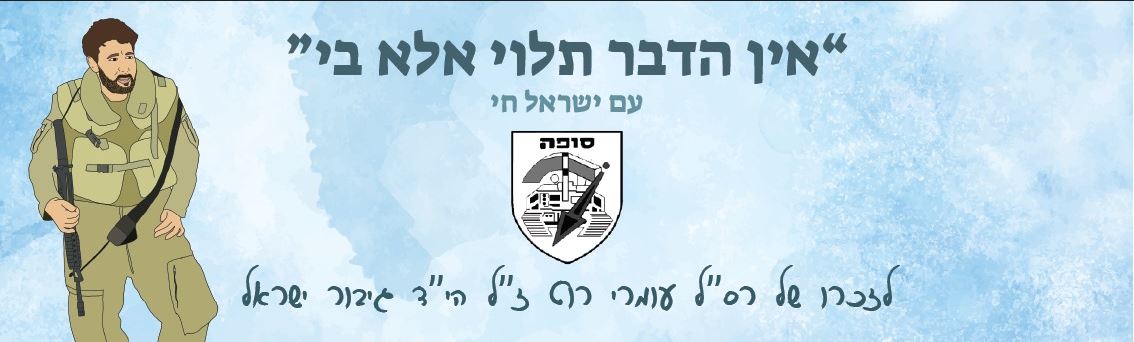
“The matter depends on none but me.”
Life & service
Profile
Service
- Rank
- Sergeant first class (res.)
- Service Type
- Reserve Forces
- Battle Location
- Gaza Strip
Family
- Father
- Shlomi
- Mother
- Shirley
Burial
Cemetery
Military Cemetery Rosh Pina
Tributes & remembrance
זכיתי להכיר את האבא היקר בקורס קציני רכב במילואים
יהי זכרו ברוך של עומרי
יהי זכרו לנצח ברוך ותהא נשמתו צרורה בצרור החיים. אמן.
הי"ד
עלם חמודות, עוד בצעירותו כתלמיד היה שקט, רגוע טוב לב, שלם עם הבחירות שעשה, אהוב על חבריו ועל מוריו. יהי זכרו ברוך.
שירלי,שלומי והבנות
איתכם בכאב ובצער...
חיבוק...גדול אם הרבה נחמה...
יהי זכרו ברוך
שירלי אני משתתפת בצערך זכרונו לברכה
לנצח נזכור אותך וכמה מיוחד היית
יהיה זכרו ברוך לילד עם החיוך המושלם
בן קצרין מלח הארץ
נקטפת בטרם עת
אוהב המון ומתגעגע חבר יקר שלי, אתה גיבור ישראל, לנצח תיהיה בלב שלי
שירלי, שלומי, גל ומעיין יקרים,
לנצח נזכור את עומרי, הילד הנבון והצנוע שהתבגר והפך לגבר משכמו ומעלה.
מחזקים אתכם ומבטיחים לא לשכוח.
היה זכרו ברוך
לנצח תשאר בליבנו
עומרי היקר!
נזכור אותך לעד
אוהב אותך אחי היקר ומתגעגע
היית נקודת אור
עומריקי, החיוך שלך עוד איתנו. מתגעגעים אלייך.
יהי זכרך ברוך
לעד תהיה בליבנו
לתלמידי היקר.
עצוב מאוד מאוד.
רס"ר עומרי רוט, יהיה זכרך נצור בליבנו,
לנצח נצחים, לעולמי עד.
אני לא מצליח להחיל את הליכתך.
תהיה נשמתך צרורה בצרור החיים , לנצח. 29.04.2025
יהי זכרו ברוך ה יקום דמו
עומרי המדהים יהי זיכרו ברוך
עומרי היקר, אחיין של גיסתי הדס האהובה,
נזכור ולא נשכח
אני בבית ספר איפה ששירלי היתה עובדת ואני גם חבר של עידו רוט משתתף בצערכם
היה זכרו ברוך
עומרי המתוק והחייכן,יהי זכרו ברוך
בן דוד יקר שלי מתגעגעים אלייך כול כך אתה חסר לנו בכול דקה ביום וכול שנייה וכול נשימה אוהבת המון ותמיד אזכור אותך
גיבור ישראל לנצח נזכור אותך
עומרי היקר אתה בליבנו תמיד
תשמור עלינו מלעמלה
גיבור שלנו
He treated the soldiers like a father, not as subordinates at all.
Source:ערוץ 7
Read the Hebrew original
הוא התייחס לחיילים כאל אבא, לא כאל פקודים בכלל.
You were my supporting hand,
Source:יזכור
Read the Hebrew original
אתה היית היד התומכת שלי,
My best friend at work.
Source:יזכור
Read the Hebrew original
החבר הכי טוב שלי בעבודה.
He knew how to work with his head and heart in perfect harmony
Source:סיפור חיי
Read the Hebrew original
ידע לעבוד עם הראש ועם הלב בסנכרון מושלם
Many of my actions as a team leader were influenced by his professional and personal outlook. It matters to me that his spirit stays with us.
Source:אלביט מערכות
Read the Hebrew original
הרבה מהפעולות שלי כמנהל צוות הושפעו מהתפיסות המקצועיות והאישיות שלו, חשוב לי שהרוח שלו תישאר איתנו.
I asked him not to do it, but he said to me, 'If I don't do it, then who will?'
Source:October7Memorial
Remembrance Day addresses
יום הזיכרון לחללי מערכות ישראל התשפ"ה – 2025
בכל יום שעובר, אזכור יותר! אזכור, את אלו שיצאו עימי לקרב ולא שבו, ולהם אין מי ידמה ומי ישווה. אזכור, שהכאב לא יעבור לעולם, והזמן, הוא לא מרפה ולא מרפא. אזכור, את שיברון הלב הגובר ואת הבית שבוער. אזכור, את צדקת הדרך, ואשבע שוב, שמה שהיה לא יהיה יותר. אזכור, שיותר מכל דבר אחר – אני חסר! ביום הזה, אני נתקף געגוע לדמותם, לחיתוך דיבורם, לחיוכם, ומדליק נר לזיכרון דרכם ומורשתם!
משרד הביטחון
אגף משפחות, הנצחה ומורשת
יום הזיכרון לחללי מערכות ישראל התשפ"ה – 2025
בכאב, בהצדעה ובתקווה אני מתכבד להדליק נר זיכרון זה. השנה, כשאנו נלחמים במלחמה ארוכה, רב זירתית וצודקת, הזיכרון נושא משמעות עמוקה. ביום זה נעצור ונתייחד עם זכרם של טובי בנינו ובנותינו שנפלו בהגנה על המדינה. מורשתם היא המצפן שמתווה את דרכינו, והיא המעניקה לנו כוח להמשיך ולהגן על מדינת ישראל ותושביה. משפחות יקרות, אנו מרכינים ראשנו ומתחייבים שנעמוד לצידכן תמיד. יהי זכר הנופלים ברוך.
אלוף דדו בר כליפא
ראש אגף כוח האדם, צה"ל
יום הזיכרון לחללי מערכות ישראל התשפ"ה – 2025
בשעה שאנו זוכרים את גודל תרומתם ועומק מסירות נפשם של טובי בנינו ובנותינו, נופלי מערכות ישראל לדורותיהן, ממשיכים צה"ל וכוחות הביטחון במימוש המשימה למענה לחמו ועבורה נפלו: הכרעת אויבינו מדרום, מצפון, ביהודה ובשומרון, וגם בזירות רחוקות יותר. בהערכה רבה ובגאווה אדירה אנו מרכינים ראש בפני הנופלים והנופלות, מאמצים את משפחותיהם אל לבנו, וממשיכים במשימה להבטחת קיומה של ישראל לדורי דורות. יחד נעשה ונצליח.
רב אלוף אייל זמיר
הרמטכ"ל, צה"ל
יום הזיכרון לחללי מערכות ישראל התשפ"ד – 2024
כאשר דגלינו מורדים לחצי התורן וראשינו מורכנים לזכר הנופלים והנופלות במערכות ישראל, ממשיכים לוחמי צה"ל ומפקדיו בלחימה בדרום, בצפון, ביהודה ובשומרון ובזירות נוספות. על כל דור מוטלת המשימה של הגנת העם והארץ – משימה שאף פעם אינה פוסקת. נצדיע בגעגוע ובגאווה לנופלים ולנופלות, נחבק את משפחותיהם, ונמשיך ברוח הציווי שהותירו לנו. עם ישראל חי.
רב ניצב יעקב שבתאי
המפקח הכללי, משטרת ישראל
יום הזיכרון לחללי מערכות ישראל התשפ"ד – 2024
אחיי הנופלים, כל נר הוא זיכרון יחיד ומיוחד, על חיים שהיו ואינם, געגוע שנצרב עמוק בלב, עולם ומלואו. הנרות כולם הם זיכרון של אומה כי לעולם לא עוד, בשורת הציונות וקוממיות ישראל. זיכרון כי הדרך לעם חופשי בארצנו עוברת דרך מסדר הנופלים. אור הנר יזכיר לנו את מסירות נפשכם להציל חיים, להגן על הבית. הנרות מסמנים לנו נתיב גבורה ערכי מחייב שאנו מצווים ללכת לאורו. נמשיך להילחם ולהוסיף אור מתוך אמונה בנצח ישראל.
יואב גלנט
שר הביטחון
יום הזיכרון לחללי מערכות ישראל התשפ"ד – 2024
בהצדעה ובכאב, בשם צה"ל כולו, אני מדליק נר זיכרון. בעיצומה של מלחמה, הזכרון נושא משמעות יום-יומית, שעבר והווה מתלכדים בה. לאורם של הנופלים נמשיך לצעוד, חיילי הסדיר והמילואים. לאורם של הנופלים נמשיך להגן על ארצנו ועל מולדתנו, גם כשהמחיר כבד. להבת-הזכרון תבער בנו בעודנו ממשיכים להלחם ונזכור את הנופלים ואת אומץ ליבם. משפחות יקרות, צה"ל מרכין היום ראש, מצדיע לכן וכואב איתכן. יהי זכר הנופלים ברוך.
אלוף יניב עשור
ראש אגף כוח האדם, צה"ל
יום הזיכרון לחללי מערכות ישראל התשפ"ד – 2024
בהוקרה, בגאווה ובכאב שאין לו סוף, אני מתכבד להדליק נר לזכרם של הנופלים והנופלות במערכות ישראל. סיפור חייהם בארץ הזאת, מסכת שירותם, גבורתם והקרבתם – הם סיפורה של הארץ הזאת, אך גם סיפור המחיר הכבד שהיא תובעת מאוהביה. מחויבותנו לזכר הנופלים ולדרך שהותירו לנו ניצבת תמיד לנגד עינינו. את המשימה שלא זכו להשלים, משלימים כיום, וישלימו, אנשי כוחות הביטחון, הממשיכים בדרכם ולאורם. יהי זכרם של הנופלים ברוך.
משרד הביטחון
אגף משפחות, הנצחה ומורשת
יום הזיכרון לחללי מערכות ישראל התשפ"ד – 2024
בחרדת קודש אני מתכבד להדליק נר לזכרם של חללי מערכות ישראל, חברנו שנפלו, מראשית היציאה מהחומות ולאורך כל שנות עצמאותנו המדינית והציונית, מהווים תמרור זיכרון לדרך חיינו ולמחוייבות הלאומית להנצחת זכרם. דרכם נותרה דרכנו ומורשתם נר להמשך עשייתנו. יהי זכרם ברוך!
בני גנץ
שר הביטחון
יום הזיכרון לחללי מערכות ישראל
נזכור אותם, כולנו יחד. כל אחד ואחת מהם, מדי יום ביומו, והיום ביתר שאת, כך – לנצח. "כי מדי דברי בו זכור אזכרנו עוד"
משרד הביטחון
אגף משפחות, הנצחה ומורשת