
The story
In the sweeping, open vistas of the Binyamin mountains, within the tranquil community of Neve Tzuf, a place where the air hung crisp and clear, and the horizon stretched out, seemingly without end, Omer Moshe Galdor was born on the 16th of Nisan, 5754, corresponding to March 28, 1994. He was the cherished son of Ra'aya and Oren, and the eldest brother to three younger siblings – Nitzan, Rotem, and Hadar – who would come to see in him a figure of an older brother who was not only responsible but also endlessly curious and brimming with an irrepressible zest for life. Their home in Neve Tzuf was more than just walls and a roof; it was a living, breathing space that absorbed the children's laughter, the quiet murmurs of study, and the comforting aroma of food wafting from the kitchen. Omer grew up in an environment where the bond with the land and the community was deeply ingrained, almost elemental, where childhood games unfolded amidst the ancient olive trees and fragrant wild bushes, and where the sunsets painted the skies in vibrant hues of crimson and orange, burning themselves into his memory as a permanent, breathtaking backdrop to his formative years.
His earliest days as a child were spent exploring the unpaved, dusty lanes of Neve Tzuf, streets where every stone seemed to whisper a story and every corner offered the promise of a new game. His small feet ran freely, tirelessly exploring the narrow pathways, the meticulously tended gardens, and those hidden, charming nooks that only children possess the innate ability to discover. He attended the local elementary school, where the first threads of robust friendships began to weave, some of which would accompany him for many years into the future. Even then, a profound curiosity and a unique capacity for observation were evident in him; he didn't merely see the world, he felt it, endeavored to grasp its inner workings, and asked questions that transcended the innocent simplicity of childhood. For middle school, Omer moved to the nearby community of Talmon, a short bus ride that, for him, represented a nascent form of independence, an opening to a world broader than that of his small hometown. There, amidst lessons and examinations, an inner need began to solidify within him: to comprehend not only the 'what' but also the 'why,' a quest for meaning that steadily intensified and deepened with each passing year.
When he reached high school age, Omer chose to attend the Neve Yeshiva High School, an institution nestled in Moshav Neve, close to the Egyptian border, a considerable distance from his home in Samaria. This choice, to journey south and live in a boarding school, already reflected his burgeoning independence and his unwavering determination to forge his own path. Boarding school life was utterly different from that of home, a challenging environment that demanded adaptation, yet simultaneously granted him freedom and space for profound personal growth. There, within the hallowed walls of the study hall and the communal dormitory rooms, he not only acquired extensive Torah knowledge but also honed his social abilities and cultivated a deep sense of belonging to a larger community. Alongside his studies, Omer was an energetic and dedicated activist in the Bnei Akiva youth movement, a fertile ground for the values that profoundly shaped his character and worldview. His counselors in the movement remembered him as a cadet who never demanded special attention or concern; he was simply *there*, showing up for every activity, participating in every discussion, and effortlessly leading his peers with a quiet confidence. "He had it all," one of his counselors recounted with admiration, "a commitment I had rarely encountered, a natural sociability, a genuine love for the land, and solid values. We, the counselors, merely had to ensure we didn't spoil what was already so perfectly formed within him." During the long, arduous hikes so emblematic of the movement, Omer was always the one pushing forward, the one looking out for the weaker members, and the one maintaining a good mood even as fatigue began to weigh heavily on everyone. He cherished the feeling of the wind in his hair and the earth clinging to his boots, the ever-changing vistas of the Israeli landscape unfolding before his eyes, and the soul-searching conversations that would take place around a nighttime bonfire beneath a sky strewn with countless stars. Later, as he matured, Omer himself became a devoted counselor, one who ignited in the hearts of younger boys that very same spark of love for the land, for tradition, and for community – a spark that burned within him with immense intensity. He invested countless hours in planning activities, preparing lesson plans, and most importantly, in truly listening to his cadets, genuinely striving to understand their world and guide them towards a path of meaning and purposeful action.
Upon completing his studies at the Yeshiva High School, Omer had little hesitation regarding his next steps. He chose to join the 'Beit Va'ad LeTorah Har Chevron' Yeshivat Hesder in Otniel, another community in the southern Hebron Hills, which for him was a natural continuation of his quest for spiritual depth and intellectual rigor. The Yeshivat Hesder, which seamlessly integrated intensive Torah study with military service, perfectly suited his character – a profound need for connection to tradition alongside an ardent desire to contribute and to act in the world. Rabbi Matanya Sternberg, one of his revered teachers at the Yeshiva, described him in warm, heartfelt terms: "Omer was a truly special and remarkably gentle soul. He possessed a creative and highly developed capacity for thought, coupled with a profound depth and an uncanny ability to notice minute, almost imperceptible details. He held significant sway within the community, with an impressive presence, and it was always important to hear what Omer had to say during deep and substantive discussions." At the Yeshiva, Omer did not content himself with a superficial reading of the texts; he plunged into their depths, seeking out the subtle nuances, the broader connections, and the philosophical and ideological meanings that lay beneath the words. He relished the spirited discussions in the study hall, the scholarly debates that unfolded with passion and fervor, and he invariably managed to introduce a fresh perspective, one that no one else had considered. His friends remembered him sitting for long hours in the library, utterly absorbed in a thick tome, and equally, finding himself at the heart of a heated debate on current affairs, presenting arguments that were both complex and remarkably lucid. Between classes and study sessions, he would often embark on long walks in the vicinity of Otniel, wandering among the seemingly arid hills that nonetheless teemed with hidden life, striving to connect his theoretical studies with the physical reality of the land. He felt the weight of history in the very air, the ancient stories concealed within every stone, and he sought to forge a connection between the past and the present, between theory and practice.
In March 2014, Omer's turn came to enlist in the IDF, a natural progression as part of his Yeshivat Hesder track. He enlisted and served as a combat soldier in the 'Lavi' Battalion of the 'Kfir' Brigade, a unit renowned for its operations in the territories. Military life was a sharp, demanding transition from the relative tranquility of the study hall, yet Omer quickly adapted to the rigorous discipline, the physical hardship, and the exacting operational demands. He was an exemplary soldier, one who executed every mission with unwavering dedication and professionalism, and he swiftly earned significant respect from his commanders. They recognized his leadership potential, offering him the opportunity to advance to an officer's course and become a commander, but Omer, with the profound thoughtfulness that characterized him, decided to complete his military service as scheduled. He felt he had other paths to explore, other worlds to delve into, and that he wished to continue his civilian and religious studies, viewing his military service as an important, but not exclusive, contribution to his nation. He yearned to express his unique abilities in other domains, to influence the civilian sphere, and to further deepen his knowledge and understanding. Even as he pressed forward with his personal aspirations, he did so not out of any lack of respect or appreciation for the role of a soldier, but from a deep understanding of his own distinct path and how he could best serve. His military service profoundly shaped him, tempered his spirit, and equipped him with invaluable tools for coping with high-pressure situations and making swift decisions – qualities that would serve him greatly throughout his life.
Following his discharge from the IDF, Omer returned to his studies at the Yeshivat Hesder in Otniel, simultaneously taking on work as a security guard for the Jerusalem Municipality. His work at the Municipality offered him a unique window into the complex and vibrant city, a chance to encounter a wide spectrum of people and cultures. He stood at the gate, maintaining order, yet also absorbing the myriad sounds, the distinct aromas, and the palpable energy that is uniquely Jerusalem. Concurrently, Omer embarked on a degree in architecture at Ariel University in Samaria. This was a natural choice for a man with a creative mind, a highly developed spatial vision, and an ardent desire to influence both the physical and social realities around him. He viewed architecture not merely as a profession but as a profound mission – the capacity to shape living environments, to impact people's well-being, and to create spaces that were both aesthetically pleasing and functionally effective. During his studies, Omer worked as an intern at an architectural firm in Tel Aviv, where he was exposed to the bustling and modern world of urban planning. Subsequently, he relocated his internship to an architectural office in the Katamon neighborhood of Jerusalem, a short walk from his home, which allowed him to more easily integrate his professional work with his personal and burgeoning family life.
As an architect, Omer was far more than just a draftsman or a planner; he was a profound thinker, a visionary. He held an unwavering belief in the immense importance of open and accessible public spaces for everyone, spaces that discriminated against no one, fostering spontaneous encounters, offering respite, and inviting play. He passionately championed the concept of 'walkability' – an urban philosophy that advocates for free, safe, and pleasant pedestrian spaces, actively encouraging a reduced reliance on private vehicles. He envisioned cities where children could walk safely to school, where adults could savor a leisurely stroll within the urban fabric, and where streets were not merely arteries for traffic but vibrant, bustling, and inviting places in their own right. In his professional work, Omer actively sought to advance these ideas, dedicating considerable thought to planning projects that would genuinely enhance public spaces. He didn't merely design buildings; he contemplated their intrinsic connection to the street, their broader impact on the surrounding environment, and how they could best serve the human experience. Beyond his professional endeavors, Omer volunteered with 'In Our Streets – The Pedestrian Organization of Israel'. There, he not only contributed his professional knowledge but also acted from a deep-seated ideology, driven by the conviction that true change begins on the street, in the shared public domain accessible to all. He participated in meetings, drafted position papers, met with planning officials in both municipal and governmental bodies, and tirelessly sought to persuade, explain, and advance these ideas through every possible avenue. He believed that a better city was inherently a more human city, one where people, rather than cars, stood at the very center of its design and purpose.
In 2016, Omer married Adi, the love of his life, a woman who shared his world, his values, and his profound affection for Jerusalem. They established their home in the Holy City, a place they both adored for its intricate complexity, its timeless beauty, and the deep history embedded within its very stones. Their small home, which quickly filled with light and laughter, became the vibrant center of their shared world. They loved to wander through Jerusalem's ancient and modern streets, discovering hidden gems, lingering in small cafes, and simply soaking in the city's unique, almost mystical atmosphere. In 2021, their first son, Neta-Ron, was born, and their lives changed irrevocably, blossoming with new purpose and joy. Omer was a devoted husband and a loving, deeply present father, one who was never content with a secondary role in his children's lives. He delighted in spending long hours with Neta-Ron at the neighborhood playground, pushing him on the swings until he seemed to touch the sky, chasing a ball with him, and laughing loudly as the little boy tumbled playfully on the grass. In the evenings, he would tell him story after story, for hours on end, inventing new characters, magical worlds, and captivating adventures that utterly enthralled little Neta-Ron. He was a father attentive to every need, every question, and every small breakthrough his son made. His love for his children was deep and unconditional; he saw in them the continuation of his path, the vibrant hope for a better future. He was a very quiet and private person, not at all outwardly expressive, yet within the sanctuary of his home, with his family, he opened up, allowing himself to be free and uninhibited, a family man with every fiber of his being.
Throughout his life, Omer remained a deeply private, quiet, and unassuming individual, one who preferred to act and contribute from behind the scenes, without drawing unnecessary attention to himself. However, one profoundly difficult and life-altering experience dramatically shifted this approach. Omer was diagnosed with cancer. It was an unbearably difficult period, during which his inherent optimism was subjected to a painful and rigorous test. The exhausting treatments, the gnawing uncertainty, and the immense physical and psychological struggle presented a colossal challenge for him and for his family. Adi, his parents, and his siblings stood by his side like an unshakeable rock, supporting him in every conceivable way, full partners in this agonizing journey. He battled the disease with profound courage, unwavering determination, and a strong, unyielding belief in his capacity to recover. After a long and complex ordeal, Omer successfully recovered from cancer, and emerging from this struggle granted him a renewed and profound perspective on life. It was precisely then, contrary to his naturally private disposition, that Omer chose to open up, to speak about the subject with candor, and to actively work towards raising awareness for early detection of the disease. He understood that his personal story could serve as an inspiration to others, offer hope, and encourage people not to neglect their own health. He did not want others to endure the journey he had undertaken without being prepared or fully aware of what lay ahead.
One of the most striking expressions of Omer's unwavering determination and profound sense of mission emerged precisely after his recovery. Despite having received a medical exemption from reserve duty following his illness, Omer adamantly insisted on continuing to serve. He did not perceive this exemption as a relief, but rather as a missed opportunity to contribute. He felt a deep and abiding commitment to the state, to his comrades in arms, and to Israeli society as a whole. After considerable effort, he returned to reserve service as a combat soldier in the Golani Brigade's Yachsam (Logistical Support Unit), where he found his place as an integral part of the fighting force, proving that his spirit was unbroken. His uncle, Avichai, spoke of him with profound admiration: "We were all partners in his journey to recovery, and we are all so proud of him. He was immensely proud of what he accomplished, he loved his wife Adi and their two wonderful children. He was a talented architect, simply a wunderkind." Omer was a brilliant and creative individual, a gifted architect whose vision extended far beyond mere plans and blueprints. He also wrote and created in other fields, such as Jewish thought, philosophy, and Talmud, seamlessly connecting diverse intellectual worlds and enriching his comprehensive worldview. His character was a unique blend of profound seriousness and a deep sense of responsibility, alongside an infectious joy for life, a keen sense of humor, and a playful mischievousness. He was a loyal and devoted friend, cheerful and optimistic, remarkably sensitive and deeply caring towards his surroundings, always seeking ways to add good to the world and benefit others, and as his friends put it, "he simply cared."
And then came that black morning, Shabbat, the 22nd of Tishrei, Simchat Torah 5784, the seventh of October 2023. At half past six in the morning, as the sun began its ascent over Jerusalem, and the lingering echoes of the holiday could still be felt in the air, the Hamas terrorist organization launched a murderous surprise attack on Israel. In an instant, the fragile peace shattered. A massive barrage of missiles and rockets from the Gaza Strip blanketed vast areas of the country, and simultaneously, thousands of terrorists infiltrated Israel by land, sea, and air. They unleashed a brutal assault on the communities surrounding Gaza, on Sderot, Ofakim, and Netivot, on innocent festival-goers at a nature party, on IDF bases, and on unsuspecting passersby on the roads. The terrorists coldly murdered some eight hundred civilians in their homes and cars, perpetrated heinous crimes against them, abducted hundreds of Israelis into the Gaza Strip, and utterly destroyed, looted, and set fire to homes and property. Hundreds of soldiers, police officers, security personnel, and members of local emergency response teams fell in battle. That morning, without a single warning, a war began that would forever alter the face of the nation.
Omer, like countless Israelis, awoke to a morning that swiftly devolved into a waking nightmare. WhatsApp messages began to flood social media chains, frantic, uncertain, and very quickly, the horrific picture became terrifyingly clear. He did not hesitate for a single moment. The profound sense of commitment within him, the very same drive that had compelled him to insist on returning to reserve duty even after his illness, propelled him to immediate action. He reported for combat duty immediately upon the outbreak of the attack, joining his unit, the Golani 'Yachsam' – the brigade's logistical support unit which, despite its name, comprised frontline combat soldiers. He was stationed in the company commander's forward command post (HAPAK) – a role that demanded he be at the very forefront, intimately close to the unfolding events, directly under enemy fire. Over the ensuing months, Omer completed hundreds of days of reserve duty, days during which he repeatedly parted from his family, driven by an unwavering belief in the justness of the war, an ardent desire to act and make a difference, and a profound sense of loyalty towards his company and its soldiers. He knew that Adi and Neta-Ron were safe behind him in Jerusalem, and the thought of them fortified him, giving him the strength to persevere, to protect, and to do everything within his power to secure their future. He was an integral part of the force that defended the borders, fought in Gaza, and carried on his shoulders the heavy burden of protecting the homeland.
Amidst all the chaos and relentless fighting, in March 2024, while Omer was still on reserve duty, Adi gave birth to their second daughter, Aluma. Aluma's birth was a radiant beam of hope and joy in a dark and tumultuous period, a living testament to the enduring power of life that continues to blossom even in the shadow of existential threat. Omer, who was granted a brief, precious window to hold his newborn daughter, was overjoyed to the depths of his soul. The delicate infant, whose name resonated like a gentle melody, was a vibrant, living reminder of what he was fighting for – for future generations, for a future that needed to be built and fiercely protected. He returned to the front lines with a heightened sense of double responsibility, carrying in his heart the image of little Aluma and the bright smile of Neta-Ron, each granting him renewed strength and resolve to face the dangers ahead.
Approximately half a year later, in late September 2024, the focus of the fighting shifted once more. The ground maneuver in Southern Lebanon commenced, and Omer's battalion was swiftly deployed to the northern sector. The entire atmosphere transformed – from the scorching sand and intense heat of the south, to the biting cold, the pervasive mud, and the rugged, mountainous landscapes of the north. The fighting there was distinct, complex, and the Hezbollah threat was palpably real and brutally unforgiving. Omer and his company comrades operated under arduous conditions, facing a sophisticated and lethal enemy, acutely aware of the dangers lurking in every corner, with every movement. Almost two months of intense combat ensued, days and nights filled with unrelenting tension, profound fatigue, and ceaseless operational activity, each moment a testament to their resilience and courage.
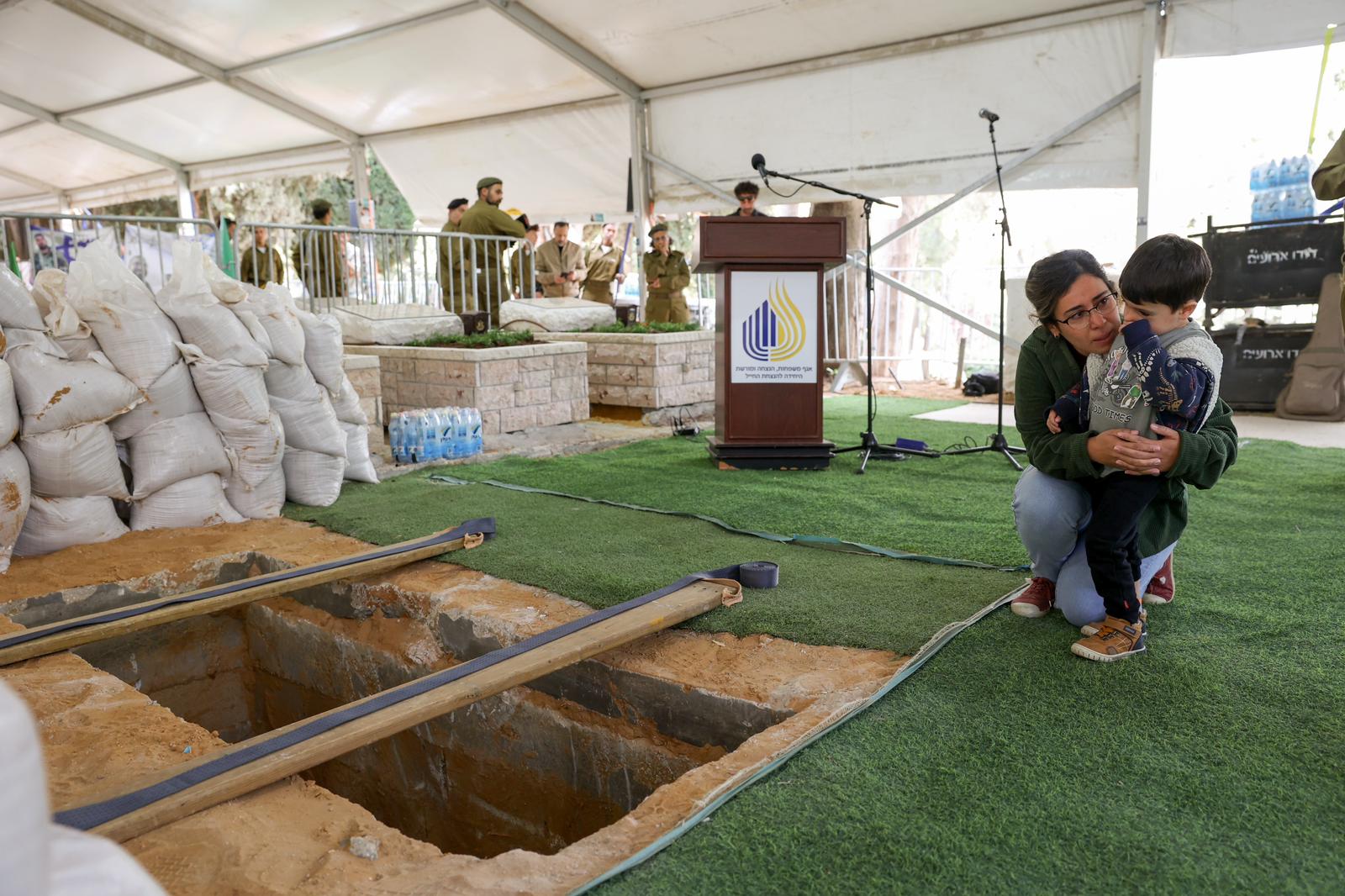
On Tuesday, November 19, 2024, the 18th of Cheshvan 5785, the terrible moment arrived. An explosive UAV (Unmanned Aerial Vehicle) launched by Hezbollah terrorists located and struck the position where Omer's force was deployed in Southern Lebanon. The explosion was violent and instantaneous. Omer was struck by the blast and shrapnel, killed instantly. He was thirty years old when he fell. The quietude that had been his portion in childhood in Neve Tzuf was shattered once more, this time with an agonizing finality. Omer Moshe Galdor, the talented architect, the devoted fighter, the loving family man, the loyal friend, the one who sought to better his world through all his actions, fell in battle, defending his home, his people, and the very dreams he had sought to build. The devastating news was delivered to his stunned family in Jerusalem, a message that shattered their worlds into countless fragments. Staff Sergeant Omer Moshe Galdor was laid to rest in the military cemetery on Mount Herzl in Jerusalem, the city he so deeply cherished, leaving behind a scorched earth in the hearts of his loved ones. Following his fall, he was posthumously promoted in rank, from Staff Sergeant to Sergeant Major, a final, poignant mark of appreciation for his dedicated service and unwavering devotion.
The void left by Omer was immense, and the voices of eulogy echoed the profound magnitude of the loss. Adi, his beloved wife, eulogized him with chillingly poignant words, brimming with both love and anguish: "As difficult as it was for me during all the months you were away, I mostly didn't worry about you at all. You are a level-headed man, always thinking several steps ahead, knowing how to navigate any situation. I told myself there was no way anything could happen to you… I am so grateful for the years we had together, for the experiences we accumulated, the family we built. You were such a deep, gentle, sensitive, talented person, with so many aspirations and dreams. It was clear to me that you would go far… We missed out on what you could still have become. My love, I will miss you… I love you now and forever." Adi's words reflected her profound understanding of Omer's unique personality, of the immense inner strength that resided within him, and of the brilliant future that was so cruelly cut short. She spoke of the life that had been, of the life that could have been, and of the enduring love that would remain eternal. Little Neta-Ron, just three years old, and baby Aluma, a mere eight months old, were left without a father, yet with an immense legacy of love, resilience, and purposeful action.
His colleagues from '15 Minutes – The Public Transport Consumer Organization of Israel' also eulogized him, emphasizing his unique contribution: "Omer was the kind of person who makes the world a little better. Not as a cliché, but in the simplest, most practical way possible. He was a sensitive soul. Sensitive to his environment, to people, and even to those small moments that we have all grown accustomed to overlooking. This sensitivity was at the heart of his creativity, transforming his work as an architect into a means of improving the lives of others… And he succeeded in making the world a little better, because he simply cared." His friends' words underscored the very essence of Omer's life – not a heroism of grand pronouncements, but a heroism of small, everyday actions, of a profound caring and sensitivity that transformed his surroundings into a better place. He did not seek honor or accolades, but rather sought tangible ways to contribute, to improve, and to infuse meaning into the world around him.
Omer's memory has been commemorated in various ways, each reflecting the rich tapestry of his world. The musician Talia Tal composed and wrote a song in his memory, a piece that beautifully incorporated excerpts Omer himself had penned on one of his birthdays, and it can be viewed on YouTube under the title 'Omer's Song'. His words, transformed into a poignant melody, continue to live and resonate, offering both solace and remembrance. A memorial page dedicated to him was also opened on memoriz.plus, allowing people to share cherished memories and photographs, ensuring his life story remains vibrant and alive. His family, wishing to commemorate him in a way that best reflected his essence, conveyed a message of hope and action: "What brings us the most joy is to see people who believe, like Omer, in their ability to improve reality and influence their surroundings, even if it's just one small act. Omer dedicated his life to creating more pleasant and comfortable daily lives, and left an indelible mark on everyone he knew. We hope that all who learn about him and his work will continue on his path, because sometimes true change can come from one person who simply believes."
This message, of unwavering faith in the power of the individual to effect change, is the very embodiment of Omer's profound legacy. He did not live an ostentatious life, yet every step he took and every choice he made was imbued with deep and resonant meaning. From the child who ran freely through Neve Tzuf, to the teenager who delved into the depths of Torah studies, the exemplary soldier, the visionary architect who dreamed of more human cities, and finally, the devoted and loving father who spent hours playing with his children – Omer Moshe Galdor was a man of action, of profound caring, and of an uncompromising belief in the inherent good within humanity and the world. He fell as a hero in the War of Revival, defending his nation and the family he had so lovingly built, yet his spirit continues to live on through his wife and children, his parents and siblings, his friends, and his colleagues. His legacy is not merely the memory of a fallen man, but a resonant call to action – to continue on his path, to believe in the capacity to improve reality, and to remember that every small act of goodness, of sensitivity, and of caring, truly makes the world a better place. The story of Omer Moshe Galdor is a narrative of a life lived to its fullest, of profound love, of struggle and resilience, and of a human heroism that stemmed from his deepest inner truth and integrity. He is etched into the national memory as the man he was, and as the man he could still have become, and his story is an inseparable thread in the ongoing narrative of this people – a story woven with pain, yet also with an unending, unyielding hope.
Moments of a life
All photographs · 2
Videos and links
In the media
Articles
- Utrecht Jewish Community Launches Student Residence Project Amid Rising Antisemitism
WireIsrael ·
- Inzameling om joods leslokaal aan Springweg te herbouwen
Nieuws030 ·
- Netherlands: memorial initiative inaugurated for IDF soldiers who fell in the war
מקור ראשון ·
- “He wanted things to be better here”: Sergeant First Class (res.) Omer Moshe Galdor laid to rest | Israel National News
ערוץ 7 ·
- Cleared for Publication: Sergeant First Class (res.) Omer Moshe Gaaldor, 30, from Jerusalem, Fell in Battle in Southern Lebanon | Israel Hayom
ישראל היום ·
- IDF announces death of Sgt.-Maj. (res.) Omer Moshe Gealdor
The Jerusalem Post ·
Show all (7)
Videos
ריכוז חברתי אולפנת שירת הים ·
Memorial sites
- Yizkor - Master Sergeant Omer Moshe Gaeldor
משרד הביטחון — יזכור
Memorial projects
The Jewish community in Utrecht inaugurated the student house extension called “Beit Omer,” in memory of cousins Omer Moshe Galdor and Omer van Gelder, with a shared memorial plaque.
Musician Talia Tal wrote and composed “Omer’s Song” in his memory, incorporating words he wrote on his birthday; Yizkor refers to a YouTube video without a direct URL.
Stories told about them
After recovering from cancer, Omer chose to speak publicly to encourage early detection and insisted on returning to reserve duty even though he had received an exemption. As an architect, he promoted accessible public spaces that were safe for pedestrians and volunteered with the organization Birhovot Shelanu.
Life & service
Profile
Service
- Rank
- Sergeant first class (res.)
- Unit
- Golani Brigade
- Service Type
- Reserve Forces
- Honours
- Posthumously Promoted
- Battle Location
- South Lebanon
Family
- Father
- Oren
- Mother
- Ra'aya
Burial
Place of rest
All photographs · 1
Tributes & remembrance
ביום חמישי שעבר חזרתי מאוחר מצילומים בצפון. זה היה אחת עשרה וחצי בלילה וחיכיתי בתחנת רכבת השלום לרכבת לירושלים. כמו תמיד, עיני נדדו אל הקירות המכוסים בסטיקרים לזכר חיילות וחיילים שנפלו. לכל אחד ציטוט מעורר השראה. חוץ מאחד, עם ציטוט שכל כך הצחיק אותי שתהיתי אם הוא הטרלה . העליתי את התמונה הזו לאינסטה (באופן כללי, אם בא לכם לעקוב אחרי, בואו לשם. רוב הזמן אני שם, לא פה) ונסעתי הביתה. בבוקר חיכו לי הודעות של אנשים שהכירו את עמר, וסיפרו לי איזה איש מיוחד ומצחיק הוא היה. הוא היה אדריכל ירושלמי, פעיל בתחום התחבורה הציבורית, בין היתר. לא הכרתי את עמר, אבל בשעה 23:36 בתחנת רכבת שוממה בתל אביב הוא העלה חיוך על פני העייפות. תודה על השירות, ותודה על מי שהיית. כל כך הרבה נופלות ונופלים, כל כך הרבה סיפורים, כל כך הרבה חיים שאבדו. ואתם, תהיו עמר, ואל תחנו כמו חרא.
תודה לך,עמר-משה היקר,על הגנת העם והמולדת במחיר ההקרבה היקרה והנוראה מכל ! תנחומים מלב כואב לכל יקיריך.יהא זכרך ברוך,גיבור ישראל !
יהי זכרך ברוך ,אנחנו מקדישים את המופע מחר בזריפה לעילוי נשמתך
תודה ששמרת עלינו, נעשה השתדלות שנהיה ראויים.
אח יקר אתה חסר, אבדן גדול לעם ישראל ולצהל, בחור ערכי גדול מהחיים איש משפחה מוכשר ושאפתן , נזכור אותך לעד
בית הספר לארכיטקטורה מרכין ראש ומודיע בצער רב על נפילתו בלבנון של רס"ל עמר משה גאלדור ז"ל. עמר משה בוגר ביה"ס לארכיטקטורה קיבל את תעודת הבוגר בטקס בחודש ספטמבר.
יהי זכרו ברוך
סבא לייזר מגעגע אליך ומדליק נר לכבודך.
עמר , סטודנט יקר אהוב ומוכשר . חסר לנו מאד .יהיה זכרו ברוך .
רס"ל במיל' עמר משה גאלדור, שנהרג הבוקר מפגיעת כטב"ם בדרום לבנון, החלים בשנים האחרונות ממחלת הסרטן. אחרי ההחלמה הוא שב לשירות מילואים כלוחם ביחס"ם בחטיבת גולני - והיום, כאמור, נפל. עמר ז"ל הותיר אחריו אישה, עדי, ושני ילדים - נטע, בן שלוש, ואלומה, בת שמונה חודשים בלבד. דודו אביחי סיפר עליו: "כולנו היינו שותפים במסע שלו להחלמה, כולנו גאים בו. הוא היה מאוד גאה במה שהוא עשה, אהב את אשתו עדי ואת שני הילדים המקסימים שלהם. הוא היה אדריכל מוכשר, פשוט ילד פלא"
עמר היקר,
נוח על משכבך בשלום ויהי זכרך ברוך!
לעולם לא אשכח את העזרה שקיבלתי ממך כאסיסטנט לספר העומד לראות אור ביוני הקרוב.
לאחייני האהוב באהבה ועם הרבה געגועים. השארת חלל גדול.
בן דוד אהוב
זכיתי להכיר אותך רק במעט ולראות אותך מאושר עם המשפחה. כמה אור היה בך. תודה
חבר, אתה חסר
עומר היקר, מודה לך ומוקיר על כל הרגעים הקטנים והגדולים ועל הזכות לשרת לצידך. אזכור אותך תמיד.
יהי זכרו ברוך , נזכר כאיש אמת וצדק חסד ואהבה
לזכרך
יעמר היקר בליבנו לעד, דוגמא לחוזק , נחישות, עוצמה ואטרף ישראלי. יהי זכרך ברוך
מתגעגע אליך עמר, לב ענק
לזכרך.
יהי זכרו ברוך. מתגעגעים אליך עמר
בני המקסים!
זוכרים ומרכינים ראש
יהי זכרו של עמר גיבור ישראל ברוך
יהי זכרו ברוך
עמר יקר נזכור אותך לעד הייתה בעל מושלם לעדי ואב למופת לנטע ואלומה אתה נצור בליבי
עמר אהוב שלנו,זכיתי לחתן נפלא שאהב מאוד את בתי והיה אבא מושלם לילדים ,לא יכולתי לבקש לבתי חתן טוב יותר .
נזכור אותך עמר יקר אתה נצור בליבנו עם החיוך התמידי הצניעות והעדינות יהי זכרך ברוך
פגשתי אותך ממש כמה שעות לפני המקרה, זכיתי לטפל בחברים שלך באירוע ואני כלכך מצטער שלא בך יהי זכרך ברוך
עמר היה מסוג האנשים שהופכים את העולם למקום קצת יותר טוב.
לא כקלישאה, אלא באופן הכי פשוט ומעשי שיש.
כאדריכל - הוא פעל לשיפור ופיתוח המרחב העירוני.
כנוסע - אם האוטובוס לא עצר או היה צפוף מדי הוא היה מיד שולח לנו הודעה.
כאזרח - הוא תיעד בעיות ומפגעים, ופנה גם למשרד התחבורה.
הוא היה אדם רגיש. רגיש לסביבה, לאנשים, וגם לרגעים הקטנים שכולנו כבר התרגלנו לא לראות. הרגישות הזו הייתה לב היצירה שלו, שהפכה את עבודתו כאדריכל לאמצעי לשיפור חיי אחרים. הוא עבד על תוכניות מעשיות לשינוי המרחב הציבורי, כשבחודשים האחרונים הקדיש את עיקר זמנו לפרויקטים בירושלים, עירו האהובה, והמשיך גם בזמנו החופשי לסייע לארגונים חברתיים, מתוך מודעות סביבתית עמוקה. הבחירה להמשיך ולשרת בצה"ל, גם אחרי שהתמודד עם מחלת הסרטן וזכה לפטור, לא הייתה מובנת מאליה. היא נבעה מתוך אמונה בצדקת דרכו ומחויבות לאנשים שבשבילם יצא לשטח.
עמר היה לוחם במלוא מובן המילה.
לוחם בחטיבת גולני.
לוחם שניצח את מחלת הסרטן.
לוחם למען הצדק ושיפור התחבורה הציבורית.
והוא הצליח להפוך את העולם למקום קצת יותר טוב, כי פשוט היה לו אכפת.
משפחתו ביקשה להנציח אותו בדרך שהכי אפיינה אותו:
"הכי משמח אותנו לראות אנשים שמאמינים, כמו עמר, ביכולת שלהם לשפר את המציאות ולהשפיע על הסביבה שלהם, גם אם זה רק מעשה אחד קטן. עמר הקדיש את חייו ליצירת חיי יום-יום נעימים ונוחים יותר, והותיר חותם בלתי נשכח בכל מי שהכיר אותו. אנחנו מקווים שכל מי שייחשף אליו ולפועלו - ימשיך בדרכו, כי לפעמים שינוי אמיתי יכול להגיע מאדם אחד, שפשוט מאמין".
תודה לך, עמר.
אנחנו מבטיחים להמשיך בדרכך.
לזכרו של רס"ל (במיל') עמר משה גאלדור, לוחם חטיבת גולני, בן-זוג ואב מסור, בן ואח אוהב, שנפל בי"ח במרחשוון התשפ"ה, 19.11.24, בקרב בדרום לבנון.
בן 30 בנופלו. הוא הותיר אחריו את רעייתו עדי, ילדיו נטע ואלומה, הוריו רעיה ואורן, ואחיו ניצן, רתם והדר.
יהי זכרו ברוך.
https://www.facebook.com/photo?fbid=1084755530355570&set=a.617996233698171
He gave his life for all of us
Source:ישראל היום
Read the Hebrew original
הוא מסר את נפשו למען כולנו
Omer is smart, cynical, perceptive, broad-minded, an attentive son
Source:ערוץ 7
Read the Hebrew original
עומר חכם, ציני, נבון, רחב אופקים, בן קשוב
You were so happy and optimistic and so devoted
Source:ערוץ 7
Read the Hebrew original
היית כל כך שמח ואופטימי וכל כך מסור
Omer was a special and very gentle person
Source:משרד הביטחון — יזכור
Read the Hebrew original
עמר היה אדם מיוחד ועדין מאוד
It is a great privilege for us to carry on the legacy of the holy soldiers in the place where our family's roots grew
Source:מקור ראשון
Read the Hebrew original
זכות גדולה עבורנו להמשיך את המורשת של החיילים הקדושים במקום שבו צמחו שורשי המשפחה שלנו
You were such a deep, gentle, sensitive, talented person, with so many aspirations and dreams.
Source:משרד הביטחון — יזכור
Read the Hebrew original
היית אדם כל כך עמוק, עדין, רגיש, מוכשר, עם כל כך הרבה שאיפות וחלומות.
Remembrance Day addresses
יום הזיכרון לחללי מערכות ישראל התשפ"ה – 2025
בכל יום שעובר, אזכור יותר! אזכור, את אלו שיצאו עימי לקרב ולא שבו, ולהם אין מי ידמה ומי ישווה. אזכור, שהכאב לא יעבור לעולם, והזמן, הוא לא מרפה ולא מרפא. אזכור, את שיברון הלב הגובר ואת הבית שבוער. אזכור, את צדקת הדרך, ואשבע שוב, שמה שהיה לא יהיה יותר. אזכור, שיותר מכל דבר אחר – אני חסר! ביום הזה, אני נתקף געגוע לדמותם, לחיתוך דיבורם, לחיוכם, ומדליק נר לזיכרון דרכם ומורשתם!
משרד הביטחון
אגף משפחות, הנצחה ומורשת
יום הזיכרון לחללי מערכות ישראל התשפ"ה – 2025
בכאב, בהצדעה ובתקווה אני מתכבד להדליק נר זיכרון זה. השנה, כשאנו נלחמים במלחמה ארוכה, רב זירתית וצודקת, הזיכרון נושא משמעות עמוקה. ביום זה נעצור ונתייחד עם זכרם של טובי בנינו ובנותינו שנפלו בהגנה על המדינה. מורשתם היא המצפן שמתווה את דרכינו, והיא המעניקה לנו כוח להמשיך ולהגן על מדינת ישראל ותושביה. משפחות יקרות, אנו מרכינים ראשנו ומתחייבים שנעמוד לצידכן תמיד. יהי זכר הנופלים ברוך.
אלוף דדו בר כליפא
ראש אגף כוח האדם, צה"ל
יום הזיכרון לחללי מערכות ישראל התשפ"ה – 2025
בשעה שאנו זוכרים את גודל תרומתם ועומק מסירות נפשם של טובי בנינו ובנותינו, נופלי מערכות ישראל לדורותיהן, ממשיכים צה"ל וכוחות הביטחון במימוש המשימה למענה לחמו ועבורה נפלו: הכרעת אויבינו מדרום, מצפון, ביהודה ובשומרון, וגם בזירות רחוקות יותר. בהערכה רבה ובגאווה אדירה אנו מרכינים ראש בפני הנופלים והנופלות, מאמצים את משפחותיהם אל לבנו, וממשיכים במשימה להבטחת קיומה של ישראל לדורי דורות. יחד נעשה ונצליח.
רב אלוף אייל זמיר
הרמטכ"ל, צה"ל
יום הזיכרון לחללי מערכות ישראל התשפ"ד – 2024
כאשר דגלינו מורדים לחצי התורן וראשינו מורכנים לזכר הנופלים והנופלות במערכות ישראל, ממשיכים לוחמי צה"ל ומפקדיו בלחימה בדרום, בצפון, ביהודה ובשומרון ובזירות נוספות. על כל דור מוטלת המשימה של הגנת העם והארץ – משימה שאף פעם אינה פוסקת. נצדיע בגעגוע ובגאווה לנופלים ולנופלות, נחבק את משפחותיהם, ונמשיך ברוח הציווי שהותירו לנו. עם ישראל חי.
רב ניצב יעקב שבתאי
המפקח הכללי, משטרת ישראל
יום הזיכרון לחללי מערכות ישראל התשפ"ד – 2024
אחיי הנופלים, כל נר הוא זיכרון יחיד ומיוחד, על חיים שהיו ואינם, געגוע שנצרב עמוק בלב, עולם ומלואו. הנרות כולם הם זיכרון של אומה כי לעולם לא עוד, בשורת הציונות וקוממיות ישראל. זיכרון כי הדרך לעם חופשי בארצנו עוברת דרך מסדר הנופלים. אור הנר יזכיר לנו את מסירות נפשכם להציל חיים, להגן על הבית. הנרות מסמנים לנו נתיב גבורה ערכי מחייב שאנו מצווים ללכת לאורו. נמשיך להילחם ולהוסיף אור מתוך אמונה בנצח ישראל.
יואב גלנט
שר הביטחון
יום הזיכרון לחללי מערכות ישראל התשפ"ד – 2024
בהצדעה ובכאב, בשם צה"ל כולו, אני מדליק נר זיכרון. בעיצומה של מלחמה, הזכרון נושא משמעות יום-יומית, שעבר והווה מתלכדים בה. לאורם של הנופלים נמשיך לצעוד, חיילי הסדיר והמילואים. לאורם של הנופלים נמשיך להגן על ארצנו ועל מולדתנו, גם כשהמחיר כבד. להבת-הזכרון תבער בנו בעודנו ממשיכים להלחם ונזכור את הנופלים ואת אומץ ליבם. משפחות יקרות, צה"ל מרכין היום ראש, מצדיע לכן וכואב איתכן. יהי זכר הנופלים ברוך.
אלוף יניב עשור
ראש אגף כוח האדם, צה"ל
יום הזיכרון לחללי מערכות ישראל התשפ"ד – 2024
בהוקרה, בגאווה ובכאב שאין לו סוף, אני מתכבד להדליק נר לזכרם של הנופלים והנופלות במערכות ישראל. סיפור חייהם בארץ הזאת, מסכת שירותם, גבורתם והקרבתם – הם סיפורה של הארץ הזאת, אך גם סיפור המחיר הכבד שהיא תובעת מאוהביה. מחויבותנו לזכר הנופלים ולדרך שהותירו לנו ניצבת תמיד לנגד עינינו. את המשימה שלא זכו להשלים, משלימים כיום, וישלימו, אנשי כוחות הביטחון, הממשיכים בדרכם ולאורם. יהי זכרם של הנופלים ברוך.
משרד הביטחון
אגף משפחות, הנצחה ומורשת
יום הזיכרון לחללי מערכות ישראל התשפ"ד – 2024
בחרדת קודש אני מתכבד להדליק נר לזכרם של חללי מערכות ישראל, חברנו שנפלו, מראשית היציאה מהחומות ולאורך כל שנות עצמאותנו המדינית והציונית, מהווים תמרור זיכרון לדרך חיינו ולמחוייבות הלאומית להנצחת זכרם. דרכם נותרה דרכנו ומורשתם נר להמשך עשייתנו. יהי זכרם ברוך!
בני גנץ
שר הביטחון
יום הזיכרון לחללי מערכות ישראל
נזכור אותם, כולנו יחד. כל אחד ואחת מהם, מדי יום ביומו, והיום ביתר שאת, כך – לנצח. "כי מדי דברי בו זכור אזכרנו עוד"
משרד הביטחון
אגף משפחות, הנצחה ומורשת