
The story
In a home adorned with Jerusalem stone, its ancient, sun-baked surface catching the light in a thousand hues, nestled in the heart of a quiet neighborhood where the air often carried the fragrant whispers of garden herbs and the rich, comforting aroma of coffee brewing on balconies, Noam Shemesh was born. It was a Friday, the 6th of Tishrei, 5764, corresponding to October 2, 2003. He arrived as the fourth child in a large, sprawling family, a new source of light for his parents, Efrat Esther and Adi, and a playful, much-anticipated little brother for his older sisters, Ayelet, Hodaya, and Avishag. The house on that Jerusalem street was perpetually vibrant, a symphony of children's laughter, the enticing scents of warm, home-cooked meals, and the interwoven sounds of lively conversations, boisterous games, and those rare, cherished moments of profound quiet. Noam grew up in an environment where the very concept of being "alone" barely existed; there was always a sibling nearby, ready to share a secret, a game, or simply a blanket in front of the television at the end of a long, eventful day. As he grew, so too did the family, with Michal, Avital, Yishai, and David joining the bustling household after him. Noam quickly found himself embracing a dual role: sometimes the youngest, seeking the attention and guidance of his elders, and at other times, the responsible older brother, a steadfast protector for those who came after him, his presence a comforting anchor in the joyful chaos.
From his earliest infancy, Noam radiated a unique quality, an undeniable spark that drew people to him. His large, expressive eyes were perpetually wide open, brimming with an insatiable curiosity, constantly taking in the world around him. A gentle smile seemed almost permanently etched on his face, as if even then, as a baby, he grasped the profound joy inherent in meeting the world with an open heart and a welcoming grin. When he first began to walk, his steps were determined, propelled by an inexhaustible energy that sent him darting between the rooms of the house – from the sun-drenched living room to the aromatic kitchen, from the small, vibrant garden bursting with life to the airy balcony overlooking the street. He was always in pursuit of some small adventure, a new corner to explore, a new texture to touch. He was a child who thrived on physical affection, cherishing the warm, enveloping hugs of his mother, the reassuring, gentle caress of his father, and the playful chatter of his older sisters who, with endless patience, tried to impart to him the myriad secrets of their burgeoning world. Many of his earliest memories were inextricably linked to the family kitchen, which truly was the beating heart of their home. It was there, amidst his mother Efrat's bowls of rising dough, the flour dusting the countertops, and the rich, complex aromas of spices – cumin, turmeric, paprika, wafting through the air – that Noam unconsciously absorbed the values of sharing, of patience, and of a love that found its most profound expression in small, consistent acts of care. He would perch on a small wooden stool beside the counter, his tiny hands earnestly attempting to mimic his mother's skilled, practiced movements. Each time he successfully stirred a mixture or pressed out a cookie, a wide, unadulterated smile would spread across his face, a smile utterly steeped in pure, unadulterated happiness.
The initial years of elementary school unveiled further layers of Noam's developing personality. He was not merely a happy child; he possessed an extraordinary, almost innate, kindness. His teachers would often recount stories of a boy who consistently looked out for the vulnerable, who was always the first to offer a helping hand to a friend who had forgotten their mid-morning snack, or to comfort a girl who had burst into tears in the schoolyard. He never sought attention or praise for these actions; rather, he operated from a natural, deep-seated instinct to give, a moral compass that unerringly guided his every interaction. One particularly memorable childhood incident, often recounted with a fond smile by his friends and even his parents, took place during a school sports day. A boy, not particularly skilled at running, stumbled and tore his pants in the middle of a relay race. While the other children, caught up in the competitive fervor, continued to sprint towards the finish line, Noam, who was leading the pack, unexpectedly halted. He turned back, ran to the fallen child, helped him to his feet, and, with a tender gesture, tried to cover the tear in the boy's pants with his own hands, as if the rip were his own, a wound he felt personally. He then walked with his friend to the finish line, willingly forfeiting his first-place position for the sake of a comrade in need. This seemingly small act, momentarily perceived as trivial, spoke volumes about Noam – about the profound priority he placed on human connection over personal achievement, about his acute sensitivity to others, and about the boundless good-heartedness that pulsed within him with all its might.
As Noam matured, these inherent qualities only deepened and strengthened. He embodied the concept of "Me'ir Panim" – a person who illuminates faces – in the most profound sense of the phrase. When he entered a room, it wasn't just his physical presence that filled the space; it felt as though the very light within it intensified, brightened by the palpable, positive energy that flowed effortlessly from him. He greeted every person with a genuine smile, one that originated deep within his eyes and instantly forged a connection. It mattered not whether it was a lifelong friend, a new acquaintance, or merely someone he encountered by chance on the street – Noam possessed an uncanny ability to make everyone feel seen, valued, and genuinely liked. He knew how to ask sincere questions, to listen with an uncommon patience, and to respond with warmth and profound empathy. This remarkable trait transformed him into a social magnet, and his circle of friends expanded organically with each passing year. They would frequently gather at his family home in Jerusalem, their laughter echoing through the rooms as they talked for hours, planning adventures and future trips. The Shemesh home was always open to them, a sanctuary where Efrat and Adi consistently ensured there was a warm corner and a full plate for anyone who walked through their door. Noam, in these gatherings, was often the architect of joy; he would tell jokes, effortlessly diffuse any nascent tensions with his lighthearted spirit, and possessed a remarkable knack for transforming even the most complex situations into something easy and flowing. He was, quite simply, "a happy, funny, lighthearted, and flowing guy," and that infectious energy was a gift he generously shared with everyone around him.
Noam's profound love for life, a characteristic so strikingly evident in his every action, manifested itself across a diverse range of passions. He harbored a deep affection for the sea – not just the familiar beaches of Bat Yam or Ashdod, but the visceral sensation of warm sand sifting between his toes, the invigorating saltiness in the air, the rhythmic, ceaseless roar of waves crashing repeatedly against the rocks. He could spend hours sitting on the shore, gazing out at the boundless horizon, lost in thought, dreaming, and contemplating the vastness of the world. Or, with a sudden burst of energy, he would run headlong into the crashing waves, laughing and exulting with the unbridled enthusiasm of a small child, even when he was already a young man. He cherished nature hikes, seeking out the hidden trails winding through the ancient Jerusalem mountains, marveling at the seasonal wildflowers that painted the landscape in vibrant hues, and walking along dusty paths with a backpack slung over his shoulders, surrounded by friends. Together, they would sing songs of the Land of Israel, feeling an almost sacred, deep connection to the earth beneath their feet. In all these pursuits, Noam wasn't chasing an adrenaline rush; instead, he sought the quietude, the simple, unadorned beauty, and the profound sense of connection to something far greater than himself. He was a man of action, certainly, but also a man who deeply valued moments of stillness, pauses for reflection, and the quiet power of observation.
The family remained a central, unwavering anchor in Noam's life. Beyond the deep bond he shared with his parents and older sisters, he cultivated unique and special relationships with his younger siblings. For Michal, Avital, Yishai, and David, Noam was more than just an older brother; he was a revered role model, a steadfast confidant they could rely on, seek advice from, and even quarrel with, knowing that at the end of the day, he would always be there for them. He would patiently help them with their homework, kick a soccer ball around the yard with them, or simply sit and listen intently to their stories about school or their friends, offering quiet encouragement and understanding. He possessed an extraordinary ability to give each of them individual attention, to instinctively sense their unique needs, and to make them feel singularly special and cherished in his eyes. When he spoke with little Yishai, his eyes would sparkle with warmth, and he would tilt his head slightly, as if every single word uttered by his youngest brother was, in that precise moment, the most important thing in the world. In a household teeming with eight children, this remarkable capacity to bestow such personalized attention was yet another testament to his exceptional character, his innate ability to see each person as an individual, and to shower them with warmth and unconditional love.
Upon completing his high school studies, Noam's deliberation regarding his military service was remarkably brief. He knew, with an unwavering clarity, that he wanted to contribute, to be an integral part of something larger than himself, to actively protect the home where he had grown up and the country he so deeply loved. He chose the Kfir Brigade, specifically the Shimshon Battalion (92), a unit renowned for its operational prowess and its reputation as a "light infantry brigade," known for its agility and effectiveness in diverse terrains. His choice surprised no one who knew him. He had always been a young man of profound determination, possessing excellent physical fitness, and an ardent desire for active involvement. His enlistment into the army marked a significant milestone, a pivotal turning point in his life. From the very first moment, Noam plunged into the military world with his entire being, embracing its challenges with an open heart. The period of basic training was undeniably demanding, both physically and mentally, yet Noam not only found it a stimulating challenge but also a fertile ground for forging deep, enduring bonds with his fellow soldiers. He was consistently the one who offered unwavering support to comrades who struggled, who diffused tense moments with a well-timed joke during grueling marches, and who always, without fail, ensured that no one was ever left behind. He carried with him the indelible lesson from his childhood – never abandon a friend, even if it meant a personal sacrifice.
Noam's natural leadership qualities quickly became apparent. His inherently "pleasant demeanor" (נעים הליכות), coupled with his innate ability to make people feel comfortable and secure in his presence, swiftly propelled him towards the squad commanders' course. There, he learned not merely how to command, but to grasp the profound depth of responsibility that now rested squarely on his shoulders. To be an infantry squad commander meant embodying the role of the responsible adult, the figure to whom soldiers instinctively turned in times of distress, the one tasked with making difficult, often life-or-death, decisions on the battlefield, and the leader who would always guide his men forward, no matter the peril. Noam embraced this role with an almost profound seriousness, yet he never lost sight of his characteristic "lightness" and his unique "sunshine." He was a beloved and admired commander, one who possessed the wisdom to know precisely when to be firm and demanding, and when to listen with empathy and provide comfort. He masterfully blended the necessary military distance with genuine human closeness, thereby building an unshakeable foundation of deep trust with his soldiers. He was attentive to each and every one of them, remembering their family names, taking a genuine interest in their personal lives, and, in doing so, transformed his squad into a tightly knit, cohesive unit, almost like a small, extended family.
Following his release from regular service, Noam returned to Jerusalem, but his inherent "pleasant demeanor" and profound "love for people" simply wouldn't allow him to remain idle. He began working various odd jobs, meticulously planning his next steps, dreaming of the grand post-army trip he yearned for, of pursuing higher education, and, one day, of establishing a home of his own. He diligently maintained close contact with his army friends, meeting them for coffee in the bustling cafes of Jerusalem or the vibrant streets of Tel Aviv, reminiscing about funny service memories, and excitedly sketching out their collective futures. He continued to be an unwavering pillar of support for his family, assisting his parents with whatever they needed, and dedicating quality time to his younger brothers and sisters, accompanying them to their extracurricular activities, helping with lessons, or simply enjoying a lighthearted stroll through the city. He was deeply involved in his community, always ready to lend a hand, to move a chair, to help an elderly neighbor with groceries, or to offer a comforting smile to anyone who seemed to need it. His special sunshine continued to illuminate his surroundings, and it seemed as though no cloud could ever truly obscure its radiant warmth.
And then came that dark morning, the seventh of October 2023. The morning when everything irrevocably changed. Noam, like millions of Israelis, awoke to the piercing wails of sirens, the frantic, panicked WhatsApp messages that flooded phones, and the stream of utterly inconceivable news that began to pour in with terrifying speed. He did not hesitate for a single moment. Like every reservist, he was instantly alert, primed, and ready. A "Tzav Shmona" – an emergency call-up order – arrived almost immediately, and he hastily packed his equipment, his heart pounding fiercely in his chest, yet imbued with an unyielding determination. He bade farewell to his parents and siblings with a long, lingering embrace, one that seemed to contain all the love and profound worry in the world. His mother whispered words of strength and encouragement, her voice thick with emotion, while his father clapped him on the shoulder, his gaze a complex blend of pride and deep concern. Noam, ever the one to diffuse tension, attempted to lighten the mood with a gentle, reassuring smile. "Don't worry, Mom," he said, "I'll be home soon." But deep down, everyone knew, with a chilling certainty, that this time was fundamentally different. The last message he sent to one of his sisters was brief, poignant: "Love you all, take care of yourselves," accompanied by a simple heart emoji.
He reported to the base, rejoining his comrades from the Shimshon Battalion, every one of them bearing the same complex look in their eyes – a stark blend of shock, simmering anger, unwavering determination, and an immediate readiness to fight. The transition from the quiet rhythms of civilian life to the chaotic, relentless tension of war was abrupt and brutal. He found himself once again in uniform, resuming his role as a squad commander, though this time, the significance of his position carried an immense, almost overwhelming weight. He was there for his soldiers, listening patiently to their fears, bolstering their spirits, and maintaining an unwavering confidence in himself and their shared path, despite the immense difficulty and uncertainty that lay ahead. They underwent rapid training, organized their gear, and stood ready for any mission. The war stretched on, longer than anyone could have imagined, and Noam, like countless others, found himself serving extended periods in reserve duty. He witnessed harrowing sights, experienced the relentless, ceaseless tension of combat, yet through it all, he steadfastly preserved his humanity, his "illuminating presence," and the essence of the "man of kindness" he had always been. He meticulously cared for his soldiers, ensuring they ate, rested, and maintained high morale, even in the darkest, most trying moments.
On April 16, 2025, after a brief period of respite at home between call-ups, Noam once again rejoined his reserve unit. This time, he was preparing for what would prove to be a significant and perilous mission in the southern Gaza Strip. This was no ordinary mobilization; the atmosphere was palpably more tense, the discussions surrounding the impending operation gravely serious. Noam gathered his men, delivering a detailed briefing, emphasizing the critical importance of discipline and unwavering vigilance. Yet, he also gently reminded them of the paramount need to look out for one another, of their mutual responsibility and unbreakable bond. He knew, with a heavy heart, that thousands of families depended on them, on their courage and their unyielding determination to protect their nation. His short, yet profoundly meaningful life, had inexorably led him to this precise moment, to this dangerous place, and to this immense, crushing responsibility.
Noam's squad, an integral part of the Shimshon Battalion, was operating deep within the heart of Khan Yunis, a city that was a complex, densely packed labyrinth of narrow alleys, scarred by ruined buildings, and riddled with potential traps lurking around every corner. It was an inherently hostile environment, demanding constant, unwavering alertness and flawless coordination. They were deeply engaged in operational activity, meticulously clearing buildings, securing vital routes, and relentlessly searching for terror infrastructure hidden beneath the urban sprawl. Every step was calculated, every movement measured with precision. Noam, as their commander, led his men from the front, his keen eyes ceaselessly scanning every shadow, every nook and cranny, his ears acutely attuned to every faint rustle or distant sound. He operated with remarkable composure, drawing upon his experience and an overwhelming sense of responsibility. He understood, with chilling clarity, that the lives of his soldiers depended entirely on him, and this knowledge imbued him with an inexhaustible, almost superhuman strength. He wasn't contemplating heroism in some abstract, grand sense; rather, his focus was singularly on protection, on the meticulous fulfillment of their mission, on safeguarding his friends, and on the distant, cherished home waiting for him in Jerusalem.
On Friday, the 18th of Sivan, 5785, June 14, 2025, during one of those deep operational activities within Khan Yunis, the terrible incident occurred. Noam's squad was advancing through a tangled maze of destroyed structures when suddenly, from a hidden ambush, an RPG missile was fired directly at them. The explosion was deafening, sharp, and brutally lethal. Smoke and dust instantly filled the air, choking visibility. Noam, positioned at the very front of the force, sustained catastrophic injuries from the blast. His comrades, despite the immediate shock and overwhelming chaos, reacted with incredible speed and immense courage under fire, desperately attempting to administer first aid. But the wound was too severe, too devastating. Noam Shemesh, just 21 years old, fell in battle, shielding his country and his friends with his own body. He was killed instantly, leaving behind a chilling, profound silence, and his comrades, stunned and heartbroken, yet fiercely determined to continue their mission in his memory.
The news of Noam's fall struck the Shemesh family home in Jerusalem like a bolt of lightning on a clear, unsuspecting day. The "Shemesh," the sun that was so intrinsically linked to his name and his radiant personality, seemed to momentarily set, plunging their world into an unimaginable darkness. The silence that descended upon their home was unlike any other they had ever experienced – a deafening quiet, the chilling stillness of a vast, gaping chasm that had suddenly opened within their lives. Efrat, his mother, despite the immense, tearing pain that ripped through her heart, discovered within herself an extraordinary wellspring of strength. In her poignant, heart-wrenching words, "Thank you for 21 years I was privileged to be your mother, I accept the decree with love," she articulated a rare and powerful combination of acceptance and profound faith. This was not an acceptance born of resignation to an unbearable loss, but rather an acceptance rooted in the deep recognition of the immense gift she had been given – the sacred privilege of being Noam's mother, of accompanying him on his journey, of knowing his unique and brilliant light, and of embracing the truth that his life, though tragically short, had been so incredibly full and profoundly meaningful.
Noam was laid to rest in the military cemetery on Mount Herzl, Jerusalem, a place hallowed by the sacrifices of generations. Thousands accompanied him on his final journey – his grieving family, his wide circle of friends, his commanders, the soldiers who had served faithfully by his side, and countless residents who came to pay their respects to the sunlight that had so tragically set. The skies above Jerusalem that day were a somber gray, as if nature itself was in mourning for his departure. Israeli flags fluttered solemnly at half-mast, and tears flowed ceaselessly, unchecked, down countless faces. Each person carried with them a small, cherished memory of Noam – a bright smile, a witty joke, a piece of good advice, an outstretched hand. During the solemn funeral ceremony, as the officers meticulously folded the national flag and gently placed it upon his fresh grave, one could feel the overwhelming power of the collective pain, but also, unmistakably, the profound power of pride. Pride in a son, a brother, a friend, a commander, a warrior who had chosen to defend his people, his land, and his values until his very last breath. Following his fall, Noam was posthumously promoted from the rank of Staff Sergeant to Sergeant Major, a further testament and recognition of his unwavering dedication and his ultimate heroism.
The void that Noam left behind was immense, an immeasurable absence that touched countless lives. His eight siblings, his parents, his friends, an entire army squad – all felt the profound emptiness. Ayelet, Hodaya, Avishag, Michal, Avital, Yishai, and David – each one of them lost a piece of their very heart. In the family home, once so boisterous and teeming with life, there now seemed to be echoes of Noam's voice, his infectious laughter, and the memory of his deep, insightful conversations. Friends gathered repeatedly, not to share laughter as before, but to remember, to share stories, to cling desperately to the radiant light he had left behind. They spoke of Noam, the "lover of people," the "kind-hearted," the "radiant presence," the "man of grace," the "pleasant-mannered," the "happy," the "funny," the "lighthearted and flowing." They spoke of his boundless love for life, for the sea, for his friends, and for his family, and, above all, of "his special sunshine in the world."
Noam's legacy was not one built on grand pronouncements or grandiose, theatrical deeds, but rather a legacy steeped in simple humanity, in pure, unadulterated kindness, in unconditional giving, and in a profound, all-encompassing love for his fellow human beings. He was a hero, not because he performed some superhuman feat, but because in every single moment of his life, from the day he drew his first breath until the tragic moment he fell, he chose to be a good person, a principled person, a person willing to put himself on the line for the sake of others. He was a hero in his unwavering choice to serve, in his resolute choice to protect, and in his inherent choice to illuminate the world around him with his unique light. The memory of Noam Shemesh stands as a constant, poignant reminder that true heroism often resides in simplicity, in genuine humanity, in the profound ability to love and to care deeply, and in the unwavering strength to stand firm in the face of the most daunting challenges. He fell as a warrior in the War of Revival, a war in which the people of Israel fought for their very existence and their future, and he became an inseparable part of that enduring story of revival. Noam's name, meaning "pleasantness," will remain forever etched in the hearts of all who knew him, and as "Shemesh" – "Sun" – his special light will continue to illuminate our path, reminding us of the inherent beauty in humanity, the indomitable power of love, and the ultimate price paid for life here, in this cherished land. His story is a narrative of a life lived to its fullest, of a great and enduring love, and of a heroism that continues to beat vibrantly in our hearts, granting us the strength to persevere, to build, and to grow, fueled by a deep and unwavering faith in a better future.
Moments of a life
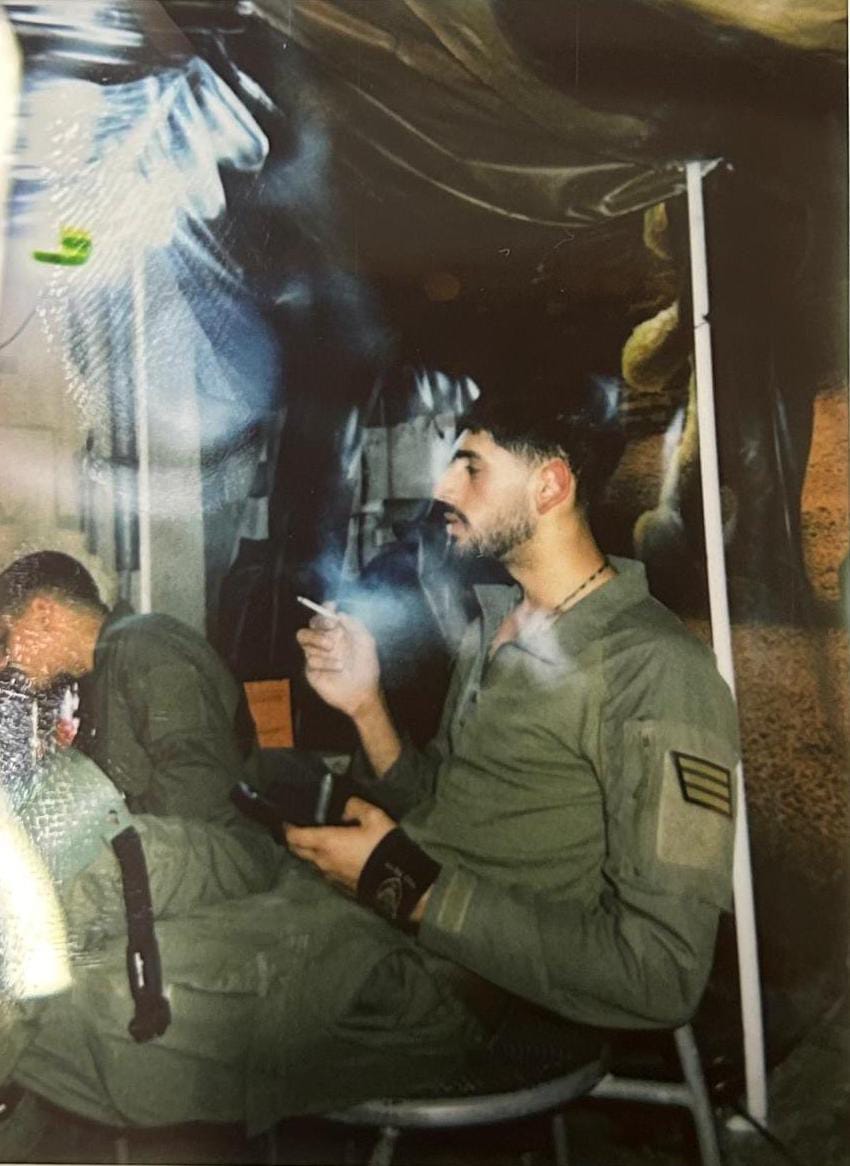
All photographs · 10
In the media
Articles
- “Noam lives within us”
ynet ·
- Sgt.-Maj. Noam Shemesh, from Jerusalem, killed in Gaza
The Jerusalem Post ·
- “Noam Was Kindhearted and Pleasant”
ynet ·
- Cleared for publication: A 21-year-old reservist was killed in fighting in the southern Gaza Strip
NEWSru ·
- The mother of Sergeant First Class (res.) Noam Shemesh to Arutz Sheva: The pain is immense; I didn’t know what I had | Arutz Sheva
ערוץ 7
Memorial sites
Memorial projects
In his memory, the family distributed a sticker bearing a phrase he often said: Thank God, I have everything. I lack nothing.
Stories told about them
His mother Efrat said that even as a toddler, he shared his snack with his sister when hers ran out. Later, during his service as a recruits’ sergeant, he accompanied soldiers to the clinic and physiotherapy and took on tasks beyond what was required.
A soldier who told his parents about struggling at the shooting range described how Noam sent him to buy two cans of drinks with his credit card and then trained with him until he succeeded. Another soldier who wanted to leave the army said that a conversation with Noam while they were on guard duty together changed his decision, and he later completed a commanders' course.
Life & service
Profile
Service
- Rank
- Sergeant first class (res.)
- Unit
- Kfir Brigade
- Service Type
- Reserve Forces
- Honours
- Posthumously Promoted
- Battle Location
- Southern Gaza Strip
Family
- Father
- Adi
- Mother
- Efrat Esther
Burial
Place of rest
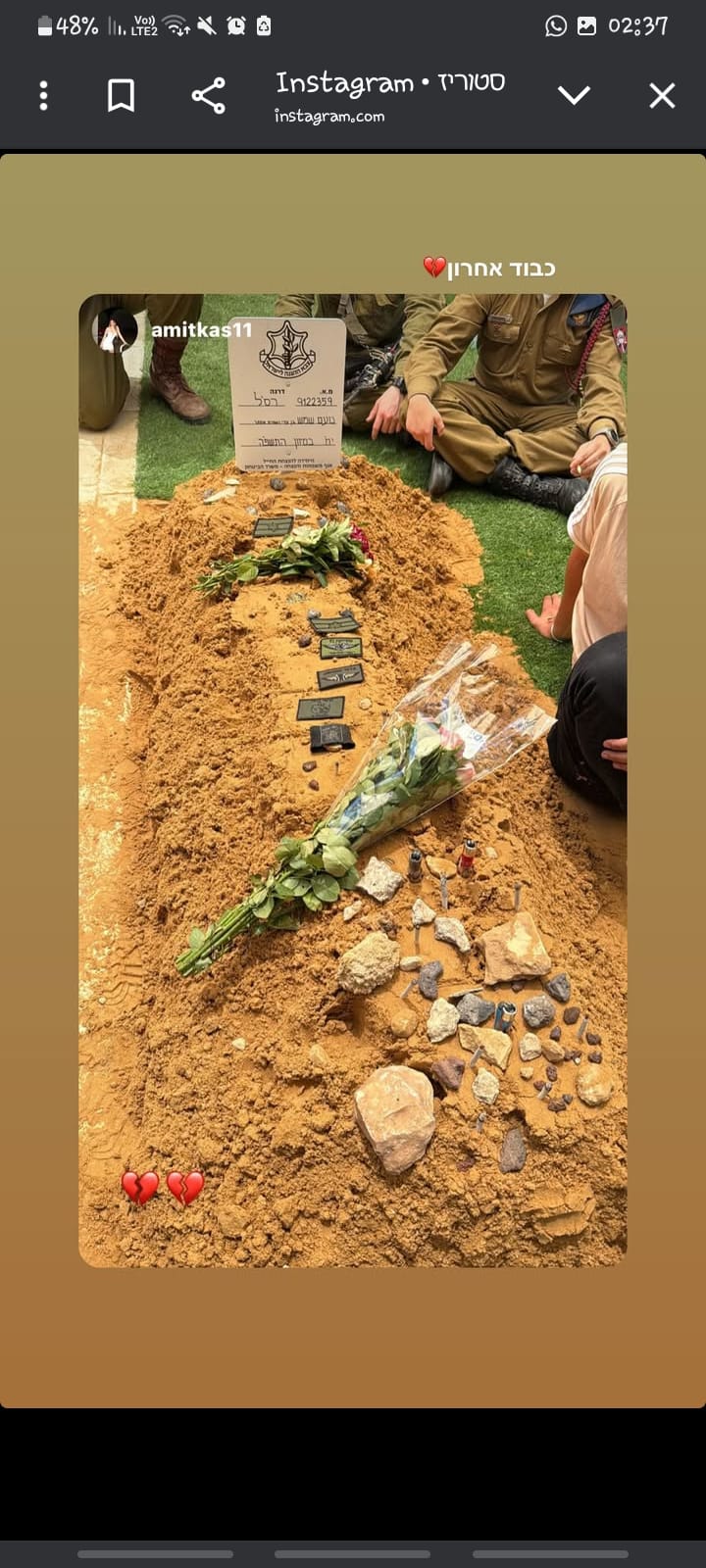
All photographs · 2
Tributes & remembrance
נזכור אתכם תמיד
אני אוהב אותך אחי ומתגעגע כל יום יותר
אח שלי הגעגוע אין סופי
תמיד אזכור אותך בתור האח הגיבור שלי אוהבת לנצח
אני אוהב אותך אחי
לנצח אוהב
אחי הגדול
תודה
אחד החיילים של נועם סיפר לנו בשבעה שהוא היה היחיד שלא הצליח במטווחים.
בשלב מסויים הוא התעצבן ומרוב ייאוש זרק את הקסדה ואמר שבחיים לא יצליח.
נועם ניגש אליו ואמר לו "פתח שעון, תיקח את הארנק שלי ולך תקנה לשנינו XL בשקם"
החייל היה מופתע וסירב ללכת אך נועם אמר לו שזו פקודה.
אחרי שהם שתו והחייל נרגע, נועם התאמן איתו שוב במטווחים ולבסוף החייל הצליח.
פקוד של נועם סיפר לנו שבזמנו הוא רצה לעזוב את הצבא לגמרי בעקבות מורכבות שהיתה לו עם המסגרת הצבאית.
פעם אחת הוא זרק לנועם מילה בנושא ונועם ישר קבע להם שמירה ביחד בש"ג.
לאחר כמה שעות שהם שמרו יחד ודיברו, נועם שינה לו את נקודת המבט על הצבא ועל עצמו לחלוטין.
בעקבות השיחה עם נועם לא רק שאותו חייל לא עזב את הצבא אלה הלך לקורס מכי"ם ואף רוצה להמשיך להתקדם בצבא.
A gracious man who was a pleasure to talk to
Source:ynet
Read the Hebrew original
איש נעים הליכות שנעים לדבר איתו
He taught me to see the good in every person.
Source:ynet
Read the Hebrew original
הוא לימד אותי להסתכל על הטוב שבכל אדם.
He had great wisdom in knowing how to connect with people, how to help them without them noticing, and always as an equal.
Source:ערוץ 7
Read the Hebrew original
הייתה לו חוכמה מאוד גדולה איך להתחבר לאנשים, איך לעזור להם בלי שהם ירגישו, והכל בגובה העיניים.
Thank you for the twenty-one years I was blessed to live alongside you, to be your mother.
Source:משרד הביטחון — יזכור
Read the Hebrew original
תודה על עשרים ואחת שנים שזכיתי לחיות במחיצתך, להיות אימא שלך.
Noam was a special young man, ambitious, the kind everyone loves.
Source:משרד הביטחון — יזכור
Read the Hebrew original
נועם היה בחור מיוחד, שאפתן, כזה שכולם אוהבים אותו.
Simply a great guy — a friend to the very end
Source:ynet – גל-עד
Read the Hebrew original
פשוט גבר – חבר עד הסוף
Remembrance Day addresses
יום הזיכרון לחללי מערכות ישראל התשפ"ה – 2025
בכל יום שעובר, אזכור יותר! אזכור, את אלו שיצאו עימי לקרב ולא שבו, ולהם אין מי ידמה ומי ישווה. אזכור, שהכאב לא יעבור לעולם, והזמן, הוא לא מרפה ולא מרפא. אזכור, את שיברון הלב הגובר ואת הבית שבוער. אזכור, את צדקת הדרך, ואשבע שוב, שמה שהיה לא יהיה יותר. אזכור, שיותר מכל דבר אחר – אני חסר! ביום הזה, אני נתקף געגוע לדמותם, לחיתוך דיבורם, לחיוכם, ומדליק נר לזיכרון דרכם ומורשתם!
משרד הביטחון
אגף משפחות, הנצחה ומורשת
יום הזיכרון לחללי מערכות ישראל התשפ"ה – 2025
בכאב, בהצדעה ובתקווה אני מתכבד להדליק נר זיכרון זה. השנה, כשאנו נלחמים במלחמה ארוכה, רב זירתית וצודקת, הזיכרון נושא משמעות עמוקה. ביום זה נעצור ונתייחד עם זכרם של טובי בנינו ובנותינו שנפלו בהגנה על המדינה. מורשתם היא המצפן שמתווה את דרכינו, והיא המעניקה לנו כוח להמשיך ולהגן על מדינת ישראל ותושביה. משפחות יקרות, אנו מרכינים ראשנו ומתחייבים שנעמוד לצידכן תמיד. יהי זכר הנופלים ברוך.
אלוף דדו בר כליפא
ראש אגף כוח האדם, צה"ל
יום הזיכרון לחללי מערכות ישראל התשפ"ה – 2025
בשעה שאנו זוכרים את גודל תרומתם ועומק מסירות נפשם של טובי בנינו ובנותינו, נופלי מערכות ישראל לדורותיהן, ממשיכים צה"ל וכוחות הביטחון במימוש המשימה למענה לחמו ועבורה נפלו: הכרעת אויבינו מדרום, מצפון, ביהודה ובשומרון, וגם בזירות רחוקות יותר. בהערכה רבה ובגאווה אדירה אנו מרכינים ראש בפני הנופלים והנופלות, מאמצים את משפחותיהם אל לבנו, וממשיכים במשימה להבטחת קיומה של ישראל לדורי דורות. יחד נעשה ונצליח.
רב אלוף אייל זמיר
הרמטכ"ל, צה"ל
יום הזיכרון לחללי מערכות ישראל התשפ"ד – 2024
כאשר דגלינו מורדים לחצי התורן וראשינו מורכנים לזכר הנופלים והנופלות במערכות ישראל, ממשיכים לוחמי צה"ל ומפקדיו בלחימה בדרום, בצפון, ביהודה ובשומרון ובזירות נוספות. על כל דור מוטלת המשימה של הגנת העם והארץ – משימה שאף פעם אינה פוסקת. נצדיע בגעגוע ובגאווה לנופלים ולנופלות, נחבק את משפחותיהם, ונמשיך ברוח הציווי שהותירו לנו. עם ישראל חי.
רב ניצב יעקב שבתאי
המפקח הכללי, משטרת ישראל
יום הזיכרון לחללי מערכות ישראל התשפ"ד – 2024
אחיי הנופלים, כל נר הוא זיכרון יחיד ומיוחד, על חיים שהיו ואינם, געגוע שנצרב עמוק בלב, עולם ומלואו. הנרות כולם הם זיכרון של אומה כי לעולם לא עוד, בשורת הציונות וקוממיות ישראל. זיכרון כי הדרך לעם חופשי בארצנו עוברת דרך מסדר הנופלים. אור הנר יזכיר לנו את מסירות נפשכם להציל חיים, להגן על הבית. הנרות מסמנים לנו נתיב גבורה ערכי מחייב שאנו מצווים ללכת לאורו. נמשיך להילחם ולהוסיף אור מתוך אמונה בנצח ישראל.
יואב גלנט
שר הביטחון
יום הזיכרון לחללי מערכות ישראל התשפ"ד – 2024
בהצדעה ובכאב, בשם צה"ל כולו, אני מדליק נר זיכרון. בעיצומה של מלחמה, הזכרון נושא משמעות יום-יומית, שעבר והווה מתלכדים בה. לאורם של הנופלים נמשיך לצעוד, חיילי הסדיר והמילואים. לאורם של הנופלים נמשיך להגן על ארצנו ועל מולדתנו, גם כשהמחיר כבד. להבת-הזכרון תבער בנו בעודנו ממשיכים להלחם ונזכור את הנופלים ואת אומץ ליבם. משפחות יקרות, צה"ל מרכין היום ראש, מצדיע לכן וכואב איתכן. יהי זכר הנופלים ברוך.
אלוף יניב עשור
ראש אגף כוח האדם, צה"ל
יום הזיכרון לחללי מערכות ישראל התשפ"ד – 2024
בהוקרה, בגאווה ובכאב שאין לו סוף, אני מתכבד להדליק נר לזכרם של הנופלים והנופלות במערכות ישראל. סיפור חייהם בארץ הזאת, מסכת שירותם, גבורתם והקרבתם – הם סיפורה של הארץ הזאת, אך גם סיפור המחיר הכבד שהיא תובעת מאוהביה. מחויבותנו לזכר הנופלים ולדרך שהותירו לנו ניצבת תמיד לנגד עינינו. את המשימה שלא זכו להשלים, משלימים כיום, וישלימו, אנשי כוחות הביטחון, הממשיכים בדרכם ולאורם. יהי זכרם של הנופלים ברוך.
משרד הביטחון
אגף משפחות, הנצחה ומורשת
יום הזיכרון לחללי מערכות ישראל התשפ"ד – 2024
בחרדת קודש אני מתכבד להדליק נר לזכרם של חללי מערכות ישראל, חברנו שנפלו, מראשית היציאה מהחומות ולאורך כל שנות עצמאותנו המדינית והציונית, מהווים תמרור זיכרון לדרך חיינו ולמחוייבות הלאומית להנצחת זכרם. דרכם נותרה דרכנו ומורשתם נר להמשך עשייתנו. יהי זכרם ברוך!
בני גנץ
שר הביטחון
יום הזיכרון לחללי מערכות ישראל
נזכור אותם, כולנו יחד. כל אחד ואחת מהם, מדי יום ביומו, והיום ביתר שאת, כך – לנצח. "כי מדי דברי בו זכור אזכרנו עוד"
משרד הביטחון
אגף משפחות, הנצחה ומורשת