- Date of death
- Age
- 33
Light a candle

The story
The sun over Alon Shvut, a community nestled in the heart of Gush Etzion, always felt different. It cast a strong, clear light on ancient olive trees, on newly restored stone terraces, and on the small houses that seemed to grow organically from the earth itself. Into this light, on a spring morning, the 14th of Nisan, 5750, April 9, 1990, Natanel Silberg was born. He was the elder of twins, brother to Elisaf, and later the big brother to Uriya, Rachel, Yonatan, and Moriya. The home of Eilat and Dov, his parents, was a warm, deeply rooted place, filled with stories of his grandparents, Yehuda and Tzvia Vehab, who were themselves pillars of the community. From his earliest days, Natanel exhibited a quiet seriousness, a curiosity in his bright eyes that scanned the world around him, yet always with a gentle smile that hinted at a subtle cynicism and a love for laughter, as his brother Uriya would recall years later. He and Elisaf, his twin, younger by mere minutes, shared a childhood room that always carried the scent of old books and board games, a room that witnessed heated debates over card game rules and rolling laughter when one managed to outwit the other. Natanel was always the one to meticulously follow the rules, to break down a problem into its components and reassemble it with endless patience, while Elisaf, it seemed, was more inclined to spontaneous improvisation, complementing each other in a way only twins can.
As he grew a little older, the first buds of his unique character became apparent. He wasn't the loudest child in the group, not the one who ran first to every game or jumped highest. Natanel was the one who observed from the side, absorbing the dynamics, asking the right questions at the right moment, sometimes difficult ones, questions that made adults pause and think. His friends from the "Achiya" tribe of the "Bnei Akiva" youth movement remembered him as someone who was always "present in the moment," not just physically but mentally. When Tamar, a childhood friend, would write about him many years later, she would describe how while they, the other children, were "silly, light-hearted, and full of nonsense," Natanel was "wiser and more mature." He wasn't afraid to express challenging opinions, but always did so in a "gentle and pleasant manner," as his Rosh Yeshiva would later attest. He was the quiet center of the group, the one you could sit with one-on-one, talk "from the heart," and know you would receive a listening ear and an honest, unevasive answer, one that stemmed from deep thought. At the elementary school in the community, when children would run during breaks in the dusty yard, Natanel would often find a quiet corner, leafing through a book, or watching birds in flight, lost in his thoughts, but always with a hand extended to help if someone needed it, always with a welcoming smile when he met a friend's gaze. He learned his letters and numbers with perseverance, never settling for superficial understanding, but always striving for the depth of things, to the root of the matter, a skill that would accompany him throughout his life.
After completing elementary school, Natanel continued to the Kiryat Arba High School Yeshiva (Yitka). This was a period of significant intellectual and spiritual development for him. Within the walls of the Beit Midrash, surrounded by holy books and the ancient scents of parchment and ink, he continued to cultivate his tireless curiosity. He didn't take things for granted, but always "asked why and suggested another way," as his comrade-in-arms, Omri, would recall years later. He delved into his studies, not just to accumulate knowledge, but to understand the world, humanity, and his place within them. The thick walls of Yitka, protecting against desert winds, bore witness to long hours he spent immersed in his studies, clarifying issues, analyzing texts, developing his analytical abilities and independent thought. He was a brilliant student, yet his modesty served him well, and he did not seek to stand out, but only to deepen his understanding.
Upon graduating high school, Natanel chose a less conventional path. Instead of proceeding directly to military service, he went to the Hesder Yeshiva in Beit She'an, but not for the customary two years, but for a full four. This decision reflected the depth of his commitment to Torah study and his search for meaning. His friends from the Bnei Akiva tribe, many of whom were already rushing to "move on to the next stations of life: yeshiva, mechina, enlistment, national service," wondered why Natanel "stopped." But Natanel didn't stop; he delved deeper. He was "present in the moment" absolutely, investing his entire being in his studies. The Rosh Yeshiva, Rabbi Shlomo Shushan, described him as "a pillar of the Beit Midrash," a young man who was "noble and authoritative, whose authority stemmed from a deep, powerful, and quietly penetrating place." Natanel was not only an excellent student but also an example and role model. He was "a thorough young man for whom every task had to be completed perfectly; if one studied Torah, it had to be to the very end, and if he scheduled a study partnership, the appointed minute had to be precisely on the clock." Every minute held meaning, every word was studied with gravity. He managed his life meticulously, allowing nothing to "divert him from the path he walked." A friend from the yeshiva recounted that he always saw him as a "role model," a student who was "diligent, responsible, and exceptionally profound," who "executed every task and decision he made in the best possible way imaginable." Imagine him sitting in the Beit Midrash, shifting the large Gemara on the crowded table, slight furrows in his brow as he delved into a complex legal issue, and then, as a solution revealed itself, a faint smile blooming on his lips, a smile expressing deep satisfaction from the journey to truth. He was modest, cheerful, and happy, but when a task was required, incredible seriousness and concentration enveloped him. He was not content with merely understanding, but sought ways to apply, to connect learning to action, to life, to the community, and Rabbi Shushan noted that "long before he saw only himself, he always first saw the needs of his family, surroundings, and friends."
After four years of intensive Torah study, at the age of twenty-four, Natanel enlisted in the IDF, this time for full military service, unlike most of his Hesder track friends. He chose the Combat Engineering Corps, out of that same deep sense of commitment to the state and a desire to contribute significantly. Already in basic training, he stood out for his skills, his sharp mind, and his physical capabilities. He was not the type of person to settle for "good enough," but always strived for excellence. Soon, he volunteered for an elite unit, the Yahalom Unit (Special Operations Engineering Unit), the Ya’el reconnaissance company. The decision to volunteer for such a unit, which demands immense sacrifice and uncompromising professionalism, stemmed from that same internal compass of "what is right and what is good" that had guided him since childhood. The training in Yahalom was difficult and demanding. The smells of earth, dust, and sweat filled his days. Long hours of grueling physical training, complex study of explosives, mining, sabotage, counter-terrorism, and the development of unique operational capabilities. Natanel, with the seriousness and thoroughness that characterized him, excelled in the course. His comrade-in-arms, Omri, remembered him as "a trainee who was not willing to take anything for granted and asked why and suggested another way," which made him a thinking, creative, and exceptionally effective fighter. He was not a robot executing orders, but a person who understood the logic behind every action and could improve and optimize it.
After a long period as a combat soldier in the Ya’el reconnaissance company, driven by a "sense of mission and commitment to the state," Natanel chose to attend officer's course. This was not an aspiration for rank or honor, but a deep desire to influence, to lead, to educate the next generation of fighters. He saw the potential in the people around him and understood that his leadership abilities could be of great benefit. At the end of the course, he returned to the unit as a team commander in training. "Silberg's Team" quickly became a household name in the unit. Colonel Eli, his commander, described how Natanel "accompanied the team from the beginning of the professional phase until their discharge." He was "a professional and principled fighter and commander, determined and modest," who led his soldiers "always quietly, persistently, and with the dedication that so characterizes you in order to defend the homeland." The name "The Silberbergs" became a nickname for a team "associated with uncompromising quality of execution and striving for contact." Peleg, a team member, recounted years later in his eulogy: "Natanel made us the best team there was. Standards were sky-high, and they were never enough. The constant phrase 'So, you don't want to be good?' became our motto." Imagine Natanel standing before his soldiers, not shouting, not threatening, but with a penetrating gaze, with powerful quietness, conveying the message of excellence and relentless pursuit of the goal. He knew "how to hold, but also how to release," knew "how to be tough, but also how to extend a caressing hand," as Tomer, Silberg's team sergeant, wrote. Noa, a young company medic, who was nineteen when she met him, remembered him as "a mature person," "admired by his team, a leader and charismatic," and was particularly impressed to see "a yeshiva student enlisted" and "to what a role," which was "inspiring" for her. He not only taught them combat techniques but also educated them in values, self-discipline, personal and group responsibility. "Your maturity, your calm voice, and clarity of mind" accompanied his soldiers many years later. His commander Nati, commander of the Ya’el reconnaissance company, said that he "learned about an amazing person, full of humility, attentive, loved and loving" and that Natanel was "so modest that he didn't understand why Silberg's team became a legend." Natanel believed in his people, in the righteousness of the path, and they followed him "with eyes uplifted." He was a groundbreaking commander, stubborn and persistent, and everyone trusted him "because you would do everything in the best possible way."
Even after his discharge from the IDF with the rank of captain, Natanel did not sever ties with the unit. He reported for reserve duty out of "love for the profession and a desire to contribute," as his commander recounted. He saw the "education of the next generation of fighters in the unit" as the most important mission of all, and it wasn't long before he was present at "one of the professional trainings even when not called up for reserves." He would arrive at the unit, don his uniform again, and return to the training ground, imparting his rich experience, guiding, teaching, and shaping the next generation. The dust on the training field, the familiar smell of weapons, the sounds of gunfire and explosions – all these were an integral part of his identity. He worked supervising mine clearance sites, a job that required the same level of precision, concentration, and composure that characterized him as a Yahalom fighter. It was a quiet, vital, and dangerous job, where every mistake could cost human lives, and he approached it with the same thoroughness and meticulousness.
During that period, Natanel built his personal life. He lived in Na'ama, a quiet, green agricultural moshav in the Jordan Valley, a landscape he particularly loved. Date palms soared high, fields stretched in vibrant green, and the scent of damp earth hung in the air. In the valley, he met Hadas, his partner, and was captivated by her charm. Their connection was deep and sensitive, a bond between two people who understood each other without words. "There was no place in my soul he didn't know. He felt me," Hadas recounted with pain. She described him as "simply good, and everything he did was good. A generous and sensitive person with a compass of what is right and what is good, which guided him in everything he did." Together, the two planned their shared future, dreaming of marriage, of building a home and family. They decided to postpone their engagement until the fury of the war passed, a sign of cautious optimism and hope for a better future. Natanel found in the valley the peace and beauty he loved, and in Hadas, his life partner, a partner for the journey, a partner for dreams. He would walk with her on the moshav's paths, looking at the green fields, at the Gilead mountains on one side and the Samarian mountains on the other, breathing deeply the clear desert air, and feeling a sense of tranquility and security.
And then came that black morning. Saturday, the 22nd of Tishrei, Simchat Torah 5784, October 7, 2023. At 6:30 AM, when most of Israel's residents were still asleep or preparing to celebrate, the Hamas terrorist organization launched a murderous surprise attack. Thousands of missiles and rockets were fired from the Gaza Strip, while thousands of terrorists infiltrated Israel by land, sea, and air. They raided the communities surrounding Gaza, the southern cities, the nature party near Re'im and Nir Oz, IDF bases, and roads. In a matter of hours, the terrorists brutally murdered some eight hundred civilians, kidnapped hundreds of Israelis to Gaza, and destroyed, looted, and set fire to homes and property. Hundreds of soldiers, police officers, security forces personnel, and members of rapid response teams fell in fierce battles. This morning marked the beginning of a war that changed the face of the country.
The first news began to flow rapidly, phones rang, and the serene atmosphere in Na'ama was replaced by growing anxiety. Natanel, the man who always saw the needs of his surroundings and friends before his own, knew immediately what he had to do. He did not wait for a call-up order. He jumped into his car and sped towards his unit, Yahalom, whose involvement in the battles was self-evident. His father, Dov, who felt immense pride in him, asked him that morning: "Take care of yourself and don't try to be a hero," but knew in his heart that "as was your way, you were a hero." When Natanel arrived at the unit, he found a certain chaos there, and at first, they told him there were enough fighters, and he could go home. Imagine Natanel standing there, in uniform, hearing an order contrary to every gut feeling he had, to every value he believed in. He refused to leave. He stayed, initially in the war room, trying to help wherever possible, but his heart burned within him. He could not sit while others fought. When he saw that preparations were being made for a ground entry into the Gaza Strip, he looked for "every way to get in." He approached one of the platoon commanders, who had once been his soldier, and offered his help. "I am willing to be in any role, as long as I get in," Natanel said. The platoon commander, who knew Natanel and his capabilities, offered him the position of platoon sergeant. Without hesitation, without any thought of the rank he held in regular service, a captain in the reserves, Natanel removed his officer's insignia, an officer becoming a sergeant, and served as the platoon sergeant. This was an act of profound humility, of personal sacrifice for the greater cause, of true leadership that does not depend on ranks or honors, but only on the desire to serve.
The entry into Gaza was difficult and brutal. The fighting took place in Shuja'iyya in the northern Gaza Strip, narrow alleys, ruined buildings, traps and ambushes at every corner. A complex battle, which a skilled Yahalom fighter like Natanel knew well. The commander of the Ya’el reconnaissance company, Nati, remembered that Natanel asked him for permission to fight, and he did not approve, but "you did not listen." Natanel acted according to his inner conscience, according to what he knew was the right thing to do. An encounter with terrorists occurred, an event that Hadas would later recount in chilling detail: "They blew up buildings… there was an encounter in a place where he wasn't. Someone was injured there and there was a position to man, he ran and took a bullet to the chest below his protective vest." Natanel, who "with the stubbornness that so characterizes you, convinced all of us to replace a team member" (as Colonel Eli noted), did not hesitate for a moment. Despite not being at the initial point of engagement, and despite the clear danger, he ran forward, towards a damaged position, towards an injured soldier. He chose "to charge at the head of the force," as Nati noted. He fought "heroically and stood out with extraordinary professionalism and striving for contact in the face of the enemy." In an act of supreme heroism, Natanel Silberg fell in battle, on the 6th of Tevet, 5784, December 18, 2023, at the age of thirty-three. The bullet hit him below his protective vest, abruptly ending a full life of action, giving, and quiet, powerful leadership.
The bitter news struck his family and friends like a thunderbolt on a clear day. His funeral was held in the military section of the Kfar Etzion cemetery, not far from the home where he grew up, surrounded by those familiar and beloved landscapes. The land of the Gush, which was the cradle of his childhood, received him back into its embrace. He left behind grieving parents, Dov and Eilat, three brothers and two sisters – Elisaf, Uriya, Rachel, Yonatan, and Moriya, and a heartbroken partner, Hadas, whose shared dream of building a home vanished in an instant.
The eulogies delivered for him reflected the depth of the loss and the profound impression Natanel left on everyone he touched. His father, Dov, eulogized him with heartbreaking pain: "I asked you to take care of yourself and not be a hero, but as was your way, you were a hero. We heard from your commander how you rushed to replace an injured soldier in the team and later fell, and then you were also hit... And what about your dreams? Finally, you found your beloved and our beloved, you decided to postpone the engagement until the end of the war. We will miss you, you don't know how much. Rest in peace." The father's voice broke as he recalled his pleas and the immense pride he felt for his son. His sister, Rachel, sobbed: "Natanel, I'm sorry you won't have more time to fulfill your way of life, time to realize all your dreams and aspirations, and you had many. Time to build your family, and time for me to also be able to look after your children, as you would do for me. You will always remain young and beautiful." Her words painted a picture of a future cut short, of immense potential that would not be realized.
Hadas, his partner, eulogized him with broken words: "'King of the World,' that's what you were to me, because for me you could be everything. I love you, I've never loved like this, I waited 33 years for you to come, and now I'm hysterical and there's no one to hug me like that… All the dead are always the most beautiful and the best and the bravest, but truly you were the most. The best but also the most modest, and I love you so much." Her words, spoken in a trembling voice, expressed the depth of their connection, the long wait for the right person, and the immense void he left behind. She recalled the small moments of their shared life, the comforting hugs, his calming smile that would soothe every storm in her soul.
His commanders and comrades-in-arms stood stunned by the loss. Colonel Eli eulogized him: "Natanel, you are one of the best fighters and commanders the unit has ever known… a dedicated, inspiring, professional, and determined young man, and above all a human being, modest, humane, and principled. You led the team in challenging and exceptional operational activities, ones that no one dared to take on before you. You believed in yourself, in the righteousness of the path, and in your people more than anything. Your soldiers say they followed you with uplifted eyes. You were a groundbreaking commander, stubborn, and persistent. When you led your soldiers in battle, all of us trusted you. We knew you would do everything in the best possible way. Natanel, dear friend, we continue to fight, and I salute you on your last journey. You will forever remain a part of us." Nati, commander of the Ya’el reconnaissance company, with whom he led dozens of operations, said: "I learned about an amazing person, full of humility, attentive, loved and loving… Your loss is immense. I feel that a part of my heart remains with you. I love you with true love." Peleg, a team member, called him "a legend that was real," and said that "Natanel Silberg is the hero, and we are supporting characters." He described how Natanel "made us the best team there was. Standards were sky-high, and they were never enough." He remembered "your quiet, with a penetrating gaze, you led us through all the series and all the activities… You managed to touch each of us exactly where we needed it." Tomer, Silberg's team sergeant, wrote: "You knew how to hold, but you also knew how to release. You knew how to be tough, but you also knew how to extend a caressing hand… Your maturity, your calm voice, and clarity of mind accompany me and every one of the soldiers to this day… I love you, friend, I will always remember you. Thank you for everything." These words painted a portrait of a multifaceted leader, who knew how to combine operational toughness with human compassion, between demanding excellence and personal understanding.
Rabbi Shlomo Shushan, head of the Hesder Yeshiva in Beit She'an, also eulogized him again, emphasizing the continuity between the yeshiva student and the fighter: "Natanel was one of the pillars of the Beit Midrash, a noble and authoritative young man whose authority stemmed from a deep and powerful place… a thorough young man for whom every task had to be completed perfectly; if one studied Torah, it had to be to the very end, and if he scheduled a study partnership, the appointed minute had to be precisely on the clock. Nothing could divert him from the path he walked. A man who set goals for himself and achieved them one by one, and every task you asked of him, you could forget about it a moment later and know it would be perfectly executed. A curious person who knew how to ask difficult questions and was not ashamed to express challenging opinions in a gentle and pleasant manner. A young man who, long before he saw only himself, always first saw the needs of his family, surroundings, and friends. An immense loss for the family and for the people of Israel." The eulogy connected the world of Torah with the world of action, showing how the values he absorbed in the yeshiva accompanied him every step of his life.
Natanel, whose life was cut short, left behind not only immense pain and emptiness but also a legacy of action, giving, and quiet leadership. In his memory, and in honor of the home he had yet to build with Hadas, his family initiated the establishment of "Building a Home" in Beit She'an – a unique center for providing couples and family therapy. This is a life's work that continues Natanel's spirit, the man who always saw the needs of others and strived to build and mend. Additionally, green and fresh trees were planted along the "Jordan Valley Scenic Route" in the Jordan Valley, in the place where Natanel so loved its green and peaceful landscapes, and where he lived with Hadas. These trees, which will grow tall and flourish, will serve as a living testament to his love for the land and nature. His memory was also artistically immortalized: photographer Neta Levi, Hadas's sister, dedicated an emotional fashion production in his memory, inspired by the book "The Little Prince," a book about love, loss, and unforgettable connections. Hadas's love, and her pain, found another creative expression that managed to touch the souls of many. The entire community remembers him. The ILAN association wrote: "We remember Natanel as a volunteer for the association, we remember his contribution and actions for others. Our hearts are with you. We appreciate and value him greatly." The figure of Natanel Silberg, the modest, profound, quiet leader, the human hero, is deeply etched in hearts. His story, a story of love for humanity, for the land, for family, and for values, is a story of Israeli resurgence, of choosing life and good, even in the face of evil. He lived a full, meaningful life and left an indelible mark. His memory will be cherished forever, like the stones of the Gush from which he grew, and like the trees of the Valley where he loved to live, strong, stable, and bearing fruits of hope and inspiration.
Moments of a life
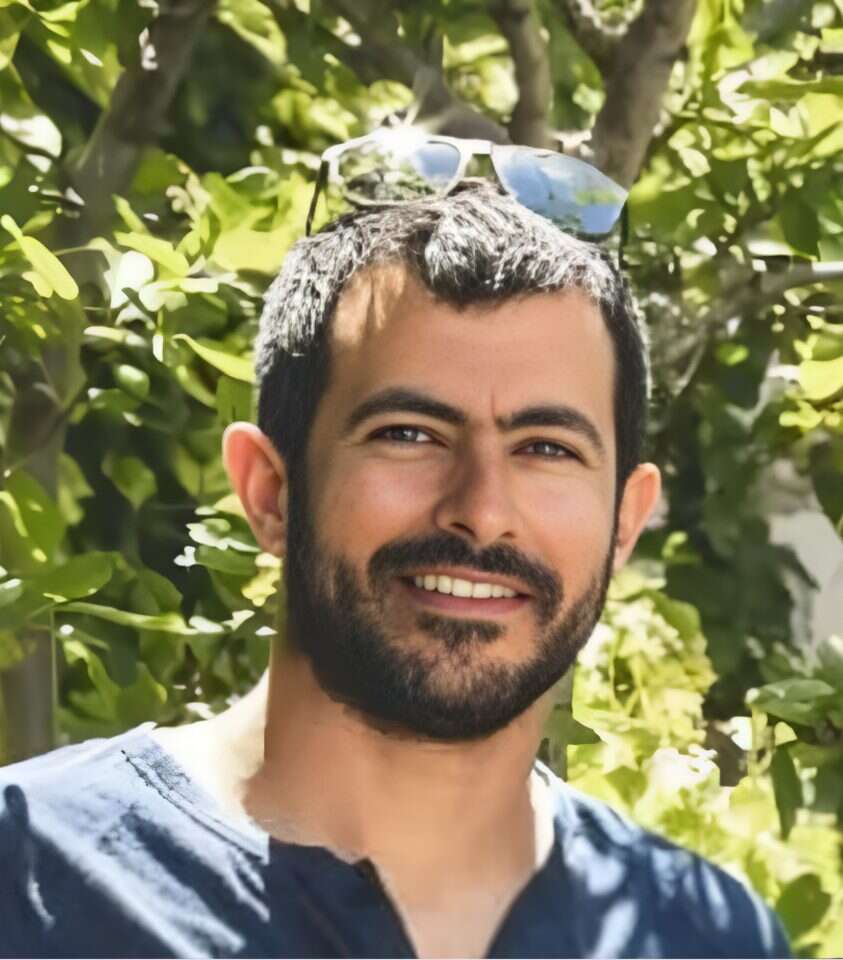
All photographs · 1
Videos and links
In the media
Articles
- Posthumous parenthood: After loss of loved ones, Israeli widows choose to bring new life
The Jerusalem Post / The Jerusalem Report ·
- Captain Netanel Silberg’s partner: I asked him not to be a hero, but he was one | Arutz Sheva
ערוץ 7 ·
Memorial sites
Memorial projects
The Im Tirtzu nonprofit donated two benches and 40 trees for a path established by the Hibburim nonprofit near Shadmot Mehola in Netanel’s memory.
Stories told about them
Hadas Levy said she requested sperm preservation after Netanel fell and later petitioned the court to allow her to conceive using it. According to the article, she gave birth to their child in June 2025; the child’s name was not published in the section that was read.
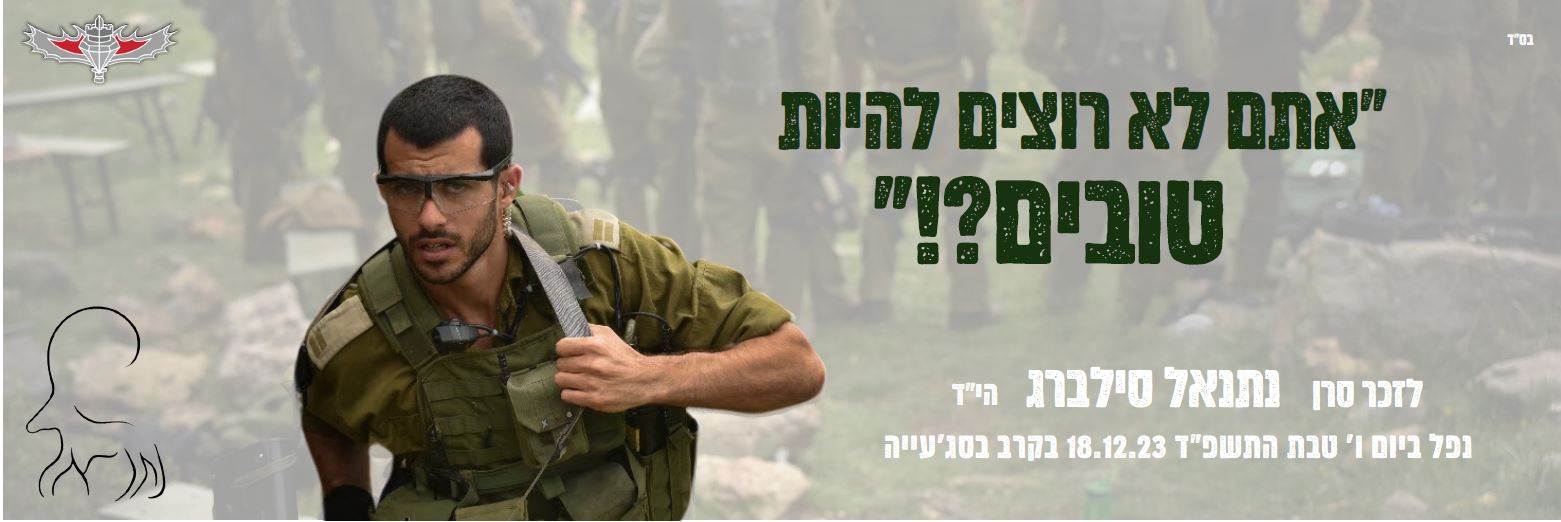
“Don’t you want to be good?!”
Life & service
Profile
- Date of birth
- April 9, 1990
- Birthplace
- Sderot
- Date of death
- December 18, 2023
- Age
- 33
Service
- Rank
- Captain (res.)
- Service Type
- Reserve Forces
- Battle Location
- North Gaza Strip
Family
- Father
- Dov
- Mother
- Eilat
Burial
Tributes & remembrance
מסרת את נפשך למעננו
במותך ציוית לנו חיים.
שנהיה ראויים
קראתי שנולד לך ילד ששמו בן נתנאל.
תשמור על משפחתך מלמעלה ותבקש על עם ישראל.
הבנתי מהכתבה שאתה אדם מיוחד , ובת זוגך מיוחדת במינה שהביאה בן לעולם בשבילך ובשבילה , למרות שאתה איננו
נתנאל היקר
תמיד היית ילד רגיש
תמיד נתגעגע אליך
אח.. סילברג היקר.. התמדה, עקשנות וכריזמה!
איזה אדם מיוחד.. חסר לנו כמוך כאן למטה..
יהי זכרו ברוך
"כשהוא הגיע ב-7/10 ליחידה, אמרו לו שיש מספיק לוחמים ושהוא יכול ללכת הביתה", כך סיפר לי דב אביו של סרן מיל' נתנאל סילברג הי"ד, לוחם יחידת יהל"ם בן היישוב אלון שבות שבגוש עציון. אבל נתנאל לא הסכים לעזוב. אז בהתחלה הוא היה בחמ"ל, ואז כשהוא ראה שמתארגנים לכניסה לעזה הוא חיפש כל דרך להכנס. נתנאל תפס את אחד ממפקדי המחלקות, שבעבר היה חייל שלו בעצמו ואמר לו שהוא מוכן להיות בכל תפקיד העיקר להכנס. מפקד המחלקה הציע לנתנאל להיות סמל המחלקה. אז למרות שבשירות הסדיר שלו היה נתנאל מפקד צוות נערץ, הוא מיד הוריד את דרגות הקצונה ותפקד כסמל המחלקה. אבל מפקד נשאר מפקד. מיד בתחילת ההתקלות, נתנאל רץ קדימה כדי לטפל בנפגעים ולהחליף אותם ושם הוא נפגע בעצמו ונהרג. תהי נשמתו צרורה בצרור החיים.
זוכרים ומתגעגעים
ראיתי אותך כמה דקות לפני נפילתך... בעוד יום שהיה אמור להיות שיגרתי ומלא בפעילות.
לא הכרנו אישית אבל רק מהכמה מילים שהחלפנו, ראיתי כמה ביטחון וכריזמה טבעית יש לך. יהי זכרך ברוך נתנאל.
גבור ישראל יהי זכרו ברוך
גיבור ישראל
יהיה זכרו ברוך
אוהבת ומתגעגעת
זוכרים ומתגעגעים
לא זכיתי להכיר את נתנאל, רק מתמונות וסיפורים ששמעתי עליו..
הלב נשרף על כל מלאך כזה.
שישמור על המשפחה מלמעלה וישלח להם כוחות
יהי זכרו ברוך.
בכבוד ובהצדעה אנו מדליקים נר זיכרון לזכר יקירנו, אחינו לנשק שנפלו ולנצח יהיו חלק ממורשת היחידה.
בשעה זו , בה אנו עדיין נלחמים בכלל הגזרות מורשתיכם מלווה אותנו בכל פעולה , צעד , מבצע ואתגר.
אנו מתחייבים להמשיך ולעשות הכול כדי להיות ראויים לכם ולהמשיך במשימה להגנת מדינת ישראל
יהי זכרם ברוך.
לוחמי ומפקדי יהל״ם.
לוחמי ומפקדי חיל ההנדסה הקרבית מתייחדים עם זכר הנופלים.
אנו פועלים להמשיך את מורשתם ולצעוד בדרכם בנחישות, אמונה ומסירות.
משפחות יקרות,
אנו נושאים את זכר הבנים והבנות בליבנו בכל עת, מחבקים ועומדים לצדכן.
יהי זכר הנופלים ברוך.
יום הזיכרון התשפ"ה
אפריל 2025
מי יעמוד בפני יופיו של האור
יהיה זכרו ברוך
יהי זכרו ברוך
איזה גבורה וגאוה שהיה לנו בחור אמיץ וצדיק שמסר נפשו למען ההגנה על המולדת
תודה לך,נתנאל היקר, על שהגנת עלינו .
כמה כואבת הקרבתך הנוראה מכל.
תנחומים לכל מכיריך.
יהא זכרך ברוך,גיבור ישראל .
סילברג היקר,
איזה בן אדם מיוחד אתה (מבחינתי הרוח שלך עדיין חיה וקיימת).
גבר-גבר, איכותי, רגיש במסווה של קשיחות מלח-הארצית ופשוט בן אדם שזו זכייה להכיר במהלך החיים.
לא האמנתי למשמע הבשורה ואני חושבת עליך כמעט בכל יום...
קשה לדמיין את הלוחמים הבאים ביחידה בלי שיפגשו אותך
משתתפים בצער העמוק של ההורים וכל המשפחה, נוח בשלום על משכבך.
נח על משכבך בשלום ילד יפה
נתנאל היקר
הכרנו ביחידה המיוחדת הזו אתה כבר אדם בוגר ואני רק בת 19
היית נערץ בפני הצוות שלך מנהיג וכריזמטי
פעם ראשונה שראיתי בחור ישיבה מגוייס וזה כל כך היה מעורר השראה ועוד לאיזה תפקיד
הלוואי שהיית מספיק עוד קצת בעולם הזה
שולחת חיבוקים למשפחתך ולבת זוגתך
זכיתם שהיה לצידכם
לנצח אזכור אותך אחי
היית מפקד צוות נערץ
אדם צנוע איש של מעשים ולא של מילים
אגדה אמיתית , שאבתי ממך המון השראה
תודה על ההקרבה שלך למען המדינה
Netanel, so sad for your partner, your parents and siblings, and for Am Yisrael.
נשאף להיות ראויים להקרבה
תהי נשמתו צרורה בצרור החיים, הי"ד
היית אדם מיוחד
מפקד נערץ לחיילך
איש אמון להוריי חיילך
הלב צורב וכואב
תודה ששמרת עלינו
השם ינקום דמך
בכבוד ובהצדעה אנו מדליקים נר זיכרון לזכר אחינו לנשק, מפקדינו ולוחמינו שנפלו ולנצח יהיו חלק ממורשת היחידה.
בחודשים האחרונים היחידה מובילה ונלחמת בכל הגזרות.
בשעה זו, אנו נושאים עימנו את הציווי שהשאירו לנו חברינו - להילחם על המולדת כשהערכים שהובילו אותם נמצאים לנגד עינינו ומנחים אותנו בשגרה ובלחימה.
אנו מתחייבים לעשות הכול כדי להיות ראויים למי שנפלו חלל.
יהי זכרם ברוך.
לוחמי ומפקדי יהל״ם.
He radiated his goodness to everyone
Source:ערוץ 7
Read the Hebrew original
הוא הקרין את הטוב שלו על כולם
At last you found the woman your heart chose, and ours too.
Source:ynet
Read the Hebrew original
סוף סוף מצאת את בחירת ליבך, וגם ליבנו.
I have never loved like this before.
Source:ynet
Read the Hebrew original
אף פעם לא אהבתי ככה.
During his four years at the yeshiva, Netanel was one of the pillars of the study hall, a noble young man with a commanding presence that came from a deep, powerful place and a penetrating quiet.
Source:נופלים
Read the Hebrew original
במשך ארבע שנותיו בישיבה נתנאל היה מעמודי התווך של בית המדרש, בחור אציל וסמכותי כשהסמכותיות שלו נבעה מתוך מקום עמוק, עוצמתי ובשקט חודר.
I want to have the children of the man I loved.
Remembrance Day addresses
יום הזיכרון לחללי מערכות ישראל התשפ"ה – 2025
בכל יום שעובר, אזכור יותר! אזכור, את אלו שיצאו עימי לקרב ולא שבו, ולהם אין מי ידמה ומי ישווה. אזכור, שהכאב לא יעבור לעולם, והזמן, הוא לא מרפה ולא מרפא. אזכור, את שיברון הלב הגובר ואת הבית שבוער. אזכור, את צדקת הדרך, ואשבע שוב, שמה שהיה לא יהיה יותר. אזכור, שיותר מכל דבר אחר – אני חסר! ביום הזה, אני נתקף געגוע לדמותם, לחיתוך דיבורם, לחיוכם, ומדליק נר לזיכרון דרכם ומורשתם!
משרד הביטחון
אגף משפחות, הנצחה ומורשת
יום הזיכרון לחללי מערכות ישראל התשפ"ה – 2025
בכאב, בהצדעה ובתקווה אני מתכבד להדליק נר זיכרון זה. השנה, כשאנו נלחמים במלחמה ארוכה, רב זירתית וצודקת, הזיכרון נושא משמעות עמוקה. ביום זה נעצור ונתייחד עם זכרם של טובי בנינו ובנותינו שנפלו בהגנה על המדינה. מורשתם היא המצפן שמתווה את דרכינו, והיא המעניקה לנו כוח להמשיך ולהגן על מדינת ישראל ותושביה. משפחות יקרות, אנו מרכינים ראשנו ומתחייבים שנעמוד לצידכן תמיד. יהי זכר הנופלים ברוך.
אלוף דדו בר כליפא
ראש אגף כוח האדם, צה"ל
יום הזיכרון לחללי מערכות ישראל התשפ"ה – 2025
בשעה שאנו זוכרים את גודל תרומתם ועומק מסירות נפשם של טובי בנינו ובנותינו, נופלי מערכות ישראל לדורותיהן, ממשיכים צה"ל וכוחות הביטחון במימוש המשימה למענה לחמו ועבורה נפלו: הכרעת אויבינו מדרום, מצפון, ביהודה ובשומרון, וגם בזירות רחוקות יותר. בהערכה רבה ובגאווה אדירה אנו מרכינים ראש בפני הנופלים והנופלות, מאמצים את משפחותיהם אל לבנו, וממשיכים במשימה להבטחת קיומה של ישראל לדורי דורות. יחד נעשה ונצליח.
רב אלוף אייל זמיר
הרמטכ"ל, צה"ל
יום הזיכרון לחללי מערכות ישראל התשפ"ד – 2024
כאשר דגלינו מורדים לחצי התורן וראשינו מורכנים לזכר הנופלים והנופלות במערכות ישראל, ממשיכים לוחמי צה"ל ומפקדיו בלחימה בדרום, בצפון, ביהודה ובשומרון ובזירות נוספות. על כל דור מוטלת המשימה של הגנת העם והארץ – משימה שאף פעם אינה פוסקת. נצדיע בגעגוע ובגאווה לנופלים ולנופלות, נחבק את משפחותיהם, ונמשיך ברוח הציווי שהותירו לנו. עם ישראל חי.
רב ניצב יעקב שבתאי
המפקח הכללי, משטרת ישראל
יום הזיכרון לחללי מערכות ישראל התשפ"ד – 2024
אחיי הנופלים, כל נר הוא זיכרון יחיד ומיוחד, על חיים שהיו ואינם, געגוע שנצרב עמוק בלב, עולם ומלואו. הנרות כולם הם זיכרון של אומה כי לעולם לא עוד, בשורת הציונות וקוממיות ישראל. זיכרון כי הדרך לעם חופשי בארצנו עוברת דרך מסדר הנופלים. אור הנר יזכיר לנו את מסירות נפשכם להציל חיים, להגן על הבית. הנרות מסמנים לנו נתיב גבורה ערכי מחייב שאנו מצווים ללכת לאורו. נמשיך להילחם ולהוסיף אור מתוך אמונה בנצח ישראל.
יואב גלנט
שר הביטחון
יום הזיכרון לחללי מערכות ישראל התשפ"ד – 2024
בהצדעה ובכאב, בשם צה"ל כולו, אני מדליק נר זיכרון. בעיצומה של מלחמה, הזכרון נושא משמעות יום-יומית, שעבר והווה מתלכדים בה. לאורם של הנופלים נמשיך לצעוד, חיילי הסדיר והמילואים. לאורם של הנופלים נמשיך להגן על ארצנו ועל מולדתנו, גם כשהמחיר כבד. להבת-הזכרון תבער בנו בעודנו ממשיכים להלחם ונזכור את הנופלים ואת אומץ ליבם. משפחות יקרות, צה"ל מרכין היום ראש, מצדיע לכן וכואב איתכן. יהי זכר הנופלים ברוך.
אלוף יניב עשור
ראש אגף כוח האדם, צה"ל
יום הזיכרון לחללי מערכות ישראל התשפ"ד – 2024
בהוקרה, בגאווה ובכאב שאין לו סוף, אני מתכבד להדליק נר לזכרם של הנופלים והנופלות במערכות ישראל. סיפור חייהם בארץ הזאת, מסכת שירותם, גבורתם והקרבתם – הם סיפורה של הארץ הזאת, אך גם סיפור המחיר הכבד שהיא תובעת מאוהביה. מחויבותנו לזכר הנופלים ולדרך שהותירו לנו ניצבת תמיד לנגד עינינו. את המשימה שלא זכו להשלים, משלימים כיום, וישלימו, אנשי כוחות הביטחון, הממשיכים בדרכם ולאורם. יהי זכרם של הנופלים ברוך.
משרד הביטחון
אגף משפחות, הנצחה ומורשת
יום הזיכרון לחללי מערכות ישראל התשפ"ד – 2024
בחרדת קודש אני מתכבד להדליק נר לזכרם של חללי מערכות ישראל, חברנו שנפלו, מראשית היציאה מהחומות ולאורך כל שנות עצמאותנו המדינית והציונית, מהווים תמרור זיכרון לדרך חיינו ולמחוייבות הלאומית להנצחת זכרם. דרכם נותרה דרכנו ומורשתם נר להמשך עשייתנו. יהי זכרם ברוך!
בני גנץ
שר הביטחון
יום הזיכרון לחללי מערכות ישראל
נזכור אותם, כולנו יחד. כל אחד ואחת מהם, מדי יום ביומו, והיום ביתר שאת, כך – לנצח. "כי מדי דברי בו זכור אזכרנו עוד"
משרד הביטחון
אגף משפחות, הנצחה ומורשת