
The story
The sun of Eilat, that knows how to be harsh, scorching, one that makes the surface of the Red Sea gleam and heats the Edom mountains until they look like whispering embers, was his playground. Nehorai Leizer was born and grew up into this strong light, into the southern city that is a world unto itself, an island of Israeliness at the edge of the desert. He was not a child of shadow. From the very first moments, it seemed he absorbed this heat and light and radiated them back, with a quiet smile, a warm gaze, with a presence that was always greater than the sum of his years. The home of Rotem David-Leizer and her children, Nehorai and Mai, was a home of values, words that might sound grand but were distilled into small, daily acts of giving and mutual respect. Rotem, his mother, saw in him from the beginning what everyone else would eventually see: "a successful child, a child with values." Not a success measured by grades or trophies, although he was an outstanding student, but a success of spirit, of heart. He was one of those children whose leadership was not boisterous. At school, the principal recognized in him a quiet and humble leader, one who didn't demand the spotlight but to whom everyone was naturally drawn, trusting his judgment, his quiet integrity. He didn't need to raise his voice to be heard; it was enough for him to incline his head, truly listen, and say the right thing at the right time.
This character revealed itself in its full power in the youth movement. There, amidst the blue or green shirts, among the smells of bonfires and the dust of hikes, Nehorai found another arena to express who he was. His sister Mai, who knew him best of all, knew how to summarize it simply: "He was the first to volunteer for everything." This sentence, like a stone cast into water, created ripples of meaning around him throughout his short life. To volunteer to carry the heaviest equipment, to volunteer to stay last and clean up, to volunteer to take responsibility for the youngest and noisiest campers. This wasn't volunteering for recognition, but an almost instinctive action, a natural movement of a soul that saw a need and immediately moved to fulfill it. He was that guy you could always count on, the friend who would be there at five in the morning if needed, no questions asked. He possessed a captivating joy for life, one that wasn't expressed in shouts or outbursts, but in a constant flow of optimism and human warmth. He was the beating heart of every group he was a part of, and the people around him felt it, drawn to the quiet, secure energy he radiated. And when he fell in love, it was total, like everything he did. Tevel Meitelman, his fiancée, found in him what everyone else saw, but in a concentrated, personal dose, one meant only for her. She knew she loved "the best person" she had ever known, "the person with the biggest heart." They were two young people on the threshold of life, planning a shared future in their sun-drenched city, dreaming of a home and family, of a lifetime of love that had only just begun to blossom.
The transition from civilian life to uniform was for Nehorai a direct continuation of his path. He didn't look for shortcuts, didn't ask for concessions. His choice to enlist in the Combat Engineering Corps, in Battalion 601 of the "Iron Trails" formation, Brigade 401, was a choice for one of the most complex and challenging roles in the IDF. This was not just the place of the frontline fighters, but of those who pave their way, who dismantle obstacles, who protect everyone from IEDs and booby traps. It was work that demanded not only courage, but also composure, technical thinking, immense personal responsibility, and above all – absolute teamwork. And there, amidst the smells of grease, the fuel fumes of heavy machinery, and the endless dust of field exercises, Nehorai found his place. He became part of a team, a brotherhood of fighters whose bond was forged in sweat, effort, and shared danger. He learned to operate complex engineering tools, identify threats, and work under extreme pressure. His teammates became a second family, and he, with his enormous heart and natural inclination to take responsibility, became one of the pillars of the team. He wasn't the official commander, but he was the go-to person. The one you could talk to when your spirit was weary, the one who would make sure everyone had water before he drank himself, the one whose quiet smile could defuse tension in the toughest moments.
And then the war came, and the relative quiet of the northern border exploded. Battalion 601, like all frontline units, was immediately drawn into intense combat. The missions were dangerous, the work Sisyphean and relentless. Clearing routes, neutralizing IEDs, building fortifications, and all this time – under constant threat from anti-tank missiles and suicide drones, which had become one of the main threats in the campaign. At a certain point during the fighting, Nehorai's body signaled him to stop. He was wounded in the knee, an injury that could have rightly granted him an exemption from re-entering the Lebanese combat zone. For many, this could have been a sigh of relief, a legitimate reason to stay behind, in the relatively safe rear. But Nehorai was not like many. For him, the injury was an obstacle, not a solution. The thought that his friends, his brothers in arms, would continue the dangerous missions without him, was unbearable. His sister Mai described the dilemma that wasn't really a dilemma: "He chose to go into Lebanon even though he was wounded." This wasn't the decision of a movie hero, but the decision of a friend. Of a brother. He couldn't leave his friends alone.
There was also fear, so human and clear. The fear of the drones, those ominous hums in the sky, which had become the death stamp of this war. Nehorai didn't hide this fear. He knew, like everyone, that this threat was almost invisible, almost random, dependent on luck and fate. And yet, he overcame it. He conquered his fear not through suppression, but through choosing a greater value – the value of camaraderie. The conversations with home in those days were charged. Rotem, his mother, felt what only a mother's heart can feel, an ancient intuition, sharp as a knife. She knew. He knew. Years later, with a broken heart, she would cry out the question that gave her no peace: "I knew something would happen to you. You knew too. Why did you go in?" The answer, probably, lay in that same sentence from his sister. He went in because his friends were there. He went in because that's who he was. He couldn't do otherwise. And so, with a wounded knee and a heart that knew fear but chose responsibility, he returned to his team, to the heavy engineering vehicle, and entered Lebanese territory with them once more.
On the 18th of Sivan, 5786, May 24, 2026, Nehorai's combat team was engaged in an engineering mission in the area of the village of Dibel in southern Lebanon, approximately five kilometers from the Israeli border. The terrain there is a mosaic of Shiite villages, deep wadis, and olive groves, a complex and deadly battlefield. They were inside their armored engineering vehicle, carrying out the precise and dangerous work they had been trained for. The skies, it seemed, were quiet. And then, from nowhere, came the hum. A Hezbollah explosive drone, launched precisely towards them, exploded on the vehicle. The explosion was immense. The thick metal, designed to protect, instantly became a trap. In a fraction of a second, Nehorai's world fell silent. Another soldier who was with him was severely wounded. News of the fall of the 948th IDF soldier in the war, the 11th since the fragile ceasefire, began to flow through secure channels, until it reached the southernmost city, to Rotem's home. The knock on the door that every mother of a soldier prays she will never hear, reached her too. The sun of Eilat, which had watched him grow, set that day on an entire city that had lost one of its finest sons.
The earth in the military cemetery in Eilat received Nehorai, who was posthumously promoted to the rank of Sergeant. A vast crowd of residents, friends, family members, and soldiers accompanied him on his final journey, enveloping his family in a silent embrace. Above the open grave, his mother's cry tore through the heavens: "My Nehorai, a mother's life... this is against the laws of nature, where is it heard that a 19-year-old child and a mother has to bury him." Every word was an open wound, an expression of the incomprehensible absurdity of death, of a loss that was a geological fault line in the soul. But from within the endless pain, in a voice that broke and rose again, she swore to him, and to herself: "Everyone will hear about you. No one will forget my son." The Mayor of Eilat, Eli Lankri, eulogized "a hero of Israel who was one of Eilat's finest sons," words that echoed the collective sentiment of the entire city. Nehorai Leizer was not just another casualty. He was the face of goodness, of values, of the beautiful Israeliness for which he fought. His story is not just a story of bravery in battle, but of bravery of character. The bravery of the humble boy who was always the first to volunteer, the bravery of the friend who didn't abandon his brothers in arms even when wounded, the bravery of the young man who overcame his fears for a greater value. The legacy he left is not only etched on a stone monument, but in the hearts of all who knew him, and of all who hear his story. A story of a child of the sun, a child with an enormous heart, who fell defending his home, and left behind a trail of light that continues to shine even in the greatest darkness. This is the revival.
Moments of a life
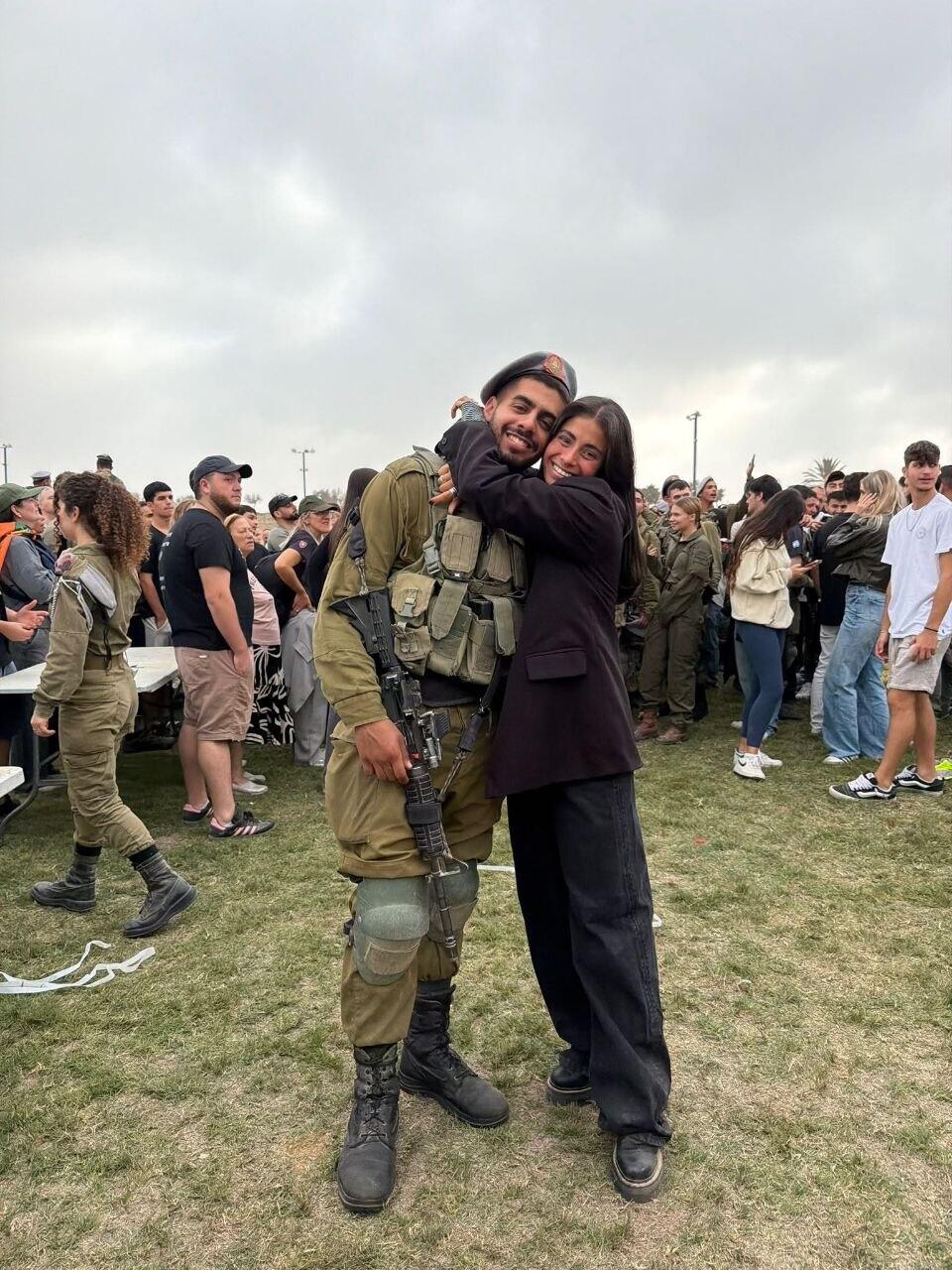
All photographs · 1
In the media
Articles
- Sergeant Nehorai Leizer, of blessed memory, is laid to rest
N12 ·
- Sergeant Nehorai Leizer, 19, fell in battle in southern Lebanon
ישראל היום ·
- Sergeant Nehorai Leizer, of blessed memory
עיריית אילת ·
- Soldier killed in south Lebanon by Hezbollah drone, another seriously wounded
The Times of Israel ·
- Eilat bids farewell to Sergeant Nehorai Leizer, who was killed in Lebanon
Digest.co.il ·
- Sergeant Nehorai Leizer Killed in Southern Lebanon
NEWSru.co.il ·
Podcasts
- Behind the name is an entire world: Nehorai Leizer's mother calls for an end to using the name as an insult
רדיו אילת 102FM ·
- Nehorai has become an insult — my son fell as a hero
גלצ / Apple Podcasts ·
- Aviv Geffen visited the Leizer family's home in Eilat
רדיו אילת 102FM ·
- Hundreds accompanied Sergeant Nehorai Leizer of blessed memory to his final resting place in Eilat: “A huge heart and a smile you can never forget”
רדיו אילת 102FM ·
Stories told about them
According to Radio Eilat’s description, Aviv Geffen visited the Leizer family home in Eilat and played and sang with family members using Nehorai’s guitar. The description presents the visit as a tribute to his memory; the recording was not played.
Mai said that Nehorai entered Lebanon despite being wounded because he did not want his friends to fight without him. Tevel described a knee injury and fear of drones alongside his insistence on continuing with his friends.
According to the municipal announcement, he studied at Harei Eilat and Goldwater and was active in Diller and the youth leadership program. He went on a year of volunteer service and later served as an engineering Namer driver.
According to the Eilat municipality, Nehorai studied theater and took advanced physical education at Goldwater High School. He was active as a young field studies leader and in the Diller program, and after a year of service he enlisted in the Combat Engineering Corps, serving as the driver of a Namer combat engineering vehicle.
Life & service
Profile
- Date of death
- May 24, 2026
- Age
- 19
- Hometown
- Eilat
Service
- Rank
- Sergeant
- Honours
- Posthumously Promoted
- Battle Location
- Southern Lebanon
Tributes & remembrance
Nehorai did not seek to be a hero, but through his actions and choices, he was one.
Source:עיריית אילת
Read the Hebrew original
נהוראי לא ביקש להיות גיבור, אבל במעשיו ובבחירותיו הוא היה כזה.
Nehorai, of blessed memory, one of Eilat’s finest sons, from a long-established Eilat family
Source:ישראל היום
Read the Hebrew original
נהוראי ז״ל, מטובי בניה של העיר אילת, בן למשפחה אילתית ותיקה
A wonderful young man from the city of Eilat, who fought bravely and defended our northern border with selfless devotion
Source:ישראל היום
Read the Hebrew original
צעיר נפלא מהעיר אילת, לחם בגבורה והגן במסירות נפש על גבולנו הצפוני
My son was a soldier who defended this country with his own body
Source:גלצ / Apple Podcasts
Read the Hebrew original
הבן שלי היה לוחם שהגן על המדינה הזו בגופו
Nehorai, you acted with courage, a generous heart and a big smile.
Source:Digest.co.il
He is the best person in the world; his eyes say it.
Source:N12
Read the Hebrew original
הוא האדם הכי טוב בעולם, העיניים שלו אומרות את זה.
You were good at everything and an outstanding student.
Source:N12
Read the Hebrew original
היית טוב בהכול ותלמיד מצטיין.
We will remain united. No one will forget you.
Source:N12
Read the Hebrew original
אנחנו נישאר מאוחדים. אף אחד לא ישכח אותך.
You were my best friend, Nehorai
Source:N12
Read the Hebrew original
היית החבר הכי טוב שלי נהוראי
Nehorai, a son of the city of Eilat, was from the best among us
Source:The Times of Israel