
The story
The air in Moshav Dekel, in the Eshkol region, is dense, carrying with it both the scent of cultivated earth and the thin, invisible tension of the border. Within this landscape, in the home of Chava and Shalom, Negev was born and raised, one of six children, part of a vibrant and boisterous human mosaic. The house was always full of life, voices of siblings mingling, doors slamming and opening, the aroma of Chava's cooking from the kitchen, and the heavy footsteps of Shalom returning from another day's work. Negev, growing up within this small, loving tribe, learned from a young age the art of communal living, the small compromises and concessions, the knowledge that there was always someone who had your back, always someone to share laughter and burdens with. He was not a child who had to seek company; it was part of the air he breathed, an essential part of his identity. The entire moshav was his playground, an open expanse of fields, orchards, and storage sheds, dirt paths where they rode bicycles until the sun set and turned the sky orange-purple, painting the fields of the Western Negev in the hues of day's end.
As he grew older, the contours of his personality became more defined and sharpened. He was "a sociable young man," one whom people were naturally drawn to, not through effort or flattery, but thanks to a quiet, confident presence. His friends knew they would always find a listening ear with him, but also an honest, direct opinion, one that wasn't always pleasant to hear but always came from a place of caring. He was "very strong-minded," as his neighbor, Ramit Shabbat, recounted, but his strong-mindedness didn't stem from arrogance; rather, it arose from deep curiosity and sharp intelligence. He didn't take things for granted. He would ask, investigate, disassemble ideas and concepts into their components to understand how they worked, precisely as he did with engines. He possessed a rare blend of profound seriousness and a sharp sense of humor, one that could interject with a dry remark in the middle of a heated discussion and melt all the tension in the room. He saw the absurdity in everyday situations, the humorous angle others missed, and would share it with a small smile at the corner of his mouth, sparkling eyes waiting to see understanding ignite in others too. The affection his friends showered upon him was not accidental; it was a natural response to a person who gave them a sense of home, a safe place where they could be themselves, and still receive a discerning look, an honest opinion, and in the end – a hug or a good joke.
His connection to hands-on work, to tangible creation, was ingrained in him from childhood. While others sought the thrill of computer games or urban entertainment, Negev found his satisfaction elsewhere. He was "connected to hands-on work," a young man who worked diligently, not out of economic necessity but from an inner drive to create, repair, build. His greatest passion revolved around the world of cars, especially old ones, those that others saw as rusty junk. "He had a hobby of buying old cars and fixing them," a hobby that was much more than a way to pass the time. It was an expression of his character. He could stand for hours under an open hood, hands covered in black grease, forehead concentrated, diagnosing a fault like a doctor listening to a pulse. The smell of gasoline and hot oil was perfume to him. The clatter of loosening bolts, the metallic clink of tools – all these were the sounds of his creation. He saw the potential inherent in a wreck, the beauty hidden beneath layers of rust and dust. There was a perfect symmetry between his intellectual curiosity and his practical ability: the mind that dismantled logical problems was the same mind that guided his hands on how to disassemble and reassemble a clogged carburetor or a grinding gearbox. Every vehicle he managed to restart, every engine that purred back to life after a long silence, was a small victory for him, proof that what seemed broken could be fixed, that new life could be breathed into what was already considered lost.
When it was time for him to enlist, the choice of the Golani Brigade was almost self-evident. For a young man from the Gaza Envelope, who grew up in the shadow of a complex security reality, combat service was not a matter of choice but of destiny. Golani, with its heritage, with the ethos of the rank-and-file fighters, "the good guys" who go through fire and water together, fit him like a glove. He didn't seek glory or rank; he sought meaning, and meaning, as he understood it, was to be there, on the front, with everyone. In Battalion 12, he found a new home, another tribe, built from the same materials as the home in Dekel: brotherhood, mutual responsibility, a rough humor that thrives in harsh conditions, and a healthy strong-mindedness of fighters who knew what they were fighting for. He brought with him to the battalion the same diligence, the same ability to see the big picture while simultaneously focusing on the smallest detail, whether it was meticulous cleaning of his weapon or fixing a technical malfunction in one of the pieces of equipment. He was that soldier you could rely on, one who wouldn't look for shortcuts, who would do the job thoroughly, quietly and professionally. His natural sociability made him the glue of the team, and his strong-mindedness, now based on operational experience, made him an important voice, one that was listened to.
With the outbreak of the war, the abstract reality of the threat became concrete and painful. For Negev, the fighter from Moshav Dekel, the war in the south was not just another mission in a foreign place; it was the defense of his home, literally. The land he fought on in the Gaza Strip was the land beyond the hills he had seen all his life from his window. He fought there valiantly, out of a deep and personal sense of mission, driven by the pain and rage over what had been done to his home. After a period of intense fighting in the south, his battalion was moved north, to a different sector, against a different enemy but with the same malicious intent. The transition from the sandy, familiar landscape of the Gaza Envelope to the rocky, green hills of the Lebanese border was stark, but the mission remained the same: defense. He and his comrades held a line, maintaining a routine of patrols, ambushes, and constant readiness, a life of taut tension under skies that appeared peaceful but were full of danger.
On that day, May fifteenth, 2026, Negev was with his force at a position in the Litani area in southern Lebanon. The operational routine was interrupted when a mortar shell struck his force. It is a sound that cannot be mistaken, a sound that contracts the muscles and freezes time for a fraction of a second, before the earth shakes. The explosion was close, too close. Within a cloud of dust and smoke, in one cruel and random moment, Negev Dagan's life was cut short. He was twenty years old, on the cusp of life, full of plans and dreams of old cars he would bring back to life, of trips with friends, of another Friday night dinner around the big table at home in Moshav Dekel.
The news of his fall struck the moshav and the entire Eshkol region like a thunderclap on a clear day. His funeral, held on the soil of the moshav he so loved, brought together all the circles of his life: Chava and Shalom and his five siblings, who lost their quiet and steady pillar; childhood friends from the moshav, who could not imagine the paths of the place without him; and his comrades from Battalion 12, Golani fighters who lost a brother in arms, a friend who was always there to fix, to listen, and to make them laugh. After his death, he was posthumously promoted from Sergeant to Staff Sergeant, a military tribute to a soldier who sacrificed his life. But Negev Dagan's true legacy is not etched in ranks or memorial stones. It lives in the stories his friends tell about him, in the memory of a strong-minded and curious, intelligent and humorous young man, who was loved by all. It continues to beat in the memory of hands that knew how to work, that knew how to fix what was broken, and with the same determination held a weapon to protect what was dearest to them. The void he left in the Dagan family home and in Moshav Dekel is a void that cannot be filled, but within the immense pain, pride also grows, pride in a young man from the Gaza Envelope who became a fighter, and who chose, at every junction of his short life, the path of action, giving, and responsibility. His story is the story of this land, a story of a life that grew from the earth and was cut down in its defense, and of one unique and special spirit that can never be repaired or replaced.
Moments of a life
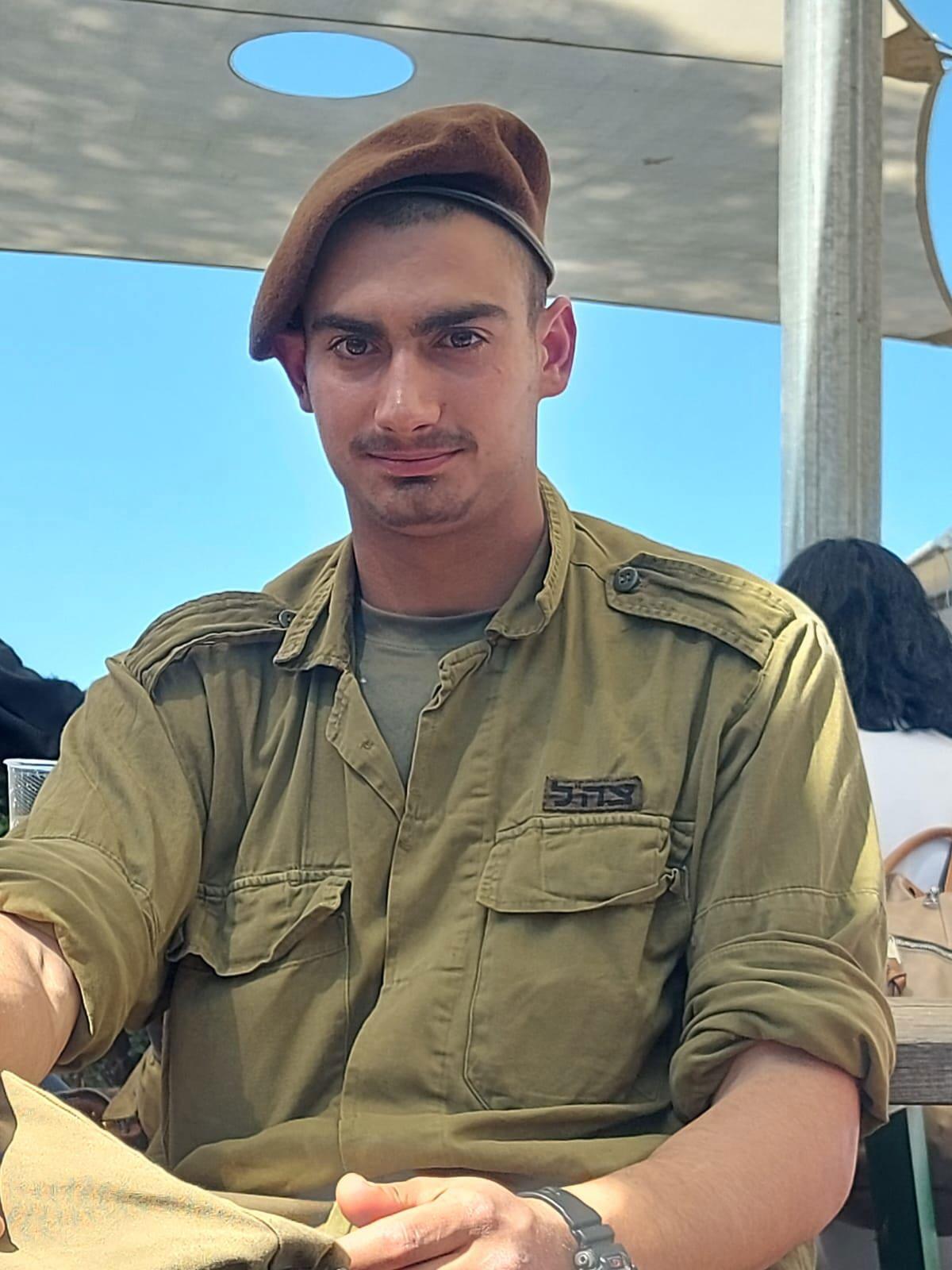
All photographs · 1
In the media
Articles
- Cleared for publication: Staff Sergeant Negev Dagan fell in battle in southern Lebanon
N12 ·
- "Endless Charisma": The Story of Staff Sergeant Negev Dagan, of Blessed Memory
ישראל היום ·
- Staff-Sgt. Negev Dagan killed by Hezbollah mortar fire near Litani River in southern Lebanon
The Jerusalem Post ·
- IDF says Staff Sgt. Negev Dagan killed by Hezbollah shell in Lebanon
The Times of Israel ·
- The Sixth Soldier Since the “Ceasefire”: Staff Sergeant Negev Dagan
אמס ·
- An IDF combat soldier was killed in southern Lebanon
7 Канал ·
Podcasts
- Tuesday, 24 Sivan 5786, 9.6.26: Beofen Miluli: Negev Dagan from Dekel
גלצ / באופן מילולי עם אבשלום קור / Omny ·
Memorial sites
Stories told about them
According to family friend Ramit Shivat, Negev used to buy old cars, repair and restore them, and then sell them. He was initially homeschooled and later attended educational institutions in the regional council.
Oren said he had a long video call with Negev about life, cars and plans after the army before Negev entered the Litani area. The next day Negev called again, said he would be going in for about 28 days without being able to talk, and the two told each other they loved each other.
Life & service
Profile
- Date of death
- May 14, 2026
- Age
- 20
- Hometown
- Dekel
Service
- Rank
- Staff sergeant
- Unit
- Golani Brigade
- Honours
- Posthumously Promoted
- Battle Location
- Southern Lebanon
Tributes & remembrance
Very opinionated, curious and smart. His teachers say he was a thoughtful boy, smiley and funny, full of humor, with boundless charisma
Source:ישראל היום
Read the Hebrew original
מאוד דעתן, סקרן וחכם. המורים מספרים שהיה ילד עמוק, חייכן ומצחיק, מלא בחוש הומור, בעל כריזמה שלא נגרמת
May his memory be blessed and cherished forever
Source:The Jerusalem Post
He was the kind of person you enjoyed talking to
Source:ynetnews
Negev was a good friend, a good kid you really can’t describe in words.
Source:ynetnews
Negev was an outgoing young man with strong opinions, who was deeply loved by his friends.
Source:N12
Read the Hebrew original
נגב היה צעיר חברותי, דעתן שהיה אהוב מאוד על חבריו.