
The story
The house in Ramot Jerusalem, a large and vibrant home, was always bathed in the warm light of the Jerusalem sun, which streamed through the windows even on cool winter days. It was a house filled with many sounds: children's laughter, deep conversations between adults, and the sweet aromas of baked goods that defined Beatrice Miriam's kitchen, his mother. It was there, in the summer of 1992, that the small Gordon family arrived. Naftali Yona, their second son, was just a year and a half old then, a sweet toddler with curious eyes, who had just left the elegant streets of the United States for the dust and promise of the new land. Together with his older brother Yaakov, and his parents, Daniel Yigal and Beatrice Miriam, they began their journey in Israel, a path that would shape Naftali into the man he would become.
His first years in Jerusalem were filled with the scents of afternoon strolls in the Ramot neighborhood, the sounds of Hebrew becoming his natural language, and the warm touch of his parents' hands. He was a relatively quiet child, yet with a strong presence, one who absorbed the world around him with a penetrating and thoughtful gaze. In 1995, when Naftali was about five years old, the family decided to make another change in their lives and move to Hoshmonaim, a smaller, green, communal settlement that offered more space for children to grow. The move to Hoshmonaim opened up a new world of freedom for Naftali, with open fields and a close-knit community where everyone knew everyone. The house in Hoshmonaim was even larger, and it quickly filled with the voices of three more sisters who were born – Sarah, Shira, Rivka, and Dvash – turning the house into a bustling beehive, full of love and constant activity.
Within the hustle and bustle of this large and loving home, Naftali found his unique place. He wasn’t the loudest or the undisputed leader, but rather the one who forged meaningful connections with each family member "in his quiet way." When he returned home from school, his backpack would be tossed in a corner, and he would soon find himself in a deep conversation with his father about the day's events, or helping his mother clear the dishes after dinner, patiently listening to the stories of her day. With his younger sisters, he was the responsible adult but also the mischievous one, allowing them to get away with small pranks, jumping together on the living room sofas when no one was looking, or sneaking into the kitchen after they had gone to bed to share sweet secrets over a bowl of cereal. A mischievous smile would light up his face as they planned some small trick, and their shared laughter would fill the house with light. He was a wonderful brother, a devoted son and grandson, who always cared for and helped all his family members, not just with words, but with small, everyday actions – helping with homework, driving them to an activity, or simply offering a listening ear to a broken heart.
Naftali spent his school years at the Bnei Akiva "Ner Tamid" yeshiva in Hoshmonaim, a framework that combined religious studies with secular subjects, shaping his values and educational world. He wasn't just an ordinary student; he absorbed the spirit of the place, the sense of community and mutual responsibility. Alongside his studies at the yeshiva, he was an active member of the Bnei Akiva youth movement. Every Saturday afternoon, after the family lunch and a short rest, Naftali would rush to put on his blue shirt with the white tie, a symbol of belonging, and head out for an "activity." These activities were full of games, lively discussions on current affairs, hikes along the paths of the settlement and its surroundings, and above all – true friendship. There, between communal singing around a bonfire and discussions about Zionism and Judaism, he developed values of giving, community responsibility, and love for the land, not as empty slogans, but as a genuine way of life. He learned to listen, to express an opinion, to take an active part in building a better society, all with good humor and a smile.
Naftali's teenage years were also when his athletic abilities emerged and shone. He loved various sports with the same enthusiasm with which he read a good book or engaged in a deep conversation. In the settlement's pool, Naftali felt at home; he was an excellent swimmer, his body cutting through the water with ease, his movements precise and strong, and he found comfort and tranquility in the steady rhythm of swimming, in the detachment from the world beneath the water. Often, he would stay to swim even after the pool had emptied, just him and the water, and a profound silence that filled his soul. In addition to swimming, he was an avid runner, covering long distances, often on the dirt paths around the settlement, with the wind caressing his face and the open landscape calming his spirit. His legs knew the way, his body responded to every incline, and he found liberation and mental clarity in every step. His love for sports was not just a personal hobby; he also became a coach, driven by a desire to share his passion and knowledge with others, to help them discover the strength in their bodies and spirits.
Basketball held a special place in his heart. He loved to play, to feel the basketball between his palms, the tension of a close game, the sweat on his forehead, the mutual cheers among teammates. But no less, he loved to watch. He was an ardent fan of the Hapoel Jerusalem basketball team. When there was a game, he would sit in front of the television, or travel to the Pais Arena, completely engrossed in what was happening on the court, swept into the rhythm, thrilled by every basket, disappointed by every missed shot. "Come on, defense! Press them!" he would murmur to himself, as if his beloved players could hear him through the screen. Beyond competitive sports, Naftali found other ways to express his love for movement and his willingness to help – he volunteered at a therapeutic horse farm. There, between the fresh scent of hay and the sound of horses' hooves on the ground, he found deep satisfaction. Stroking a horse's neck, brushing its coat, gently leading those who rode it – this was another way for him to give, to offer himself, and to see the light in the eyes of the special patients who came to the farm. The contact with the animals, and the unique tranquility that pervaded the farm, contributed greatly to his calm and embracing personality.
After completing his studies at the "Ner Tamid" yeshiva, it was Naftali's turn to enlist in the IDF. He chose to serve in a combat unit, in the Armored Corps. This choice surprised no one; it reflected his willingness to contribute, to defend, and the physical and mental strength inherent in him. He underwent rigorous basic training, intense drills, and was eventually assigned as a gunner in a tank. The role of a gunner demanded extreme precision, composure, rapid operation of complex systems, and unwavering concentration. Within the cramped space of the tank, surrounded by cold metal and the roar of powerful engines, Naftali learned to trust his crew and himself, to feel the tank as an extension of his body, and to know that every decision he made was critical. The smells of diesel, metal, and sweat became an inseparable part of his service experience. He served with dedication, with a deep understanding of the importance of his role in defending the homeland.
But Naftali's life wasn't solely defined by formal frameworks. Both before his enlistment and after his discharge, he found time to work in settings for people with special needs. This work was not just a source of income, but a clear expression of his unique personality. He would arrive at these facilities with a wide smile and kind eyes, ready to listen, to help, to embrace. He knew how to find a unique way to connect with each person, to understand their needs, and to give them a sense of worth and dignity. He would sit beside a patient, patiently converse with them about the small things in life, help them with daily activities, and see the person behind the limitation. This work sharpened his ability to see the good in everyone, to develop deep empathy, and to act out of a pure desire to help.
After his discharge from the army, as he sought his professional path, Naftali chose to combine his two great loves: his love for people and his desire to help, along with his passion for sports and movement. He enrolled in physiotherapy studies at Ariel University, where he earned a bachelor's degree. His university years were a period of significant intellectual and personal development for him. He was a talented and dedicated student, immersed in the study material, curious to learn every detail about the human body, its mechanics, and the ways to heal and rehabilitate. He was not content with merely learning the required material; he researched, delved deep, asked incisive questions of his lecturers, and sought to understand the "why" behind every exercise and every diagnosis. He spent hours in the library, reading scientific articles, and discussing various clinical cases with his fellow students. The physical labs were his home ground, where he repeatedly practiced treatment techniques, precise hand movements, and the ability to diagnose complex problems. He acquired extensive knowledge and advanced skills in his field, with a deep understanding that knowledge is the power to bring relief to people.
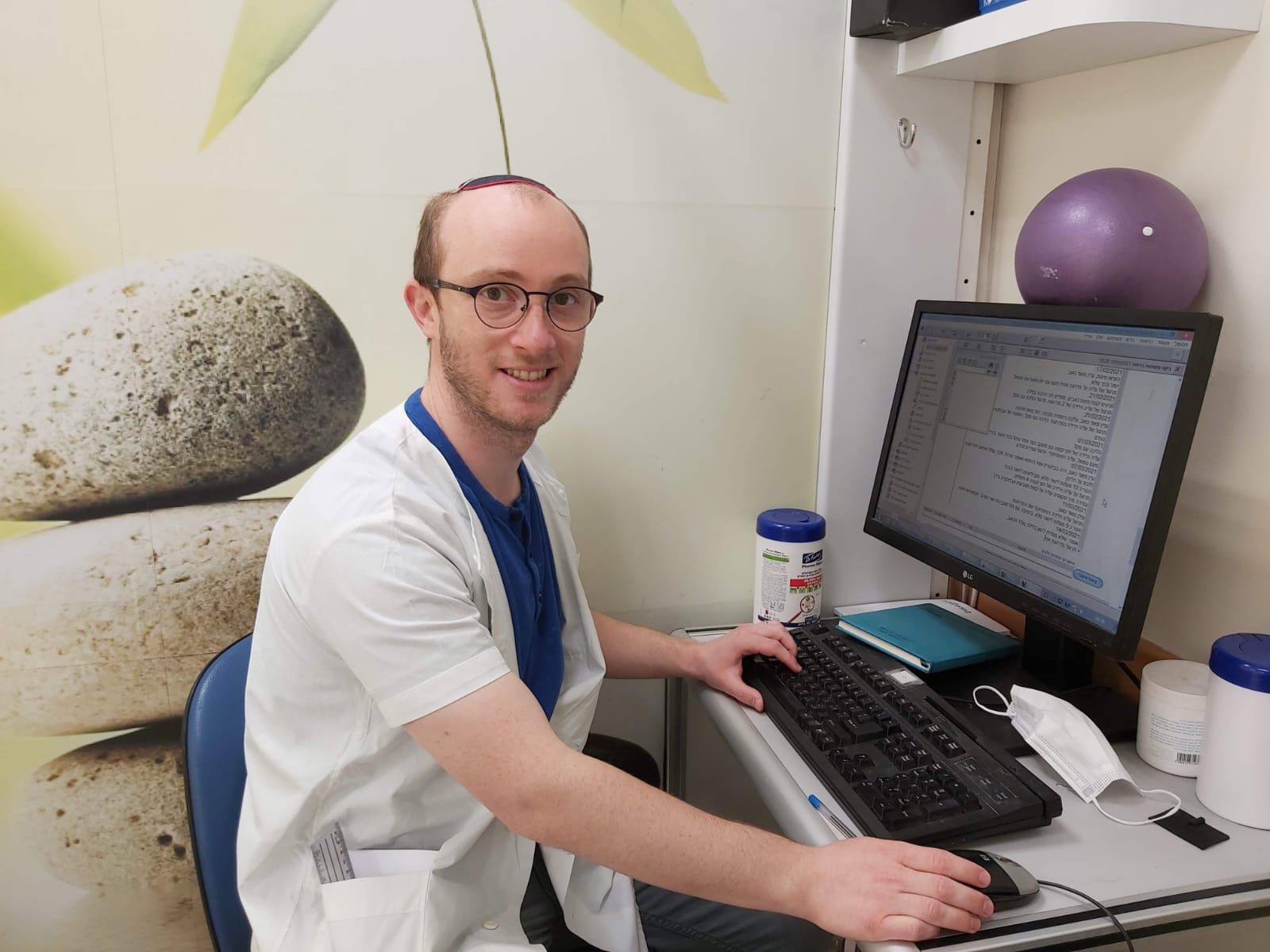
Naftali began his professional career at the Clalit Health Services physiotherapy institute in Ramat Eshkol, Jerusalem. In fact, he had arrived there as a student during clinical internships. Even then, in those years when he was just an intern, his professional talents and pleasant personality stood out above all others. He was not just another naive student; he approached every patient with profound seriousness, full attention, and an empathetic approach that made people immediately feel comfortable and secure in his hands. The senior staff at the institute quickly recognized his immense potential, and after he completed his studies, Naftali was immediately recruited to be part of the permanent team. He remained there ever since, becoming a pillar of the institute, a central and beloved figure.
In his work at the institute, Naftali filled professional roles usually reserved for much more experienced physiotherapists. He coordinated the orthopedics department, a complex subject that required broad knowledge and deep understanding of the musculoskeletal system. He was not content with treating common problems, but researched specific and challenging topics such as physiotherapy treatments for headaches, neck, and jaw pain – areas many avoided due to their complexity. He developed innovative treatment protocols, integrated different approaches, and succeeded in bringing relief to many patients suffering from chronic and debilitating pain. Beyond direct treatment, Naftali led fascinating workshops and lectures on these topics for other physiotherapists and family doctors, earning much praise for his expertise, clarity, and ability to convey complex knowledge in an accessible and engaging way. He also coordinated the equipment department for physiotherapy services in the Jerusalem district, a role requiring great responsibility, order, and managerial ability, and in this too, he excelled particularly.
His colleagues described him as a professional authority in his field. "He had an infinite capacity for containment," one colleague recounted, eyes sparkling, "and it was an amazing combination of a very pleasant and kind person, embracing, caring, and dedicated, alongside being exceptionally intelligent, skilled, and sharp-minded." They saw him not just as a coworker, but as a dear friend for life, a significant, almost irreplaceable link in the physiotherapy institute. "The man with the huge smile," they would say, "that you not only see but even hear, and an even bigger heart full of a spirit of giving and volunteering." Naftali's smile was infectious; he would enter a room and the atmosphere would immediately change, becoming lighter and more pleasant.
Thanks to his extensive knowledge, sharp mind, and pleasant, non-judgmental temperament, Naftali became a go-to person for consultations of all kinds. Not just professional questions about a complex patient or a new treatment method, but also more personal questions: family matters, financial issues, and even culinary advice. "Naftali, what do you think of this cheesecake recipe?" one of the therapists would ask him, and he would reply seriously and with a smile, sharing his experience. He always exuded an inviting calmness, was an attentive listener to everyone, no matter the problem. Nothing was too difficult for Naftali; he was always the first to volunteer for a task, to commit to achieving a goal, even if it seemed impossible. "The patient who could make you lose your temper hasn't been born yet," his colleagues would tell him with appreciation and affection, an expression of the inner calm and infinite patience that characterized him. Even in a prosaic area like dress code, Naftali left his mark. He led an initiative at the institute to allow male employees to wear shorts in the summer, a move that was enthusiastically received and became "Naftali's legacy" – another small testament to his pioneering personality, unafraid to break minor conventions for the comfort and well-being of others.
A brilliant future awaited him in his field. Besides direct patient care, he was slated to start a management course and was earmarked for clinical instruction and management succession. He was on a sure path to becoming a senior and leading manager in physiotherapy, with the ability to influence many, train generations of therapists, and improve the quality of care at a systemic level.
But beyond all this, Naftali's life gained an even deeper meaning when he met Psia. Already on their first date, Psia, his future wife, knew "this was it." It was a moment of clarity, of deep inner recognition, that this was the person with whom she wanted to spend the rest of her life. Naftali and Psia married, and their shared home was established in the Katamonim neighborhood of Jerusalem. It was a young home, full of laughter, love, and plans for the future. The couple had two sweet daughters, Libby and Gefen, two pieces of light that illuminated their world. Psia described him as someone who "was born to be a father." He was a devoted father to his two daughters, one who would bend down to their height, play with them for long hours, tell them bedtime stories, and invent funny games that only they understood. He was a loving and supportive husband, who always stood by Psia, encouraged her, and was a full partner in all decisions and challenges. Their home was a fortress of love and security, a place where everyone felt loved and valued.
Naftali was a devoted and loving family man with every fiber of his being. He was an inspiration to those around him for his wonderful ability to find balance between work and home, and to elegantly manage all the relationships in his life without friction. He was not a person who compromised on the quality of time with his family, nor on his dedication to his work. He knew how to give each area of his life the necessary attention, out of personal strength and confidence in his path. He was someone who, with modesty and gentleness, knew how to reach the heart of every person, even if it was a stranger patient or a colleague he hadn't known for long. He managed to inject playfulness and humor even in the most frustrating moments, to relieve tension with a smile or a small joke. He knew how to be lighthearted and fun, someone who woke up in the mornings with a spark of mischief in his eyes, ready to jump into a new day full of surprises. He pampered his family in every possible way, whether with an elaborate breakfast or a small, thoughtful gift that surprised them at just the right moment. His life was balanced, full, and served as an example and role model for many.
And then came that bitter and hasty morning, Saturday, the 22nd of Tishrei, Simchat Torah 5784, October 7, 2023. It was six-thirty in the morning. The sun had begun to rise over Jerusalem, promising a joyful and peaceful holiday. However, at that very hour, far away, in the south of the country, the Hamas terrorist organization launched a brutal and unprecedented surprise attack on Israel. Massive barrages of missiles and rockets from the Gaza Strip covered wide areas of the country, and under the cover of this inferno, thousands of terrorists infiltrated – by land, sea, and air – and began a murderous assault on the communities surrounding Gaza, on Sderot, Ofakim, and Netivot, on the nature party revelers near Kibbutzim Re'im and Nir Oz, on IDF bases, and on those traveling on the roads in the area. Naftali, like all of Israel, woke up to a morning that would never be forgotten. His phone vibrated. WhatsApp messages began to pour in, first in confusion, then in horror. Horrific images began to arrive, testimonies of atrocities, massacres, kidnappings. The land was ablaze.
On that terrible morning, as the attack on the State of Israel began, Naftali was called up for reserve duty. He was ordered to return to his unit, as an armored combatant in Battalion 53 of the 188th "Barak" Brigade. He did not hesitate for a moment. There was no question. He enlisted willingly, ready as always to give of himself for the country and its values, for his home and family. "I have to go," he told Psia, and in his eyes shone deep determination. "We have no other country. Someone has to defend the home." The farewell was difficult, tears flowed, strong hugs were exchanged, but both knew there was no choice. He said goodbye to his daughters with an especially long embrace, trying to leave them with a mark of love and security, even as the world around them was crumbling.
The first days were filled with short, intense training. Every soldier knew what lay ahead. The tension was in the air, the smells of diesel and metal filled their nostrils, and the sounds of training fire were incessant. Naftali, with his experience, his composure, and his ability to embrace, quickly became an anchor for his teammates. He would speak to them quietly, dispelling fears, explaining tactics, and giving them the sense of security that was so vital in such days. After a brief training, the ground maneuver began, and he entered the fighting in the Gaza sector with his crew.
Inside the Gaza Strip, amidst the ruined and dangerous expanses, Naftali fought with exceptional bravery and professionalism. His commanders testified that he was beloved by his comrades, a central and unifying figure in the team. He carried out every mission flawlessly, even under incessant fire, even when danger loomed over their heads at every moment. There were situations where he risked himself for his comrades, not hesitating to leap forward, to act with courage, out of deep loyalty to the team and the objective. "He was like a brother to us," his friends recounted, their eyes showing pain and appreciation. "He instilled in us a 'Zionist spirit'," they added, "always reminding us why we are here, what we are defending." Naftali, in his calmness and determination, was a beacon of hope in the inferno.
One day, when he was already deep in combat in the Gaza Strip, a surreal and moving event occurred. Naftali was supposed to be the godfather at his newborn nephew's brit milah (circumcision). This was, of course, impossible due to his entry into the Strip that very day. But Naftali, in his unique way, did not give up. He participated in the brit via "Zoom" from the field, while preparing his equipment for the next mission. His tank crew stood around him, quiet and respectful, as the sounds of the brit ceremony emanated from the small phone. At the end of the ceremony, the mohel asked Naftali to bless the newborn with the Priestly Blessing. Naftali, an armored combatant in a helmet and full gear, stood there, facing the screen, and blessed his infant nephew with a trembling yet steady voice, bestowing upon him the ancient blessing. It was a particularly emotional moment, which became even more significant after his fall, a testament to the fact that even in the midst of war, life goes on, and family ties are stronger than anything else.
On the evening of the first candle of Hanukkah 5784, on the 24th of Kislev, December 7, 2023, as homes across Israel lit the first candle of the holiday, and the small light symbolized hope in the midst of war, Naftali fought with his crew in a fierce battle in Shuja'iyya in the northern Gaza Strip. The Shuja'iyya area, known as a terrorist stronghold, was a scene of difficult and uncompromising battles. Naftali's tank, which was at the forefront of the fighting, took a direct hit. An enemy missile, fired with precision, struck the massive vehicle. From the impact of the missile, Naftali was killed instantly. He was thirty-two years old when he fell.
The news of his fall struck his family and loved ones like a bolt from the blue. The first candle of Hanukkah, which was supposed to bring light and hope, became a painful memorial candle. Sergeant Major First Class Naftali Yona Gordon, of blessed memory, was laid to rest in the military cemetery on Mount Herzl in Jerusalem. Tens of thousands accompanied him on his final journey, with broken hearts and tearful eyes, but also with a deep sense of pride in his heroism. He left behind a wife, Psia, two young daughters, Libby and Gefen, beloved parents, and five heartbroken siblings.
His wife, Psia, with great difficulty, eulogized him: "You were perfect. A perfect husband and father, brother, friend, and grandson. My comfort is that you lived a good life. You had a happy childhood, you studied a field you loved, and you enjoyed and were valued at work. We were happy together. You were fun, lighthearted, easygoing. You always woke up in the morning with a smile and a spark of mischief... Since you became mine, my life has been illuminated. I so wanted to grow old with you. I will always be yours and you mine... I will raise our daughters with joy. You fell sanctifying God's name while doing the most important thing. We both believed there was no choice. We have no other country, and someone has to defend the home." Psia's words, spoken from the depths of her broken heart, reflected the great light Naftali brought into her life and the lives of their daughters, and the deep understanding of the price he paid for everyone.
His mother, Beatrice Miriam, also found the strength to eulogize her dear son: "Naftali, it is difficult to eulogize such a wonderful son. You were a wonderful brother, an exceptional husband, a fantastic son... You always wanted to help others. You always came to assist... You always worried about us. You were so special. You were always here for me... I will miss you forever. I hope your death will make Israel a safer place." Her voice broke, but her message was clear: Naftali was a person of giving, of love, and of endless care for those around him, and she hoped his sacrifice would not be in vain. His sister added through tears: "You sacrificed for the country so that we could continue to live here. You fell a hero so that we could live in the Land of Israel that you loved so much."
Naftali Yona Gordon, of blessed memory, may have fallen in battle, but his spirit and legacy continue to live on and inspire. In his memory, the employees of Clalit Health Services in the Jerusalem district, in the same physiotherapy institute he loved so much and where he was a pillar, organized a moving blood drive evening in the building where he worked. On this evening, many dozens of people – colleagues, patients, friends, and family – came and donated over a hundred units of blood, an act of giving and saving lives that so characterized Naftali himself. At Ariel University, where he studied and flourished, Naftali's memory is commemorated as an alumnus of the university on the "In Their Memory" website, a testament to his talent and contribution. He was also commemorated in the "Voice of Memory" project, a podcast where his family members tell his story, giving voice to his full life story. A special memorial candle for the elevation of his soul was distributed by "Shalhevet Light," and of course, his memory is also etched on the "Gal-Ed" website of the Jerusalem Municipality, his city of residence and love.
Naftali Yona Gordon was a man of smiles, of giving, of mischief, of uncompromising professionalism, and of endless love for his family and his people. He lived a full, meaningful life, and left behind a huge void that is difficult to fill. But this void is not empty; it is filled with the light of his memory, with lessons from his life, and with the pure heroism of his actions. Naftali's story is a story of Israeli resilience – of a man who chose to live, to love, to contribute, and in the moment of truth, to defend his home with fierce dedication. His memory is an eternal flame, continuing to light our way, teaching us about the meaning of humanity, mutual responsibility, and uncompromising love for this land. He fell as a hero, so that we can continue to live here, in the land he loved so much, with hope and faith in the future. May his memory be a blessing.
Moments of a life
All photographs · 1
In the media
Articles
- ‘It’s like you fall into a very deep black hole and there’s no way out,’ bereaved mother says at IDF Widows and Orphans’ Yom HaZikaron ceremony
eJewishPhilanthropy ·
- 24-Dec-24: "I can do it": Reflecting on a precious life cut short
This Ongoing War ·
- Master Sgt. (res.) Naftali Gordon, 32: A man of 'honesty and justice' | The Times of Israel
The Times of Israel
- Two Years Since the Fall of Naftali Yona Gordon, of Blessed Memory - The Clalit Jerusalem District Family Remembers - Newsim Network
newzim.co.il
Podcasts
- She Lost Her Sister To Terror… Then Oct. 7 Took Her Husband
The Erin Molan Show / Zeno.FM ·
- “You don’t expect lightning to hit twice”- Pesi Gordon
Legends Among Us / Rabbi Benji ·
Memorial sites
- Yizkor — Master Sergeant Naftali Yonah Gordon
יזכור
- Master Sgt. Naftali Yona Gordon, of blessed memory
bneiakiva.gal-ed.co.il
Memorial projects
A blood donation evening in the building where he worked, collecting more than a hundred units; an episode in the Kol Zikaron project; commemoration at Ariel University and Gal-Ed Jerusalem.
A memorial evening marking two years since his death combined short talks on subjects he loved with personal stories.
Stories told about them
Naftali worked as a physiotherapist at a Clalit clinic in Ramat Eshkol and coordinated professional specialties despite his young age. His colleagues also used to turn to him for personal advice, and he worked to allow clinic staff to wear shorts in the summer.
Naftali was asked to serve as sandak at his nephew’s circumcision, but could not leave Gaza. He joined the ceremony by Zoom and recited the Priestly Blessing.
Life & service
Profile
- Date of birth
- December 24, 1990
- Birthplace
- Hashmonaim
- Date of death
- December 7, 2023
- Age
- 32
- Hometown
- Jerusalem
Service
- Rank
- Master sergeant (res.)
- Service Type
- Reserve Forces
- Battle Location
- Gaza Strip
Family
- Father
- Daniel Yigal
- Mother
- Beatrice Miriam
Burial
Tributes & remembrance
כ"ד בכסלו. לימוד הדף היומי היום מוקדש לזכרו.
תודה על זה שהגנת על המדינה אפילו שזה לקח לך את החיים אוהב אותך ומקווה שאתה חי חיים שמחים בגן עדן
תומכים בכם
יהי זכרו ברוך
לנצח תיהיה בליבי אחי היקר!
הלב כואב מגעגוע..
May your memory be blessed and your family comforted.
שירה יקרה, מחשבות שלי איתך.
תודה.
הבת שלי בחרה בך לרוץ לשמך בבית הספר ברצים לזכרם
נפתלי, אתה חסר
תודה על הזמן שהיית איתנו
טופלת במשמרת שלי, והלוואי שעל הצד הטוב ביותר. מבטיח להשתדל ללמוד על האור והטוב שעשית בחייך והשארת לנו בעולם. זה מהקצת שלמדתי עליך
בעל ואב כיפי ומוערץ לשתי בנות. בעל חוש הומור מיוחד שאהב להצחיק את סביבתו עם שטויותיו. בכל בוקר השרה אווירה כיפית וקלילה בביתו. אוהב מאוד לעזור לאחרים. היה רץ בשמחה לעזור לסבתו. מהיותו אוהב ספורט ואוהב לעזור לאחרים, בחר להיות פיזיותרפיסט במקצועו. שירת במילואים מתחילת המ
נפתלי-יונה היקר,
התרגשתי ונפעמתי לקרוא על תכונותיך האציליות,
המגבירות את הכאב והצער על לכתך.
תודה לך על שהגנת עלינו.
תודה לך על מסירותך ועל נתינתך במחיר ההקרבה הנורא מכל !
תנחומים לכל משפחתך היקרה.
יהא זכרך הרוך,גיבור ישראל .
נפתול אחי אוהב אותך,אתה בין האנשים הכי טובים וטהורים שפגשת בחיי תודה על הכל לעולם תלך איתי בלב ובנפש
זכיתי להכיר את נפתלי נפתלי היה פיזיותרפיסט שלי אדם עדין סובלני עם חיוך רחב נפש אצילה לא אשכח אותו
ה" ינקום דמו יהי זכרו ברוך
ה ינקום דמו
יהי זכרו ברוך
נפש עדינה ונשמה טובה על כל הבריות.
תודה על מי שהיית בזמן שהיית.. לכל החברים ומשפחה.
נוח על משכבך בשלום
תודה נפתלי שלימדת אותנו על מידת השמחה.
יהי זכרך ברוך, אברהם וכיתה ד3
נפתול,
הבחור עם הלב הענק שיש בו מקום לכולם.
תמיד עושה הכל בחיוך ובאהבה.
אתה חסר לנו כל כך והגעגוע הוא אינסופי..
בצער רב ובכאב, קיבלנו את הבשורה הקשה על נפילתו בקרב של נפתלי יונה גורדון היד.
נפתלי היה בעבר מדריך באבוקת אור במשך שנים רבות, טיפל במסירות ובאהבה והיה שופע שמחה ונתינה.
יהי זכרו ברוך
נפתלי היקר, אי אפשר להאמין שאתה לא פה איתנו. זה פשוט לא נקלט.
בן אדם מדהים, עם עיניים טובות, חיוך ולב ענק.
מתגעגעים כל כך !
אדם שנברא בצלם אלהים הניבט ממתק דרכיו , עדין , רך , מידות טובות , גיבור ואמיץ , הלב הענק שמחלחל בשקט בהקשבה , נתינה , ערבות , אכפתיות , מכניס את האור בתוך השיגרה בתוך החומר בפשטות .. לימים אבא ענק ובעל ענק.. איש של טוב , מצפים לראותך במהרה קם בהתקיים בנו הבטחת האל באחרית .
יהי זכרו ברוך יחד עם כל הנופלים
נפתלי היקר,אתה כ"כ חסר לנו..
התמונה עם החיוך והעיניים הטובות מדגישה את החוסר והריק..
זוכרים ומתגעגעים
ניחומים להוריו וכל בני משפחתו
גדוד סופה זוכר את גיבוריו ופועל לאור מורשתם, יהי זכרם ברוך
תמיד אזכור את הטוב לב שלך, את החבר שהיית, את החיוך שלך
יהי זכרו ברוך
זכיתי לעבור את הטירונות והאימון מתקדם עם נפתלי במחלקה, אני לעולם לא אשכח את הטוב לב, את החבר שהוא היה, את החיוך שתמיד היה לו.
יהי זכרו ברוך!
May your memory be blessed and may Hashem comfort your beautiful family
איש עניו עם לב רחב ויד מושטת לזולת. לבי עם שרה, אחותו ועם כל בני המשפחה. שלא תדעו עוד צער. יהי זכרו ברוך.
יהי זכרו ברוך לעד ומנוחתו עדן
יהי זכרו ברוך
You always wanted to help others.
Source:bneiakiva.gal-ed.co.il
Read the Hebrew original
תמיד רצית לעזור לאחרים.
You made sacrifices for the country so that we could go on living here.
Source:bneiakiva.gal-ed.co.il
Read the Hebrew original
הקרבת בשביל המדינה כדי שנוכל להמשיך לחיות כאן.
The patient who could make you lose your temper has yet to be born
Source:bneiakiva.gal-ed.co.il
Read the Hebrew original
עוד לא נולד המטופל שיוציא אותך מכליך
His devotion to his wife, children, parents, and siblings was unwavering, and his presence enriched the lives of all who knew him.
Source:This Ongoing War
My consolation is that you lived a good life.
Source:יזכור
Read the Hebrew original
הנחמה שלי היא שחיית חיים טובים.
man of honesty and justice who was filled with joy and humor.
Source:The Times of Israel
He had endless patience
Source:The Times of Israel
Remembrance Day addresses
יום הזיכרון לחללי מערכות ישראל התשפ"ה – 2025
בכל יום שעובר, אזכור יותר! אזכור, את אלו שיצאו עימי לקרב ולא שבו, ולהם אין מי ידמה ומי ישווה. אזכור, שהכאב לא יעבור לעולם, והזמן, הוא לא מרפה ולא מרפא. אזכור, את שיברון הלב הגובר ואת הבית שבוער. אזכור, את צדקת הדרך, ואשבע שוב, שמה שהיה לא יהיה יותר. אזכור, שיותר מכל דבר אחר – אני חסר! ביום הזה, אני נתקף געגוע לדמותם, לחיתוך דיבורם, לחיוכם, ומדליק נר לזיכרון דרכם ומורשתם!
משרד הביטחון
אגף משפחות, הנצחה ומורשת
יום הזיכרון לחללי מערכות ישראל התשפ"ה – 2025
בכאב, בהצדעה ובתקווה אני מתכבד להדליק נר זיכרון זה. השנה, כשאנו נלחמים במלחמה ארוכה, רב זירתית וצודקת, הזיכרון נושא משמעות עמוקה. ביום זה נעצור ונתייחד עם זכרם של טובי בנינו ובנותינו שנפלו בהגנה על המדינה. מורשתם היא המצפן שמתווה את דרכינו, והיא המעניקה לנו כוח להמשיך ולהגן על מדינת ישראל ותושביה. משפחות יקרות, אנו מרכינים ראשנו ומתחייבים שנעמוד לצידכן תמיד. יהי זכר הנופלים ברוך.
אלוף דדו בר כליפא
ראש אגף כוח האדם, צה"ל
יום הזיכרון לחללי מערכות ישראל התשפ"ה – 2025
בשעה שאנו זוכרים את גודל תרומתם ועומק מסירות נפשם של טובי בנינו ובנותינו, נופלי מערכות ישראל לדורותיהן, ממשיכים צה"ל וכוחות הביטחון במימוש המשימה למענה לחמו ועבורה נפלו: הכרעת אויבינו מדרום, מצפון, ביהודה ובשומרון, וגם בזירות רחוקות יותר. בהערכה רבה ובגאווה אדירה אנו מרכינים ראש בפני הנופלים והנופלות, מאמצים את משפחותיהם אל לבנו, וממשיכים במשימה להבטחת קיומה של ישראל לדורי דורות. יחד נעשה ונצליח.
רב אלוף אייל זמיר
הרמטכ"ל, צה"ל
יום הזיכרון לחללי מערכות ישראל התשפ"ד – 2024
כאשר דגלינו מורדים לחצי התורן וראשינו מורכנים לזכר הנופלים והנופלות במערכות ישראל, ממשיכים לוחמי צה"ל ומפקדיו בלחימה בדרום, בצפון, ביהודה ובשומרון ובזירות נוספות. על כל דור מוטלת המשימה של הגנת העם והארץ – משימה שאף פעם אינה פוסקת. נצדיע בגעגוע ובגאווה לנופלים ולנופלות, נחבק את משפחותיהם, ונמשיך ברוח הציווי שהותירו לנו. עם ישראל חי.
רב ניצב יעקב שבתאי
המפקח הכללי, משטרת ישראל
יום הזיכרון לחללי מערכות ישראל התשפ"ד – 2024
אחיי הנופלים, כל נר הוא זיכרון יחיד ומיוחד, על חיים שהיו ואינם, געגוע שנצרב עמוק בלב, עולם ומלואו. הנרות כולם הם זיכרון של אומה כי לעולם לא עוד, בשורת הציונות וקוממיות ישראל. זיכרון כי הדרך לעם חופשי בארצנו עוברת דרך מסדר הנופלים. אור הנר יזכיר לנו את מסירות נפשכם להציל חיים, להגן על הבית. הנרות מסמנים לנו נתיב גבורה ערכי מחייב שאנו מצווים ללכת לאורו. נמשיך להילחם ולהוסיף אור מתוך אמונה בנצח ישראל.
יואב גלנט
שר הביטחון
יום הזיכרון לחללי מערכות ישראל התשפ"ד – 2024
בהצדעה ובכאב, בשם צה"ל כולו, אני מדליק נר זיכרון. בעיצומה של מלחמה, הזכרון נושא משמעות יום-יומית, שעבר והווה מתלכדים בה. לאורם של הנופלים נמשיך לצעוד, חיילי הסדיר והמילואים. לאורם של הנופלים נמשיך להגן על ארצנו ועל מולדתנו, גם כשהמחיר כבד. להבת-הזכרון תבער בנו בעודנו ממשיכים להלחם ונזכור את הנופלים ואת אומץ ליבם. משפחות יקרות, צה"ל מרכין היום ראש, מצדיע לכן וכואב איתכן. יהי זכר הנופלים ברוך.
אלוף יניב עשור
ראש אגף כוח האדם, צה"ל
יום הזיכרון לחללי מערכות ישראל התשפ"ד – 2024
בהוקרה, בגאווה ובכאב שאין לו סוף, אני מתכבד להדליק נר לזכרם של הנופלים והנופלות במערכות ישראל. סיפור חייהם בארץ הזאת, מסכת שירותם, גבורתם והקרבתם – הם סיפורה של הארץ הזאת, אך גם סיפור המחיר הכבד שהיא תובעת מאוהביה. מחויבותנו לזכר הנופלים ולדרך שהותירו לנו ניצבת תמיד לנגד עינינו. את המשימה שלא זכו להשלים, משלימים כיום, וישלימו, אנשי כוחות הביטחון, הממשיכים בדרכם ולאורם. יהי זכרם של הנופלים ברוך.
משרד הביטחון
אגף משפחות, הנצחה ומורשת
יום הזיכרון לחללי מערכות ישראל התשפ"ד – 2024
בחרדת קודש אני מתכבד להדליק נר לזכרם של חללי מערכות ישראל, חברנו שנפלו, מראשית היציאה מהחומות ולאורך כל שנות עצמאותנו המדינית והציונית, מהווים תמרור זיכרון לדרך חיינו ולמחוייבות הלאומית להנצחת זכרם. דרכם נותרה דרכנו ומורשתם נר להמשך עשייתנו. יהי זכרם ברוך!
בני גנץ
שר הביטחון
יום הזיכרון לחללי מערכות ישראל
נזכור אותם, כולנו יחד. כל אחד ואחת מהם, מדי יום ביומו, והיום ביתר שאת, כך – לנצח. "כי מדי דברי בו זכור אזכרנו עוד"
משרד הביטחון
אגף משפחות, הנצחה ומורשת