
The story
The air in Modi'in, on the 13th of Nisan, 5749, was already steeped in the fragrances of spring. A warm afternoon sun kissed the hills, which were just beginning to turn green, and in the Rosenwald family home, still in its nascent stages in the young settlement, a new breath was heard. Arie and Elizabeth, fresh parents for the third time, looked with wonder at little Alexander and Tali, who tried to grasp the commotion and joy surrounding the infant who had just arrived – a tiny, soft, pink baby named Maxim, who quickly became Moshiko to everyone. The house, until then filled with the laughter of the two older children, gained an additional dimension of warmth and tenderness. Elizabeth, her eyes sparkling with happiness, stroked Moshiko's tiny head, and Arie, his large hand enveloping her shoulder, felt his heart expand and fill with a deep sense of completion and wholeness. The first years passed marked by shared growth, of older siblings protecting and playing with their younger brother, and of parents watching their family expand and take shape against the developing landscape of Modi'in, then in its infancy, surrounded by barren fields and ancient olive trees that provided the children with endless spaces for imaginative games and exploration.
Moshiko grew into a curious child, his blue eyes always searching for the next thing to learn or explore. He was not the kind of child who would sit indoors and draw; he was drawn to the outside, to the earth, to the semi-wild nature that still characterized Modi'in's first neighborhoods. One could find him for hours in the yard, or in the small vegetable garden his father tended, his small hands digging into the damp soil, inhaling the scent of wet earth after the rain, trying to identify different types of weeds or observing the scurrying ants. He loved the direct contact with the world, the sense of satisfaction from physical labor, even if it was just pulling a weed or planting a young flower. Arie, seeing his young son connect so deeply with the earth, would sometimes take him on tours of the nearby fields, explaining the types of crops, the cycles of life in nature, and the importance of manual work. "You see, Moshiko," he would say as they stood in a green wheat field, "this is where our meal begins. Every grain, every stalk, requires investment. This is the heart of the matter, my son." And Moshiko would listen, wide-eyed, absorbing the words and the deep sense of connection his father felt for the land, echoing it in his own way. At home, these values of hard work, integrity, and commitment to the community were not just empty words; they were a way of life. Elizabeth, with her wide smile and soft voice, taught him the importance of giving and of loving people, not just in speech but in small, everyday actions – helping a neighbor, sharing toys, volunteering to collect litter in the park. "This world is ours, Moshiko," she would tell him as they folded laundry together, "and we need to take care of it, of each other, and of the place where we live."
His elementary school years were filled with great enjoyment. He loved to learn, but even more, he loved the breaks, the boisterous soccer games in the yard, running with his friends, and the moments when he could help a friend struggling with a lesson or stand by someone who was hurt. Even then, the spark of leadership within him began to emerge. He was not a loud or dominant leader, but one whom his friends trusted, to whom they would turn for advice or mediation in small conflicts. He possessed a rare combination of humility and determination, of listening and initiative. By the time he reached Modi'in City High School A, he was already a well-formed teenager, with clear principles and a high work ethic. He excelled in his studies, especially in the sciences that demanded logical thinking and problem-solving, but he was also active in sports clubs and social activities. He loved the atmosphere at school, the deep conversations in the hallways, the teachers who saw in him not just a student but a young person with immense potential. He was a patriot at heart, but not the kind who delivered fiery speeches. His patriotism was quiet, practical, deeply rooted in an understanding of commitment. He was aware of the nation's challenges, never changed his tune during heated classroom debates about politics or security, but always advocated an approach of action, contribution, and building. "It's not enough to talk," he would tell his friends when they discussed social or national problems, "you also have to do. To roll up your sleeves. That's what truly matters." He believed in the power of community, of people working together for a common goal, and this belief accompanied him every step of the way.
As the date for his IDF enlistment approached, there was little hesitation. Moshiko knew he wanted meaningful service, combat service, where he could make a tangible contribution to the nation's security. He was drawn to the Combat Engineering Corps, perhaps because of that ancient love for working with his hands, for dismantling and assembling, for solving complex problems in the field. He saw the Engineering Corps as a unit that demanded physical strength, creative thinking, and the ability to work as a team under pressure. Enlistment day arrived like a thunderclap, even if it had been long anticipated. The farewell from his parents, from Alex and Tali, and from Eden, his girlfriend of several years, was difficult, yet filled with pride and expectation. He stood there, in his new olive uniform, with his duffel bag on his back, excited but determined. "I'm fine, don't worry," he told his mother, her throat choked with tears, "I'll take care of myself. And I'll write to you." His promise was sincere, and he indeed kept it. The combat engineering training course was challenging. Long days of grueling physical exercises, learning about explosives, complex navigation in the field, practicing obstacle breaching. Moshiko quickly discovered that he was not only physically strong but also cool-headed under fire, with a rapid ability to analyze situations. He stood out among his comrades thanks to his ability to explain complex topics simply, to encourage those who struggled, and to maintain optimism even in the most difficult moments. His commanders recognized his leadership potential, and he was soon sent to a squad commanders' course, and from there to an officers' course. The path to becoming an officer was not easy, but he excelled, bringing with him all his qualities – his "salt of the earth" essence, his determination, his dedication, and his love for humanity. He became a company commander in Engineering Battalion 7107 of the Nahal Brigade, a role requiring immense responsibility, deep tactical understanding, and the ability to motivate people to act under threat. His soldiers admired him; he was attentive to their needs, strict but fair, and above all – always concerned for their safety and well-being. "An inspiring commander, a fierce fighter, and a loyal friend" – this is how his friends and commanders described him, and this description accompanied him throughout his service, in regular duty and in the reserves.
When he completed his regular service, Moshiko returned to civilian life, but the connection with the army, and especially with the engineering personnel, remained strong and alive through his reserve duty. He found his way in the working world, in a field that required technical abilities and problem-solving, suiting his practical and hands-on nature. But his heart was always drawn to Eden, his beloved since high school. Their relationship had strengthened and deepened during his army years, through letters, short phone calls, and sporadic meetings. She was his anchor, the home he always yearned to return to. Their wedding day was an especially joyful occasion, filled with laughter, dancing, and warm blessings from friends and family who came to celebrate the beginning of their shared journey. Eden, beautiful and radiant in her white dress, and Moshiko, his wide smile illuminating his face, looked as if they were born for each other. They built their home in Modi'in, their hometown, and dreamed of a shared future full of children, trips, and a loving routine. And as if in answer to their prayers, little Orel came into the world. Orel's birth was a pivotal moment in Moshiko's life. He, the fierce fighter, the tough commander, became a tender and devoted father. He loved the touch of her small hand in his large one, the scent of the baby's head, her rolling laughter that erupted every time he played with her. He was a dedicated father, one who changed diapers without flinching, who got up in the middle of the night to soothe cries, and who saw every moment with his little daughter as a precious gift. He would share all his thoughts and dreams about Orel's future with Eden, about the values they wanted to instill in her, and about the safe and loving home they wanted to build for her. Recently, they decided to make a change, to embark on a new path, and move to the city of Yavne. They saw it as an opportunity to build a new nest for themselves, a new community, and to continue to grow and develop as a family. The house in Yavne was still in the process of being organized, full of boxes and dreams, but the atmosphere within it was already brimming with love and hope for a better future. Moshiko would volunteer for any task, helping neighbors, offering his assistance to friends, and was always there to listen, advise, and hug when needed. He was a "loyal friend" not just in words, but in small and large daily actions, and was a pillar of support for many around him.
And then, the morning of October 7, 2023, broke. The sun rose over Yavne, like every Saturday, but the tranquility was suddenly shattered by incessant sirens and initial reports of an invasion in the south. Moshiko's phone wouldn't stop vibrating. The reservists' WhatsApp groups were ablaze, short, grim messages about a mass casualty event, about terrorists infiltrating, about a call to report for duty. Eden, with little Orel in her arms, looked at Moshiko with worried eyes. "What's happening, Moshiko?" she whispered, her voice trembling. He tried to reassure her, but deep down he knew the situation was more severe than anything he had imagined. "It's serious, Eden. I have to go." He didn't wait for an official order; the understanding was clear. As a company commander in combat engineering, he knew his blood was flowing in the south, and that he was needed there, now. The air in the house was dense. He hugged Orel tightly, deeply inhaling her sweet scent, as if trying to draw strength from her for the unknown journey ahead. "Daddy will be back soon," he told her, his voice choked. He gave Eden a long, full hug, a promise he didn't know if he could keep. She tried to gather her strength, to be strong for him, but tears streamed down her face of their own accord. "Take care of yourself, Moshiko. Come back to us." He was already on his way, military bag on his back, running towards the car. The road south was crowded with military and civilian vehicles, all rushing towards the inferno. Inside the car, a tense silence prevailed. His unit friends, who shared the ride with him, were determined, but they too were in shock. The last phone calls to family, repeated promises to stay in touch, and above all – trying to comprehend the magnitude of the disaster that had unfolded.
The first weeks were hell. Moshiko and his company plunged into the thick of it, under heavy fire, clearing paths, sweeping booby-trapped houses, neutralizing explosive devices. The work of the Engineering Corps, usually quiet and technical, turned into fierce, face-to-face combat, under constant threat. Moshiko, a Major in the reserves, led his soldiers with immense courage, instilling confidence in them even in the most difficult moments. He was there for them, physically and mentally, encouraging, guiding, always the first to face danger. He attended to every detail, from equipment to the morale of his soldiers, while ensuring meticulous briefings and a thorough analysis of each mission. He fought like a lion, exactly as he had been described – a "fierce fighter," but also an "inspiring commander" who saw the person behind the uniform. Days turned into weeks, weeks into months. The War of Revival continued, and every soldier had a critical role. Moshiko and his company were at the forefront, clearing routes, preparing the ground for maneuvering forces, and tackling complex engineering challenges under fire. He would call home whenever possible, his voice tired but determined, trying to reassure Eden, to hear Orel's voice, to draw strength from those short conversations. "I'm fine, my love," he would say, "take care of yourself and Orel. I'll be back, I promise."
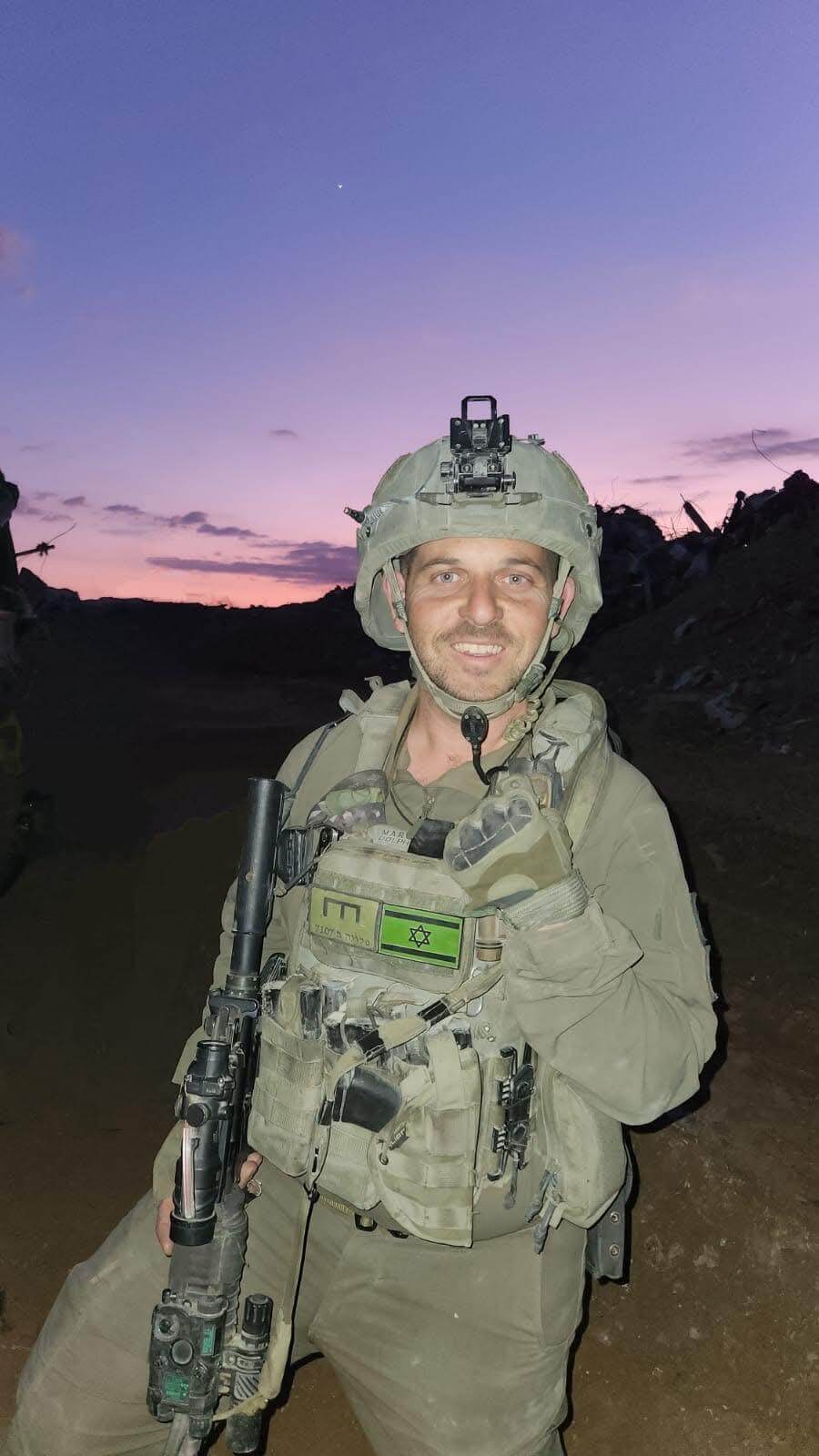
Months passed, and the fighting in the southern Gaza Strip became increasingly intense. December 16, 2024, the sixteenth of Kislev 5785, was a cold and rainy day. Moshiko's company operated in a dense urban area, in a sector where the enemy was well-entrenched, had planted numerous explosive devices, and conducted complex fighting from an underground infrastructure. The mission was to breach a movement route for infantry and armored forces, clear booby-trapped buildings, and ensure the advance of the forces. Moshiko, the company commander, led the force, as was his custom, from the front. He meticulously scanned the area, his sharp eyes searching for any sign of a trap or ambush. The battle was difficult, house-to-house, room-to-room. Gunfire and explosions echoed from all directions, and the air was thick with dust and the smell of burning. Moshiko managed the battle with impressive composure, directing his soldiers, instructing them on positions, and ensuring that each of them was as protected as possible. At one point, while he was busy clearing a complex engineering obstacle under fire, he was exposed to heavy enemy fire. He did not hesitate for a moment, returned fire, and tried to secure his soldiers, but was hit directly. His comrades rushed to him, tried to provide first aid under fire, but his injury was severe. Major (res.) Moshiko (Maxim) Rosenwald, 35 years old at the time of his fall, fell in battle in the southern Gaza Strip, shielding his soldiers with his body, leading them until his last breath.
The news of Moshiko's fall struck the Rosenwald family like a thunderclap, leaving an immense void. The message from the officer who arrived at the home in Yavne, with Eden and little Orel inside, was an incomprehensible moment of darkness and pain. Elizabeth and Arie, Alex and Tali, each lost a piece of their heart. Little Orel, who still could not grasp the magnitude of the tragedy, waited for Daddy to come home, and her mother tried to find the words to explain to her that Daddy would not return. His funeral in the military section of the Modi'in cemetery was attended by thousands of people – family members, friends, neighbors, commanders, and soldiers who had served alongside him. All came to pay their last respects, and to accompany the hero on his final journey. The sounds of weeping mingled with moving eulogies that described Moshiko as he was – a man of principles, a devoted father, a loving husband, a supportive brother, a loyal son, and a commander who served as a role model and personal example. He was the salt of the earth in every sense of the word, a man who lived a full life of giving, of love for the land and its people.
Moshiko left behind a legacy of courage, devotion, and love for humanity. The home in Yavne, which was meant to be a new beginning, became a symbol of great pain, but also of hope. Eden and Orel, along with the entire family, will continue to carry his memory, his smile, and all the good he brought into the world. Moshiko's story, like the story of all those who fell in the War of Revival, is a story of human heroism, of choosing life, and of deep commitment to the state and its future. He did not fall in vain; he fell so that little Orel, and all the children of Israel, could live here in safety, with dignity, and with hope. His memory and his deeds will be etched forever in the heart of the nation, a pillar of fire that goes before the camp, illuminating the path for future generations, out of a deep and painful Israeli pride. His memory, of a man who touched so many lives, will serve as a constant reminder of the power of the human spirit and the triumph of life over death, even in the most difficult moments. He will remain in our hearts, a hero of action, of love, and of sacrifice.
Moments of a life
All photographs · 2
In the media
Articles
- A memorial to Ironi Alef graduates
mcity ·
- Moshiko Rosenwald
עיריית מודיעין ·
- Two soldiers killed in Rafah
VINnews ·
- Eden Bid Farewell to Her Husband Moshiko
ערוץ 7 ·
- IDF announces deaths of Maj. Moshiko Maxim Rozenwald, Sgt.-Maj. Alexander Asnov in Rafah, Gaza
The Jerusalem Post ·
- Moshiko and Alexander killed in the collapse of a building in Rafah: "They gave their lives for all of us"
ynet
Show all (8)
Social posts
- Inauguration of the Moshiko Rosenwald Path
עיריית מודיעין מכבים רעות — Telegram ·
- Invitation to the Dedication Ceremony of the Moshiko Rosenwald Path
עיריית מודיעין מכבים רעות — Telegram ·
Memorial sites
- Maj. Moshiko (Maxim) Rosenwald, of blessed memory
סיפור חיי
- Moshiko Rosenwald
עמותת הנח״ל
Memorial projects
On June 16, 2026, a memorial to six fallen graduates, including Moshiko Maxim Rosenwald, was unveiled at Ironi Alef School in Modi’in.
A path named after Moshiko was inaugurated in Modi’in on September 19, 2025, according to a municipal report summarizing the ceremony. The invitation gives the address as 42 Dam HaMaccabim Street and explains that there is a memorial stone with a QR code.
Stories told about them
As a teenager, he was a field studies guide and led trips around the country. He studied civil engineering at the Technion in an honors program, worked at Green Structures and started a family in Yavne.
The memorial page says that he worked as a project manager on the construction of the Memorial Hall at Mount Herzl. This was a professional role he held during his life, not an initiative established in his name.
Life & service
Service
- Rank
- Major (res.)
- Service Type
- Reserve Forces
- Battle Location
- In the southern Gaza Strip
Family
- Father
- Aryeh
- Mother
- Elizabeth
Burial
Cemetery
Intelligence (Military Section)
Tributes & remembrance
תודה לך ,משה-מושיקו-מקסים המקסים,
על כל הטוב שהפצת בעולמנו.
תודה שהגנת עלינו, אך כמה נוראה הקרבתך היקרה מכל.
תנחומים מלב כואב לכל יקיריך,
יהא זכרך ברוך,גיבור ישראל!
משיקו אתה היתה הדוד הכי טוב בעולם אני אוהבת אותך ומדגעגעת ממאיה
נזכור אותך כל ימי חיינו. מסרת את נפשך עבור העם ובטחונו. השארת משפחה וילד, אשר יגדל ברוחך. מי יתן ויגדל לתפארת זכרך.
רס"ן במילואים מושיקו רוזנוולד נפל אמש בעזה. בפוסט האחרון שמושיקו העלה, אחרי שחייליו סיפרו לו על נתינה של אזרחים שכלל לא הכירו, הוא כתב: "היום קרב - בו כל הקצוות יהיו בדממה וישאר רק עם ישראל היפה! אל ייאוש - עם ישראל חי" מושיקו והלוחמים שלנו נלחמים בגבורה כדי להגן עלינו מפני האויבים שמבחוץ. וגם מזכירים לנו כי יש גם מאבק פנימי על החיים ביחד, על הנתינה, השותפות והתקווה. יהי זכרו ברוך.
Love you
אחי היקר תודה שזכיתי לחברות קרובה איתך במשך שנתיים, למדתי ממך המון דברים שאקח לכל חיי, אתה ההגדרה המילונית למונח מלח הארץ , איש שעשוי מהחומרים הטובים ביותר - מנהיגות, חריצות, יוזמה, אכפתיות, דאגה, הגינות וצניעות.. יהי זכרך ברוך גיבור ישראל! מי ייתן והקבה ייתן מזור למשפחתך היקרה
נזכור אותך לנצח!
יהי זכרו ברוך. אנו מרכינים ראש לזכרו של החייל שנפל בהגנה על מדינת ישראל. ליבנו עם משפחתו, ואנו שולחים חיבוק ותנחומים עמוקים
ת.נ.צ.ב.ה נזכור אותך לתמיד אח יקר!!!
הטוב שבטובים!!! לנצח הזכור את העיניים הטובות החיוך והלב הענק!! לא נתפס.. כמה כואב ועצוב..
מתגעגעים, משפחה, חברים, היציע הצפוני,
כל משפחת אוירבך.
אתה חסר!
לנצח בלב שלי. תודה על כל מה שעשית עבורי.
יהיי זכרך ברוך מושיקו היקר
זוכרים איך הייתה ילד קטן בירושלים.
מושיקו היקר והאהוב,
לא נתפס שאתה לא איתנו
זכיתי להכיר אותך את הנשמה הטובה שלך,
החיוך ,האכפתיות , חבר טוב, אזכור אותך תמיד
ותהיה בליבי תמיד.
תודה
לא הכרתי אותו אישית. שמעתי את סיפור חייו ונפילות כעת בהקראת שמות הנופלים וכעת נודע לי שהיה בין מקימי היכל שמות הנופלים. יהיה זכרו ברוך לעד.
שנהיה ראויים
We love you!
יהא זכרך ברוך!
השארת מורשת וגאווה!
מושיקו, עזבת אותנו בטרם עת.כולנו נזכור אותך תמיד. החיוך שלך, שמח החיים, ההישגיות והשאיפה למצויינות. אוהבים אותך, נזכור אותך תמיד, תהיה מנוחתך עדן.
תנוח על משכבך בשלום גיבור
מתגעגע מאוד מושיקו. אנחנו ממשיכים בדרך שלך, ברוח שלך. בוחרים בחיים. אוהבים לנצח.
אחי היקר מושיקו,
לא מאמין שאני כותב לך ואתה לא תקרא את זה. ביום הזה, כשהשקט עוטף את הארץ, אני חושב עליך.
על האיש שהיית בן, אח, בעל, אבא, נכד, דוד, חבר ומפקד.
איש של אנשים, איש של אהבה לעם ולאדמה, איש שתמיד ידע להציב מטרות ולכבוש אותן לא רק בריצה למרחקים ארוכים, אלא גם בחיים עצמם.
המבנה חסר, מושיקו, אבל אנחנו לא נעמוד בחורבות. נבנה מחדש. נאהב מחדש. נחיה בדרכך, באור שלך.
מתגעגע אליך מאוד.
מושיקו אחי אני מתגעגע אליך כל-כך אין יום אני לא חושב עליך אתה מחזק אותי בלימודים ובחיים אתה האמנת בי ואני לא אאכזב אותך בבקשה תן לי כוח מלמעלה
יהי זכרו ברוך
רב סרן מושיקו (מקסים) רוזנוולד נפל בקרב ביום ט"ז בכסלו תשפ"ה (16.12.2024). בן שלושים וחמש בנופלו. הוא הובא למנוחות בחלקה הצבאית בבית העלמין במודיעין. הותיר אחריו אישה, ילד, הורים ושני אחים.
גיבור! ההשפעה שלך תלווה אותי כל שארית חיי
גיבור
אדם מיוחד, דוגמה למופת, אכפתיות, מקצועיות,אחריות, מנהיגות, תמיד דואג לחייליו קודם, כריזמטיות וחוש הומור, כל כך הרבה תכונות טובות בבן אדם אחד.
מתגעגעים אליך חבר
זכינו בך המפקד בגדוד
תודה על הזכות
מושיקו(מוקישו)
נזכור ונזכיר אותך לעד אח יקר
חבל על דאבדין ולא משתכחין
You are the greatest gift in my life
Source:ערוץ 7
Read the Hebrew original
אתה המתנה הכי גדולה שלי בחיים
That is how we taught them to give, contribute and help others
Source:ערוץ 7
Read the Hebrew original
ככה לימדנו אותם לתת, לתרום ולעזור לזולת
He does not give up when things get hard; he does not look for excuses.
Source:ynet
Read the Hebrew original
הוא לא מוותר כשקשה, הוא לא מחפש תירוצים.
You saw your service as a privilege to lead soldiers in battle rather than an obligation.
Source:ynet
Read the Hebrew original
ראית את שירותך לא כחובה, אלא כזכות להוביל חיילים בקרב.
The city of Yavne embraces you in your pain
Source:ynet
Read the Hebrew original
העיר יבנה מחבקת אתכם בכאבכם
At home, he absorbed the values of love for the land and personal responsibility, and he was a young hiking guide who served as a role model for his trainees
Source:עיריית מודיעין מכבים רעות — Telegram
Read the Hebrew original
בביתו, ספג ערכים של אהבת הארץ ואחריות אישית והיה מש"צ ששימש דמות מופת עבור חניכיו
Remembrance Day addresses
יום הזיכרון לחללי מערכות ישראל התשפ"ה – 2025
בכל יום שעובר, אזכור יותר! אזכור, את אלו שיצאו עימי לקרב ולא שבו, ולהם אין מי ידמה ומי ישווה. אזכור, שהכאב לא יעבור לעולם, והזמן, הוא לא מרפה ולא מרפא. אזכור, את שיברון הלב הגובר ואת הבית שבוער. אזכור, את צדקת הדרך, ואשבע שוב, שמה שהיה לא יהיה יותר. אזכור, שיותר מכל דבר אחר – אני חסר! ביום הזה, אני נתקף געגוע לדמותם, לחיתוך דיבורם, לחיוכם, ומדליק נר לזיכרון דרכם ומורשתם!
משרד הביטחון
אגף משפחות, הנצחה ומורשת
יום הזיכרון לחללי מערכות ישראל התשפ"ה – 2025
בכאב, בהצדעה ובתקווה אני מתכבד להדליק נר זיכרון זה. השנה, כשאנו נלחמים במלחמה ארוכה, רב זירתית וצודקת, הזיכרון נושא משמעות עמוקה. ביום זה נעצור ונתייחד עם זכרם של טובי בנינו ובנותינו שנפלו בהגנה על המדינה. מורשתם היא המצפן שמתווה את דרכינו, והיא המעניקה לנו כוח להמשיך ולהגן על מדינת ישראל ותושביה. משפחות יקרות, אנו מרכינים ראשנו ומתחייבים שנעמוד לצידכן תמיד. יהי זכר הנופלים ברוך.
אלוף דדו בר כליפא
ראש אגף כוח האדם, צה"ל
יום הזיכרון לחללי מערכות ישראל התשפ"ה – 2025
בשעה שאנו זוכרים את גודל תרומתם ועומק מסירות נפשם של טובי בנינו ובנותינו, נופלי מערכות ישראל לדורותיהן, ממשיכים צה"ל וכוחות הביטחון במימוש המשימה למענה לחמו ועבורה נפלו: הכרעת אויבינו מדרום, מצפון, ביהודה ובשומרון, וגם בזירות רחוקות יותר. בהערכה רבה ובגאווה אדירה אנו מרכינים ראש בפני הנופלים והנופלות, מאמצים את משפחותיהם אל לבנו, וממשיכים במשימה להבטחת קיומה של ישראל לדורי דורות. יחד נעשה ונצליח.
רב אלוף אייל זמיר
הרמטכ"ל, צה"ל
יום הזיכרון לחללי מערכות ישראל התשפ"ד – 2024
כאשר דגלינו מורדים לחצי התורן וראשינו מורכנים לזכר הנופלים והנופלות במערכות ישראל, ממשיכים לוחמי צה"ל ומפקדיו בלחימה בדרום, בצפון, ביהודה ובשומרון ובזירות נוספות. על כל דור מוטלת המשימה של הגנת העם והארץ – משימה שאף פעם אינה פוסקת. נצדיע בגעגוע ובגאווה לנופלים ולנופלות, נחבק את משפחותיהם, ונמשיך ברוח הציווי שהותירו לנו. עם ישראל חי.
רב ניצב יעקב שבתאי
המפקח הכללי, משטרת ישראל
יום הזיכרון לחללי מערכות ישראל התשפ"ד – 2024
אחיי הנופלים, כל נר הוא זיכרון יחיד ומיוחד, על חיים שהיו ואינם, געגוע שנצרב עמוק בלב, עולם ומלואו. הנרות כולם הם זיכרון של אומה כי לעולם לא עוד, בשורת הציונות וקוממיות ישראל. זיכרון כי הדרך לעם חופשי בארצנו עוברת דרך מסדר הנופלים. אור הנר יזכיר לנו את מסירות נפשכם להציל חיים, להגן על הבית. הנרות מסמנים לנו נתיב גבורה ערכי מחייב שאנו מצווים ללכת לאורו. נמשיך להילחם ולהוסיף אור מתוך אמונה בנצח ישראל.
יואב גלנט
שר הביטחון
יום הזיכרון לחללי מערכות ישראל התשפ"ד – 2024
בהצדעה ובכאב, בשם צה"ל כולו, אני מדליק נר זיכרון. בעיצומה של מלחמה, הזכרון נושא משמעות יום-יומית, שעבר והווה מתלכדים בה. לאורם של הנופלים נמשיך לצעוד, חיילי הסדיר והמילואים. לאורם של הנופלים נמשיך להגן על ארצנו ועל מולדתנו, גם כשהמחיר כבד. להבת-הזכרון תבער בנו בעודנו ממשיכים להלחם ונזכור את הנופלים ואת אומץ ליבם. משפחות יקרות, צה"ל מרכין היום ראש, מצדיע לכן וכואב איתכן. יהי זכר הנופלים ברוך.
אלוף יניב עשור
ראש אגף כוח האדם, צה"ל
יום הזיכרון לחללי מערכות ישראל התשפ"ד – 2024
בהוקרה, בגאווה ובכאב שאין לו סוף, אני מתכבד להדליק נר לזכרם של הנופלים והנופלות במערכות ישראל. סיפור חייהם בארץ הזאת, מסכת שירותם, גבורתם והקרבתם – הם סיפורה של הארץ הזאת, אך גם סיפור המחיר הכבד שהיא תובעת מאוהביה. מחויבותנו לזכר הנופלים ולדרך שהותירו לנו ניצבת תמיד לנגד עינינו. את המשימה שלא זכו להשלים, משלימים כיום, וישלימו, אנשי כוחות הביטחון, הממשיכים בדרכם ולאורם. יהי זכרם של הנופלים ברוך.
משרד הביטחון
אגף משפחות, הנצחה ומורשת
יום הזיכרון לחללי מערכות ישראל התשפ"ד – 2024
בחרדת קודש אני מתכבד להדליק נר לזכרם של חללי מערכות ישראל, חברנו שנפלו, מראשית היציאה מהחומות ולאורך כל שנות עצמאותנו המדינית והציונית, מהווים תמרור זיכרון לדרך חיינו ולמחוייבות הלאומית להנצחת זכרם. דרכם נותרה דרכנו ומורשתם נר להמשך עשייתנו. יהי זכרם ברוך!
בני גנץ
שר הביטחון
יום הזיכרון לחללי מערכות ישראל
נזכור אותם, כולנו יחד. כל אחד ואחת מהם, מדי יום ביומו, והיום ביתר שאת, כך – לנצח. "כי מדי דברי בו זכור אזכרנו עוד"
משרד הביטחון
אגף משפחות, הנצחה ומורשת