
The story
The air in Hebron, on the morning of the 10th of Marheshvan, 5745 (November 4, 1984), was cool and crisp, carrying the scent of wet earth and road dust, as the first rays of sun began to break over the hills surrounding the ancient city. Inside a small house, its walls steeped in the stories of generations, a tiny baby was born, the firstborn to Hannah and Yechiel Michael Leiter, who had chosen to breathe new life into this ancient, rooted place. They named him Moshe Yedidya. He was not just a newborn; he was a small symbol, a first pulse of new life in the heart of history, a landmark connecting a distant past of ancestors to the future of a growing nation. Moshe grew into this feeling, a sense of purpose and responsibility, even if he couldn't then articulate it in words. The Leiter family home was always filled with light, children's laughter, and deep conversations. Seven siblings joined Moshe over the years – Neria, Sarah, David, Tsofia, Shmuel, Noam, and Amikam – and together they created a vibrant, lively mosaic of opinions, games, and dreams. Hannah and Yechiel Michael made sure to provide their children with an anchor of values, not through eloquent sermons, but through personal example, through conversations around the Shabbat table, through small acts of mutual help, and through a willingness to listen and understand. Moshe, the eldest, absorbed these values like clear water – the importance of community, mutual responsibility, and a deep love for the place where he lived, not just as land, but as an ongoing story of people and ancient stone houses.
Moshe's early childhood unfolded amidst the stone alleyways of Kiryat Arba, a short walk from the ancient house where he was born. He ran in courtyards, played "cops and robbers" with friends among the dry bushes, and built sandcastles in the neighborhood park. He vividly remembered the smell of fresh pita from the local bakery and the sounds of the bustling market on Thursdays. Until second grade, his world was confined to the familiar and safe boundaries of the neighborhood, but even then, a deep curiosity and a tendency to understand things thoroughly were evident in him. When he was eight, the family packed their belongings and moved to the settlement of Eli, nestled in the heart of the Benjamin mountains. The move was not simple; Eli was different, greener, more open, yet still deeply embedded in the country's mountainous landscape. At "Ohel Shilo" elementary school in Eli, Moshe quickly found his place. He loved sitting in class, listening to teachers, and asking questions that went beyond the curriculum. He had no desire to stand out, but an inner need to understand, to break down ideas into their components and rebuild them more clearly. He loved the simplicity of life in the settlement, the ability to go out into the open fields after school, climb rocks, or just sit under an ancient olive tree and gaze at the landscape stretching to the horizon, listening to the sound of the wind through the branches and the birdsong.
As he grew older, his passion for knowledge and action intensified. In his youth, Moshe left the comfortable and warm home in Eli and went to study at the "Makor Chaim" Yeshiva in Gush Etzion. The move to boarding school, away from his family, was a significant step for him, demanding independence and responsibility. There, within the walls of the Beit Midrash and the dormitory rooms, he met lifelong friends, partners on a journey of endless discussions about the meaning of life, the role of man in the world, and the right path to walk. He was not only a brilliant student but also an attentive friend, who knew how to offer good advice and support in times of distress. He listened patiently to his friends' concerns and was able to see the bigger picture, offering practical solutions rather than just empty comfort. Afterward, he continued his path at the Yeshiva in Hispin, where he further deepened his studies and his search for meaning. These years of youth, filled with intensive learning, true friendship, and grappling with existential questions, shaped his great spirit. They fostered in him a rare combination of intellectual depth, personal and communal responsibility, and a caring that transcended boundaries. He learned that every person has a role, and the best way to fulfill it is through continuous giving, without expectation of reward. Even then, it was clear that he was not just studying the world, but preparing to act in it, to change it, and to take an active part in its construction.
Upon completing his Yeshiva studies, Moshe did not rush to enlist immediately. He chose to dedicate two more years to personal development and identity formation at the "Bnei David" pre-military academy in Eli – the place where he had essentially grown up as a child. The academy was for him not only physical and mental preparation for military service but also a spiritual hothouse where he could examine his principles, sharpen his views, and prepare for the journey of life ahead. He engaged extensively in social activities, volunteered in the community, and took part in heated discussions about the future of the state and the challenges it faced. He was not one of those young people who sought shortcuts or glory. Every step he took was calculated, deep, and full of intention. The commanders at the academy quickly recognized his inherent potential – quiet leadership, exceptional listening skills, and a strong desire to contribute himself for the common good. He was the one who always volunteered for difficult tasks, who cared for the weaker friends, and who took responsibility even when not required. He understood that true command is not just giving orders, but the ability to lead through personal example, through deep knowledge, and through genuine concern for every individual.
In 2003, mature and highly motivated, Moshe enlisted in Shaldag, an elite unit in the Air Force, considered one of the most distinguished and classified in the IDF. Reaching such a unit was a peak for many, but for Moshe, it was just the beginning of a glorious military career, a journey of about 15 years in permanent service, rich in challenges, complex missions, and formative moments. He began his path as a regular combat soldier, underwent grueling training that demanded exceptional physical and mental capabilities, and learned the intricacies of special warfare. Very quickly, Moshe stood out for his abilities, not only physical and technical but also leadership. He was not loud or ostentatious, but led quietly, with confidence and professionalism that few could match. He climbed the ranks and filled diverse and leading roles, from squad commander (Mefakatz) – responsible for the lives of younger soldiers, through company commander (Mefaked Pluga) – a role in which he commanded dozens of soldiers, to broader roles in the unit's headquarters, where he influenced the shaping of the next generation of soldiers and commanders. He was a natural mentor, who cared for every soldier as if they were his own child, stood by them in difficult moments, lent them an attentive ear, and made sure to provide them with the best tools for success, both in battle and in life. "Moshe, you see things before everyone else," an veteran commander once told him, "you are not just a commander, you are a human compass." Such a statement described his essence – the ability to navigate not only the terrain but also the souls of people.
Even after his release from permanent service, Moshe did not cease to give. He continued to serve in active reserves, not just incidentally, but with dedication and determination that served as a role model. He joined Brigade 551, an elite paratrooper reserve brigade, and was appointed company commander (M.P.) of Company 697. This role demanded significant time, deep commitment, and heavy responsibility, despite the burdens of life, a growing family, and intensive studies. He did not give up more than 80 days of reserve duty a year, an astronomical number by any standard, almost a quarter of the year. "How do you manage to combine everything, Moshe?" his friends would ask in astonishment, seeing him in uniform after an exhausting semester of studies, or returning from field training directly to the study room. He would just smile quietly and answer: "It's not a question of success, it's a question of duty. There are things that just have to be done, and there's no one else to do them in your place." He believed wholeheartedly in his role, in his ability to influence his soldiers and the security of the state, and was willing to pay the personal price involved. In the summer before the "Swords of Iron" war, Moshe completed a reserve battalion commanders' course, a prestigious and grueling course that trains the next generation of senior commanders in the army. He completed it with exceptional distinction, which only emphasized his impressive capabilities and uncompromising commitment. He was about to become the first battalion commander in the IDF who would also be a doctor – a rare and extraordinary combination of combat command, human compassion, and medical professionalism, a combination that reflected his multifaceted personality and his vision for the future. He saw medicine not just as a profession, but as another way to serve, to save lives, and to connect people.
Alongside his demanding military career, Moshe also pursued knowledge and contribution in civilian fields. He was not content with conquering military peaks, but sought to broaden his horizons and realize his intellectual potential. He studied biology at Bar-Ilan University, a field that fascinated him with its complexity and precision. Afterward, he fulfilled an old dream and continued to study medicine at Ariel University, a grueling academic journey that demanded endless hours of learning, memorization, and perseverance. He would arrive at classes after an exhausting week of reserve duty, sit in the front row, absorbing every word, soaking up knowledge like a sponge. His classmates, who witnessed his uncompromising determination, were amazed by his abilities. "Moshe, when do you even sleep?" they would ask with a smile, and he would shrug, as if time were an inexhaustible resource. He didn't want to be a "regular" doctor; he wanted to be a doctor who understood the whole person, their body and soul. During his studies, Moshe joined the "Het Young Researchers Program" at Sheba Medical Center, a prestigious program that opened up a world of medical research and innovation for him. There, he led groundbreaking medical, educational, and community initiatives, connecting his different worlds – the world of medicine, the world of education, and the world of community. He believed that a good doctor is not only one who wields a scalpel but also one who knows how to listen, educate, and lead social change.
But Moshe's contribution didn't end there. He managed a mentors' program at the Shaldag Association, where he guided young soldiers who had completed their service, helping them integrate into civilian society, find their way, and fulfill their dreams. He served as an attentive ear, a loyal advisor, and a true friend, seeing their success as his own. Concurrently, Moshe worked at "MedSense," a company active in the medical field, where he brought to bear his analytical skills and his ability to think outside the box. He was not content with a technical role, but sought to understand the broader meaning of his work, how it could improve people's lives. However, one of the initiatives closest to his heart was the "Kodkod" program – a groundbreaking program that integrated young people from the Haredi sector into meaningful and high-quality service in Unit 8200, the IDF's leading technological intelligence unit. Moshe saw this program as a bridge connecting different sectors of Israeli society, a way to integrate diverse populations into contributing to the nation's security, while preserving their identities. He believed in the power of diversity and the ability to connect different worlds into a stronger, greater whole. He managed the program with sensitivity and professionalism, meticulously attending to every detail, and was a beacon of hope for many.
Amidst all this endless activity, Moshe also built a home. He married Tzipora, a warm, wise woman full of joy, and together they created a family nest filled with faith, modesty, humility, and above all – values. Their home was not a palace, but a place where everyone felt loved, belonged, and valued. They lived for a short period in Jerusalem, between the ancient city's alleyways and its vibrant neighborhoods, and then moved to the settlement of Palmachim, on the coast, where they breathed the salty sea air and watched spectacular sunsets. Finally, they found their place in Kibbutz Ein Tzurim, a communal agricultural settlement in the south, where they could plant deep roots and raise their children in an atmosphere of a warm and supportive community. Tzipora was his partner on this journey, by his side in all his incessant endeavors, understanding his motivations and supporting him without reservation. "I know you can't sit idly by," she often told him, "but remember that we also have a place in your heart." And he remembered. He made sure to find time for his children, for Carmi, Maayan, Harel, Tzur, Lia, and little Ivri, who was born just three months before the war. Each of them was a world unto themselves for him, and he saw in them the continuation of his path, the sparkling light of his soul, his great love, and his vision for the future. He was a present father, playing soccer with them in the yard, reading them stories before bed, teaching them about the world and the importance of being a good person. He taught them to love the land through hikes on hidden trails, through planting small trees in the garden, and through conversations about history and the future. He didn't speak to them in abstract terms, but showed them the right way through his actions.
The Leiter family home in Ein Tzurim was a vibrant gathering place. Children ran in the yard, laughter echoed from the kitchen, the smell of baking cakes and Shabbat dishes filled the air. Moshe, despite his many responsibilities, always found time to sit with his children, listen to their stories from school, help them with homework, and play board games with them until they fell asleep on the sofa. He taught Carmi, the eldest, how to fix broken bicycles, and with Maayan, who was very curious, he would sit for hours explaining stars and the laws of physics. Harel, Tzur, and Lia were younger, and with each of them, he found a special way to connect. He would play ball with Harel, draw colorful pictures with Tzur, and tell Lia adventure stories before bed. Little Ivri, born just three months before that terrible Shabbat, was still a tender infant, wrapped in the love and warmth of a large family. Moshe would carry him in his arms, whisper words of love, and smile at him broadly, the smile of a proud and happy father. He celebrated Ivri's brit milah with the entire community, a covenant that symbolized for him another link in the chain of generations, another hope for the future. Within this home, Moshe found the peace and strength to continue his endless work. He was a quiet and strong anchor in a noisy world, a man of quiet and deep action, connected to his roots and his vision, and especially – connected to the people around him. He knew how to connect past and future, Torah and science, warfare and medicine, East and West, sectors, souls, and communities. He saw the big picture, the complex mosaic of Israeli society, and always sought ways to bridge gaps, to build together, and to create a better society.
And then came the cursed Shabbat, Simchat Torah, October 7, 2023. The sun rose as usual over Ein Tzurim, and the smell of coffee mingled with the scent of morning blossoms. Moshe and Tzipora woke to the sounds of their children, preparing for a peaceful and festive Shabbat day. The morning began like any other, but soon the tranquility was shattered. Ear-splitting sirens began to interrupt the quiet, followed by alarming WhatsApp messages. "Moshe, did you hear what's happening in the south?" "General call-up, everyone report!" The phone vibrated in his hand, and he read the messages with a pounding heart. Within seconds, he understood the magnitude of the event. He hugged Tzipora in a long embrace, kissing his children one by one, trying to hide the worry in his eyes. Little Ivri slept peacefully, sweet and calm, unaware of the storm outside. "I have to go," he told Tzipora, his voice resolute but full of dread. "Take care of the children. I'll be back." He quickly packed a small bag, put on his reserve uniform, whose scent was so familiar, and walked out the door, leaving behind a worried family and a quiet home emptied of his warm presence. He knew he was going to a dangerous place, but there was no question in his mind. This was his duty, his mission, his essence. He could not sit at home while his country burned.
Moshe quickly reported to his unit, where he met his soldiers, his comrades in arms. The atmosphere was tense, heavy, accompanied by a sense of uncertainty and urgency. The faces of the soldiers reflected the situation – a mixture of apprehension, determination, and anger. Moshe, as company commander, projected calm and confidence, even as his heart was torn with worry. He attended to every detail, ensuring every soldier was equipped and ready, listening to their concerns, and strengthening their morale. Orders were given quickly, and the unit set out, towards the burning border, towards the inferno. They entered the Gaza Strip from the north, into hostile and unknown territory, their objective clear: to fight, to clear the area, to defend the settlements, and to find those who had committed the atrocities. The days that followed were intense, difficult, and complex fighting. Moshe led his soldiers with courage, discretion, and uncompromising professionalism. He was always at the head of the force, a fearless personal example, meticulously planning every step, caring for his soldiers above all else. He navigated narrow alleyways, under incessant fire, making critical decisions in real-time, fully aware of the weight of every word and every command. He spoke to his soldiers over the radio in a calm but resolute voice, encouraging them, guiding them, and instilling in them a sense of security. "Keep moving forward, eyes open, I'm with you," he told them again and again, and his voice gave them strength to continue.
On the 26th of Marheshvan, 5784 (November 10, 2023), the eve of Shabbat Parshat Chayei Sarah, Moshe and his company were in the midst of an operation in the northern Gaza Strip. They advanced cautiously, scanning buildings, clearing routes, trying to locate terror infrastructure. The tense silence was suddenly broken by gunfire and explosions. The battle had begun. Moshe led his soldiers with determination, reacting quickly and calmly, managing the fire and directing the forces. He knew they were close to a significant target. Suddenly, through the radios, Moshe's resolute voice emerged: "We found the shaft. Shabbat Shalom." These were his last words. Short, concise words that reflected his essence – uncompromising professionalism, a deep understanding of the mission, and a moment of human, almost personal, reference to the approaching Shabbat. He found the target, fulfilled his duty to the end, and at that moment, in the heart of the battle, Major (res.) Moshe Yedidya Leiter, 39 years old at his fall, a commander, a doctor, a man of connection, fell. He fulfilled his mission until the last moment, defending his home, his family, his people, and the country he loved with all his heart. His last words, "We found the shaft. Shabbat Shalom," became a chilling legacy, a testament to his heroism, his professionalism, and the inner peace that characterized him even in the most critical moments.
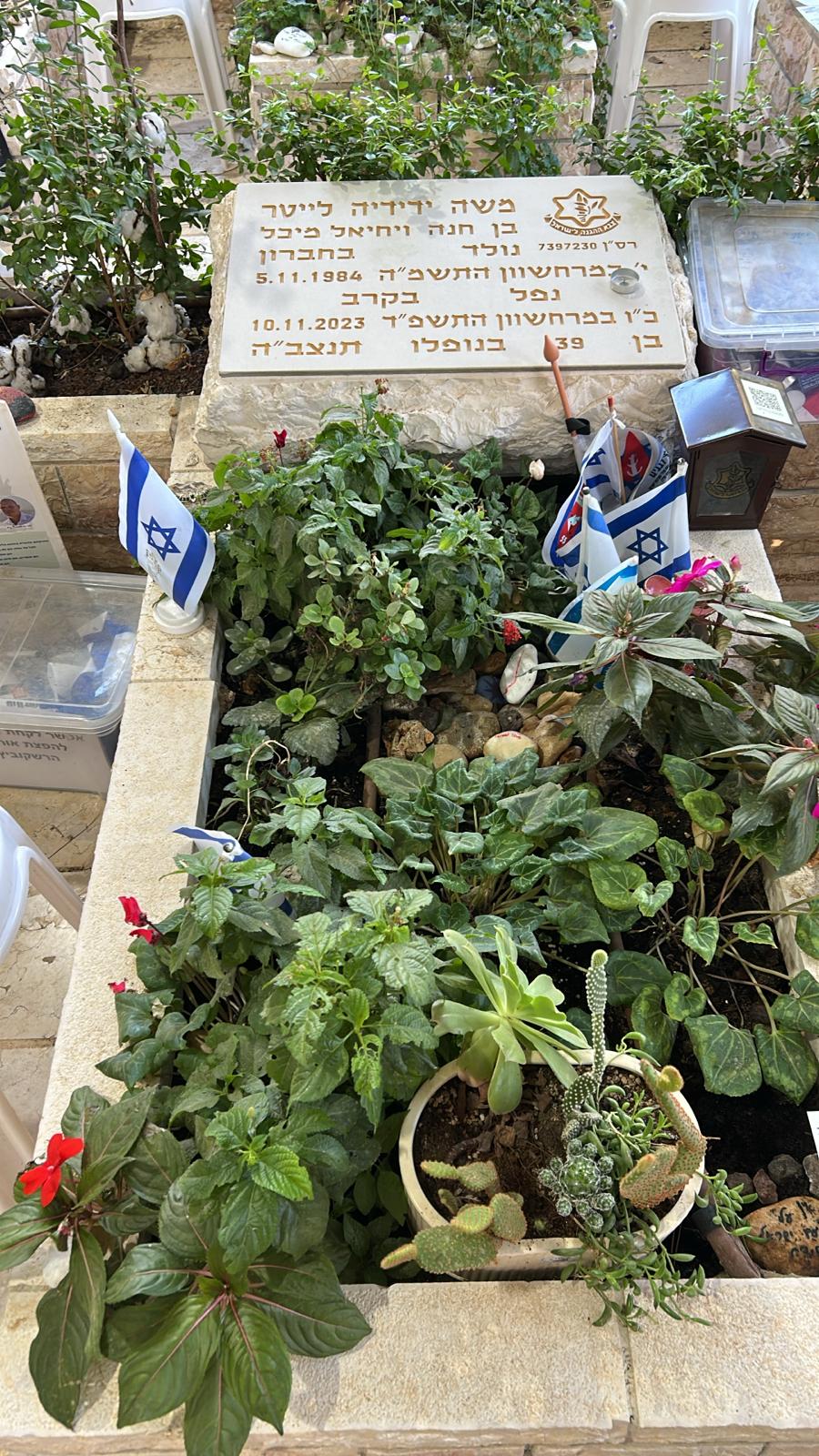
The news of Moshe's fall struck Ein Tzurim and all of Israel like a bolt from the blue. The community, family, friends, soldiers – all felt shock and disbelief. The warm and vibrant home of the Leiter family was suddenly filled with heavy silence, Tzipora's voice choked with pain, and the young children, Carmi, Maayan, Harel, Tzur, Lia, and Ivri, were left with an immense void. Little Ivri, whose brit milah they had celebrated just three months prior, would never get to know his heroic father. Moshe was laid to rest in the military cemetery on Mount Herzl, in plot D/8, among the nation's greats, his precious blood nourishing the roots of our people's revival. Thousands accompanied him on his final journey, and the eulogies, despite the immense pain, emphasized his strength, his leadership, and his unforgettable legacy.
"Moshe's entire essence was connection," his wife Tzipi wrote about him, and this sentence accurately summarized his life. He connected past and future, the ancient roots of Hebron with the innovation of medicine and technology. He connected Torah and science, showing that there is no contradiction between deep study of sources and an incessant pursuit of academic knowledge. He connected warfare and medicine, military toughness with human compassion, proving that one can be an elite warrior and an admired commander, and at the same time be a sensitive, attentive, and caring person. He connected East and West, different sectors of Israeli society – Haredi and secular, religious and non-religious, and always sought the common ground, the unifying elements, the bridges that could connect souls and communities. Moshe was a quiet and strong anchor in a noisy world, a silent yet powerful figure who influenced everyone he met. He didn't just live his life – he sculpted his soul within his people, imprinted his deep mark in all his actions, all his decisions, and in every person he touched. His image will continue to illuminate and motivate, accompanying his beloved children – Carmi, Maayan, Harel, Tzur, Lia, and Ivri – who carry within them the spark of his soul and his vision, his many students, his many friends, and his commanders and soldiers, who followed him through fire and water. Moshe Yedidya Leiter did not fall in vain. He fell as a hero, in the line of duty, defending his home, his family, his people, and the future. His legacy is a call to action, to connection, to giving, and to building a better society, a strong and humane society, as he believed in. He was an integral part of the story of Israeli revival, and his memory will continue to be a light to our feet, illuminating the way forward, towards a future of hope and pride. May his memory be blessed.
Moments of a life
All photographs · 66
Videos and links
In the media
Articles
Podcasts
- Commander Gavravar\ Looking people in the eye and moving forward
כינוס קודקודים / פק״ל ·
- Kodkod Gavravar, This Is Kodkod\ Command Is a Labor of Love
כינוס קודקודים / פק״ל ·
Memorial sites
- Moshe Yedidya Leiter
מועצה אזורית שפיר
Memorial projects
A Torah scroll in memory of Moshe Leiter was dedicated at the Kodkod program’s study hall in Petah Tikva, with the participation of the family and Elisha Medan, who was wounded in the battle in which he fell.
A United Hatzalah ambucycle was dedicated in his memory in Jerusalem on January 15, 2025, donated by the Falic family, in the presence of his parents and the paramedic who treated him.
Stories told about them
Yechiel said that at their last meeting he approached Moshe to bless him, and Moshe pinched his cheek and reassured him that things would be all right. According to the father, Moshe’s friend interpreted the gesture as removing the last barrier between father and son.
His brother David said that hours before he fell, they sat together in Beit Hanoun and talked about the family and a ski vacation they planned for after the war. David said in his eulogy that Moshe was a source of guidance and security for him.
Life & service
Profile
- Date of birth
- November 5, 1984
- Birthplace
- Ein Tzurim
- Date of death
- November 10, 2023
- Age
- 39
- Hometown
- Ein Tzurim
Service
- Rank
- Major (res.)
- Service Type
- Reserve Forces
- Battle Location
- In the northern Gaza Strip
Family
- Father
- Yechiel Michael
- Mother
- Hana
Burial
Place of rest
All photographs · 1
Tributes & remembrance
גיבור ישראל. תהא נשמתך צרורה בצרור החיים
תבקש שם גאולה
תודה. ??
לעולם לא תעלם מהעולם הזה ומהעולם הבא ??
איש מיוחד ואמיץ
גיבור ישראל.
בזכותו ובזכות שכמותו יש לנו מדינה לתפארת
דור של אריות. עטורי תהילה.
תודה על המסירות. תודה על ההקרבה הגדולה.
מקווה שאנחנו ראויים. יהי זכרו ברוך.
יהי זיכרו ברוך
גיבור ישראל
בזכותו החטופים שבו הביתה. יהי זכרו ברוך!
מצדיע לך גיבור ,
אין מילים לומר את אשר על ליבי
אוי לאבדן של מלח הארץ
לא נשכל לעולם
הי"ד,נצח ישראל לא ישקר..במותו ציווה לנו את החיים,גיבור ישראל לעולמי עד תהיה חרוט בלב ישראל
תודה גיבור
קדוש וגיבור ישראל
במותך ציוית לנו את החיים, נדאג שהקרבתך לא תהיה לשווא. אתה השראה לכולנו. תודה לך.
יהי זכרו ברוך
גיבור ישראל
הי"ד. יהי זכרו ברוך.
יהי זכרך ברוך גיבור ישראל
יהי זכרו ברוך לעד.עם כל חללי צ.ה.ל.גיבור
בוגר מסלול קודקוד.
לא זכיתי להכירו בחייו
אך מהווה עבורי דוגמא והמחשה אישית
לייטר, היית יחיד ומיוחד, גיבור אמיתי.
ת.נ.צ.ב.ה
סליחה ותודה גיבור
יהי זכרך ברוך
אדם אציל מכובד ולאחר הסיפורים מאמינה שהשאיר מורשת חזקה למשפחתו
ייהי זכרו ברוך
ולזכר מעשיו והקרבתו תעמוד לנצח
יהי זכרו ברוך
איזה חיוך
איזו אבידה לעם ישראל
איזה איש יפה מבפנים ומבחוץ
העולם חסר אותך
ציפי המהממת חזקי ואמצי
לעילוי נשמתך
חבריך ומוריך מוקירים את אבדנך. אין ספק כי מערכת הבריאות איבדה רופא עתידי מופלא
משה, כמה שאתה חסר...
במיוחד בפורים.
יהי זכרו ברוך
אני רון שרף, קצין בחטיבה 551. בשמי ובשם החטיבה והגדוד, אני מדליק נר לזכרו של משה לייטר ז"ל.
מורשתו מאירה לנו את הדרך ואנו נמשיך לזכור ולהזכיר את זכרו ואת זכרם של יתר נופלי הגדוד והחטיבה. יהי זכרו ברוך. יהי זכרם של יוסי הרשקוביץ, מתן מאיר וסרגיי שמרקין חבריו לנשק של משה ברוך.
הייתה לי זכות עצומה להכיר את לייטר, נפילתו ממלאת אותי בתחושת צניעות גדולה, ומורשתו מחייבת אותנו להיות ראויים.
אני כרמל פרץ, קצינה בחטיבה 551 בשמי ובשם החטיבה, אני מדליקה נר לזכרו של משה ידידיה לייטר ז"ל.
מורשתו מאירה לנו את הדרך ואנו נמשיך לזכור ולהזכיר את זכרם של נופלי היחידההחטיבה. יהי זכרו ברוך.
הי"ד תהא נשמתו צרורה בצרור החיים.
במותו ציווה לנו חיים.
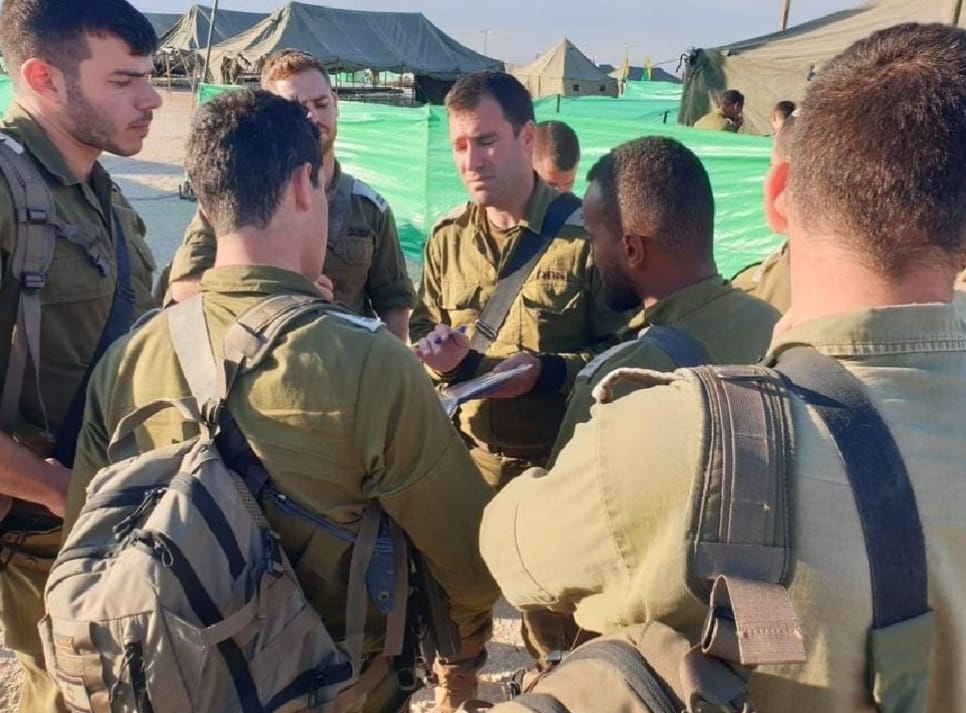
התמונה האחרונה לפני הכניסה לעזה
"עם ישראל חי", כתב אחד מחברי הצוות ב-11 באוקטובר, ארבעה ימים אחרי מתקפת הפתע - לצד תמונת לוחמי המילואים מגדוד 697 בחטיבה 551 (עוצבת חצי האש). אמש, חודש אחרי, הותר לפרסום כי ארבעה מאותם לוחמים שצולמו בתמונה נהרגו מפיצוץ מטען חבלה בפיר ממולכד ליד מסגד, במהלך הלחימה בעזה.
כוח מילואים בפיקוד מפקד פלוגה בדק ביום שישי בערב פיר של מנהרה ליד מסגד בבית חאנון שבצפון הרצועה. הפיר היה ממולכד, ומטען חבלה פגע בקצין ובשלושה לוחמים. הארבעה נהרגו. מלבדם נפצעו עוד ארבעה באותה תקרית, שניים קשה ושניים אנוש.
לכתבה המלאה:
בניחום אבלים אצל משפחתו של לוחם שלדג, רס״ן משה ידידיה לייטר ז״ל.
משה היה אב ל-6 ילדים ובעל אוהב, לוחם אמיץ ועז נפש. הוא שימש לחייליו מגדלור של ערכים ודוגמא אישית - תמיד ראשון למשימה, תמיד ראשון להסתער.
השם יקום דמו. ננצח את חמאס - עד הסוף. יהי זכרו ברוך.
(צילום: חיים צח, לע״מ)
לזכרו של בוגר התוכנית משה ידידיה לייטר ז"ל
בוגר התכנית במחזור2020-2021, תחת הנחייתם של פרופ' יואב צ'פמן, דר'אפרת שביט-שטיין ודר'אמיר דורי במעבדה הנוירולוגית למחקר.
נפל בקרב בעזה בראש חייליו בליל שישי ה-10/11/23.
משה היה מפל"ג ביחידת שלדג שהגשים את חלומו ללמוד רפואה במחזור הראשון שלאונ' אריאל,עם תכניות ושאיפות רבות לעתיד.
לאחר נפילתו הוענק למשפחתו תואר דר' לרפואה עבורו.
משה הוא דוגמה לנתינה אין סופית, ענווה, תרומה לקהילה ואהבת אדם.
הוא השאיר אחריו אישה ושישה ילדים, הורים, אחים,אחיות וחברים רבים.
הפקנו סרט לזכרו והקדשנו את מפגש פברואר2024 להנצחתו במעמד דמויות מפתח מעולם הרפואה והיחידה.
יהי זכרו ברוך.
I learned from you not to give up. I always felt safe beside you — I felt that you radiated calm
Source:ערוץ 7
Read the Hebrew original
למדתי ממך לא להתייאש. תמיד הרגשתי מוגנת לידך - הרגשתי שאתה משדר רוגע
Moshe always made you feel that you existed, that you mattered.
Source:ערוץ 7
Read the Hebrew original
משה תמיד נתן לך להרגיש קיים, שאתה חשוב.
Highly motivated
Source:ערוץ 7
Read the Hebrew original
חדור מוטיבציה
Something magnetic
Source:ערוץ 7
Read the Hebrew original
משהו ממגנט
A whirlwind
Source:ערוץ 7
Read the Hebrew original
רוח סערה
You loved
Source:ערוץ 7
Read the Hebrew original
אהבת
The compass and the light
Source:ערוץ 7
Read the Hebrew original
המצפן והאור
A source of security
Source:ערוץ 7
Read the Hebrew original
מקור ביטחון
Simple humility
Source:ערוץ 7
Read the Hebrew original
ענווה פשוטה
The glue that held the family together
Source:ערוץ 7
Read the Hebrew original
הדבק של המשפחה
Always get back up
Source:ערוץ 7
Read the Hebrew original
תמיד לקום
A model of partnership
Source:ערוץ 7
Read the Hebrew original
מודל לזוגיות
Everyone’s brother
Source:ערוץ 7
Read the Hebrew original
האח של כולם
You knew how to listen
Source:ערוץ 7
Read the Hebrew original
ידעת להקשיב
All my life I sought peace and quiet, and I found them in your big heart.
Source:מועצה אזורית שפיר
Read the Hebrew original
כל חיי ביקשתי שלום ושקט ומצאתי אותם בליבך הגדול.
Moshe was my best friend,
Source:The Jerusalem Post
We know that even though he’s no longer with us, he’s continuing to act
Source:JNS
Remembrance Day addresses
יום הזיכרון לחללי מערכות ישראל התשפ"ה – 2025
בכל יום שעובר, אזכור יותר! אזכור, את אלו שיצאו עימי לקרב ולא שבו, ולהם אין מי ידמה ומי ישווה. אזכור, שהכאב לא יעבור לעולם, והזמן, הוא לא מרפה ולא מרפא. אזכור, את שיברון הלב הגובר ואת הבית שבוער. אזכור, את צדקת הדרך, ואשבע שוב, שמה שהיה לא יהיה יותר. אזכור, שיותר מכל דבר אחר – אני חסר! ביום הזה, אני נתקף געגוע לדמותם, לחיתוך דיבורם, לחיוכם, ומדליק נר לזיכרון דרכם ומורשתם!
משרד הביטחון
אגף משפחות, הנצחה ומורשת
יום הזיכרון לחללי מערכות ישראל התשפ"ה – 2025
בכאב, בהצדעה ובתקווה אני מתכבד להדליק נר זיכרון זה. השנה, כשאנו נלחמים במלחמה ארוכה, רב זירתית וצודקת, הזיכרון נושא משמעות עמוקה. ביום זה נעצור ונתייחד עם זכרם של טובי בנינו ובנותינו שנפלו בהגנה על המדינה. מורשתם היא המצפן שמתווה את דרכינו, והיא המעניקה לנו כוח להמשיך ולהגן על מדינת ישראל ותושביה. משפחות יקרות, אנו מרכינים ראשנו ומתחייבים שנעמוד לצידכן תמיד. יהי זכר הנופלים ברוך.
אלוף דדו בר כליפא
ראש אגף כוח האדם, צה"ל
יום הזיכרון לחללי מערכות ישראל התשפ"ה – 2025
בשעה שאנו זוכרים את גודל תרומתם ועומק מסירות נפשם של טובי בנינו ובנותינו, נופלי מערכות ישראל לדורותיהן, ממשיכים צה"ל וכוחות הביטחון במימוש המשימה למענה לחמו ועבורה נפלו: הכרעת אויבינו מדרום, מצפון, ביהודה ובשומרון, וגם בזירות רחוקות יותר. בהערכה רבה ובגאווה אדירה אנו מרכינים ראש בפני הנופלים והנופלות, מאמצים את משפחותיהם אל לבנו, וממשיכים במשימה להבטחת קיומה של ישראל לדורי דורות. יחד נעשה ונצליח.
רב אלוף אייל זמיר
הרמטכ"ל, צה"ל
יום הזיכרון לחללי מערכות ישראל התשפ"ד – 2024
כאשר דגלינו מורדים לחצי התורן וראשינו מורכנים לזכר הנופלים והנופלות במערכות ישראל, ממשיכים לוחמי צה"ל ומפקדיו בלחימה בדרום, בצפון, ביהודה ובשומרון ובזירות נוספות. על כל דור מוטלת המשימה של הגנת העם והארץ – משימה שאף פעם אינה פוסקת. נצדיע בגעגוע ובגאווה לנופלים ולנופלות, נחבק את משפחותיהם, ונמשיך ברוח הציווי שהותירו לנו. עם ישראל חי.
רב ניצב יעקב שבתאי
המפקח הכללי, משטרת ישראל
יום הזיכרון לחללי מערכות ישראל התשפ"ד – 2024
אחיי הנופלים, כל נר הוא זיכרון יחיד ומיוחד, על חיים שהיו ואינם, געגוע שנצרב עמוק בלב, עולם ומלואו. הנרות כולם הם זיכרון של אומה כי לעולם לא עוד, בשורת הציונות וקוממיות ישראל. זיכרון כי הדרך לעם חופשי בארצנו עוברת דרך מסדר הנופלים. אור הנר יזכיר לנו את מסירות נפשכם להציל חיים, להגן על הבית. הנרות מסמנים לנו נתיב גבורה ערכי מחייב שאנו מצווים ללכת לאורו. נמשיך להילחם ולהוסיף אור מתוך אמונה בנצח ישראל.
יואב גלנט
שר הביטחון
יום הזיכרון לחללי מערכות ישראל התשפ"ד – 2024
בהצדעה ובכאב, בשם צה"ל כולו, אני מדליק נר זיכרון. בעיצומה של מלחמה, הזכרון נושא משמעות יום-יומית, שעבר והווה מתלכדים בה. לאורם של הנופלים נמשיך לצעוד, חיילי הסדיר והמילואים. לאורם של הנופלים נמשיך להגן על ארצנו ועל מולדתנו, גם כשהמחיר כבד. להבת-הזכרון תבער בנו בעודנו ממשיכים להלחם ונזכור את הנופלים ואת אומץ ליבם. משפחות יקרות, צה"ל מרכין היום ראש, מצדיע לכן וכואב איתכן. יהי זכר הנופלים ברוך.
אלוף יניב עשור
ראש אגף כוח האדם, צה"ל
יום הזיכרון לחללי מערכות ישראל התשפ"ד – 2024
בהוקרה, בגאווה ובכאב שאין לו סוף, אני מתכבד להדליק נר לזכרם של הנופלים והנופלות במערכות ישראל. סיפור חייהם בארץ הזאת, מסכת שירותם, גבורתם והקרבתם – הם סיפורה של הארץ הזאת, אך גם סיפור המחיר הכבד שהיא תובעת מאוהביה. מחויבותנו לזכר הנופלים ולדרך שהותירו לנו ניצבת תמיד לנגד עינינו. את המשימה שלא זכו להשלים, משלימים כיום, וישלימו, אנשי כוחות הביטחון, הממשיכים בדרכם ולאורם. יהי זכרם של הנופלים ברוך.
משרד הביטחון
אגף משפחות, הנצחה ומורשת
יום הזיכרון לחללי מערכות ישראל התשפ"ד – 2024
בחרדת קודש אני מתכבד להדליק נר לזכרם של חללי מערכות ישראל, חברנו שנפלו, מראשית היציאה מהחומות ולאורך כל שנות עצמאותנו המדינית והציונית, מהווים תמרור זיכרון לדרך חיינו ולמחוייבות הלאומית להנצחת זכרם. דרכם נותרה דרכנו ומורשתם נר להמשך עשייתנו. יהי זכרם ברוך!
בני גנץ
שר הביטחון
יום הזיכרון לחללי מערכות ישראל
נזכור אותם, כולנו יחד. כל אחד ואחת מהם, מדי יום ביומו, והיום ביתר שאת, כך – לנצח. "כי מדי דברי בו זכור אזכרנו עוד"
משרד הביטחון
אגף משפחות, הנצחה ומורשת