
The story
In Jerusalem of the early 1980s, a city of Jerusalem stone and pine trees, of ancient sanctity and vibrant life, a small baby named Mordechai Chaim was born on the 3rd of Nisan, 5742, corresponding to March 26, 1982. He was the youngest child of Aluma and Aharon Amoyal, a younger brother to Orly, Odelia, and Yosef, who were already much older and largely shaped his world as the last child born into a warm and loving home in the Ramat Eshkol neighborhood. The Jerusalem air, clear and cool, entered his lungs from his very first day, and the view from their window – the neighborhood houses climbing the hill, the green gardens, and the sounds of bells from distant churches – formed the backdrop of his childhood. His parents, who saw him as a late and moving gift, provided him with a home where love was the primary currency, and where every question received a patient answer and every wish a hug. Little Mordechai grew up within this embracing family nest, learning the nuances of human connection from quiet observation of his older siblings, his understanding parents, and the bustling life around the Shabbat table. Even then, a special quality was evident in him: an inner quiet, an observant eye, and an ability to understand complex situations without uttering a word. He was not a noisy or dominant child, but one whose presence was felt even in silence, thanks to a natural wisdom and modesty that made him an undisputed center of any circle of friends.
Childhood in Ramat Eshkol was a blend of innocent street games and constant learning. Mordechai loved running with his friends between the houses, climbing trees in the small groves, and playing soccer in the neighborhood field until the sun set and his mother's call from the window interrupted the game. But alongside the external hustle and bustle, a rich inner world developed within him. He was a curious child who loved to sit for hours with children's books, asking questions about the world, about people, and about meaning. He was not content with superficial answers; rather, he gently explored, trying to understand the depth behind everything. His parents, recognizing his unique qualities, encouraged him to follow his curiosity, to broaden his mind, and to strive for excellence not only in his studies but also in his character. They taught him the importance of giving and camaraderie through personal example: a bowl of hot soup for a sick neighbor, a helping hand extended to a friend in trouble, an open door for guests. Mordechai absorbed these values naturally, and they became a solid foundation for his developing character. He was a natural leader, not through force or loudness, but through wisdom and calm, and his friends trusted him implicitly. When an argument broke out between children, he was the one they would turn to for mediation, to find the right way to resolve the conflict, and most of the time he succeeded, thanks to his ability to listen to every side and offer a fair solution.
Mordechai spent his first years of schooling in educational institutions in Jerusalem, where he excelled as an outstanding student, not only for his high grades but also for his conduct. He was loved by his teachers and friends, thanks to his easygoing nature, his respect for others, and the seriousness with which he approached every task. He did not boast of his knowledge but shared it with humility, helping friends who struggled and always being the first to offer assistance. There was always within him the aspiration to develop, to challenge himself, and to learn more and more. In his adolescence, when it was time to choose a high school yeshiva, the choice fell on "Neve Shmuel" in Efrat, a yeshiva that combined sacred and secular studies at a high level, while emphasizing personal and ethical development. The transition from bustling Jerusalem to the relative quiet of Efrat, with its open landscapes and mountain air, was a refreshing change. There, within the walls of the yeshiva, in the large library and the bustling dining hall, Mordechai deepened his studies, drawn into the world of Talmud and Halakha, but also excelled in scientific and humanities subjects. He spent long hours in the Beit Midrash, bent over books, trying to unravel their secrets, gently debating complex issues with his friends, and finding deep satisfaction in the learning process itself. He had a special ability to see the beauty and logic in Jewish tradition, not as restrictive chains, but as golden threads connecting generations and giving meaning.
During that period, alongside his yeshiva studies, Mordechai was a central and active figure in the local "Bnei Akiva" branch, one of the largest and most vibrant in his city. He began as a dedicated trainee, eagerly absorbing the movement's values, the love of the land and its people, the connection to the nation and tradition. He quickly distinguished himself and became an esteemed instructor, one whom his trainees admired and sought out. He was always ready to listen, advise, and share. On the long hiking trips through the country's landscapes, at the nightly bonfires where stories were told and songs were sung, in the weekly activities at the branch – Mordechai was the moral compass, the unifying figure. He knew how to make people laugh, tell a fascinating story, but also to touch upon deep points of faith and identity. He cared for every trainee, remembered their names, their personal stories, and formed real, long-term connections with many of them. Through instructing, he not only gave but also received – strengthening his sense of mission, his commitment to society, and his love for all of Israel. As he reached the peak of his youth, he decided to continue his studies at a Hesder Yeshiva in Petah Tikva, a path that combined deep Torah study with full military service. This was not a technical choice, but a further expression of his belief that connection to the nation and the land is also expressed in defending them.
The move to the Hesder Yeshiva marked a new and exciting stage in Mordechai's life, a stage where the world of Torah and spirit met the world of action and security. In Petah Tikva, he immersed himself once again in the study of Gemara and Halakhic rulings, but this time he knew that this period was preparation for even more meaningful service. He loved the special atmosphere of the Hesder Yeshiva, where young men with peyot and knitted kippot prepared themselves for the challenges of military service, out of a deep sense of national responsibility. The conversations with his fellow students, which ranged from complex Talmudic issues to discussions about the security situation and the challenges facing Israeli society, deepened his worldview. When the time for enlistment arrived, he reported with full vigor, determined to give his all. He chose to serve in the infantry, in the "Nahshon" unit, a unit that demanded high physical fitness, mental determination, and the ability to withstand stressful situations. The training was grueling: long marches under a scorching sun, exhausting shooting drills, long hours of guard duty and operational activities. Mordechai, with his quiet nature and modesty, became an outstanding soldier. He did not complain, performed every task with dedication, and always looked out for his friends. He was among the first to offer help, the last to despair, and the one who instilled confidence around him. His natural leadership abilities, which had manifested themselves already in his childhood and in Bnei Akiva, developed and took on an additional dimension on the battlefield. He became a beloved and admired commander, one whom his soldiers trusted implicitly.
The sense of mission that accompanied Mordechai throughout his life did not end with the completion of his regular service. Unlike many who felt relief at the conclusion of their military chapter, he decided to extend his service beyond what was required, continuing with active and committed reserve duty. This was a decision that testified to the depth of his belief in the need to defend the state, the home, the nation. Every time a call-up order arrived, he reported for duty. He left behind his civilian life, his family, his work, and donned the olive uniform again, understanding that this was his responsibility, his right, and his duty. In the reserves, he met his unit friends again, men who had become a second family. They shared experiences, laughed, complained, but always stood by each other, ready for any mission. The bonds forged during regular service only intensified and strengthened in the reserves, making it an inseparable part of his life's circle. He saw reserve duty not merely as fulfilling an obligation, but as a deep expression of his Israeli identity, of the values upon which he was raised, and of the legacy he sought to pass on.
After his release from regular service, a new and exciting stage arrived in Mordechai's life: building a home of his own. He met Rina, a beautiful and kind-hearted young woman who became the love of his life. Their connection was immediate and deep, based on shared values, intense love, and common dreams. They married in a moving ceremony and established their home in the city of Lod, a city where they saw great mission and potential. Their home quickly became a warm, open, and love-filled space, where sounds of laughter and lively discussions resonated. One after another, they were blessed with six children: Shira, Nadav, Ayana, Tamar, Dror, and Talia. Mordechai was a father with every fiber of his being, a loving and devoted father who dedicated his life to his family and the education of his children. He was not content with merely providing for them or with formal education; rather, he was deeply and actively involved in every moment of their lives. He was present, listening, advising, playing, hugging.
His children called him a "magician," not because he could make coins disappear or pull rabbits from a hat, but because of his wondrous ability to transform simple, routine moments into moments of magic, family togetherness, and love. A family dinner, under his hands, became a culinary and storytelling journey; a short walk in the nearby park turned into an adventure of discoveries and imagination; even boring household chores took on the dimension of a fun game. He knew how to tell fascinating bedtime stories, to play soothing melodies on the flute for them, and to make them laugh with jokes and imitations until their stomachs hurt. He took them on trips across the country, not just to see the landscapes, but to connect them to their roots, to history, to the story of the Jewish people. They would walk ancient paths, visit historical sites, and Mordechai would turn every stone into a fascinating lesson, every landscape into a story. He taught them about values of camaraderie and giving, not just in words, but through personal example: helping a neighbor, hosting guests, volunteering in the community. Their home was always open, and there was always room for another person, another smile, another conversation.
Alongside his family endeavors, Mordechai was a man of Torah in the fullest sense of the word. He always carried holy books, not as an external symbol, but as an inseparable part of his inner world. He loved to learn, to delve deeply, to research the sources of Judaism. He shared this love with the community in Lod. For years, with admirable persistence, he delivered a regular Torah lesson in the synagogue on Shabbat morning, immediately after the morning prayer. His lesson was not intended only for the knowledgeable or the scholars; he knew how to speak to everyone, to touch the hearts of the elderly and the young, of traditionalists and Torah scholars. He knew how to simplify complex issues, to connect the past to the present, and to turn learning into a relevant and fascinating experience. His calm voice, his illuminating smile, and his ability to listen and respond to every question made his lessons a beloved community gathering, where everyone felt connected to him. He worked tirelessly for Torah study in the community and for the neighborhood children, organizing circles, lessons, and was always a listening ear for anyone seeking advice or guidance. He was a spiritual and social pillar, a man whose presence in the community was an anchor of stability and values.
In the years leading up to the "Iron Swords" War, Mordechai's life flowed along a rich and full path. He harmoniously combined his roles as a loving spouse, a devoted father of six children, a community leader, a Torah scholar, and a worker. Each of these roles was not separate, but interwoven, creating a rich and colorful tapestry of life. He would rise at dawn, before his children awoke, to study a little Torah, and then begin the day with Rina, planning their day, sharing experiences. He filled his days with work, providing for his family, but always found time for a short phone call with one of his children, or with Rina, just to hear how they were doing. He loved the quiet of the evening hours, when the children were already in their beds, to sit with Rina, play a little flute, read a book, or simply converse. The Sabbaths were the highlight of the week, with going to the synagogue, the Torah lesson, the Shabbat meals with the extended family, and the free time to walk with the children or just sit with them and talk about what was on their hearts. He was an anchor of stability and love, a person who was simply good to be near. His life was a living testament to a person who could combine different worlds – spirit and matter, family and community, personal and national – and excel in all, out of humility, love, and boundless dedication. He planned for the future, dreamed of expanding his family, of grandchildren, of many more years of study and activity.
And then, on the morning of Simchat Torah, the 22nd of Tishrei, 5784, October 7, 2023, at six-thirty AM, everything changed. A joyful and peaceful holiday morning, when children were supposed to run with flags in the synagogue and families gather for the last celebrations of the holiday month, instantly turned into hell on earth. The sound of repeated sirens, louder and more threatening than anything they had ever known, tore through the silence. Mordechai and Rina ran with their children to the safe room, trying to understand what was happening. Within minutes, the initial, inconceivable reports began to flow in: a cruel surprise attack by the Hamas terrorist organization. Not just unprecedented rocket fire from the Gaza Strip to wide areas across the country, but the infiltration of thousands of terrorists – by land, sea, and air – into the Gaza envelope communities, Sderot, Ofakim, Netivot, into innocent nature parties, into IDF bases. The images that began to surface on phones, the horrifying testimonies, made it clear that this was something different, darker and more murderous than anything they had known. Hundreds of civilians were murdered in their homes, in their cars, in cold blood; dozens were abducted to Gaza; homes were burned and looted. Hundreds of soldiers, police officers, and security forces fell in fierce battles. "War," Mordechai whispered to Rina, his eyes reflecting the shock and the deep understanding of the event's magnitude. This morning marked the beginning of a war that would take Israel on a painful and long journey.
The first phone call arrived quickly. Order 8, a call to arms. Mordechai, who had been released from reserve duty due to his age and the number of his children, did not hesitate for a moment. He could have stayed home, protecting his family from the rear, but his sense of mission burned stronger than any exemption or relief. "I have to go," he told Rina, his voice determined but his eyes full of worry. "They need me. I am a fighter, and I am going to defend our home." Rina, who loved him so much and knew his soul deeply, understood. She saw the spark in his eyes, the uncompromising determination. Despite the immense fear, she hugged him tight, "Take care of yourself," she whispered, tears choking her throat. The children, small and grown, gathered around him. Mordechai hugged each of them a long, strong hug, trying to convey all the love and security in the world in one touch. He promised he would return, tried to make them laugh with a small joke, but they too felt the weight of the moment. His last WhatsApp messages to his wife were short, to the point, but with a subtle hint of love and concern. "Take care of everyone. I love you. Don't worry." He packed his backpack quickly, with the skill of a veteran fighter, and within a few hours he was already on his way to the assembly point of Battalion 222, Carmeli Brigade (2). He insisted on enlisting as a combat soldier, on the front lines, not in a rear-echelon role. The reality outside was unbearable, and he knew his place was with his friends, at the front, defending his people.
The first days of the war were days of chaos and uncertainty. Mordechai quickly found himself with his battalion friends, familiar faces that conveyed a mixture of shock, rage, and determination. They organized, trained, received equipment, and prepared for any scenario. The air was steeped in tension, in chilling stories arriving from the south, and in the understanding that this time it was a struggle for the very existence of the state. Mordechai, with his extensive experience and calm spirit, was a pillar for his friends. He knew how to calm, advise, and maintain high morale. Their conversations were about home, about their children, about the hope that they would soon return to routine, but always with their gaze forward, to the mission ahead. They knew they were going to a long and difficult war, and each of them carried the weight of responsibility on their shoulders. Mordechai spoke with Rina almost every day, in short, quick calls, trying to convey confidence, to hear about the children, to maintain the most important connection of all. He told her about the atmosphere in the unit, about his friends, about the preparations, but always omitted the truly worrying details, so she wouldn't worry.
Mordechai's unit, Battalion 222, Carmeli Brigade, was sent to the north, to the tense Lebanese border, where they awaited the possibility of escalation on that front as well. Days turned into weeks, and each day was filled with training, observations, and vigilant waiting. The tension was constant; their eyes scanned the horizon, their ears alert to every rustle. Mordechai continued to serve as an example and role model for his friends, with his professionalism, his composure, and his uncompromising spirit of mission. He cared for his soldiers, listened to their dilemmas, and encouraged them in difficult moments. He was there for them, physically and emotionally, a true leader. He would sometimes seclude himself with a small book of Psalms, or simply think, praying in his own way, drawing strength from his inner sources.
The last battle of Sergeant Major (Res.) Mordechai Chaim Amoyal took place on Hoshana Rabbah, the 21st of Tishrei, 5785, October 23, 2024, in Southern Lebanon. It was a difficult and bloody battle, part of a broader campaign that the IDF was conducting at that time. The full details of that terrible day remain classified, but what is clear is that Mordechai, as was his way, fought with courage and bravery. He acted with determination, defending his comrades in arms and the State of Israel, out of that deep sense of mission that had driven him his entire life. He did not think of himself, but of the goal, of the people around him, of the home he had left behind. In the inferno, amidst the firing and concussion, he continued to lead, to fight, to defend. There, on the Lebanese battlefield, at only forty-two years old, Mordechai Chaim Amoyal fell. His pure soul was plucked away in an instant, and he left behind an immense void, a gaping wound in the heart of his family, his friends, and an entire nation. He fell as a hero; in his death, he commanded life, just as he lived all his days.
The news of Mordechai's fall struck like a thunderbolt in the Amoyal family home in Lod. Rina, who had been waiting for him with bated breath, received the hardest news a woman could ever receive. Her world turned upside down in an instant. Their six children, Shira, Nadav, Ayana, Tamar, Dror, and Talia, lost their father, their "magician," their anchor. His parents, Aluma and Aharon, lost their youngest son, and his siblings Orly, Odelia, and Yosef lost a beloved brother. The pain was incomprehensible; the void that opened was immense. All of Lod, the entire community, was enveloped in deep mourning. The weekly lesson in the synagogue fell silent; Mordechai's calming, teaching voice was gone.
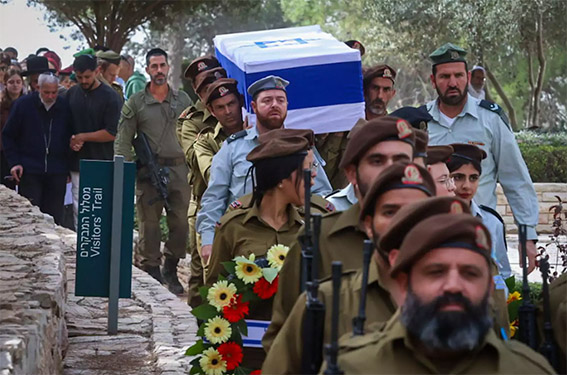
Mordechai Chaim Amoyal was laid to rest in the military cemetery on Mount Herzl in Jerusalem, his birthplace, a city he loved so much. Thousands accompanied him on his last journey; Israeli flags draped his coffin, and tears streamed down cheeks. Soldiers, friends, family members, neighbors, students – all came to pay their last respects. After his fall, he was posthumously promoted to the rank of Sergeant Major, a tribute to his dedication, bravery, and contribution to the state. But this rank was only an external symbol of his spiritual greatness and inner strength. He left behind a rich legacy of love for humanity, love for Torah, love for the land, and boundless dedication. His family and friends continue to commemorate his memory in various ways: through events in his honor, through Torah study for the elevation of his soul, and through legacy stories that recount his extraordinary personality and his heroism. They are careful to pass on his story to their children and to future generations, so that his spirit continues to beat. The void he left behind is immense, but his good memory, the deeds he left behind, and the values he instilled, continue to illuminate the path of many. Mordechai's life story is a story of Israeli revival, of a man who chose to live a full and meaningful life, and gave his soul for his people and his land. May his memory be a blessing.
Moments of a life
All photographs · 3
Videos and links
In the media
Articles
- Espresso, hot chocolate, and remembrance: A memorial cart for the soldier who fell in Lebanon
ynet ·
- Bereaved families left to cope with immense loss after 13 IDF troops fall in battle
Ynetnews ·
- Chief Warrant Officer Mordechai Haim Amoyal killed in Lebanon
The Jerusalem Post ·
- IDF names 5 fallen soldiers in southern Lebanon battles
Ynetnews ·
- Five IDF soldiers killed in battle in southern Lebanon
Вести-Ynet ·
- L’armée israélienne annonce la mort de cinq soldats tués lors de combats contre le Hezbollah au Liban
Times of Israel français ·
Show all (7)
Social posts
- Ohr Torah Stone’s condolences on the death in service of Mordechai Haim Amoyal
אור תורה סטון / LinkedIn
Memorial sites
- Mordechai Chaim Amoyal, of blessed memory — Elbit employee — Remembering and commemoratingAccessibility toolsIncrease textDecrease textGrayscaleHigh contrastInverted contrastLight backgroundHighlight linksReadable fontReset
זוכרים ומנציחים ·
- Yizkor — Warrant Officer Mordechai Haim Amoyal
יזכור – משרד הביטחון
Memorial projects
The social coffee cart “Sheva Shoko” was launched in Lod in his memory, at the initiative of Tzevet Nachshon and with help from Lod residents and the municipality. Each menu item is associated with a different fallen person; a game kit was also reported, with more than 180 question and task cards to extend the family tradition.
According to the article, a family tradition he introduced, called “Sheva Shoko,” is being shared and practiced in other homes. The body of the article does not provide enough detail to describe the steps of the custom.
Stories told about them
His friend Moshe Aharon said they called Mordechai “the last one” because he would arrive late. In retrospect, they realized the delays came from his finding time to help and do many things for others along the way.
Life & service
Service
- Rank
- Warrant officer (res.)
- Service Type
- Reserve Forces
- Honours
- Posthumously Promoted
- Battle Location
- South Lebanon
Family
- Father
- Aharon
- Mother
- Aluma
Burial
Cemetery
Mount Herzl Military Cemetery
- Area
- א
Place of rest
All photographs · 1
Tributes & remembrance
הושענא רבה, כ"א בתשרי.
לימוד הדף היומי היום מוקדש לזכרו.
איש יקר גיבור ישראל.
תודה על המסירות, תודה על ההקרבה הגדולה.
מקווה שאנחנו ראויים.
שנה לנפילתו. יהי זכרו ברוך.
אני זוכר את טוב ליבו וחיוכו, תמיד פיזר אור
תודה לך, מרדכי חיים היקר,
על שהגנת עלינו ונלחמת למעננו,במחיר ההקרבה הנוראה מכל!
תודה על כל הטוב שהותרת בעולמנו החסר.
תנחומים מלב כואב לכל אהוביך.
יהא זכרך ברוך, גיבור ישראל.
· 3h · רס״ב (מיל׳) מרדכי חיים אמויאל, בן 42, מלוד, לוחם בגדוד 222, חטיבת כרמלי (2), נפל בקרב בדרום לבנון. ראש עיריית לוד יאיר רביבו הודיע הערב: "שנה בדיוק אחרי, העיר לוד משלמת שוב בדם הבנים. בכאב רב, אני נאלץ לבשר על נפילתו של לוחם המילואים הגיבור מרדכי אמויאל שנהרג בקרב בלבנון. אנו מחבקים את הרעיה רינה ואת 6 היתומים הקטנים, ואת חברי קהילת "אוהל משה" בנווה זית שקיבלו את הבשורה בבוקר החג, ומבטיחים להמשיך ולהילחם על הארץ הזו", כתב רביבו. "הערב, נצא בלב שבור אך עם גאווה יהודית להקפות השניות, יהיה מאופק אך חובתנו לשמוח לכבודה של תורה שקבעה "כִּי אֶת כָּל הָאָרֶץ אֲשֶׁר אַתָּה רֹאֶה לְךָ אֶתְּנֶנָּה וּלְזַרְעֲךָ עַד עוֹלָם." מבקש מכל מארגני ההקפות להקדיש הקפה אחת מתוך ה-7 שתהיה הקפה שקטה ללא שירים וריקודים, ובה נזכור את מרדכי וחבריו הנופלים, שמאפשרים לנו ב"ה לחיות פה את חיינו". יהי זכרו ברוך.
יהי זכרו ברוך
שמשפחתו תמצא כוח בסיפור חייו שהתווה בביתו ועשייתו, ושלא תדעו עוד צער
מטובי עמנו
יהי זכרו ברוך
איש יקר ואהוב, היית אהוב על כולם, השארת חותם בעולם הזה , שמור עלינו מלמעלה
שכן יקר שנפל במלחמה
זכר צדיק וקדוש לברכה
תרם המון לביטחון המדינה גם בעבודה וגם במילואים
אדם מדהים,איש אהוב ואישיות לתפארת מדינתנו האהובה! בשמים מרחפים מלאכים...
שכן אהוב שנפל במלחמה
שכן יקר שנפל במלחמה
אח יקר ואהוב
אדם מיוחד במינו
תשמור עלינו למעלה ואנחנו נעשה הכל לשמור על מה שיקר לך כאן
תודה על מורשת מדהימה שהשארת לנו פה. לאורך נלך..
מרדכי היקר, זה שתמיד התהלך במסדרונות המכללה בצניעות ובנועם, תמיד עם חיוך ומוכנות לעזור. ה ייקום דמך וישלח נחמה למשפחתך.. לנצח נזכור אותך מרדכי, תודה על הזכות להכיר אותך
חבר ואיש יקר, תמיד עם חיוך ונכונות לעזור , לב רחב ונתינה רבה.
תודה לך ועליך, תהיה נשמתך בצרור החיים!
מרדכי שלנו,
אחי היקר, הקטן אבל הגדול.
כל כך גדול ואהוב ומיוחד כל כך.
וחסר, חסר עד כאב עד כדי חוסר ההבנה שהלכת מעמנו, שעלית מעלה מעלה למרומים,
ולא תשוב, לא היום, לא מחר, לא בכלל...
אוהבים ומתגעגעים כל כך,
שתהא מליץ יושר על כל עם ישראל כולו עבורו נלחמת!
יהי זכרו ברוך.
זכיתי להכיר אותך בתמרון בעזה חבר עם ערכים ציונים ואהבת ישראל על כמוך נאמר ממני תראו וכן תעשו
מרדכי בן דודי האהוב, לנצח תישאר בליבי, מבטיחה ללכת לאורך ולהנחיל זאת גם לבנותי
יהי זכרו ברוך השם יקום דמו
יהי זכרו ברוך
הי"ד
כל חייו היה בחור עם נתינה אינסופית.
מרדכי.
זו היתה זכות להכירך, גם אם לתקופה קצרה. היית דמות מיוחדת ומוערכת. עצב גדול הגיע עם היוודע דבר מותך. יהי זכרך ברוך.
גם בחלוף הימים והשבועות , גבורתך לא נשכחת. לאורך נלך ונחנך .
מורדי
כמה שאתה חסר.
הייתה לי הזכות להכיר אותך
אח שלי הולכת לי פיתום ולא השארת לי רגע לדבר איתך
למי אני היתקשר כדי לדבר ולספר מה היה לי ומה עבר עלי במילואים כי רק אתה יודע על מה אני מדבר רק אתה יודע מה אנחנו עוברים שם בשטח וכמה אתה אהבת את ללבוש מדים ולשמור על עם ישראל
אתה לא הייתה חייב ללבוש מדים אבל אתה אף פעם לא חושב על עצמך רק על האחר אך אפשר לעזור אך אפשר לתת כתף ולומר מילה טובה אוהב אותך
בן משפחתי היקר.
נפל בלבנון במלחמת חרבות ברזל, ערב שמחת תורה תשפ"ה.
הי"ד.
אחי הקטן האהוב
כגודל הנשמה שלך כך החלל הענק
המתגלה בכל סיפור חדש
רינה והילדים הם תכלית הפסוק " הזורעים בדמעה ברינה יקצורו" שהטבעת בעולם
מתגעגע
מרדכי הוא הלב של המשפחה שמחבר בין כולם , משנולדתי אני זוכר את הצחוקים שהוא היה עושה איתנו .
מרדכי הוא איש של אהבת הארץ והעם בעל שמחת חיים ברמה הכי גבוהה שיצא לי להכיר ואני מרגיש גאווה שזה הדוד שלי.
תודה על הזכות להכיר אותך למשך 14 שנים ואני בטוח שאתה מסתכל עלינו מלמעלה וגאה.
"גיסי היקר, האהוב, זה שבאמת קופץ תמיד ראשון לעזור בכל דבר שאפשר, בן אדם שמחפש את הטוב בכל דבר, גיבור ישראל שנפל בקרב בלבנון", כתב אמש בכאב גיסו של מרדכי חיים אמויאל, איציק דרור, "בכי ועצב שאין להם סוף".
חבר קהילה שלו, אהוד נהיר, ספד לו: "אין לי מילים. בן אדם נשמה שלרוב שקט, אבל כשצריך תמיד נכון לעזרה. ראשון לפתוח את בית הכנסת ולהעביר דף יומי - עוד לפני תפילת שחרית. איזו אבדה".
חברו אסף סלומון כתב על ההיכרות ביניהם: "מרדכי אמויאל, או רק אמויאל, היה המדריך שלי בבני עקיבא ושמיניסט שהיה כיף להתרועע איתו גם כשכבר לא היה המדריך הרשמי, אבל נשאר דמות בוגרת שאפשר להתייעץ איתו. הצקנו לו ודיברנו איתו וצחקנו איתו, ותמיד היה לו חיוך גדול".
לדבריו, "בכל פעם שנתקלתי בו מאז - אותם חיוך וטוב לב. הפעם האחרונה שנתקלתי בו הייתה ביציאה מעזה, בדצמבר. הייתה שיחה מתוקה ולא נפרדנו לפני שהצטלמנו ושלחתי תמונה לאבא שלי, שהיה מורה שלו ומרדכי שאל עליו".
ראש עיריית לוד, יאיר רביבו, פנה אתמול לתושבי העיר ואמר כי, "שנה בדיוק אחרי, העיר לוד משלמת שוב בדם הבנים. הערב נצא בלב שבור אך עם גאווה יהודית להקפות השניות, יהיה מאופק אך חובתנו לשמוח לכבודה של תורה שקבעה 'כִּי אֶת כָּל הָאָרֶץ אֲשֶׁר אַתָּה רֹאֶה לְךָ אֶתְּנֶנָּה וּלְזַרְעֲךָ עַד עוֹלָם'".
הוא הוסיף כי הוא "מבקש מכל מארגני ההקפות להקדיש הקפה אחת מתוך השבע שתהיה הקפה שקטה ללא שירים וריקודים, ובה נזכור את מרדכי וחבריו הנופלים, שמאפשרים לנו לחיות פה את חיינו".
״ממה אפשר להתחיל? מי חלם שדווקא אתה? אני יודעת שאתה שמח שם למעלה. תמיד תרמת לעם ישראל", ספדה בתו של מרדכי. תמיד היית מבסוט מהחיים, רואה את חצי הכוס המלאה, רואה את מה שיש ולא את מה שאין. תודה שתמיד היית שם. תודה שבזכותך גדלתי להיות מי שאני. תודה לך על הכל. תנוח על משכבך בשלום, אתה תלווה אותי בכל צעד בחיים״.
https://www.israelhayom.co.il/military-life/article/16664605
מרדכי הנהיג עם הילדים שלו "שבע שוקו". כולם קמים ב-7:00 בבוקר, כל בוקר (גם כשאבא לא בבית), לומדים דף יומי לילדים על כוס שוקו, ויוצאים למסגרות.
מרדכי היה אחראי על התהלים לילדים בבית הכנסת כל שבת.
מרדכי לא היה אמור להיות שם. עם ששה ילדים הוא פטוּר ממילואים והוא בכלל לא היה בסדיר בכרמלי. הוא ביקש להצטרף לשם. הוא התנדב. ברגע שהוא סיים את הסבב בעזה (בגולני) הוא חיפש מה עוד הוא יכול לעשות.
זה נכון שהקב"ה לא לוקח את הטובים, אלא שהטובים הם אלו שהולכים ראשונים קדימה.
מרדכי הוא הראיה לזה.
He was the driving spirit here and managed to find his way into everyone's heart
Source:זוכרים ומנציחים
Read the Hebrew original
הוא היה הרוח החיה פה והצליח להיכנס לכל אחד ללב
Mordechai left a great void in our hearts, but also a great light in the world that only keeps growing
Source:ynet
Read the Hebrew original
מרדכי השאיר אחריו חסר גדול בלבנו, אבל גם אור גדול בעולם שרק הולך וגדל
It gives us the feeling that we are doing something good here
Source:ynet
Read the Hebrew original
זה נותן תחושה שאנחנו עושים כאן משהו טוב
I am really, really proud to be his wife
Source:ynet
Read the Hebrew original
אני ממש ממש גאה להיות אשתו
He really was simply outstanding at everything he did
Source:ynet
Read the Hebrew original
הוא פשוט היה תותח באמת בכל מה שהוא עשה
You used every minute, listened to lessons on headphones every moment
Source:Ynetnews
On behalf of the entire network, our deepest condolences to his wife Rina, their six children, and the whole family. His memory will always be with us.
Source:אור תורה סטון / LinkedIn
Read the Hebrew original
בשם הרשת כולה, תנחומינו העמוקים לאשתו רינה, לששת ילדיהם ולכל המשפחה. זכרו יהיה עמנו תמיד.
Remembrance Day addresses
יום הזיכרון לחללי מערכות ישראל התשפ"ה – 2025
בכל יום שעובר, אזכור יותר! אזכור, את אלו שיצאו עימי לקרב ולא שבו, ולהם אין מי ידמה ומי ישווה. אזכור, שהכאב לא יעבור לעולם, והזמן, הוא לא מרפה ולא מרפא. אזכור, את שיברון הלב הגובר ואת הבית שבוער. אזכור, את צדקת הדרך, ואשבע שוב, שמה שהיה לא יהיה יותר. אזכור, שיותר מכל דבר אחר – אני חסר! ביום הזה, אני נתקף געגוע לדמותם, לחיתוך דיבורם, לחיוכם, ומדליק נר לזיכרון דרכם ומורשתם!
משרד הביטחון
אגף משפחות, הנצחה ומורשת
יום הזיכרון לחללי מערכות ישראל התשפ"ה – 2025
בכאב, בהצדעה ובתקווה אני מתכבד להדליק נר זיכרון זה. השנה, כשאנו נלחמים במלחמה ארוכה, רב זירתית וצודקת, הזיכרון נושא משמעות עמוקה. ביום זה נעצור ונתייחד עם זכרם של טובי בנינו ובנותינו שנפלו בהגנה על המדינה. מורשתם היא המצפן שמתווה את דרכינו, והיא המעניקה לנו כוח להמשיך ולהגן על מדינת ישראל ותושביה. משפחות יקרות, אנו מרכינים ראשנו ומתחייבים שנעמוד לצידכן תמיד. יהי זכר הנופלים ברוך.
אלוף דדו בר כליפא
ראש אגף כוח האדם, צה"ל
יום הזיכרון לחללי מערכות ישראל התשפ"ה – 2025
בשעה שאנו זוכרים את גודל תרומתם ועומק מסירות נפשם של טובי בנינו ובנותינו, נופלי מערכות ישראל לדורותיהן, ממשיכים צה"ל וכוחות הביטחון במימוש המשימה למענה לחמו ועבורה נפלו: הכרעת אויבינו מדרום, מצפון, ביהודה ובשומרון, וגם בזירות רחוקות יותר. בהערכה רבה ובגאווה אדירה אנו מרכינים ראש בפני הנופלים והנופלות, מאמצים את משפחותיהם אל לבנו, וממשיכים במשימה להבטחת קיומה של ישראל לדורי דורות. יחד נעשה ונצליח.
רב אלוף אייל זמיר
הרמטכ"ל, צה"ל
יום הזיכרון לחללי מערכות ישראל התשפ"ד – 2024
כאשר דגלינו מורדים לחצי התורן וראשינו מורכנים לזכר הנופלים והנופלות במערכות ישראל, ממשיכים לוחמי צה"ל ומפקדיו בלחימה בדרום, בצפון, ביהודה ובשומרון ובזירות נוספות. על כל דור מוטלת המשימה של הגנת העם והארץ – משימה שאף פעם אינה פוסקת. נצדיע בגעגוע ובגאווה לנופלים ולנופלות, נחבק את משפחותיהם, ונמשיך ברוח הציווי שהותירו לנו. עם ישראל חי.
רב ניצב יעקב שבתאי
המפקח הכללי, משטרת ישראל
יום הזיכרון לחללי מערכות ישראל התשפ"ד – 2024
אחיי הנופלים, כל נר הוא זיכרון יחיד ומיוחד, על חיים שהיו ואינם, געגוע שנצרב עמוק בלב, עולם ומלואו. הנרות כולם הם זיכרון של אומה כי לעולם לא עוד, בשורת הציונות וקוממיות ישראל. זיכרון כי הדרך לעם חופשי בארצנו עוברת דרך מסדר הנופלים. אור הנר יזכיר לנו את מסירות נפשכם להציל חיים, להגן על הבית. הנרות מסמנים לנו נתיב גבורה ערכי מחייב שאנו מצווים ללכת לאורו. נמשיך להילחם ולהוסיף אור מתוך אמונה בנצח ישראל.
יואב גלנט
שר הביטחון
יום הזיכרון לחללי מערכות ישראל התשפ"ד – 2024
בהצדעה ובכאב, בשם צה"ל כולו, אני מדליק נר זיכרון. בעיצומה של מלחמה, הזכרון נושא משמעות יום-יומית, שעבר והווה מתלכדים בה. לאורם של הנופלים נמשיך לצעוד, חיילי הסדיר והמילואים. לאורם של הנופלים נמשיך להגן על ארצנו ועל מולדתנו, גם כשהמחיר כבד. להבת-הזכרון תבער בנו בעודנו ממשיכים להלחם ונזכור את הנופלים ואת אומץ ליבם. משפחות יקרות, צה"ל מרכין היום ראש, מצדיע לכן וכואב איתכן. יהי זכר הנופלים ברוך.
אלוף יניב עשור
ראש אגף כוח האדם, צה"ל
יום הזיכרון לחללי מערכות ישראל התשפ"ד – 2024
בהוקרה, בגאווה ובכאב שאין לו סוף, אני מתכבד להדליק נר לזכרם של הנופלים והנופלות במערכות ישראל. סיפור חייהם בארץ הזאת, מסכת שירותם, גבורתם והקרבתם – הם סיפורה של הארץ הזאת, אך גם סיפור המחיר הכבד שהיא תובעת מאוהביה. מחויבותנו לזכר הנופלים ולדרך שהותירו לנו ניצבת תמיד לנגד עינינו. את המשימה שלא זכו להשלים, משלימים כיום, וישלימו, אנשי כוחות הביטחון, הממשיכים בדרכם ולאורם. יהי זכרם של הנופלים ברוך.
משרד הביטחון
אגף משפחות, הנצחה ומורשת
יום הזיכרון לחללי מערכות ישראל התשפ"ד – 2024
בחרדת קודש אני מתכבד להדליק נר לזכרם של חללי מערכות ישראל, חברנו שנפלו, מראשית היציאה מהחומות ולאורך כל שנות עצמאותנו המדינית והציונית, מהווים תמרור זיכרון לדרך חיינו ולמחוייבות הלאומית להנצחת זכרם. דרכם נותרה דרכנו ומורשתם נר להמשך עשייתנו. יהי זכרם ברוך!
בני גנץ
שר הביטחון
יום הזיכרון לחללי מערכות ישראל
נזכור אותם, כולנו יחד. כל אחד ואחת מהם, מדי יום ביומו, והיום ביתר שאת, כך – לנצח. "כי מדי דברי בו זכור אזכרנו עוד"
משרד הביטחון
אגף משפחות, הנצחה ומורשת