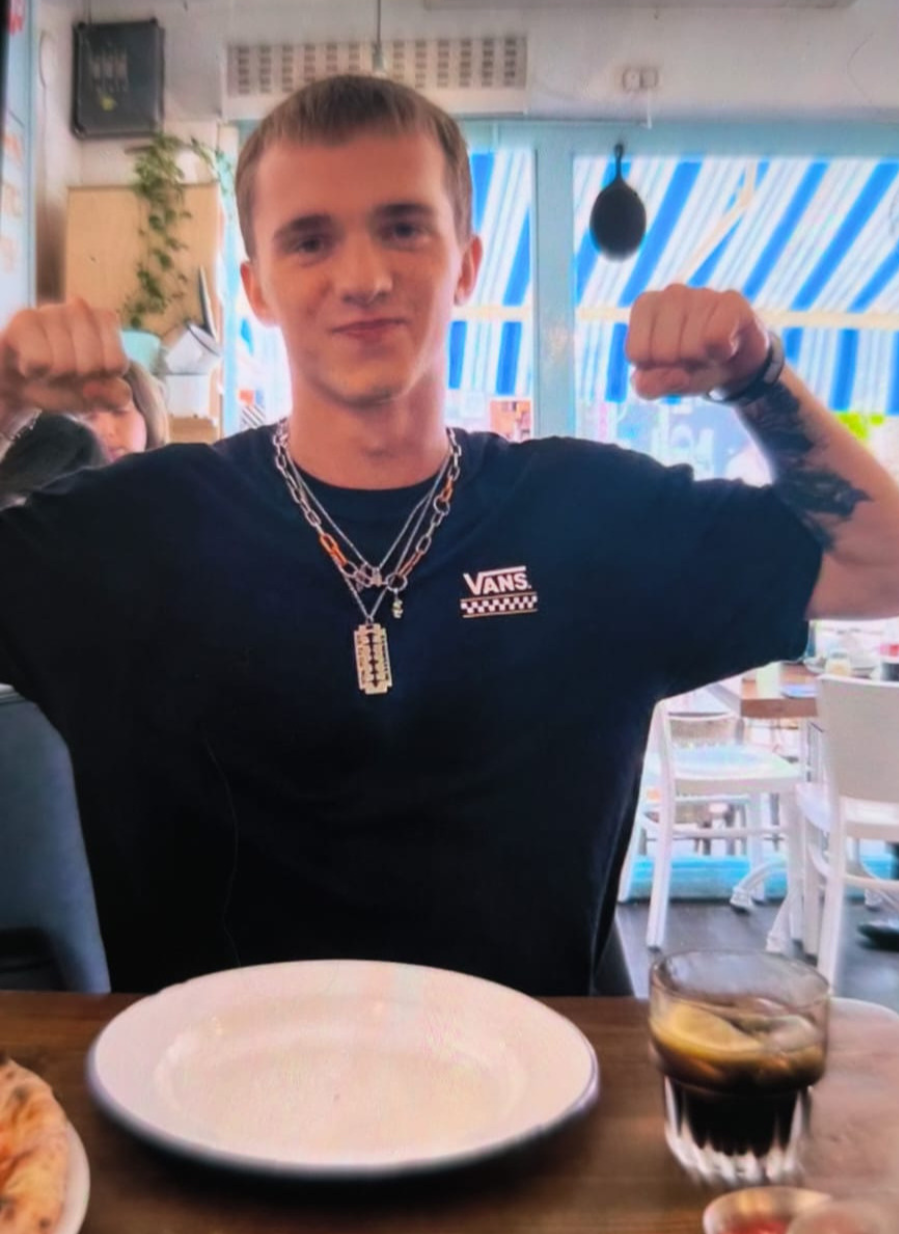
The story
The story of Michael Tyokin begins not in the sun-drenched land of Ashkelon, but thousands of kilometers away, in Ukraine, where his roots were planted. He was a boy when the great journey of his life began, a boy who, in 2020, packed, along with his mother, what could be squeezed into suitcases, leaving an entire world behind. This was not a spur-of-the-moment decision, but a conscious, quiet choice by a mother and her only son to turn a new page, to tie their fate to another place. Their landing in Israel was the beginning of everything. The hot, humid air of the coastal plain, so different from the familiar climate of Eastern Europe, enveloped them as they exited Ben Gurion Airport. The Hebrew language, which at first sounded like a jumble of strange and difficult sounds, became their daily challenge. They settled in Ashkelon, a city of sea and sand, of old buildings alongside new ones, a human mosaic of veterans and new immigrants. For Michael and his mother, this was a new piece of land on which to build their future, with only his grandfather by their side, completing their small and limited family unit here, in the new land. The first days were steeped in a sense of foreignness, an attempt to decipher the unwritten codes of Israeli society, to understand the rhythm, the noise, the human warmth that at times could be almost as intimidating as the physical heat of summer. But Michael, in his quiet way, absorbed everything. He was not a boy of many words, but of actions. He saw his mother struggling to adapt, to turn their rented apartment into a home, and he became her support, her quiet and stable pillar, even before he was a man.
The transition to the Ort network high school was another stage in his acclimatization. He entered the classroom when the Hebrew on his tongue was not yet fluent, when his accent still betrayed the place he came from. But very quickly, friends and teachers discovered the qualities hidden behind his quiet demeanor. His friend Netanel would later recount about this young man, who in his eyes was a rare phenomenon: "Michael was something you don't see every day. He worked hard and didn't utter a peep, always with a smile on his face." That smile was his trademark. It wasn't a wide, boisterous smile, but a small, almost shy smile that would appear at the corner of his mouth and light up his entire face. It would appear when he managed to solve a complicated math problem, when he understood a typical Israeli joke, or just because, out of an inner kindness that radiated outwards. He didn't complain about the difficulties, neither about the language nor about the longing for what he had left behind. He simply got up every morning and did what was necessary, with hard work and silent determination. His homeroom teacher, Masha Sabag, recognized in him this depth and maturity, which was rare for his age. She saw the young man who had arrived from another country, and instead of seeking the easy path, the safe route, he had already set his sights on a completely different place. She described his choice, which had already solidified then, amidst civics lessons and history exams, as a purely ethical choice. "Despite the clear risk," she would say, "he made no personal calculations – he insisted on enlisting in a combat unit." This choice did not stem from a desire for adventure or social influence. It stemmed from a deeper place, from a quiet understanding that this new land, which had given him and his mother a home, demanded responsibility from him. He saw his friends, native-born Israelis, talking about enlistment as a natural and obvious stage in their lives, and he decided that he would not only be a part of it.
The decision to enlist in the Givati Reconnaissance Unit was not accidental. It was the culmination of that quiet determination that characterized him. He didn't seek glory, but the most challenging place, the place where he could contribute the most, the place where the best would serve. The tryouts for the reconnaissance unit were an arduous journey of sand, sweat, and cold, a relentless test for body and soul. There, in the endless dunes and the cold desert nights, Michael found his place. The physical hardships didn't break him; they only forged that "tough quietness" that his teammates would later recognize in him. He was one of many, sturdy young men with bright eyes, but there was something different about him. He didn't talk much, but his presence was felt. He was the first to volunteer for the difficult tasks, the last to complain. The team, forged from dust and effort, became his second family. For a young man who came to Israel with such a small family, this camaraderie among the fighters was everything. They learned to trust each other implicitly, to know every nuance of the other's behavior, to know when a friend needed a kind word and when he needed to be left alone. And Michael, in his unique way, knew how to be there for everyone. As his teammate, Eyal, would testify, "There were always smiles, laughter, a good atmosphere around him." He was a man of contrasts: "A very deep and quiet person, yet lighthearted." He knew how to put things in perspective, to defuse tension with a quiet joke, to remind everyone that there were also moments of light within the demanding military routine. He was a lone soldier according to the dry definitions, but he was never alone. The team was his home, and he was the beating heart of the team.
Operational service turned the young man into a man, the fighter into a professional. The Givati Reconnaissance Unit operated in the most complex and dangerous places, and Michael was always there, an integral part of the force. His quietness became a source of strength. Eyal vividly remembered one incident, near Jenin, that illustrated Michael's true nature more than anything. The team encountered an explosive device, and the tension in the air was thick, such that you could cut it with a knife. In such moments, when adrenaline floods the body and fear threatens to take over, the initial instinct is to shout, to move quickly, to react. But Michael, he remained "completely calm, in silence." He didn't freeze, but acted with deep inner focus, with a composure that calmed everyone around him. This was his heroism, a quiet, unostentatious heroism, one measured not by battle cries but by a steady pulse under fire. But that focused and composed fighter was also the one who, in moments of respite, when the team returned exhausted to its base, could suddenly start "dancing in the middle" while everyone around him clapped. He was the soul of the team, the one who reminded them that they were still young, that there was life, that there was joy. He was the friend who brought lightness, the ability to laugh at oneself and the situation, the balance so essential between strict military discipline and the free human spirit. He was a lone soldier according to the dry definitions, but he was never alone. The team was his home, and he was the beating heart of the team.
The night between May 30 and May 31, 2026, was a night of operational activity deep within Lebanese territory. The Givati Reconnaissance Unit moved under the cover of darkness, north of the Litani River, in the area of the village Zutar A-Sharkiya. This was a mission that demanded the highest level of professionalism, secrecy, and vigilance. Every soldier in the force knew the meaning of operating in enemy territory, the risk involved in every step, every rustle. The air was cold, and the silence was broken only by crickets and the sounds of the fighters' cautious steps on the rugged terrain. Michael was there, part of this well-oiled machine, his eyes scanning the darkness, all his senses sharpened. He was in the place he had aspired to reach, fulfilling the mission he had chosen for himself, defending the home he had built for himself tens of kilometers south of there. He fought, as the Prime Minister would later say, "with heroism deep within Lebanese territory." And then, from the darkness, the attack came. It wasn't a face-to-face battle, not an encounter with a terrorist cell. It was the new, modern, deadly threat. A Hezbollah suicide drone, guided by fiber optics, silent and swift, plunged towards them. The explosion tore through the silence of the night. For a brief moment, time stood still. Then came the chaos. Shouts, commands, the smell of gunpowder in the air. Four of his teammates were lightly wounded, but Michael, Michael sustained the most severe injury. The quiet fighter, the stable rock of the team, fell in battle. He was 21 years old when he fell.
The news of Michael's fall made its way back from the dark valleys of southern Lebanon to the lights of Ashkelon. It reached the small apartment, to his mother and grandfather, and shattered their world. The only son, the beloved grandson, the support, the hope for the future – gone. The void that opened was unbearable. His teammate articulated the magnitude of the tragedy in simple, painful words: "Michael was a lone soldier, and he has no one here but his mother and grandfather..." These words echoed his entire life story – the journey from Ukraine, the new beginning, the small family that fought to build a life for themselves, and their son's choice to dedicate his life to defending the country that adopted them. Loneliness turned into orphanhood, and the quiet that was Michael's hallmark became a deafening silence of loss. But then, something happened. His friends from the reconnaissance unit, his brothers in arms, were not willing to let him go on his final journey alone. They knew about his small family, and they issued an emotional appeal to the general public, an appeal that spread rapidly across social networks and media outlets: Come pay your last respects to Michael. Come show his mother and grandfather that they are not alone.
The funeral, held on June 1, 2026, at the Givat Zion Military Cemetery in Ashkelon, became a tremendous display of Israeli mutual responsibility. After his unit mates called on the public to come and pay their last respects to the lone fighter, many arrived to stand by his mother and grandfather and envelop them in a quiet embrace. They came to say with their actions what the Minister of Defense, Israel Katz, would say with his words: that Michael "chose to tie his fate to the fate of the State of Israel... and became a symbol of Zionism, dedication, and love of the land." Above the fresh grave stood the Givati Reconnaissance Unit fighters, his teammates, their young faces frozen in grief. Their purple berets were a splash of color amidst the mourning. They carried their friend on their shoulders, and continued to carry his memory in their hearts. They knew that the only way to honor his memory was to move forward, stronger, more determined. Their team commander expressed this in a battle cry that became a testament: "Heads up! For Tyokin! We don't stop!" This was not just an order to continue fighting; it was a promise to continue living, to continue building, to continue being worthy of his sacrifice.
Michael Tyokin was posthumously promoted from Sergeant to Staff Sergeant. But the legacy he left behind is greater than any rank. He was a young man who traveled thousands of kilometers to find a home, and became a fighter who defended that home with his body. He was proof that Zionism is not solely the domain of native-born Israelis, but a daily choice, a decision of the heart. He was the quiet within the storm, the smile amidst hardship, the friend who was always there. His brief story is a tale of determination, of quiet love for a new homeland, and of heroism measured not by words but by deeds. He fell on Lebanese soil, but his roots are deeply planted in the soil of Israel, the land he chose, the land he defended, the land where he now rests, enveloped in the love of his brothers in arms and an entire nation, which became his extended family. And they, his friends, continue forward, carrying his image and his quiet smile with them, for Tyokin, because they don't stop.
Moments of a life
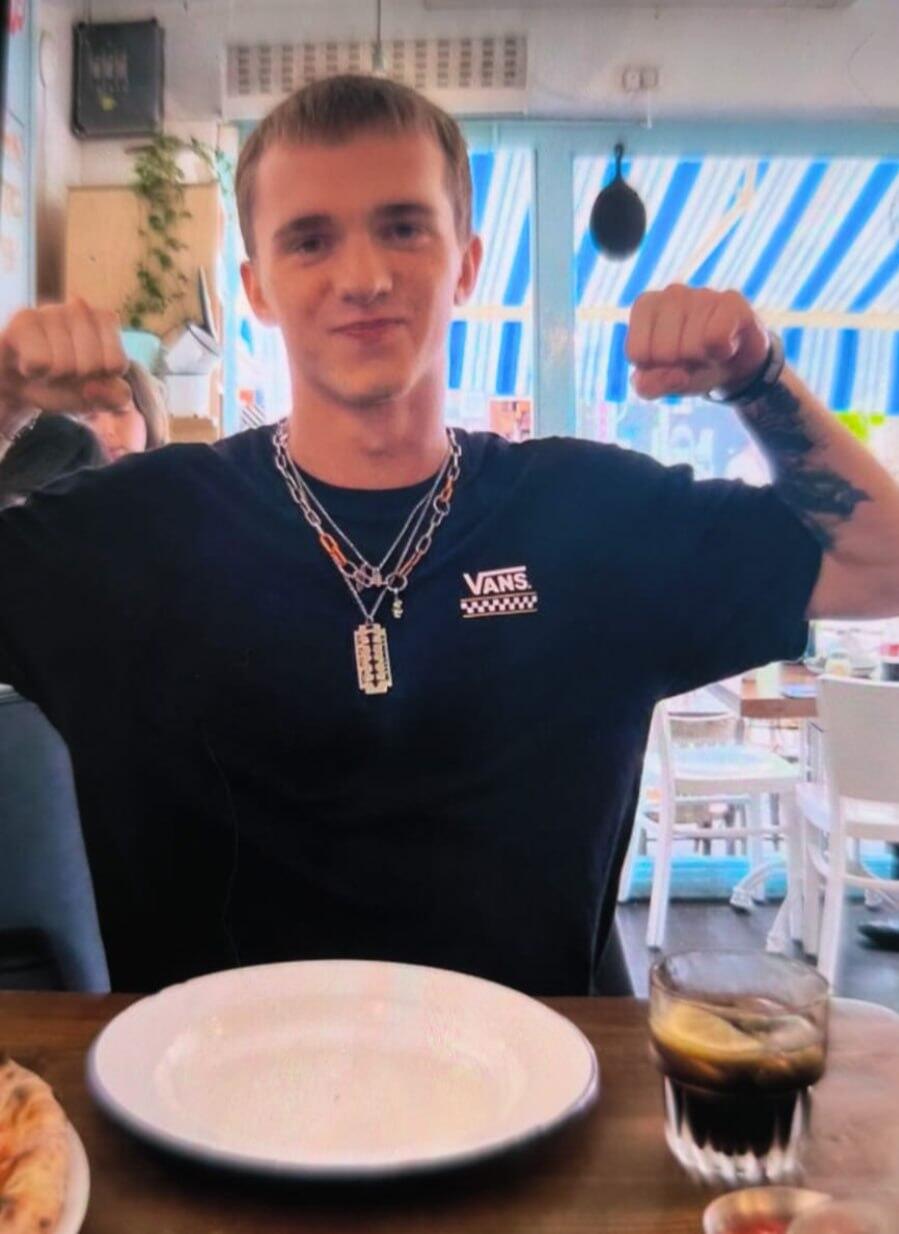
All photographs · 1
In the media
Articles
- Michael’s Testament: Rallying to Help the Mother of the Soldier Who Fell in Battle at Beaufort
ישראל היום ·
- Mikhail Tyukin: a soldier from Ukraine whom Israel did not leave alone
NAnews - Nikk.Agency Israel News ·
- The Biggest Heart There Is: Staff Sergeant Mikhail Tyukin and Staff Sergeant Adam Tzarfati, Who Fell in Lebanon, Laid to Rest
N12 ·
- Yekaterina was left alone: Michael, who fell in southern Lebanon, was an only child who immigrated from Ukraine
וואלה ·
- Friends of Staff Sgt. Michael Tyukin Call on the Public to Attend His Funeral
N12 English Edition ·
- The funeral of Givati Staff Sergeant Mikhail Tyukin will take place in Ashkelon
NEWSru.co.il ·
Show all (9)
- Staff-Sergeant Michael Tyukin killed in combat in southern Lebanon
The Jerusalem Post ·
- The mother who lost her only son, and the doctor who fell in Lebanon
מקור ראשון
- Shabbat Beha'alotcha
Congregation Beth Abraham-Jacob
Videos
Memorial sites
Memorial projects
The family’s campaign with the Givati reconnaissance unit alumni association, Amutat Hashual, called “Michael’s Will,” to support and rehabilitate his mother Katya, with commemorating him also among its goals. The campaign description was verified in the article; the current fundraising status was not checked.
During the shiva, a bereaved mother brought a purple memorial notebook with newspaper clippings and articles about Michael, intended to collect his friends’ memories. This is a personal commemorative object described in the article, without a public address or permission for use.
Stories told about them
Days before he fell, Michael wrote in his school alumni group that he would not attend the annual gathering because he was staying in Lebanon. After his death, his family and the HaShual nonprofit organized support for his mother Katya, for whom he had been a central source of support.
His teammate Netanel described a hardworking person who never complained, even when things were difficult or he felt unwell. His friends called on the public to attend the funeral because the team was still in Lebanon and his family in Israel was small.
His friend from the boxing club, Yuri Yakubovsky, said they called Michael Mike because of his strength and determination to train. Ella Basovich said he played table tennis as a child, trained in boxing and graduated from the ORT Naval Officers high school in Ashdod.
Life & service
Profile
- Date of death
- May 30, 2026
- Age
- 21
- Hometown
- Ashkelon
Service
- Rank
- Staff sergeant
- Unit
- Givati Brigade
- Honours
- Posthumously Promoted
- Battle Location
- South Lebanon
Tributes & remembrance
Michael, of blessed memory, was his mother’s only son.
Source:וואלה
Read the Hebrew original
מיכאל ז"ל היה בן יחיד לאמו.
He enlisted for meaningful combat service and became a symbol of Zionism, devotion and love of the land
Source:וואלה
Read the Hebrew original
התגייס לשירות קרבי משמעותי והפך לסמל של ציונות, מסירות ואהבת הארץ
We discovered a person who did things quietly. Without talking about himself. Without asking to be noticed.
Source:ישראל היום
Read the Hebrew original
גילינו אדם שעשה דברים בשקט. בלי לדבר על עצמו. בלי לבקש שיראו אותו.
He believed that everything had to be earned honestly
Source:מקור ראשון
Read the Hebrew original
הוא האמין שצריך להרוויח ביושר כל דבר
After immigrating to Israel, he integrated quickly
Source:מקור ראשון
Read the Hebrew original
אחרי העלייה השתלב מהר
May Michael’s memory be blessed and enshrined in our hearts forever.
Source:The Jerusalem Post
Michael was something you don’t see every day.
Source:N12 English Edition
Beneath the strength was a huge heart
Source:N12
Read the Hebrew original
מתחת לעוצמה היה לב ענק
I am so proud of you
Source:N12
Read the Hebrew original
אני כל כך גאה בך
A Viking with immense sensitivity
Source:N12
Read the Hebrew original
ויקינג עם רגישות ענקית
May their memories forever be a blessing, and may Hashem comfort their families.