
The story
In Jerusalem at the turn of the millennium, within an old stone building whose walls had absorbed decades of residents' conversations and whose windows looked out onto red rooftops and green pine trees, a boy named Matan was born on the 29th of Nisan, May 1st, 2003. He was the second child of Polina and Vladimir, the younger brother of Stella, who was several years his senior, and from the moment of his birth, he breathed new life and sweet laughter into the modest family home. Even in infancy, there was something special about him, a gentleness alongside an intense curiosity in his blue-gray eyes, always searching for the next thing to understand, the next face to know. The house was always filled with sounds of love, conversations in Russian and Hebrew intertwining, the aromas of Polina’s cooking, and laughter echoing through the hallways. Vladimir, his father, was an anchor of stability, and Stella, his older sister, was both a role model and a playmate, forging a deep bond of mutual love and protection between them.
Matan grew into a somewhat quiet child, yet his presence was felt in every room. He wasn't a child who ran and shouted incessantly, but rather one who observed, absorbed, and above all, thought. From a very young age, his parents and sister recognized the overflowing kindness within him, the natural generosity that was an inseparable part of his character. If another child in kindergarten forgot their pencil case, Matan was the first to offer a pencil or eraser from his small bag. If a friend fell and scraped a knee, he would approach with a concerned expression and offer help, sometimes just an encouraging smile or a kind word. He loved to write and learn, not just for school assignments, but from an inner drive to understand the world. He would sit for hours with books, often history or science fiction, delving deep into them, and then he would compose his own sentences in a notebook, short stories, or thoughts on what he had read. He wasn't afraid to ask questions, even if they seemed simple or complex, and always sought answers beyond the obvious.
Matan spent his elementary school years at Shuvu Jerusalem, where he quickly distinguished himself not by being boisterous, but by his persistence and meticulousness. He was always the first to everything and every task, not out of a desire to stand out, but from a deep sense of responsibility and an internal motivation to do everything to the best of his ability. He was the first to arrive for morning prayers, sitting quietly in his place, concentrating on the words and the sense of community. But the story that speaks most of his pure soul and extraordinary generosity happened outside of lessons. Polina, his mother, recounted during the Shiva a story she heard from the elementary school cleaner—an elderly, quiet, and hardworking woman who came specifically to comfort the family. She told the family that Matan noticed how difficult it was for her to lift the students' chairs every day after school so she could sweep and wash the floor. Other children would run out cheering at the sound of the bell, eager to go to the yard or home, but Matan would stay. Day after day, without a word, he would be the last in the classroom, carefully lifting all the chairs and placing them on the tables, easing the cleaner's work. Then, the next morning, he would arrive first, before everyone else, and put the chairs back in their places, ready for a new school day. Such a small, consistent act, testifying to a great soul, an eye that saw the other, and a heart that felt distress.
This goodness, this generosity, overflowed throughout his short life. He sought no reward; he simply acted from an inner essence. He meticulously wore his tzitzit and a small kippah, usually hidden under his helmet as he grew older, out of a deep connection to tradition and the values his home instilled in him. This connection was not flowery or pretentious, but simple and natural, an inseparable part of who he was. His bond with his grandmother, a Holocaust survivor, was particularly significant for him. He would visit her often, sitting patiently beside her for long hours, listening to her stories of life past, of loss, but also of hope and resilience. He absorbed her narratives, the lessons within them, and they shaped in him a deep sense of responsibility and the importance of preserving memory and Jewish existence. He cared for her, helped her with every small thing, from bringing her groceries to sitting with her and drinking tea, just so she wouldn't feel alone.
When Matan moved on to high school, also at the "Shuvu Jerusalem" institution, he continued to develop and mature. He was a serious student who loved intellectual challenges. His love for computers, which began in his childhood with simple games, became a real hobby. He would delve into the intricate details of operating systems, learn basic programming, and was always the one friends turned to when their computer "got stuck." He knew how to dismantle and reassemble, to understand the logic behind the code, and could spend hours in front of the screen, fascinated by the digital world. Alongside this, he developed another dream that grew stronger over the years: to enlist in meaningful combat service in the IDF. He saw this not just as a civic duty, but as a personal calling, a way to continue the chain of generations, the defense of home and family. He would watch war movies, read about military operations, and imagine himself as part of the defending force. He trained at the gym, ran in Jerusalem's parks, building his physical fitness for the goal he had set for himself. He shared this dream with his friends, and even though he sometimes heard their concerns, he was always determined. His best friend, with whom he shared secrets and dreams, was a partner in the idea of traveling abroad together after military service, to see the world, to experience adventures. This was their shared dream, a subject of long conversations on a park bench or in a neighborhood café.
Three years before his fall, while still a young man, Matan experienced a difficult upheaval: his father, Vladimir, passed away. His father's death left a huge void in the home, but also revealed Matan's strength. At eighteen, on the verge of enlistment, he did not let grief paralyze him. Instead, he matured overnight, becoming his mother Polina's right-hand man and a pillar of support for her and his sister Stella. He took on heavy responsibilities, sometimes beyond his years. He handled arrangements, helped with household chores, and was there for his mother in every matter, from heart-to-heart conversations to fixing small leaks. He was the responsible adult, the shoulder to lean on, and this role filled him with a deep sense of purpose. Amidst all the difficulty, he found the strength to continue caring for his grandmother, making sure to visit, ensuring she had everything she needed. He was also the beloved uncle to his nephews, his sister Stella's children. He would get down to their level, play with them for hours, prepare surprises for them, and manage to instill joy and laughter in them even on difficult days. This connection with his nephews was a source of light for him, a constant reminder of the power of family and the importance of future generations.
On December 8, 2021, Matan fulfilled his dream and enlisted in the IDF, to the Nahal Brigade, Battalion 932, Spearhead Company, RTAK Platoon. The moment of enlistment, with his new uniform and large pack on his back, was a moment of immense pride, but also of farewell and apprehension. He hugged his mother and sister a long, strong embrace, one that spoke more than a thousand words. The basic training period was challenging, mentally and physically demanding. Long days of grueling drills, little sleep, harsh field conditions. There were moments of breaking, of unbearable fatigue, of wanting to give up, but Matan, with the perseverance that characterized him from childhood, refused to surrender. He pushed himself forward, again and again, remembering his goal, his dream, and the family that supported him. He insisted on completing the course, proving to himself and his commanders his uncompromising character. His commander, Roi Lavi, later said of him: "He was a guy who never gave up, always giving of himself for his friends." Matan wasn't the type to shout or stand out; he was quiet, introverted, but his presence was felt. He was always the first to offer help, whether carrying heavy equipment or explaining theoretical material to a struggling friend. His company mates remembered a small but significant detail: "Every Sunday after returning from home, he would arrive with two toiletry bags: one for himself and the other for whoever might need it." That was Matan – thinking one step ahead, caring for the small details that eased his friends' burdens, always with an open heart and ready to help.
After basic and advanced training, Matan served on the line in Judea and Samaria. The service there was complex, full of tension, and required constant vigilance. Days of endless guard duty at outposts, foot and vehicle patrols in hostile areas, and dealing with both civilian and security situations. Matan approached every mission seriously, understanding its importance and the responsibility placed upon him. He didn't complain, but fulfilled his role diligently, absorbing the pressures, and even in difficult moments, maintained composure and humanity. Between missions, he dreamed of the future. He wanted to sign on for permanent service as an armorer in the battalion, a role requiring technical responsibility and precision, combining his love for computers and mechanics. He planned to hike the Israel National Trail, to travel the entire country, to experience its landscapes and beauty on foot, without a uniform. He wanted to begin academic studies, to learn something that would intellectually challenge him, and yes, to travel abroad with his best friend, to fulfill their shared dream. He told his mother about this in long phone calls on weekends, when he would come home for a short leave, the familiar scent of a Jerusalem home enveloping him. The house was always full of nephews waiting for him, jumping on him with shouts of joy when he entered the door, and he would put down his bag and immediately devote himself to them, playing, telling stories, simply giving them his all.
Then came October 7th. A quiet Saturday that quickly turned into a morning of horror, confusion, and war. Matan's phone, like those of thousands of other soldiers, rang incessantly. Call-up order 8, immediate deployment. The air in the house filled with worry, with anxiety, but Matan, in his steadfast spirit, was calm. He packed his equipment quickly, checking everything he needed again and again. He hugged his mother and sister a long, strong embrace, one that said more than a thousand words. "We are here to protect the citizens of the State of Israel and bring back the hostages," he told them in a quiet but determined voice, "This is our role and our mission." There was no apprehension in him, no overt fear, only a deep sense of purpose. He knew where he was going, knew what was expected of him, and accepted the mission with courage and determination.
The first days and weeks of the war were harrowing. Matan's battalion, like many others, entered the Gaza Strip. Matan experienced countless entries and exits from the Strip, each one harder and more complex than the last. He saw difficult sights, experienced fierce battles, and dealt with an unparalleled reality. In short phone calls with his mother and sister, in moments when he managed to get reception somewhere among the ruins, he spoke of the difficult experiences. His voice was sometimes tired, but always resolute. "We will protect the country," he would say, his voice sounding distant but clear. He didn't elaborate too much, so as not to worry them, but between the words, one could hear the intensity of the challenges. He didn't complain, didn't show signs of breaking, but remained focused on the mission, keeping the goal in mind: protecting home, protecting the people of Israel. He was a symbol of inner peace and resilience even under fire.
The night of March 18, 2024, the 8th of Adar Bet 5784, was a cold and wet night in the northern Gaza Strip. Forces entered an operation in the Shifa Hospital area, a particularly complex and sensitive mission. The air was thick with tension, the smells of smoke and dust, and the sounds of distant gunfire. Matan and his company mates advanced cautiously through the narrow alleys, their eyes scanning every corner, every window, every shadow. They knew the enemy was lurking, that danger could come from any direction. Hamas fighters used civilian infrastructure as cover and as launching points for attacks. Adrenaline surged through Matan's veins, all his senses were sharpened, but his heart was in place, ready for any scenario.
Then, with horrifying suddenness, a massive explosion erupted. A missile, or a mortar shell, precisely aimed at the force, struck with great power. Sharp, hot shrapnel scattered in all directions at dizzying speed. Matan, standing in the line of fire, absorbed the impact. He took the full force of the shrapnel, which was meant to hit dozens of soldiers behind him. In one moment of supreme heroism, he became a human shield. He fell. The soldiers around him, who witnessed the shocking event, rushed to him, but the injury was unbearable. A medical team on site provided initial treatment, and at the same time, it was decided to quickly airlift him to Barzilai Hospital in Ashkelon, hoping for a miracle. The helicopter circled in the night air, rushing to the hospital, but all efforts were in vain. There, in the emergency room, Staff Sergeant Matan Vinogradov was pronounced dead. Only twenty years old.
The bitter news reached his family in Jerusalem. The house, which only moments before had been full of living memories, was engulfed in unimaginable grief. Polina and Stella, who had lived in constant anxiety for weeks, found themselves facing the worst news of all. Matan was laid to rest in the military cemetery on Mount Herzl, on the same Jerusalem soil he loved so much, surrounded by green mountains that watched him grow. Thousands accompanied him on his final journey, many figures from his life—family, friends, commanders, and even the cleaner from the elementary school, who came to stand by his grave, her eyes tearful, remembering the little boy with the huge heart.
During the Shiva, amidst the painful stories and memories, two officers from Matan's company told the family the full story of his fall. "By Matan absorbing the impact of the shell," they said, their voices choked with tears, "he prevented injury to dozens of other soldiers." These words echoed in the room, strengthening the understanding of the magnitude of his sacrifice. "That's his name, 'Matan'," Polina said, her voice trembling, "and that's exactly how he lived his life: always full of giving to others!" Indeed, Matan's name, meaning "gift," reflected his essence. He was a gift to the world, to his family, to his friends, and to his country.
But Matan, in his generosity and deep wisdom, left behind more than just memories. On his mobile phone, among WhatsApp messages and photos, a will was found. Words written simply, but with extraordinary power, penned by a young man of twenty who foresaw a possible future, and above all, thought of others even in critical moments. "I request that at least 20 percent (corresponding to my age) of my savings in my checking account go to charities that save lives. The rest you should keep for yourselves and divide so you have money for an emergency. I would be very happy if something were established in my memory, something that would help people in the long term, like education, donors, there's no shortage."
These words were a final imprint on his life, further testament to the selfless love, the giving, and the communal thinking that characterized him from childhood until the day he fell. Matan Vinogradov, a son of Jerusalem, a fighter in the Nahal Brigade, was a child who loved to learn and write, a young man who dreamed of serving his country, and a young man who became an anchor for his family. He was a devoted friend, a loving brother, a brave son, and a wonderful uncle. He fell as a hero, protecting his friends with his body, leaving behind a huge and irreplaceable void. But his story is not just a story of loss, but a story of resurgence. It is a resurgence of the human spirit, of values that will not fade, of unconditional giving. Matan left behind a legacy of love for humanity, of devotion and responsibility, of courage and faith in his path. His pure memory will be a lamp unto our feet, a symbol of Israeli heroism that stems from the deepest and simplest humanity, from the willingness to protect home, nation, and eternal values. He lived a short but meaningful life, in which every small and great act was a testament to the power of the spirit. May his memory be blessed.
Moments of a life
All photographs · 1
In the media
Articles
- "He Asked to Help Children": The Special Last Wish of the Fallen Nahal Soldier
ynet ·
- “You Always Said You Would Be a Combat Soldier”: Staff Sergeant Matan Vinogradov, of Blessed Memory, Laid to Rest | Israel Hayom
israelhayom.co.il ·
- Staff Sergeant Matan Vinogradov from Jerusalem fell in battle in northern Gaza
Israel National News ·
- Staff Sergeant Matan Vinogradov fell in battle in the northern Gaza Strip
NEWSru.co.il ·
Videos
טייני / TINY Music Official ·
זיכרון לחיים - אנדרטה דיגיטלית (ע"ר) ·
Memorial projects
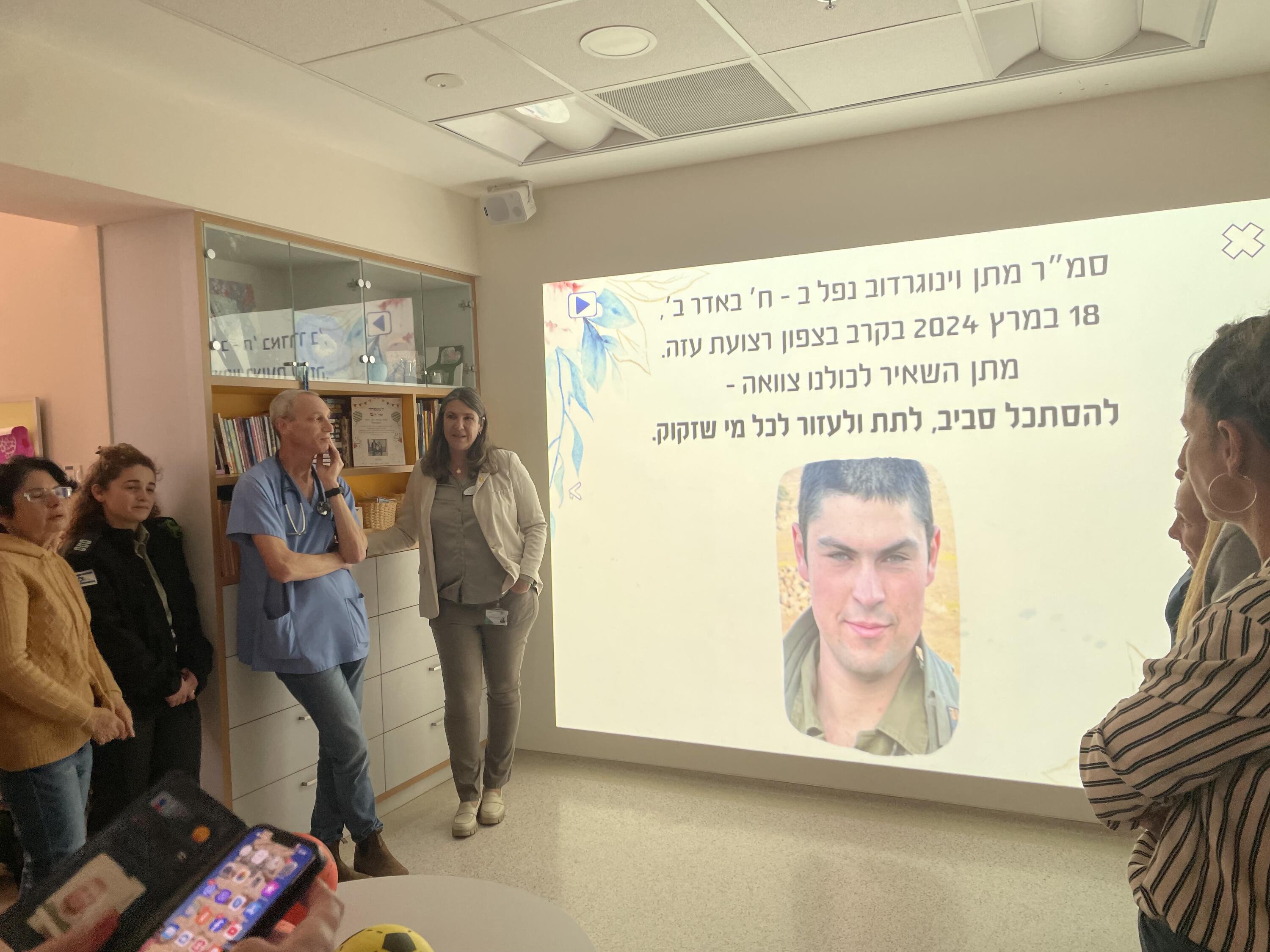
The family and the parents of his company comrades established an interactive wall in his memory in the cardiac intensive care unit at Schneider, in accordance with the request in his letter.
Stories told about them
At the start of the war, Matan wrote a letter and left his sister instructions on how to find it on his phone if anything happened to him. After he fell, the family found in the letter a request to commemorate him through an educational initiative for children.
Stella said that Matan spent time with her children whenever he could, even when he returned tired from the army. He saw education as a central investment in the future, and his love for children lay behind his request for a memorial that would benefit children.
Life & service
Service
- Rank
- Staff sergeant
- Unit
- Nahal Brigade
- Battle Location
- In the northern Gaza Strip
Family
- Father
- Vladimir
- Mother
- Polina
Burial
Cemetery
Mount Herzl Military Cemetery
- Area
- א
Tributes & remembrance
תנוח בשלום על משכבך איש יקר..
לצערי לא היכרתיו. מהמכתב שהשאיר התרשמתי שמדובר בבחור עם נפש מיוחדת מאוד.
נשתדל לפסוע בדרכיך ולהיות אנשים קצת טובים יותר בזכות מורשתך.
יהי זכרו ברוך.
זוכרים
צוואתו של סמ״ר מתן וינוגרדוב שנפל בשיפאא׳ בשבוע שעבר על הגנת המולדת. איזה גיבור. איזו אבידה
תנוח על משכבך בשלום
השם יקום דמך ילד יפה
ילד מתוק שתמיד בלב איתנו
וינו לא נשכח אותך חבר
לוחמי ומפקדי חטיבת הנח״ל
מרכינים ראש ומתייחדים עם זכרם של חללי הנח״ל .
יהי זכרם ברוך!
זוכרים תמיד
יהי זכרו ברוך, שנהיה ראויים.
משפחה יקרה,
מחר מתקיים הטקס המרכזי בקיריה בת"א ליום הזיכרון ואני זכיתי להקריא את המכתב האחרון שמתן השאיר, אני נרגשת ומלאת גאווה שתמיד נזכור את גיבור ישראל! שמורשתו תמשיך ותתרום לרבים כפי שביקש.
כולנו מרכינים ראש ומדליקים נר לזכר אלו אשר מסרו נפשם למען תקומת מדינת ישראל תודה לכם ואמן שתשמרו עלינו מלמעלה כמו ששמרתם עלינו בחייכם.
וינו היקר איזו נשמה טהורה אתה, חייל מדהים ובן אדם אדיר. אזכור אותך תמיד
תודה לך,מתן היקר, על שהגנת עלינו .
כמה נוראה הקרבתך היקרה מכל!
תנחומים מלב כואב לכל יקיריך.
יהא זכרך ברוך,גיבור ישראל !
תודה ששמרת עלינו
השם ינקום דמך
מתן היקר.
יהי זכרך ברוך וה יקום את דמך.
אהוב למשפחתך ולחבריך.
השארת צוואה מצמררת שממחישה את דרכו של העם היהודי כולו.
ת.נ.צ.ב.ה.
תודה ששמרת עלינו
יהי זכרו ברוך
גיבור
יהי זכרו ברוך
במותם ציוו חנו את החיים
יהיה זכרו ברוך
ממיטב בנינו ,גיבור ישראל.
תהיו גאים במעשיו ובהגנתו על המולדת.
וינו, הייתה גיבור גדול יהיה זיכרך ברוך לוחם.
מתת גיבור ישראל וכך תיזכר לעולמים
נתת אור ואושר לכל אחד, אתה תמיד היית אהוב ותיהיה בליבנו בעד.
אוהב אותך וינו תשמור עלינו מלמעלה
חבר יקר ואהוב לא נשכח לעולם עזבי זכרך בדרוך השם יקום דמך
מתן היה לוחם מדהים ואיש מיוחד, יהי זכרך ברוך גיבור
תהה נשמתך גן עדן. ילד מיוחד
תודה על הבן אדם המיוחד הטוב והטהור שהיית
I discovered a new person I had not known
Source:ynet
Read the Hebrew original
גיליתי בן אדם חדש שלא הכרתי
He excelled in his studies and would help everyone.
Source:israelhayom.co.il
Read the Hebrew original
הוא היה מצטיין בלימודים, היה עוזר לכל אחד.
Matan was a great light
Source:ynet.co.il
Read the Hebrew original
מתן היה אור גדול
We reached the initial goal of 150,000 shekels
Source:ynet.co.il
Read the Hebrew original
הגענו ליעד הראשוני של 150 אלף שקלים
A great privilege and a mission to carry on his legacy
Source:ynet.co.il
Read the Hebrew original
זכות גדולה ושליחות להמשיך את מורשתו
Vino was a soldier with a constant light in his eyes
Source:ynet.co.il
Read the Hebrew original
וינו היה חייל עם אור תמידי בעיניים
Remembrance Day addresses
יום הזיכרון לחללי מערכות ישראל התשפ"ה – 2025
בכל יום שעובר, אזכור יותר! אזכור, את אלו שיצאו עימי לקרב ולא שבו, ולהם אין מי ידמה ומי ישווה. אזכור, שהכאב לא יעבור לעולם, והזמן, הוא לא מרפה ולא מרפא. אזכור, את שיברון הלב הגובר ואת הבית שבוער. אזכור, את צדקת הדרך, ואשבע שוב, שמה שהיה לא יהיה יותר. אזכור, שיותר מכל דבר אחר – אני חסר! ביום הזה, אני נתקף געגוע לדמותם, לחיתוך דיבורם, לחיוכם, ומדליק נר לזיכרון דרכם ומורשתם!
משרד הביטחון
אגף משפחות, הנצחה ומורשת
יום הזיכרון לחללי מערכות ישראל התשפ"ה – 2025
בכאב, בהצדעה ובתקווה אני מתכבד להדליק נר זיכרון זה. השנה, כשאנו נלחמים במלחמה ארוכה, רב זירתית וצודקת, הזיכרון נושא משמעות עמוקה. ביום זה נעצור ונתייחד עם זכרם של טובי בנינו ובנותינו שנפלו בהגנה על המדינה. מורשתם היא המצפן שמתווה את דרכינו, והיא המעניקה לנו כוח להמשיך ולהגן על מדינת ישראל ותושביה. משפחות יקרות, אנו מרכינים ראשנו ומתחייבים שנעמוד לצידכן תמיד. יהי זכר הנופלים ברוך.
אלוף דדו בר כליפא
ראש אגף כוח האדם, צה"ל
יום הזיכרון לחללי מערכות ישראל התשפ"ה – 2025
בשעה שאנו זוכרים את גודל תרומתם ועומק מסירות נפשם של טובי בנינו ובנותינו, נופלי מערכות ישראל לדורותיהן, ממשיכים צה"ל וכוחות הביטחון במימוש המשימה למענה לחמו ועבורה נפלו: הכרעת אויבינו מדרום, מצפון, ביהודה ובשומרון, וגם בזירות רחוקות יותר. בהערכה רבה ובגאווה אדירה אנו מרכינים ראש בפני הנופלים והנופלות, מאמצים את משפחותיהם אל לבנו, וממשיכים במשימה להבטחת קיומה של ישראל לדורי דורות. יחד נעשה ונצליח.
רב אלוף אייל זמיר
הרמטכ"ל, צה"ל
יום הזיכרון לחללי מערכות ישראל התשפ"ד – 2024
כאשר דגלינו מורדים לחצי התורן וראשינו מורכנים לזכר הנופלים והנופלות במערכות ישראל, ממשיכים לוחמי צה"ל ומפקדיו בלחימה בדרום, בצפון, ביהודה ובשומרון ובזירות נוספות. על כל דור מוטלת המשימה של הגנת העם והארץ – משימה שאף פעם אינה פוסקת. נצדיע בגעגוע ובגאווה לנופלים ולנופלות, נחבק את משפחותיהם, ונמשיך ברוח הציווי שהותירו לנו. עם ישראל חי.
רב ניצב יעקב שבתאי
המפקח הכללי, משטרת ישראל
יום הזיכרון לחללי מערכות ישראל התשפ"ד – 2024
אחיי הנופלים, כל נר הוא זיכרון יחיד ומיוחד, על חיים שהיו ואינם, געגוע שנצרב עמוק בלב, עולם ומלואו. הנרות כולם הם זיכרון של אומה כי לעולם לא עוד, בשורת הציונות וקוממיות ישראל. זיכרון כי הדרך לעם חופשי בארצנו עוברת דרך מסדר הנופלים. אור הנר יזכיר לנו את מסירות נפשכם להציל חיים, להגן על הבית. הנרות מסמנים לנו נתיב גבורה ערכי מחייב שאנו מצווים ללכת לאורו. נמשיך להילחם ולהוסיף אור מתוך אמונה בנצח ישראל.
יואב גלנט
שר הביטחון
יום הזיכרון לחללי מערכות ישראל התשפ"ד – 2024
בהצדעה ובכאב, בשם צה"ל כולו, אני מדליק נר זיכרון. בעיצומה של מלחמה, הזכרון נושא משמעות יום-יומית, שעבר והווה מתלכדים בה. לאורם של הנופלים נמשיך לצעוד, חיילי הסדיר והמילואים. לאורם של הנופלים נמשיך להגן על ארצנו ועל מולדתנו, גם כשהמחיר כבד. להבת-הזכרון תבער בנו בעודנו ממשיכים להלחם ונזכור את הנופלים ואת אומץ ליבם. משפחות יקרות, צה"ל מרכין היום ראש, מצדיע לכן וכואב איתכן. יהי זכר הנופלים ברוך.
אלוף יניב עשור
ראש אגף כוח האדם, צה"ל
יום הזיכרון לחללי מערכות ישראל התשפ"ד – 2024
בהוקרה, בגאווה ובכאב שאין לו סוף, אני מתכבד להדליק נר לזכרם של הנופלים והנופלות במערכות ישראל. סיפור חייהם בארץ הזאת, מסכת שירותם, גבורתם והקרבתם – הם סיפורה של הארץ הזאת, אך גם סיפור המחיר הכבד שהיא תובעת מאוהביה. מחויבותנו לזכר הנופלים ולדרך שהותירו לנו ניצבת תמיד לנגד עינינו. את המשימה שלא זכו להשלים, משלימים כיום, וישלימו, אנשי כוחות הביטחון, הממשיכים בדרכם ולאורם. יהי זכרם של הנופלים ברוך.
משרד הביטחון
אגף משפחות, הנצחה ומורשת
יום הזיכרון לחללי מערכות ישראל התשפ"ד – 2024
בחרדת קודש אני מתכבד להדליק נר לזכרם של חללי מערכות ישראל, חברנו שנפלו, מראשית היציאה מהחומות ולאורך כל שנות עצמאותנו המדינית והציונית, מהווים תמרור זיכרון לדרך חיינו ולמחוייבות הלאומית להנצחת זכרם. דרכם נותרה דרכנו ומורשתם נר להמשך עשייתנו. יהי זכרם ברוך!
בני גנץ
שר הביטחון
יום הזיכרון לחללי מערכות ישראל
נזכור אותם, כולנו יחד. כל אחד ואחת מהם, מדי יום ביומו, והיום ביתר שאת, כך – לנצח. "כי מדי דברי בו זכור אזכרנו עוד"
משרד הביטחון
אגף משפחות, הנצחה ומורשת