
The story
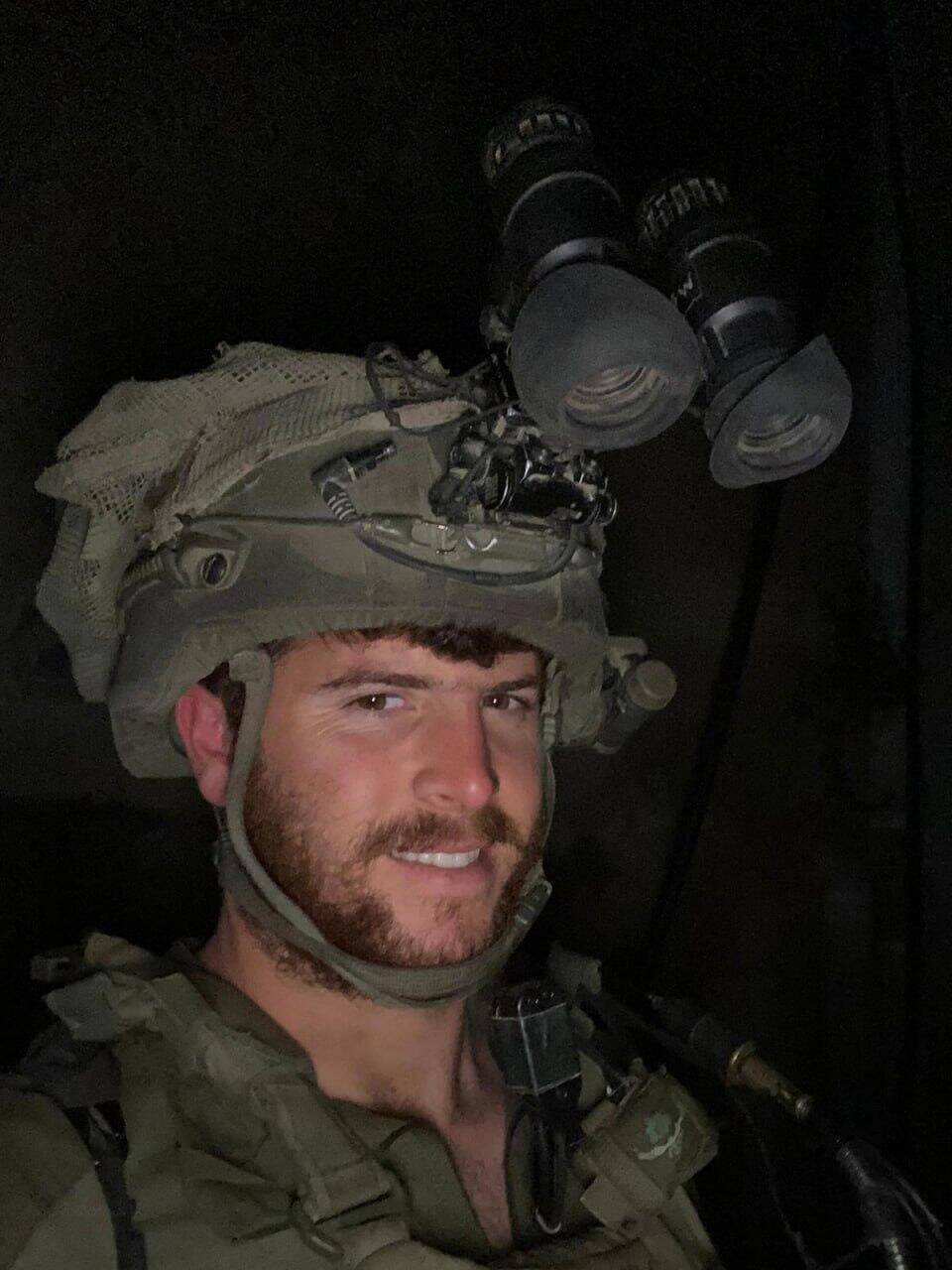
The land of Itamar is stubborn, rocky land, the kind that demands willpower to make anything grow from it. It rewards those who don't give up on it, those willing to rise at dawn and carve their way through rocks, to plant trees where others see only desolation. Within this landscape, among the bare hills of Samaria looking eastward towards the Jordan Valley, Maoz Yisrael Recanati was born and raised. He was not merely a resident; he was a descendant of its founders, part of the settlement's very DNA. The Recanati family, father Eliyahu and mother Ayelet, were among those who built Itamar with their own hands, transforming a vision into a reality of homes with red roofs and flourishing gardens. The home where Maoz grew up, alongside his six brothers and sisters, was a bustling house, one where there was always room for another chair at the table, a home where the values of Torah, love of the land, and mutual responsibility were not mere slogans but the very air they breathed. Eliyahu, a rabbi in Israel, and Ayelet instilled in their children the simple yet profound feeling that they were part of a larger story, that the land they walked upon was not just real estate, but a heritage. In this home, between homework and bedtime stories, between romping in the yard and household chores, Maoz absorbed the foundations that made him who he was. He was, as his uncle, Yehuda Asiel, recounted, "the redhead of the family," a child whose presence couldn't be missed, not because he was loud, but because of the light that radiated from him. He had "a joy for life, a smile that reached the heavens," one that was infectious, one that diffused tensions and melted hearts. "Wherever he went," his uncle testified, "everyone loved him." This wasn't a love born of people-pleasing, but one that stemmed from his authenticity, from the inner calm he projected, from the pure goodness within him. His childhood was interwoven with the landscapes of Samaria, with the scent of pines after the rain, with endless vistas from the hills, with a sense of freedom and expanse, but also with the early understanding, naturally acquired when growing up in a place like Itamar, that reality also has complex sides, that one must protect one's home.
When the time came to choose his life's path, the way was clear. He turned to the Hesder Yeshiva in Itamar, the place where Torah and labor, spirit and matter, intertwine. There, amidst the benches of the study hall, he deepened his spiritual world, connecting to the deep roots of the Jewish people. But Maoz was not a man of theory alone. His great spirit also demanded practical expression. The head of the Hesder Yeshiva, Rabbi Yehoshua Van Dyke, described him with precise words that painted his complex personality: "Maoz was excellent in every sense. He was quiet but powerful." This description, "quiet but powerful," was the key to understanding his character. He was not a man of grand words or dramatic declarations. His strength stemmed from within, from a rich inner world, from a clarity of purpose. In the study hall, he could sit for hours, immersed in a Talmudic discussion, and with the same degree of concentration and devotion, he prepared for military service. For him, there was no contradiction between these two worlds. The defense of the people of Israel and the Land of Israel was the practical application of all he had learned, the realization of all the values he had absorbed in his parents' home. He saw military service as a great privilege, a mission, and he prepared for it with all his might, with his characteristic quietness, with a determination that needed no declarations.
His military service was an accurate reflection of his character. He didn't look for shortcuts, nor did he ask for concessions. He enlisted in the Egoz unit, one of the elite units of the IDF, a place that demands the maximum from its fighters, physically and mentally. There, on endless navigation trails, in exhausting ambushes, under the weight of heavy equipment, he forged himself, transforming his inner strength into operational capability. But for Maoz, being an outstanding fighter was not the end of the road, but merely the beginning. He felt he had more to give, that he bore responsibility not only for himself but also for others. He went to officers' training, and chose to return not as a team member in a special unit, but as a platoon commander in Battalion 12 of the Golani Brigade. This was a choice that taught more about him than anything else. He chose a place where the influence on people is the most direct and significant, a place where a commander is a father, a brother, and a guide for dozens of young soldiers. He chose responsibility. As a commander, all his traits intensified and sharpened. He was, as Defense Minister Yisrael Katz testified about him, "an admired commander, brave and devoted to his subordinates – a fighter who led from the front, with responsibility, personal example, and love of the land." "Leading from the front" was not a cliché for him. It meant being the first to rise and the last to go to sleep, ensuring that each of his soldiers had everything they needed, knowing each one's personal story, their worries from home, their dreams for the future. His personal example was that powerful quietness, his ability to remain calm under pressure, to make measured decisions, to instill confidence in his surroundings. His subordinates admired him not because he commanded them, but because they followed him out of absolute trust. They saw in him a figure to identify with, a commander who believed in the mission, but first and foremost believed in his people. Yossi Dagan, head of the Samaria Regional Council, defined him as "one of our finest sons, a brave officer and devoted fighter who dedicated his life to the security of the people of Israel." And indeed, he dedicated his life, every day, every hour, with boundless devotion.
And amidst this intense life, between training and operation, between responsibility for soldiers and concern for family, the great light of love also blossomed. He met Rani Kellerman from Ma'ale Adumim, and his powerful quietness met hers. They became engaged, and the future suddenly seemed clearer and brighter than ever. His smile, the one that always reached the heavens, seemed even wider. They planned their wedding, which was scheduled to take place next month. One can imagine the excited conversations, the distribution of invitations, the dreams of the home they would build, of the family they would raise. He, a son of a founding family, and she, a daughter of Ma'ale Adumim, two people who grew from a love of the land and wished to build their shared future within it. The wedding preparations were a ray of light amidst a tense security reality, a promise of life, of normalcy, of continuity. For Maoz, this was another peak to conquer, the most personal and sweetest of all. He stood on the verge of realizing his dream, moments before he was to build his own home, just as his parents had built theirs in Itamar.
But the Israeli reality, the one that had shaped him from the day he was born, did not allow him to reach that peak. The war in the north, "Lion's Roar," continued with varying intensity, and the Lebanese border was a daily battleground. Maoz, as a platoon commander in Golani, was there, on the front lines, leading his soldiers in complex defensive missions. In mid-May of 2026, he led his force on an operational activity in southern Lebanon, in the area adjacent to the Litani River. Lebanon's green and pastoral landscape always conceals deadly threats. During one moment of the operation, as he and his soldiers were exposed in the field, an explosive drone of the Hezbollah terrorist organization plunged towards them. This is a modern, fast threat, almost silent until the moment of impact. The explosion was fatal. Maoz, the commander who led from the front, who was always at the head of the force to protect his people, was hit. He was 24 years old when he fell, the twentieth casualty since the start of the operation in Lebanon, and the seventh since the fragile ceasefire came into effect. The quiet yet powerful officer, the fierce-spirited fighter, fell in battle, defending the country where he had dreamed of building his home.
The bitter news struck his family, his fiancée, the settlement of Itamar, and the Golani Brigade like a bolt from the blue. The settlement, which saw in him the next generation of the founders' spirit, issued a statement of mourning: "With immense pain, we received the news of the fall in Lebanon of the settlement's son, Captain Maoz Recanati. Maoz, son of the Recanati family, founders of the settlement of Itamar, was like them a fierce-spirited fighter and officer." The pain was unfathomable. The wedding that would not be, the home that would not be built, the children who would not be born. The immense void he left behind was palpable and painful. He was laid to rest in the military cemetery on Mount Herzl in Jerusalem, the eternal capital of the people he loved so dearly. After his death, he was posthumously promoted from the rank of Lieutenant to Captain, a final recognition of his heroism and leadership. Before the fresh grave stood his parents, brothers and sisters, his fiancée Rani, his comrades-in-arms, and his subordinates, stunned and grieving. His uncle, Yehuda, expressed the mixed feelings of bereavement and resurgence: "We are pained and shocked, but certain that it was not in vain. He fought for the people of Israel." This sentence, spoken from a broken heart, was Maoz's legacy. He did not fall in vain. His short life was full of meaning, and his last battle was the culmination of the self-sacrifice that always characterized him. The story of Captain Maoz Yisrael Recanati is a story of a redhead with a smile that reached the heavens, who grew on rocky soil and made it bloom, of a quiet yeshiva student who became a powerful commander, of a happy fiancé who stood on the verge of building his home and fell to protect the homes of others. He left behind a legacy of personal example, of a quiet and deep love for the land and its people, and of the sad yet noble understanding that for life in this land, at times, one must fight to the last drop of blood. And his smile, that smile that reached the heavens, remains etched in memory, an eternal reminder of the great light that was extinguished, and of the hope he represented – the hope for the continuation of life, for growth and building, on the land where he fell.
Moments of a life
All photographs · 1
In the media
Articles
- On the day he was supposed to marry: The chilling words Tehila wrote to her brother, may God avenge his blood
ערוץ 7 ·
- Captain Maoz laid to rest, a week after the ketubah was written
ynet ·
- The Fiancée of Maoz, of Blessed Memory, Who Fell in Lebanon, Eulogized Him
ישראל היום ·
- Footage from the funeral procession: the rabbi delivered a tearful eulogy and read the ketubah
ערוץ 7 ·
- À Itamar, les adieux à Maoz Israel Recanati tombé au combat
MediaJ ·
- Israeli soldier slain in Hezbollah drone attack
JNS ·
Podcasts
Stories told about them
Maoz and Rani registered for marriage with the community rabbi about a week before the funeral, and their ketubah was written at the meeting. The wedding was supposed to take place about a month after he fell.
Rabbi Yehoshua Van Dijk remembered Maoz washing the large trays in the yeshiva dining hall. He presented this quiet help alongside perseverance in study and prayer as an expression of his humility.
His uncle Oren said Maoz was allowed to have a phone during the ground operation. He did not turn it on, even though his family and fiancée wrote to him, because his soldiers did not have phones.
His uncle Yehuda Asael said that his parents discovered he had received a certificate of excellence in officers’ training only when they found it while cleaning for Passover. He said that Maoz had not told them about the certificate, presenting this as an expression of his modesty.
Life & service
Profile
- Date of death
- May 15, 2026
- Age
- 24
- Hometown
- Itamar
Service
- Rank
- Captain
- Unit
- Golani Brigade
- Honours
- Posthumously Promoted
- Battle Location
- Southern Lebanon
Tributes & remembrance
With immense sorrow, we received the news that Captain Maoz Recanati, a member of our community, had fallen in Lebanon.
Source:ערוץ 7
Read the Hebrew original
בכאב עצום קבלנו את הבשורה על נפילתו בלבנון של בן הישוב סרן מעוז רקנטי.
Your shy smile never leaves my mind's eye
Source:ערוץ 7
Read the Hebrew original
החיוך המבויש שלך לא מש מנגד עיניי
Holy officer Maoz, you burned with love for the Land of Israel, the Torah and the land.
Source:ישראל היום
Read the Hebrew original
הקצין הקדוש מעוז, בערת באהבת ארץ ישראל, התורה והארץ.
Maoz Yisrael's bravery was special.
Source:ישראל היום
Read the Hebrew original
גבורתו של מעוז ישראל מיוחדת.
For two and a half years, you fought a cursed battle against the darkness.
Source:ישראל היום
Read the Hebrew original
במשך שנתיים וחצי נלחמת בקרב ארור נגד החושך.
Maozi, my beloved brother, my heart is crying
Source:וואלה
Read the Hebrew original
מעוזי אחי האהוב הלב בוכה
I wanted you to come to my bridal chair and smile at me.
Source:ynet
Read the Hebrew original
רציתי שתבוא לכיסא הכלה שלי ותחייך אליי.
Maoz Yisrael, you were a charismatic, talented, funny boy, a natural leader
Source:ynet
Read the Hebrew original
מעוז ישראל, היית ילד כריזמטי, מוכשר, מצחיק, מנהיג טבעי
You were the glue that held the family together. Everyone gathered when you arrived
Source:ynet
Read the Hebrew original
היית הדבק המשפחתי. כולם התכנסו כשהגעת
You were a source of support for everyone around you.
Source:ynet
Read the Hebrew original
היית משענת בשביל כל מי שסבב אותך.
I imagine you, Maozi, beneath a wedding canopy of clouds of glory
Source:ערוץ 7
Read the Hebrew original
מדמיינת אותך מעוזי בחופה של ענני כבוד
Maoz was a boy with a constant smile on his face, who spoke through his actions and was always helping.
Source:גלצ / Omny
Read the Hebrew original
מעוז היה ילד עם חיוך קבוע על פניו, שדיבר בעשייה ועזר כל הזמן.
He was an admired commander, brave and devoted to his soldiers
Source:ynetnews
We all embrace her and his loved ones during this difficult time
Source:The Times of Israel
He spoke little; he was humble, modest and unassuming, but we knew he would go far.
Source:MediaJ
He had joy for life, a smile that reached the heavens.
Source:ynetnews