
The story
In a house surrounded by the vibrant green of Talmon, a small community sprawling across the Judean and Samarian hills, beneath skies that seemed endless to a small child, a firstborn son was welcomed into the world on a cold yet bright Kislev day in 1998 by Tzurit and Elad Fenigstein. They named him Maoz. The house was spacious, filled with light and laughter, and he quickly filled its quiet corners with his calm yet curious presence. He was the first grandchild, the first great-grandchild, and it felt as though the entire extended family breathed their first breaths along with him. His mother, Tzurit, always remembered him as a child who asked questions—not questions of defiance or skepticism, but questions born of genuine wonder, a deep desire to understand the world around him, to dismantle the complex into its smallest parts and uncover the hidden secrets in everything, from a wild flower peeking between rocks to an intricate machine he saw his father operate. He brought a sense of calm to the home, an inner quietness that was contagious, soothing even the small daily storms. His siblings who arrived after him—Yoav, Ido, Haya Noga, Efrat, Ariel, and Dvir—always saw him as an anchor, someone they could rely on, lean on, and also share moments of silliness and laughter with. His friends, who always surrounded him in the backyard or on the dirt paths of the community, were drawn to him like moths to a flame, to his captivating smile and his unique sense of mischief, which always combined creativity and playfulness with an extraordinary gentleness and sensitivity.
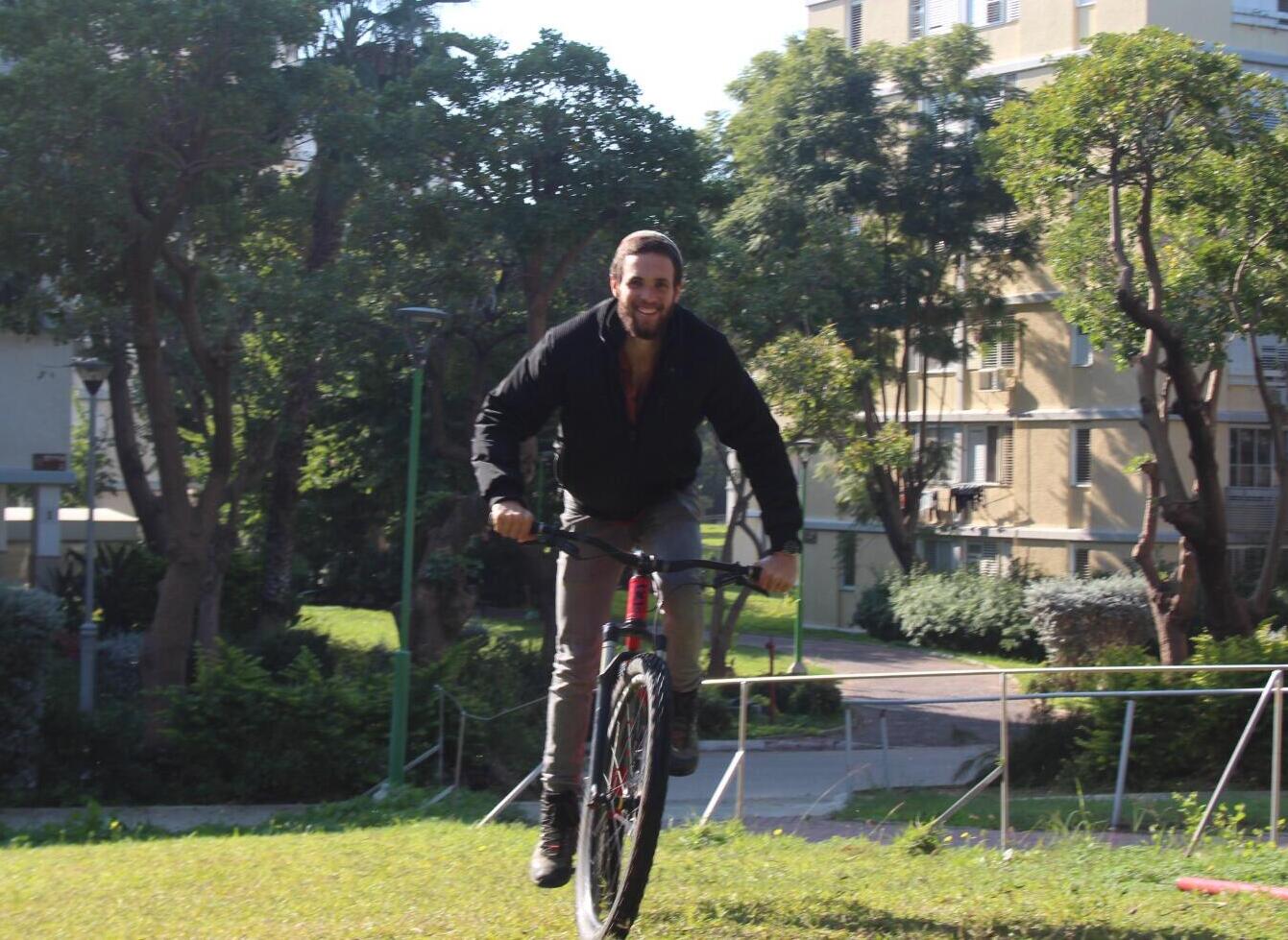
Maoz spent his early years on the dirt paths of Talmon, rolling a small stone down a hill and chasing after it with ringing laughter, or building sandcastles in the kindergarten yard, the local Talmud Torah, where he began his studies. The crisp mountain air and open spaces formed the backdrop of his childhood, teaching him a love for wild nature and a sense of freedom. But this routine was interrupted when his father's work led the family to Canada, to entirely different landscapes. For four long years, filled with snow and frozen lakes, young Maoz lived in that distant northern land. There, among wide park paths and dense forests, he discovered the bicycle. It wasn't just riding; it was a deep connection to the two-wheeled vehicle, which quickly became an inseparable part of his identity. He felt the wind whistling in his ears as he sped down a hill, his muscles working hard as he climbed, the delicate balance between standing and falling. He rode for long hours, exploring every hidden trail, every green corner. In the snowy winters, when his bicycle rested, he skied down mountain slopes, feeling the cool snow beneath his feet, the sensation of swift gliding, and the rush of adrenaline. He was a skilled skier, one who knew how to dance on the snow with grace and control. But even when the snow melted and the bicycle returned to action, something always pulled him back to Israel, to the familiar hills. And so, after four years, the family returned to Talmon, and Maoz, now an older child, continued his elementary education at the local school, carrying with him the memories of the Canadian expanses and his unwavering love for wheels and speed.
Around the time of his Bar Mitzvah, when his friends began to show interest in soccer or computers, Maoz discovered the unicycle. This wasn't just another hobby; it was a revelation. He fell in love with the challenge, the delicate balance, the feeling of floating on a single wheel, almost defying the laws of physics. In a short time, the unicycle became his trademark, his "brand," as his friends called it. You could see him riding it everywhere—to school, to a friend's house, to the community grocery store. He would skillfully navigate through people, effortlessly going up and down curbs, a mischievous smile always on his face. It was his way of expressing his uniqueness, his unconventional approach to life. After elementary school, Maoz went on to study at the Mitzpe Ramon high school yeshiva in the Negev. The transition from the green hills of Benjamin to the yellow, silent desert of the Ramon Crater was dramatic, but Maoz embraced it joyfully. The open expanses of the desert, the endless quiet, the stars shining brightly on light-pollution-free nights—all these spoke to his soul. He loved the sense of freedom and liberation the desert offered, the ability to go on hikes or rides and discover hidden corners, the challenge of navigating unfamiliar terrain. The desert strengthened his sense of courage and independence. At sixteen, already experienced in cycling and unicycling, he obtained a motorcycle license. This, too, was not merely a means of transport, but a direct continuation of his love for speed, for the wind in his face, for the feeling of control and freedom. The motorcycle allowed him to reach more distant places, to experience the land more deeply, to travel on side roads that not everyone dared to take.
Upon completing his high school studies in Mitzpe Ramon, Maoz chose to continue his path in the world of Torah, but in his own way. For a year, he studied at the Ramat Gan Hesder Yeshiva, an institution that combined Torah study with meaningful military service. Rabbi Shapira, the head of the yeshiva, remembered him well. He described Maoz as an extraordinary personality, possessing a rare combination of seriousness and spiritual courage, alongside infectious playfulness and cheerfulness. Maoz was a God-fearing man, but not in a narrow or clichéd way. He strived for truth and integrity in all aspects of his life, and his personality charmed everyone around him thanks to his good character and his heartwarming smile, a smile that held something both innocent and childlike. He was a strong person, with great inner resilience, yet also light-hearted and cheerful, a "true hero," as the Rabbi described him. After his year at Ramat Gan Yeshiva, Maoz decided to embark on a different journey. He flew to the United States, where he worked as a counselor at a Jewish camp. This was an experience that opened up a new world for him, encountering Jews from all corners of the globe, and an opportunity to pass on his unique spirit. Upon returning to Israel, he continued his studies at the Bnei Netzarim Yeshiva in the Eshkol Regional Council, right on the Gaza border. There, in the heart of an agricultural area, close to the earth and nature, he found his place once again.
Maoz never gave up his sports and extreme activities. He continued to ride mountain bikes, conquer challenging trails, and hike with his family and friends in every corner of the country. He knew every trail, every spring, every cliff—as his family recounted—not just from a map, but from his feet that trod upon them, his hands that gripped the handlebars, his lungs that breathed the local air. He was almost like a naturalist, only the trails were for him not just paths but stories he read in the touch of his feet on the earth, in the sound of flowing water, and in the whisper of the wind through the trees. In addition to his love for nature and the extreme, Maoz also had an artistic side. He loved to draw, and his simple yet expressive works testified to a sensitive eye and a rich imagination. But more than anything, what captivated those around him was his sense of humor. He wasn't a clown in the usual sense of the word, but a "shtutnik" (mischievous prankster), as his relative Itzik described him, a description that illuminated many facets of his unique personality. Maoz's "shtutnik" wasn't meant to ridicule or simply entertain. His actions, words, and simply observing him were always unpredictable, joyful, astonishing, and sometimes even thought-provoking. He never ridiculed others or himself, nor did he point out failures. Instead, he was humble in his actions, yet carefully observed his surroundings, learning how his actions were received and how they impacted others. This was an external expression of deep thinking, creativity, developed imagination, amazing spatial perception, inventiveness, and sophistication. He always sought new ways to deal with existing reality, never settling for conventions. This unconventional thinking, and the desire to prove that one could think differently, led him to constant examination and exploration. For this, he had to possess broad knowledge in various fields—engineering, technology, creation—as well as a rich vocabulary, technical skill, and golden hands. He was capable of building anything, repairing any device, creating something out of nothing. His determination was legendary. The skill he developed, out of the need to understand how his actions would be received by people who didn't think like him, accustomed him to putting himself in another's shoes, to seeing the world from their perspective. Therefore, he always had sensitivity and understanding for the other's situation, feelings, needs, and sensitivities. He was extremely caring, and always paid attention to small details. Such was Maoz—a highly talented "shtutnik," with a big heart and hands that knew how to create and give.
This rare combination of mental freshness, exceptional physical prowess, and determination naturally led Maoz to the military path. He passed the selection for reconnaissance units, and even the grueling selection for Sayeret Matkal, the most elite unit in the IDF. Despite this, he chose to serve in Sayeret Duvdevan, the special commando unit operating in Judea and Samaria. This choice did not surprise those who knew him. Maoz sought the challenge, the place where he could express his many skills, but also the place where he could directly impact the security of the land and its people, close to his home and the landscapes where he grew up. His commander in the unit spoke of him with deep appreciation. Maoz was characterized by his modesty, his quietness, and his optimistic and positive approach to life. This modesty was particularly striking given his impressive abilities: he was an excellent navigator, one who knew how to find his way in any terrain and under any conditions, and was a role model for the entire team. He was the soldier who carried enormous amounts of ammunition and equipment, without complaining, without bragging about the heavy weight of the pack on his back. He was the beating heart of the team, the one everyone respected and admired, not only for his physical and professional abilities, but for his good spirit and his unwavering willingness to give of himself. He never complained, even in the most difficult moments. And when the opportunity arose to send a limited number of soldiers for a break, he always asked to be the last in the rotation, to give everyone else who needed it before him, always putting his friends' needs before his own.
During his military service, between training sessions and operational activities, Maoz found the love of his life. He married Odaya, a beautiful and kind-hearted woman who understood his complex world and provided him with an anchor of stability and love. Together, they built their home, a place of quiet and calm, a respite from the hustle and tension of military service. In the summer of 2022, after years of long and challenging service, Maoz was discharged from the IDF. He entered civilian life with a rich resume of skills, experience, and values of giving and dedication. But he did not cut himself off from the military world entirely. He continued to serve in the reserves, as a combat soldier in Battalion 7008 of the "Half Fire" formation (Brigade 551), a prestigious reserve unit where elite soldiers served. After his discharge, for an entire year, Maoz and Odaya traveled together across the country, rediscovering the trails and landscapes Maoz loved so much, but this time as a couple, at leisure and in peace. He also studied Torah at the Re'uta Yeshiva in the community of Carmel, continuing his connection to the spiritual world, but here too in his own way, in a constant search for truth and integrity. And then, the happiest moment of all arrived—their first daughter, Tene, was born. She was a fifth-generation member of Maoz's extended family, a symbol of continuity and life. Maoz loved Tene with all his soul. A relative wrote: "You still managed to play with her on the couch and make funny faces for about a month until you went to war." This short month, during which little Tene began to discover the world through her father's loving eyes, was filled with small moments of pure happiness, rolling laughter, and warm hugs. The young family made their home in Givat Hanan, a neighborhood of the community of Sussia in the southern Hebron Hills, in a quiet, rural environment, just like the one where Maoz himself grew up.
This quiet, the blessed routine of a young family, was abruptly shattered on Saturday morning, Simchat Torah 5784, October 7, 2023. At 6:30 AM, as the sun was just beginning to rise over the Judean mountains, the Hamas terror organization launched a brutal surprise attack on Israel. Massive barrages of missiles and rockets from the Gaza Strip covered wide areas of the country, and under their cover, thousands of terrorists infiltrated—by land, sea, and air. They embarked on a murderous rampage in the Gaza envelope communities, in Sderot, Ofakim, and Netivot, at innocent nature parties, at IDF bases, and against innocent civilians on the roads. Hundreds were murdered in their homes, in their cars, after severe crimes were committed against them, and hundreds were kidnapped to the Gaza Strip. Homes were destroyed, property was looted and set on fire. Hundreds of soldiers, police officers, security forces personnel, and members of local rapid response teams fell in battle. On this terrible morning, a war began, a war for the very existence of the state. Maoz was at his home in Givat Hanan, with his wife Odaya and infant daughter Tene, when the short, urgent WhatsApp messages began to arrive, the calls to mobilize, the panicked voices of friends and commanders. Without hesitation, without a second thought, he said goodbye to his wife and small daughter, a farewell he did not know would be his last. He rushed to join his friends in the reserve unit. They armed themselves at their base, and among the first reserve battalions, they hurried towards the burning Gaza envelope. Facing the chaos and destruction, facing the horrors that unfolded before their eyes, they fought at the Nahal Oz outpost, under intense fire, and evacuated wounded soldiers. Maoz, with his determination and calm spirit, was there, fighting, extracting, saving lives, defending what little remained.
After the initial days of fighting in the Gaza envelope, as the conflict transitioned to a ground maneuver phase, Maoz and his fellow combatants entered the Gaza Strip. They were among the first to penetrate deep into the hostile territory, into the tunnels and destroyed buildings of Gaza. Maoz fought in Jabalia in the northern part of the Strip, a dense and complex area, riddled with threats. Day after day, week after week, they cleared houses, eliminated terrorists, uncovered terror infrastructure, and navigated the narrow, booby-trapped alleys. Maoz, the excellent navigator, with his golden hands and unconventional thinking, was at the forefront, leading silently, guiding his friends with determination and professionalism, always with a small, mischievous smile on his face, even in the most difficult moments. He cared for his friends, cared for their morale, and was always the first to offer a hot cup of coffee to any soldier or commander who happened to visit, even in a destroyed building in the heart of Gaza, just as he would have done in his home in Givat Hanan. He was there, present, strong, calm, confident, conveying to those around him that everything would be alright, that they would succeed in their mission.
On the 7th of Tevet 5784, December 19, 2023, during an operational activity in Jabalia, Maoz was hit by a sniper's bullet from a terrorist. He was killed instantly. He was twenty-five years old at the time of his fall. His voice, his laughter, his smile, were silenced at once. The difficult news reached the family home in Sussia, shaking all his loved ones. The man of steel, the eldest son, the admired brother, the loving husband, and the new father, fell in battle defending the land and the people. He was laid to rest in the military cemetery on Mount Herzl in Jerusalem, the eternal capital of the nation, surrounded by thousands who came to pay their last respects. He left behind his wife Odaya, his young daughter Tene, his parents Tzurit and Elad, his four brothers and two sisters—all heartbroken, yet filled with pride for the way he lived and the way he fell. After his fall, Maoz was posthumously promoted to the rank of First Sergeant. In a final act of giving, an act so characteristic of his spirit, his family decided to donate his organs, saving lives through them. Even in his death, Maoz continued to give.
The pain was deep, but alongside it grew a profound sense of pride and gratitude for the privilege of knowing such a person. Odaya, his wife, eulogized him with heartbreaking words: "My beloved, you are so confident, serene, and relaxed. You give the feeling that everything is good. You are so good, and embracing, and loving, strong and calm. You bring so much light and blessing into the world... I feel that the main thing has been taken from me." She spoke of his inner peace, his ability to instill security and calm even amidst the storm, of his great love that embraced her and Tene. His mother, Tzurit, eulogized her firstborn son, "my strength and the first fruit of my vigor." She recounted how he made them parents, how his easygoing nature, his being thoughtful, balanced, and calm, brought goodness to the entire home. She described him as head and shoulders above others, "the tallest in the house," smart, charismatic, talented, and successful, always surrounded by loved ones and friends, and taking life "in stride." She knew he would not be comfortable with clichés, but emphasized that every word was true. She remembered the challenges of his service in Duvdevan, his attempts to reassure her, the details he told her in retrospect so she wouldn't worry. "Since Simchat Torah, you barely saw home, and you went to a war unlike any other in its righteousness," she said, and thanked the Creator for the privilege and grace, for the good years with "good Maoz" who lived a meaningful and full life.
His father, Elad, eulogized him as a "guide," for he learned so much from him. He remembered how, from a very young age, he noticed the strengths within him and his rare technical ability. "A wise son makes a father glad," he quoted, and asked him to rest in peace. "We were blessed with twenty-five wonderful years with you. We feel not worthy enough of this blessing. You will be greatly missed," he said with pain. His brother Yoav, who admired him, saw him as "the crowning glory of the family, the spearhead." "The eldest, and it was felt," he said, "I adored you. I was blessed to tell you that while you were still alive." He recalled his innocence, his sense of humor, and his love for the land that lived simply, without clichés. "Maoz, we are proud of you. Thank you for all the years with you." Ido, his younger brother, described a home where "no matter what happens, in every situation, every problem, there's Maoz. I never reached a breaking point. There's always Maoz. I don't know how we can manage without him. I admired him like no one else." His sister Efrat eulogized him as "the perfect brother, happy, funny, mature, the kind everyone would want. You never got angry. You were always calm and thoughtful. I love you."
His friends and commanders in the army also expressed the depth of their loss. Sagi, his team commander, described Maoz as "a great man, brilliant, intelligent, very creative, and professional." He knew him during the fighting, and remembered the calm he brought to the missions he performed, and his being a role model for the entire team. "You were different from everyone in thought and action. You did everything in reverse, everything differently, and you did it best," he said, describing Maoz's uniqueness even on the battlefield. David, his teammate, wrote about Maoz's sensitivity, about the comforting words only he could say, but most of all, about his smile—"that innocent and almost childlike smile, which held within it your entire joyful personality." He gave them moments of laughter and joy that cannot be described in words. "Maoz, my brother, we, the entire team, were always headed in one direction, and you, on your own, always offered another angle, another perspective, never settling for the path everyone else took. Challenging conventional thinking. How much we will miss your way. How much we will miss you."
Matanel, a relative, summarized what Maoz was to many: "Maoz. I loved him so much, and I loved loving him. There was nothing easier in the world." He emphasized his lack of arrogance, despite being tall, handsome, and a Duvdevan commando. With a kind of innocence or simplicity, "he walked far, far from these realms, and floated above our world with wonderful nonchalance, with his open heart and radiant smile—and without a hint of pretense. At ease, in peace and calm..." He was a man of freedom, of infinite inner goodness, a man of life who drank the marrow of life to the fullest, in every single moment. Matanel remembered him at a wedding, flashing into the center of the circle with his unicycle, electrifying all the dancers with mesmerizing acrobatics, and most importantly—with a gentle, mischievous smile that you couldn't take your eyes off. A gentle smile, because all this wonder was accompanied by extraordinary gentleness. He described hands that knew how to cut, saw, carve, glue, hang, drill, and build—kitchen cabinets, a deck from discarded raft remnants—all based on precise and delicate drawings, which were works of art in themselves. He was a man with a good heart, who cared for everyone. Matanel recounted how Maoz gave them a workshop on how to greet neighbors who came to ask for something: "Seat them on the couch, offer something to eat or drink, ask how they are, and only then how you can help." And he himself was the first to brew a pot of coffee for any guest—whether in his home in Givat Hanan, or in a building in Gaza, for any soldier or commander, junior or senior, who came to visit. This was his way, to love, to give, to create, and to change reality in his unique way.
Maoz Fenigstein, the curious child from Talmon, the boy who rode a unicycle, the humble and brave Duvdevan commando, the new and loving father, left behind an immense void, but also a rich legacy of love for humanity and love for the land, of creativity, giving, and heroism. His name and legacy are commemorated on various sites, such as remember.bio and the Har Hebron Regional Council website, and an episode of the podcast "Shim'u Sipur" was dedicated to him, featuring his parents telling his story. But the most significant commemoration comes from the hearts of his friends and family. The "Maoz Shaul" farm near Avnei Hefetz was named after him and another fallen soldier, Captain Shauli Greenglick, a symbol of the combination of agriculture, settlement, and defense of the land. Maoz's friends, who knew his technical abilities and his love for innovation, established a store for civilian weapons and defense equipment and named it after him—MAOZZ, an acronym that carries his name and spirit. Beyond that, they began placing benches across the country for sitting and enjoying the view and the sunset at hiking sites, a project called "Maoz's Bench." On each such bench, built from simple materials but with loving hands, hikers sit, breathe the air, gaze at the expanses, and remember the man who loved the land with every fiber of his being, who lived a full and meaningful life, and who was willing to give his life for its security. These benches, scattered across the landscapes of Israel, are not just a memory, but also an invitation to continue living, hiking, breathing deeply, experiencing the beauty and goodness of life, exactly as Maoz did. This is a living, breathing commemoration, allowing his spirit to continue to touch people, to remind everyone of the values of giving, love, and heroism, and to instill a sense of revival and Israeli pride in all hearts, out of deep recognition of those who paid the ultimate price for our future.
Moments of a life
All photographs · 1
In the media
Articles
- Widow of fallen soldier Maoz Fenigstein marries his friend
Israel National News ·
Podcasts
- Episode #831 — Maoz Fenigstein, of blessed memory
גיקונומי — ראם שרמן ודורון ניר ·
Books
- What If? — Seventh Day of Pesach 5785
Rabbi Ariel Rackovsky ·
Memorial sites
Memorial projects
The family is promoting the establishment of a yeshiva pre-military academy called Maoz at Mikneh Yehuda Farm near Asael. In July 2026, an initiative and campaign were presented, rather than verification of an actual opening.
His classmate Eliana Rohr raised money to dedicate copies of Mesillat Yesharim to the study hall of Hebrew Academy in Montreal in Maoz’s memory. Their classmate Benji Friedman took a copy to Maoz’s family; the sermon recounts that the meeting to hand it over became the pair’s first date, and they later married.
Stories told about them
On the morning of October 7, he was called up from his home, where he was with his wife and daughter. He joined the fighting in Nahal Oz and the evacuation of casualties under fire, and later entered the Gaza Strip.
Life & service
Service
- Rank
- Master sergeant (res.)
- Service Type
- Reserve Forces
- Battle Location
- In the northern Gaza Strip
Family
- Father
- Elad
- Mother
- Tzurit
Burial
Tributes & remembrance
מוצאי שבת, ז' בטבת. יהי זכרו ברוך.
יהי זכרך ברוך.
גיבור ישראל, שנהיה ראויים
מעוז היקר! לוחם מלא רגישות, אדם מלא יצירתיות וייחודיות!
זוכרים את מעוז ואת משפחתו, את הוריו היקרים, את אחיו ואחיותיו, את הסבים והסבתות, את הדודים האוהבים והמתגעגעים.
גיבור ישראל
תודה
הקרבת הכל למעננו.
הלוואי שנהיה ראויים להקרבה.
יהי זיכרך ברוך
אוהב אותך ולא אשכח אותך לנצח
מתגעגעת מכל הלב אדוה.
מעוז
תודה אחי
מעוז שלנו
אתה כל כך חסר פה
מתגעגעים
יהיה זכרך ברוך מעוז יקר
יהיה זכרו ברוך
יהי זכרו ברוך
אני שחר חיילת מחטיבה 551 , בשמי ומשם החטיבה אני מדליקה נר לזכרו של רס״ר מעוז פניגשטיין ז״ל.
נזכור אותך מעוז למען איזו מטרה מסרת חייך. שנהיה ראויים לכך ונכבד זכרך וזכרם של הנופלים למען הגנה עלינו. יהי זכרך נצור בלב.
יהי זכרו ברוך, שנהיה ראויים.
גיבורי כוח עושי דברו...... לשמוע בקול דברו
כואבים ומתגעגעים - יהי זכרו ברוך
לא נשכח אותך לעולם גיבור ישראל
גיבור ישראל
ז בטבת.
לימוד הדף היומי היום מוקדש לזכרו.
תודה על המסירות ועל ההקרבה.
שנה לנפילתו.
מעוז היקר,
תודה לך על הגנתך במחיר ההקרבה היקר מכל.
תנחומים לכל אהוביך.
יהא זכרך ברוך,גיבור ישראל
תודה ששמרת עלינו
השם ינקום דמך
ליבי עם המשפחה המדהימה
יהיה זכרך ברוך לעולם ועד גיבור ישראל
יהי זכרך ברוך לעולם ועד.
הלוואי וביתך תזכה לחיים טובים מלאי אור
קדוש אהוב ויקר
החזקתי רק מלשמוע על דרכך על פועלך גדלת במשפחה מיוחדת והשארת חותם גדול
יהי זכרו ברוך
מעוז היקר והאהוב,
אתה העמוד ההולך לפני המחנה
אני זוכר איך בקמפינג בקשת, טיפסת על המבנה כדי לקשור את התאורה. בשובבות ושמחה מיוחדת לך. צוחק וגיבור מלא קסם.
תן לנו כוחות להמשיך, לראות את הטוב, את התקווה בתקופה כל כך קשה.
לנצח נזכור אותך באהבה וגאווה רבה
מעוזי, איש גדול מהחיים. תמיד היית מקור לשמחה חיוביות ואושר, תחסר לנו בחיים ויחסר לנו התכונות שהיית מביא איתך.
Maoz was a man of Torah, joy, and creativity.
Source:ערוץ 7
Read the Hebrew original
מעוז היה איש של תורה, של שמחה ושל יצירה.
My love, you are so secure, peaceful, and at ease. You make it feel as though everything is good. You are so kind, embracing and loving, strong and calm.
Source:יזכור
Read the Hebrew original
אהוב ליבי, אתה כזה בטוח, שליו ונינוח. נותן תחושה שהכול טוב. אתה כזה טוב, ומחבק, ואוהב, חזק ורגוע.
His personality was captivating
Source:יזכור
Read the Hebrew original
האישיות שלו הילכה קסם
You made us parents.
Source:יזכור
Read the Hebrew original
אתה הפכת אותנו להורים.
You were my guide
Source:יזכור
Read the Hebrew original
היית לי מורה דרך
I admired you.
Source:יזכור
Read the Hebrew original
הערצתי אותך.
Maoz is always there.
Source:יזכור
Read the Hebrew original
תמיד יש את מעוז.
You never got angry.
Source:יזכור
Read the Hebrew original
אף פעם לא כעסת.
You were different from everyone else
Source:יזכור
Read the Hebrew original
היית שונה מכולם
Remembrance Day addresses
יום הזיכרון לחללי מערכות ישראל התשפ"ה – 2025
בכל יום שעובר, אזכור יותר! אזכור, את אלו שיצאו עימי לקרב ולא שבו, ולהם אין מי ידמה ומי ישווה. אזכור, שהכאב לא יעבור לעולם, והזמן, הוא לא מרפה ולא מרפא. אזכור, את שיברון הלב הגובר ואת הבית שבוער. אזכור, את צדקת הדרך, ואשבע שוב, שמה שהיה לא יהיה יותר. אזכור, שיותר מכל דבר אחר – אני חסר! ביום הזה, אני נתקף געגוע לדמותם, לחיתוך דיבורם, לחיוכם, ומדליק נר לזיכרון דרכם ומורשתם!
משרד הביטחון
אגף משפחות, הנצחה ומורשת
יום הזיכרון לחללי מערכות ישראל התשפ"ה – 2025
בכאב, בהצדעה ובתקווה אני מתכבד להדליק נר זיכרון זה. השנה, כשאנו נלחמים במלחמה ארוכה, רב זירתית וצודקת, הזיכרון נושא משמעות עמוקה. ביום זה נעצור ונתייחד עם זכרם של טובי בנינו ובנותינו שנפלו בהגנה על המדינה. מורשתם היא המצפן שמתווה את דרכינו, והיא המעניקה לנו כוח להמשיך ולהגן על מדינת ישראל ותושביה. משפחות יקרות, אנו מרכינים ראשנו ומתחייבים שנעמוד לצידכן תמיד. יהי זכר הנופלים ברוך.
אלוף דדו בר כליפא
ראש אגף כוח האדם, צה"ל
יום הזיכרון לחללי מערכות ישראל התשפ"ה – 2025
בשעה שאנו זוכרים את גודל תרומתם ועומק מסירות נפשם של טובי בנינו ובנותינו, נופלי מערכות ישראל לדורותיהן, ממשיכים צה"ל וכוחות הביטחון במימוש המשימה למענה לחמו ועבורה נפלו: הכרעת אויבינו מדרום, מצפון, ביהודה ובשומרון, וגם בזירות רחוקות יותר. בהערכה רבה ובגאווה אדירה אנו מרכינים ראש בפני הנופלים והנופלות, מאמצים את משפחותיהם אל לבנו, וממשיכים במשימה להבטחת קיומה של ישראל לדורי דורות. יחד נעשה ונצליח.
רב אלוף אייל זמיר
הרמטכ"ל, צה"ל
יום הזיכרון לחללי מערכות ישראל התשפ"ד – 2024
כאשר דגלינו מורדים לחצי התורן וראשינו מורכנים לזכר הנופלים והנופלות במערכות ישראל, ממשיכים לוחמי צה"ל ומפקדיו בלחימה בדרום, בצפון, ביהודה ובשומרון ובזירות נוספות. על כל דור מוטלת המשימה של הגנת העם והארץ – משימה שאף פעם אינה פוסקת. נצדיע בגעגוע ובגאווה לנופלים ולנופלות, נחבק את משפחותיהם, ונמשיך ברוח הציווי שהותירו לנו. עם ישראל חי.
רב ניצב יעקב שבתאי
המפקח הכללי, משטרת ישראל
יום הזיכרון לחללי מערכות ישראל התשפ"ד – 2024
אחיי הנופלים, כל נר הוא זיכרון יחיד ומיוחד, על חיים שהיו ואינם, געגוע שנצרב עמוק בלב, עולם ומלואו. הנרות כולם הם זיכרון של אומה כי לעולם לא עוד, בשורת הציונות וקוממיות ישראל. זיכרון כי הדרך לעם חופשי בארצנו עוברת דרך מסדר הנופלים. אור הנר יזכיר לנו את מסירות נפשכם להציל חיים, להגן על הבית. הנרות מסמנים לנו נתיב גבורה ערכי מחייב שאנו מצווים ללכת לאורו. נמשיך להילחם ולהוסיף אור מתוך אמונה בנצח ישראל.
יואב גלנט
שר הביטחון
יום הזיכרון לחללי מערכות ישראל התשפ"ד – 2024
בהצדעה ובכאב, בשם צה"ל כולו, אני מדליק נר זיכרון. בעיצומה של מלחמה, הזכרון נושא משמעות יום-יומית, שעבר והווה מתלכדים בה. לאורם של הנופלים נמשיך לצעוד, חיילי הסדיר והמילואים. לאורם של הנופלים נמשיך להגן על ארצנו ועל מולדתנו, גם כשהמחיר כבד. להבת-הזכרון תבער בנו בעודנו ממשיכים להלחם ונזכור את הנופלים ואת אומץ ליבם. משפחות יקרות, צה"ל מרכין היום ראש, מצדיע לכן וכואב איתכן. יהי זכר הנופלים ברוך.
אלוף יניב עשור
ראש אגף כוח האדם, צה"ל
יום הזיכרון לחללי מערכות ישראל התשפ"ד – 2024
בהוקרה, בגאווה ובכאב שאין לו סוף, אני מתכבד להדליק נר לזכרם של הנופלים והנופלות במערכות ישראל. סיפור חייהם בארץ הזאת, מסכת שירותם, גבורתם והקרבתם – הם סיפורה של הארץ הזאת, אך גם סיפור המחיר הכבד שהיא תובעת מאוהביה. מחויבותנו לזכר הנופלים ולדרך שהותירו לנו ניצבת תמיד לנגד עינינו. את המשימה שלא זכו להשלים, משלימים כיום, וישלימו, אנשי כוחות הביטחון, הממשיכים בדרכם ולאורם. יהי זכרם של הנופלים ברוך.
משרד הביטחון
אגף משפחות, הנצחה ומורשת
יום הזיכרון לחללי מערכות ישראל התשפ"ד – 2024
בחרדת קודש אני מתכבד להדליק נר לזכרם של חללי מערכות ישראל, חברנו שנפלו, מראשית היציאה מהחומות ולאורך כל שנות עצמאותנו המדינית והציונית, מהווים תמרור זיכרון לדרך חיינו ולמחוייבות הלאומית להנצחת זכרם. דרכם נותרה דרכנו ומורשתם נר להמשך עשייתנו. יהי זכרם ברוך!
בני גנץ
שר הביטחון
יום הזיכרון לחללי מערכות ישראל
נזכור אותם, כולנו יחד. כל אחד ואחת מהם, מדי יום ביומו, והיום ביתר שאת, כך – לנצח. "כי מדי דברי בו זכור אזכרנו עוד"
משרד הביטחון
אגף משפחות, הנצחה ומורשת