
The story
At the very northern tip of Israel, in Metula, where Lebanon is visible from every window and the fragrant air carries the scent of fruit trees from the orchards, Maayan Baruch Perlshtein was born in 2004, 5764 according to the Hebrew calendar. Their home was always vibrant, filled with the sounds of laughter and the comforting aromas of homemade cooking that Osnat and Amit, his parents, meticulously prepared. Maayan was the eldest, and after him came Naamah, Yael, and Tamar, who introduced a sweet dimension of lively commotion into the household. The house in Metula was a quiet bubble within the complex reality of the borderland, a place where childhood could blossom under the shadow of verdant mountains, with long walks through fields and along winding paths, enveloped by the strong, earthy scent of wet soil after rain and the sweet citrus perfume of spring blossoms. Maayan, a child with a probing gaze, absorbed these landscapes deep into his being—the unique tranquility of Metula, the strong sense of community where everyone knew everyone, and the resilience that emanated from life on the border. He often walked with his father among the orchards, learning about the different types of trees, touching their rough barks, and inhaling the delicate fragrance of their blooms. Even then, a natural and profound curiosity was evident in him, a desire to understand how things worked, what lay hidden beneath the surface.
When he was ten, the family moved to Eshhar, a communal settlement in the Galilee, a transition that shifted his small world but opened up new horizons. Eshhar, with its stone houses and red roofs blending seamlessly into the Galilean landscape, offered a greener, more expansive environment, less "on the edge" and more nestled in the heart of nature. Maayan attended the local educational institutions and quickly found his place in the new community. His mother described him as "sweet as honey," and this was no mere figure of speech – he was a smiling child, with a natural inclination to make people feel at ease around him, attentive and sensitive. Though he sometimes found formal schooling tedious, his quick mind often sought more complex challenges, yet he was exceptionally intelligent and wonderfully curious. He dedicated most of his intellectual energy to subjects that genuinely captivated him. One of his great passions was the video game "Minecraft," which became for him an entire world of creation, construction, and challenge. He spent hours in front of the screen, building intricate virtual worlds, planning and executing, always thinking outside the box. This love for the game, coupled with an intense desire to communicate with other gamers from all corners of the globe, spurred him to learn English on his own. He sat with dictionaries, watched videos, read texts, and practiced speaking with other players through his headphones. Slowly but surely, the language unfolded before him, and he discovered the richness of reading books in English, not just about games, but on deeper and more complex subjects like philosophy, psychology, and neuroscience. He would often sit in his room, immersed in a thick tome, his mind swirling with thoughts on consciousness, morality, and what truly motivates human beings. He was not content with superficial understanding; instead, he delved deeply, posed incisive questions, and strove to unravel the mysteries of human existence.
From childhood, Maayan was an active and athletic boy. He joined the "Zofim" youth movement, initially as an enthusiastic member, proudly wearing his khaki uniform, participating in activities and camps, relishing nights spent in tents under the open sky, smelling the bonfire smoke, and singing kumzitz songs with his friends. As he grew older, he became a counselor, finding immense satisfaction in imparting his knowledge and the spirit of the Scouts to the younger generation. He knew how to connect with children, to ignite in them a spirit of adventure, and to teach them values of friendship, responsibility, and mutual aid. Concurrently, he was a member of a climbing club in Karmiel, where he found an outlet for his boundless physical energy. He loved the challenge of climbing, the absolute concentration required to find the next hold, the tension in his muscles, the sense of achievement upon reaching the summit, the white chalk on his hands, and the sweet ache in his fingers after an intense workout. Often, he would return home with small scratches and stories of new routes he had conquered. He was also part of the "Team Misgav" mountain biking squad of the Misgav Regional Council. He spent long hours on his bicycle, riding the trails of the Galilee, feeling the wind on his face and the adrenaline coursing through his veins, tackling steep ascents and rapid descents, with the distant hum of tractor engines from nearby kibbutzim accompanying him in the background. In his adolescence, he discovered chess, another field in which he quickly excelled. He loved the strategy, the need to think several steps ahead, the quiet and intellectual struggle against an opponent, and the precision demanded by every move. He would sit for long hours before the chessboard, pondering, analyzing, developing tactics, and then executing the winning move with a profound sense of satisfaction.
After completing high school, Maayan chose to join the "Beit Yisrael" pre-military preparatory academy in Jerusalem, a step that reflected his desire to deepen his understanding, broaden his horizons, and prepare for life's journey. In Jerusalem, amidst the ancient cobblestone alleys and unique atmosphere, he found himself in an environment vastly different from the Galilee he knew. Although he was part of a secular minority in the academy, he was unafraid to engage in robust and profound theological discussions with his teachers and peers. He did not seek to challenge or provoke, but genuinely and sincerely wanted to understand, to explore, to get to the root of things. He asked incisive questions about faith, morality, humanity's place in the world, and the very meaning of life. These conversations, sometimes heated, were always conducted with mutual respect and friendship, and he earned great admiration for the depth of his thought and his sincerity. Especially notable was the unique camaraderie that formed between him and his Haredi friend. For long hours, the two would sit, over steaming mugs of tea, discussing philosophical and theological issues, examining texts, analyzing ideas, and scrutinizing the world from entirely different perspectives. The contrasts between them only deepened their bond, and their study partnership evolved into a true and close friendship, built on mutual respect and a deep appreciation for each other’s sharp intellect.
Even while at the academy, Maayan meticulously maintained a rigorous physical training regimen. He regularly visited a climbing gym, and on his peak days, he could perform thirty consecutive pull-ups – a testament to his willpower and self-discipline. He loved the feeling of straining muscles, the physical challenge, and the sense of vitality he felt after a good workout. Alongside all this, Maayan knew how to indulge in life's pleasures. He was a true connoisseur, loved good food, and especially savored fine steaks. Whenever he came home for Shabbat, his mother knew she needed to plan dinner around a succulent steak, and they would often venture out to a new steakhouse, enjoying every bite, exchanging observations on the quality of the meat and its doneness. He loved to be pampered, and it was a joy to pamper him, as his mother recalled, to see the satisfaction on his face. He also invested effort in preparing complex and rich sandwiches, surprising combinations of flavors and textures, each a small meal in itself. Maayan was a genuine coffee aficionado; he enjoyed grinding fresh beans himself, inhaling the rich aroma that filled the room, and leisurely sipping the steaming brew, a small ritual of calm and tranquility amidst a busy day. He loved quality films, spending hours watching complex cinematic masterpieces, and enjoyed analyzing them afterward with his friends. Music was an inseparable part of his life; he constantly listened to American music across a spectrum of styles, from the vibrant 1950s to the late 1990s, with his Spotify playlist an eclectic collection of rock, blues, jazz, and pop classics. Music accompanied him at every moment, whether climbing, studying, or cycling, serving as a personal soundtrack to his life.
Then, on the morning of Simchat Torah, the 22nd of Tishrei 5784, October 7, 2023, everything changed. At 6:30 AM, while most Israelis were still asleep or preparing for the holiday, the Hamas terrorist organization unleashed a brutal and unprecedented surprise attack. Under the cover of a massive barrage of thousands of missiles and rockets launched from the Gaza Strip towards central and southern Israel, thousands of terrorists infiltrated – by land, sea, and air – and began a murderous assault on the Gaza envelope communities, on Sderot, Ofakim, and Netivot, on revelers at a nature party near Kibbutzim Re'im and Nir Oz, on IDF bases, and on travelers on the roads in the area. The terrorists murdered approximately eight hundred civilians in their homes and cars, committed heinous crimes, kidnapped hundreds of Israelis to the Gaza Strip, and destroyed, looted, and set fire to homes and property. Hundreds of soldiers, police officers, security personnel, and members of local emergency response teams fell in battle. On this terrible morning, a war began. The new reality turned his world upside down, and with it, the trajectory of Maayan’s life. His studies at the academy were abruptly cut short in March 2024, and he was drafted into the army. There was no room for questions, for deliberation, only an unequivocal sense of responsibility. He did not try to evade or postpone his enlistment. When told he was needed, he immediately responded, with his characteristic composure: "They need me, so I'm going." This was not excessive enthusiasm, but a radical acceptance of reality, a profound understanding of the necessity and urgency of the moment.
He enlisted in the Combat Engineering Corps, a unit that demands daring, sharp intellect, and advanced technical aptitude, serving in the "Dolev" Rifleman Company of Battalion 605 in Brigade 188, the "Barak" Formation. Very quickly, amidst the grueling and intense training conducted in the shadow of war, Maayan proved to be an exceptional marksman. He excelled in his training, and thanks to his impressive accuracy and his ability to maintain concentration under pressure, he swiftly became the battalion's designated sharpshooter. His commander recounted: "Maayan underwent the intensive Combat Engineering training against the backdrop of the war and particularly excelled in shooting and marksmanship. He became the battalion's sharpshooter, and rightly so. He possessed a rare capacity for learning and dedicated his free time to improvement, not only for himself but also for others. He instructed, guided, and shared – always with humility." He did not hoard his knowledge but was always collaborative, patiently explaining to his comrades how to properly hold a weapon, how to breathe before a shot, how to aim at the target. His quiet and calm voice was soothing even on noisy shooting ranges, and he was always there to help, guide, and instruct, all with an unassuming smile and devoid of any arrogance. He deeply loved his military profession, its technical and operational challenges, and his squad mates, who became a second family to him. Within the harsh reality of war, human connections were the saving rope, and he knew how to nurture them. He was not "army-obsessed" in the conventional sense, not the type who dreamed of a long military career; in fact, his mother said she thought he was quite eager to finish his service and begin his real life. He had initially aimed for other significant roles, such as Unit 669, but ultimately ended up in Combat Engineering, and there, despite the difficult conditions in Gaza, he found his place and was content. He did what was necessary, asked no questions, did not argue with reality, but accepted it and fulfilled his duty with unwavering loyalty and commitment.
Throughout most of his military service, Maayan actively participated in the fighting in the Gaza Strip. He spent long months there, in the heart of danger and complexity. His mother tried to ask him what he was doing, how he was feeling, but he did not share much about his activities. "He wouldn't tell me anything," she recounted, "he would laugh, he would tell me 'It's classified, I can't talk about it.'" This laugh, and this phrase, became a kind of hallmark, through which he preserved his privacy and also his family's peace of mind, understanding that not everything could or should be shared. Besides the fighting in Gaza, in one of his deployments, he also participated in battles in Lebanon, another experience that contributed to his development as a fighter. Even in the army, Maayan continued to be the quiet, gentle, and respectful person he had always been. He stood out for his exceptional intellect and profound insights, as well as his ability to make his friends laugh and to relieve tension in the difficult atmosphere. He was overflowing with kindness and always happy to help, extending a hand to anyone in need, listening patiently, and offering wise counsel. His friends loved him deeply, trusted him implicitly, and knew he was always there for them. There was a rare inner serenity in him for his young age, one that allowed him to cope with anything, with any difficulty, without losing his composure. "Something that truly characterized him was a radical acceptance of reality," his mother summarized, "he simply didn't argue with reality, I never saw him lose his balance, he had such composure and he knew how to deal with everything, he had a very strong chin [a resilient spirit], he was very authentic." This authenticity, this deep acceptance of the existing situation, allowed him to function with clarity and determination even in the most difficult moments, without complaint or falter.
He had ambitious plans for life after his military discharge. He aspired to become an entrepreneur, to study psychology, philosophy, and neuroscience – all those fields that had captivated him since childhood. He envisioned himself building new ventures, exploring the enigmas of the psyche and cognition, continuing his endless journey of learning. But fate dealt a cruel hand, and these plans were truncated tragically. Just before the Iranian attack on Israel, on the morning of June 13th, he was supposed to go home for Shabbat, for a brief respite from the fighting. The anticipation of seeing his family, sharing a home-cooked Shabbat meal, sipping fresh coffee, was palpable. But then came the urgent summons – he had to return to base immediately. This was the last time they met and spoke, a brief and hurried conversation, with a promise to return soon, a promise that remained unfulfilled. The sense of emergency in the air, the looming Iranian threat, added a poignant layer of urgency and foreboding to that last farewell.
On June 24, 2025, the 28th of Sivan 5785, during an operational mission in Khan Younis in the southern Gaza Strip, Maayan and his fellow soldiers from the "Dolev" company embarked on a critical task. They were scanning terror targets, working to clear the area, a mission designed to locate improvised explosive devices, tunnel shafts, and booby traps that could endanger the forces. This is a dangerous role, demanding unremitting vigilance and utmost precision. They were moving in their heavily armored "Puma" APC, a robust and powerful vehicle designed to protect soldiers in a threat-laden environment. Amidst the tense, relentless routine of their meticulous and cautious advance, with a discerning gaze on every detail of the terrain, their "Puma" APC was suddenly struck. The impact was catastrophic. Maayan and six of his comrades were killed instantly. The death was instantaneous, tragic, and utterly devastating. He fell at the tender age of twenty.
The news of his fall struck his family and community with profound shock and grief. The home in Eshhar, which until recently had echoed with his laughter and quiet presence, was now filled with heavy mourning. He left behind grieving parents, Osnat and Amit, two sisters, Naamah and Yael, and a brother, Tamar, who were left to cope with the immense void he created. Maayan was laid to rest in the Misgav military cemetery, his funeral procession accompanied by thousands of people – friends, family members, commanders, and soldiers – all bereaved by the loss of a young man of immense talent and promise. Following his fall, Maayan was posthumously promoted from Corporal to Sergeant, in recognition of his unwavering dedication, invaluable contribution, and profound bravery. It was a small solace amidst overwhelming sorrow, an official acknowledgment of his heroism and the manner in which he fulfilled his duty.
Yet, Maayan's legacy transcends mere rank or official recognition. It lives and breathes among his family and friends, who continue his unique path in the world in creative and poignant ways. He is memorialized on the website of the "Barak" association and "Memories+", but his true commemoration lies in daily actions. His expertly curated Spotify playlist, containing all the American music he loved from the fifties to the nineties, has become a way for his friends and family to feel close to him, to hear an echo of his presence through the sounds he chose. They screen films he loved as part of a film club established in his name, discussing and analyzing them, precisely as he used to do. They founded a chess club in his honor, where enthusiasts of the strategic game gather, remembering his sharpness of mind and his love for the game. Beyond all these, they make a point of practicing "radical acceptance of reality" – the trait that so characterized Maayan, as they describe it, and which granted him a rare inner serenity for his young age. They learn from him to confront life's challenges, to accept things as they are, without fruitlessly struggling against them, and in doing so, to find strength and peace. This is an invaluable life lesson he left behind, and it continues to resonate in their lives. Maayan Baruch Perlshtein, who fell at the age of twenty, left behind an immense void, but also a profound and enduring legacy of curiosity, intellectual depth, boundless kindness, unwavering courage, and above all, a deep, unwavering acceptance of reality. His life story, cruelly truncated, is a poignant yet inspiring testament to the resilience of the human spirit, even in the face of loss, and to the unwavering resolve of a nation seeking to continue living and growing, even under the shadow of war. His memory, and all he represented, will be a beacon for our path, a foundation for our resurgence.
Moments of a life
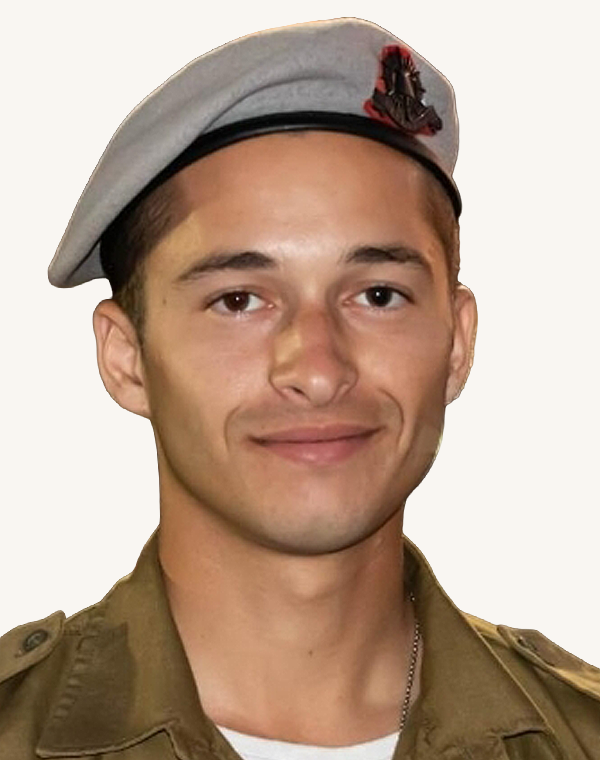
All photographs · 1
In the media
Articles
- The mother of Sergeant Maayan Perlstein, who fell in Khan Younis: “They warned that the armored personnel carriers were outdated”
ynet ·
- Five combat engineering soldiers who fell in the Khan Younis disaster laid to rest
ynet ·
- IDF names 7 soldiers killed in Gaza explosion
ynetnews ·
- ‘How does a father eulogize his son?’: 5 soldiers killed in Gaza blast laid to rest
The Times of Israel ·
- An IDF officer and six soldiers were killed in Khan Younis
Вести
Podcasts
- Episode 33 — Army friends talk about Shuzi
בכיכר שמאלה בית רביעי מימין — הפודקאסט הקהילתי של אשחר ·
- Episode 32 - friends from Eshhar talk about Shuzi
בכיכר שמאלה בית רביעי מימין — הפודקאסט הקהילתי של אשחר ·
- Episode 25: What is happening in Gaza?
Ask Haviv Anything — Haviv Rettig Gur ·
Memorial sites
- Our Story – Maayan Baruch Perlstein of Blessed Memory
מכינת בית ישראל
- Maayan Baruch Perlstein
ynet – גל-עד
- Yizkor – Sergeant Maayan Baruch Perlstein
משרד הביטחון — יזכור
Memorial projects
ynet Gal-Ed describes a local chess club and screenings of films he loved, intended to commemorate his memory.
Stories told about them
The description of episode 33 says Maayan would make coffee and choose music for his friends in the company. He introduced them to chess and philosophical discussions; the information here comes from the written description, without listening.
The Beit Yisrael pre-military academy describes Maayan as a member of its 27th graduating class, a fan of English-language literature and philosophy, and a lover of music and films. He served as a combat soldier and lead marksman in the Combat Engineering Corps and fell in Khan Younis.
According to his commander, Maayan excelled in shooting and marksmanship during training and became the battalion’s designated marksman. He devoted his free time to improving himself and also to instructing his friends, with humility.
Life & service
Service
- Rank
- Sergeant
- Honours
- Posthumously Promoted
- Battle Location
- Southern Gaza Strip
Family
- Father
- Amit
- Mother
- Osnat
Burial
Cemetery
Misgav
Tributes & remembrance
שני לבבות שפועמים בקצב אחד. הגעתי היום לשבעה אצל משפחת פרלשטיין באשחר, שבנם סמל מעיין ברוך פרלשטיין ז״ל נפל השבוע ברצועת עזה. קשה להסביר את הפער בין החלל שהותיר במותו לבין החיות שאפיינה אותו בחייו. מעיין, כך סיפרו לי, אהב את החיים הטובים. אחד כזה שלא יכול בלי הקפה של הבוקר, ורק עם פולים טריים שהיה מקפיד לקלות בעצמו. שאהב על האש עם הבשר הכי משובח שיש, שחלם בגדול והכי גבוה שאפשר, ולצד זאת מעיין הבין את החשיבות בשירות כלוחם, בהגנה על ביטחון מדינת ישראל, על החיים כאן, כדי שנוכל להמשיך ו"לחיות בגבוה", כמו שהוא כל כך אהב. מלבד הקהילה והחברים שעוטפים את המשפחה, הגיעו לנחם גם משפחות שכולות נוספות. אחת המשפחות שפגשתי היא משפחתו של סמ"ר עדי מלכ חרב ז״ל מבית ג׳ן, שנפל לפני למעלה משנה וחצי, גם הוא ברצועת עזה. הסתכלתי בשתי האימהות השכולות - סלוא ואסנת - וידעתי ששני הלבבות שלהן פועמים עכשיו בקצב אחד. ״כל הדברים היפים באמת מתגלים בזמנם האיטי, הבלתי מתחשב, הפועם בקצבו של הלב״.
מתגעגע אלייך מעייני, לא אשכח אותך לעולם
היי חנוך, אנחנו חברי מכינת בית ישראל מחזור כ״ז איבדנו היום בכאב ענק את חברנו למחזור מעיין פרלשטיין ז״ל. מעיין מצטרף ליוסף חיים צבי סרלין ז״ל, חבר נוסף שלנו מהמחזור שאיבדנו לפני שלושה חודשים. לא נתפס איך בזמן כלכך קצר איבדנו שני חברים למחזור. לקבוצה. למשפחה. אנחנו מתגעגעים אליהם ובטוחים שהם שומרים עלינו מלמעלה מצרפת תמונה מצמררת של שניהם יחד. הדור שלכם משלם מחיר בלתי נתפס. אתם גיבורים. הלב אתכם
מתגעגע אלייך אחי
מצפה אשחר, גליל עליון. סמל מעיין פרלשטיין ז״ל היה אישיות ייחודית. אימו אסנת סיפרה לי עכשיו שמעיין היה ״עיוור צבעים״ במובן שלא היה אכפת לו אם אתה דתי או חילוני, ימין או שמאל, עשיר או עני, הוא התעניין במהות ולא בחזות. ברגעי הפסקה מלחימה הוא קרא (באנגלית) ספרי פילוסופיה וספרות; מחד, הוא היה ספקן, ושאל שאלות על כל דבר ולא קיבל דברים כמו שהם. מאידך, היתה לו בהירות מוחלטת על חשיבות הלחימה למען קיום מדינת ישראל. מעיין גדל ביישוב היפהפה אשחר שבגליל העליון, עם נוף על נחל חילזון והר חזון, בן לאסנת ועמית, אח גדול של נעמה, יעל והבן הקטן תמר (כן, השם תמר לבן). הוא היה מגיע רחוק, אבל ממש מסקרן לאן. כל כך כואב הלב על מה שיכול היה להיות, ואיננו. יהי זכרו של מעיין ברוך.
They knew they were not sufficiently protected
Source:ynet
Read the Hebrew original
הם ידעו שהם לא מספיק מוגנים
He had a rare ability to learn
Source:משרד הביטחון — יזכור
Read the Hebrew original
הייתה לו יכולת למידה נדירה
We still haven’t come to terms with it. I never thought this would happen to us. We trusted him and the system.
Source:The Times of Israel
Remembrance Day addresses
יום הזיכרון לחללי מערכות ישראל התשפ"ה – 2025
בכל יום שעובר, אזכור יותר! אזכור, את אלו שיצאו עימי לקרב ולא שבו, ולהם אין מי ידמה ומי ישווה. אזכור, שהכאב לא יעבור לעולם, והזמן, הוא לא מרפה ולא מרפא. אזכור, את שיברון הלב הגובר ואת הבית שבוער. אזכור, את צדקת הדרך, ואשבע שוב, שמה שהיה לא יהיה יותר. אזכור, שיותר מכל דבר אחר – אני חסר! ביום הזה, אני נתקף געגוע לדמותם, לחיתוך דיבורם, לחיוכם, ומדליק נר לזיכרון דרכם ומורשתם!
משרד הביטחון
אגף משפחות, הנצחה ומורשת
יום הזיכרון לחללי מערכות ישראל התשפ"ה – 2025
בכאב, בהצדעה ובתקווה אני מתכבד להדליק נר זיכרון זה. השנה, כשאנו נלחמים במלחמה ארוכה, רב זירתית וצודקת, הזיכרון נושא משמעות עמוקה. ביום זה נעצור ונתייחד עם זכרם של טובי בנינו ובנותינו שנפלו בהגנה על המדינה. מורשתם היא המצפן שמתווה את דרכינו, והיא המעניקה לנו כוח להמשיך ולהגן על מדינת ישראל ותושביה. משפחות יקרות, אנו מרכינים ראשנו ומתחייבים שנעמוד לצידכן תמיד. יהי זכר הנופלים ברוך.
אלוף דדו בר כליפא
ראש אגף כוח האדם, צה"ל
יום הזיכרון לחללי מערכות ישראל התשפ"ה – 2025
בשעה שאנו זוכרים את גודל תרומתם ועומק מסירות נפשם של טובי בנינו ובנותינו, נופלי מערכות ישראל לדורותיהן, ממשיכים צה"ל וכוחות הביטחון במימוש המשימה למענה לחמו ועבורה נפלו: הכרעת אויבינו מדרום, מצפון, ביהודה ובשומרון, וגם בזירות רחוקות יותר. בהערכה רבה ובגאווה אדירה אנו מרכינים ראש בפני הנופלים והנופלות, מאמצים את משפחותיהם אל לבנו, וממשיכים במשימה להבטחת קיומה של ישראל לדורי דורות. יחד נעשה ונצליח.
רב אלוף אייל זמיר
הרמטכ"ל, צה"ל
יום הזיכרון לחללי מערכות ישראל התשפ"ד – 2024
כאשר דגלינו מורדים לחצי התורן וראשינו מורכנים לזכר הנופלים והנופלות במערכות ישראל, ממשיכים לוחמי צה"ל ומפקדיו בלחימה בדרום, בצפון, ביהודה ובשומרון ובזירות נוספות. על כל דור מוטלת המשימה של הגנת העם והארץ – משימה שאף פעם אינה פוסקת. נצדיע בגעגוע ובגאווה לנופלים ולנופלות, נחבק את משפחותיהם, ונמשיך ברוח הציווי שהותירו לנו. עם ישראל חי.
רב ניצב יעקב שבתאי
המפקח הכללי, משטרת ישראל
יום הזיכרון לחללי מערכות ישראל התשפ"ד – 2024
אחיי הנופלים, כל נר הוא זיכרון יחיד ומיוחד, על חיים שהיו ואינם, געגוע שנצרב עמוק בלב, עולם ומלואו. הנרות כולם הם זיכרון של אומה כי לעולם לא עוד, בשורת הציונות וקוממיות ישראל. זיכרון כי הדרך לעם חופשי בארצנו עוברת דרך מסדר הנופלים. אור הנר יזכיר לנו את מסירות נפשכם להציל חיים, להגן על הבית. הנרות מסמנים לנו נתיב גבורה ערכי מחייב שאנו מצווים ללכת לאורו. נמשיך להילחם ולהוסיף אור מתוך אמונה בנצח ישראל.
יואב גלנט
שר הביטחון
יום הזיכרון לחללי מערכות ישראל התשפ"ד – 2024
בהצדעה ובכאב, בשם צה"ל כולו, אני מדליק נר זיכרון. בעיצומה של מלחמה, הזכרון נושא משמעות יום-יומית, שעבר והווה מתלכדים בה. לאורם של הנופלים נמשיך לצעוד, חיילי הסדיר והמילואים. לאורם של הנופלים נמשיך להגן על ארצנו ועל מולדתנו, גם כשהמחיר כבד. להבת-הזכרון תבער בנו בעודנו ממשיכים להלחם ונזכור את הנופלים ואת אומץ ליבם. משפחות יקרות, צה"ל מרכין היום ראש, מצדיע לכן וכואב איתכן. יהי זכר הנופלים ברוך.
אלוף יניב עשור
ראש אגף כוח האדם, צה"ל
יום הזיכרון לחללי מערכות ישראל התשפ"ד – 2024
בהוקרה, בגאווה ובכאב שאין לו סוף, אני מתכבד להדליק נר לזכרם של הנופלים והנופלות במערכות ישראל. סיפור חייהם בארץ הזאת, מסכת שירותם, גבורתם והקרבתם – הם סיפורה של הארץ הזאת, אך גם סיפור המחיר הכבד שהיא תובעת מאוהביה. מחויבותנו לזכר הנופלים ולדרך שהותירו לנו ניצבת תמיד לנגד עינינו. את המשימה שלא זכו להשלים, משלימים כיום, וישלימו, אנשי כוחות הביטחון, הממשיכים בדרכם ולאורם. יהי זכרם של הנופלים ברוך.
משרד הביטחון
אגף משפחות, הנצחה ומורשת
יום הזיכרון לחללי מערכות ישראל התשפ"ד – 2024
בחרדת קודש אני מתכבד להדליק נר לזכרם של חללי מערכות ישראל, חברנו שנפלו, מראשית היציאה מהחומות ולאורך כל שנות עצמאותנו המדינית והציונית, מהווים תמרור זיכרון לדרך חיינו ולמחוייבות הלאומית להנצחת זכרם. דרכם נותרה דרכנו ומורשתם נר להמשך עשייתנו. יהי זכרם ברוך!
בני גנץ
שר הביטחון
יום הזיכרון לחללי מערכות ישראל
נזכור אותם, כולנו יחד. כל אחד ואחת מהם, מדי יום ביומו, והיום ביתר שאת, כך – לנצח. "כי מדי דברי בו זכור אזכרנו עוד"
משרד הביטחון
אגף משפחות, הנצחה ומורשת