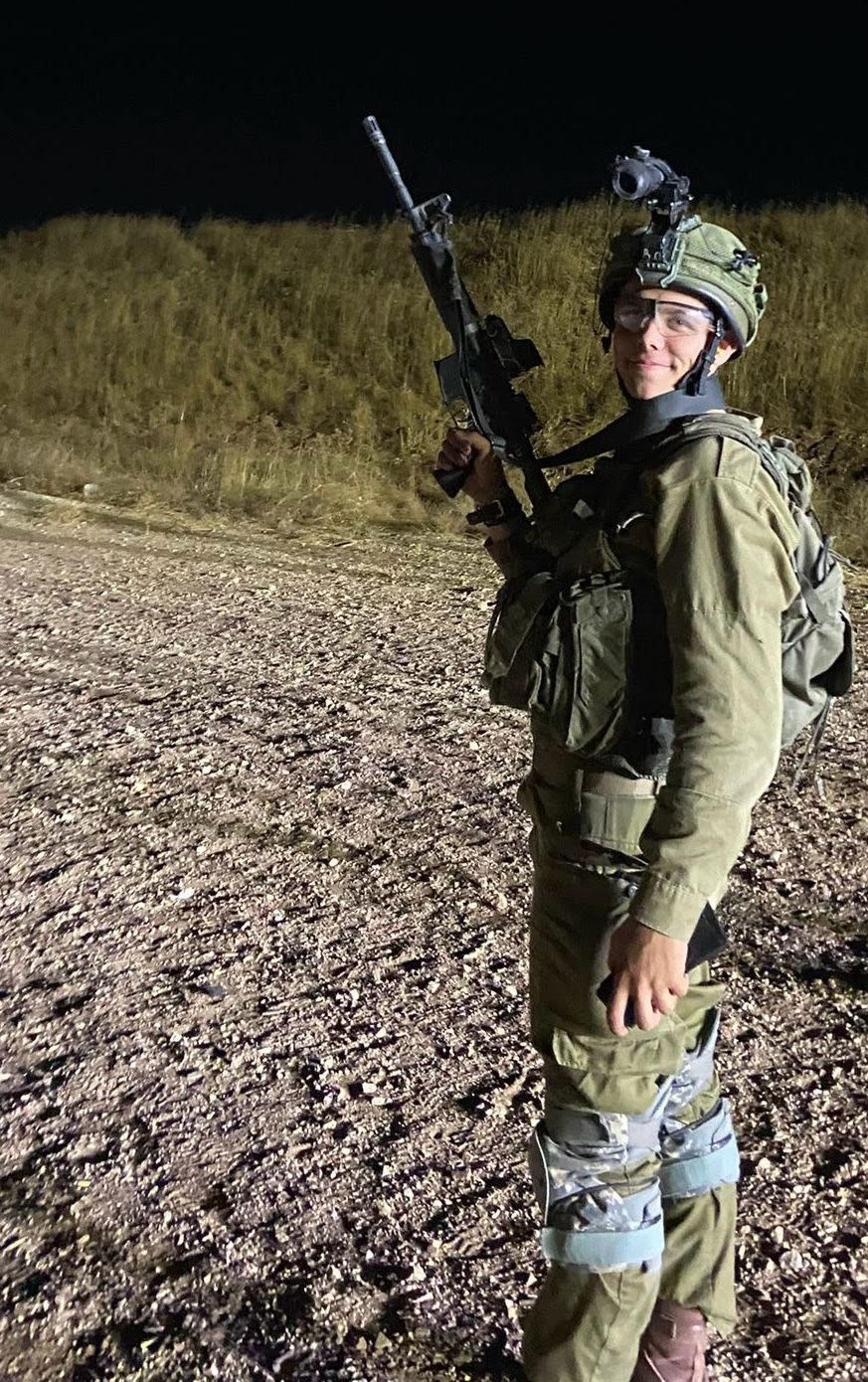
The story
In a bright concrete house, on the second floor of a Ramat Gan building whose walls had absorbed thousands of hours of Mediterranean sun, Kirill Brodsky was born on the 17th of Av, 5764, which was August 4, 2004. He was the youngest, the baby of Elena and Viktor, and the little brother of Alina, who was already waiting for him at home at the end of the hallway. This city, Ramat Gan, which blended green corners with bustling streets, was the backdrop to his childhood, to his first steps, to the rolling laughter that soon filled the spaces. From the very first moment, there was something about Kirill that captured hearts – perhaps it was the sparkle in his eyes, or the tiny crease that formed at the corner of his mouth when he smiled, that laughing dimple that would become his trademark, an anchor of joy in difficult moments. The home was always filled with warmth, with the sounds of conversations in Russian and Hebrew, with the smells of home-cooked meals and stories of lives that began elsewhere and took deep root in Israeli soil. Elena and Viktor, with the traditions they brought with them, made sure to instill in their children values of respect, hard work, and giving, but above all, they taught them to see the beauty in every day, even in the smallest things, and to approach life with an open heart and a smile. Kirill absorbed this like a sponge, becoming a good, pleasant-mannered child who always knew how to respect those around him – his parents, his sister, the elderly neighbors in the stairwell, and the shopkeepers in the local grocery stores.
The first years passed under the sign of exploration and adventure. Kirill was a lively and energetic child who knew no rest. Every object in the house could become a toy, every corner of the shared yard was a destination for imaginary journeys. He attended the Ben-Gurion elementary school in nearby Givatayim, where his social side began to emerge. When he entered a new class or a playgroup, he wasn't one of those children who immediately jumped into the center of attention; he wasn't "all sound and fury," as his friends would later recall. He would stand to the side, observing, taking in the atmosphere, the dynamics, and only then, when he felt comfortable, when he recognized the faces and voices, would he open up. But once he opened up, he opened up completely. Conversation would begin to flow, his smile would light up his face, and he would become an integral part of the group. Very quickly, these friends became a real family. They knew they had a true friend, one they could trust with their eyes closed. He was loyal, modest, and always the first to step up to help, without the slightest expectation of thanks or attention. They remembered how on annual trips, when all the children were running around and kicking up dust, he would stick close to his teacher, offering to carry her heavy bag, or supporting a child who struggled with a steep climb, offering a hand or a kind word. Before school ceremonies, when the chaos of chairs and decorations would take over the hall, he would be there, in his quiet way, arranging, straightening, making sure everything was in place, without being asked, just because he saw it was needed. He was simply there.
Kirill’s passion for sports was evident from a young age. He loved the adrenaline, the physical effort, the feeling of satisfaction from achieving a goal. He played soccer in the yard, rode his bike in the park, and any activity that required movement and concentration drew him in. But there was one field that captured his heart in a special way – motor sports. Even as a child, when he saw a motorcycle pass by on the street, his eyes would light up and he would follow it with a longing gaze, imagining himself riding, the wind on his face, the deafening roar of the engine. At sixteen, already a tall and strong teenager, he fulfilled this childhood dream. Through hard work and saving, perhaps with the help of his parents, he bought his first motorcycle. It wasn't just a means of transportation, but a gateway to a new world of freedom, challenge, and responsibility. He would go on rides with friends, a convoy of young riders cutting through the desert air or the winding roads of the north. But even there, amidst the adrenaline and excitement, his unique trait stood out – he always made sure to be at the end of the line. Not to show off or be the last one, but to watch over, to ensure everyone rode carefully, that no one was left behind, that everyone arrived home safely. Two years later, when he was older, with more experience and confidence, he upgraded to a heavier, more powerful motorcycle that suited his adventurous spirit.
Alongside his love for sports, Kirill was also known for his highly developed technical sense. From childhood, he loved to take things apart, explore their internal mechanisms, and assemble small parts into a whole. In his room, next to textbooks and sports equipment, there were always boxes of Lego, not ready-made towers or cars, but a mix of colorful bricks that became the basis for original creations, born of his imagination and assembly logic. He didn’t stop there; he developed this passion into a real hobby, even building an entire computer from parts he bought separately, meticulously assembling each component, connecting cables, installing software, until the silent machine came to life under his skilled hands. He loved the challenge of problem-solving, the precision of assembly, the satisfaction of creating something new from nothing. This technical sense, along with the calm and concentration that characterized him, formed the basis not only for his hobbies but also for how he approached challenges in his life.
At Shimon Ben Tzvi High School in Givatayim, in the sports track, Kirill was already a well-formed young man with clear principles and a developed sense of justice. His homeroom teacher remembered him as a mischievous child with a lot of joy for life, who loved to fool around and laugh with friends, but over time he matured and became a more serious teenager who set life goals and achieved them. In class discussions and debates, his voice was always heard. He wasn't loud or dominating, but when he had an opinion, it was solid, well-reasoned, and he wasn't afraid to express it, even if it wasn't popular. He demanded nothing from anyone, asked for no help or favors, and did everything with his own two hands, out of belief in his abilities and an internal desire to succeed. When the first draft notice arrived, Kirill began to think seriously about his future in the army. He was a Zionist and a deep patriot at heart, believing in the importance of the state and the necessity of defending it. Despite the natural apprehension expressed by his parents and sister – "Kirill, maybe you could go for a rear-echelon role, something safer?" his mother asked one evening in the kitchen while preparing dinner, her voice full of worry – he was determined. "Mom, this is important to me," he answered, placing a hand on her shoulder, "I want to protect our home, to truly contribute. I want to be a combat soldier." He even dreamed of a military career, seeing himself continuing service beyond the mandatory period. To achieve his dream, he enrolled in combat fitness training, twice a week he would sweat, train, push his physical limits, run, carry weights, preparing for the challenge ahead. He knew this was his way to contribute, to serve, and to fulfill the values he grew up with.
Shortly before his enlistment, in the period between graduating high school and donning his uniform, Kirill met Miri. It was love at first sight, or at least a deep infatuation that quickly blossomed into a warm and loving relationship. Miri, an intelligent and gentle young woman, was captivated by Kirill’s charm. According to her, one of the things that won her heart was his directness and honesty. He didn't play games, didn't try to impress or sugarcoat things. He spoke his mind, openly and clearly, and it was refreshing. He was a true gentleman, always putting the well-being of others before his own. "Are you sure you want to drive all the way to me now? It's late already," she would sometimes ask him on the phone when he offered to drive her home after an outing with friends, and he would reply in a soft voice, "Of course, darling. I'm already on my way. The important thing is that you get home safely." She loved his smile, the sparkle in his eyes when he talked about his motorcycle or his plans for the army. There was a deep understanding between them, a bond of trust and mutual support. Miri was there for him during his army preparation, encouraging and supportive, and Kirill was there for her, listening, advising, and embracing. They dreamed together of the future, of shared motorcycle rides, of a whole life together. Miri, to herself, began taking riding lessons in secret, hoping to surprise him when he returned from the war, to ride alongside him, exactly as he had always hoped. This was her way of telling him, without words, how much she loved him and how much she believed in their dreams.
On a bright day, March 23, 2023, Kirill arrived at the induction center, dressed in green fatigues, with a wide smile and sparkling eyes. He enlisted in the IDF, in Battalion 101 of the Paratroopers Brigade, an elite unit that, in his eyes, represented the pinnacle of combat service. He was enthusiastic, highly motivated, and ready for any challenge. The first days of basic training were intense, physically and mentally exhausting, but Kirill endured them bravely, pushing himself beyond what he thought was possible. Yet, amidst those days full of adrenaline and pushing to the limit, Kirill suffered a severe leg injury. The pain was intense, and the injury was significant, one that could have broken the spirit of any other soldier. But Kirill did not give up. He refused to let the injury dictate his future and decided to continue on the paratrooper path with unparalleled determination. He completed 05 basic training, a fundamental combat course, despite the pain and physical limitations. He gritted his teeth, ignored the limp, and trained alongside his friends, almost as if nothing had happened. But reality was more stubborn. After completing basic training, the injury worsened. The doctors were unequivocal: continuing on a combat path was impossible. Kirill was forced to withdraw from the unit he so wanted to serve in and was recommended for service as a driver in the Southern Brigade. This was a severe blow, a bitter disappointment, but Kirill, in his quiet and determined way, accepted the decree. He did not complain, did not grumble. He knew that even as a driver, there was importance, and there too he could contribute.
He was stationed at Re'im base, in the heart of the Western Negev, at the Gaza Division headquarters. It was a sharp change for him, from the dream of parachuting and operational activity as an infantry combatant, to a role that demanded different skills, concentration, and heavy responsibility for the lives of others. He took on the role with utmost seriousness. The Deputy Brigade Commander, the "Samach," who was responsible for Kirill's training, immediately recognized his exceptional potential. "From the first moment, we understood that a serious young man had arrived in the brigade," Lt. Col. Alon Peled, the Samach, later recounted. Kirill stood out as the driver who completed his training most successfully and quickly in the division's history. He learned the sector thoroughly, the roads, the paths, the weak points. He absorbed every detail, every instruction, and performed his duties to the best of his ability, with uncompromising professionalism. "You were determined to learn the sector and perform your role to the best of your ability," the Samach recalled, "always ready, always with the quiet that characterized you, always precise and always with uncompromising professionalism." Thanks to his exceptional abilities, the decision was made that Kirill would serve as a driver in the command post, the "Chapak," of the Brigade Commander himself. This was a sensitive role, requiring absolute reliability, the ability to maneuver under pressure, and discretion. Kirill accepted the role with reverence, understanding the magnitude of the responsibility placed on his young shoulders. He was proud to have earned such trust and saw it as proof that even outside the paratrooper path, he could make a significant contribution to the nation's security. He was a leading and courageous fighter, even when holding the steering wheel instead of a rifle.
Saturday morning, the 22nd of Tishrei, Simchat Torah 5784, October 7, 2023. The morning began like any other Saturday morning in the Negev, quiet and bright, perhaps with a gentle bird chirp and the smell of brewing coffee. Kirill was at Re'im base, ready for any call, as always. It was six-thirty in the morning when many "Red Color" alarms suddenly sounded, sharply interrupting the silence. This was no ordinary alarm. They were followed by loud thunder, sounds of explosions that left no room for doubt – something big, unprecedented, was happening. His phone vibrated with frantic WhatsApp messages, groups of friends and family filled with initial, inconceivable photos and reports: terrorist infiltration, gunfire, raids on communities. The Hamas terrorist organization launched a murderous surprise attack on Israel, with a massive barrage of missiles and rockets from the Gaza Strip, and under this aerial cover, thousands of terrorists infiltrated – by land, sea, and air. They raided the Gaza Envelope communities, Sderot, Ofakim, and Netivot, massacred partygoers at the nature festival near Kibbutz Re'im and Nir Oz, attacked IDF bases, and harmed passersby on the roads. Within a few hours, about eight hundred civilians were murdered in their homes, in their cars, after suffering severe crimes, and hundreds of Israelis were kidnapped to the Gaza Strip. Homes were destroyed, looted, and set on fire. Hundreds of soldiers, police officers, security forces personnel, and local standby squad members fell in battle. On this morning, a war began.
Kirill did not hesitate. He didn't think twice. He immediately jumped into the vehicle, its engine already running, his heart pounding fiercely. He was the first in the vehicle, ready to go, as Lt. Col. Alon Peled testified. Together with the Brigade Commander, Colonel Asaf Hamami, and the radio operator, Staff Sergeant Tomer Yaakov Ahimas, the three set out into the inferno. Their destination: Kibbutz Nir Oz. They knew they were entering a dangerous situation, but the sense of duty and the desire to protect civilians were stronger than any fear. At six-fifty in the morning, just twenty minutes after the attack began, they entered the kibbutz. They were the first military force to arrive at the scene, before significant reinforcements could arrive. The sight of the kibbutz was horrifying: smoke, destruction, and gunfire from all directions. Dozens of terrorists had already raided the homes, sowing destruction and death. Asaf's command post, with Kirill behind the wheel, Tomer on the radio, and Asaf commanding, entered into stubborn and uncompromising combat. They fought bravely against a vastly superior force, against dozens of well-armed terrorists, who swarmed from all sides.
The exchange of fire was intense. Bullets whistled through the air, explosions shook the ground. The Brigade Commander, Colonel Asaf Hamami, was hit. It was a critical, fateful moment. Instead of thinking about retreating or about themselves, Kirill and Tomer acted with the instinct of brave fighters, of people who put the welfare of others before their own. Under heavy fire, at certain risk to their lives, they evacuated their wounded commander to a nearby shelter. They carried him, dragging him through shrapnel and dust, to the only protected space available. With their swift and skilled hands, they applied a tourniquet, in a desperate attempt to stop the bleeding, and Tomer called for help on the radio, his voice choked but clear, relaying details of their location and condition. They remained with their commander, shielding him with their bodies, continuing to fight and wait for reinforcements to arrive. A short time later, within that small shelter, under incessant fire, they too were hit. Kirill, Asaf, and Tomer were killed in this heroic battle in Kibbutz Nir Oz. Their bodies were abducted to Gaza by the terrorists, who continued their rampage of destruction. But their courage, their determination, and their uncompromising sacrifice saved the residents of the kibbutz. They delayed the terrorists, giving the residents precious time to barricade themselves, to defend themselves, and allowed additional forces to arrive. Without their swift and brave action, the number of casualties in Nir Oz would have been much higher. They stood as an impenetrable wall, three against many, and defended their home.
The days that followed were days of terror and uncertainty. Kirill’s family, like many others, had to contend with the abyss that had opened, with the shocking news that Kirill was missing, perhaps kidnapped, perhaps wounded, perhaps… They clung to every scrap of information, every glimmer of hope. The agony lasted 53 days, 53 days of nerve-wracking waiting, of silent prayers and choked sobs. On November 28, 2023, his death was cleared for publication. Hearts shattered, the last hope vanished. Kirill, only nineteen years old, had fallen in battle. Eight long months more passed, months of deep pain and incomprehensible longing, until on July 24, 2024, Kirill was returned to Israel. He was laid to eternal rest in the military cemetery in Kiryat Shaul, Tel Aviv. His short, yet profoundly meaningful life journey, had come to its tragic end. After his fall, Kirill was posthumously promoted from Corporal to Sergeant, a late but sincere recognition of his bravery and devotion. He left behind heartbroken parents, Elena and Viktor, and a beloved sister, Alina, as well as Miri, his partner, whose shared dreams were abruptly cut short.
At the funeral, amidst the silent rows of people, between the Israeli flags flying at half-mast, stood his mother, Elena, her voice trembling but her eyes filled with pride and deep sorrow. "Our dear and beloved son," she eulogized him, words difficult to utter, "I stand here to accompany you, and we don't know how we will live without your smile and your bright face. On October 7th, something happened that I never thought would. You defended the land of Israel as you wished and always said that every child should enlist, whether in combat or not, even to be some kind of assistant, to do something, but to contribute to the country. That was your opinion, and we agreed." She spoke of his smile that knew no complaints, of his hard work, of how he often sacrificed sleep and strength for others, because friends were waiting for him outside, because it was important to him. "You are a hero, you were a hero and you will always remain in my heart," she continued, tears streaming down her cheeks. "My heart is broken, truly broken, we love you and you will always remain in our hearts and memories... A mother always waits for her child, this time it is a farewell forever. The heart aches. Nineteen years is too short. You will always remain in my heart forever. Thank you for being here, thank you for everything you did, and you did quite a lot. You did much for many and for the country." His father, Viktor, whom Kirill had drawn into motorcycle riding, and who had obtained his motorcycle license shortly before his son's fall, also found himself facing unbearable pain, which has since prevented him from getting on his motorcycle, symbolizing the loss and paralysis that accompany him.
His high school homeroom teacher, who had watched him grow and develop, also stood and eulogized him, her voice breaking with emotion. "Kirill, my beloved student," she said, "you came to us a mischievous child with a lot of joy for life, you loved to fool around and laugh with friends, but over time you matured and became a serious teenager who set life goals and achieved them. You were a principled young man, with a developed sense of justice. In class discussions and debates, your voice was always heard, and you had a solid opinion on almost everything." She emphasized again his modesty and his actions: "You never demanded anything from anyone, never asked for anything, and did everything with your own two hands... Kirill, it was impossible not to love you. It pains me to think that there are people in this world who will no longer get to know you, but we will make sure everyone knows who you were... Thank you, Kirill, for defending us with your body and fighting until your last breath. It was a great privilege to be the homeroom teacher of a hero like you." The Deputy Brigade Commander, Lt. Col. Alon Peled, also added in a cracking voice, the professional and personal recognition: "You were a leading and courageous fighter... just as you were that morning. You jumped without thinking twice and were the first in the vehicle to protect civilians. You were part of the force that prevented a severe incident in Kibbutz Nir Oz. You defended the residents with your body along with the rest of the command post and fell during the fierce fighting. Your unique character and values will serve as a symbol and a compass." These words, spoken by people who saw him as a friend, student, soldier, and commander, painted a complete portrait of Kirill – a quiet, modest person, yet with extraordinary inner strength, determination, and an intense love for his homeland and its people.
Kirill Brodsky’s legacy, despite his incredibly short life, continues to live on and resonate. The Mayor of Ramat Gan, in a decision that moved his family and the entire community, ordered a section of the street where his family lives to be renamed "Kirill Street." Now, every time someone passes by the street, Kirill’s name will be etched in stone, a daily reminder of the hero who grew up there, the child with the captivating smile and the sparkle in his eyes. His friends, those who became family, chose a more intimate and personal way to commemorate him: they got a tattoo in his memory. A drawing of his lip line, that laughing dimple, combined with the letter "K" in Kirill’s own handwriting, with a small heart, signifying their immense love for him. This tattoo, etched on their skin, is a living testament to an unbreakable bond, to a memory that does not fade. And at Shimon Ben Tzvi High School, the place where his personality was shaped, where he dreamed of his future, they produced a film in his memory, "So They Know There Was Kirill," a film available for viewing on YouTube. This film is not just a documentary, but an educational testament, a way to convey to future generations Kirill’s story, his values, his courage, and his smile that lit up every space. Kirill Brodsky, nineteen years old when he fell, left behind a huge void, but also a legacy of human heroism, of giving, of love for people and love for his homeland. He was a light, and he continues to shine, his memory etched in hearts, in stories, in streets, and in the sense of Israeli resurgence and pride he represents.
Moments of a life
All photographs · 1
In the media
Articles
Social posts
- Elana Brodski shares the story of her son
Wing Security
Memorial projects
CrossFit Panda published a Hero W.O.D workout on 21.4.2026 in memory of Kirill, explicitly mentioning that he fell in Nirim on 7.10.2023. This is a workout program page, not a record of attendance or completion.
Shimon Ben Zvi High School announced a “Running in His Memory” event in memory of its graduate Kirill, scheduled for October 16, 2025. The source is an advance announcement and does not establish that the event took place.
His partner Miri Samurov stated that she would obtain a motorcycle license and buy a motorcycle in his memory; this is an intention to commemorate him described in the article, rather than verification that it was carried out.
According to Yizkor, a section of the street where his family lived in Ramat Gan was renamed Kirill Street. His friends tattooed a lip outline and the letter K in his handwriting.
Stories told about them
Kiril bought a motorcycle as a teenager and passed his love of riding on to his father. His partner began learning to ride to surprise him, and after he fell, she said she would finish her lessons and ride in his memory.
Life & service
Profile
Service
- Rank
- Sergeant
- Unit
- Infantry Corps
- Honours
- Posthumously Promoted
Family
- Father
- Victor
- Mother
- Alena
Burial
Tributes & remembrance
קיריל היקר , אני כלכך מצטער על הסיפור שלך , יהי זכרה ברוך , אוהב אותך קיריל אתה כמו חבר בלב
נזכור אתכם תמיד
תהא נשמתם צרורה בצרור החיים יהי זכרו ברוך
כל יום יותר מתגעגע לא היית רק חבר היית לא פחות מאח מרגישים שאתה חסר מאוד
נזכור אותך לעד
תלמיד אהוב לא נשכח אותך
יהי זכרך ברוך
קיריל ברודסקי ז״ל היה חלק מהמשפחה שלנו משפחת ג׳ונתן טים.
עבורנו, הוא לא היה רק חניך הוא היה חבר אמיתי .
תמיד שקט, עם חיוך צנוע, מבט מפוקס, ונוכחות.
קיריל היה מסוג האנשים שנותנים דוגמה אישית בלי לומר הרבה ,הוא השקיע, התמיד ודחף את עצמו קדימה .
תחושת השליחות בערה בו, והיא זו שהובילה אותו, גם ברגעים הקשים.
הכאב גדול, והחוסר מורגש אוהבים
ומתגעגעים אליך קיריל
לעולם תישאר בלבנו, היית בן בית ותישאר כזה בלב
ת.נ.צ.ב.ה לא נשכח אותך
קיריל היקר,
זוכרים אותך כל יום , זוכרים ולא שוכחים
מתגעגעים. יהי זכרך ברוך
בן היקר שלי , אני מאוד מתגעגת אליך , אני גהה בך ואוהבת אותך.
לכאב אין סוף
קירל ברודסקי מלח הארץ השם יקום דמך הלוואי שנהיה ראויים להקרבה שלך ושל כל יתר הנופלים.ת.נ.צ.ב.ה נשמתך עדן
חיים צעירים ושמחים שנגדעו
נזכור ולא נשכח
אוהב ומתגעגע חבר יקר
תודה לך ולמשפחתך על הכל
קיריל תלמידי האהוב,נמשיך לשאת את שמך בגאווה, להנציח את פועלך, ולחנך לערכים שעליהם גדלת אהבת הזולת, תרומה, ואחריות.
גיבור ישראל! מצדיע לך.
מנוחתך עדן גיבור קדוש. ניר בני ז״ל סיפר לנו עליך וכמה שהוא וכל החברים דאגו. זכרונך לברכה.
שניכם שמרו עלינו כעת מלמעלה
אנחנו לא מכירים.
לוויתי אותך בדרכך האחרונה.
נתת לי את הכבוד.
היית גיבור, עדיין לא סופרו של סיפורי הגבורה וגם לא שלך.
תנוח בשלום על משכבך
תלמיד יקר וגיבור,
יהי זכרו ברוך
לא הכרנו. לצערי.
שמעתי על גבורתך בשבעה באוקטובר.
את החיוך המיוחד רואים בתמונה.
ליוויתי אותך בדרכך האחרונה
אוהב אותך אח יקר חבל שלא יצא לנו לשבת ולשוחח עוד קצת עם סיגריה וקפה, שמור עלינו מלמעלה
אני מצטערת שהיית צריך לעבור את הדבר הזה ואמן ונהיה ראויים. יהיה זכרו ברוך
תודה קיריל. אזכור את החיוך שלך במדים.
גבורתך קיריל עוד תהדהד שנים רבות
תודה קיריל על מסירותך וגבורת נפשך להגן עלינו, היד.
משתתף בצערה הגדול של משפחתו היקרה מאוד.
הייתי מורה ביהל"ם זוכרים אותו לטובה. יהי זיכרו ברוך
קיריל היקר,תלמיד אהוב שלי,
לימדתי אותך שנים בודדות מכיתה א בבית הספר יהל"ם,ילד מתוק וחייכן,חכם מקסים
הנכנס אל הלב.
עם נפילתך הוכנו בהלם וצער עמוק במיוחד,אני ומורות נוספות שהכירו והעריכו אותך.
אתה גיבור ישראל,עשוי ללא חת ודוגמא אישית לאומץ לב ונתינה להצלת חיי אדם במלחמת חרבות ברזל, הארורה במלחמות ישראל,הגנת בגופך להצלת נירים.
אני נרגשת מאד שאתה זוכה היום להיקבר בקבר ישראל. הלב שלי עם הוריך ואחותך
סליחה ותודה לך על השרות.
תודה קיריל, וסליחה, נזכור אותך לעד ונשתדל להיות ראויים. השם ייקום דמך
סליחה שלא הייתי בלוויה אוהבת אותך
always ready, always with the silence that characterized you, and always with professionalism.
Source:The Jerusalem Post
Kirill, you were here for 19 wonderful, funny years, and that is not enough. Nineteen years is so little, you will forever be in my heart and I will love you forever.
Source:ynet
Read the Hebrew original
קיריל, אתה היית פה ל-19 שנים נהדרות ומצחיקות, וזה לא מספיק. 19 שנים זה מעט, אתה לנצח תהיה אצלי בלב ולנצח אוהב אותך.
You were always a brave fighter who led the way
Source:ynet
Read the Hebrew original
תמיד היית לוחם מוביל ואמיץ
The friends he made became family,
Source:ynet
Read the Hebrew original
החברים שהוא יצר הפכו למשפחה,
For almost two months, we tried to hold on to hope
Source:ynet
Read the Hebrew original
במשך כמעט חודשיים ניסינו לקוות
And I will ride in his memory
Source:ynet
Read the Hebrew original
וארכב לזכרו
This is an inseparable bond of blood
Source:ynet
Read the Hebrew original
זה קשר דם בלתי ניתן להפרדה
His image, his values and his love for the country will remain engraved in all our hearts
Source:BE106 חדשות גבעתיים
Read the Hebrew original
דמותו, ערכיו ואהבתו למדינה יישארו חקוקים בלב כולנו
A mother always waits for her child; this time it is a farewell forever.
Source:משרד הביטחון
Read the Hebrew original
אימא תמיד מחכה לילד, הפעם זו פרידה לתמיד.
It was a great privilege to be the teacher of a hero like you
Source:משרד הביטחון
Read the Hebrew original
זו הייתה זכות גדולה להיות מחנכת של גיבור כמוך
There was no fuss or fanfare
Source:משרד הביטחון
Read the Hebrew original
לא היה רעש וצלצולים
Remembrance Day addresses
יום הזיכרון לחללי מערכות ישראל התשפ"ה – 2025
בכל יום שעובר, אזכור יותר! אזכור, את אלו שיצאו עימי לקרב ולא שבו, ולהם אין מי ידמה ומי ישווה. אזכור, שהכאב לא יעבור לעולם, והזמן, הוא לא מרפה ולא מרפא. אזכור, את שיברון הלב הגובר ואת הבית שבוער. אזכור, את צדקת הדרך, ואשבע שוב, שמה שהיה לא יהיה יותר. אזכור, שיותר מכל דבר אחר – אני חסר! ביום הזה, אני נתקף געגוע לדמותם, לחיתוך דיבורם, לחיוכם, ומדליק נר לזיכרון דרכם ומורשתם!
משרד הביטחון
אגף משפחות, הנצחה ומורשת
יום הזיכרון לחללי מערכות ישראל התשפ"ה – 2025
בכאב, בהצדעה ובתקווה אני מתכבד להדליק נר זיכרון זה. השנה, כשאנו נלחמים במלחמה ארוכה, רב זירתית וצודקת, הזיכרון נושא משמעות עמוקה. ביום זה נעצור ונתייחד עם זכרם של טובי בנינו ובנותינו שנפלו בהגנה על המדינה. מורשתם היא המצפן שמתווה את דרכינו, והיא המעניקה לנו כוח להמשיך ולהגן על מדינת ישראל ותושביה. משפחות יקרות, אנו מרכינים ראשנו ומתחייבים שנעמוד לצידכן תמיד. יהי זכר הנופלים ברוך.
אלוף דדו בר כליפא
ראש אגף כוח האדם, צה"ל
יום הזיכרון לחללי מערכות ישראל התשפ"ה – 2025
בשעה שאנו זוכרים את גודל תרומתם ועומק מסירות נפשם של טובי בנינו ובנותינו, נופלי מערכות ישראל לדורותיהן, ממשיכים צה"ל וכוחות הביטחון במימוש המשימה למענה לחמו ועבורה נפלו: הכרעת אויבינו מדרום, מצפון, ביהודה ובשומרון, וגם בזירות רחוקות יותר. בהערכה רבה ובגאווה אדירה אנו מרכינים ראש בפני הנופלים והנופלות, מאמצים את משפחותיהם אל לבנו, וממשיכים במשימה להבטחת קיומה של ישראל לדורי דורות. יחד נעשה ונצליח.
רב אלוף אייל זמיר
הרמטכ"ל, צה"ל
יום הזיכרון לחללי מערכות ישראל התשפ"ד – 2024
כאשר דגלינו מורדים לחצי התורן וראשינו מורכנים לזכר הנופלים והנופלות במערכות ישראל, ממשיכים לוחמי צה"ל ומפקדיו בלחימה בדרום, בצפון, ביהודה ובשומרון ובזירות נוספות. על כל דור מוטלת המשימה של הגנת העם והארץ – משימה שאף פעם אינה פוסקת. נצדיע בגעגוע ובגאווה לנופלים ולנופלות, נחבק את משפחותיהם, ונמשיך ברוח הציווי שהותירו לנו. עם ישראל חי.
רב ניצב יעקב שבתאי
המפקח הכללי, משטרת ישראל
יום הזיכרון לחללי מערכות ישראל התשפ"ד – 2024
אחיי הנופלים, כל נר הוא זיכרון יחיד ומיוחד, על חיים שהיו ואינם, געגוע שנצרב עמוק בלב, עולם ומלואו. הנרות כולם הם זיכרון של אומה כי לעולם לא עוד, בשורת הציונות וקוממיות ישראל. זיכרון כי הדרך לעם חופשי בארצנו עוברת דרך מסדר הנופלים. אור הנר יזכיר לנו את מסירות נפשכם להציל חיים, להגן על הבית. הנרות מסמנים לנו נתיב גבורה ערכי מחייב שאנו מצווים ללכת לאורו. נמשיך להילחם ולהוסיף אור מתוך אמונה בנצח ישראל.
יואב גלנט
שר הביטחון
יום הזיכרון לחללי מערכות ישראל התשפ"ד – 2024
בהצדעה ובכאב, בשם צה"ל כולו, אני מדליק נר זיכרון. בעיצומה של מלחמה, הזכרון נושא משמעות יום-יומית, שעבר והווה מתלכדים בה. לאורם של הנופלים נמשיך לצעוד, חיילי הסדיר והמילואים. לאורם של הנופלים נמשיך להגן על ארצנו ועל מולדתנו, גם כשהמחיר כבד. להבת-הזכרון תבער בנו בעודנו ממשיכים להלחם ונזכור את הנופלים ואת אומץ ליבם. משפחות יקרות, צה"ל מרכין היום ראש, מצדיע לכן וכואב איתכן. יהי זכר הנופלים ברוך.
אלוף יניב עשור
ראש אגף כוח האדם, צה"ל
יום הזיכרון לחללי מערכות ישראל התשפ"ד – 2024
בהוקרה, בגאווה ובכאב שאין לו סוף, אני מתכבד להדליק נר לזכרם של הנופלים והנופלות במערכות ישראל. סיפור חייהם בארץ הזאת, מסכת שירותם, גבורתם והקרבתם – הם סיפורה של הארץ הזאת, אך גם סיפור המחיר הכבד שהיא תובעת מאוהביה. מחויבותנו לזכר הנופלים ולדרך שהותירו לנו ניצבת תמיד לנגד עינינו. את המשימה שלא זכו להשלים, משלימים כיום, וישלימו, אנשי כוחות הביטחון, הממשיכים בדרכם ולאורם. יהי זכרם של הנופלים ברוך.
משרד הביטחון
אגף משפחות, הנצחה ומורשת
יום הזיכרון לחללי מערכות ישראל התשפ"ד – 2024
בחרדת קודש אני מתכבד להדליק נר לזכרם של חללי מערכות ישראל, חברנו שנפלו, מראשית היציאה מהחומות ולאורך כל שנות עצמאותנו המדינית והציונית, מהווים תמרור זיכרון לדרך חיינו ולמחוייבות הלאומית להנצחת זכרם. דרכם נותרה דרכנו ומורשתם נר להמשך עשייתנו. יהי זכרם ברוך!
בני גנץ
שר הביטחון
יום הזיכרון לחללי מערכות ישראל
נזכור אותם, כולנו יחד. כל אחד ואחת מהם, מדי יום ביומו, והיום ביתר שאת, כך – לנצח. "כי מדי דברי בו זכור אזכרנו עוד"
משרד הביטחון
אגף משפחות, הנצחה ומורשת