
The story
In days of profound upheaval and rebirth, when a deep slumber had fallen upon the land, only for it to rise from the ashes, the pure soul of Itay Ya'avetz, son of Ayala and Avishai, the firstborn of Modi'in-Maccabim-Re'ut, was etched into the book of generations forever. His spirit was destined to illuminate the path for those who would follow, to serve as a pillar of fire and cloud in the eternal journey of the people of Israel. From his mother's womb, before he ever saw the light of day, a precious soul was woven, ready to fulfill its destiny in the long chain of generations of a nation that had risen from dust to new life, like the mythical phoenix, and continued to fight for its existence and its spirit. It was on the fifth day of the month of Adar, in the year 5764 according to the Hebrew calendar, corresponding to February 27, 2004, in the beautiful city of Modi'in – a name that echoes the ancient valor of the Maccabean heroes – that Itay's eyes first opened to the world. A small, tender cry, the innocent sound of a newborn, pierced the hushed silence of the delivery room, a cry that resonated like an ancient song, brimming with the promise of a vibrant future. His father, Avishai, a quiet and steadfast engineer whose hands knew how to build and design, stood there, his posture tall, his eyes sparkling with joy and excitement. In his heart, dreams stirred for this firstborn son, a future he envisioned for the child. His mother, Ayala, whose heart was a garden of blossoms and a flowing spring of warmth and compassion, dedicated to nurturing the souls of Israel, still enveloped in the lingering pangs of childbirth, cast her weary gaze upon her pristine son. In her eyes, all the hopes and dreams of a mother for her child were reflected, dreams for a son born into the new creation of the people of Israel in their ancient land. The sterile scent of the hospital, a blend of alcohol and soap, permeated the air, yet for Ayala, all she could perceive was the fresh scent of her newborn, a fragrance of hope, a scent of the future. She whispered his name, "Itay," meaning "God is with me," an unspoken prayer for protection and success, for a day when God would indeed be with him in all his endeavors.
The home where Itay grew up, nestled in the heart of the developing city of Modi'in, was a small sanctuary of love, warmth, and foundational values cast in the golden bricks of the people of Israel. His room always carried the faint, comforting scent of wood and earth, a lingering memory of countless hikes across the country's diverse landscapes – through the verdant trails of the Galilee and up the terraced slopes of the Golan. The melodious strains of old and new Hebrew songs constantly filled the spaces with joy and a deep yearning for Israel, both ancient and modern, intertwined. How could it be otherwise, when his parents had instilled in him from birth the profound values of love for humanity and the state, the inherent heroism embedded in every Israeli soul, the humility that is a crown of royalty, and the dedication that serves as the very switch of life? Ayala, with gentle persistence and tenderness, would tell him stories from the Tanakh, tales of ancient heroes who led the people from slavery to freedom, of prophets who fought for justice, and of mothers who never surrendered their hope. Avishai, in his quiet way, would spread out old maps of the Land of Israel, explaining the significance of every hill and every tree, teaching Itay to observe nature with open eyes, to discern the chirping bird, the unfolding flower, and the beauty of the land in all its myriad hues. Itay's large eyes, as blue as the Mediterranean Sea on a clear day, absorbed everything, internalizing every detail, every word and deed becoming a building block in the construction of his inner soul. Even in his early childhood, when he was just seven years old, playing with his younger brother Raz – who was three years his junior and saw Itay as his greatest hero – the nascent signs of leadership, concern for others, and protection of the vulnerable were clearly visible. Ayala vividly recalled a scorching summer day when little Raz fell and scraped his knee in the playground. Seven-year-old Itay didn't cry; instead, he immediately rushed to his brother, helped him up, and gently tried to soothe him with soft words and a comforting pat on the head, then safely led him home. Raz was like Itay's younger self, and every minor crisis in their games, every small stumble, every cry of injustice, transformed into an opportunity for Itay to pave the way, to guide, and to accompany. These were but tender buds, small lights in a child's heart, yet within them lay the secrets of the heroism that would unfold in the days to come, days of battle and struggle for the nation's very life.
When Itay entered the municipal school Gimmel, "Moreshet," where he was educated in the blessings of heritage and the land, his precious values and qualities became even more pronounced. He excelled not only in his studies, particularly in history and civics, where he showed keen interest in the nation's past and future, but also in his volunteering for every social cause. He was an active member of the student council and initiated a project to collect food for those in need before Passover, a project that garnered immense enthusiasm among students and teachers alike. With a readiness to assist friends in distress, Itay never hesitated to offer his help without being asked, whether it was providing tutoring in mathematics to those who struggled or offering a truly listening ear to a friend going through a personal crisis. Itay's childhood memories were woven with braids of children's laughter playing in the neighborhood park, the scent of freshly cut grass on a hot summer day as the sun dipped below the horizon in a fiery orange blaze, and the chirping of birds from among the tall trees planted in every corner of the green city. All these, Itay loved to absorb, to carry in his heart, and to make them an integral part of his deep identity. He learned to appreciate silence and tranquility, the sanctity of home and family, and the right to exist with which the young state was blessed. Yet, he had not yet come to know the true cost of that right, a price that would be exacted from him in the future. His dreams were as simple as those of any Israeli youth in those good days: to study at university, to travel the world, to build a home, to plant a vineyard, to raise a family with a beloved wife, and to live in peace in the land bequeathed to him by his ancestors. But in his heart also pulsed the understanding that peace is not free, and that it must be guarded with all one's might, and with one's very soul.
Then came the day of upheaval, the day of crisis and revival, October 7, 2023. It was at this time, when Itay was in the vibrant, enthusiastic age of youth, that a new path unfolded before him, a journey of service to the land, but one that no one could have foreseen. It was a holy Sabbath, Simchat Torah, a day of peace and joy, when Jews danced with Torah scrolls in every corner of the globe. Itay, too, at a friend's house in Modi'in, awoke to a day of tranquility; the aroma of fresh coffee wafted through the air, and the gentle chirping of birds could be heard from outside. But in the south of the country, in the serene Eden of the Gaza Envelope, hell broke loose. The Sabbath's tranquility shattered like a clay vessel, and the sons of darkness rose to slaughter, burn, rape, and steal lives from human beings without cause or reason, without any explanation, without any mercy. The shock was immense, it broke the heart of the nation, and shook the very foundations of its existence. The sound of sirens that tore through the silence was like a shofar blast on a Day of Judgment, and the terrible news from the incessantly ringing mobile phones scorched Itay's soul and the souls of all his generation. "What's happening there?" he asked his friend, his voice trembling, and the images that emerged from the south were more horrifying than any imagination could conjure. The peace that had permeated the world that day was replaced by a deep sense of brokenness, of betrayal, and of holy wrath. But from within this shock, from within the searing pain, a steely resolve arose in Itay's heart. He knew there was no other option now but to leap into the abyss, to confront absolute evil, and to defend the sanctity of life, the sanctity of the people of Israel, and the sanctity of the land. His heart yearned to enlist, to take part in the defense of the country, and to join the faithful messengers who rose above the grim moment to save the people of Israel.
The mobilization was immediate. From his friend's house, on Saturday night, Itay rushed to his home in Modi'in. His parents, still filled with dread, for a moment wept for their son going off to battle, but immediately found strength. "Itay, take care of yourself," Ayala whispered, her eyes tearful, "and bring us peace." "Fight with pride, my son," Avishai said in a firm voice, "like our forefathers, like the Maccabees after whom our city is named." Raz, his younger brother, who was not yet old enough to enlist, embraced his brother in a long, tight hug, a hug that said everything without words. Itay grabbed his pack and his weapon, and from there headed south, to the staging areas of the war. The roads were filled with roaring cars, all heading in one direction, all carrying the sons and daughters of the land rising to defend it. The air smelled of burning and dust, but also of heroism and courage, the scent of a nation rallying around its children. On his journey, Itay passed by desolate homes, by fields still burning, and by people still filled with terror. At that moment, as he looked into the eyes of a rescued grandfather, whose entire home had been burned by the wicked, and who stood there with his small grandchild in his arms, Itay understood the magnitude of the mission. It was not merely to defend, but to rebuild anew, to construct from scratch, and to ensure that such an atrocity would never again befall their land.
Enlisting in the IDF was not just a duty for him, but a right and a supreme mission, especially in a time of war. On December 10, 2023, Itay enlisted in the IDF, deep in the midst of the raging conflict. He chose to join the Nahal Brigade, a brigade whose name precedes it in valor and strength, and to join the "Erez" program, designed for outstanding combat soldiers destined for leadership and command roles. The "Erez" program is a path of excellence, demanding from soldiers not only physical and mental strength, but also sharpness of mind, decision-making ability, and a fierce will to lead. From the heart of Modi'in, amidst the olive groves and oak trees, Itay set out on his path, carrying not only new olive-green fatigues, but also the weight of expectations from his family and the entire nation.
Basic training was a spear of fire, a test of endurance and resilience. In the cold desert winter and under the scorching summer sun, in dusty fields that filled the air with grains of sand, and through muddy trenches that weighed down every step, Itay learned the secrets of combat, the sanctity of the weapon, and the power of the fighting unit. These were difficult days, filled with exhaustion and internal struggle, but Itay, with his unwavering spirit, did not break. He persevered in every task, helped his comrades when they struggled, and was always ready to lend a hand and a heart. One of his friends, Yonatan, recalled how, during a long and arduous march, when his legs were failing from exhaustion and his pack weighed heavily on his back, Itay quietly approached him and took a portion of his equipment to carry on his own shoulders, without asking for anything in return, only offering an encouraging smile. The bonds forged there, between commanders and subordinates, and among the friends themselves, were stronger than iron, holier than gold. On long nights of guard duty in forgotten outposts, under the flickering desert stars that silently watched over the young souls from above, the young men shared their life stories, their hidden dreams, their secret fears, and their hopes for the future that lay ahead. And Itay, with his attentive ear and understanding eyes, became a pillar of support, a listening ear and a comprehending heart, someone who knew how to offer good advice and instill faith. He excelled in everything he put his hand to, not only with physical might and courage, but also with wisdom and humility, with strengths of spirit and soul. These qualities distinguished him among his friends and made him a natural candidate for officership, a path that opened a door for him to greater influence. From private to second lieutenant, from fighter to commander – it was a short path in time, but long in meaning and burden. Every rank he ascended, every insignia added to his shoulders, was a new reminder of the immense responsibility he carried on his young shoulders, a responsibility for lives, for the land, and for the future. He felt the weight of this burden in every fiber of his being, and he knew that from now on, every decision he made would change the course of many lives.
The Nahal Brigade, and specifically Battalion 932 in which Itay served, were among the pioneering combat units dispatched to the front lines in the War of Revival. This war, which we all now call "The War of Revival," was no ordinary conflict. It was a war for the very soul of the nation, a war for its right to exist, a war for Israel's moral character. Itay, as a fresh Second Lieutenant, still at the beginning of his journey as an officer, stood at the breach, at the head of his soldiers, leading them with strength and valor. The "Erez" program, in which he had been trained, had prepared him for this moment: to be a leader in an emergency, to take responsibility for the lives of others, and to make difficult decisions under fire, without hesitation, without flinching. He was appointed a platoon commander in Battalion 932, and it wasn't long before he entered the heart of the battle. The engagements in the Gaza Strip were harsh and bloody, a war that was not direct, but a struggle in every corner and alleyway. The soldiers encountered an enemy devoid of human image, hiding in deep underground tunnels like foxes, evading direct combat, but striking from ambush with cunning and malice. Every house in the crowded neighborhoods became a booby trap, every street a winding maze fraught with snares, and every corner harbored immediate danger. But the spirit of the nation, the spirit of revival, pulsed in the hearts of the soldiers. They knew they were fighting not only for their own lives, but for the lives of the entire people, and for the future of the state.
Itay led his soldiers in the southern Gaza Strip, deep within the enemy's abyss. It was on the 27th of Tishrei, in the year 5786 according to the Hebrew calendar, corresponding to October 19, 2025. The war had already been raging for over two years, and the soldiers were weary, but resolute. Each step on the battlefield was a brick in the renewed construction of Israel's independence, rising from the ashes of October 7th. On that fated day, as he led his forces in a deep operation in the heart of Gaza, with the first light of dawn, they encountered a meticulously prepared ambush. The sounds of gunfire shattered the pre-dawn silence, and the air filled with the acrid smell of dust and gunpowder. Itay, a true leader, did not hesitate. He surged forward, towards the enemy, to protect his soldiers. The decision was instantaneous, without a shred of doubt, an instinct of a leader who saves his subordinates with his own life. In one swift moment, amidst the enemy's intense barrage, Itay was mortally wounded. A small cry was heard in the heart of the battle, and then, a profound silence. His soldiers, who loved him as a brother and a commander, fought with desperate courage to save him, but it was too late. Itay's pure soul was drawn from his young body and ascended to the heavens, to join the retinue of army angels who had guarded and defended the people of Israel from ancient times until this very day. Itay fell in battle, at the age of twenty-one, a young officer still at the beginning of his path, yet already full of deeds and acts of heroism.
The bitter news reached Modi'in, to the home of Ayala and Avishai, striking them like thunder on a clear day. The sound of the knock on the door, the footsteps of the officers delivering the terrible tidings, all these etched themselves into their memory forever. A mother fell to her knees in bitter weeping, a father sat in stunned silence, his eyes raised helplessly to the heavens. His brother, Raz, who had found in Itay both his shadow and his light, was left with a deep hole in his heart, a void that would never be filled. But from within this pain, from within the immense brokenness, also arose the choice to rise, to strengthen themselves, and to draw strength from Itay's elevated figure, from the enduring spirit he embodied.
Second Lieutenant Itay Ya'avetz, so his name would be called forever, for in his death, he was promoted to the rank of officer. He was laid to eternal rest in the military section of the cemetery in Modi'in, a city whose very name is steeped in ancient memories of heroism and sacrifice. His fresh grave, over which the flag of Israel fluttered gently, became a lighthouse, a symbol for all the residents of the city and for all the people of the land. On the day of his funeral, many of his Nahal comrades, his commanders, and his subordinates stood with tear-filled eyes. The heavens wept with them, and the earth trembled beneath their feet.
In her eulogy, his mother, Ayala, stood, her posture stooped but her spirit unyielding, and in a voice trembling with grief yet filled with immense pride, she spoke: "Itay, my son, beloved of my soul, who can ever replace you? I remember carrying you in my womb, and I prayed for light and blessing. And behold, you became for me a great light, a precious son, a pure soul. Even in your childhood, you looked upon the world with open eyes, full of curiosity and a desire to do good. I remember how you dreamed of building a house on the mountain, planting a vineyard, raising a family. But the days of darkness came, and you, with your great heart, could not stand idly by. You jumped into the fire, with the heart of a lion, to defend all of Israel. Every step you took in your life, every word you uttered, was full of truth and integrity. You were an exemplary son, an exemplary brother, an exemplary friend, and an exemplary officer. My beloved son, what can I say, what can I speak? Your soul is an eternal lamp, illuminating our path in dark nights. From my womb you came into the world, and to the embrace of the heavens you ascended. May your soul be bound in the bundle of life, and we will never forget you, forever and ever."
And his father, Avishai, in a deep and heavy voice, yet full of comfort drawn from faith, eulogized: "My son Itay, my firstborn, I learned more from you than I taught you. I learned from you the strength of spirit, the genuine smile even in difficult times, and the unwavering dedication to your goal. How can I forget the day of your enlistment, the sparkle in your eyes, the enthusiasm to go out and defend the land, especially on a day of such brokenness as it was. You did not hesitate for a moment; you enlisted with purpose, to restore the stolen honor, to rebuild the house of Israel anew. And behold, you became an officer, a leader, bearing immense responsibility. Your soldiers loved you, trusted you, and were ready to follow you anywhere. You were not just a commander; you were a big brother, a true friend, a spiritual guide. In your fall, you sanctified God's name, and you planted in the heart of the nation the hope, the understanding that we have no other land, and no other people. May your soul be bound in the bundle of life, and let us not imagine that we will not meet again. We continue your path, my beloved son, with every single step."
And Raz, his younger brother, who had grown up in the shadow of his older brother, wrote in a final letter, which was not read aloud at the grave but carried in his heart: "Itay, my brother, my shadow, my light, I could not imagine a world without your smile, without your advice, without your protective hand. When I was little, you were my hero, a role model to emulate. As I grew, you became my brother and a true friend. Every memory I have from childhood is connected to you – the games in the park, the hikes in the fields, the laughter that filled our home. How will I live without your kind gaze, without your open heart? I promise you, my brother, that I will carry your name with pride, I will continue your path, I will build upon the foundations you laid, and I will never forget your battle, your sacrifice, and your heroism. Rest in peace, my dear brother, I love you forever."
Itay's impact on his unit was immense. He became a symbol of determination and brotherhood, of leadership intertwined with humility. His soldiers, who accompanied him on the battlefield, spoke of a commander who was not afraid to lead from the front, who cared for each and every one of them as if they were his own children, and who always knew how to instill in them faith in their path and the righteousness of their cause. "He was a pillar in the company," said one of his comrades, an officer of similar rank. "He always had a smile on his face, even when the situation was difficult. He instilled in us calm and confidence, and we knew that as long as Itay was by our side, we would overcome all obstacles."
Itay's fall was not just a personal loss for his family and friends; it became a symbol for the entire nation. He was one of those precious sons who rose in a time of emergency, who enlisted with a full heart to defend their home, and who sacrificed their young lives for the sanctity of the land and the people. The War of Revival, in which he fell, is a war that changed the face of the state, and Itay was an inseparable part of its process of renewal and robust building. Every step he took in his life, from his innocent childhood to the moment of his heroic fall, was part of a life tapestry of dedication, humility, and valor. He left behind an eternal legacy, a legacy of truth and integrity, of love for humanity and faith in the path.
The message Itay left for future generations, a message that resonated from his every action, is one of unity, of taking responsibility, and of faith in the righteousness of the path. In a world of brokenness and divisions, Itay's clear voice calls upon us to unite, to build bridges, and to remember that our destiny is one. His heroism was not only on the battlefield but also in his daily life, in his volunteering, in his care for others, and in his resolute decision to serve his people and his land with all his might. He was a great light, and his light will never be extinguished.
And for us, who remain behind him, the mission remains to carry the torch he left, to continue his path, and to ensure that his sacrifice will not be in vain. With a deep prayer from a broken heart, and with unwavering hope for revival and complete redemption, we implore the Creator of the World to protect His people Israel, and to bring us days of peace and security. Itay's memory is etched in our hearts, as a symbol of the strength of the Israeli spirit, the resilience of the soul, and the readiness to sacrifice everything for one's people and land. From the synagogues and study halls, from the battlefields and holy cities, we raise our voices to the heavens, in supplication and prayer for Itay's sacred memory, and for the complete revival of the State of Israel.
And so concludes the story of Itay Ya'avetz, not as an end, but as the beginning of an eternal legacy, of a memory that will never be sealed, and of a light that will never fade. Each time we look to the sky and see a shining star, we will know that it is Itay's soul, watching over us from above.
May his memory be a blessing.
May his memory be a blessing.
May his memory be a blessing.
We will remember forever.
We will remember forever.
We will remember forever.
Moments of a life
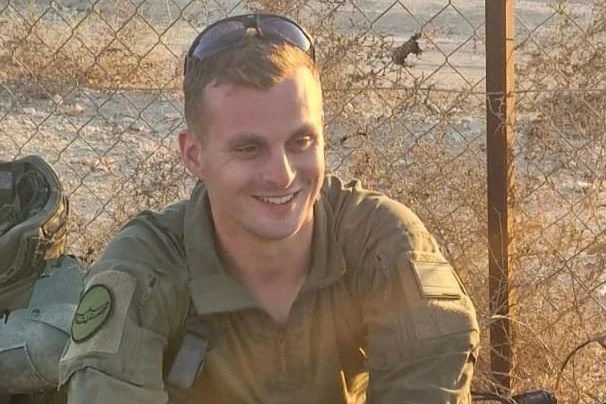
All photographs · 3
In the media
Articles
- Nahal commander honors fallen comrades and inspires a new generation of IDF soldiers
Israel National News ·
- Competing and Remembering: The Off-Road Duathlon in Memory of Triathlete Second Lieutenant Itay Yaavetz, of Blessed Memory
שוונג ·
- Fallen IDF Soldier Staff Sergeant Itay Yaavetz Is Being Laid to Rest in His City, Modi’in
וואלה ·
- The notes left by Itay Yaavetz, who fell in Rafah: “Beauty and goodness float around me”
ynet
- Nahal Soldier Staff Sergeant Itay Yavetz, of Blessed Memory, Laid to Rest; Brigadier General Yuval Bezek Eulogized Him: “Another Son I Have Lost” | Israel Hayom
ישראל היום
- The 42nd pin: “Erez Wings” awarded to the parents of Second Lieutenant Itay Yaavetz, of blessed memory, from Modi’in. Home, News – Modi’in Online
modiinonline.co.il
Show all (7)
- His Words, After His Passing – Modiin News
mnews.co.il
Memorial sites
- Yizkor — Second Lieutenant Itay Yaavetz
משרד הביטחון - יזכור
Memorial projects
On January 23, 2026, an off-road duathlon was held in his memory in Ben Shemen Forest, with more than 250 athletes from fifteen clubs, initiated by Maoz Triathlon and his coach Sharon Maoz.
At the graduation ceremony for the first cohort of the Erez program, Deputy Chief of Staff Tamir Yadai presented his parents with the Erez wings, the 42nd pin. The family distributed coffee kits in his memory to the graduates with a personal letter.
Stories told about them
Capt. Y., who commanded the engineering platoon, said Itay served as Kola’s radio operator on a mission to locate and destroy tunnels in eastern Rafah. He said both charged toward the terrorists, and he believes the charge prevented a greater disaster; this is Y.’s account and assessment.
His father said that following a message from a close friend, the family received Itay’s phone and found notes he had written to himself. At the funeral, he read Itay’s thoughts about studies, growth, responsibility, and meaning.
Life & service
Profile
- Date of birth
- February 27, 2004
- Birthplace
- Modiin-Maccabim-Reut
- Date of death
- October 19, 2025
- Age
- 21
- Hometown
- Modiin-Maccabim-Reut
Service
- Rank
- Second lieutenant
- Unit
- Nahal Brigade
- Honours
- Posthumously Promoted
- Battle Location
- Southern Gaza Strip
Family
- Father
- Avishai
- Mother
- Ayalah
Burial
Tributes & remembrance
יהי זכרו ברוך הכרתי אותו מהקיבוץ
Gur Ziv סמ״ר איתי יעבץ, בן 21, מודיעין-מכבים-רעות, לוחם בתכנית ארז בגדוד 932, חטיבת הנח״ל, נפל בקרב בדרום רצועת עזה. סמ"ר יעבץ, בוגר תיכון עירוני ג', הותיר אחריו את ההורים איילה ואבישי ואת האח רז. בני המשפחה ציינו כי "איתי היה נער מיוחד במינו. צנוע, מחייך תמיד, חבר אמת, אכפתי ושאפתן. המשפחה עבור איתי הייתה מרכז העולם, ובעיניו הטובות ראה את כולם. איתי היה פעיל בצופים והדריך את שכבת ד' בשלוחה של שבט ארבל בצופים. הוא גם הדריך את הקורס בשבט יובל במודיעין והיה דמות משמעותית מאוד בשבט האהוב עליו". עוד מסרה המשפחה: "איתי היה ספורטאי מצטיין, שהתחרה בטריאתלון, ובתיכון הצטרף לתוכנית קשת - תוכנית המנהיגות ששמה במרכז את ההיכרות עם אהבת הארץ והיכרות עם כל רובדי החברה הישראלית. לאחר סיום לימודיו יצא איתי לשנת שירות מטעם תנועת הצופים בנתיבות, שם המשיך להעניק מעצמו לסובבים אותו בפרויקטים בקהילה במסירות ובאהבה. "איתי רצה כל חייו לתרום, להגן על המדינה, להיות לוחם, לשרת את המדינה הכי טוב שאפשר ולהתקדם בצבא 'עד שימונה להיות רמטכ"ל'. הוא הצטרף למחזור הראשון של תוכנית 'ארז', תוכנית עילית בצה"ל להכשרת מפקדי העתיד של יחידות השדה. אהבתו לאדם, למדינה ולחיים עצמם תישאר חקוקה בלב כל מי שזכה להכירו". יהי זכרו ברוך.
And above all, the ability to see the good in so many people.
Source:וואלה
Read the Hebrew original
ובעיקר את היכולת לראות בכל כך הרבה אנשים, את הטוב.
He loved the moments when everyone gathered together
Source:modiinonline.co.il
Read the Hebrew original
הוא אהב את הרגעים שבהם כולם מתכנסים יחד
My son, I salute you
Source:ישראל היום
Read the Hebrew original
בן שלי, אני מצדיע לך
A young leader
Source:ישראל היום
Read the Hebrew original
מנהיג צעיר
An admired young man who led the way
Source:ישראל היום
Read the Hebrew original
בחור מוביל ואהוב
The team remains a team forever
Source:ישראל היום
Read the Hebrew original
הצוות נשאר צוות לנצח
Always in high spirits
Source:ישראל היום
Read the Hebrew original
תמיד עם מורל
A child of love, my Tuti. How I love you.
Source:ynet
Read the Hebrew original
ילד אהבה, תותי שלי. כמה שאני אוהבת אותך.
Itay had that spark. Charisma, leadership and ambition you don't find in everyone
Source:שוונג
Read the Hebrew original
באיתי היה אותו ניצוץ. כריזמה, כושר מנהיגות ואמביציה שלא מוצאים בכל אחד
Both Yaniv and Itai charged straight at the terrorists.
Source:Israel National News
Remembrance Day addresses
יום הזיכרון לחללי מערכות ישראל התשפ"ה – 2025
בכל יום שעובר, אזכור יותר! אזכור, את אלו שיצאו עימי לקרב ולא שבו, ולהם אין מי ידמה ומי ישווה. אזכור, שהכאב לא יעבור לעולם, והזמן, הוא לא מרפה ולא מרפא. אזכור, את שיברון הלב הגובר ואת הבית שבוער. אזכור, את צדקת הדרך, ואשבע שוב, שמה שהיה לא יהיה יותר. אזכור, שיותר מכל דבר אחר – אני חסר! ביום הזה, אני נתקף געגוע לדמותם, לחיתוך דיבורם, לחיוכם, ומדליק נר לזיכרון דרכם ומורשתם!
משרד הביטחון
אגף משפחות, הנצחה ומורשת
יום הזיכרון לחללי מערכות ישראל התשפ"ה – 2025
בכאב, בהצדעה ובתקווה אני מתכבד להדליק נר זיכרון זה. השנה, כשאנו נלחמים במלחמה ארוכה, רב זירתית וצודקת, הזיכרון נושא משמעות עמוקה. ביום זה נעצור ונתייחד עם זכרם של טובי בנינו ובנותינו שנפלו בהגנה על המדינה. מורשתם היא המצפן שמתווה את דרכינו, והיא המעניקה לנו כוח להמשיך ולהגן על מדינת ישראל ותושביה. משפחות יקרות, אנו מרכינים ראשנו ומתחייבים שנעמוד לצידכן תמיד. יהי זכר הנופלים ברוך.
אלוף דדו בר כליפא
ראש אגף כוח האדם, צה"ל
יום הזיכרון לחללי מערכות ישראל התשפ"ה – 2025
בשעה שאנו זוכרים את גודל תרומתם ועומק מסירות נפשם של טובי בנינו ובנותינו, נופלי מערכות ישראל לדורותיהן, ממשיכים צה"ל וכוחות הביטחון במימוש המשימה למענה לחמו ועבורה נפלו: הכרעת אויבינו מדרום, מצפון, ביהודה ובשומרון, וגם בזירות רחוקות יותר. בהערכה רבה ובגאווה אדירה אנו מרכינים ראש בפני הנופלים והנופלות, מאמצים את משפחותיהם אל לבנו, וממשיכים במשימה להבטחת קיומה של ישראל לדורי דורות. יחד נעשה ונצליח.
רב אלוף אייל זמיר
הרמטכ"ל, צה"ל
יום הזיכרון לחללי מערכות ישראל התשפ"ד – 2024
כאשר דגלינו מורדים לחצי התורן וראשינו מורכנים לזכר הנופלים והנופלות במערכות ישראל, ממשיכים לוחמי צה"ל ומפקדיו בלחימה בדרום, בצפון, ביהודה ובשומרון ובזירות נוספות. על כל דור מוטלת המשימה של הגנת העם והארץ – משימה שאף פעם אינה פוסקת. נצדיע בגעגוע ובגאווה לנופלים ולנופלות, נחבק את משפחותיהם, ונמשיך ברוח הציווי שהותירו לנו. עם ישראל חי.
רב ניצב יעקב שבתאי
המפקח הכללי, משטרת ישראל
יום הזיכרון לחללי מערכות ישראל התשפ"ד – 2024
אחיי הנופלים, כל נר הוא זיכרון יחיד ומיוחד, על חיים שהיו ואינם, געגוע שנצרב עמוק בלב, עולם ומלואו. הנרות כולם הם זיכרון של אומה כי לעולם לא עוד, בשורת הציונות וקוממיות ישראל. זיכרון כי הדרך לעם חופשי בארצנו עוברת דרך מסדר הנופלים. אור הנר יזכיר לנו את מסירות נפשכם להציל חיים, להגן על הבית. הנרות מסמנים לנו נתיב גבורה ערכי מחייב שאנו מצווים ללכת לאורו. נמשיך להילחם ולהוסיף אור מתוך אמונה בנצח ישראל.
יואב גלנט
שר הביטחון
יום הזיכרון לחללי מערכות ישראל התשפ"ד – 2024
בהצדעה ובכאב, בשם צה"ל כולו, אני מדליק נר זיכרון. בעיצומה של מלחמה, הזכרון נושא משמעות יום-יומית, שעבר והווה מתלכדים בה. לאורם של הנופלים נמשיך לצעוד, חיילי הסדיר והמילואים. לאורם של הנופלים נמשיך להגן על ארצנו ועל מולדתנו, גם כשהמחיר כבד. להבת-הזכרון תבער בנו בעודנו ממשיכים להלחם ונזכור את הנופלים ואת אומץ ליבם. משפחות יקרות, צה"ל מרכין היום ראש, מצדיע לכן וכואב איתכן. יהי זכר הנופלים ברוך.
אלוף יניב עשור
ראש אגף כוח האדם, צה"ל
יום הזיכרון לחללי מערכות ישראל התשפ"ד – 2024
בהוקרה, בגאווה ובכאב שאין לו סוף, אני מתכבד להדליק נר לזכרם של הנופלים והנופלות במערכות ישראל. סיפור חייהם בארץ הזאת, מסכת שירותם, גבורתם והקרבתם – הם סיפורה של הארץ הזאת, אך גם סיפור המחיר הכבד שהיא תובעת מאוהביה. מחויבותנו לזכר הנופלים ולדרך שהותירו לנו ניצבת תמיד לנגד עינינו. את המשימה שלא זכו להשלים, משלימים כיום, וישלימו, אנשי כוחות הביטחון, הממשיכים בדרכם ולאורם. יהי זכרם של הנופלים ברוך.
משרד הביטחון
אגף משפחות, הנצחה ומורשת
יום הזיכרון לחללי מערכות ישראל התשפ"ד – 2024
בחרדת קודש אני מתכבד להדליק נר לזכרם של חללי מערכות ישראל, חברנו שנפלו, מראשית היציאה מהחומות ולאורך כל שנות עצמאותנו המדינית והציונית, מהווים תמרור זיכרון לדרך חיינו ולמחוייבות הלאומית להנצחת זכרם. דרכם נותרה דרכנו ומורשתם נר להמשך עשייתנו. יהי זכרם ברוך!
בני גנץ
שר הביטחון
יום הזיכרון לחללי מערכות ישראל
נזכור אותם, כולנו יחד. כל אחד ואחת מהם, מדי יום ביומו, והיום ביתר שאת, כך – לנצח. "כי מדי דברי בו זכור אזכרנו עוד"
משרד הביטחון
אגף משפחות, הנצחה ומורשת