
The story
In Tel Aviv's Ichilov Hospital, as the sun began its descent on the 29th of Sivan, 5762 (June 9, 2002), a pivotal moment unfolded for Liat and Eyal Saadon. At precisely 6:35 PM, amidst the gentle commotion of the delivery room, Itay, their firstborn son, entered the world. He was a quiet, serious baby with a shock of black hair, dark eyes, and a wise gaze that, even before he uttered a sound, held a universe of curiosity and potential. He was the first grandchild for both the Saadon and Sadeh families, destined to fill the lives of Grandpa Eli and Grandma Miriam, and Grandpa Michael and Grandma Sima, with joy and pride. His first three years were spent in Modi'in, in a warm, spacious home that seemed built to accommodate his unique developmental pace. Itay was a child who "cooked" slowly, doing everything at his own rhythm, as if carefully examining each stage before moving on. There was no point in trying to rush him, for he simply wouldn't yield to external pressures, a trait that would accompany him throughout his life. By five months, he was already crawling, his small legs propelling his tiny body across the polished floor, eager to explore every corner of the house, but he chose to take his first steps only a year later. And when he finally decided to walk, he did so with confident, steady strides, without a trace of fear, as if walking on a runway paved just for him.
As a toddler, Itay spent long hours close to his parents, protected and warm in a baby carrier. He loved the feeling of closeness, the heartbeat of his mother or father, the familiar scent of their clothes. When they arrived at the playground, his eyes sparkled at the sight of the wide sandbox, where he built towers and castles with his small hands, feeling the soft grains slip between his fingers. He climbed the equipment with vigor, slid down the slide again and again, laughing loudly as the wind caressed his face. At home, he found a loyal companion in Toffee, the family's ginger cat. He could sit for hours petting her, following her graceful movements, feeling her soft fur beneath his palm. Already at three months old, his parents took him to baby swimming lessons, and from the very first moment, it was clear that water was his natural environment. He swam like a fish, with confidence and skill, and by the age of one, he had already crossed the width of the small pool by himself, his soft body gliding across the water, the sounds of splashing accompanying his short breaths. This was another reminder of his special temperament – when he decided to do something, he did it with utmost seriousness and professionalism, as if born for the task.
But what truly captured young Itay's imagination, perhaps more than anything else, was his intense fondness for cars and motor vehicles. Even before he could speak in full sentences, he could identify cars on the road by their structure and shape. He would point enthusiastically at passing vehicles, mumbling their names or unique characteristics. He could spend long hours watching tractors and bulldozers, captivated by their massive movement, the roaring sound of their engines, the way the enormous scoop dug into the earth and lifted piles of dirt. This wasn't just play; it was an obsession, the beginning of a romance with machines and power, with precision and speed. Alongside this affection, he displayed an impressive, almost supernatural, sense of direction. By the age of two and a half, he knew the way to kindergarten by himself, his small legs toddling confidently through the familiar streets, as if a living map was imprinted in his mind. As he grew, his talent only sharpened: his friends would cover his eyes, spin him around until he was completely disoriented, and when he opened his eyes, he immediately knew how to point north. "It's like I have a compass in my head," he used to say with a smile, almost apologetic for this extraordinary gift. Given this talent, his role in family trips abroad was clear: he was the chief navigator, leading the family through unfamiliar city streets. A quick glance at a map, a brief moment of concentration, was all he needed, and he would already know the way, the correct turns, the hidden destinations. It was an essential part of his identity, the knowledge that he always knew where he was going, always found his way.
When Itay was three, the family made a significant change in their lives, moving to the community of Har Halutz in the Galilee, a small and pastoral place, surrounded by green nature and breathtaking views. Here, among the mountains and trees, he grew, learned, and shaped his personality until the end of 12th grade, at the regional high school in Misgav. The clear air, the quiet, and the open spaces served as a fitting backdrop for his developing character. During this period, his beloved younger sister, Mika, joined the family. From the outset, it was important to his parents not only to raise Itay and Mika individually but also to foster the special bond between them. The message was clear: there was no competition between them, there was enough love and resources for everyone, and their relationship was a priceless asset. Their relationship was full of caring, mutual consideration, and deep understanding. Their concern for each other stemmed not from obligation, but from pure will and love. When Itay participated in a "take-and-give market" at school, he made sure to bring a small gift for Mika too, thinking of her even when he was engrossed in his own affairs. And when Mika discovered a new and delicious snack, she always left a portion aside so Itay could taste and enjoy it with her.
Mika, later, spoke of this special bond with deep longing: "We did a lot of things together, but what was best for me was the feeling that I was protected and safe when I was next to him, that there was someone looking out for me." She remembered one incident in particular, when she was in elementary school and someone annoyed her on the school bus. When they got off, she saw Itay agitated, his face tense. "I asked what happened and he said: 'If someone bothered you, it concerns me.'" These words, spoken with the determination of an older brother, etched in her the strength of their connection and the feeling of absolute security Itay provided her. Their bond didn't always require words; often, mere presence was enough. "I could sit next to him on the bed for an hour or two, not talking, but together. That was the communication between us," she recounted, describing the meaningful silence, the non-verbal understanding that connected them so deeply.
Itay also loved spending time with his cousins and was very close to them. Every summer, all the cousins spent a full week at Grandpa Eli and Grandma Miriam's moshav, an experience that was a landmark in the family calendar. This week was packed with treats, laughter, and a variety of attractions prepared by their loving grandparents. One year, for Tu B'Shvat, the grandchildren planted loquat trees in Grandpa and Grandma's well-tended yard, each grandchild getting their own tree, inaugurating it with a festive ceremony. Since then, every year, measuring the height of the tree against the height of the grandchild became an amusing tradition, a symbol of shared growth, both natural and human. On Fridays, the entire family gathered for a festive Shabbat dinner at Grandpa Michael and Grandma Sima's. Itay especially loved the pizza and fried eggplant his grandmother prepared, the kitchen aromas filling the house, and he would sit at the large table, savoring every bite, surrounded by love and family warmth. With his grandfather, Michael, who passed away when Itay was only nine, he spent his early childhood years on small excursions, sitting in a stroller or tricycle, Grandpa gently pushing him, their voices mingling in rolling laughter.
Itay always insisted on doing things his own way, with a pleasant stubbornness and self-confidence. He was very attuned to his inner desires, knew how to express them clearly, and did not succumb to social pressure. This trait was also evident in his studies. He proved to his parents and teachers again and again that he would always do everything at his own pace, even if it meant deviating from the norm or raising questions. When he was in sixth grade, for example, he struggled greatly with English. Although he studied with a private tutor and gained some confidence, his grades remained low in junior high, which worried his parents. But then, at the end of ninth grade, he flew with his family on a cross-country trip in the USA, an experience that was supposed to be just a fun vacation. There, to everyone's surprise, he chatted in English calmly and confidently, engaging in conversations with locals, asking questions, understanding jokes. When his parents asked in amazement, "How do you know English so well? Your grades are...", he replied with a mischievous smile, "Remember that question next time you tell me I spend too many hours on YouTube." The small screen, which they saw as a waste of time, became a powerful learning tool for him.
In tenth grade, another "proof" of Itay's unique approach arrived: he scored six out of a hundred on a math test. His parents recount that it was so "talented" of him to manage to get so few points on the test that it became a running joke between him and his friends. His parents' educational approach was based on trust and free choice: they allowed their children to take responsibility and make independent decisions about their lives. They explained to him the need to invest in his studies, the importance of mathematics, but left the final decision to his discretion. And indeed, in the end, when it truly mattered to him, Itay took the matriculation exam in four units of mathematics and scored ninety-six out of a hundred, proving once again that if he wanted to, he was capable of anything. As part of the electronics major he studied in high school, he had the honor of representing the school in an international robotics competition in the USA. Together with his team, he worked long hours, planning, building, and programming the robot, focused and alert. They won third place and he returned with a gleaming medal, another symbol of his technical talent and determination.
When he finished high school, the family moved to Tel Aviv, a dramatic change from the Galilean quiet. Itay loved the big city, its vibrant energy, bustling streets, and endless opportunities. He enjoyed spending time there until his enlistment in the army, soaking in the urban atmosphere. Before his enlistment, he worked at an ice cream parlor on Dizengoff Street, behind the polished counter, serving colorful scoops of ice cream to satisfied customers. There, amidst the vanilla and chocolate flavors, he made good friends and met Liza, his beloved. The first buds of love blossomed between coffee cups and whipped cream, accompanied by sweet laughter and long conversations into the night.
But above all, above studies, work, friends, and love, hovered Itay's great and old dream: to be a pilot. Every path of his life was directed towards the fulfillment of this dream, which was deeply ingrained in him since childhood. He built complex models of airplanes, displayed them in his room, identified planes in the sky with incredible ease by their silhouette and engine noise, and knew all the famous stories of malfunctions, emergency landings, and botched flights, as if they were folk tales. When he was nine, he acquired his first simulator, and the world opened up to him. He kept a neat and detailed flight logbook, in which he prepared complex flight paths, learned the names of airports from all over the world, as well as the names and functions of all the buttons and instruments in the cockpit, as if he were a professional pilot preparing for his first flight.
As a teenager, he was a guide in the "Working and Studying Youth" movement, and even there, his dream found expression. From time to time, he invited his trainees home, not just for educational discussions, but to teach them to fly on the simulator, to infect them with the flying bug. He didn't just teach children; he also taught adults in a group of simulator enthusiasts from all over the world, sharing his vast knowledge. He prepared detailed and professional instructional videos for anyone interested in learning from him, with patience and clarity. On flights abroad with his family, he always asked to sit by the window, and over the wing. It wasn't the breathtaking view that interested him so much, but the movement of the engines, the opening and closing of the flaps, the mechanical precision. He could talk about it for hours, explaining the mechanics, the physics, the magic behind every movement.
His Bar Mitzvah trip took the family to Paris and London, a classic European experience. But the highlight for Itay was on the way back, when they boarded an El Al flight on a Boeing 737, his favorite plane on the simulator. During the flight, the pilots responded to his polite request and let him into the cockpit. There, among hundreds of buttons and screens, they were impressed by his amazing knowledge and deep familiarity with every single detail. They invited him to sit beside them again during the landing, an experience that became an unforgettable moment for him, sealing his dream in reality, if only for a brief moment. Itay was what parents call a "good kid" in the deepest sense of the word: attentive, responsible, and intelligent. He was not prone to anger, and received very few punishments from his parents, if any, as a child and teenager. It was very difficult to argue with him, as he always knew how to listen and understand, and it was very easy to talk to him. All his relatives and acquaintances knew they could trust him implicitly. He was a good and caring friend, a pleasant and intelligent conversationalist, who knew many things and was always happy to share his knowledge and teach others, with patience and humor.
His relationship with his parents was very close, a bond of trust and mutual understanding. With his father, Eyal, he shared many interests, which became cornerstones of their special connection. As a child, he went with his father to games of his childhood team, Hapoel Acre in soccer, an experience that became a tradition. Since then, they spent a lot of time together at the fields, watching games, analyzing plays, sharing the tension and joy. Itay supported Hapoel Acre and Maccabi Tel Aviv, and as a child, he participated in a soccer club. He especially loved being the goalkeeper, standing in the goal, examining the direction of the approaching ball, calculating angles and speeds. He explained that he didn't like to run on the field, and preferred to calculate the angle at which the ball was supposed to meet him in the goal, precision and calculation versus physical effort, again a characteristic trait of his. Running was indeed not his strong suit, but when it came to motor games, he excelled particularly, as if born with genes tuned for speed and precision. He diligently followed Formula 1 car races, sweeping his father along, and watched all the races with him, trembling with excitement in front of the screen, analyzing every turn and every overtake. He was an active member of the Israeli Formula 1 car racing simulator community and participated in many competitions. Even when he was in the army, despite the workload and long hours, he used to arrive at competitions in uniform and with his weapon, sometimes after a sleepless night, just to participate. And although he didn't have time to practice like the other participants, he managed to reach the finals and finish the competition in the top ten, further proof of his determination and natural talent.
He traveled extensively around the world with his family, experiencing new cultures, tasting new and exciting foods, and discovering interesting places. In his short life, he managed to visit thirteen countries, each leaving its mark on him. He was curious, loved to delve into and learn things that interested him, and lived a diverse, rich, and fulfilling life. He dared to ride the scariest roller coasters in the world, screaming with laughter or tension as the train plunged downwards at dizzying speed. He climbed on foot to the top of the Eiffel Tower, breathless but determined, enjoying the panoramic view of Paris spread out at his feet. He learned to fly a drone, controlling it with amazing precision, and tried surfing, feeling the power of the ocean beneath his feet. In one of the pivotal moments, trying to convince his mother to go skydiving as a family, he told her words that almost became his motto: "Mom, when life offers you an experience, say yes." Despite her natural fears, she couldn't resist him, and between moments of fear and excitement, she agreed. And the four of them, the whole family, skydived together, sharing an unforgettable experience, suspended between heaven and earth, almost touching Itay's great dream.
When Itay received his first draft notice, it was, for him, the crucial first step toward fulfilling his dream of becoming a pilot. At that moment, his mother, Liat, decided to document his exciting journey, and began writing a moving blog titled "Raising Wings – A Diary of a Potential Pilot's Mother." She followed him step by step, describing the tension, the hopes, the anticipation. Itay passed the various stages on the path to the coveted flight course, each stage bringing him a little closer to the sky. But ultimately, he fell at the last stage – the *gibush* (selection camp). That moment, when the *gibush* results arrived, was unbearable. He broke. For two long days, he cried in bed, hurting and desperate, his great dream shattered in an instant. But then, as always, he got up. He got out of bed, his eyes still red, and told his mother the sentence that expressed his inner strength: "My dream is bigger than this; if they closed this door, I will find another door." He didn't give up. He planned to be discharged from his military service and go to study civil aviation in Canada, an alternative path, but no less determined.
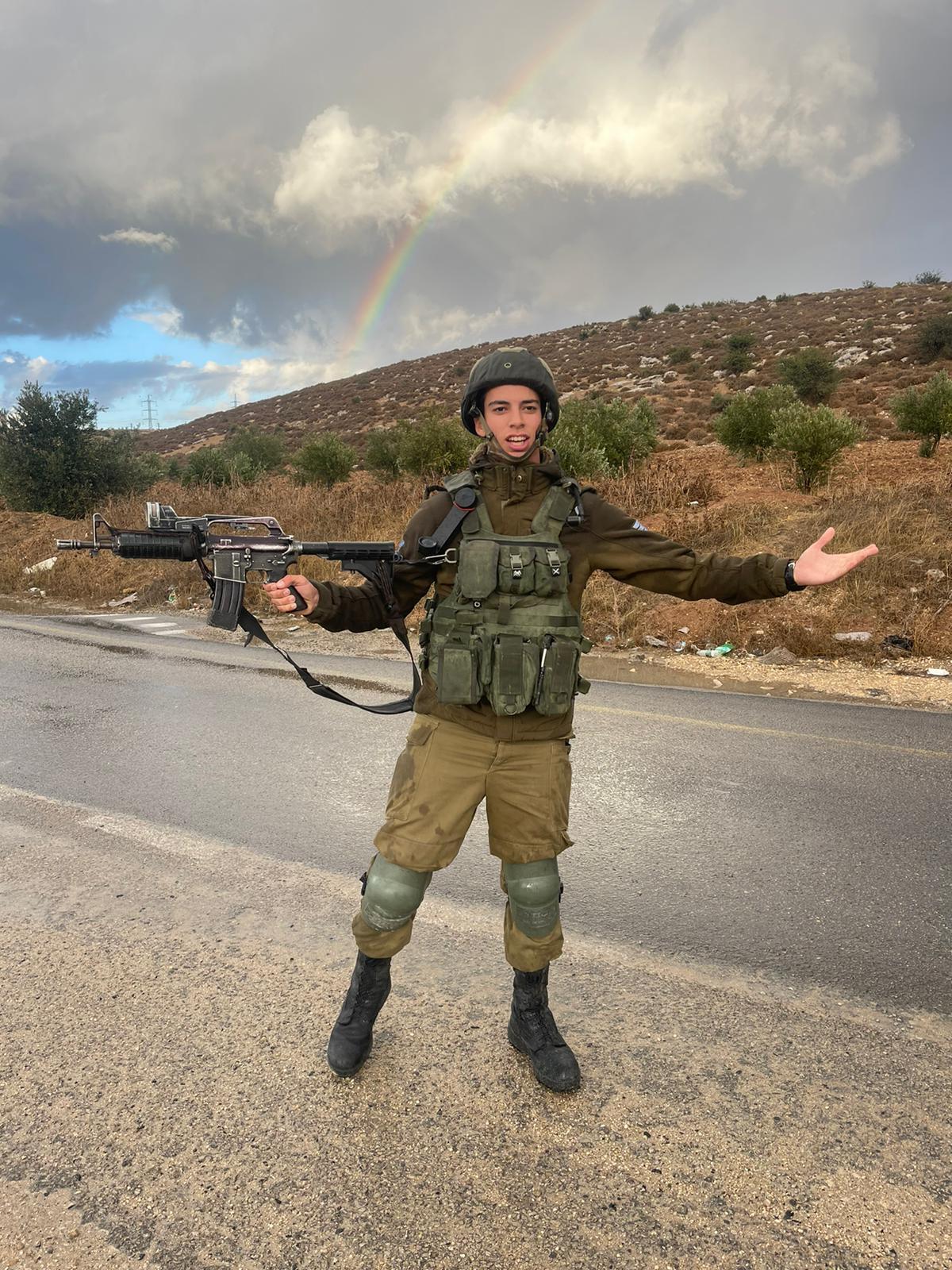
On March 22, 2021, Itay enlisted in the IDF and served in the Armored Corps, a tough and demanding corps, so far from the skies he loved so much. Later, he went on to a tank commander's course, where he began to learn the secrets of command and combat. In his course notebook, in his neat handwriting, he wrote his vision for the commander he wanted to be: "The commander I want to be: to listen to my soldiers, to see their current situation and act accordingly, without being stubborn. To be a friend to my soldiers, to laugh with them when possible, to be someone they can always turn to, but also to be tough with them when necessary. Not to order my soldiers to do something I wouldn't do. And if I ordered something that is on the verge of illogical, then to set an example and be the first to lead the mission. To be myself, not to give up who I am and what I am because of the commander's role." He meant every word, and he applied it in every action and every conversation with his subordinates.
When he had the opportunity to participate in the operational training of the new "Barak" tank, his eyes sparkled with enthusiasm. He was amazed by the cutting-edge technology, the advanced screens, the unprecedented capabilities. He knew every button and every system, as if they were the cockpit buttons of an airplane. "This is the closest thing to operating a plane," he enthusiastically claimed, finding comfort and connection to his dream even within the armored vehicle. The battalion commander, who noticed his talent, his motivation, and his quality as a commander, offered him to go to officer's school, to continue in permanent service, to become an officer. But Itay replied honestly and sadly that he indeed loved the company, his friends, the challenge, but he had a bigger dream to fulfill in civilian life, and therefore would not be able to sign on for permanent service. His dream of being a pilot in the civilian world was stronger than any military role, however important. When his parents received his personal belongings after his death, they found a military notebook with the title "Commander's Notebook" printed on it, and next to it, in Itay's handwriting, in a small and touching addition, was written: "And a future pilot." These two words summarized his life, the role he filled, and the dream that still simmered within him.
After a difficult and challenging service in the territories, which included long guard hours, complex operational activities, and constant tension, Itay received a certificate of excellence for his performance. At the end of the ceremony, surrounded by his friends and commanders, he wrote on his Instagram page words that became a legacy: "Always give 100% of yourselves, even when it's hard, especially when it's hard. Work hard even if you don't want to be where you are, because you're already there, so make an impact. Do good and good will return to you." These were not just words; these were life principles, a philosophy of giving, perseverance, and influence.
On Saturday, the 22nd of Tishrei, Simchat Torah 5784, October 7, 2023, at 6:30 AM, the quiet was shattered. The Hamas terrorist organization launched a brutal and unprecedented surprise attack on Israel. Under the cover of massive barrages of thousands of missiles and rockets from the Gaza Strip into wide areas of the country, thousands of terrorists infiltrated – by land, sea, and air – and began a murderous assault on the Gaza envelope communities and everyone in the area. That morning, a war began, a war that would change the face of the country and the lives of so many. The Simchat Torah weekend was supposed to be Itay's last Shabbat in uniform before his eagerly anticipated discharge, which was scheduled for November 15. He had already bought flight tickets to Berlin, where he planned to spend a post-army trip with his friends. But on that cursed Saturday, all plans changed. Itay, as always, volunteered to spend Shabbat at the base in the Golan Heights, with his soldiers and company friends, looking after them, being there for them. On Shabbat, with the outbreak of the attack, it was decided to send them south, into the heart of the inferno.
From that moment, Itay began to write a war diary, a chilling account of the first tense days: "Boom! Saturday, 7:00 AM, phone call to the company commander: 'Do you see what's on the news? They're going to scramble us...' I try to go back to sleep, maybe it's just a dream. I can't, it's reality... The company commander grabs me: 'Get me three soldiers for the forward command post' and then stops and asks: 'Do you want to come with me?' The command post goes first, at the front, but I don't want to be first. I look at him and say: 'Yes, I'm with you.'" These words, written amidst the chaos, express the tension, the initial helplessness, and then the courageous decision, the choice to be on the front lines, to protect, to fight. Itay was supposed to fly to Berlin, for a trip of freedom and release, but instead, he remained in the army, remained to defend his home, his people, the future of his dream.
After several weeks of intensive training and preparation, during which they trained non-stop, sharpening their skills, learning the terrain, and practicing various scenarios, Itay, along with the ground forces, entered the fighting in the Gaza Strip. He fought bravely, commanding his tank with determination and professionalism, performing his duty fearlessly, leading his soldiers forward, protecting them, instilling confidence in them. He operated the tank, button after button, with the expertise of someone who mastered the machine, with the precision of a pilot, navigating the armored vehicle through the crowded city alleys, amidst the ruins and fire. On Thursday, November 2, 2023, during a bloody battle in the northern Gaza Strip, Itay was hit. He was shot in the chest, and died on the spot. Staff Sergeant Itay Saadon fell in battle on the 18th of Cheshvan 5784, at only twenty-one years old. He was laid to rest in the cemetery in Misgav, close to the home where he grew up, leaving behind his parents, Liat and Eyal, and a beloved sister, Mika, and thousands of dreams cut short prematurely.
On his tombstone, the family engraved the chilling words: "Sometimes the world from above looks beautiful and distant for human eyes to see." These words, more than anything, express his essence, his dream, and the place where he is now. His mother, Liat, eulogized him with heartbreaking words, interwoven with infinite love and deep longing: "Every path of your life was dedicated to fulfilling your great dream of being a pilot... At sixteen, you received the coveted summons for flight selections... until the message arrived: 'Unfortunately, you did not pass the *gibush*'... There you broke. For two days you cried in bed and then you got up and told me: 'My dream is bigger than this, if they closed this door, I will find another door'... Your eyes were always fixed on the sky, searching for planes, and now you are in the sky and have received wings. Of an angel." Liza, his beloved, wrote him moving words: "My Itay, you were an amazing person, friendly, kind, introverted, good-hearted, funny, handsome, goal-oriented, someone who leads and influences others... When I talked about you, I used to say: 'My boyfriend who is a future pilot.' I was happy that you finally found a flight school in Canada, even if it meant we would have to live on two different continents for five years... You were supposed to be the pilot who scatters hearts from above, because that's who you were, you touched all hearts."
Itay's legacy lives on in many hearts. He is commemorated on the "Wall of Names" of the fallen of the Armored Corps in Latrun, where his name is carved in stone, as well as on the website of the "Working and Studying Youth" movement, where he was a beloved guide. The Israeli Formula 1 Simulator League, of which he was an active and outstanding member, held an event in his memory, where everyone spoke of how determined he was, how he persevered and never gave up on himself even when he encountered difficulties. One of his friends asked his parents for a picture of Itay, to put it in his wallet, and explained: "I enrolled in studies at the Technion, I know it's going to be challenging, and I want to look at Itay's picture in difficult moments, so I can draw strength from him and not break." One of Itay's soldiers wrote to him after his death: "I used to tell you all the time that I wanted you to continue to be my commander even after discharge and suddenly it happened. I wake up in the morning and look at your picture and it gives me strength." The Israeli Sport Aviation Association held a flyover in his memory, exactly one year after the date he was supposed to be discharged from the IDF. Sixty-five planes, as if accompanying him on his last journey to the sky, drew hearts and flight paths in his memory. At Atid Tafen High School, a tree planting ceremony was held in Itay's memory, a tree that will grow and flourish, a symbol of a life cut short but continuing to make an impact. His mother, Liat, read the blog she wrote about him in a moving episode of the "One a Day" podcast, titled: "Raising Wings: A Farewell Diary from Itay Saadon," her voice trembling but determined, sharing her son's story with the world. His father, Eyal, launched a website called "Tweets for Itay" – tweetsforitay.com – where he compiled all the tweets he wrote about Itay on Twitter, in his life before and after his fall, documenting every moment, every thought, every longing. And Itay's sister, Mika, chose to follow in his footsteps and enlist in the Armored Corps, guided by her brother's legacy. Mika received Itay's personal weapon, and at the graduation ceremony for armored instructor course, her parents gave her his beret, a symbol of the tradition, heroism, and giving that was deeply ingrained in her brother. Itay Saadon, a future pilot, a commander in the present, a hero forever. May his memory be eternal.
Moments of a life
All photographs · 3
In the media
Articles
Podcasts
Memorial sites
- Yizkor - Staff Sergeant Itay Saadon
משרד הביטחון — יזכור
- The life story of Itay Saadon
אתר איתי סעדון
Memorial projects
A Formula 1 simulator league held a memorial event, and the sport aviation association held a flyover of 65 aircraft. A tree was planted at Atid Tefen; his mother read her farewell diary on the Ehad Bayom podcast, and his father collected writings on the Tziutzim Le’Itay website.
Stories told about them
Even as a child, Itay was interested in flight simulators. Returning from a bar mitzvah trip, he was invited into the cockpit, impressed the pilots with his knowledge of the instruments and sat beside them during the landing as well.
Life & service
Profile
- Date of birth
- June 9, 2002
- Birthplace
- Tel Aviv-Yafo
- Date of death
- November 2, 2023
- Age
- 21
- Hometown
- Har Halutz
Service
- Rank
- Staff sergeant
- Battle Location
- North Gaza Strip
Family
- Father
- Ayal
- Mother
- Liat
Burial
Cemetery
Misgav
Tributes & remembrance
תודה שהגנת על אלינו
איתי יקר, נכנסתי בעקבות פרסום של אמא שלך בפייסבוק. היה חשוב לי לקרוא עליך לזכור אותך עוד קצת ולכבד את ההקרבה שלך ושל המשפחה שלך, כדי שנזכה לחיים טובים יותר כאן. אוהבים ולא שוכחים
איתי היקר אוהב אותך כ"כ אתה בנאדם מדהים יהי זכרו ברוך
געגועים אלייך אחיין יקר
גיבור אמיתי ילד של כל עם ישראל .
לא זכיתי להכיר אותך וחבל..
הכרתי את סבך אלי שדה שממשיך במפעל חייו מבוך מרים יחד עם הנצחתך..
אני מכירה את איתי רק דרך כתיבתה של ליאת, אמו.
מדליקה נר לזכרו ומייחלת לימים קלים וטובים יותר למשפחה ולכל עם ישראל
תודה לך איתי היקר, על מה שנתת למען העם הזה. תנוח בשלום על משכבך גיבור.
ילד מדהים גיבור !!!
לא מכיר אבל מהקריאה עליו עלות דמעות איזה הפסד
יפה חכם ומרתק באשיותו. איך שהעולם הפסיד אותך איתי. לבכות לך ....
יהי זכרו ברוך!!
תודה איתי, במותך ציוות לנו את החיים.
יהי זכרו ברוך.
יהי זכרו ברוך
תודה ששמרת עלינו
יהי זכרו ברוך, מלח הארץ
לא הכרתי אותך, אבל שמעתי את הסיפור שלך דרך ההורים הטובים שלך, אמא שלך שרטטה אדם מדהים וערכי ופשוט קרעה לכולנו את הלב. תשמור עליהם ילד יפה.
איתי
כמו מטוס שטס בשמיים , אתה הינך מרחף מעל העננים ופורש כנפי מלאך כמו מטוס.
אני אוהבת אותך ומתגעגעת
איתי אחייני האהוב
מתגעגעת אלייך מתגעגעת לסיפורים שלך
מתגעגעת בבילוים שלנו ביחד
יהי זכרו ברוך
יהי זכרו ברוך
יהי זכרו ברוך
תנצב״ה
מכירה אותך איתי, רק אחרי נפילתך, בעקבות מעקב אחרי סיפורי אמך ומיקה ומצדיעה בלב שבור. מי יתן ונהיה ראויים
יהיה זכרך ברוך גיבור ישראל
נגעת בשמיים ומעבר להם
לנצח נזכור אותך
לא הכרתי אותך אישית אבל שמעתי סיפורים עליך אלוף
תמיד נזכור אותך ותמיד תישאר בן 21
נזכור תמיד
מדליקה נר שני לזכרך געגועים
לא היכרתי אותך אבל שמעתי עליך, כנראה שלאלוהים היה חסר רציני במלאכים שהוא קטף אותך
I could sit beside him on the bed for an hour or two
Source:משרד הביטחון — יזכור
Read the Hebrew original
הייתי יכולה לשבת לידו על המיטה במשך שעה או שעתיים
And you received wings. An angel's wings
Source:משרד הביטחון — יזכור
Read the Hebrew original
וקיבלת כנפיים. של מלאך
Because that is who you were, you touched every heart
Source:משרד הביטחון — יזכור
Read the Hebrew original
כי כזה היית, נגעת בכל הלבבות
So that I can draw strength from him and not break
Source:משרד הביטחון — יזכור
Read the Hebrew original
כך שאוכל לשאוב ממנו כוח ולא להישבר
I get up in the morning and look at your picture
Source:משרד הביטחון — יזכור
Read the Hebrew original
אני קם בבוקר ומסתכל על התמונה שלך
Over the years, the street emptied of bicycles and the sounds of play, and the children, who had grown into teenage girls and boys, moved on to hanging out at one of the houses
Source:N12
Read the Hebrew original
עם השנים הרחוב התרוקן מאופניים וקולות משחקים, והילדים שגדלו להיות נערות ונערים, עברו לעשות 'ישיבות' באחד הבתים
His biggest dream was to be a pilot
Source:The Times of Israel
Itay said that he wanted to continue to live there and raise his children there
Source:The Times of Israel
My relationship with Itay hasn't ended; it has just transformed.
Source:Ynetnews
Remembrance Day addresses
יום הזיכרון לחללי מערכות ישראל התשפ"ה – 2025
בכל יום שעובר, אזכור יותר! אזכור, את אלו שיצאו עימי לקרב ולא שבו, ולהם אין מי ידמה ומי ישווה. אזכור, שהכאב לא יעבור לעולם, והזמן, הוא לא מרפה ולא מרפא. אזכור, את שיברון הלב הגובר ואת הבית שבוער. אזכור, את צדקת הדרך, ואשבע שוב, שמה שהיה לא יהיה יותר. אזכור, שיותר מכל דבר אחר – אני חסר! ביום הזה, אני נתקף געגוע לדמותם, לחיתוך דיבורם, לחיוכם, ומדליק נר לזיכרון דרכם ומורשתם!
משרד הביטחון
אגף משפחות, הנצחה ומורשת
יום הזיכרון לחללי מערכות ישראל התשפ"ה – 2025
בכאב, בהצדעה ובתקווה אני מתכבד להדליק נר זיכרון זה. השנה, כשאנו נלחמים במלחמה ארוכה, רב זירתית וצודקת, הזיכרון נושא משמעות עמוקה. ביום זה נעצור ונתייחד עם זכרם של טובי בנינו ובנותינו שנפלו בהגנה על המדינה. מורשתם היא המצפן שמתווה את דרכינו, והיא המעניקה לנו כוח להמשיך ולהגן על מדינת ישראל ותושביה. משפחות יקרות, אנו מרכינים ראשנו ומתחייבים שנעמוד לצידכן תמיד. יהי זכר הנופלים ברוך.
אלוף דדו בר כליפא
ראש אגף כוח האדם, צה"ל
יום הזיכרון לחללי מערכות ישראל התשפ"ה – 2025
בשעה שאנו זוכרים את גודל תרומתם ועומק מסירות נפשם של טובי בנינו ובנותינו, נופלי מערכות ישראל לדורותיהן, ממשיכים צה"ל וכוחות הביטחון במימוש המשימה למענה לחמו ועבורה נפלו: הכרעת אויבינו מדרום, מצפון, ביהודה ובשומרון, וגם בזירות רחוקות יותר. בהערכה רבה ובגאווה אדירה אנו מרכינים ראש בפני הנופלים והנופלות, מאמצים את משפחותיהם אל לבנו, וממשיכים במשימה להבטחת קיומה של ישראל לדורי דורות. יחד נעשה ונצליח.
רב אלוף אייל זמיר
הרמטכ"ל, צה"ל
יום הזיכרון לחללי מערכות ישראל התשפ"ד – 2024
כאשר דגלינו מורדים לחצי התורן וראשינו מורכנים לזכר הנופלים והנופלות במערכות ישראל, ממשיכים לוחמי צה"ל ומפקדיו בלחימה בדרום, בצפון, ביהודה ובשומרון ובזירות נוספות. על כל דור מוטלת המשימה של הגנת העם והארץ – משימה שאף פעם אינה פוסקת. נצדיע בגעגוע ובגאווה לנופלים ולנופלות, נחבק את משפחותיהם, ונמשיך ברוח הציווי שהותירו לנו. עם ישראל חי.
רב ניצב יעקב שבתאי
המפקח הכללי, משטרת ישראל
יום הזיכרון לחללי מערכות ישראל התשפ"ד – 2024
אחיי הנופלים, כל נר הוא זיכרון יחיד ומיוחד, על חיים שהיו ואינם, געגוע שנצרב עמוק בלב, עולם ומלואו. הנרות כולם הם זיכרון של אומה כי לעולם לא עוד, בשורת הציונות וקוממיות ישראל. זיכרון כי הדרך לעם חופשי בארצנו עוברת דרך מסדר הנופלים. אור הנר יזכיר לנו את מסירות נפשכם להציל חיים, להגן על הבית. הנרות מסמנים לנו נתיב גבורה ערכי מחייב שאנו מצווים ללכת לאורו. נמשיך להילחם ולהוסיף אור מתוך אמונה בנצח ישראל.
יואב גלנט
שר הביטחון
יום הזיכרון לחללי מערכות ישראל התשפ"ד – 2024
בהצדעה ובכאב, בשם צה"ל כולו, אני מדליק נר זיכרון. בעיצומה של מלחמה, הזכרון נושא משמעות יום-יומית, שעבר והווה מתלכדים בה. לאורם של הנופלים נמשיך לצעוד, חיילי הסדיר והמילואים. לאורם של הנופלים נמשיך להגן על ארצנו ועל מולדתנו, גם כשהמחיר כבד. להבת-הזכרון תבער בנו בעודנו ממשיכים להלחם ונזכור את הנופלים ואת אומץ ליבם. משפחות יקרות, צה"ל מרכין היום ראש, מצדיע לכן וכואב איתכן. יהי זכר הנופלים ברוך.
אלוף יניב עשור
ראש אגף כוח האדם, צה"ל
יום הזיכרון לחללי מערכות ישראל התשפ"ד – 2024
בהוקרה, בגאווה ובכאב שאין לו סוף, אני מתכבד להדליק נר לזכרם של הנופלים והנופלות במערכות ישראל. סיפור חייהם בארץ הזאת, מסכת שירותם, גבורתם והקרבתם – הם סיפורה של הארץ הזאת, אך גם סיפור המחיר הכבד שהיא תובעת מאוהביה. מחויבותנו לזכר הנופלים ולדרך שהותירו לנו ניצבת תמיד לנגד עינינו. את המשימה שלא זכו להשלים, משלימים כיום, וישלימו, אנשי כוחות הביטחון, הממשיכים בדרכם ולאורם. יהי זכרם של הנופלים ברוך.
משרד הביטחון
אגף משפחות, הנצחה ומורשת
יום הזיכרון לחללי מערכות ישראל התשפ"ד – 2024
בחרדת קודש אני מתכבד להדליק נר לזכרם של חללי מערכות ישראל, חברנו שנפלו, מראשית היציאה מהחומות ולאורך כל שנות עצמאותנו המדינית והציונית, מהווים תמרור זיכרון לדרך חיינו ולמחוייבות הלאומית להנצחת זכרם. דרכם נותרה דרכנו ומורשתם נר להמשך עשייתנו. יהי זכרם ברוך!
בני גנץ
שר הביטחון
יום הזיכרון לחללי מערכות ישראל
נזכור אותם, כולנו יחד. כל אחד ואחת מהם, מדי יום ביומו, והיום ביתר שאת, כך – לנצח. "כי מדי דברי בו זכור אזכרנו עוד"
משרד הביטחון
אגף משפחות, הנצחה ומורשת