
The story
The late November sun, gentle yet clear, caressed the verdant hills of Samaria as it emerged over the eastern horizon, casting its first light upon the nascent caravan homes taking root in the community of Karnei Shomron. On such a day, the 16th of Kislev, 5760, almost twenty-five years ago, Israel Sokol was born, the fourth child to Marina and Yehoshua, a younger brother to Anna, Dina, and Yaakov, and later, an older brother to Yonatan. The home in which he grew up was a warm, bustling nest, vibrant with life, where five children absorbed from their parents the values of hard work and giving. Marina, their mother, toiled day and night, not merely to provide for the family, but to ensure that each of her children received the best possible foundation, the support system that would allow them to flourish. This wasn't just about material needs; it was a deep investment in education, in values, in instilling a sense of belonging and responsibility. Israel absorbed this spirit from the very beginning, and it became an inseparable part of who he grew to be – a beloved, smiling, and special child, whose primary focus was always on giving.
As a child in Karnei Shomron, Israel was an integral part of the landscape. He wasn't the type of child who would retreat indoors with books or screens; he was outside, exploring, climbing, getting dirty, breathing the crisp air of the hills. From a young age, his hands knew the softness of muddy earth after rain and the feel of warm granules in the July heat, as summer seeds were sown in the furrow. He didn't just "love" agriculture; he lived it. He vividly remembered the times he rose at dawn, even before the sun painted the Samarian peaks in deep orange, to go out with his father or neighbors to the fields of the nearby kibbutz. The tired rumble of the old tractor's engine, the cold air whipping his face as he sat in the open seat, and above all – the rich, earthy scent of damp soil mingling with the smell of diesel and sweat. The sense of satisfaction at the end of a workday, when his body ached and the sun was setting, was for him deeper than any classroom lesson. He saw it not just as work, but as an ancient conversation with the land, a way to truly understand it, not through books but through muscle and breath.
He spent his elementary school years at the local "Rimon" school, where he stood out not only for his intelligence but also for his huge smile and generous heart. He wasn't one of the attention-seekers, those who shout their opinions at every turn, but rather the quiet type, who absorbed every detail, thought deeply, and only then spoke. In Torah lessons, he was always the one who asked the surprising question, the one that opened new avenues of thought, and in nature studies, he was the one who could identify every plant and bird in the vicinity, not from rote memorization, but from personal acquaintance. In the "Amirim" troop of the Scouts movement, which he joined in his youth, Israel found another framework to realize his love for the land and for community. He was a beloved guide, not because he was the "coolest" or most vocal, but because of his authenticity, because of the way he knew how to listen and contain, and because of his ability to lead precisely through personal example. The long hikes, where he carried a backpack too large for his frame and still managed to encourage the weaker members of the group, were for him not just a social activity, but practical lessons in getting to know the land "through one's feet," as he often said. He learned to recognize every path, every wadi, every ancient carob tree that had witnessed countless stories.
As he grew older, his prominent traits sharpened. His wide smile, which had already become his trademark, was not merely a facial expression but a reflection of a good and open soul. He was a "fighter" in the deepest sense of the word – not just a warrior on the battlefield, but a fighter in life itself, one who never gave up on a goal he set for himself, who strived for excellence in everything he touched. He was known for his endless energy, but also for his ability to channel it to the right places. "Says little and does much" – a phrase his friends used to say about him, and indeed, he was a man of action. Responsibility was deeply ingrained in him, straight as a ruler, and his modesty was genuine and true. He didn't seek headlines or praise; he simply did what needed to be done, because that's what he believed, and that's how he was raised.
Israel completed his high school studies at the Bnei Akiva Yeshiva of Samaria, a framework that combined Torah study with worldly wisdom and education in Zionist values. There, in the study hall, he found an additional depth to his connection to heritage and identity. He was not an ordinary student; he was an inquisitive student, whose questions were not merely to receive answers, but to deepen his understanding. After high school, Israel chose to continue his studies at the "Birkat Moshe" Hesder Yeshiva in Ma'ale Adumim. There, in an environment of intensive Torah study, his scholarly talent blossomed. His rabbis and yeshiva friends testified that he was one of the greatest scholars, possessing immense wisdom and a rare ability to delve into the depths of things, analyze them, and understand their roots. He didn't just memorize; he researched, he deconstructed and reassembled, always seeking the truth underlying things. His rabbi at the yeshiva remembered him as a responsible and serious young man, whose measure of truth and integrity was striking, and he found it difficult to tolerate falsehoods or insincerity. His life, as described by his teachers and friends, was full of meaning and deep faith, action and contribution – principles that shaped his entire path.
Within the framework of the Hesder Yeshiva, the moment arrived when Israel donned the uniform of the IDF. He enlisted in the "Shaked" Battalion of the "Givati" Brigade, a purple, fighting brigade. Military service was not just a duty for him, but a great privilege to defend the country he so loved. As a company commander's radio operator, a role requiring great responsibility, composure, and the ability to function under pressure, he quickly distinguished himself. He was the one who could always be relied upon, the one who ensured that communication worked even in the most difficult conditions, the one who understood the situation even when it was complex. During his service, something within him changed. His love for the land, his sense of mission and duty to Israel's security strengthened so much that he decided to forgo returning to the yeshiva and complete full military service, contrary to the usual Hesder track. He felt it was his right and duty to continue to contribute, to remain at the forefront of security operations.
Throughout his service, Israel served in various sectors – from Gush Etzion, through Hebron, to the Gaza Strip border. Everywhere, he left his mark. He was not an official commander, but he became the "unofficial commander of the platoon." The soldiers trusted him implicitly, not because of his rank or formal authority, but because of his great abilities, his wisdom, his composure, and especially – because of the honesty and truth that radiated from him. When a complex problem needed a solution, when someone was needed to calm tensions or lead a dangerous mission, everyone knew they could turn to Israel. He was there, always with a small smile, always with a kind word, and always with a solution. He taught his friends not only how to fight, but how to be human.
After his discharge from the army, Israel could have rushed into academic studies or a promising career. But as was his custom, he chose a less conventional path, one that expressed his principles. For six months, he worked as a construction worker in Samaria, out of an ideal of manual labor and a desire "to work with my hands and not just with my head," as he put it. He enjoyed every moment. To see the building slowly rise, to feel the weight of the blocks, the dust on his face, the muscle aches at the end of the day – all these were for him an integral part of the sense of accomplishment and creation. It was a period in which he reconnected himself to the earth, to basic labor, to the satisfaction of physical construction, which was so different from the intense mental work of the yeshiva and the army.
Only afterward did he begin to study physics for his bachelor's degree at the Hebrew University of Jerusalem. Here too, he demonstrated the depth of his wisdom and analytical abilities. He enjoyed his studies and excelled in them exceptionally. Physics, with its clear laws and its ability to explain the world around us, fascinated him. He didn't just learn the material; he tried to understand its essence, the reasons behind it. During his studies, he harnessed his theoretical knowledge and his love for action to invent a life-saving project in the field of drowning prevention at sea. The details of the project were not specified in the sources, but the very idea, the very attempt to find a practical solution to a painful human problem, again highlights Israel's character: intelligent, creative, and with a big heart for giving, focused on the essential and on doing good. He didn't invent for the sake of invention; he invented for the sake of life.
Israel's life was deeply interwoven with the landscapes of the land. He loved to hike, and not just to hike – but to explore, to learn, to get to know. Hikes were for him a supreme value, a way to understand history, geography, the soul of the place. He felt fortunate to have been born in the State of Israel, and saw the right to defend it as an even greater privilege. Always in the background hovered his great dream, to inherit the entire Land of Israel and to live in Lebanon. This dream, which might sound detached to an outsider, was for him a deep expression of Zionism, of boundless patriotism, of a historical and cultural connection to the entire region. He made sure to know every corner of the places he stayed, including their history, and advocated for knowing the land "through one's feet." His favorite hikes were in winter, preferably in the rain, when "nature awakens," as he put it. When the clouds gathered in the Samarian sky and the rain began to drip, Israel would go out, equipped with boots and a coat, and disappear among the wet paths, smelling the scent of the wet earth, hearing the gurgle of water in the streams, feeling life awaken before his eyes. His love for nature was not limited to the land; he took a diving course, explored the quiet and mysterious underwater world, participated in a guided stargazing observation, where he felt small before the power of the universe, and took a rappelling course, where he learned to trust himself and his equipment in the face of abysses. And yet, despite all his love for adventures and discoveries, he never traveled abroad. His entire world, everything he sought and everything he loved, he found within the borders of his homeland.
And then came that cursed Saturday. The 22nd of Tishrei, Shemini Atzeret 5784, October 7, 2023. The sun rose as usual, perhaps more beautiful, clearer, illuminating the southern skies. But soon, the clarity turned to smoke, the silence was shattered by screams, and joy turned to mourning. The Hamas organization attacked Israel from the Gaza Strip, and on the morning of that Saturday, a war began. Israel, who was at home in Karnei Shomron, did not receive a call-up order. He was a student, an ordinary citizen, seemingly outside the immediate circle of combat. But Israel's heart knew no rest. He could not sit idly by while the land burned. During Shabbat, as rumors and reports began to flow, he found a fellow university student, an infantry officer, and rushed to him after Shabbat to the north, convinced that the main fighting would be there. His heart told him that he had to be where he was needed, where the country needed him. He didn't wait to be called; he ran to be called.
The next day, it became clear that there would be no entry into Lebanon at this stage, and the war was focused on the south. Israel's heart drew him to the fire, to the place where he could contribute the most. He, still officially a civilian, went south to Bahad 1, an officers' base, to join his friends from regular service and enter Gaza with them. He was supposed to be assigned to the Jordan sector, perhaps a quieter, less dangerous place. But the "fighter" in him would not let him give up. He insisted, pushed, spoke to everyone he could, and managed to transfer to Battalion 8208, Brigade 261 – a fighting unit destined to enter Gaza. He was not willing to stay out of the battle, not when he knew he could contribute. He entered the fighting with the unit, determined, quiet, with that small smile of someone who knows exactly what he is doing and why he is doing it.
The days and weeks that followed were days of intense fighting. Israel and his fellow soldiers were engaged in security missions in the southern Gaza Strip, constantly exposed to danger. They operated deep in hostile territory, face to face with a cruel enemy. On January 22, 2024, the 12th of Shevat 5784, Israel's force entered the Al-Maghazi refugee camp. The mission was clear: to destroy Hamas terror infrastructure, clear the area, and create a security strip to protect the communities surrounding Gaza – those communities that had experienced the terrible inferno of Simchat Torah. It was a complex and dangerous mission, in the heart of a built-up area, riddled with traps and ambushes.
They advanced cautiously, every step calculated, every gaze scanning. The air was thick with the smell of dust and soot, and every small noise could indicate approaching danger. Suddenly, without warning, two RPG missiles were fired at the force. The explosion was deafening, a cloud of dust and smoke rose to the sky, and shrapnel flew everywhere. In the chaos and destruction, twenty-one soldiers fell in that difficult incident, among them Staff Sergeant (Res.) Israel Sokol. He fell as he lived – a fighter, focused on doing good, defending his people and his land. He was twenty-four years old when he fell.
The bitter news struck Karnei Shomron, the Sokol family home, with shock and deep sorrow. Israel was laid to rest in the local cemetery, in the military section, beneath the Samarian skies he so loved. He left behind heartbroken parents, two sisters and two brothers, an entire community of friends and acquaintances who could not imagine the world without him. At the funeral, amidst the sobs and the sense of loss, his brother and sister tried to eulogize their hero, the man who had shaped their lives.
His younger brother, Yonatan, who would later become the community's security coordinator, spoke with a breaking voice: "They say a man makes plans and God laughs. I think now He is crying. I will always remember your desire to give and contribute as much as possible. You were an amazing older brother and a role model. I'm sorry I didn't tell you that more often. I love you so much." In these words, not only immense love was revealed, but also deep appreciation for the man of action, for one who was an example and an inspiration.
Anna, his sister, added and spoke about their Israel: "Israel, my heroic brother. What is a hero? A hero is one who conquers his impulses and does what needs to be done. And that's what you did. You were constantly doing, and you didn't tell. You could always be relied upon. You lived the saying 'if a wheel is missing – I am the wheel,' quietly and gently. You cared about your nephews and all of us, and you made sure behind the scenes that everyone was okay. We will miss you, your wisdom, your wit, and the sense of security you brought when you were around. Thank you for all the years you were with us." Her words painted a picture of a modest person, who acted out of a deep sense of responsibility, secretly cared for everyone, and provided an irreplaceable sense of security. He was the anchor, the rock, and in his absence – a huge void remained.
Israel Sokol was not just a soldier who fell in battle; he was an entire life story, a person whose every action stemmed from a deep love for people and for the land. His friends, unable to bear his passing, established an observation point in his name in Ramat Gilad, a magical corner in Karnei Shomron, overlooking the Samarian mountains. There, among the stones and trees, visitors can feel his spirit, his love for the landscapes, his deep connection to the land. This observation point is not just a monument; it is a point of connection, a place where one can remember, commune, and draw inspiration.
Beyond that, the "Uri Tzafon – Movement for Settlement in Northern Israel (NPO)" was established in his name, intended to promote Israel's vision – the vision of settlement and construction in all parts of the Land of Israel, including the northern areas. On his tombstone, the words "I saw you, Gaza, in the shadow of the cedars of Lebanon" are engraved – words that carry with them his distant dream, his aspiration to see the entire land flourishing and secure, words that express the tragically closed circle, and his unextinguished hope. These words of his, undoubtedly spoken as an expression of love for the land and a desire to expand Israel's spiritual and physical borders, now take on a chilling meaning, as they are etched on the tombstone of a warrior who fell defending his home.
Israel Sokol, may his memory be a blessing, left behind a legacy of true love, boundless giving, deep wisdom, and uncompromising integrity. He was a person who lived a life full of meaning, every step of which was directed towards a higher purpose. He did not seek fame, but acted out of a deep inner conviction. His story is a story of heroism stemming not from superhuman deeds, but from the actions of a simple and true person, who chose at every moment of his life to do good, to protect what was most precious to him, and to contribute his part to the building of the land. He fell as a hero of Israel, but his spirit continues to live – in the hearts of his family and friends, in the Samarian landscape he so loved, and in the vision of the resurgence of the people of Israel, who continue to build and grow, even amidst immense pain. His memory will be cherished forever.
Moments of a life
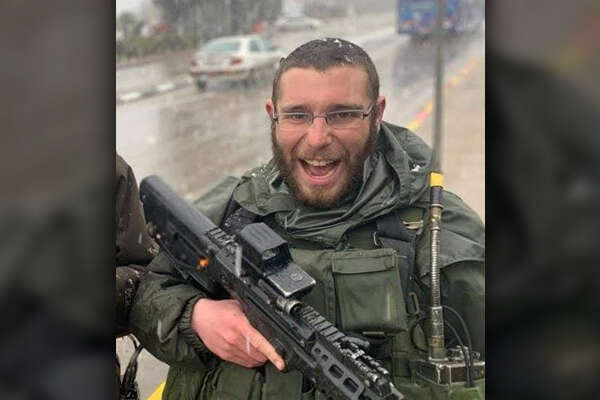
All photographs · 1
In the media
Articles
- Honoring Staff Sergeant Israel Sokol: 70 Trees Planted in His Memory
Im Tirtzu ·
- Reservists killed while planting explosives in a house in Gaza: 21 names — and all of Israel
IsraelInfo ·
- Planting in memory of Yisrael Sokol, may God avenge his blood — News — Im Tirtzu — Building a Zionist Societya
imti.org.il
- A memorial ceremony on the Temple Mount marking one year since Sergeant First Class Israel Sokol fell in the Gaza Strip | Arutz Sheva
www.inn.co.il
Podcasts
Memorial sites
- Yizkor - Sergeant First Class Yisrael Sokol
משרד הביטחון — יזכור
Memorial projects
Dr. Yehoshua Sokol published an edition of Rabbi Yaakov Mazeh’s memoirs in memory of his son Yisrael, his platoon comrades, and residents of Karnei Shomron who fell in the war. The interview article explicitly identifies the father, son, and community.
His friends established a lookout in Ramat Gilad in Karnei Shomron. According to Yizkor, the Uri Tzafon movement was also established in his name.
Family members, friends and residents of Karnei Shomron planted about 70 trees in his memory.
On the first anniversary of his death in battle, a memorial visit to the Temple Mount took place with the family and students of Yeshivat HaShomron participating.
Stories told about them
After his discharge, he worked for six months in construction in Samaria out of a desire to do manual work. He then began studying physics at the Hebrew University.
Life & service
Profile
- Date of birth
- November 28, 1999
- Birthplace
- Karnei Shomron
- Date of death
- January 22, 2024
- Age
- 24
- Hometown
- Karnei Shomron
Service
- Rank
- Sergeant first class
- Unit
- Brigade 261
- Service Type
- Reserve Forces
- Battle Location
- Southern Gaza Strip
Family
- Father
- Yehoshua
- Mother
- Marina
Burial
Tributes & remembrance
יהי זכרך ברוך
יהי זכרך ברוך.
39779#. לא ממש הכרתי את ישראל סוקול . חבר של חבר. בשנה א' נתקענו בשאלה בקורס במכניקה. הוא גם היה סטודנט בשנה א, בחוג לפיזיקה. אז ניגשנו אליו בהרמן וביקשנו ממנו עזרה. "אני לא ממש יודע," הוא אמר בענווה, בחיוך. "עוד לא הגענו לזה. נלמד את זה בשנה ב'. אני אוכל לעזור לכם רק בשנה הבאה." אז הודינו לו והלכנו ושברנו את הראש. אלוהים יודע מה היתה השאלה הזו בכלל. הוא לא למד את זה בשנה ב'. לפחות, אני לא חושבת. כי המלחמה פרצה והוא גויס למילואים ונפל בעזה. אני כבר סיימתי עם פיזיקה לתואר. אבל מידי פעם- אני לא יודעת- אני פותחת את המודל ומסתכלת על רשימת הקורסים שכבר עברתי ושאעבור, ואני חושבת עליו. על זה שאת הנושא הזה של השאלה הזו (ומי בכלל זוכר על מה היא היתה?) הוא בחיים לא ילמד. בחיים לא יוכל לספק לנו תשובה. ואז זה מכה בי. אני מצטערת שלא הכרנו יותר. אני אפילו לא יודעת אם היינו יכולים להיות ידידים או משהו. הרי בקושי החלפתי איתך כמה משפטים. אבל עדיין. השאלה המטומטמת ההיא בפיזיקה כאילו נותנת לי כאפה. כי אני הספקתי ללמוד אותה וכבר לשכוח, ואתה מעולם לא. ואני בכלל לא אוהבת פיזיקה.
ילד טווווב! נשבר הלב
טופלת במשמרת שלי, והלוואי שעל הצד הטוב ביותר. מבטיח להשתדל ללמוד על האור והטוב שעשית בחייך והשארת לנו בעולם. זה מהקצת שלמדתי עליך
איש אמת שלא סובל זיופים ושקר, אשר בראש מעייניו לחיות חיים מלאי משמעות. הקדיש את חייו לעם ישראל, ארץ ישראל מתוך תורת ישראל. התנדב רבות בתור נער. בין היתר היה מזמין חיילים בודדים ודואג להתעניין בשלומם באופן שוטף וכן היה שותף בארגונים שונים. למד תורה בישיבה בשקידה ובהתמדה
אשיות נדירה ביושרה .בגוון שבה..באהבה
רס"ל (במיל') ישראל סוקול ז"ל מקרני שומרון נפל בקרב בדרום רצועת עזה. משפחת סוקול נמנית על וותיקי העולים להר הבית. אימו, מרינה סוקול כתבה לאחר שנפל: "שכלתי את הבן שלי במלחמה הזו, והמלחמה היא על הר הבית. אנחנו צריכים להקריב שם קורבנות. ומכיוון שאיננו עושים זאת, אנחנו נאלצים להקריב לה' את טובי הבנים שלנו."
חבר,
שותף
הרבה זמן שלא נפגשנו
מתגעגע
אוי ישראל כמה שאני מתגעגעת לחיוך שלך
לזכרו של איש ישר כמו סרגל
יהודי יקר אוהב העם והארץ אשר נפל במלחמת חרבות ברזל אשר במרכזה היה הר הבית אליו היה מחובר בנפשו.
יהי זכרו ברוך
להתראות חבר אוהב המון ומתגעגע לעולם לא אשכח את השקידה העצומה שהיתה לך ואת אהבת הארץ
ישראל היקר,
היית ונשארת אחד האנשים שאני מעריך ביותר בעולם כולו. כל מה שעשית היה מכוון ומכוון, וממך למדתי דרך חיים. תודה על הכל. אני מתגעגע אליך.
יהי זכרך ברוך לעד
תהיה נשמתך צרורה בצרור החיים
יהי זכרו ברוך
איך נפלו גיבורים
יהי זכרך ברוך
ת.נ.צ.ב.ה.
ישראל גיבור ישראל!
תנוח על משכבך ושמור עלינו מלמעלה
גיבור ישראל. תנצב"ה
יהעה זכרו ברוך. חסר לנו ממש עכשיו אנשים כמוך ישראל.
גיבור ישראל בנפשו.
איש חכם ואכפתי.
אוהב ישראל ונאמן לא-לוהיו.
אני זוכר את העיניים הטובות והחמימות הקורנת מפניך. תודה על שלחמת והגנת עלינו בגופך.
הַצְּבִי יִשְׂרָאֵל עַל-בָּמוֹתֶיךָ חָלָל אֵיךְ נָפְלוּ גִבּוֹרִים.
מִנְּשָׁרִים קַלּוּ מֵאֲרָיוֹת גָּבֵרוּ.
יהי זכרו ברוך!
כבר לא צריך לחפש לך שידוך
אתה מסודר מה שנקרא
היית פרויקט
לא פשוט למצוא נפש תאומה לאדם מיוחד כמוך
רווק נצחי
עצרו אותך
לא הייתי יכול לדמיין עצירה יותר פתאומית
נעצרת באמצע
כמו רגע של פאוז באמצע קפיצה
אתה מסמל חיות גדולה
חום ואנרגיות בלתי נגמרות
וחייך נעצרו באופן בלתי אפשרי
תמיד אומרים שאתם יושבים שם כל החברה הטובים
אתה בטח מדלג שם בין גדולי עולם
בין קודש לקודש
כמו בחייך
כל דבר שנגעת בו קודש
ישראל חברי היקר , המורשת שלך תמשיך איתנו.
ניזכור ולא נשכח
ישראל,
איש האמת, היושר.
איש של אהבת התורה, הארץ והעם.
איפה אתה לא מוכנה לכתוב עליך בלשון עבר.
אתה חסר לנו!
תעזור לעם שלנו שאתה אוהב מלמעלה.
תן לנו את היכולת לאהוב אהבת חינם וללכת בשבילי ארצנו היפה תוך כדי לימוד התורה,
כמו שאתה היית עושה, בפשטות ובלי הרבה דיבורים.
עליך נאמר - אומר מעט ועושה הרבה.
כל הזמן מגלים עליך דברים נוספים שעשית בשקט ובצניעות.
תודה על כל הטוב שהענקת לנו.
בתפילה לתחיית המתים.
זוכרים בחיבה ובאהבה גדולה
בליבי לעד חבר.
נזכור את גדולתך, אמיתתך וישרותך.
נמשיך לבנות ולהיבנות בארץ הקדושה הזאת.
״לנצח אחי, אזכור אותך תמיד!״
נפילתך כמו פרח שנקטף. תשאר צעיר לנצח.
יהי זכרך ברוך
He has a responsibility toward the people of Israel
Source:www.emess.co.il
Read the Hebrew original
יש לו אחריות למען עם ישראל
We planted about 70 new trees in the Land of Israel
Source:imti.org.il
Read the Hebrew original
נטענו כ- 70 עצים חדשים בארץ ישראל
We will miss you, your wisdom, your wit, and the sense of security we felt when you were around.
Source:www.izkor.gov.il
Read the Hebrew original
אנחנו נתגעגע אליך, לחוכמה, לשנינות ולתחושת הביטחון שאתה באזור.
I will always remember your desire to give and contribute as much as possible. You were an amazing big brother and a role model.
Source:משרד הביטחון — יזכור
Read the Hebrew original
תמיד אזכור את הרצון שלך לתת ולתרום כמה שיותר. היית אח גדול מדהים ודמות לחיקוי.
Remembrance Day addresses
יום הזיכרון לחללי מערכות ישראל התשפ"ה – 2025
בכל יום שעובר, אזכור יותר! אזכור, את אלו שיצאו עימי לקרב ולא שבו, ולהם אין מי ידמה ומי ישווה. אזכור, שהכאב לא יעבור לעולם, והזמן, הוא לא מרפה ולא מרפא. אזכור, את שיברון הלב הגובר ואת הבית שבוער. אזכור, את צדקת הדרך, ואשבע שוב, שמה שהיה לא יהיה יותר. אזכור, שיותר מכל דבר אחר – אני חסר! ביום הזה, אני נתקף געגוע לדמותם, לחיתוך דיבורם, לחיוכם, ומדליק נר לזיכרון דרכם ומורשתם!
משרד הביטחון
אגף משפחות, הנצחה ומורשת
יום הזיכרון לחללי מערכות ישראל התשפ"ה – 2025
בכאב, בהצדעה ובתקווה אני מתכבד להדליק נר זיכרון זה. השנה, כשאנו נלחמים במלחמה ארוכה, רב זירתית וצודקת, הזיכרון נושא משמעות עמוקה. ביום זה נעצור ונתייחד עם זכרם של טובי בנינו ובנותינו שנפלו בהגנה על המדינה. מורשתם היא המצפן שמתווה את דרכינו, והיא המעניקה לנו כוח להמשיך ולהגן על מדינת ישראל ותושביה. משפחות יקרות, אנו מרכינים ראשנו ומתחייבים שנעמוד לצידכן תמיד. יהי זכר הנופלים ברוך.
אלוף דדו בר כליפא
ראש אגף כוח האדם, צה"ל
יום הזיכרון לחללי מערכות ישראל התשפ"ה – 2025
בשעה שאנו זוכרים את גודל תרומתם ועומק מסירות נפשם של טובי בנינו ובנותינו, נופלי מערכות ישראל לדורותיהן, ממשיכים צה"ל וכוחות הביטחון במימוש המשימה למענה לחמו ועבורה נפלו: הכרעת אויבינו מדרום, מצפון, ביהודה ובשומרון, וגם בזירות רחוקות יותר. בהערכה רבה ובגאווה אדירה אנו מרכינים ראש בפני הנופלים והנופלות, מאמצים את משפחותיהם אל לבנו, וממשיכים במשימה להבטחת קיומה של ישראל לדורי דורות. יחד נעשה ונצליח.
רב אלוף אייל זמיר
הרמטכ"ל, צה"ל
יום הזיכרון לחללי מערכות ישראל התשפ"ד – 2024
כאשר דגלינו מורדים לחצי התורן וראשינו מורכנים לזכר הנופלים והנופלות במערכות ישראל, ממשיכים לוחמי צה"ל ומפקדיו בלחימה בדרום, בצפון, ביהודה ובשומרון ובזירות נוספות. על כל דור מוטלת המשימה של הגנת העם והארץ – משימה שאף פעם אינה פוסקת. נצדיע בגעגוע ובגאווה לנופלים ולנופלות, נחבק את משפחותיהם, ונמשיך ברוח הציווי שהותירו לנו. עם ישראל חי.
רב ניצב יעקב שבתאי
המפקח הכללי, משטרת ישראל
יום הזיכרון לחללי מערכות ישראל התשפ"ד – 2024
אחיי הנופלים, כל נר הוא זיכרון יחיד ומיוחד, על חיים שהיו ואינם, געגוע שנצרב עמוק בלב, עולם ומלואו. הנרות כולם הם זיכרון של אומה כי לעולם לא עוד, בשורת הציונות וקוממיות ישראל. זיכרון כי הדרך לעם חופשי בארצנו עוברת דרך מסדר הנופלים. אור הנר יזכיר לנו את מסירות נפשכם להציל חיים, להגן על הבית. הנרות מסמנים לנו נתיב גבורה ערכי מחייב שאנו מצווים ללכת לאורו. נמשיך להילחם ולהוסיף אור מתוך אמונה בנצח ישראל.
יואב גלנט
שר הביטחון
יום הזיכרון לחללי מערכות ישראל התשפ"ד – 2024
בהצדעה ובכאב, בשם צה"ל כולו, אני מדליק נר זיכרון. בעיצומה של מלחמה, הזכרון נושא משמעות יום-יומית, שעבר והווה מתלכדים בה. לאורם של הנופלים נמשיך לצעוד, חיילי הסדיר והמילואים. לאורם של הנופלים נמשיך להגן על ארצנו ועל מולדתנו, גם כשהמחיר כבד. להבת-הזכרון תבער בנו בעודנו ממשיכים להלחם ונזכור את הנופלים ואת אומץ ליבם. משפחות יקרות, צה"ל מרכין היום ראש, מצדיע לכן וכואב איתכן. יהי זכר הנופלים ברוך.
אלוף יניב עשור
ראש אגף כוח האדם, צה"ל
יום הזיכרון לחללי מערכות ישראל התשפ"ד – 2024
בהוקרה, בגאווה ובכאב שאין לו סוף, אני מתכבד להדליק נר לזכרם של הנופלים והנופלות במערכות ישראל. סיפור חייהם בארץ הזאת, מסכת שירותם, גבורתם והקרבתם – הם סיפורה של הארץ הזאת, אך גם סיפור המחיר הכבד שהיא תובעת מאוהביה. מחויבותנו לזכר הנופלים ולדרך שהותירו לנו ניצבת תמיד לנגד עינינו. את המשימה שלא זכו להשלים, משלימים כיום, וישלימו, אנשי כוחות הביטחון, הממשיכים בדרכם ולאורם. יהי זכרם של הנופלים ברוך.
משרד הביטחון
אגף משפחות, הנצחה ומורשת
יום הזיכרון לחללי מערכות ישראל התשפ"ד – 2024
בחרדת קודש אני מתכבד להדליק נר לזכרם של חללי מערכות ישראל, חברנו שנפלו, מראשית היציאה מהחומות ולאורך כל שנות עצמאותנו המדינית והציונית, מהווים תמרור זיכרון לדרך חיינו ולמחוייבות הלאומית להנצחת זכרם. דרכם נותרה דרכנו ומורשתם נר להמשך עשייתנו. יהי זכרם ברוך!
בני גנץ
שר הביטחון
יום הזיכרון לחללי מערכות ישראל
נזכור אותם, כולנו יחד. כל אחד ואחת מהם, מדי יום ביומו, והיום ביתר שאת, כך – לנצח. "כי מדי דברי בו זכור אזכרנו עוד"
משרד הביטחון
אגף משפחות, הנצחה ומורשת