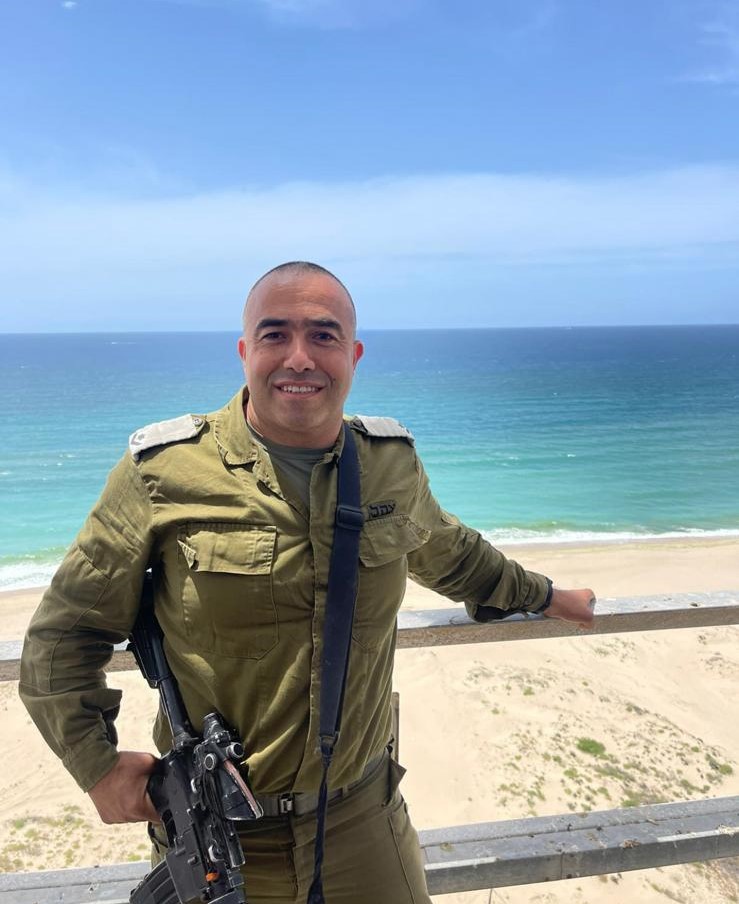
The story
In the village of Majdal Shams, nestled among the verdant hills of the Galilee, where ancient olive trees are rooted deep in the rocky soil, whispering stories of generations past, Ibrahim Kharouba was born on the first day of November, 1983. The warm autumn morning sun illuminated the modest, welcoming home built by Hamda and Hassan, his parents, bringing with it a promise for the future. Ibrahim was one of seven children—a younger brother to Nora, Muhammad, and Suliman, and an older brother to Ahmed, Anwar, and Azhar. The house was always alive: laughter echoing from the courtyard, rich aromas of cooking wafting from the kitchen, and the sounds of conversation and radio blending into a vibrant tapestry of daily life. Hamda, a diligent and gentle woman, dedicated her life to raising her children with loyalty and love, instilling in them values of respect for family and community, the importance of hard work, and the belief in the power of unity. Hassan, a quiet and generous man, built his world around the labor of his hands and his love for the land, serving as a role model for his children. He taught them the secrets of the earth, how to read nature’s signs, and the tranquility found in a deep connection to their surroundings—lessons Ibrahim absorbed deeply into his soul, becoming an inseparable part of his being.
In his childhood, Ibrahim was a curious boy who loved to run through the narrow alleys of the village, climb the surrounding hills, and explore the nearby wadis. He spent long hours under the olive trees, his fingers playing in the damp soil, learning to identify the different scents of plants, the calls of hidden birds, and the subtle shifts in light and shadow that marked the passage of time. He often accompanied his father or older brothers to the fields, watching them with half an eye as they harvested crops or tended the garden. From them, he learned the quiet satisfaction of manual labor, the joy of transforming a small seed into a blooming plant, and the way nature responds to patience and devoted care. He wasn't a particularly talkative child but rather an observer, noticing details others missed, his face often lost in thought, his brown eyes scrutinizing every slight movement of a leaf or a stone. He cherished the company of his siblings, their shared games in the courtyard, the mock battles fought among the bushes, and Hamda’s bedtime stories of heroes and legends. He vividly remembered the time the old village cat disappeared, and no one knew where it was. Little Ibrahim, then seven, went looking for it. He didn't call its name but walked quietly, his eyes fixed on the ground. He followed signs only he could see: a broken leaf, a faint paw print in the mud, a fallen feather. After a long hour, he found the cat trapped in a thorny bush, mewling softly. He returned home with the frightened cat in his arms, his face smudged with dust and minor scratches, but with a small, triumphant smile, a secret shared only between him and the cat. This was one of the first moments his natural inclination for reading the terrain, for understanding the stories the earth tells, revealed itself—a trait that would accompany him throughout his life and shape his path.
Ibrahim’s teenage years unfolded under the olive trees of Majdal Shams, between school benches and wild nature trails. He was a serious student, particularly fond of nature and geography classes, where he could combine formal knowledge with his personal insights from the field. His teachers remembered him as a quiet but attentive boy who always surprised them with well-reasoned and profound answers, indicative of true understanding rather than mere memorization. His friends appreciated his calm presence, his loyalty, and his dry sense of humor, which would surface unexpectedly and successfully defuse tension. He wasn't a loud leader, but his quiet, steadfast presence provided security. On Friday evenings, when his friends gathered in the village square or at the local coffee shop, Ibrahim often preferred to walk alone in the fields or sit on a secluded hill, gazing at the stars and listening to the unique silence of the night. He learned to identify stars, different constellations, and find his way even in complete darkness. He developed an astonishing sense of direction, based not just on maps but on intuition, on reading the terrain, and on a photographic memory of every tree, stone, or bush. He would tell his friends, with a small smile, "The earth speaks; you just need to know how to listen." He was deeply connected to the Druze tradition of military service, viewing it as a natural duty and a way to contribute to society and the state. Conversations at home about the service of brothers and uncles, about the pride in uniform, about responsibility, echoed in his ears. He knew he too would follow this path and awaited the day he could fulfill this sense of belonging and commitment.
When he turned eighteen, on November 15, 2001, Ibrahim enlisted in the IDF. It was an exciting day for the entire family. Hamda showered his cheeks with kisses, her eyes sparkling with tears of pride and apprehension. Hassan patted his shoulder, his gaze conveying more than words. His siblings stood around him, some in admiration, others with shared excitement. Ibrahim himself stood tall, his face resolute. He rode the military bus, his gaze fixed on the familiar landscape of the Galilee receding, on the olive trees that had witnessed his childhood and youth. He knew he was embarking on a journey that would change him, but he also knew he carried with him everything he had learned and absorbed at home. He was assigned to the Border Defense Corps, where he found his natural place. His special abilities were evident even during basic training. While his comrades struggled to navigate unfamiliar terrain, Ibrahim moved quietly, his eyes scanning the ground, picking up faint tracks, identifying hidden paths. Commanders quickly noticed his rare talent for reading the terrain, interpreting every moved stone, every broken leaf, every faint sign. He didn't need complex navigation devices; his intuition, his visual memory, and his ability to blend with the environment made him a human navigation machine. He was sent for tracker training, and there, among the arid deserts and tense borders, his talent blossomed in full force. He learned the art of tracking—not just to identify footprints, but to understand the story they told: who walked here, when, where they were headed, whether they carried a load, whether they were injured. He learned to distinguish between an animal’s track and a human’s, between an old track and a new one, between the track of someone in a hurry and that of someone sneaking. He spent long hours kneeling, examining the desert earth, the soft sand, the hard rocks. He learned to feel the wind's direction, to identify slight temperature changes, to notice distant smells. He became part of the terrain, understanding its secret language, translating it into vital operational information. He found deep satisfaction in this, a sense of purpose. It wasn't just a profession; it was an essence, a way of life that connected him to everything he had learned in childhood, but now with a clear purpose and a deep meaning of defending his home.
Over the years, Ibrahim became an expert tracker in the Northern Brigade of the Gaza Division. It was a demanding role, requiring constant vigilance, endless patience, and exceptional keenness of senses. He knew the sector like the back of his hand; every path, every ravine, every solitary eucalyptus tree was a familiar landmark. He spent long days and nights on patrols along the security fence, under scorching sun or freezing winds, his eyes scanning both the horizon and the ground. He would arrive at places where others saw only sand and stones and find a complete story: tracks of an infiltration attempt, signs of terrorist organization, or even just the tracks of an innocent shepherd who had lost his way. His ability to identify the "abnormal" within the routine, the small deviations from the familiar pattern, was what made him such a valuable asset. He was close to the earth, smelling its scent, recognizing its colors, feeling its vibrations. He was not just a tracker in the professional sense; he was a tracker in his soul, reading the world through hidden signs, understanding the unseen that was visible to all. His soldiers and commanders trusted him implicitly. When Ibrahim said there was something there, everyone knew it was true. He was a model of professionalism, of calm under pressure, and of uncompromising commitment to the mission. He earned great respect, and his ranks steadily rose, but he remained humble, preferring the company of the earth to the spotlight.
But Ibrahim’s life wasn't only about the field and operational duties. He built a complete world of love and family for himself. He married Asmaa, a warm and strong woman who came from a similar background and shared his values. Their first meeting, a gentle arrangement by family members, was filled with shy smiles and quiet mutual understanding. Ibrahim, accustomed to reading trails and signs in the field, found himself reading subtle body language, a sparkle in the eyes, a small smile that conveyed much. Asmaa saw in him stability, depth, and a reassuring calm. They built their home in Majdal Shams, a house where the hustle and bustle of his childhood were replaced by the hustle and bustle of their own children. They had four children: Rafif, Lynn, Muhammad, and Jean—four pillars of joy and love. Ibrahim was a devoted and loving father. After long days of patrols in the sector, when he returned home, he would shed his combat uniform and the burden of responsibility, transforming into a gentle, playful dad. He loved to sit with his children in the yard, telling them stories about the wild animals he had seen, about hidden tracks, about the way one must respect nature. He taught little Muhammad to identify bird tracks in the garden and would compete with Rafif and Lynn to see who could find the most special stone on the way to school. Little Jean would climb on him like a tree, and he would hug her with a tired but deeply satisfied smile. He was attentive to their needs, encouraging them to learn, explore, and be independent. He loved the quiet of family evenings, when Asmaa would prepare a warm meal, and their children would share their day's experiences with him. He listened patiently, offering advice in few but precise words. He provided for all their needs and was proud of every one of their achievements, big or small. Home was his fortress, the place where he found solace, love, and deep meaning. He was a good friend in the community, always ready to help, advise, and lend a hand. His neighbors and relatives knew Ibrahim was an honest and upright man, someone they could rely on. When he was called for reserve duty or long operational assignments, Asmaa managed the household with a strong hand, supporting him and giving him the peace of mind to know that a strong and loving home front stood behind him.
And then came that morning, Simchat Torah, October 7, 2023. The sun rose as usual over the Galilee hills, but the peace that should have prevailed on a holiday was shattered in an instant. The first WhatsApp messages began to flow even before the morning fully brightened: "Infiltration," "Continuous gunfire," "Terrorists in the communities." Ibrahim was at home, enjoying the morning quiet with his family, when suddenly his phone vibrated. He picked up the receiver, and the officer’s voice on the other end was tense and urgent. "Ibrahim, jump immediately. The situation is grave. The entire sector is on fire." He didn't hesitate for a moment. His gaze met Asmaa's worried eyes. She didn't say a word, just approached him, quickly helped him pack his small bag, and prepared him a hot cup of coffee. "Take care of yourself," she whispered, her voice trembling, as she hugged him tightly. The children were still asleep, and Ibrahim bent down to kiss each of them on the forehead, stroking their hair, trying to absorb the warmth of their bodies into his soul, as if he instinctively knew this was a moment he would need to remember. He left the house for the car, the sounds of gunfire and shelling that had begun to echo even from a distance already reaching his ears. The road from the Galilee south, towards the Gaza envelope, was a path of chaos and uncertainty. Military vehicles rushed in all directions, smoke rose from everywhere, and radio messages changed rapidly, painting a dark picture of an unprecedented event.
When he arrived at his base, the chaos was absolute. Officers and soldiers ran everywhere, orders were shouted, weapons were loaded. Ibrahim, quiet and focused as always, reported for duty. He knew exactly what was required of him. As a veteran and experienced tracker in the Northern Brigade of the Gaza Division, he was a vital pillar in the effort to repel the attack. His role was critical: to identify infiltration routes, understand the movement of terrorists, and guide the fighting forces in the complex and dangerous terrain. He immediately went into the field, to the combat zones that had become burning battlefields. He worked tirelessly, day and night, moving between attacked communities, identifying terrorist tracks, leading forces towards combat hotspots, trying to save lives and restore order. He saw the horrors with his own eyes—the destruction, the fear, the loss—but did not allow despair to overcome him. His face was resolute, his eyes focused on the mission. He remembered the faces of his children, Asmaa's face, the quiet of Majdal Shams, and this gave him the strength to continue. He was there, on the ground, breathing the dust and the smell of smoke, listening to the sounds of battle, and trying to interpret the story the bleeding earth told him. He tracked footprints, identified slight changes in the terrain, managed to distinguish between the tracks of fleeing civilians and those of armed terrorists. He was the eyes of the force, the human compass that guided them through the inferno. He worked long hours without sleep, with only short breaks to drink water and eat a little, before heading out again into the unknown. He knew that the lives of many depended on his ability to read the terrain, and therefore he did not allow himself to despair or grow tired.
The first days of the war were days of absolute madness. Ibrahim was at the forefront of the fighting, trying to understand the scope of the attack, guiding the forces rushing into the inferno. He was involved in countless operational incidents, penetrating areas under enemy control, risking his life again and again to obtain vital information or extract the wounded. He displayed extraordinary composure and courage, even as bullets whistled over his head and mortar shells exploded around him. He was the tracker everyone wanted by their side, the man who knew how to identify danger even before it materialized. He helped locate terrorists hiding in bushes and buildings, led forces to critical targets, and assisted in saving the lives of both civilians and soldiers. On Friday, October 13, 2023, six days after the attack began, Staff Sergeant Major Ibrahim Kharouba went on another mission, one of many, to defend his home. The exact details of his fall remain shrouded in the fog of war, but one thing is clear: he fell in battle, doing what he knew best, what he believed in with all his heart—defending his people and his land. He was thirty-nine when he fell, at the peak of his strength, at the height of his experience, with a loving and vibrant family he left behind. He was laid to rest in the civilian cemetery in Majdal Shams-Marar Bedouin, where the earth lay quiet beneath him, the earth whose secrets he knew so well, and he became a part of it. After his fall, he was posthumously promoted to Sergeant First Class, a mark of appreciation and recognition for his dedicated service and the sacrifice he made.
The news of Ibrahim's fall reached Majdal Shams like a thunderclap, leaving a vast and painful void in many hearts. The Kharouba family home, always filled with laughter and life, suddenly fell silent. Asmaa lost her beloved, her life partner, her pillar of strength. Their four children, Rafif, Lynn, Muhammad, and Jean, were left without their father, whose presence was so significant and profound in their lives. His parents, Hamda and Hassan, lost a cherished son, a great pride. His brothers and sisters lost a beloved brother, a loyal friend. The entire village mourned the loss of one of its finest sons, a quiet man of immense power, who contributed greatly to the security of the state and the resilience of the community. But even amidst the deep pain, a seed of resurgence slowly began to sprout. The story of Ibrahim, the expert tracker from Majdal Shams, began to be told again and again, by word of mouth, from generation to generation. A story of a man connected to the earth with every fiber of his being, who read the signs of nature and used his unique abilities to defend his homeland. He became a symbol of dedication, professionalism, quiet and profound courage, of love for humanity and love for the land.
Ibrahim Kharouba's legacy is not just in his ranks or titles. It lives and breathes in his children, who continue to grow and thrive with his story, with the values he instilled in them, and with immense pride in their heroic father. It lives in Majdal Shams, the village where he was born and raised, where the olive trees continue to bear fruit, and the wind continues to carry stories of heroism. It lives in the IDF, in the tracker unit, where he is considered a role model for generations of soldiers and commanders. He left behind a trail of clear footprints, not only in the earth he tracked but also in the hearts of everyone who knew him. Footprints of an honest, diligent, quiet man, yet with an incomprehensible inner strength. Footprints of a loving father, husband, son, and brother. Footprints of a loyal protector, who paid with his life for the defense of his home. His tragic death is a painful reminder of the heavy cost of war, but his life is a testament to the human spirit, to the ability to rise above fear, and to choose a path of sacrifice for the common good. The memory of Ibrahim Kharouba is deeply etched in the national memory, as an inseparable part of the story of Israeli revival, a story of steadfastness, human heroism, and an uncompromising hope for a better future. He fell as a hero, but his spirit continues to live, strong and clear, like a fresh trail of footprints in the earth, showing us all the way.
Moments of a life
All photographs · 1
In the media
Articles
- Israeli television marks three years since October 7 massacre
The Jerusalem Post ·
- Nahal Oz survivor reveals harrowing battle against Hamas on Oct. 7
The Jerusalem Post ·
- Tracker Sergeant Major Ibrahim Kharouba defended the lookout soldiers and was recommended for the Medal of Courage
ynet ·
- Warrant Officer Ibrahim Kharuba, 39: ‘Fought until his last breath’
The Times of Israel ·
- “True Partnership”: A Hebrew Course for Arabic-Speaking IDF Widows and Bereaved Women
ישראל היום ·
- For six hours, Ibrahim Kharuba defended the Nahal Oz surveillance soldiers. Help arrived too late
ynet / סמדר שילוני
Memorial sites
- Yizkor — Command Sergeant Major Ibrahim Kharuba
משרד הביטחון - יזכור
- About | remember ibrahim
אתר זיכרון איברהים ח׳רובה
Memorial projects
His family was chosen to take part in lighting a torch at the national Memorial Day ceremony in 5784, alongside other bereaved families.
Stories told about them
His brother Suleiman says that Ibrahim cared for their father after a heart attack. He describes him as someone who supported the family physically and emotionally and loved sports and life.
After he fell, Asma found it difficult to read condolence letters in Hebrew on her own. She took part in an initiative for a Hebrew course for widows and bereaved mothers at the Maghar community center, funded by the Nechama and Hatzala nonprofit.
After an alert about suspicious activity, Ibrahim went on patrol with the deputy battalion commander and later helped evacuate him after he was wounded. He continued to protect the female soldiers in the Nahal Oz operations room, helped others get out and did not manage to escape himself.
Life & service
Service
- Rank
- Warrant officer
- Honours
- Posthumously Promoted
Family
- Father
- Hassan
- Mother
- Chemda
Burial
Cemetery
Maj'ar-Marar Bedouin
Tributes & remembrance
נזכור אתכם תמיד
גיבור ישראל
תודה !
יהיה זכרו ברוך
איברהים גיבור ישראל,נלחם בגבורה,יהיה זכרו ברוך
אבראהים יא אבראהים לא יודע מה להגיד אתה חסר לי שברת לי הלב
אין מילים שיכולות לתאר את הכאב שאני חווה עכשיו ואין דבר שיכול למלא את החלל העצום בלעדיך יותר
הכאב ימשיך ללוות אותי כל החיים אוהב אותך בלי סוף
יהי זכרו ברוך
לא הכרתי אותו ודרכינו מעולם לא נצטלבו אך מותו, וגבורתו לפני נפילתו ריגשו אותי. כך נוהג לוחם אמיתי.
לנצח תישאר חבר ואח לנשק.
גיבור
יהי זכרו ברוך
גיבור ישראל,
לנצח נזכור
גיבור ישראל מנוחתך עדן
יהי זכרך ברוך לעד גיבור ישראל
יהי זכרו ברוך
לנצח נזכור את גבורתך הנעלה!
גיבור ישראל!
יהא זכרך ברוך לעד!
תמיד היית חבר
תמיד היית מוכן לעזור
תמיד היית נחמד
תמיד חייכת
תמיד היית חייל מצטיין
פעם צנחן תמיד צנחן
ת.נ.צ.ב.ה
האיש עם החיוך התמידי, גיבור ישראל.
נוב 2001 לא שוכחים אותך
איש יקר וגיבור
בית הספר לפיקוד לנגדים מרכין ראשו לזכרו של רס"ב איברהים חרובה ז"ל, בוגר קורס פו"ם גדעון מחזור כ"ח. יהי זכרו ברוך.
יהי זכרו ברוך גיבור ישראל
משתתפים בצערכם
אוהבת משפחת בהלג
זכרונו לברכה
גיבור ישראל
מודה לך מידי יום על גבורתך. יהי זכרך ברוך
יהיו זכרו ברוך.
אוהבים משפחת בהל״ג
גיבור ישראל .
בזכותך ובזכות חבריך הצלת את חמ"ל נחל עוז.
חירפתה את נפשך.
מנוחתך עדן
ביום הזיכרון לחללי מערכות ישראל מורד דגל המדינה לחצי התורן וכולנו מרכינים ראש לזכר אלו שמסרו את נפשם למען תקומת מדינת ישראל. יום זה מבטא את השותפות בכאבן של המשפחות השכולות ואת החובה המוסרית לזכור ולהנציח את הנופלים. "אברהים חרובה"
אחי האהוב.. גיבור היית וגיבור תישאר בלבי לעד. חסרונך מורגש בכל רגע, אך מורשתך והאהבה שהשארת מלווים אותי תמיד. יהי זכרך ברוך
נזכור אותך תמיד כגיבור לא נשכח אותך לעולם ת.נ.צ.ב.ה מצדיע לך חבר
גיבור ישראל
I am coping with loss and longing for the man who loved me, supported me and was the warm heart and shoulder I leaned on at every moment.
Source:ישראל היום
Read the Hebrew original
אני מתמודדת עם אובדן ועם געגועים לאיש שאהב אותי, תמך בי והיה לי הלב החם והכתף שנשענתי עליה בכל רגע.
I know very well who I raised. Ibrahim was a man of values who would shield others with his body
Source:ynet
Read the Hebrew original
אני יודע היטב מה גידלתי, איברהים היה אדם ערכי שישמור בגופו על אחרים
Ibrahim was a great man, he loved to live, he loved sports,
Source:The Times of Israel
Remembrance Day addresses
יום הזיכרון לחללי מערכות ישראל התשפ"ה – 2025
בכל יום שעובר, אזכור יותר! אזכור, את אלו שיצאו עימי לקרב ולא שבו, ולהם אין מי ידמה ומי ישווה. אזכור, שהכאב לא יעבור לעולם, והזמן, הוא לא מרפה ולא מרפא. אזכור, את שיברון הלב הגובר ואת הבית שבוער. אזכור, את צדקת הדרך, ואשבע שוב, שמה שהיה לא יהיה יותר. אזכור, שיותר מכל דבר אחר – אני חסר! ביום הזה, אני נתקף געגוע לדמותם, לחיתוך דיבורם, לחיוכם, ומדליק נר לזיכרון דרכם ומורשתם!
משרד הביטחון
אגף משפחות, הנצחה ומורשת
יום הזיכרון לחללי מערכות ישראל התשפ"ה – 2025
בכאב, בהצדעה ובתקווה אני מתכבד להדליק נר זיכרון זה. השנה, כשאנו נלחמים במלחמה ארוכה, רב זירתית וצודקת, הזיכרון נושא משמעות עמוקה. ביום זה נעצור ונתייחד עם זכרם של טובי בנינו ובנותינו שנפלו בהגנה על המדינה. מורשתם היא המצפן שמתווה את דרכינו, והיא המעניקה לנו כוח להמשיך ולהגן על מדינת ישראל ותושביה. משפחות יקרות, אנו מרכינים ראשנו ומתחייבים שנעמוד לצידכן תמיד. יהי זכר הנופלים ברוך.
אלוף דדו בר כליפא
ראש אגף כוח האדם, צה"ל
יום הזיכרון לחללי מערכות ישראל התשפ"ה – 2025
בשעה שאנו זוכרים את גודל תרומתם ועומק מסירות נפשם של טובי בנינו ובנותינו, נופלי מערכות ישראל לדורותיהן, ממשיכים צה"ל וכוחות הביטחון במימוש המשימה למענה לחמו ועבורה נפלו: הכרעת אויבינו מדרום, מצפון, ביהודה ובשומרון, וגם בזירות רחוקות יותר. בהערכה רבה ובגאווה אדירה אנו מרכינים ראש בפני הנופלים והנופלות, מאמצים את משפחותיהם אל לבנו, וממשיכים במשימה להבטחת קיומה של ישראל לדורי דורות. יחד נעשה ונצליח.
רב אלוף אייל זמיר
הרמטכ"ל, צה"ל
יום הזיכרון לחללי מערכות ישראל התשפ"ד – 2024
כאשר דגלינו מורדים לחצי התורן וראשינו מורכנים לזכר הנופלים והנופלות במערכות ישראל, ממשיכים לוחמי צה"ל ומפקדיו בלחימה בדרום, בצפון, ביהודה ובשומרון ובזירות נוספות. על כל דור מוטלת המשימה של הגנת העם והארץ – משימה שאף פעם אינה פוסקת. נצדיע בגעגוע ובגאווה לנופלים ולנופלות, נחבק את משפחותיהם, ונמשיך ברוח הציווי שהותירו לנו. עם ישראל חי.
רב ניצב יעקב שבתאי
המפקח הכללי, משטרת ישראל
יום הזיכרון לחללי מערכות ישראל התשפ"ד – 2024
אחיי הנופלים, כל נר הוא זיכרון יחיד ומיוחד, על חיים שהיו ואינם, געגוע שנצרב עמוק בלב, עולם ומלואו. הנרות כולם הם זיכרון של אומה כי לעולם לא עוד, בשורת הציונות וקוממיות ישראל. זיכרון כי הדרך לעם חופשי בארצנו עוברת דרך מסדר הנופלים. אור הנר יזכיר לנו את מסירות נפשכם להציל חיים, להגן על הבית. הנרות מסמנים לנו נתיב גבורה ערכי מחייב שאנו מצווים ללכת לאורו. נמשיך להילחם ולהוסיף אור מתוך אמונה בנצח ישראל.
יואב גלנט
שר הביטחון
יום הזיכרון לחללי מערכות ישראל התשפ"ד – 2024
בהצדעה ובכאב, בשם צה"ל כולו, אני מדליק נר זיכרון. בעיצומה של מלחמה, הזכרון נושא משמעות יום-יומית, שעבר והווה מתלכדים בה. לאורם של הנופלים נמשיך לצעוד, חיילי הסדיר והמילואים. לאורם של הנופלים נמשיך להגן על ארצנו ועל מולדתנו, גם כשהמחיר כבד. להבת-הזכרון תבער בנו בעודנו ממשיכים להלחם ונזכור את הנופלים ואת אומץ ליבם. משפחות יקרות, צה"ל מרכין היום ראש, מצדיע לכן וכואב איתכן. יהי זכר הנופלים ברוך.
אלוף יניב עשור
ראש אגף כוח האדם, צה"ל
יום הזיכרון לחללי מערכות ישראל התשפ"ד – 2024
בהוקרה, בגאווה ובכאב שאין לו סוף, אני מתכבד להדליק נר לזכרם של הנופלים והנופלות במערכות ישראל. סיפור חייהם בארץ הזאת, מסכת שירותם, גבורתם והקרבתם – הם סיפורה של הארץ הזאת, אך גם סיפור המחיר הכבד שהיא תובעת מאוהביה. מחויבותנו לזכר הנופלים ולדרך שהותירו לנו ניצבת תמיד לנגד עינינו. את המשימה שלא זכו להשלים, משלימים כיום, וישלימו, אנשי כוחות הביטחון, הממשיכים בדרכם ולאורם. יהי זכרם של הנופלים ברוך.
משרד הביטחון
אגף משפחות, הנצחה ומורשת
יום הזיכרון לחללי מערכות ישראל התשפ"ד – 2024
בחרדת קודש אני מתכבד להדליק נר לזכרם של חללי מערכות ישראל, חברנו שנפלו, מראשית היציאה מהחומות ולאורך כל שנות עצמאותנו המדינית והציונית, מהווים תמרור זיכרון לדרך חיינו ולמחוייבות הלאומית להנצחת זכרם. דרכם נותרה דרכנו ומורשתם נר להמשך עשייתנו. יהי זכרם ברוך!
בני גנץ
שר הביטחון
יום הזיכרון לחללי מערכות ישראל
נזכור אותם, כולנו יחד. כל אחד ואחת מהם, מדי יום ביומו, והיום ביתר שאת, כך – לנצח. "כי מדי דברי בו זכור אזכרנו עוד"
משרד הביטחון
אגף משפחות, הנצחה ומורשת