
The story
The mid-autumn air in Petah Tikva, on the 25th of Tishrei, 5752, already carried the cool scent of a changing season, but in the Katzman family home on a quiet city street, the atmosphere was filled with warmth and anticipation. There, into the vibrant bustle of a lively and loving household, Haim Yeshurun was born, son to Hannah and Daniel, a younger brother to Ezra, Tova, Noy (who would later be called Avinoam), Yedidia, and Tsviya. He arrived in the world on October 3, 1991, a baby who even then seemed to carry a spark of curiosity in his bright eyes, a spark that would accompany him and lead him throughout the short but profoundly meaningful path he walked. The house was always buzzing with activity, the Shabbat table laden with conversation and laughter, and the children darting between rooms, building a rich world of games and imagination for themselves. Haim, even from a young age, stood out with his vibrant personality; he was a child impossible to ignore, with a captivating smile that opened doors and sometimes too quickly closed eyes to small mischiefs. He was funny, mischievous, always finding a way to bring a smile to the faces of those around him, even when his small actions brought him to the brink of trouble.
His first years in Petah Tikva were a period of constant discovery for him. He attended the local elementary school, and later moved to the city high school, where he began to mature into a young man. His natural curiosity, present since birth, knew no bounds. He wasn't content with what was handed to him on the silver platter of the curriculum; he always sought to broaden his horizons, to explore, to understand deeply. His sharp intellect was sometimes almost too keen, and the stubbornness that often characterized him challenged his teachers and parents. He didn't easily give up his opinion, fighting for what he believed in, but always did so with a certain grace, with that same inclination to smile that was an inseparable part of him. His many friends, who saw him as a natural social center, loved him for his authenticity, his ability to embrace diverse opinions, and his unwavering loyalty. He was handsome, with that personal charm that drew people to him, and he knew how to use this talent to build a supportive and loving circle of friends around him.
Even before finishing high school, at an age when most teenagers are primarily occupied with dreams of a distant future, Haim had already begun to forge new paths. He enrolled in a Bachelor's degree program in Philosophy at the Open University, testifying to his insatiable hunger for knowledge and his inclination towards deep thought. Philosophy, with its grand questions about existence, morality, and truth, spoke to his heart. Alongside poring over thick books and engaging in complex discussions about the essence of life, he also found refuge and expression in the world of music. He learned to play the bass guitar, and his fingers, accustomed to turning book pages, found a new rhythm on the instrument's strings. The bass, with its deep, stable sounds, served as an anchor, much like Haim's personality – stable, fundamental, and providing an essential foundation for the entire melody.
When his time came to enlist in the IDF in 2009, Haim brought with him this entire rich and complex personality. He was assigned to the Combat Intelligence Collection Corps of the Border Defense Force, a role that demanded not only sharp thinking and alertness but also the ability to withstand pressure and operate under fire. He served in the Judea and Samaria area, and often participated in operations that required courage and resourcefulness. The military environment, despite its harshness and the challenges it posed, did not force Haim to abandon who he was. On the contrary, it allowed him to express his prominent qualities. One of his commanders, who remembered him well, spoke of him years later, his voice still echoing with deep appreciation: "Haim is the kind of person you meet in life and never forget, because of their special personality. He was first and foremost a friend, who cared for everyone in the toughest moments. Funny and an inseparable part of the team spirit." These words painted a picture of Haim not just as a dedicated soldier, but as a human pillar, one who knew how to diffuse tension with a joke at the right time, and to be a listening ear for each of his friends. The commander added how Haim, thanks to his wisdom and extraordinary emotional intelligence, managed to bridge gaps between people from different backgrounds and with polar opposite views. "We had people in our team from different backgrounds, with very different opinions from each other," he recounted, "and Haim always knew, with his wisdom and emotional intelligence and of course his smile, how to explain the other opinion to people in such a respectful way that it never led to an argument. He made the whole team respect other opinions, and all this was done with a grace and sensitivity that only Haim could display." This was a rare ability, to transform potential conflict into an enriching discussion, to instill understanding and mutual respect even within a demanding framework like the military.
Alongside his full and intense military service, Haim did not give up his academic studies. He persevered in his Bachelor's degree in Philosophy, utilizing every free moment – perhaps during breaks between missions, in the steamy mess hall, or on quiet evenings at the base – to read, write, and delve deeper. He completed his studies shortly after his discharge from the IDF, with a degree in hand and a sense of great personal achievement. But this degree was not the end of the road for him, but merely another station on his intellectual and personal journey. Haim sought meaning, sought a place where he could apply his values and contribute to society in a tangible way. He found that place in Kibbutz Holit in the Gaza Envelope. He joined a core group from his hometown, Petah Tikva, who saw it as their mission to strengthen the remote kibbutz, which faced security and social challenges. The move from the bustling metropolis of Petah Tikva to the relative quiet of the Gaza Envelope, to a small and warm community, symbolized a new beginning for him, another chapter in his life.
In Holit, Haim was not content with just the vibrant community life. He sought work that would allow him to integrate into the local fabric of life, to feel the earth and work with his hands. He began to learn mechanics, a practical skill far removed from the abstract philosophical fields he had pursued. His days were spent in the garage in the neighboring moshav of Dekel, getting dirty with oil and grease, grappling with broken engines and technical challenges. This transition, from deep contemplation to strenuous physical labor, was not a contradiction for him, but a completion. He saw great value in manual labor, in repair, in creation, in connection to material reality. Alongside his work in the garage, Haim continued to cultivate his thirst for knowledge. He enrolled in a Master's degree program in Politics and Government at Ben Gurion University of the Negev in Be'er Sheva. Thus, in the time between fixing a tractor in the morning and changing oil in another vehicle in the afternoon, he found time to travel south, to sit in lecture halls, to dive into a world of political theories, international relations, and social issues. He was a person who lived a full life, combining work, studies, society, and family.
Haim's academic journey did not stop with his Master's degree. After completing it with distinction as well, he aimed higher, for the pinnacle of the academic world. He moved to Seattle, USA, a rainy and green city thousands of kilometers from the arid landscapes of the Negev, and began his doctoral studies in International Studies at the University of Washington. There, surrounded by books, brilliant lecturers, and students from all corners of the globe, he continued to develop his unique and innovative thinking. However, like many others in the world, Haim's life path also changed due to the COVID-19 pandemic. When the world shut down and flights were canceled, he made the decision to return home, to Kibbutz Holit, and completed his doctorate remotely. This was a challenging period of intensive study in front of a screen, of a certain academic solitude, but Haim, with his unwavering determination, managed to overcome it.
His academic colleagues described him as a brilliant researcher, a person with original and unique thinking, one who was not afraid to go against the current and ask incisive questions. His dissertation, which dealt with political attitudes within the Religious Zionist community in which he grew up – a community he knew from the inside, in all its nuances and complexities – aroused great interest and received praise. It offered an innovative and critical, yet always respectful, look at sensitive and charged topics. In 2020, the work won the Baruch Kimmerling Award for the best thesis from the Association for Israel Studies – significant recognition of the depth of his research and his contribution to the field. After earning his doctorate, Haim began to teach. He served as a respected lecturer in the Department of Politics and Communication at Hadassah Academic College in Jerusalem, and also gave fascinating lectures in several pre-military academies in the south, where he touched the souls of many young people and served as a role model for them. He not only imparted knowledge but inspired, taught critical thinking, and above all – taught how to be better human beings.
Alongside his demanding academic work, Haim found time to engage in a wide range of other fields, as if his day contained more hours than that of an ordinary person. He published numerous articles and opinion pieces, in which he expressed his reasoned and original views on political, social, and cultural issues. But it wasn't just written words that attracted him. Haim loved the earth and nature. He learned gardening, and as with everything he did, he approached it with seriousness and depth. He became Holit's landscape gardener, lovingly and devotedly tending the community gardens on the kibbutz. He would go out with gloves and tools in the early morning hours, when the dew still covered the leaves, striving to see the beauty growing from the earth, and nurturing it patiently. His hands, which knew how to write complex academic papers, also knew how to touch the moist earth, plant small seedlings, weed and prune, bringing bloom and beauty to the kibbutz. He found deep satisfaction in contact with the earth, in the creation and shaping of a green and flourishing environment. In addition, he also served as an editor and writer for the kibbutz newspaper, "Holiton," and through it continued to contribute to community life and strengthen the bond between kibbutz members. He had a natural curiosity that constantly pushed him to learn and explore new fields. His determination to excel in everything he did was amazing, and his ability to concentrate and work hard allowed him to achieve so much. He cultivated this ability, among other things, by practicing meditation, which filled him with inner calm and the ability to focus.
But above all, Haim was a musician at heart. He not only played bass guitar but also worked as a DJ, spinning records at parties and various productions. He believed with all his heart in the power of music to create a bridge of peace and connection between people and between the peoples living here. This belief was not just a theoretical idea for him; he put it into practice. He chose to DJ Arabic music, loved the rhythm, the lyrics, the culture it represented. He worked to make Jews familiar with it, to open up to it, and for both Jews and Arabs to come together to dance to its sounds. For Haim, the dance floor was a kind of social laboratory, a place where boundaries blurred and pure human connection could flourish. He saw music as a tool for bringing hearts closer, for breaking down prejudices, and for creating a better and more peaceful reality.
Haim was also a loyal friend, a humble and gentle person, who always remembered to understand the other and their way of thinking, even if he disagreed with their opinions. He was not a judge, but a listener, trying to see the world through the eyes of others. This ability allowed him to build close and deep relationships, and to maintain them for many years, even as physical distance grew. His good friends, who affectionately called him "Katzu" or "Katzman," knew that he would always look out for their well-being and be there for them when they needed him. He was a steady rock, a supportive shoulder, a listening ear, always ready to lend a hand. His ability to separate his ego from his opinions and ideas was a rare trait that was also evident in his academic work and published writings. He was never offended when criticism was expressed about his views and conclusions; on the contrary, he saw it as an opportunity for learning, for growth, for deeper discussion. He provided a safe space for expressing different viewpoints and for open and honest discussion about them, believing that only in this way could true understanding and progress be achieved.
In the summer of 2023, almost two months before the horrific attack, Haim fulfilled an old dream and went on a three-month trip to India. For him, it was not just a vacation, but a spiritual journey, a journey of self-discovery and connection to another culture. He played music, lectured, forged connections with Israeli tourists, with foreigners, and with locals, absorbing experiences, learning, and developing. He returned to Israel at the end of September 2023, full of experiences, stories, new insights, and with a sense of renewal for the new year. The neighborhood in Kibbutz Holit awaited him eagerly. His friend Shir described the excitement preceding his return: "I knew you even before I met you. When you were still in Seattle, and the whole neighborhood was preparing for your return. They wouldn't stop talking about you. Everyone was so proud. The neighborhood's Dr. A week before, everyone prepared for your return – they cleaned your house, filled your fridge with vegan food, made a colorful sign that is still hanging at the entrance to your house today. Just seeing everyone excited and looking forward to your return, I understood how special you are and how much you are in the hearts of so many people. Like family." This description paints a picture of a person whose presence was felt even in his absence, a person whose return everyone anticipated, who was an inseparable part of the community fabric. When he returned, Shir recounted their first meeting: "And then we sat in the garden, Aviad and I, and you arrived barefoot, with a torn shirt, wild hair... From the first moment we met, you made sure I felt completely at home in the kibbutz, in the neighborhood, in the family you had built." This was Haim – simple, natural, embracing, and above all – making everyone around him feel a sense of belonging and love.
On the eve of the terrible Shabbat, Simchat Torah, the 22nd of Tishrei, 5784, October 7, 2023, Haim did what he loved most: he played at the "Isis" brewery near his home. The place, which served as an open stage for artists, was a second home for him. He stood there, perhaps in that same torn shirt and wild hair, the bass in his hands, and the sounds filled the air. He connected people, created an atmosphere of freedom and joy, exactly as he believed music should do. It was a picture of Haim at his peak, connected to his passions, surrounded by people who loved him. No one suspected that this would be the last night of routine, the last night of a deceptive calm.
The morning of Simchat Torah dawned in fire. At 6:30 AM, when most residents of the Gaza Envelope were still asleep or beginning their day in the quiet of a holiday morning, the first sirens sounded. Then, heavy barrages of rockets began to fall on the area, like a sudden hammer blow. Haim awoke in his home, like all residents of Holit, to the piercing screams of the sirens and the roar of explosions. It quickly became clear that this time it was different. This was not another routine series of attacks. Soon, the first, horrific reports of terrorist infiltration arrived. Thousands of terrorists from the Hamas terror organization, armed to the teeth, breached the borders – by land, sea, and air. They stormed the Gaza Envelope communities, Sderot, Ofakim, and Netivot, massacred revelers at the nature party near Re'im and Nir Oz, attacked IDF bases, and targeted travelers on the roads. Within a few hours, hundreds of civilians were murdered in their homes, in their cars, and in open spaces, while horrific crimes were committed. Hundreds of Israelis were abducted to Gaza, and homes and property were set on fire and looted. On this morning, a war began.
When he realized that terrorists had infiltrated Kibbutz Holit itself, Haim felt he could not remain idle at home. He was a member of the kibbutz's rapid response team, but he was unarmed. Several months earlier, when he traveled to India, he had deposited his personal weapon and had not yet managed to retrieve it. The sirens continued, explosions echoed, and gunshots sounded closer and closer. His heart pounded fiercely, but the decision was made quickly. He could not sit idly by when people around him were in danger. Logic might have dictated staying protected, but the values Haim lived by, that deep concern for others, that sense of communal responsibility, pushed him out. He decided to go out, not to fight with bare hands, but to move between the houses, to try to understand which residents were in danger and to whom he could offer some help. It was an act of supreme courage, an act stemming from the deepest humanity.
Haim moved from house to house, knocking on doors, calling out names, trying to locate survivors or people in distress. He exposed himself to immense danger, but his concern for others was stronger than his fear. Amidst the chaos and horror, he reached the home of his neighbor, Avital, who was sitting alone in her secure room, terrified. Haim entered, bringing with him a small hope amidst the madness. The two hid together, seeking a last refuge from the tangible threat. They found cover in the wardrobes in the room, huddled in the narrow space, hoping the terrorists would not find them. Haim, with that sense of responsibility that distinguished him, chose to be in the outer wardrobe, as a kind of shield, a first human wall. Avital was behind him, in the inner wardrobe.
The tension was unbearable; every rustle outside sounded like an approaching step. Hearts pounded fiercely. And then, the moment they had so feared arrived. The terrorists burst into the room, likely due to a slight noise or movement. In an instant, a barrage of fire was unleashed towards the wardrobes. Haim, who was in the outer wardrobe, took the full force of the fire. He served as a human shield, absorbing the bullets with his body, protecting Avital who was behind him. Haim Yeshurun Katzman was killed on the spot, thirty-two years old at the time of his death. Avital, who was behind him in the inner wardrobe, miraculously survived, her life saved thanks to Haim's supreme and incomprehensible act of heroism. He sacrificed himself for her, in a moment of absolute truth, without hesitation.
Sergeant First Class Haim Yeshurun Katzman fell in battle on the 22nd of Tishrei, 5784, October 7, 2023. His death was part of the terrible price paid by the State of Israel on that black day, and he became a symbol of heroism and humanity amidst the inferno. He was laid to rest in the Yarkon Cemetery in Petah Tikva, the city where he was born and raised, surrounded by love and immense grief for the loss. He left behind heartbroken parents, Hannah and Daniel, and five siblings – Ezra, Tova, Noy (Avinoam), Yedidia, and Tsviya – who were left with a huge void in their hearts. After his fall, he was posthumously promoted to the rank of Master Sergeant First Class, in recognition of his bravery and devotion. On his tombstone, his family engraved the words "Man of Peace," two words that summarized the essence of his life and his deep belief in bringing hearts closer and building bridges. Beside them, the words "And the song of his life was cut short in the middle" were etched, from Haim Nachman Bialik's poem "After My Death," words that powerfully expressed the pain of a life cut short prematurely, of infinite potential missed, of a melody silenced at its peak.
Haim's legacy, however, continues to play, resonate, and influence. Shir, his friend from the kibbutz, described the light he radiated: "So many people said that the light you spread touched them. Even people who didn't know you said that just hearing about you made them understand what a special person you are. That's how you were and that's how you'll remain, a person who knows how to touch everyone. We miss you and we also know that you will continue to accompany us and be with us forever." This light, of a person who knew how to touch people, has not been extinguished. It continues to shine through his stories, through the memories of his friends and students. One of his students from the "Negev" pre-military academy eulogized him with touching words: "In his official capacity, Haim was my philosophy teacher, but in practice, we were simply good friends, deep conversations, he was my anchor throughout the entire year of the academy. Haim was for me a man to aspire to be like. In the way he lived, in simplicity, according to ideology. He was simply a moral and ethical compass for me and for everyone. A handsome man, with infinite wisdom and intelligence." The student particularly remembered a small but significant event: "Once I arranged to talk with him, I came to his house and his whole group was sitting there with him. I said to myself: 'What am I doing here now? Why didn't he tell me?' He did it on purpose, to give me a sense of belonging, to introduce me to people, to make me feel like I was part of his life. I am grateful for every moment I had with him and I don't stop telling my family about Haim and his work. I loved him with all my heart." This small story reflects the greatness of Haim's heart, his ability to see the other, to care for them, and to give them a sense of belonging, a sense of home.
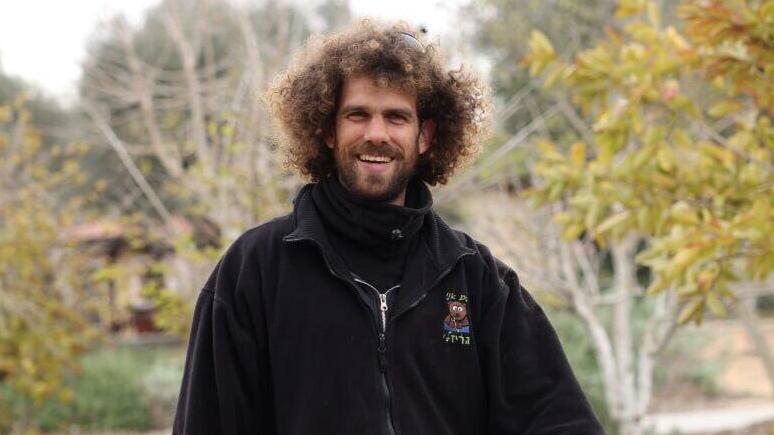
Assaf, another friend, eulogized him with words that painted the complexity of his personality: "I met Haim Katzman almost two years ago and loved him immediately. We met on some Shabbat of solidarity activists, both of us hoeing the hard rocky soil and talking about techno and Abraham our father. All those clichés about God taking the best are true. He really was like that. Gentle and wise and full of quiet charm, with an impossible mane of curly hair on his head." Assaf went on to describe the variety of his work: "He accomplished a lot in his short life, and touched the hearts of many. He holds an impressive list of degrees, but somehow it seems to me that more than all his academic achievements, he would have wanted his music to continue playing. Dr. Haim Katzman, the prominent intellectual, the philosophy teacher, the mechanic, the gardener, was also a DJ." These are words that paint a picture of a complete person, who lived his life to the fullest, in deep connection to all areas of activity and creation, and each of them was an inseparable part of his identity.
Haim's memory continues to live on through various memorial events. At the "Isis" brewery, the place where he found a second home and expressed his love for music, a musical evening was held in his memory, surely with sounds of Arabic and other music, as he loved and played. His students from Hadassah Academic College in Jerusalem, where he lectured, produced a film in his memory, "Project in Memory of Dr. Haim Katzman," available on YouTube, in which they share their voices and stories about their special teacher. The academic community, where he left his mark as a brilliant researcher, also commemorated him in an online seminar (webinar) in his memory, with the participation of his mother and colleagues. The recording of the webinar, "Dr. Haim Katzman: Between the Personal and the Academic," offers another glimpse into his rich world, his deep thinking, and his breadth of knowledge.
Haim Yeshurun Katzman, a man of peace, a man of earth and music, a man of spirit and action, left behind a legacy of humanity, wisdom, and courage. The story of his life, cut short prematurely, is not a story of an end, but a story of continuity. He continues to live in the hearts of all who knew him, in the gardens he cultivated, in the music he played, in the articles he wrote, and above all – in his last act of heroism, in which he chose to sacrifice his life for another. He is a symbol of Israeli resurgence, of the unwavering spirit of people who chose to live and build, to believe in peace and connection, and in the moment of truth – to defend their home and their community at all costs. His memory will be etched forever in the nation's memory, as a pillar of fire that goes before the camp, illuminating the way with the light of love, courage, and hope. May his memory be a blessing.
Moments of a life
All photographs · 3
In the media
Articles
- A Man of Peace: In Memory of Hayim Katsman (1991–2023)
Politics and Religion Journal ·
- Comfort among the mourners
The Times of Israel Blogs ·
- Hayim Katsman, 32: US-Israeli scholar and peace activist
The Times of Israel ·
- He Brought Parties from Ramallah to Holit: The Doctor of Philosophy Murdered on October 7
ynet
- A sustainability center in Rahat in memory of the peace activist murdered on October 7
ynet
- A Grieving Mother Finds Comfort in the Barnard Community
Barnard College
Show all (7)
- In memory of Hayim Katsman, murdered by Hamas terrorists - opinion
The Jerusalem Post
Podcasts
- Episode 132: Two Years Later
Jewish Women’s Archive – Can We Talk? ·
- An Israeli Mother, Her Son ... and a Personal and Collective Loss
Plaza Jewish Community Chapel – Exit Strategy
Memorial sites
- Dr. Haim Katsman, of blessed memory
קיבוץ חולית
Memorial projects
A campaign to establish a sustainability center in Rahat in Haim’s memory, in partnership with his mother Hanna and Fuad al-Ziyadna. The article describes fundraising and planning; it should not be inferred that the center has already opened.
Hadassah Academic College reports awarding scholarships to three students in the Politics and Communication Department for projects in his memory, and a memorial event on December 7.
According to the Kan page, a musical evening was held at the Isis brewery, Hadassah students made a film, and a webinar took place with his mother and colleagues. The film and webinar titles are detailed on the page; direct video links were not verified.
Stories told about them
His partner in the Rahat activities, Fuad al-Ziyadna, said that Haim guided residents in gardening and sustainability and participated in establishing two community gardens. After his murder, an initiative took shape to expand the activities into a center bearing his name.
His uncle Aharon said that during his doctoral studies in Seattle, Haim lived with his grandfather and cared for him. He said their shared interests in cars and gardening strengthened their bond.
Life & service
Service
- Rank
- Master sergeant (res.)
- Service Type
- Reserve Forces
- Honours
- Posthumously Promoted
Family
- Father
- Daniel
- Mother
- Hana
Burial
Cemetery
Yarkon Gate Petah Tikva
- Plot
- חלקה ח' 8
- Row
- כ"ב
- Grave
- 1
Tributes & remembrance
נזכור אתכם תמיד
תודה עליך כצמן
לצידכם, משפחת בהל״ג
לזכרו של חיים ישורון כצמן
ממשפחת בהלג
משפחת בהל״ג מדליקה נר לזיכרו, יהי זכרו ברוך
תודה על מי שהיית
יהי זכרו ברוך.
איפה ישנם עוד אנשים
כמו האיש ההוא
כמה תארים כמה סיפורים
חבל שאין המשך
כצמן היקר, היה לי הזכות לשרת איתך בשירות הצבאי באותו הצוות. הייתה מודל לחיקוי בתור סמל צוות וחובש.
תודה על הכל, לא אשכח אותך!
עזוב כצמן, בוא נחזור להודו.
הלב שלי נשבר, אין ולא יהיו אנשים כמוך!
אדם מיוחד במינו, נזכור אותך תמיד
יהיה זכרך ברוך חיים היקר והאהוב
יהי זכרך ברוך איש מיוחד שהיית
הייתה לי הזכות ללמוד ממך, אדם אופטימי ואמיתי, זוכרת שיעורים שאיתגרת אותנו וגרמת לנו לחשוב על כל סיטואציה מזווית חדשה ומסקרנת, תודה לך!
נחשפתי לסיפורו של חיים כצמן. אדם מיוחד ורב גוני. תנחומי למשפחה
חיים, חבר לחטיבה ותיכון,
היה אדם ערכי, בעל כישרון רב,
מצטיין במספר תחומים בלימודים
ואיש של אמת.
יהי זכרו ברוך
לנצח אחי אזכור אותך תמיד
Our sympathy goes out to the relatives of Hayim Katsman and all the victims.
Source:Moses Mendelssohn Center
He was first and foremost a friend who cared for everyone
Source:כאן
Read the Hebrew original
הוא היה קודם כול חבר, שדואג לכולם
How proud everyone was.
Source:כאן
Read the Hebrew original
כמה גאווה הייתה לכולם.
Gentle and wise and full of quiet charm,
Source:כאן
Read the Hebrew original
עדין וחכם ומלא בקסם שקט,
Chaim was a lively, curious boy and a successful student
Source:ynet
Read the Hebrew original
חיים היה ילד תוסס, סקרן ותלמיד מוצלח
From the very first moment, it was clear that Chaim had not come to us just as an employee, but had come from the heart
Source:ynet
Read the Hebrew original
מהרגע הראשון היה ברור שחיים לא הגיע אלינו רק כעובד, אלא בא מהלב
Katzman was actually my most left-wing friend, and I loved him because he was a good person
Source:ynet
Read the Hebrew original
כצמן היה בעצם החבר הכי שמאלני שלי, ואהבתי אותו כי הוא איש טוב
musician, mechanic, horticulturist, writer,
Source:The Times of Israel
he was a wonderful person
Source:The Times of Israel
He was modest, generous, intellectually honest,
Source:The Times of Israel
Hayim loved the land, people, words and music.
Source:The Times of Israel
He saw everyone as equal, no matter their gender, race, religion, nationality or political opinions.
Source:The Times of Israel Blogs
I say yes to 95% of things because they really do help me.
Source:Barnard College
Hayim was a whole world, and we feel his loss daily.
Source:The Times of Israel Blogs
He was a dear, dear friend to me and to many.
Source:The Jerusalem Post
Remembrance Day addresses
יום הזיכרון לחללי מערכות ישראל התשפ"ה – 2025
בכל יום שעובר, אזכור יותר! אזכור, את אלו שיצאו עימי לקרב ולא שבו, ולהם אין מי ידמה ומי ישווה. אזכור, שהכאב לא יעבור לעולם, והזמן, הוא לא מרפה ולא מרפא. אזכור, את שיברון הלב הגובר ואת הבית שבוער. אזכור, את צדקת הדרך, ואשבע שוב, שמה שהיה לא יהיה יותר. אזכור, שיותר מכל דבר אחר – אני חסר! ביום הזה, אני נתקף געגוע לדמותם, לחיתוך דיבורם, לחיוכם, ומדליק נר לזיכרון דרכם ומורשתם!
משרד הביטחון
אגף משפחות, הנצחה ומורשת
יום הזיכרון לחללי מערכות ישראל התשפ"ה – 2025
בכאב, בהצדעה ובתקווה אני מתכבד להדליק נר זיכרון זה. השנה, כשאנו נלחמים במלחמה ארוכה, רב זירתית וצודקת, הזיכרון נושא משמעות עמוקה. ביום זה נעצור ונתייחד עם זכרם של טובי בנינו ובנותינו שנפלו בהגנה על המדינה. מורשתם היא המצפן שמתווה את דרכינו, והיא המעניקה לנו כוח להמשיך ולהגן על מדינת ישראל ותושביה. משפחות יקרות, אנו מרכינים ראשנו ומתחייבים שנעמוד לצידכן תמיד. יהי זכר הנופלים ברוך.
אלוף דדו בר כליפא
ראש אגף כוח האדם, צה"ל
יום הזיכרון לחללי מערכות ישראל התשפ"ה – 2025
בשעה שאנו זוכרים את גודל תרומתם ועומק מסירות נפשם של טובי בנינו ובנותינו, נופלי מערכות ישראל לדורותיהן, ממשיכים צה"ל וכוחות הביטחון במימוש המשימה למענה לחמו ועבורה נפלו: הכרעת אויבינו מדרום, מצפון, ביהודה ובשומרון, וגם בזירות רחוקות יותר. בהערכה רבה ובגאווה אדירה אנו מרכינים ראש בפני הנופלים והנופלות, מאמצים את משפחותיהם אל לבנו, וממשיכים במשימה להבטחת קיומה של ישראל לדורי דורות. יחד נעשה ונצליח.
רב אלוף אייל זמיר
הרמטכ"ל, צה"ל
יום הזיכרון לחללי מערכות ישראל התשפ"ד – 2024
כאשר דגלינו מורדים לחצי התורן וראשינו מורכנים לזכר הנופלים והנופלות במערכות ישראל, ממשיכים לוחמי צה"ל ומפקדיו בלחימה בדרום, בצפון, ביהודה ובשומרון ובזירות נוספות. על כל דור מוטלת המשימה של הגנת העם והארץ – משימה שאף פעם אינה פוסקת. נצדיע בגעגוע ובגאווה לנופלים ולנופלות, נחבק את משפחותיהם, ונמשיך ברוח הציווי שהותירו לנו. עם ישראל חי.
רב ניצב יעקב שבתאי
המפקח הכללי, משטרת ישראל
יום הזיכרון לחללי מערכות ישראל התשפ"ד – 2024
אחיי הנופלים, כל נר הוא זיכרון יחיד ומיוחד, על חיים שהיו ואינם, געגוע שנצרב עמוק בלב, עולם ומלואו. הנרות כולם הם זיכרון של אומה כי לעולם לא עוד, בשורת הציונות וקוממיות ישראל. זיכרון כי הדרך לעם חופשי בארצנו עוברת דרך מסדר הנופלים. אור הנר יזכיר לנו את מסירות נפשכם להציל חיים, להגן על הבית. הנרות מסמנים לנו נתיב גבורה ערכי מחייב שאנו מצווים ללכת לאורו. נמשיך להילחם ולהוסיף אור מתוך אמונה בנצח ישראל.
יואב גלנט
שר הביטחון
יום הזיכרון לחללי מערכות ישראל התשפ"ד – 2024
בהצדעה ובכאב, בשם צה"ל כולו, אני מדליק נר זיכרון. בעיצומה של מלחמה, הזכרון נושא משמעות יום-יומית, שעבר והווה מתלכדים בה. לאורם של הנופלים נמשיך לצעוד, חיילי הסדיר והמילואים. לאורם של הנופלים נמשיך להגן על ארצנו ועל מולדתנו, גם כשהמחיר כבד. להבת-הזכרון תבער בנו בעודנו ממשיכים להלחם ונזכור את הנופלים ואת אומץ ליבם. משפחות יקרות, צה"ל מרכין היום ראש, מצדיע לכן וכואב איתכן. יהי זכר הנופלים ברוך.
אלוף יניב עשור
ראש אגף כוח האדם, צה"ל
יום הזיכרון לחללי מערכות ישראל התשפ"ד – 2024
בהוקרה, בגאווה ובכאב שאין לו סוף, אני מתכבד להדליק נר לזכרם של הנופלים והנופלות במערכות ישראל. סיפור חייהם בארץ הזאת, מסכת שירותם, גבורתם והקרבתם – הם סיפורה של הארץ הזאת, אך גם סיפור המחיר הכבד שהיא תובעת מאוהביה. מחויבותנו לזכר הנופלים ולדרך שהותירו לנו ניצבת תמיד לנגד עינינו. את המשימה שלא זכו להשלים, משלימים כיום, וישלימו, אנשי כוחות הביטחון, הממשיכים בדרכם ולאורם. יהי זכרם של הנופלים ברוך.
משרד הביטחון
אגף משפחות, הנצחה ומורשת
יום הזיכרון לחללי מערכות ישראל התשפ"ד – 2024
בחרדת קודש אני מתכבד להדליק נר לזכרם של חללי מערכות ישראל, חברנו שנפלו, מראשית היציאה מהחומות ולאורך כל שנות עצמאותנו המדינית והציונית, מהווים תמרור זיכרון לדרך חיינו ולמחוייבות הלאומית להנצחת זכרם. דרכם נותרה דרכנו ומורשתם נר להמשך עשייתנו. יהי זכרם ברוך!
בני גנץ
שר הביטחון
יום הזיכרון לחללי מערכות ישראל
נזכור אותם, כולנו יחד. כל אחד ואחת מהם, מדי יום ביומו, והיום ביתר שאת, כך – לנצח. "כי מדי דברי בו זכור אזכרנו עוד"
משרד הביטחון
אגף משפחות, הנצחה ומורשת